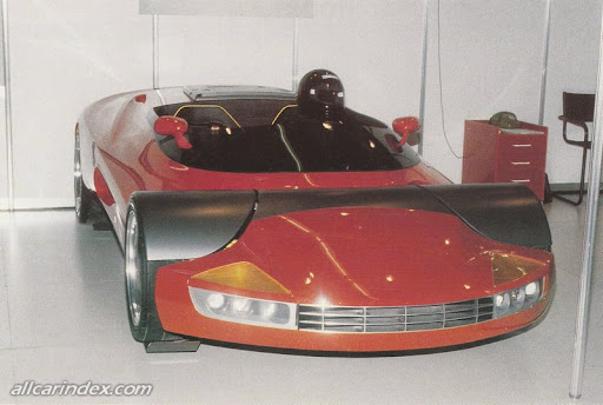

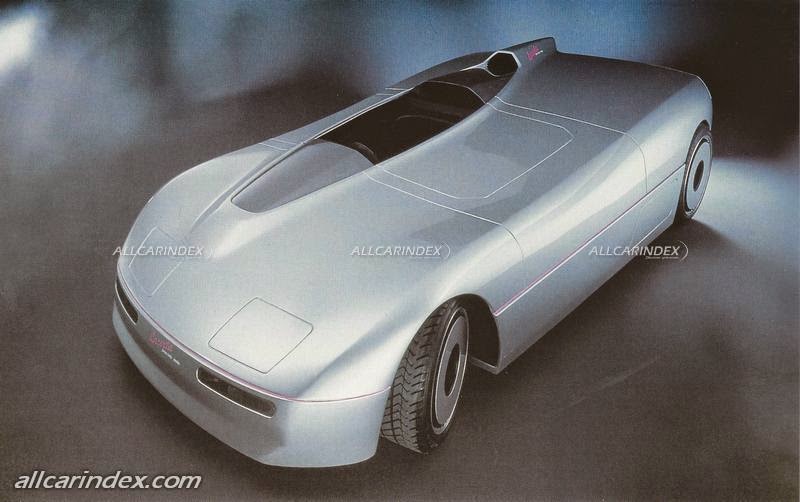
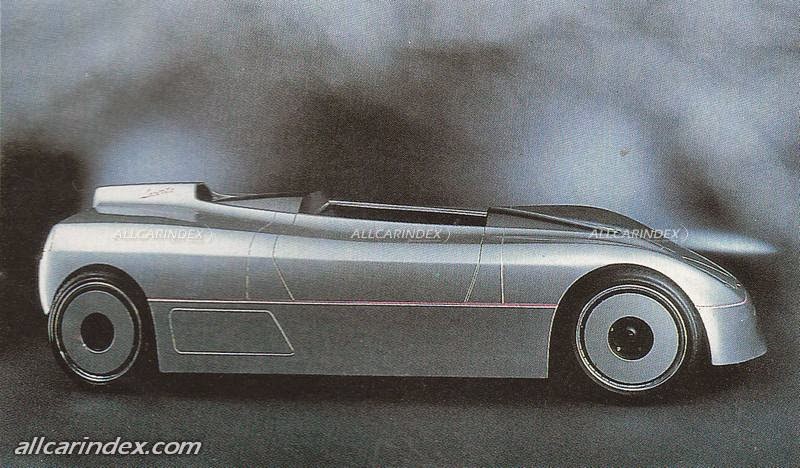
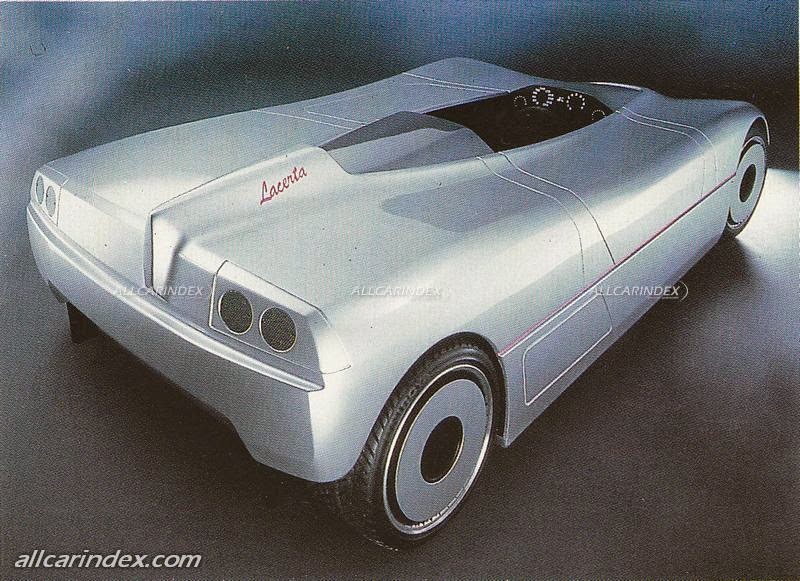
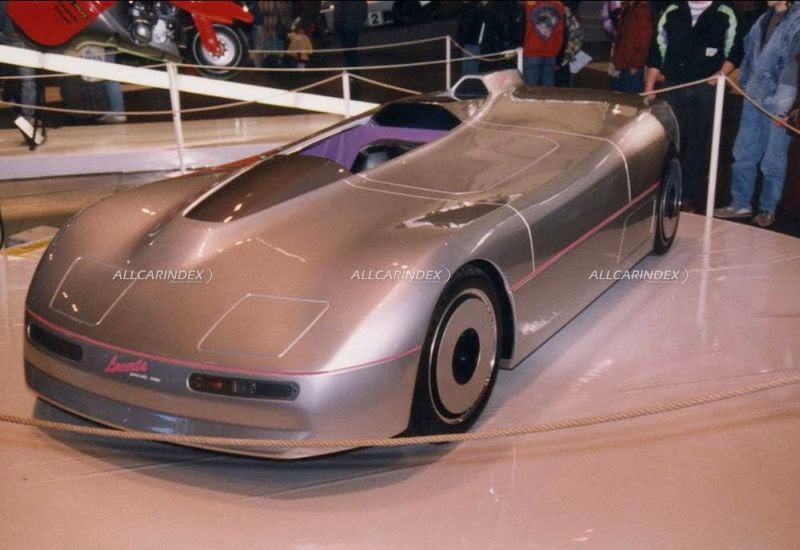
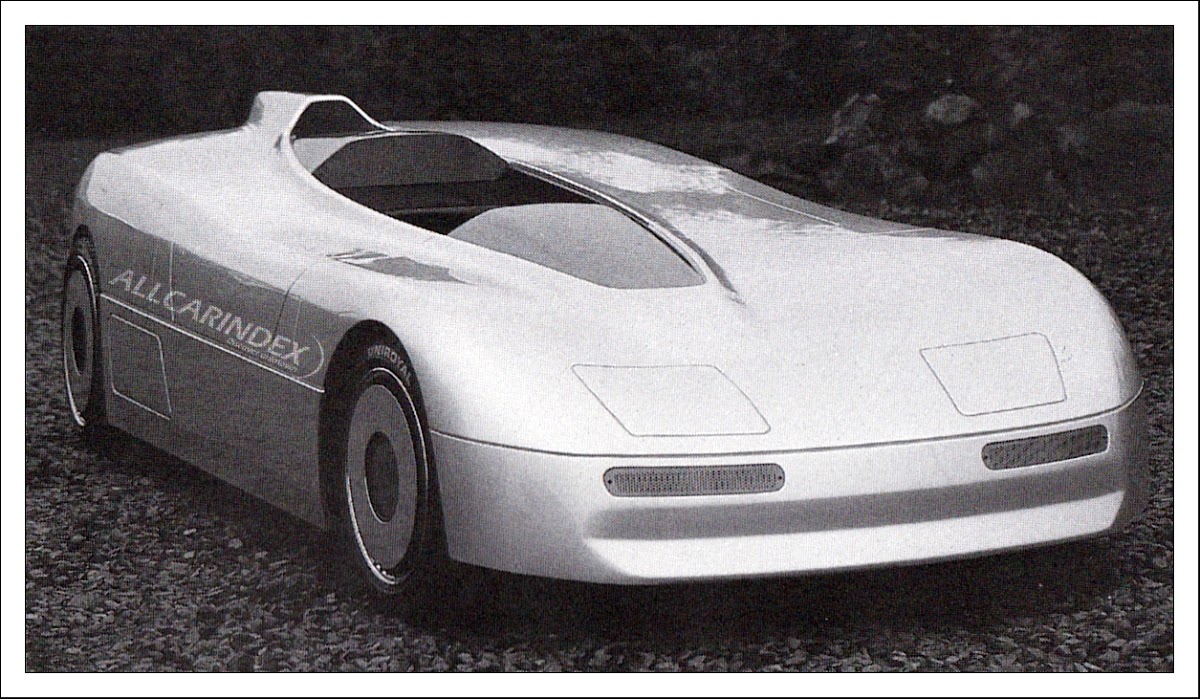
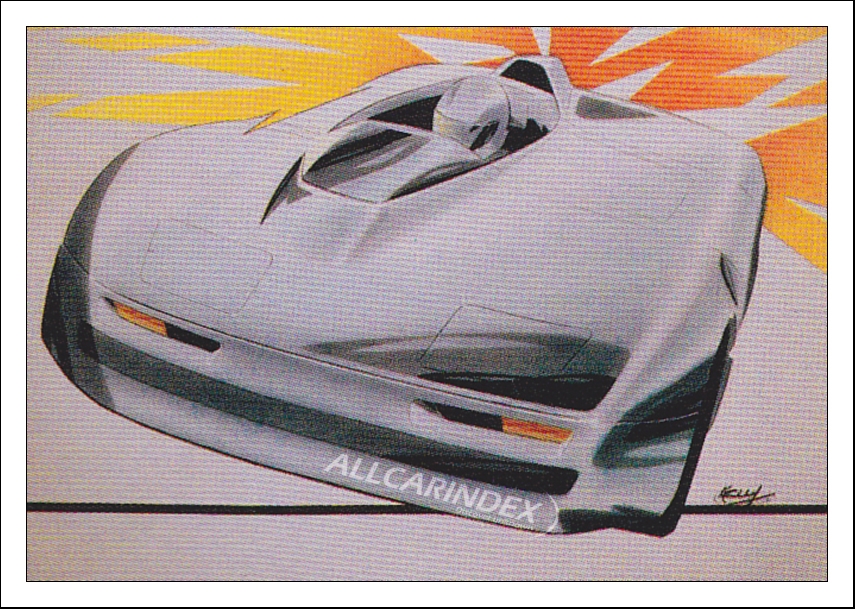
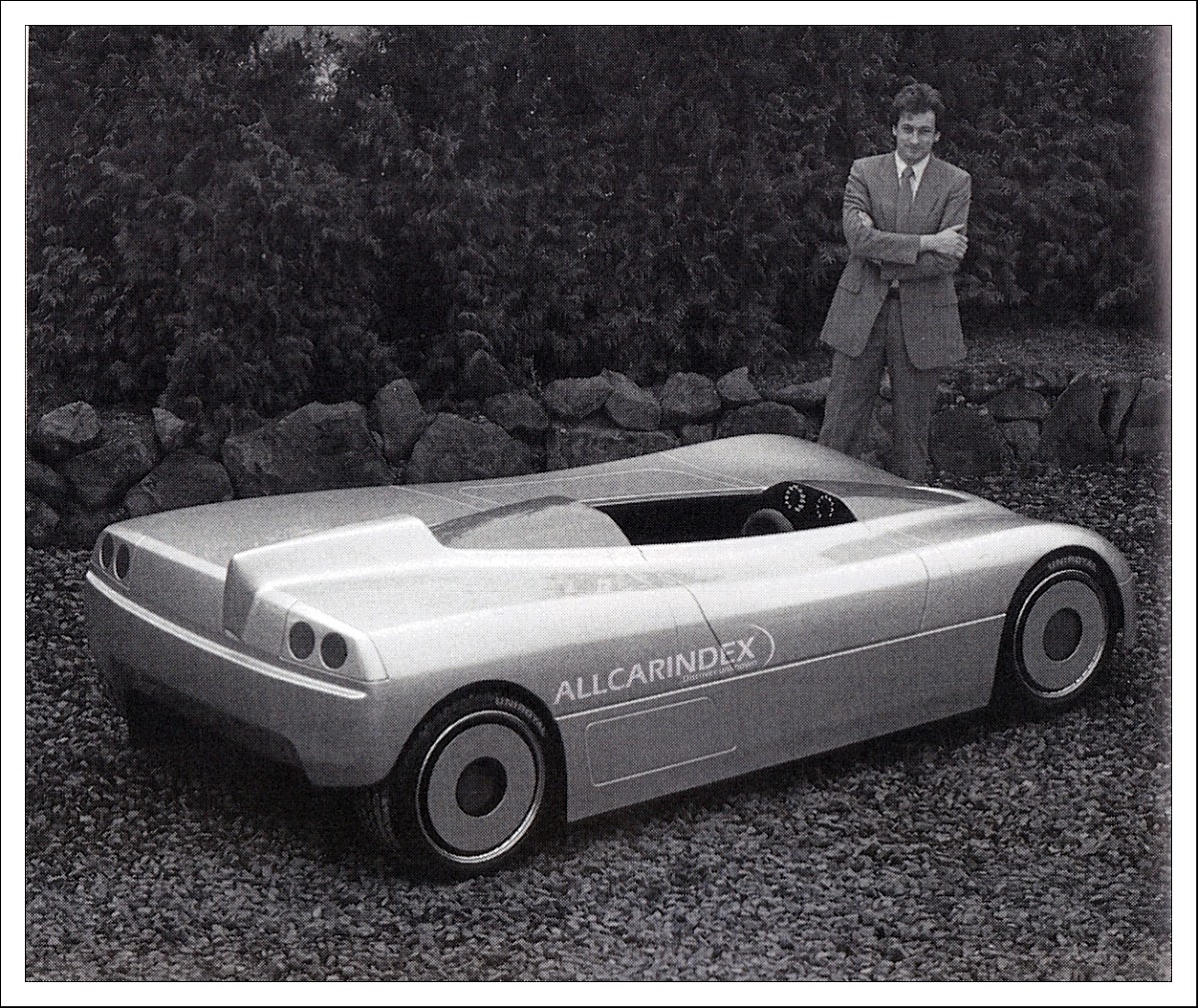
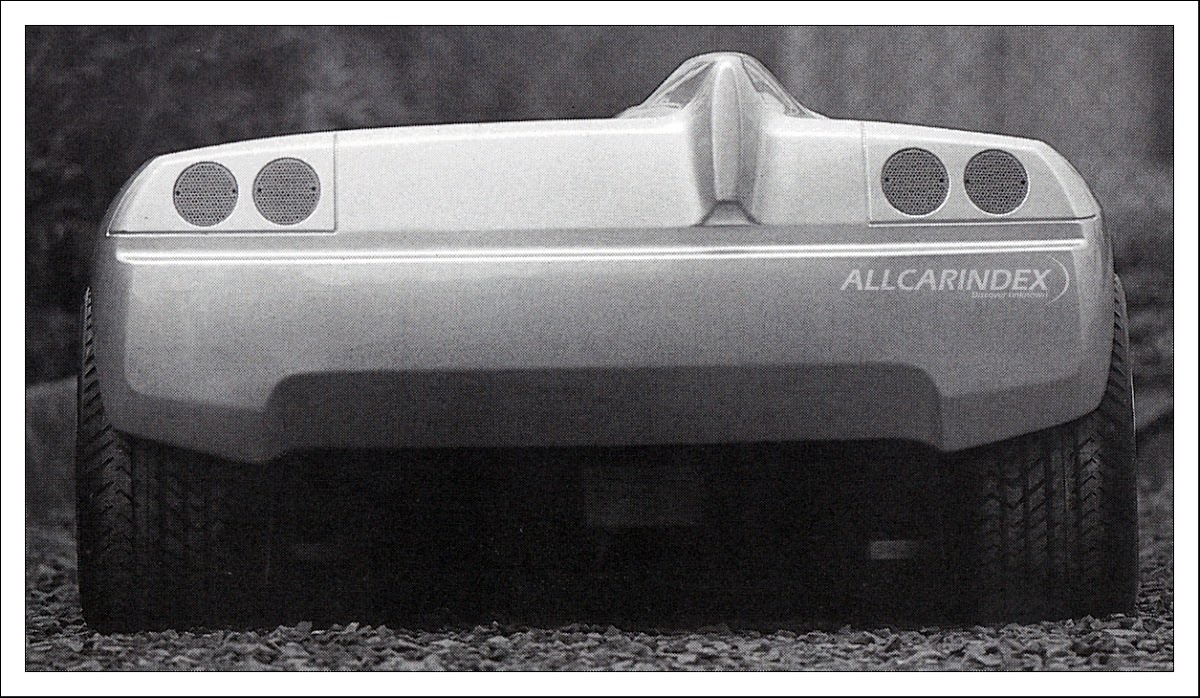
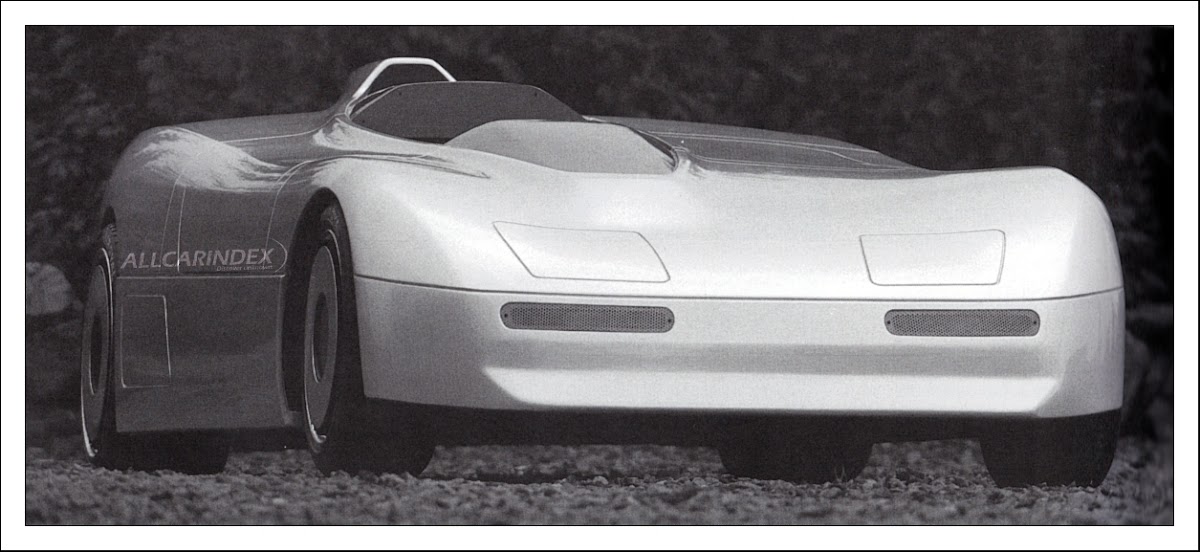
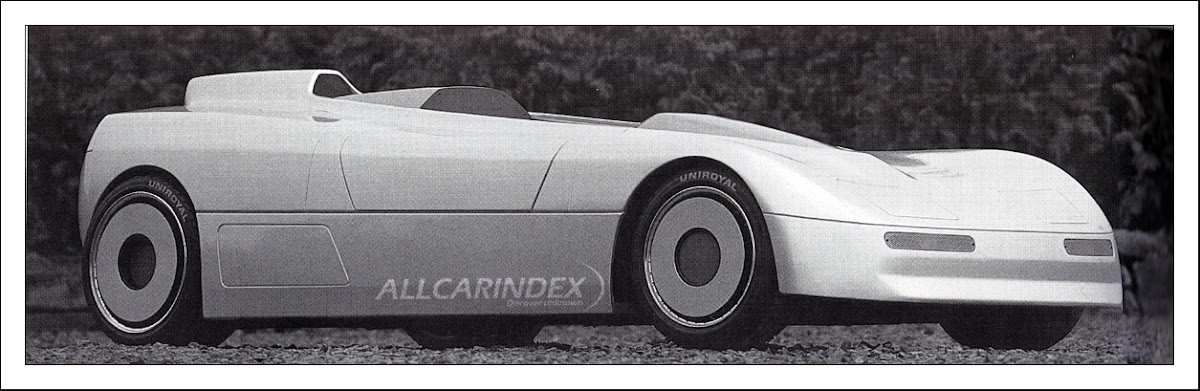
The Lacerta was a concept sports car designed by the Scottish designer James Kelly, who ran the JK Design studio, also referred to as JK Design, in the German town of Mayen. It was presented as a full-size 1:1 model on the stand of the tire manufacturer Uniroyal at the 1989 IAA motor show, alongside a design study for an asymmetric, directional tire tread intended for sporting vehicles. The Lacerta, whose name means lizard, was conceived as an open, mid-engined racing-style sports car and was the result of three years of development work.
Kelly had studied industrial design in England from 1974 to 1977 and, with support from the Ford Motor Company, graduated from the Royal College of Art in London. He then worked on passenger car development for Ford in Dunton and Cologne before starting independent design work for the automotive industry from 1986 onward, while also teaching at the Art Center College of Design (Europe) in La Tour-de-Peilz. With the Lacerta he aimed for a high degree of functionality for a new generation of sports cars, developing the design through numerous sketches, a 1:4 scale model, and eventually a full-size styrofoam and clay model before producing the final glass-fiber and carbon-fiber-reinforced body mounted on an aluminum and carbon-fiber monocoque chassis.
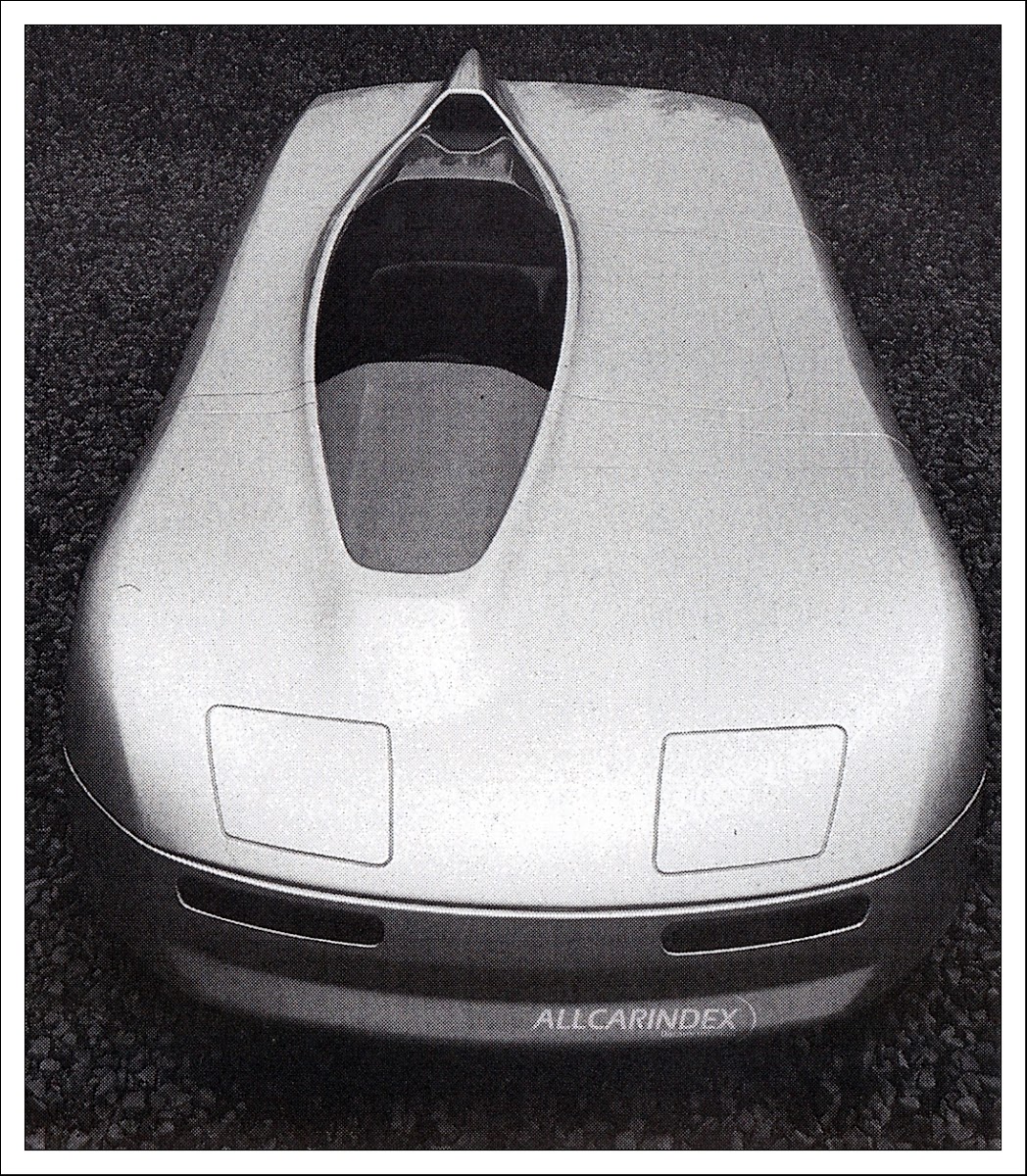
The car was laid out as a 1+1 seater with right-hand drive; the bodywork featured a cockpit cutout only on the right side, with a second seat that could be revealed alongside it when needed. It had no roof or windshield, a feature shared with several other concept cars of the 1980s aimed at emphasizing driving enjoyment. The estimated drag coefficient was 0.2. Uniroyal fitted specially developed tires for mid- and rear-engined cars, sized 205/45 ZR 16 at the front and 295/30 ZR 17 at the rear. The steering wheel was designed as a thick, padded disc.
Power came from a mid-mounted, turbocharged four-cylinder Ford Cosworth engine, initially cited as a 2.8-liter unit and later as a 2-liter version, with an output given as over 200 hp, and elsewhere stated as 260 hp. Performance figures, described as theoretical, included a 0-100 km/h time of around 5 seconds, a top speed of about 265 km/h, and fuel consumption of roughly 8.5 l/100 km. The car measured 3400 mm in length, 1625 mm in width, and 1050 mm in height, with a 2410 mm wheelbase, a track of 1420 mm, and a weight of 665 kg.