
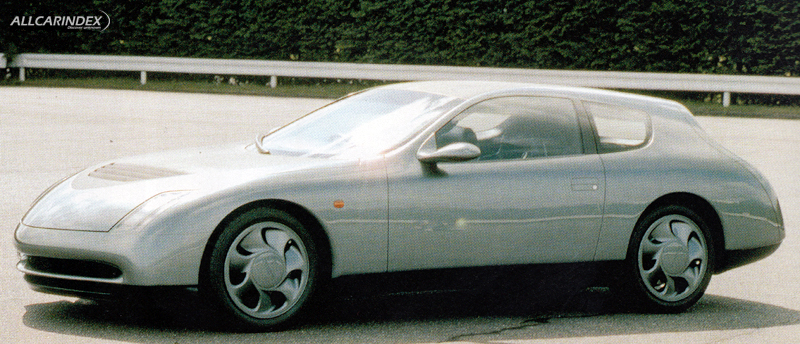
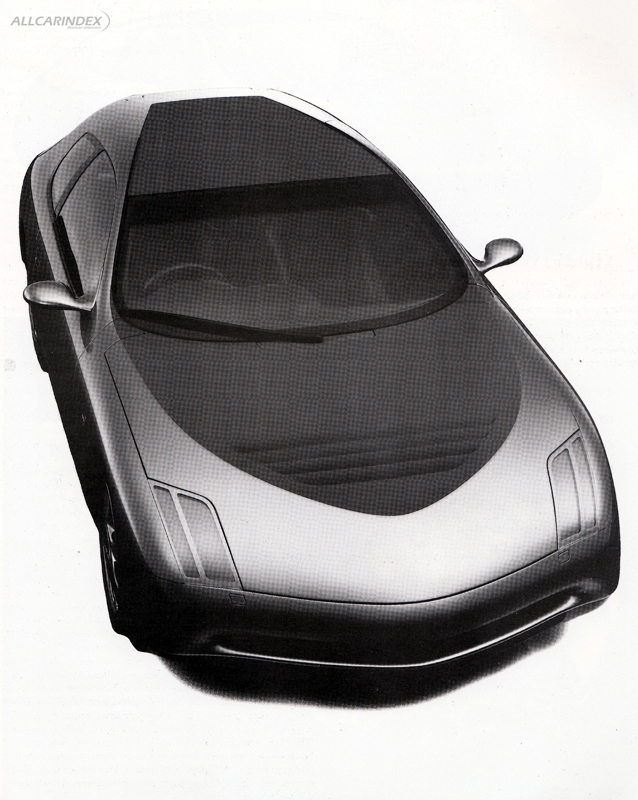
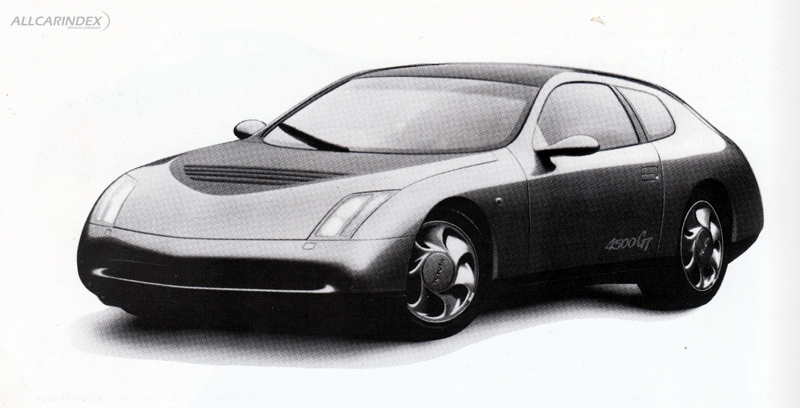
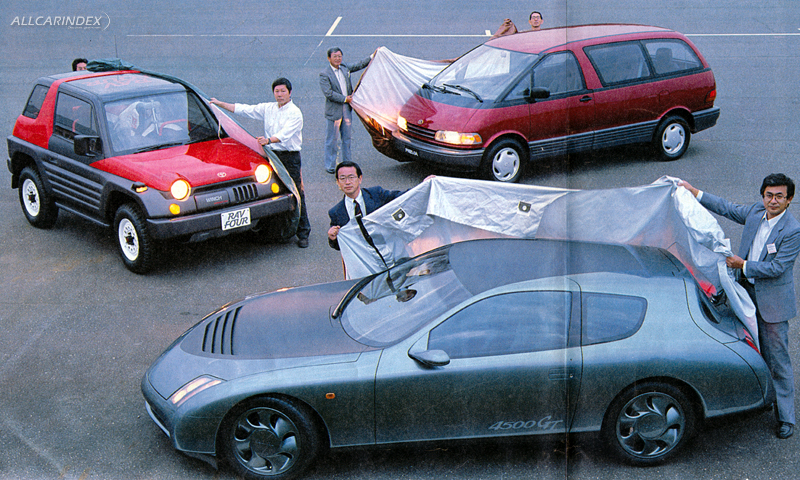
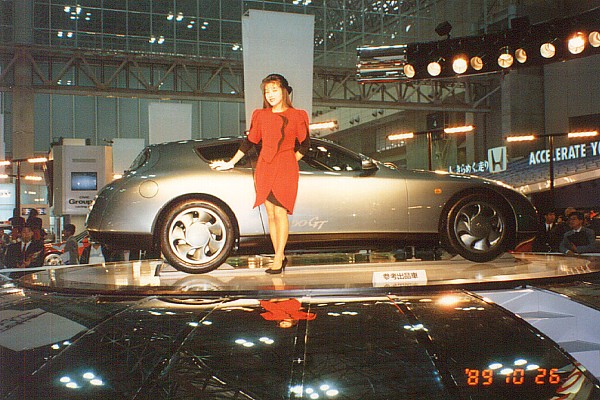
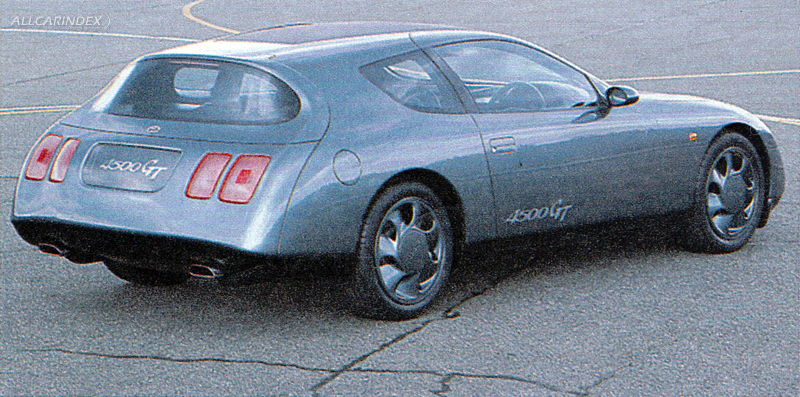
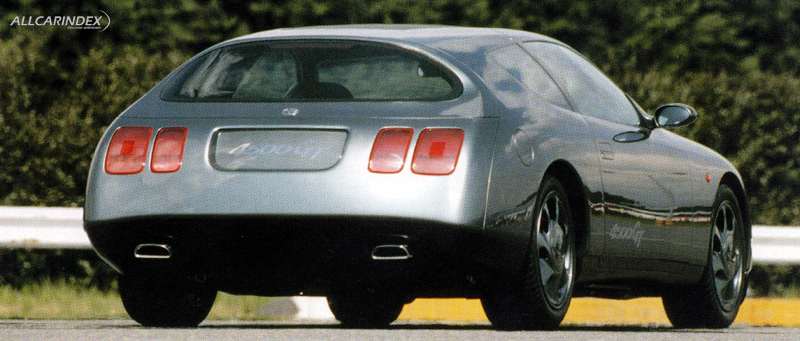
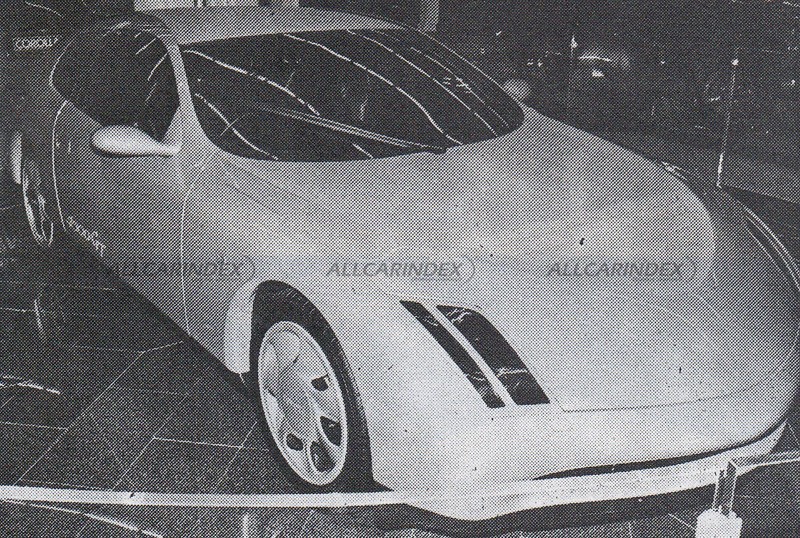
The Toyota 4500 GT was a 2+2-seat high-performance coupe concept that Toyota presented at the Frankfurt International Motor Show. Its debut drew attention both because Toyota chose a European show dominated by rival manufacturers as the setting, and because the styling of the car, described as a look toward the late 1990s, departed sharply from the Italian-influenced lines expected of contemporary supercar rivals from Honda and Mitsubishi.
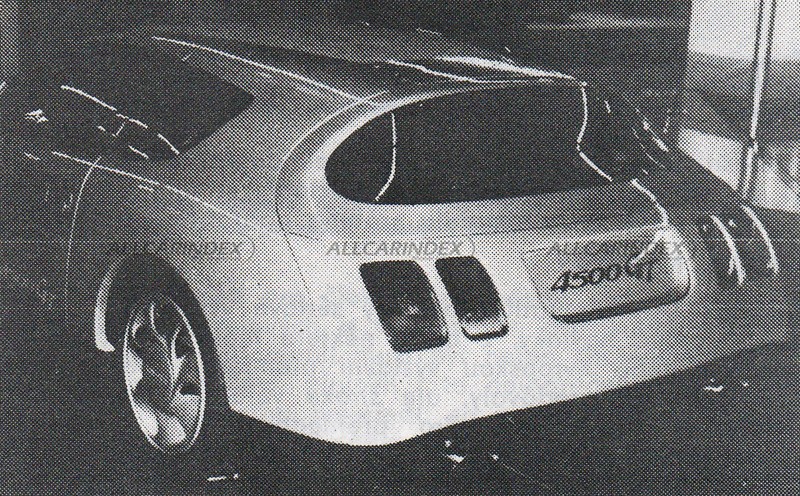
The design brief favored a comfort-oriented coupe with room for two adults, two children, and luggage rather than an extreme, low-slung layout. Toyota developed the shape through hundreds of sketches and more than twenty 1:5 scale models before building three full-size clay models in projectile, fastback, and Group C racing-inspired sporting forms. The projectile shape was chosen for its balance of practicality and high-speed stability, featuring front air flaps and a steeply cut-off tail that used airflow to keep the rear window clean. The body achieved a drag coefficient of 0.29. Construction used composite resins for the fenders and tailgate, and carbon-fiber-reinforced plastic with aramid-fiber honeycomb for the hood, with laser welding and special adhesives making the structure lighter and 20 to 30 percent stiffer than conventional material combinations.
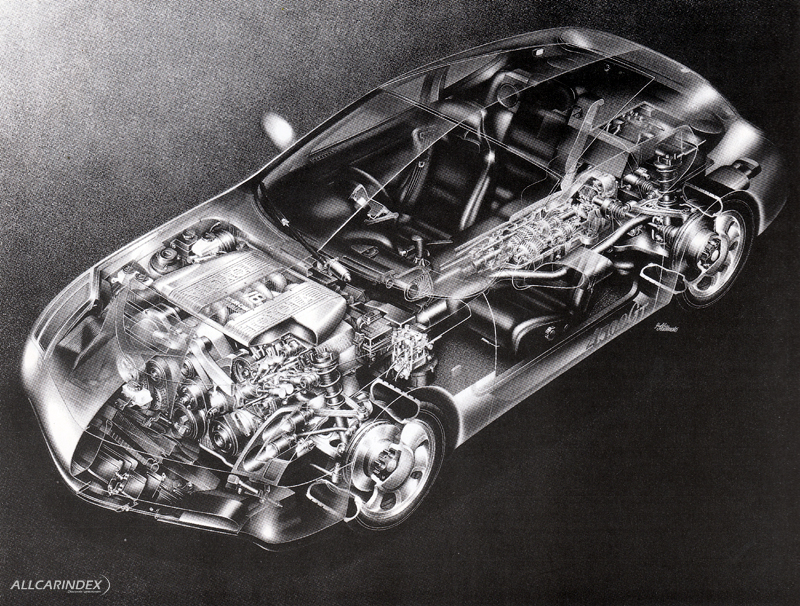
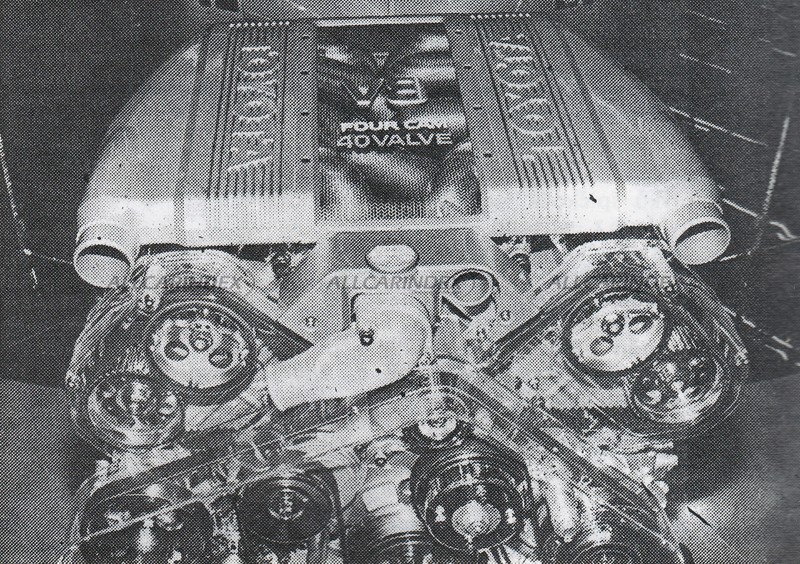
Power came from a 4.5-liter V8 with double overhead camshafts and five valves per cylinder, producing a targeted 300 hp at 6600 rpm and 390 Nm at 4800 rpm, enough for a targeted top speed of 300 km/h. The 90-degree V8 had an aluminum block with a magnesium cylinder head cover and oil pan, separate intake throttles per cylinder bank, equal-length intake pipes, and a shock-absorbing flywheel. Drive went to the rear wheels through a six-speed transaxle gearbox mounted ahead of the rear axle, giving a 50:50 weight distribution, with a Torsen limited-slip differential. The car featured four-wheel steering with a computer-controlled system reacting to steering angle and speed, double wishbone suspension front and rear, and Toyota Electronic Modulated Suspension (TEMS) using piezo sensors to adjust damping. Magnesium wheels carried Dunlop Denloc tires in 235/45 and 255/40 ZR17 sizes, with no spare wheel, ventilated disc brakes on all four corners, and four-channel ABS. Additional features included light-adaptive liquid-crystal windshield and headlight covers, tri-color filtered taillights, seat-integrated seatbelts, dual airbags, and full leather trim.
The 4500 GT measured 4365 mm long, 1830 mm wide, and 1210 mm high, with a 2490 mm wheelbase and a weight of 1450 kg.