
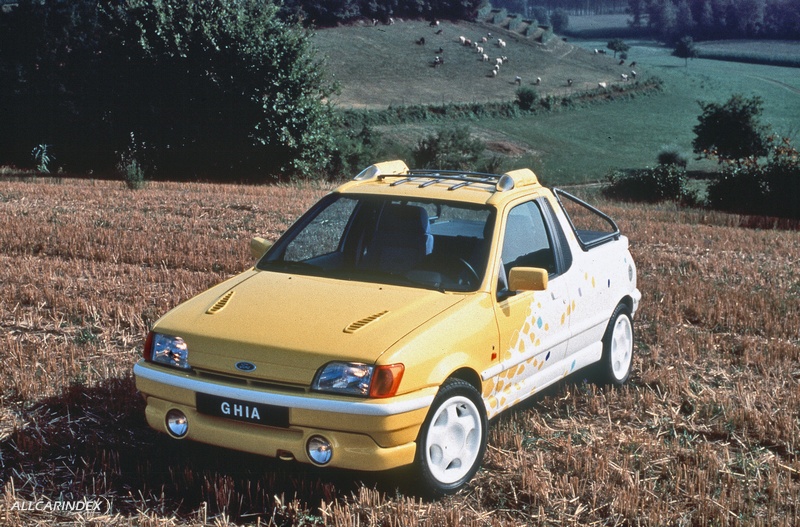
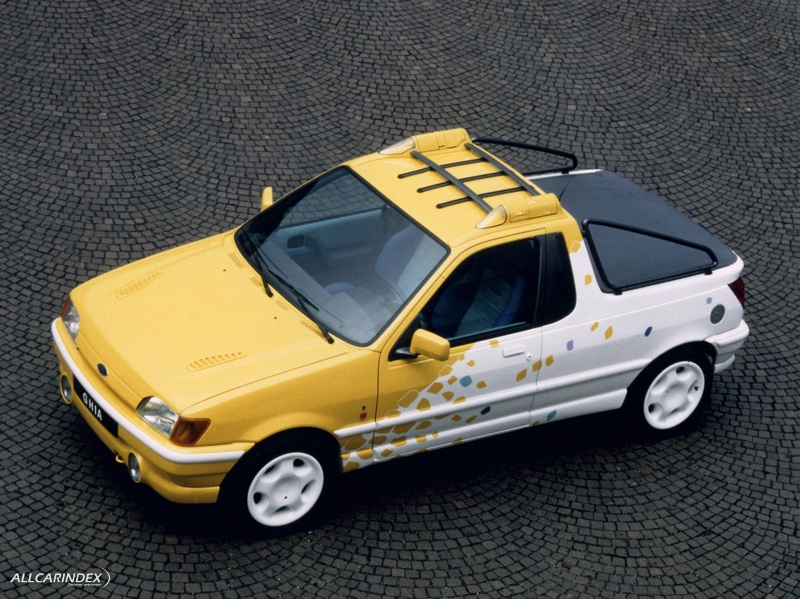
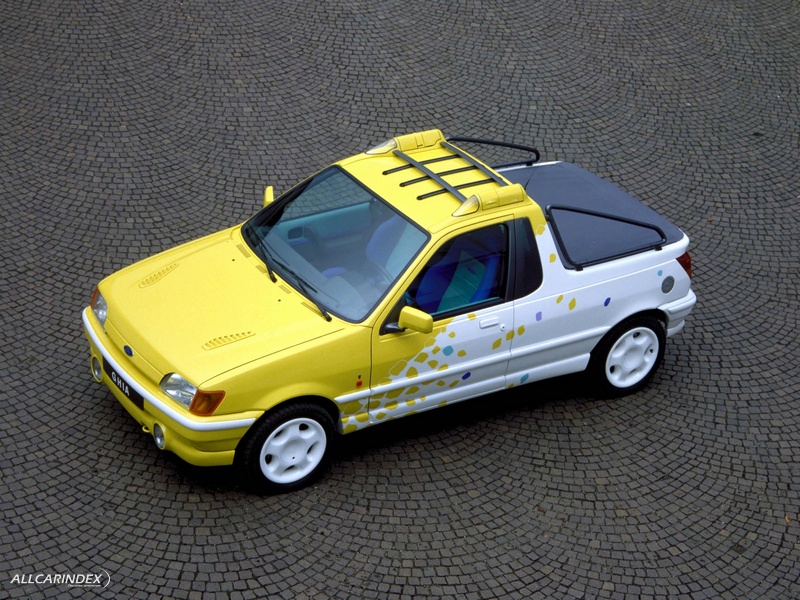
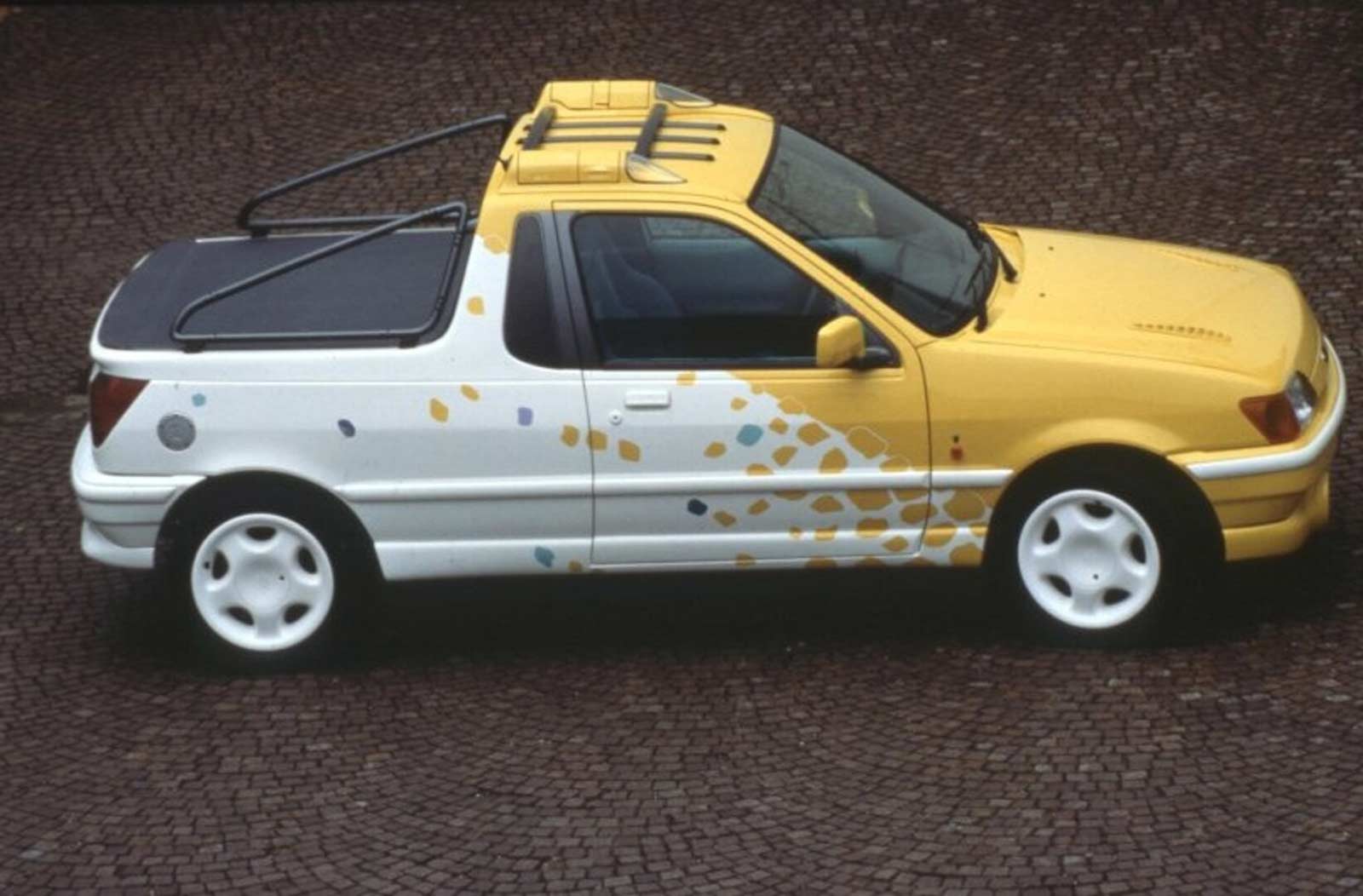
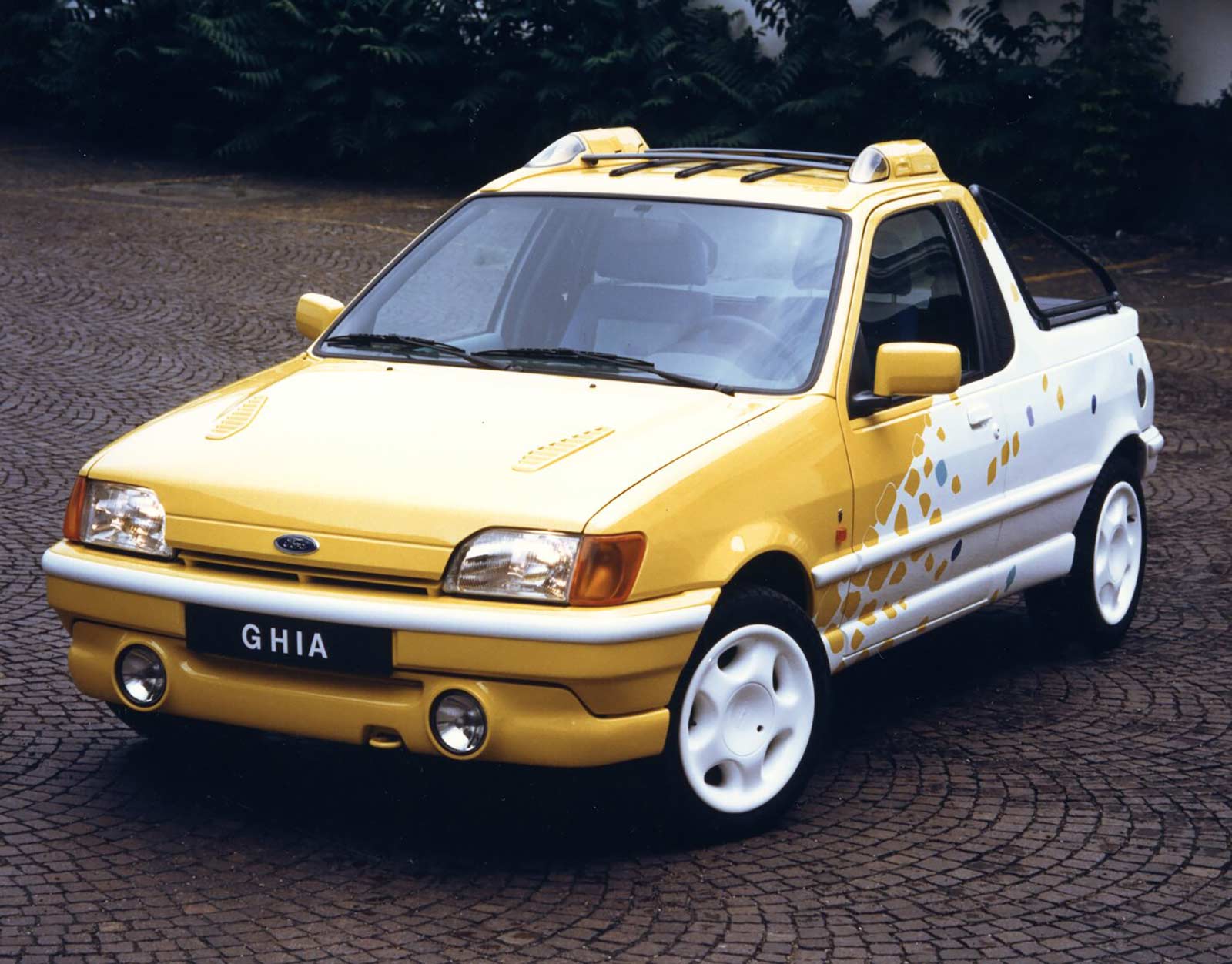
The Ford Fiesta Bebop was a concept vehicle based on the second-generation five-door Ford Fiesta, converted into a colourful pick-up intended as a leisure vehicle. It was shown on the Ford stand at the Frankfurt International Motor Show, held September 14 to 24, 1990. The project was developed jointly by the Ghia Design Studio in Turin and Ford designers at the company's Research and Engineering Centre in Dunton, Essex, under the direction of Graham Symonds, a former British Olympic swimmer who served as Ford's Design Manager responsible for small car programmes. Helmuth Schrader, director of Ford Design in Cologne-Merkenich, commented that the vehicle was aimed at the growing European leisure market, and the name Bebop was chosen to express "the mood and dynamism of a young, modern lifestyle."
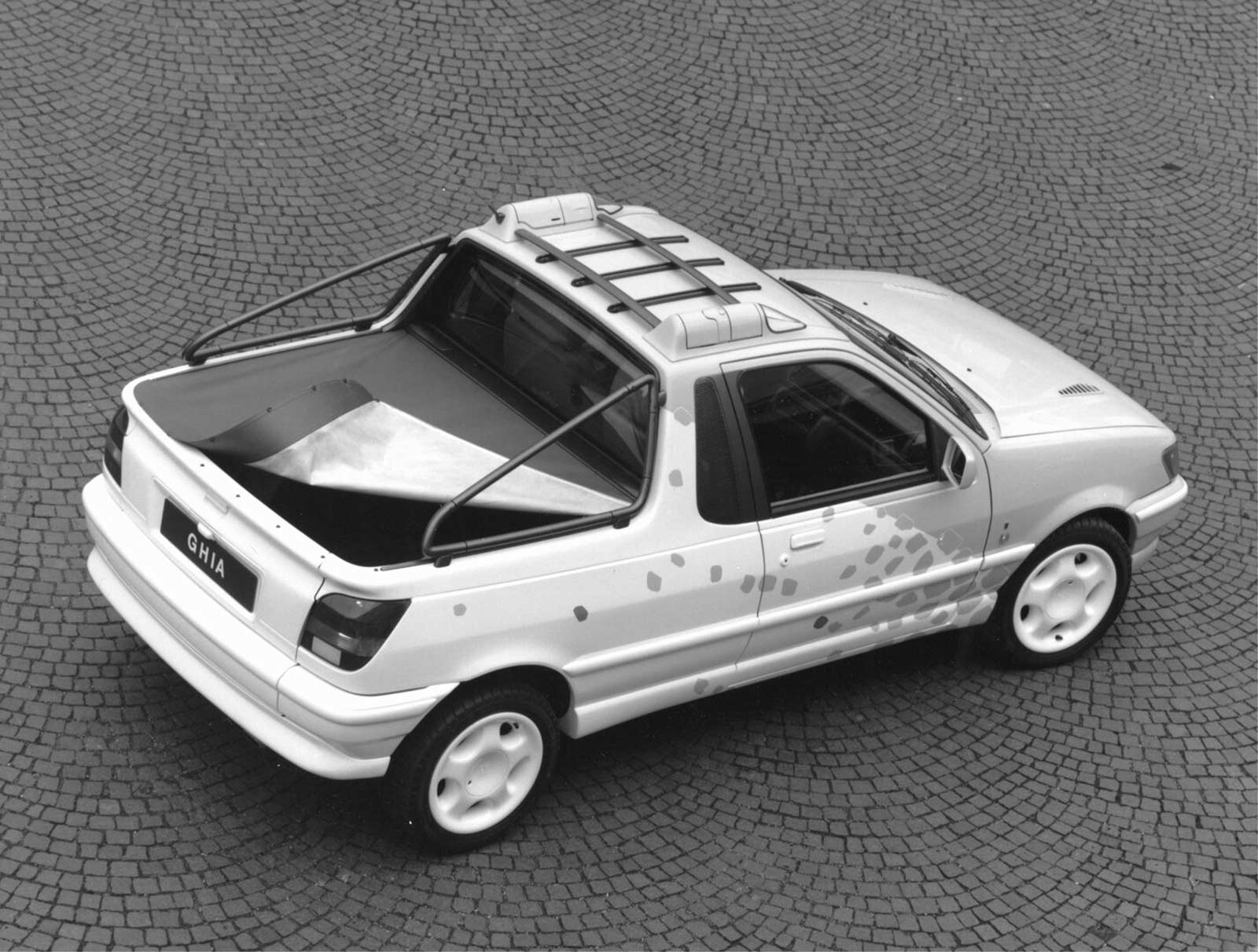
The Bebop was built as a two-door, two-seat pick-up. Its exterior featured a multi-coloured paint scheme graduating from bright yellow at the front to white at the rear, using a cascading rock-and-gravel motif at the transition point, with additional tones of turquoise, blue and violet also mentioned in connection with the design. Special bumpers, side protection panels, RS-style air slits on the bonnet, a quick-release fuel filler cap and 15-inch alloy sports wheels were fitted, with the wheels also credited with providing additional ground clearance. A front spoiler housed twin long-range driving lamps and an extra cooling duct, while the tailgate incorporated a rear spoiler. The interior carried a sporting theme to match the exterior, with deep blue Recaro bucket seats featuring contrasting turquoise inserts and blue-and-yellow Fiesta motifs woven into the upholstery.
The load bed was reinforced and could be extended to a length of 1.5 metres via a fold-flat tailgate, onto which the number plate could be mounted. Removable tubular steel side bars were fitted to the load area, and a large window between the cab and the load bed could be opened, hinged, or removed entirely along with its dividing partition. The rear bulkhead of the vehicle, which incorporated a special load container, could also be detached and left off the car entirely. A tonneau cover could be drawn over the load bed, secured at the rear with press studs and at the sides by electrically operated pressure bars, giving it a high-security closed position. Two removable roof cross rails, an extendable retaining strap, and two aerodynamic roof-mounted lamps were fitted above the cab; one of these lamps could be detached and used separately, connected by a two-metre cable.
The Bebop was powered by a Ford Fiesta 1.8-litre naturally aspirated diesel engine, a four-cylinder unit of 1753 cc producing 60 hp at 4800 rpm and 110 Nm of torque at 2500 rpm, driving through a five-speed transmission. Ford stated that the concept could also have been built with manual or automatic transmissions and with petrol engines ranging from 1.0 to 1.6 litres, though the show car itself used the diesel unit. The vehicle had a wheelbase of 2445 mm, a track of 1390/1385 mm, and overall dimensions of 3740 mm in length, 1610 mm in width and 1325 mm in height in its standard form.
Symonds described the design brief as an exploration of the versatility of the new Fiesta, noting that the five-door configuration was used as the starting point for developing the multi-purpose pick-up aimed at the leisure market. Ford stated that the variant had been engineered so that it could be manufactured in one of the company's Fiesta plants alongside the standard three-door and five-door models and the light van, while adding that customer reaction would determine whether the concept was taken further. The Fiesta Bebop remained a concept vehicle and did not enter production.