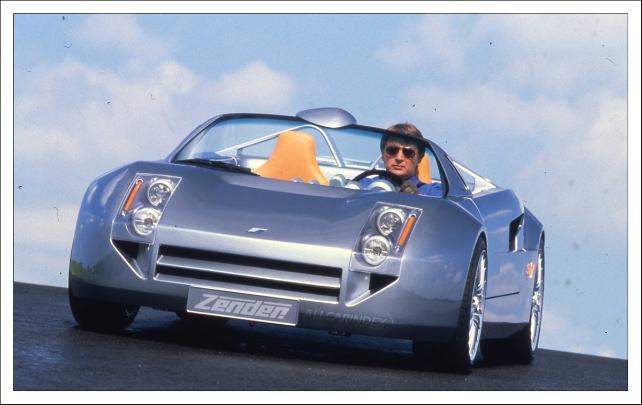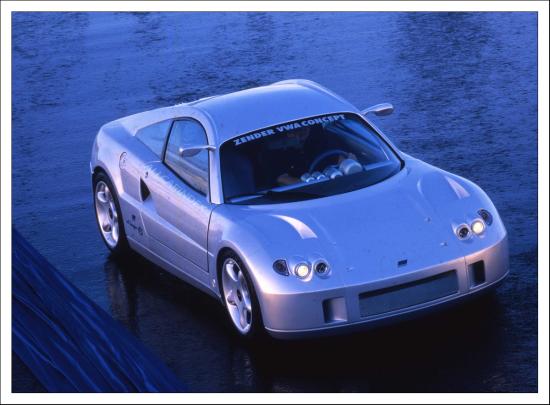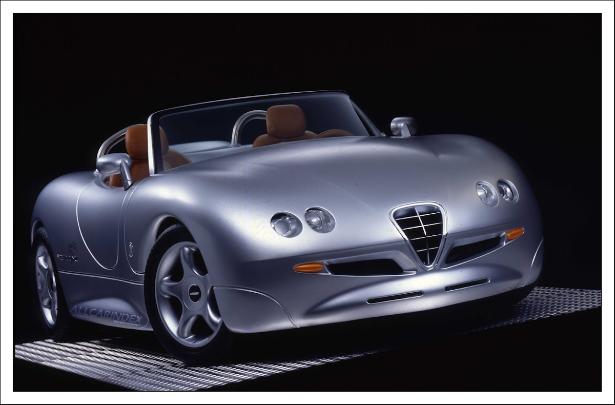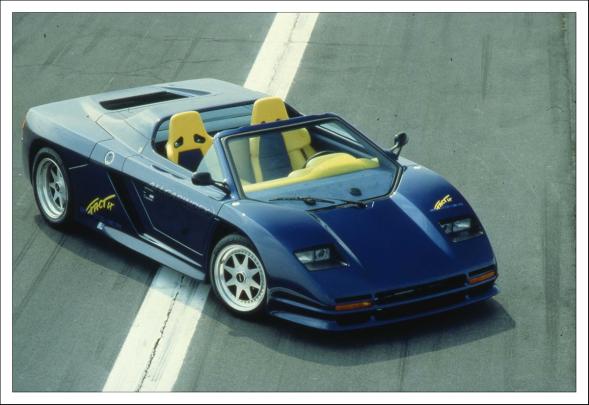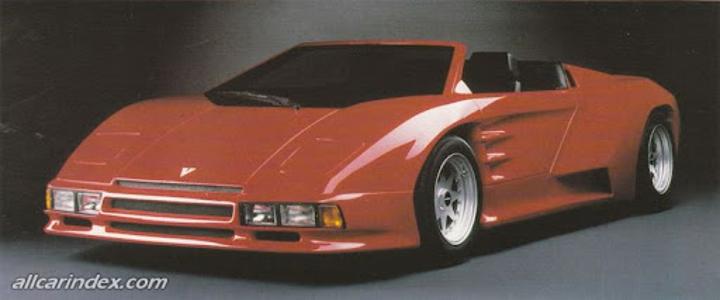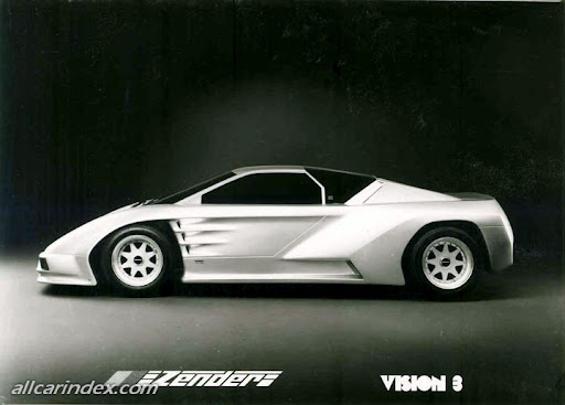

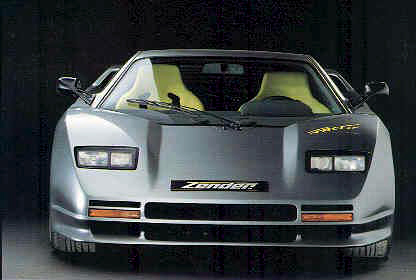
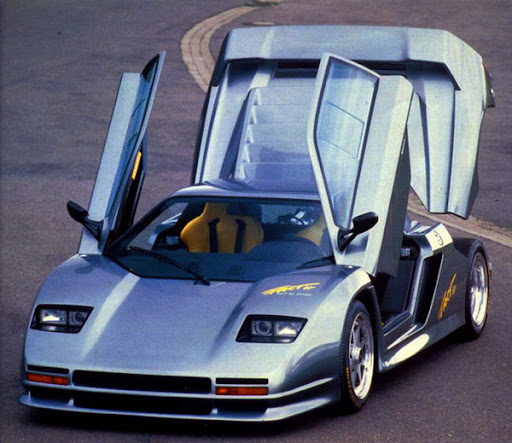
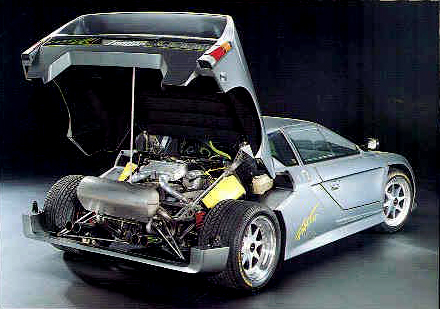
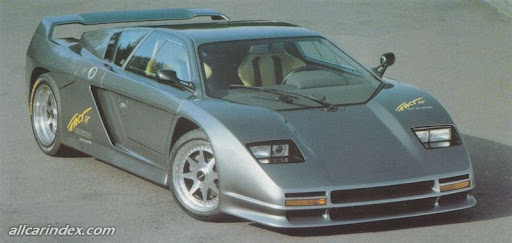
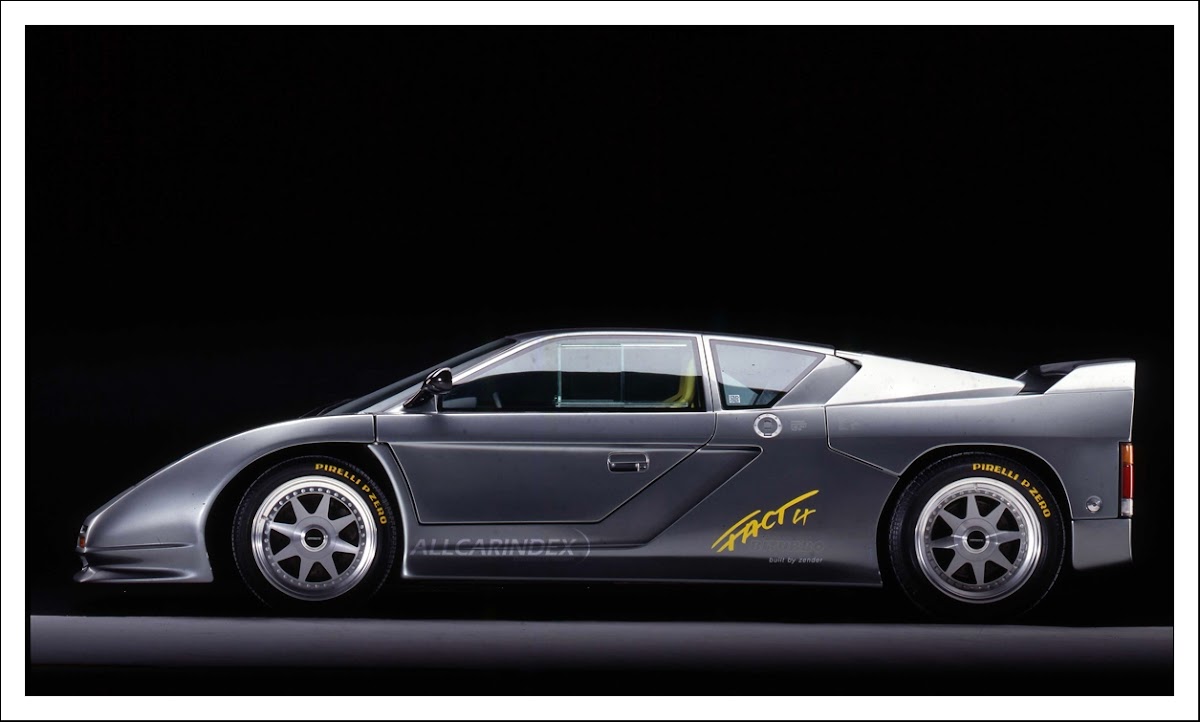
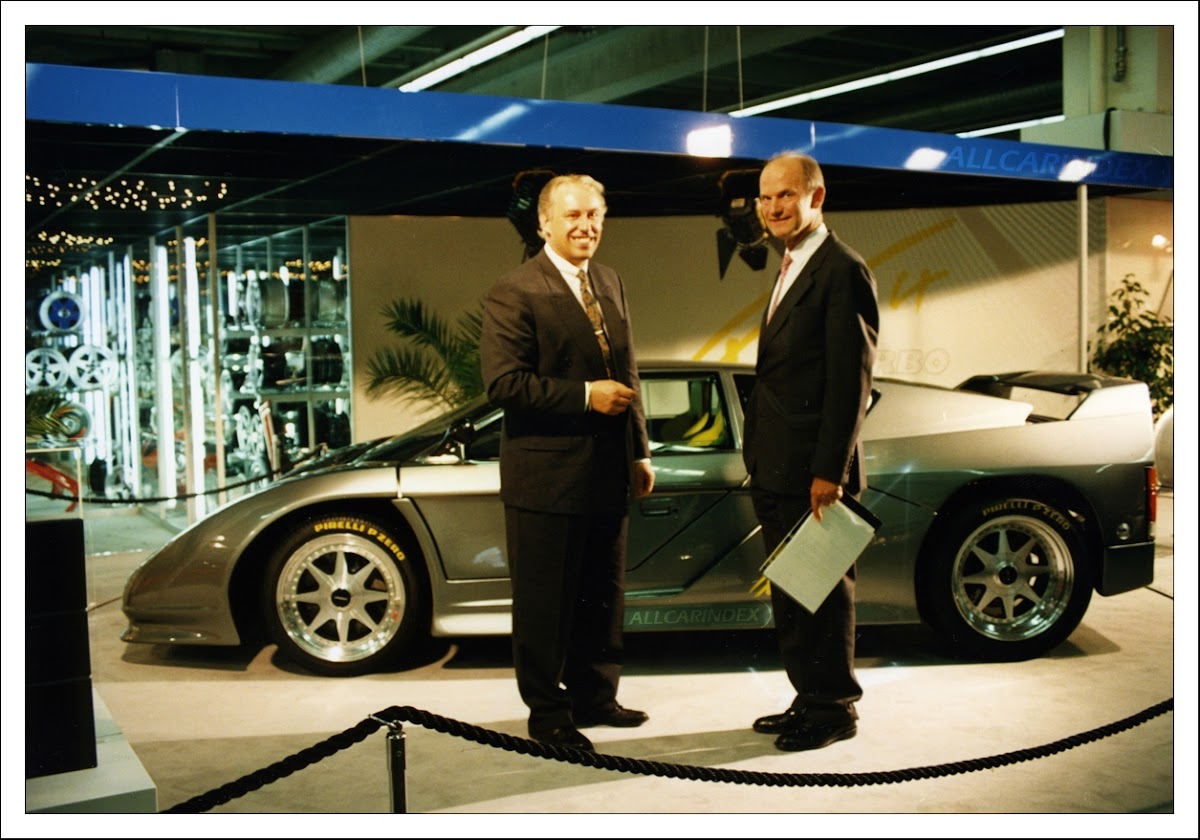
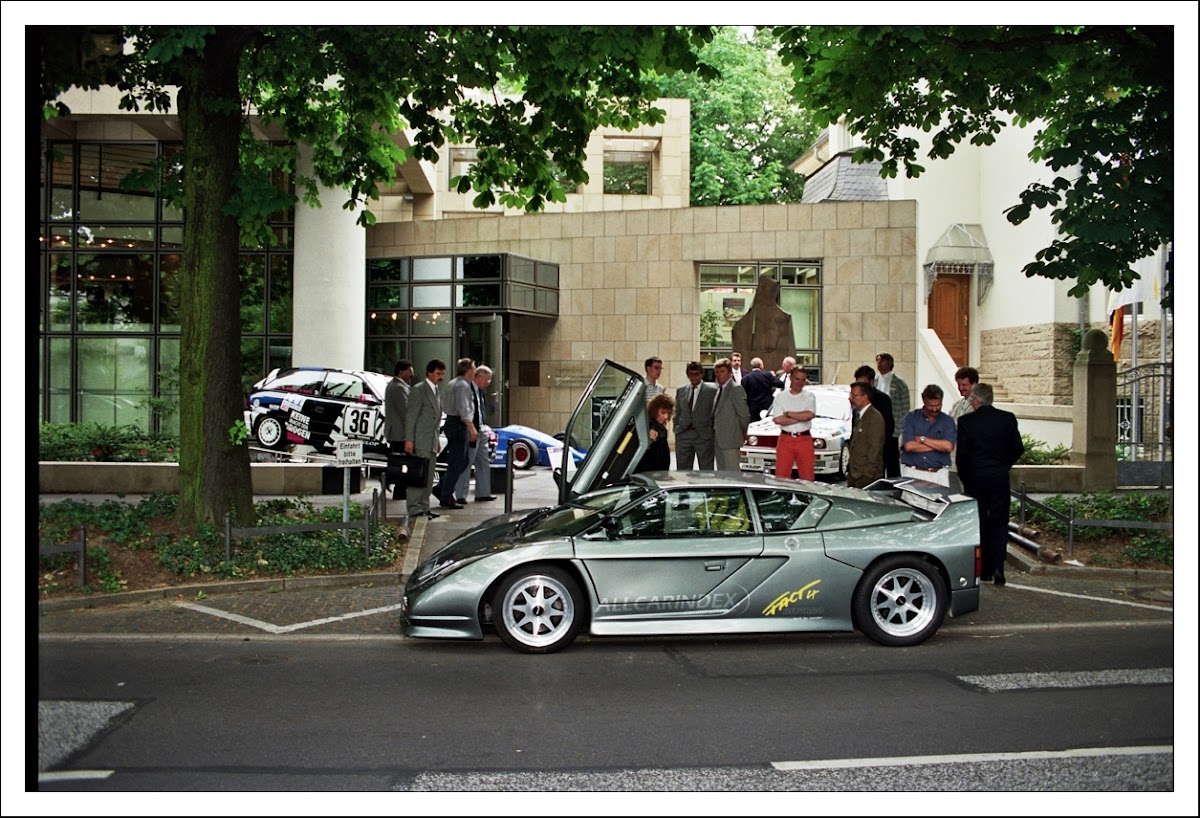
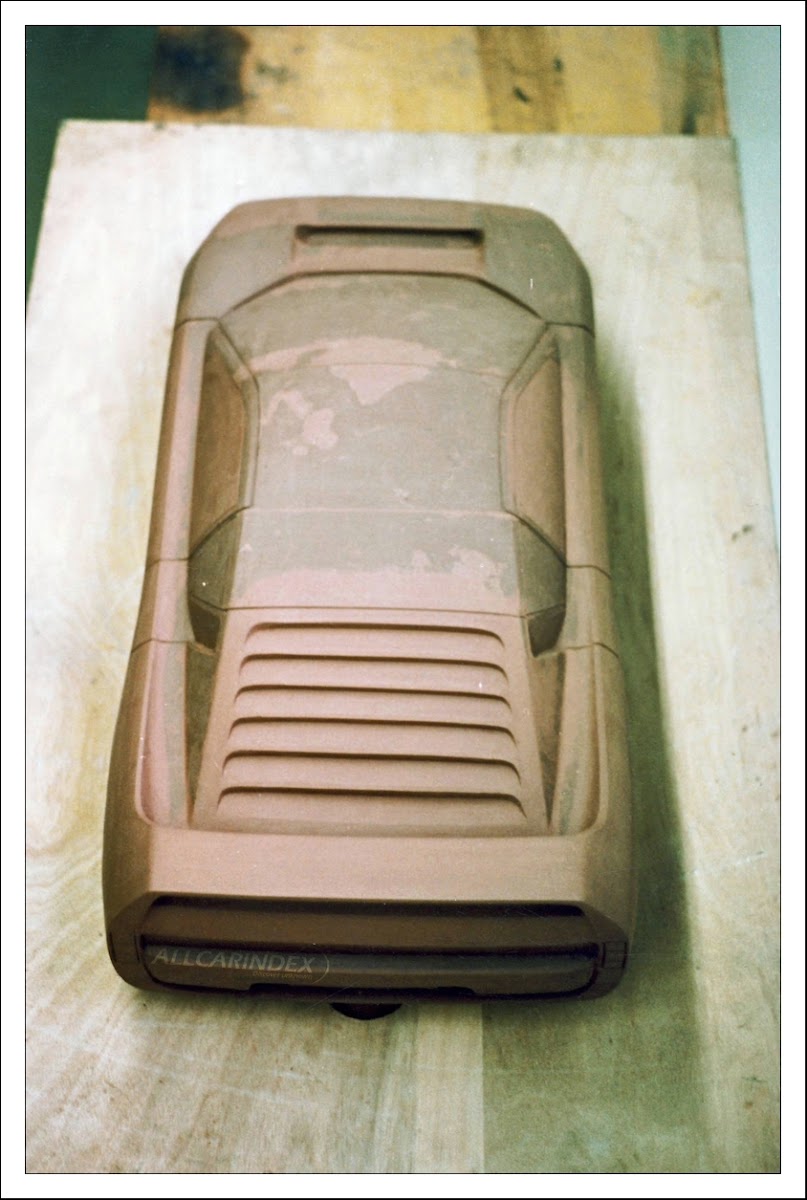
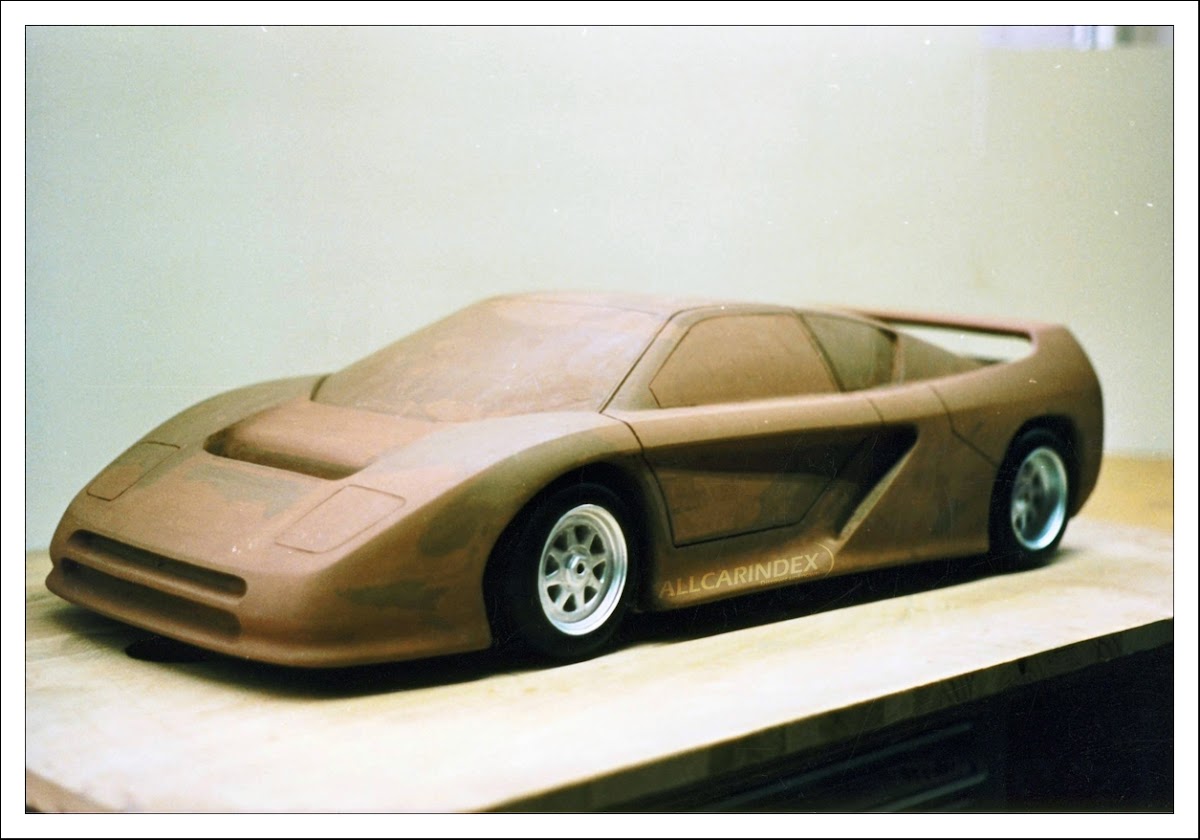
The Zender Fact 4 Biturbo was a mid-engined high-performance coupe built by the German tuning and coachbuilding company Zender, shown two years after its predecessor, the Vision 3. Unlike the Vision 3, which had used a Mercedes V8, the Fact 4 was fitted with a heavily reworked Audi V8. It was conceived purely as a study and demonstration vehicle rather than as a production model, though it was engineered for full roadworthiness.
The car used a carbon-fibre monocoque chassis built in racing style, employing fabric prepregs cured in an autoclave process at pressures of 20 t/m² and temperatures of 135 degrees Celsius. Nomex honeycomb panels made from aramid-fibre paper impregnated with phenolic resin formed the core material, with stainless steel reinforcement around the front suspension mounting points. The drivetrain and rear suspension were integrated into a tubular steel subframe that could be removed as a complete unit, and the chassis structure passed TÜV impulse and material testing.
The longitudinally mounted 3562 cc aluminium Audi V8 was reworked by Audi motor specialist Lehmann of Liechtenstein, who normally prepared engines for Audi's works racing department. Displacement was left unchanged, but two KKK K16 turbochargers with separate intercoolers were added, running up to 0.8 bar boost, while compression was lowered from 10.6:1 to 9.3:1. Output rose to 448 hp at 6500 rpm with 529 Nm of torque at 4000 rpm, managed by a Bosch Motronic MP 1.2 engine management system and a four-outlet exhaust. A manual five-speed gearbox with gate shift replaced the four-speed automatic used in the standard Audi V8, paired with a twin-plate clutch, a 40 percent limited-slip differential and constant-velocity driveshafts.
Suspension used double wishbones front and rear with anti-roll bars and Koni dampers with four-stage electro-hydraulic adjustment operable from the dashboard; the body could also be raised by 3 cm for obstacles such as driveway ramps. Brakes were Girling units with perforated, internally vented discs and four-piston calipers, and the car rode on three-piece Zender alloy wheels with Pirelli Zero tyres in 245/40 and 335/35 ZR17 sizes.
Designed by Günter Zillner, the body used lightweight plastic construction, including forward-opening dihedral doors weighing just 3 kg each in raw form and a rear engine cover weighing 12 kg unfinished; the complete raw carbon/aramid body weighed 55 kg. Seats made of carbon/aramid weighed 4.5 kg each. The car measured 408 cm long, 200 cm wide and 112 cm high, with a 250 cm wheelbase, front/rear track of 161/165 cm, and a total weight of 1100 kg. Performance figures included 0-100 km/h in 4.3 seconds and a top speed exceeding 300 km/h. Zender ultimately decided against small-series production due to the capacity expansion, staffing, and financial risk it would have entailed for a mid-sized company.