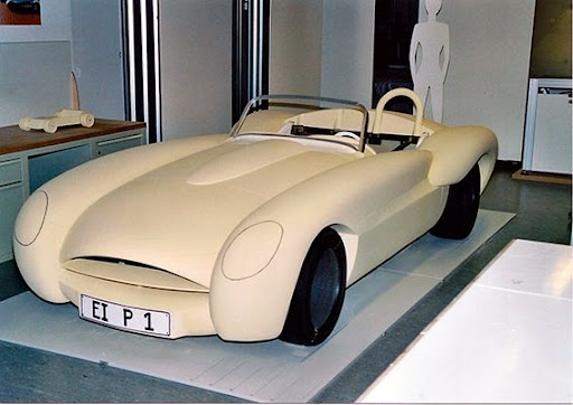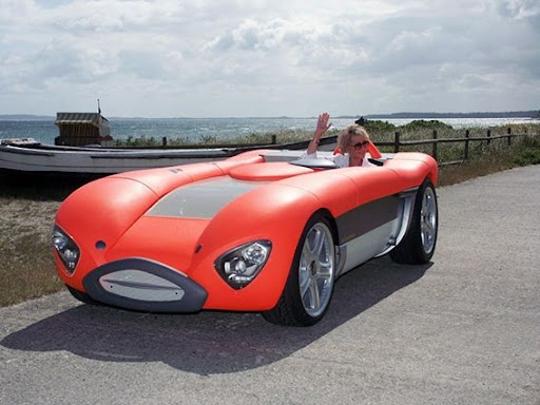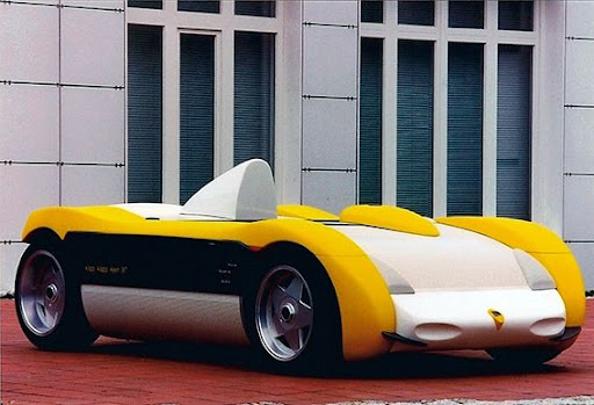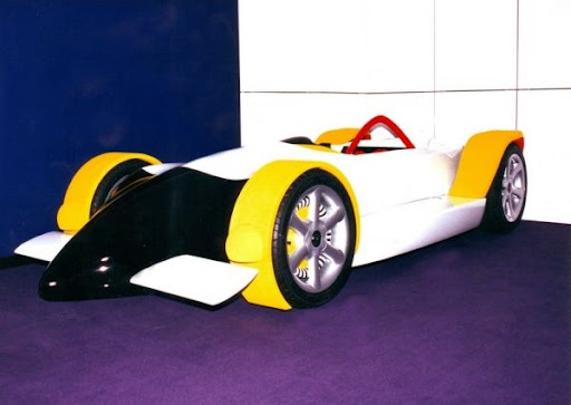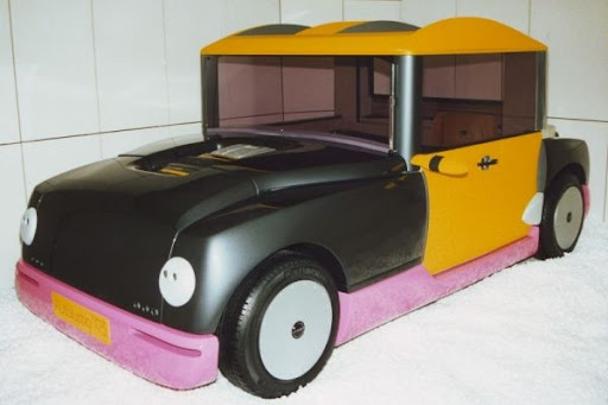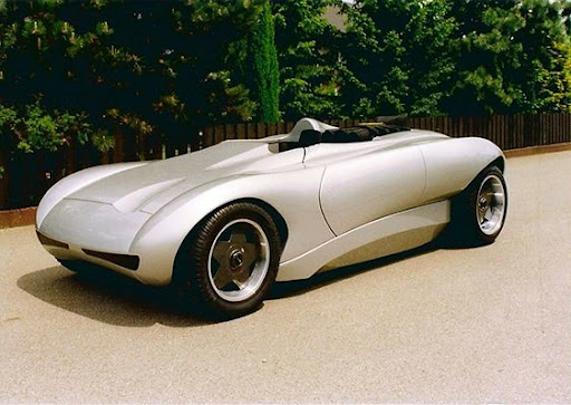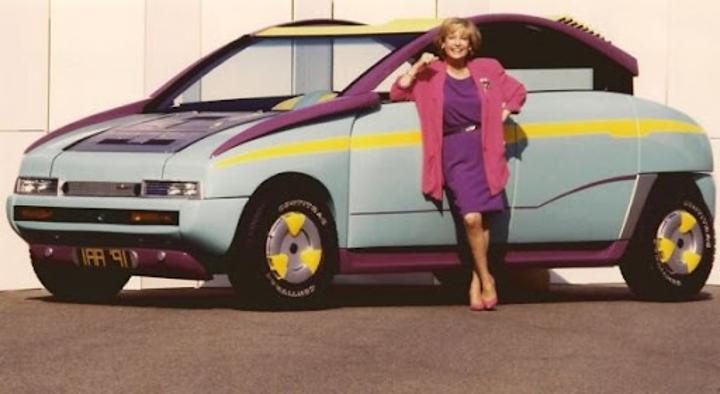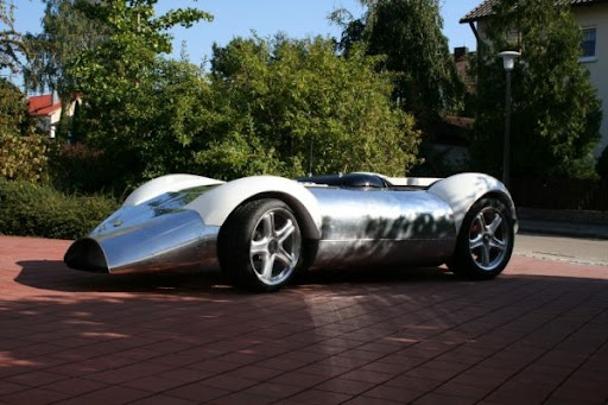

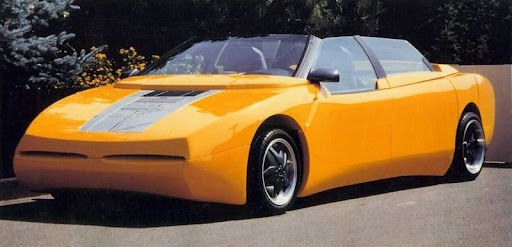
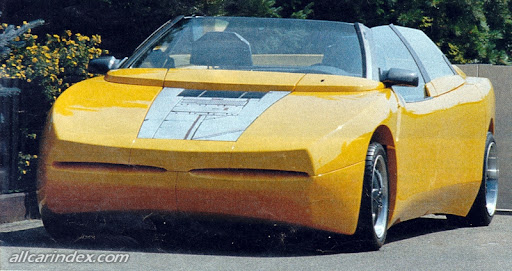
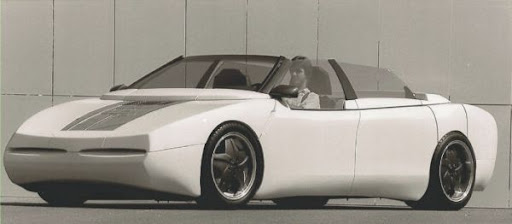
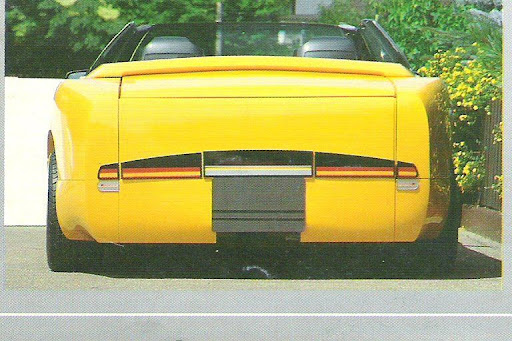
Die Limousine '89 was a design study created jointly by a group of German automotive suppliers, coordinated with exterior design work carried out by the Pollmann design studio in Böhmfeld near Ingolstadt. It was shown at the Internationale Automobil-Ausstellung (IAA), displayed in an upper-level corner of the show rather than a prominent position. Despite its name, the project was actually built as a four-door cabriolet mock-up, conceived primarily to demonstrate technical and structural ideas for a future upper-class car. No fewer than 16 named supplier companies contributed systems and components to the concept.
The car measured 510 cm in length and 205 cm in width, with a wheelbase of 312 cm, making it a notably large vehicle for its type. Its bodywork used pliable plastic material, supplied by Gebr. Happich GmbH, for the door contours that ran down toward the wheels for aerodynamic effect, as well as for the integrated front and rear aprons and the soft-top cover; these plastic elements were colour-matched to the rigid body panels using paint technology from Herberts. It rode on Continental Sport Contact tyres sized 255/40 ZR 17, mounted on Borbet light-alloy wheels of 8.5 and 10 inches width.
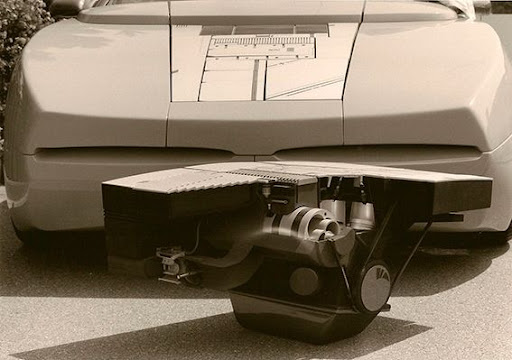
A distinctive feature was an externally visible engine, styled by Pierburg so that its upper contour matched the line of the car's front end, eliminating the need for an opening bonnet. The engine concept was a 3-litre two-stroke unit developing around 300 hp, feeding a electronically controlled four-speed automatic gearbox driving the front wheels; Pierburg confirmed this engine was imaginary rather than a real development, though associated technology, such as a high-efficiency rotary-piston supercharger doubling as a rotary valve for gas exchange, an Ecojet-R direct injection system, elimination of crankcase scavenging lubrication, air-mass-flow-based mixture preparation, an electronic throttle housing and a three-way catalytic converter, was described as genuine engineering work. A waterproof, easy-to-fit ignition strip with electronics from Beru allowed all six spark plugs to be contacted in one motion.
Other features included an active chassis from Teves that adapted to conditions and lowered the body at speed, inboard-mounted disc brakes at the front enabling a 17-inch wheel, an automatically deploying rollover bar behind the front seats (also from Teves) that extended in 0.3 seconds, a through-lit instrument display from MotoMeter, reprogrammable centre-console switch labelling from Kirsten, an asymmetric leather steering wheel from Petri with an integrated airbag pad, seat memory functions from Teves, an integrated automatic three-point/harness combination belt system from Schroth, a parking aid from In.pro, a 2-metre ski hatch in the floor made possible by front-wheel drive, a separate document flap above the rear wheel arch, foldable wood-and-carpet composite load floors from Schabmüller, a communications unit from Grundig combining radio, CD, cassette, car phone and fax, diversity antennas integrated into the A-pillars by Hirschmann, and double-glazed side windows from Sekurit intended to reduce sun glare and cabin noise.