
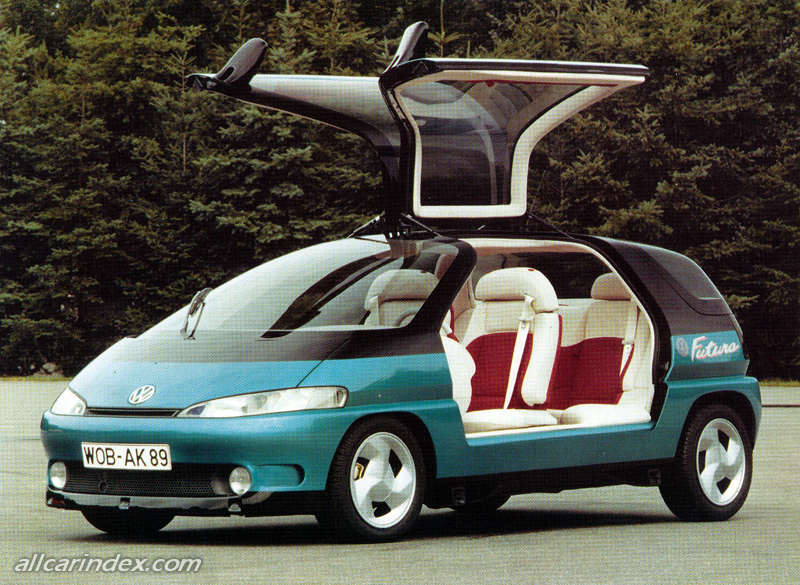
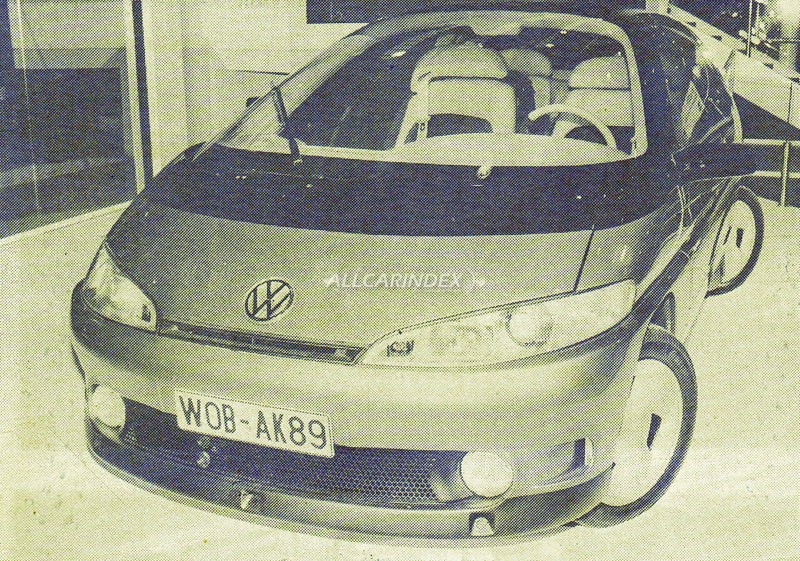
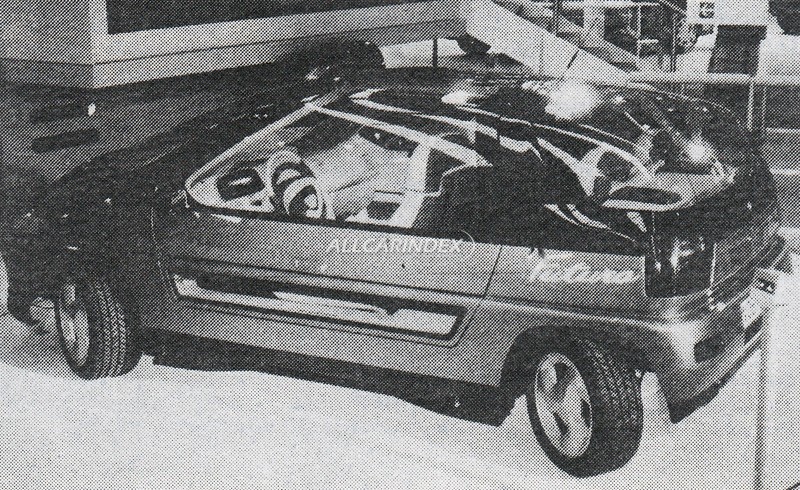
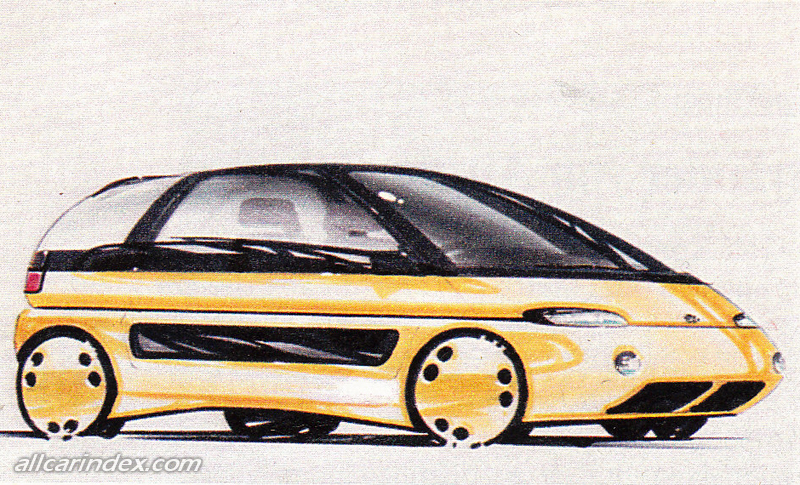
The Volkswagen IRVW Futura was a concept car built by Volkswagen under its Integrated Research Volkswagen program, a designation used to signal that the company's full research and development capacity had been applied to the project. It was presented as a one-volume ("one-box") three-door hatchback-estate with 2+2 seating, styled with an appearance the maker itself described as pursuing "a new aesthetic," and which recalled the 1986 VW Scooter concept without directly resembling it. The car was never intended for production and remained a research study.
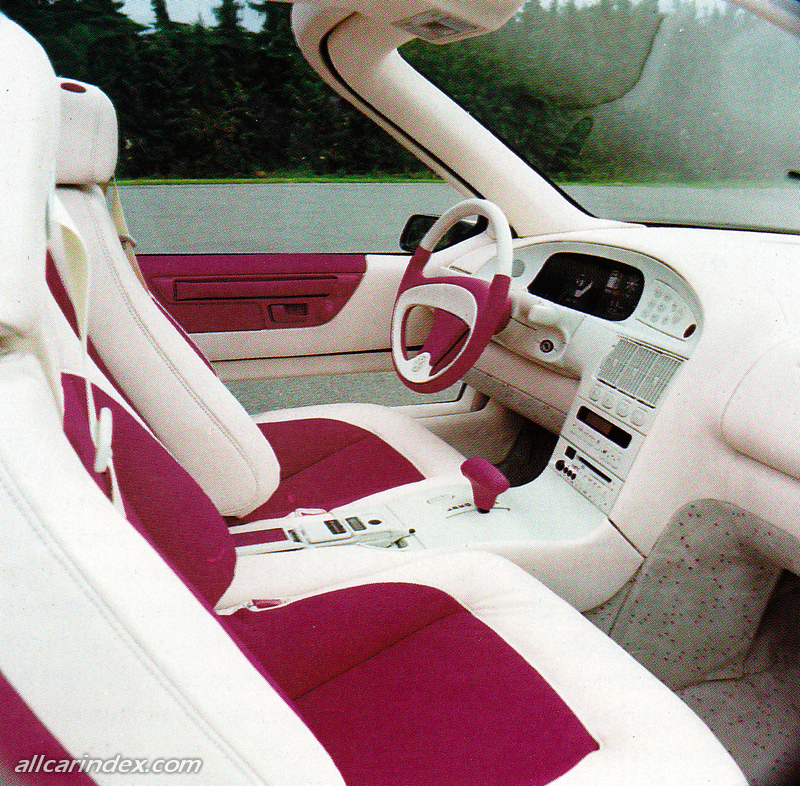
Its all-steel body was shaped for aerodynamic efficiency, achieving a drag coefficient of 0.28. The bonnet and windscreen ran in a single line, the centrally wiped windscreen was spherically curved, and the heavily glazed, rounded tailgate narrowed toward the top. A domed glasshouse covered the passenger compartment, incorporating roof-hinged gullwing doors whose lower sections retracted into the sills when opened, similar in concept to the BMW Z1, giving a lowered entry height typical of gullwing designs. To limit interior heat buildup from the glass canopy, the car used holographic heat-protective glazing that stayed transparent from the driver's viewpoint while filtering light entering from other angles, combined with infrared-damping green glazing that together cut heat radiation by more than 60 percent. The doors and rear glazing could be removed to convert the Futura into an open "leisure" vehicle with rollover protection. The colorful interior included a right-hand rear seat that could be converted into a child safety seat.
Mechanically, the Futura used a 1715 cc four-cylinder petrol engine with direct injection and a mechanical G-charger, producing 82 hp (60 kW) at 4200 rpm and 155 Nm at 2500 rpm, paired with a four-speed automatic transmission of the type later introduced in the Passat. An evaporative cooling system removed the need for a water pump and cooling fan while speeding warm-up, and combined with an oxidation catalyst and lean-running operation to reduce emissions; a two-speed alternator further improved efficiency. Four-wheel steering used Golf front axles at both ends, the rear one rotated 180 degrees, electronically controlled via yaw and speed sensors, and was also developed into an automatic parking system that maneuvered the car into a space using electronic throttle, the automatic transmission, and distance sensors. Braking used an electronic anti-lock system (EBS) with separate front and shared rear-wheel control, employing plunger valves for lower cost. The dashboard featured two active-matrix color LCD screens, an infrared laser distance sensor doubling as a collision warning display, and a noise-cancellation system using cabin microphones to counter engine noise. Dimensions included a wheelbase of 247 cm, track widths of 143/144 cm, and overall length, width and height of 378/167.5/142.5 cm.