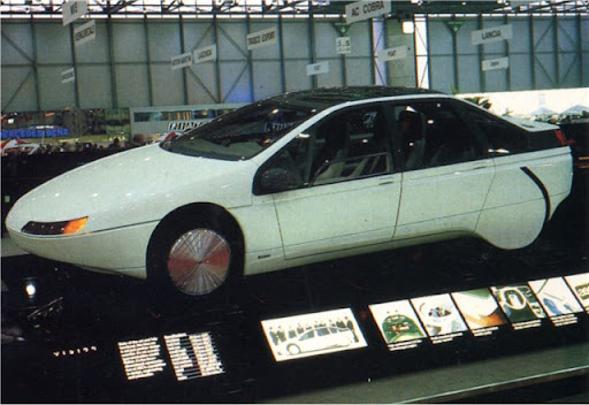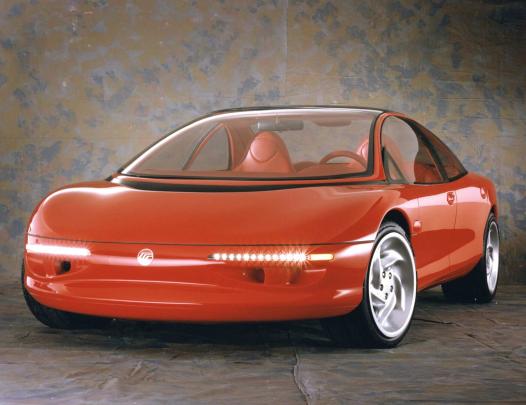

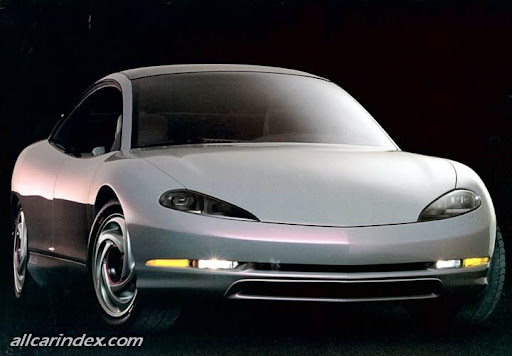
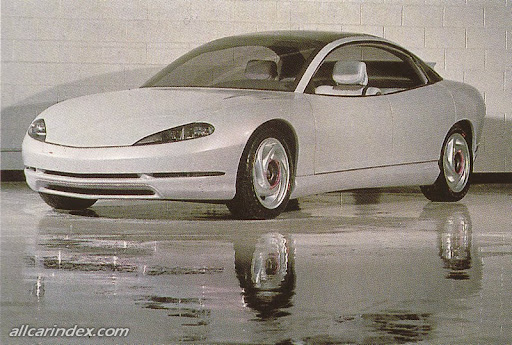
The Vision II was a concept car built by ASC Incorporated of the United States, presented to mark the company's 25th anniversary. By the time of its debut, ASC was supplying accessory products and development services to 21 automakers worldwide, and it exhibited 29 cars at the Detroit show to which it had contributed. The company's specialty remained glass roofs and cabriolet conversions, and one of its newer clients was Porsche, for which ASC had helped develop the 944 Cabriolet. That connection was reflected in the Vision II itself, which used the 2.5-liter, 4-cylinder engine and five-speed gearbox from the Porsche 944 Turbo, producing 223 hp at 6000 rpm. Its creators described the concept as a reflection of what they expected from the automotive world in the further reaches of the 1990s: performance-oriented, versatile vehicles suited to genuine travel enjoyment.
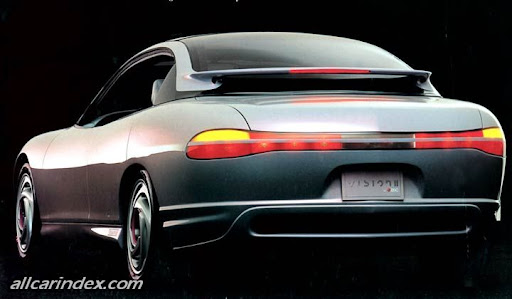
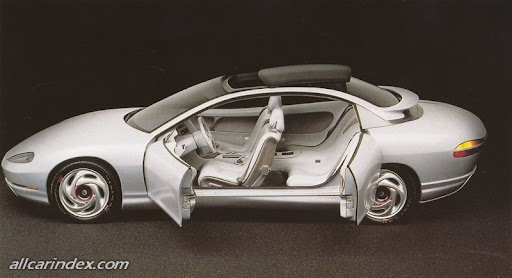
Conceived as a practical, roomy family sedan, the Vision II had a steel body built as a four-door design without a center pillar, with rear doors that opened rearward in the manner of older Lancia or Lincoln models, allowing especially easy entry and exit when both doors on one side were open. The styling was modern and understated, with a rounded front featuring teardrop-shaped plexiglass covers for small headlamps and low-set air intakes, plus a windshield-to-roofline arc that continued the car's smooth surfacing. Its large glass sliding roof, bordered only by the upper edges of the doors, slid back over the rear roof section when opened, similar in principle to sunroofs used on the Honda CRX or Peugeot 205, but admitting considerably more air and rising above the roofline like a wing when open; a matching wing element was fitted at the base of the rear window. The tail featured two slim continuous light bands and an aerodynamic air outlet beneath the raised rear end.
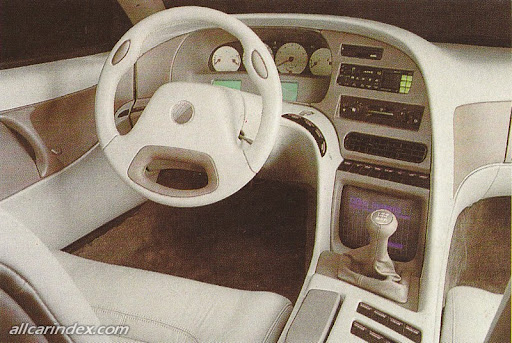
The windshield, roof, and rear window each had individually switchable integrated LCD dimming for glare and heat protection. The cockpit used round white-faced instruments, with two small monitors beneath them linked to rear-mounted cameras that replaced conventional door mirrors. Additional electronics included an advanced Alpine audio system, a navigation display mounted ahead of the gear selector, a telephone, a computer with word processing and printer, a fax machine, and a stock market information system. The two-tone leather interior extended to the steering wheel, with seats trimmed in leather that shimmered in the car's body color, storage compartments under the rear seats, and video monitors with individual headphones for rear passengers. Equipment also included Goodyear tires marked "Vision II" (255/40 VR 17), front airbags, and a compass. The car measured 4890 mm long, 1830 mm wide, and 1270 mm high, on a 2790 mm wheelbase, and weighed 1515 kg.