
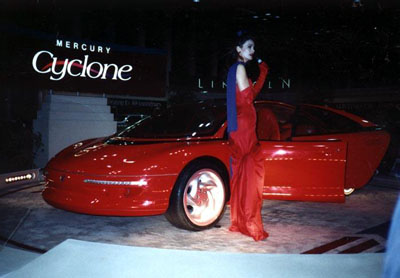
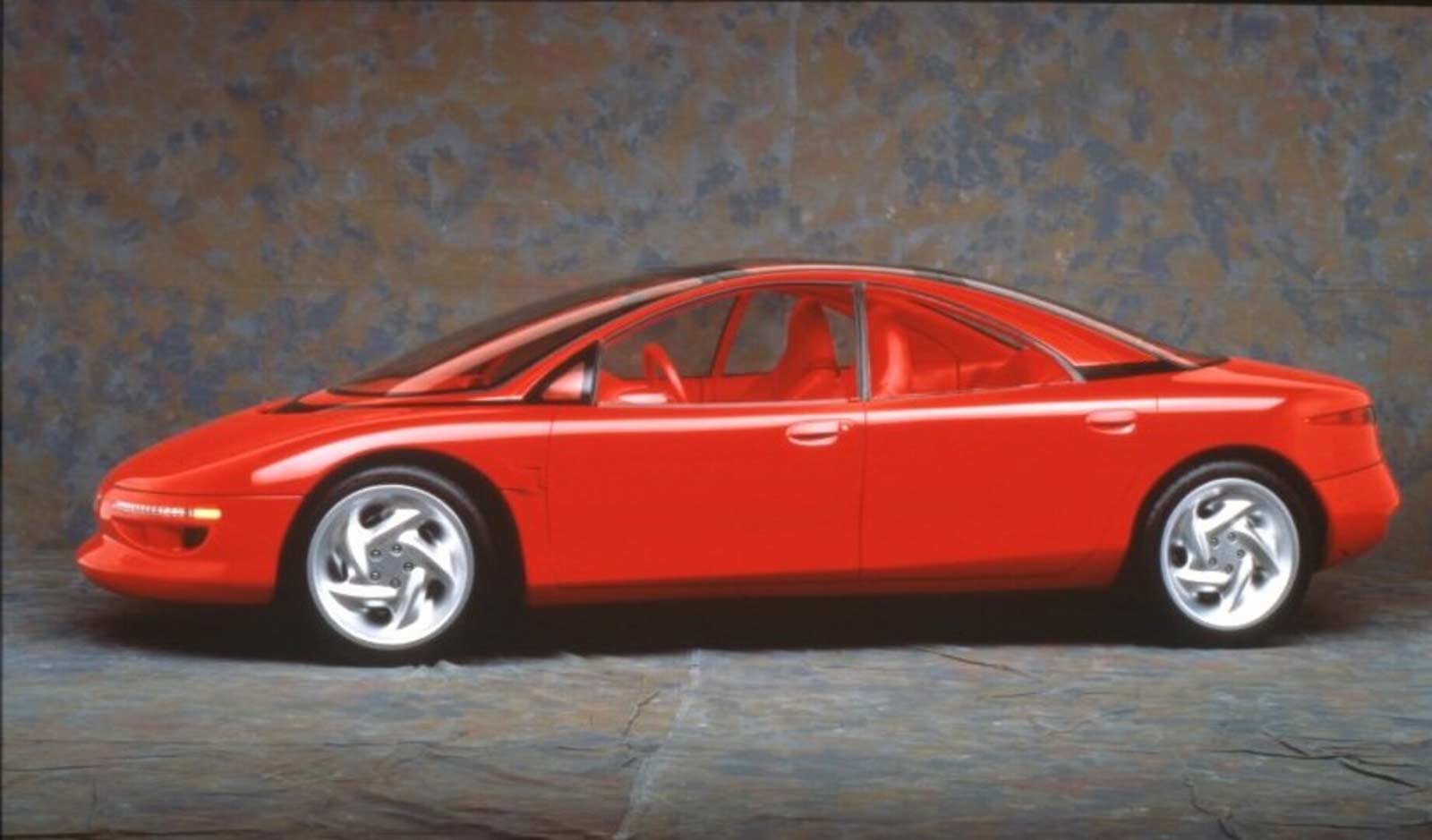
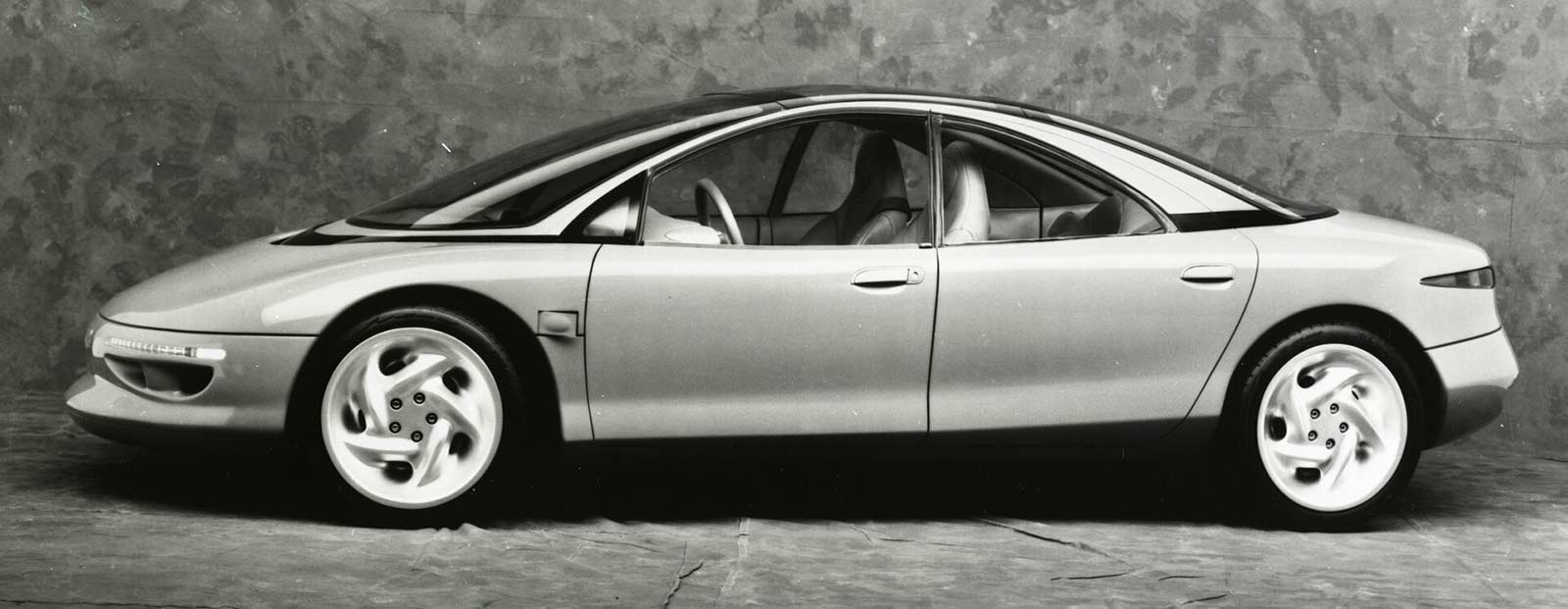
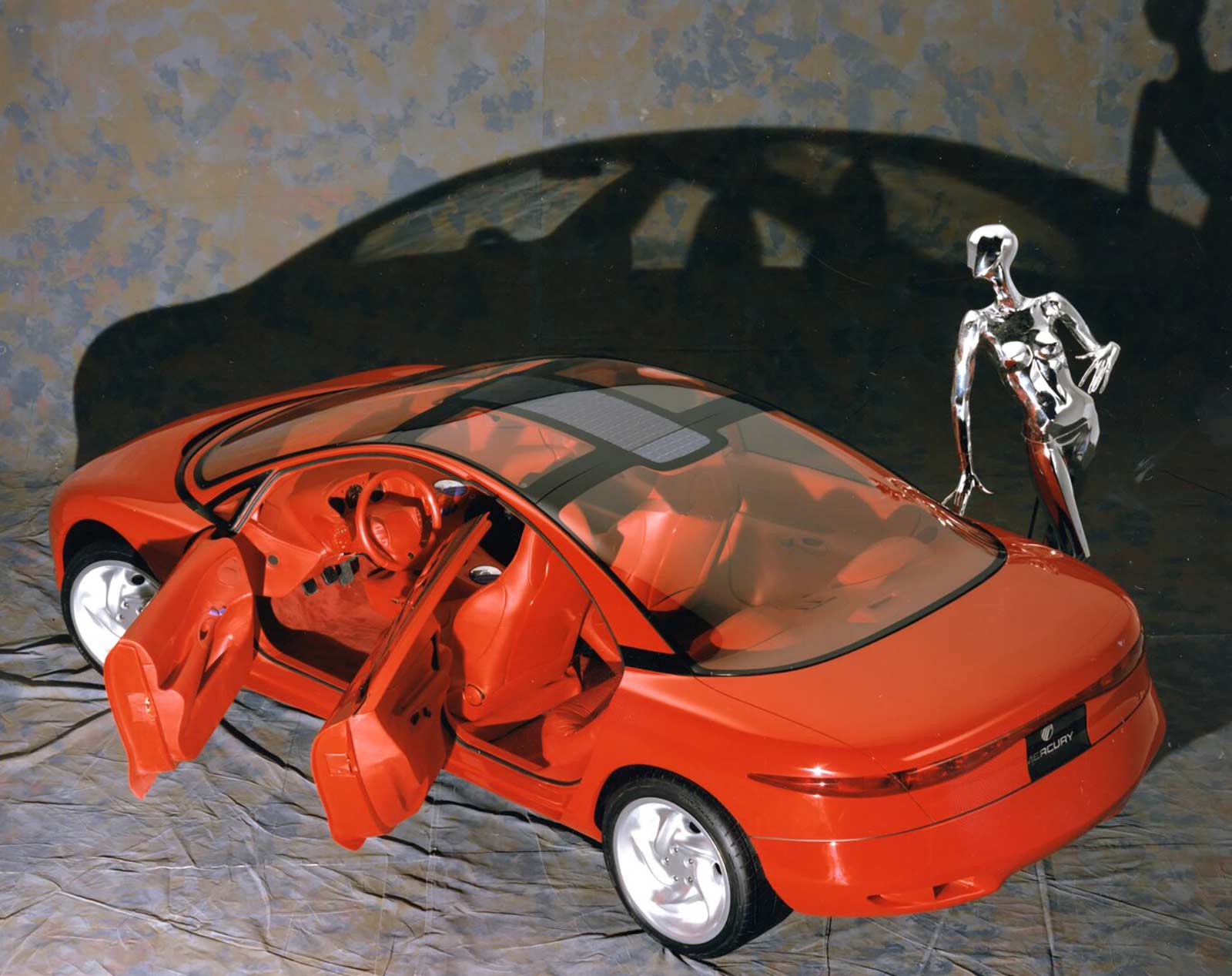
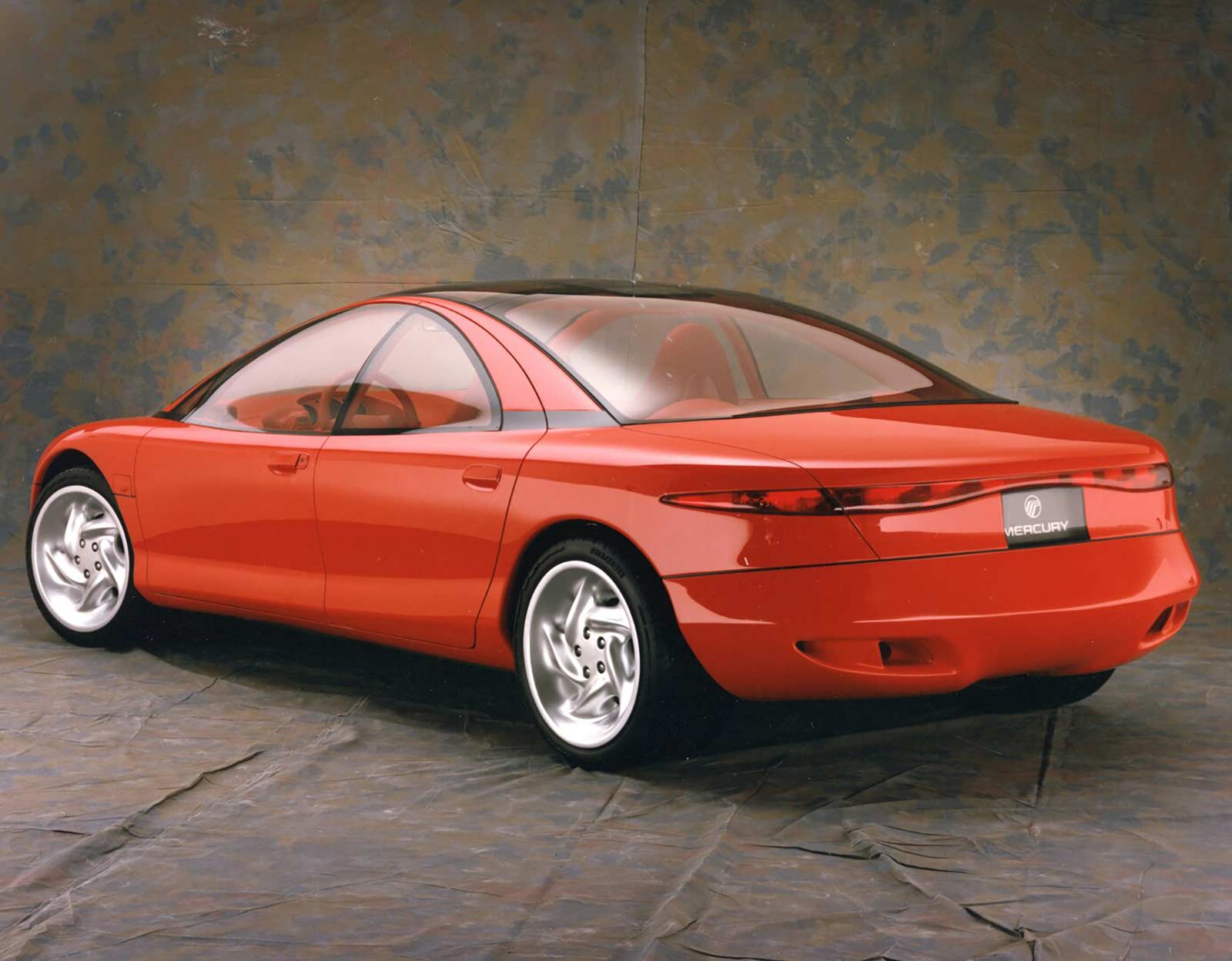
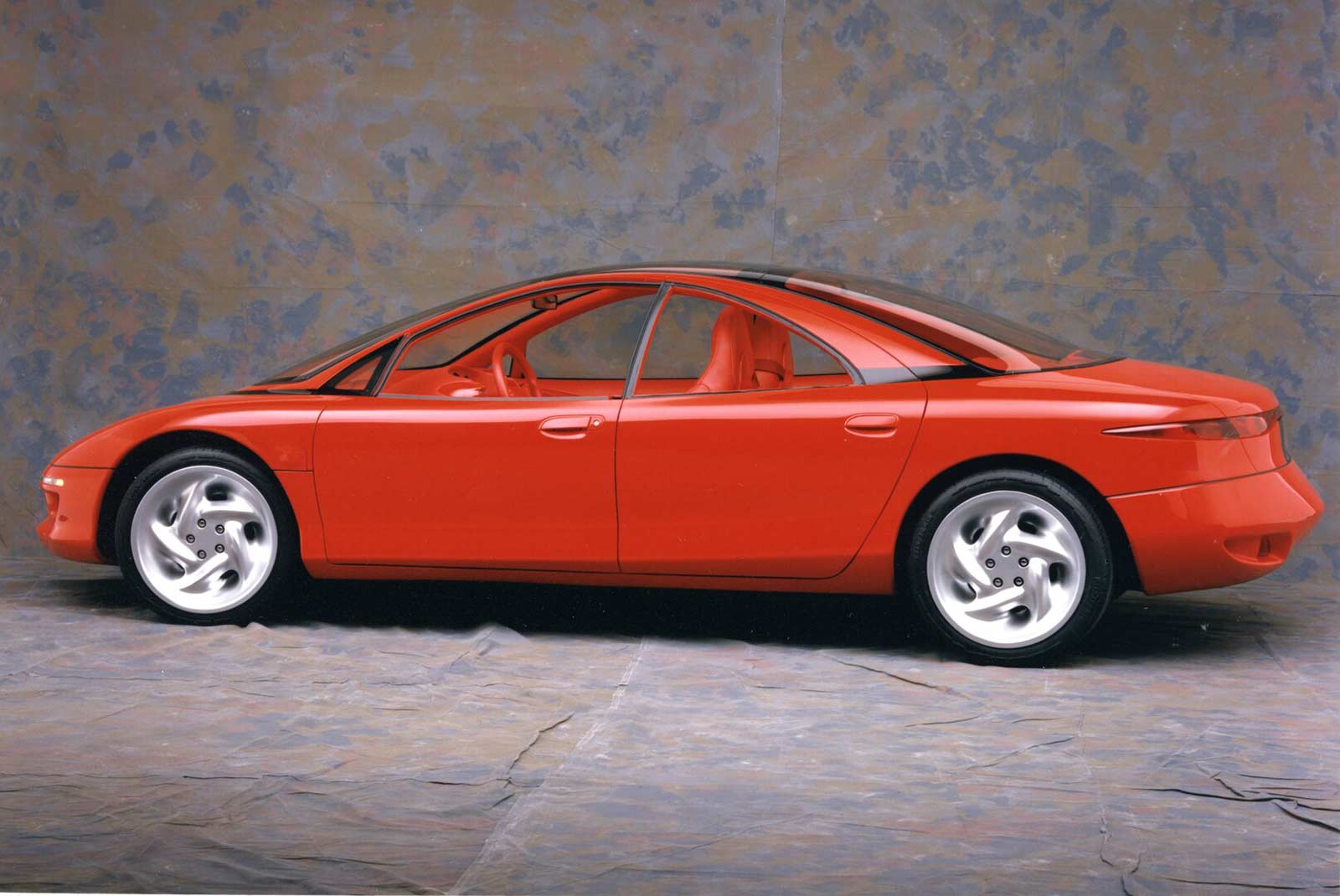
The Mercury Cyclone name first appeared in 1965 as the designation for the top-of-line version of the Comet model series. It resurfaced at the Detroit Auto Show in early January 1990, this time attached to a pure concept car rather than a production model. This four-door Cyclone concept shared strong similarities with the Ghia Via, a concept built in Turin the previous year, including a closely related wheel design. The car was constructed by Synthetex Inc., a firm based in Romulus, Michigan, that specialized in building prototypes.
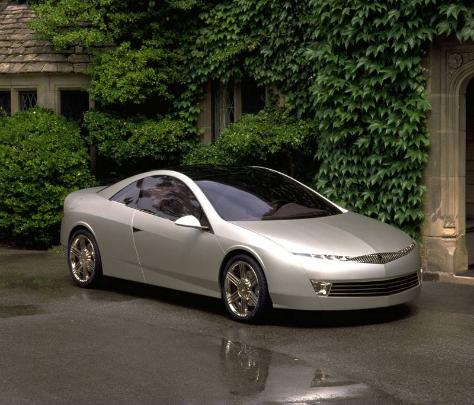
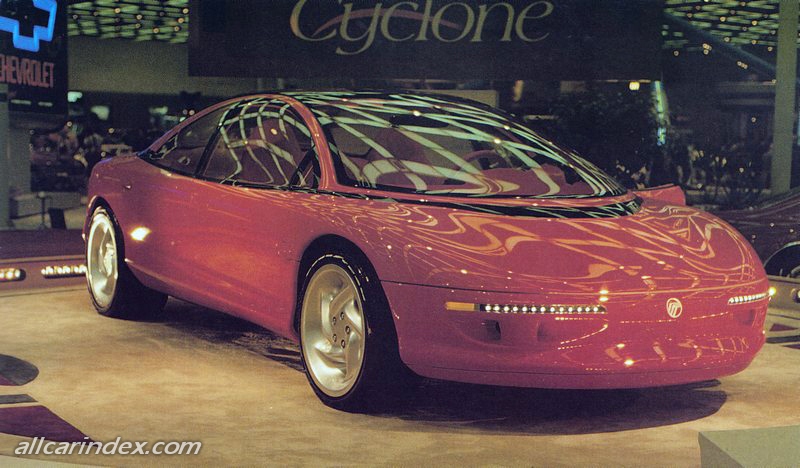
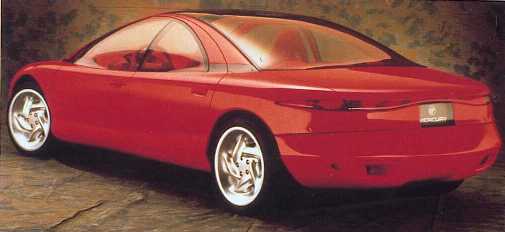
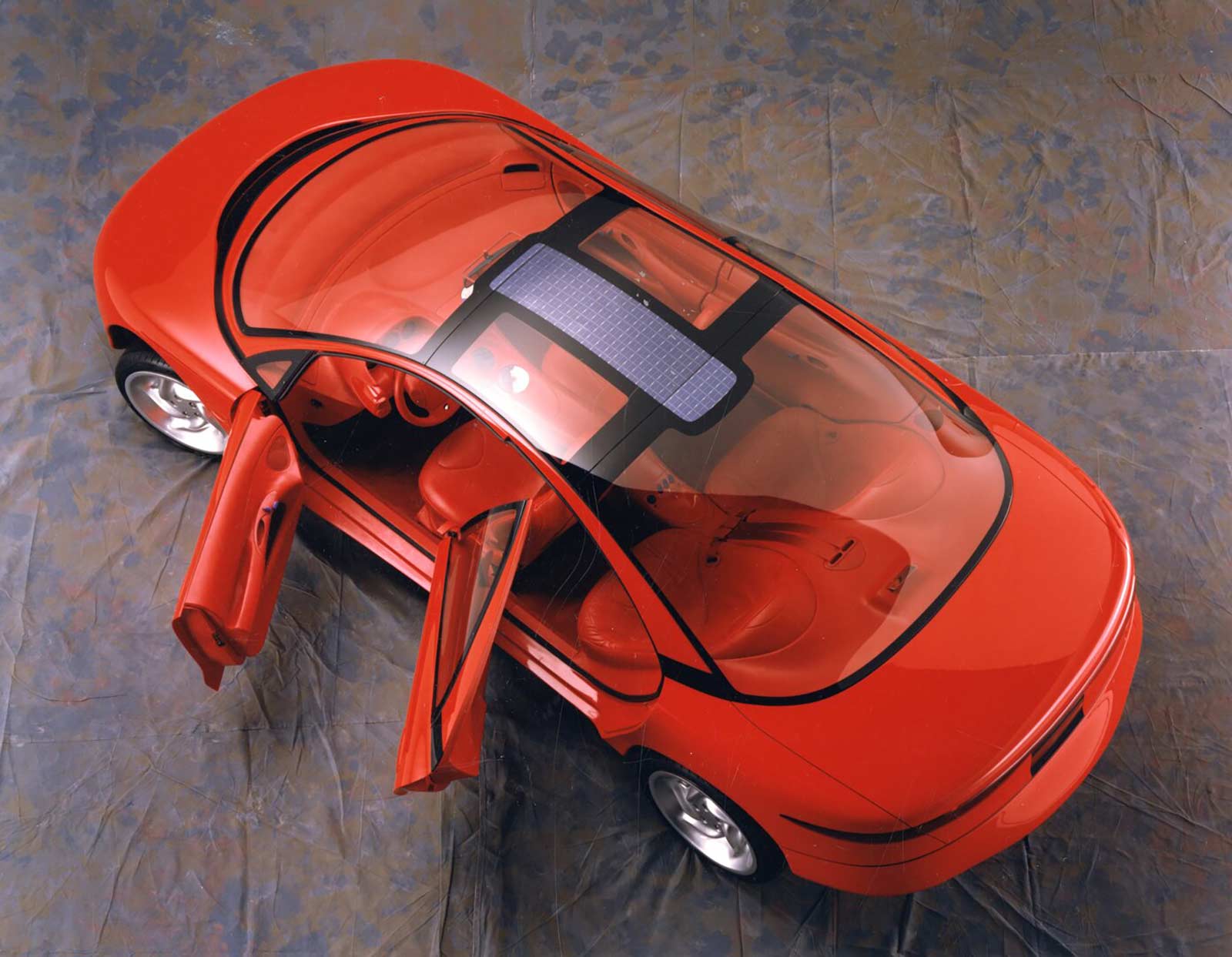
Like the Via, the Cyclone stood out for its arched roofline, a shape more typical of a coupe even though the finished body had four doors. Designers had in fact initially sketched the car as a two-door coupe, and the resulting roofline left limited headroom for rear passengers. No details were given about the underlying platform, apart from the statement that there was enough room to accommodate a large V8 engine, with a transverse installation reportedly considered; the engine specified was a 4.6-liter V8.
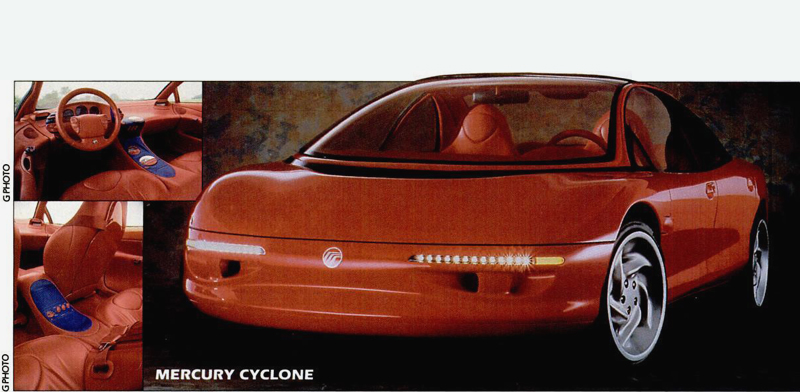
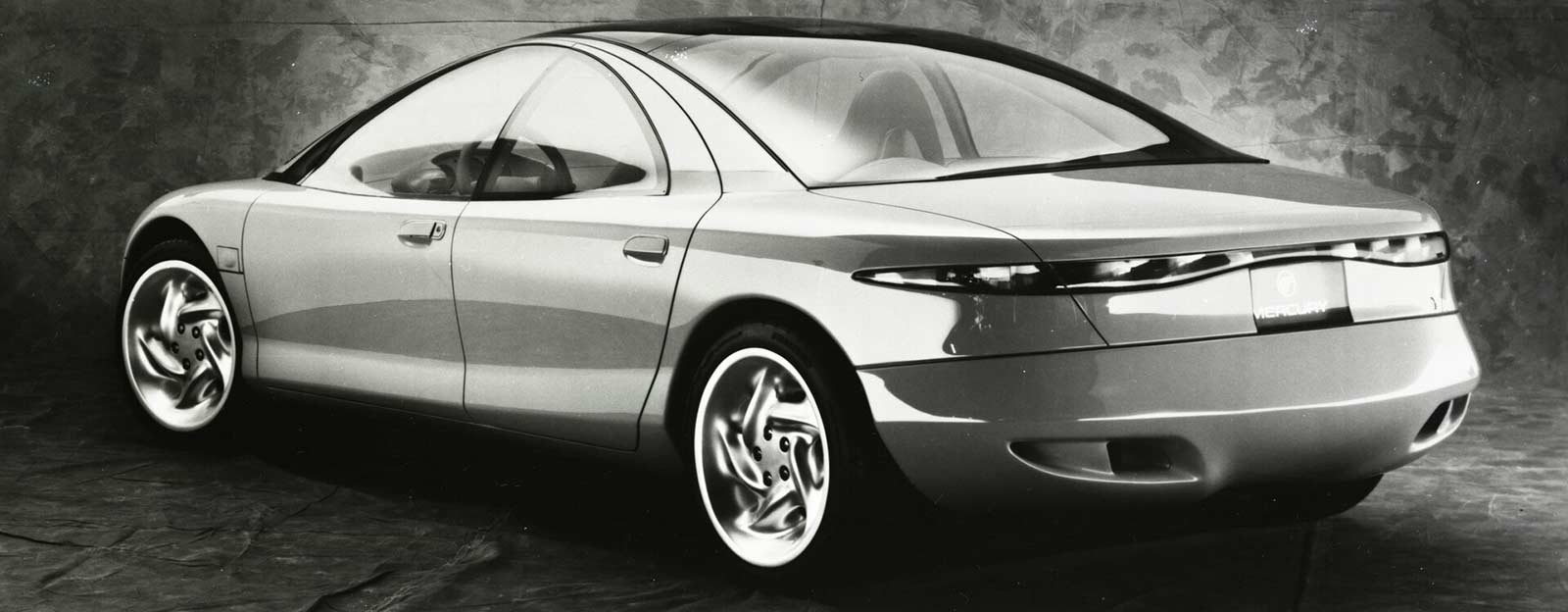
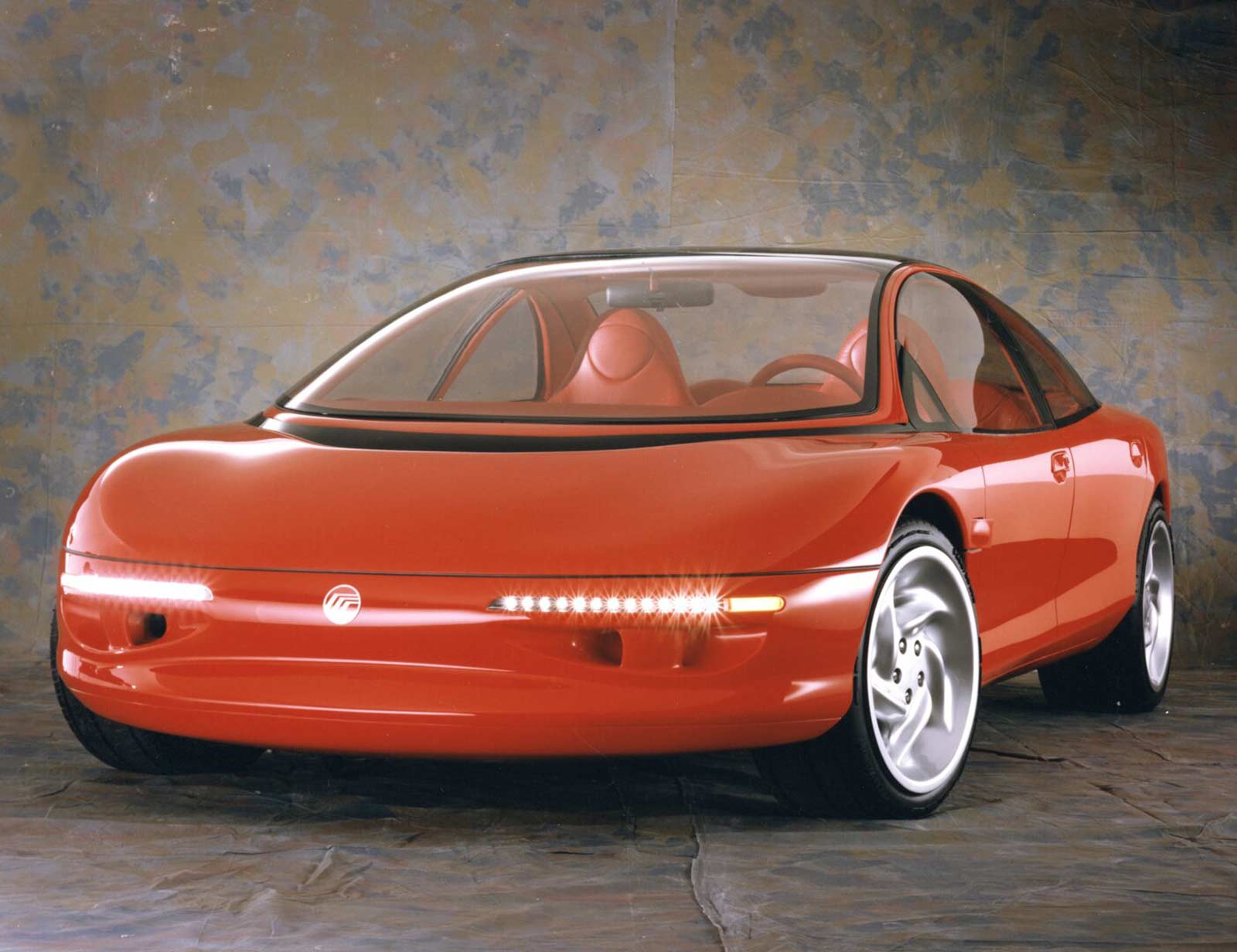
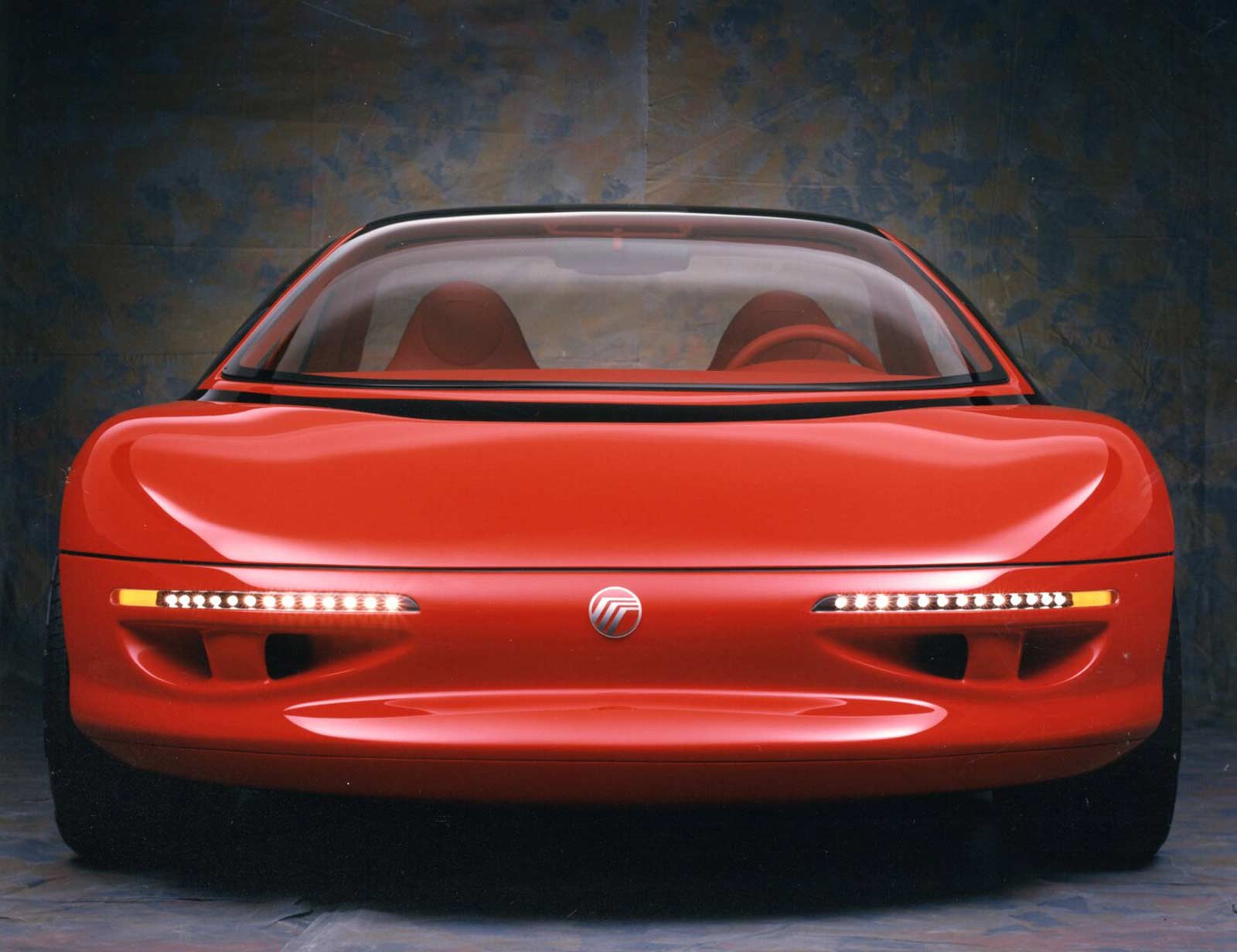
A notable feature of the Cyclone was its electrochromatic glass roof, which formed a single unit with the windshield and rear window. The driver could adjust its light transmittance, switching from about 35 percent down to under 5 percent using an electric control, functioning as a liquid crystal glass roof that shifted between transparent and opaque states. In place of conventional headlamps, the front held a band of thirteen sharp points of light on each side using fiberoptic technology, a lighting principle also applied to the taillamps and instrument panel illumination, with the taillamp design providing even lighting without hot spots. A see-through, high-mounted stop lamp gave the driver an unobstructed rear view, while a rear-mounted camera fed two color monitors positioned beneath the windshield at each end of the instrument panel, replacing traditional side-view mirrors.
As with other Ford-group concept vehicles, the steering wheel, instrument cluster, and controls could be adjusted together as a unit to suit different driver statures, with a tilt/telescope function, and the instrument displays were analog. The aerodynamically shaped Cyclone was finished entirely in red, covering the body and interior including the dashboard. Its wheelbase measured 279.5 cm, 10 cm longer than that of the Mercury Sable, yet the car was 20 cm shorter overall than that mid-size model. Overall dimensions were given as a length of 468 cm, width of 186 cm, and height of 126.5 cm. The body was a four-door, four-seat notchback sedan.