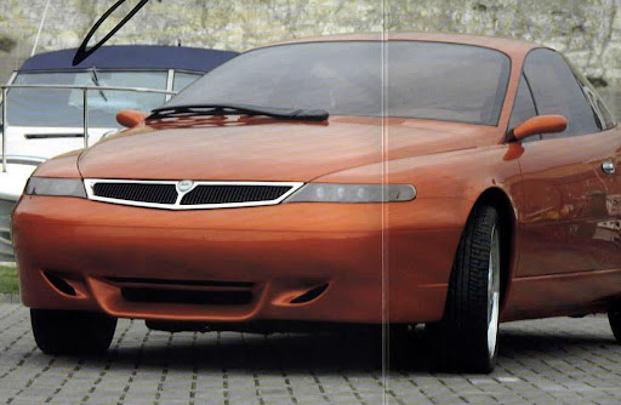

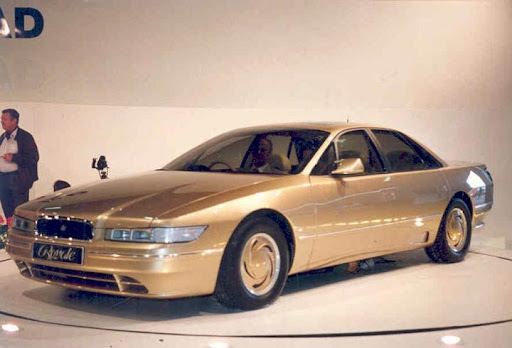
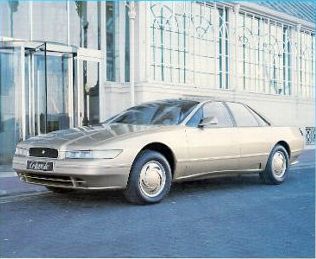
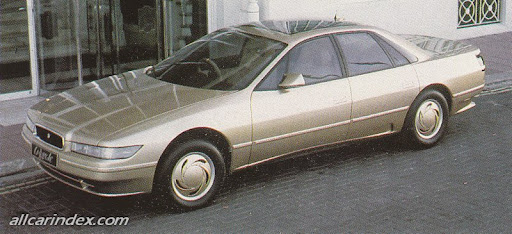
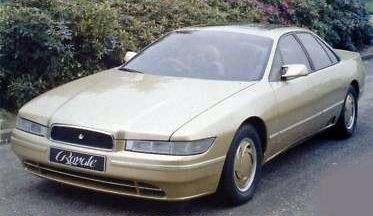
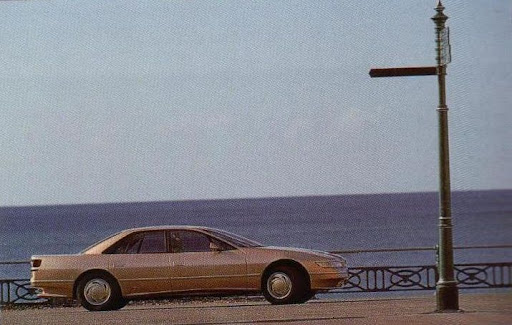
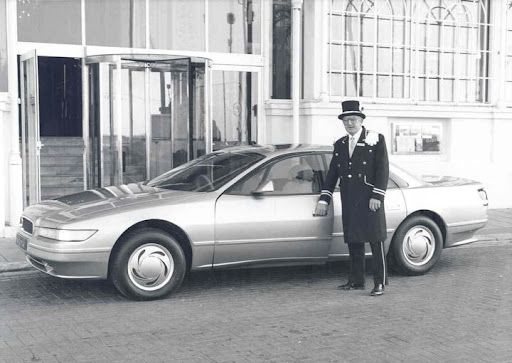
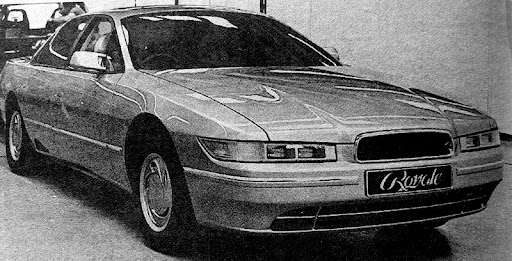
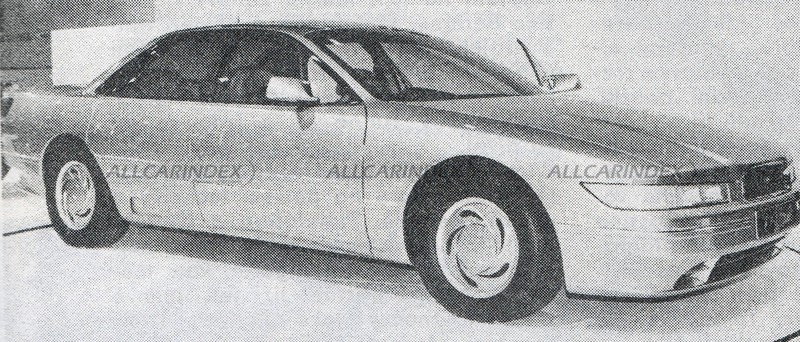
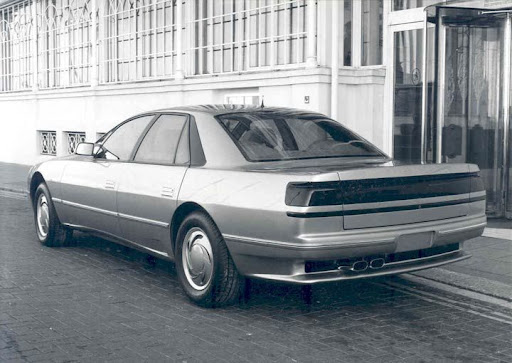
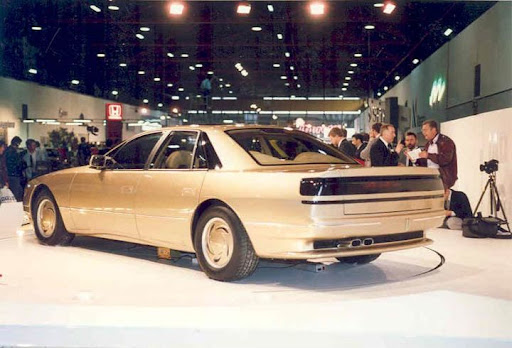
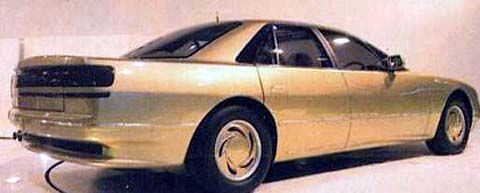
The IAD Royale was a concept study for a luxury saloon developed by IAD, the British design and engineering consultancy founded and run by John Shute, which by the time of the project employed more than 570 people and operated internationally. The Royale was styled as a business car in the format of a Jaguar, with an aerodynamically modern but not futuristic design, and a low, upward-curving front grille that gave it a somewhat classical appearance. It was conceived primarily for executives who, in IAD's own words, wanted to make the most of their time whether driving or being driven.
Despite its luxury positioning, the Royale was based on the underpinnings of the Subaru XT 6, also known as the Alcyone, the six-cylinder version of the XT coupe also sold in Europe. For the Royale, this platform was stretched by 80 cm and widened, producing a wheelbase of 295 cm and track widths of 162 cm front and 158 cm rear. Overall length reached 505 cm, exceeding that of the contemporary Mercedes-Benz S-Class by 3 cm, although the Royale was notably wider and lower. Power came from the Subaru six-cylinder boxer engine of 2672 cc, producing 150 PS at 5200 rpm and 211 Nm of torque at 4000 rpm, driving all four wheels through a reportedly three-speed automatic transmission. The car weighed 1365 kg. The Subaru-derived running gear also brought electropneumatic spring/damper suspension units with automatic ride-height control. Wheels were of styled magnesium alloy, fitted with BF Goodrich Comp T/A 235/60 VR 15 tyres.
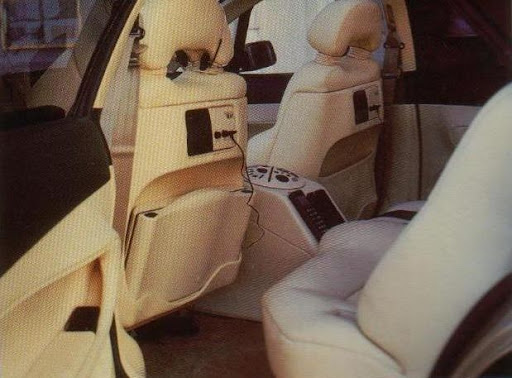
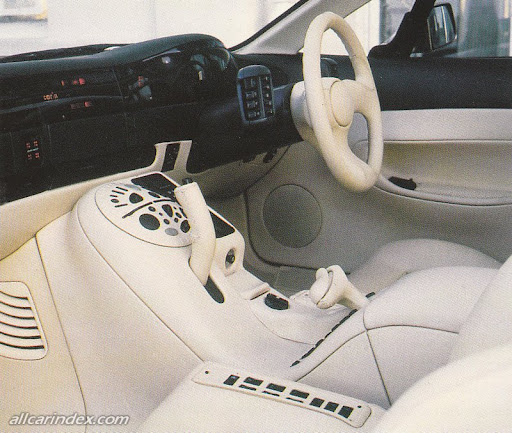
The cabin was fully leather-trimmed and featured four individual seats with perforated cushions for ventilation, along with an unconventionally arranged dashboard and centre console designed to keep all controls within easy reach. Front seat position was electronically adjustable. Working with Philips of Eindhoven, IAD fitted what it described as the most sophisticated audio system ever installed in a car, with 13 speakers controllable by any of the four occupants via two circular selector units on the front and rear consoles. Rear passengers had two TV monitors with headphones, and the car also included two telephones, a Philips Carin navigation system, an adapted Philips PC, and a fax machine. Philips also developed the reflectors and electronics for the car's gas-discharge headlights. At the rear, an alphanumeric LED display integrated between the taillights could show the registration number or warnings to following drivers.