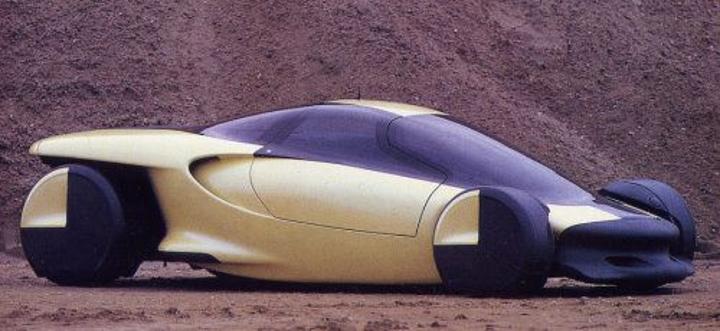

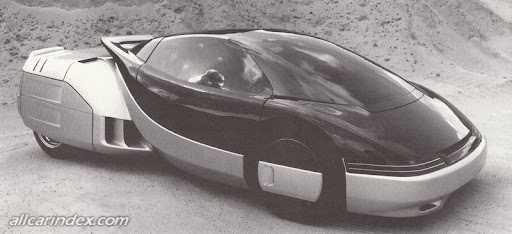
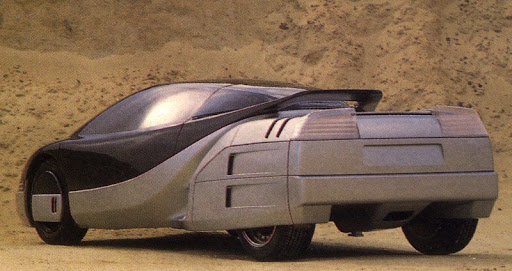
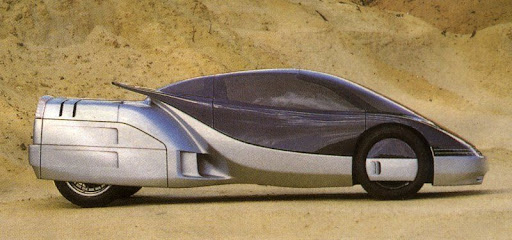
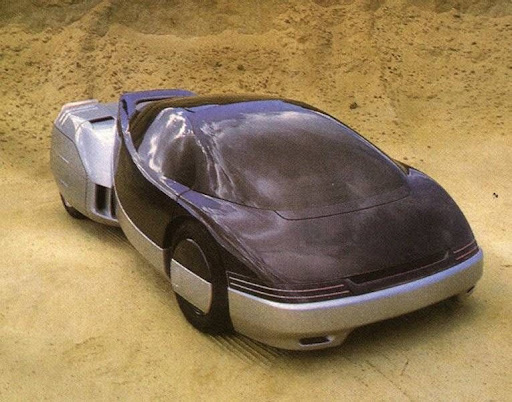
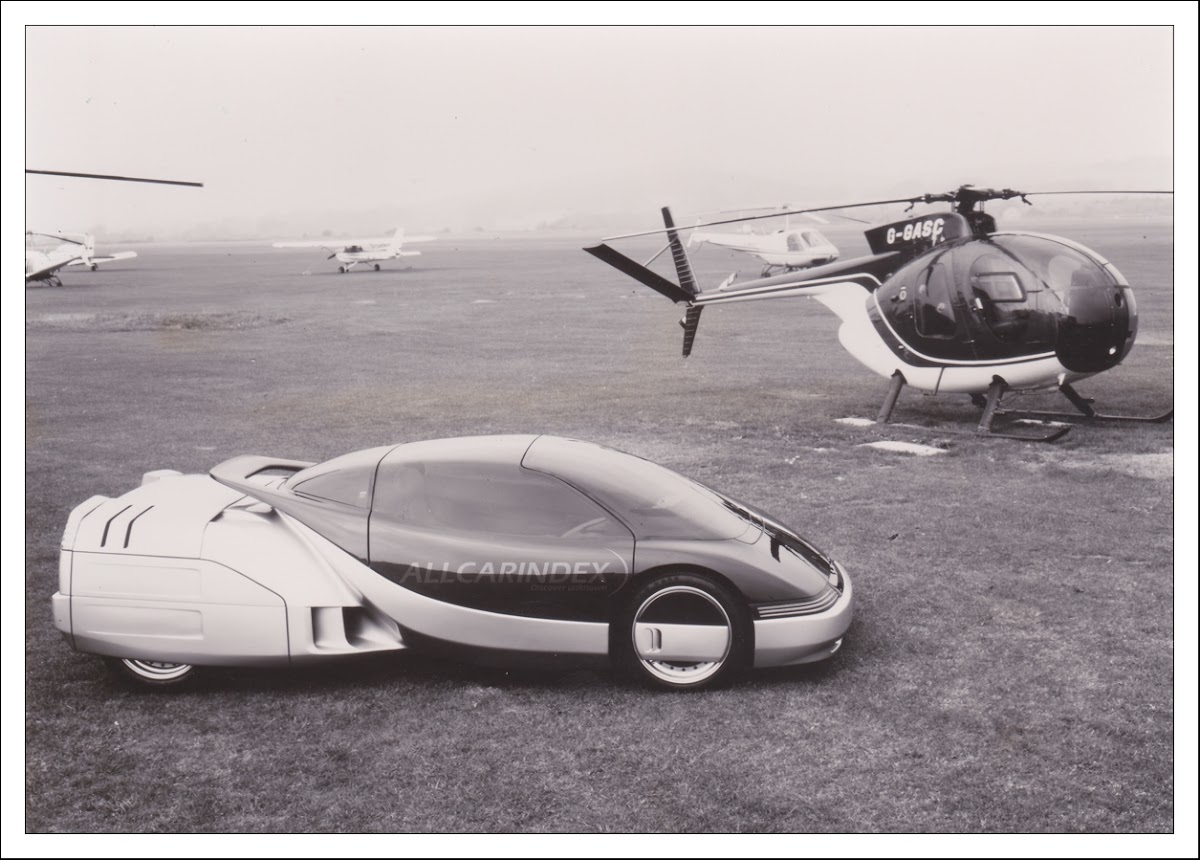
The Alien was a concept car shown by IAD (International Automotive Design) at the Turin motor show of 1986. Its extremely futuristic shape drew considerable attention in a setting long associated with automotive design, and the concept was developed by the young designers Martin Longmore and Marcus Hotblack within IAD's styling division. As with other IAD concepts of the period, the Alien was created to explore ideas that might later filter into production vehicles.
The car was built as a two-seat sports coupe with two forward-opening, angled gullwing-style doors. It measured 369 cm in length, 160 cm in width and 107 cm in height, with a wheelbase of 239 cm. Its design combined two visually distinct modules, one housing the passengers and the other the mid-mounted engine, giving the car a form likened to a large insect. The passenger cell had a one-box shape that tapered toward the rear, a shape that alone would likely have produced a very low drag coefficient. A light-coloured lower flank section extended rearward from the front bumper, visually linked by an asymmetric front wheel cover. The roof area was almost entirely glazed, with panoramic front and rear screens joined by a central longitudinal rib, into which the gullwing doors were integrated.
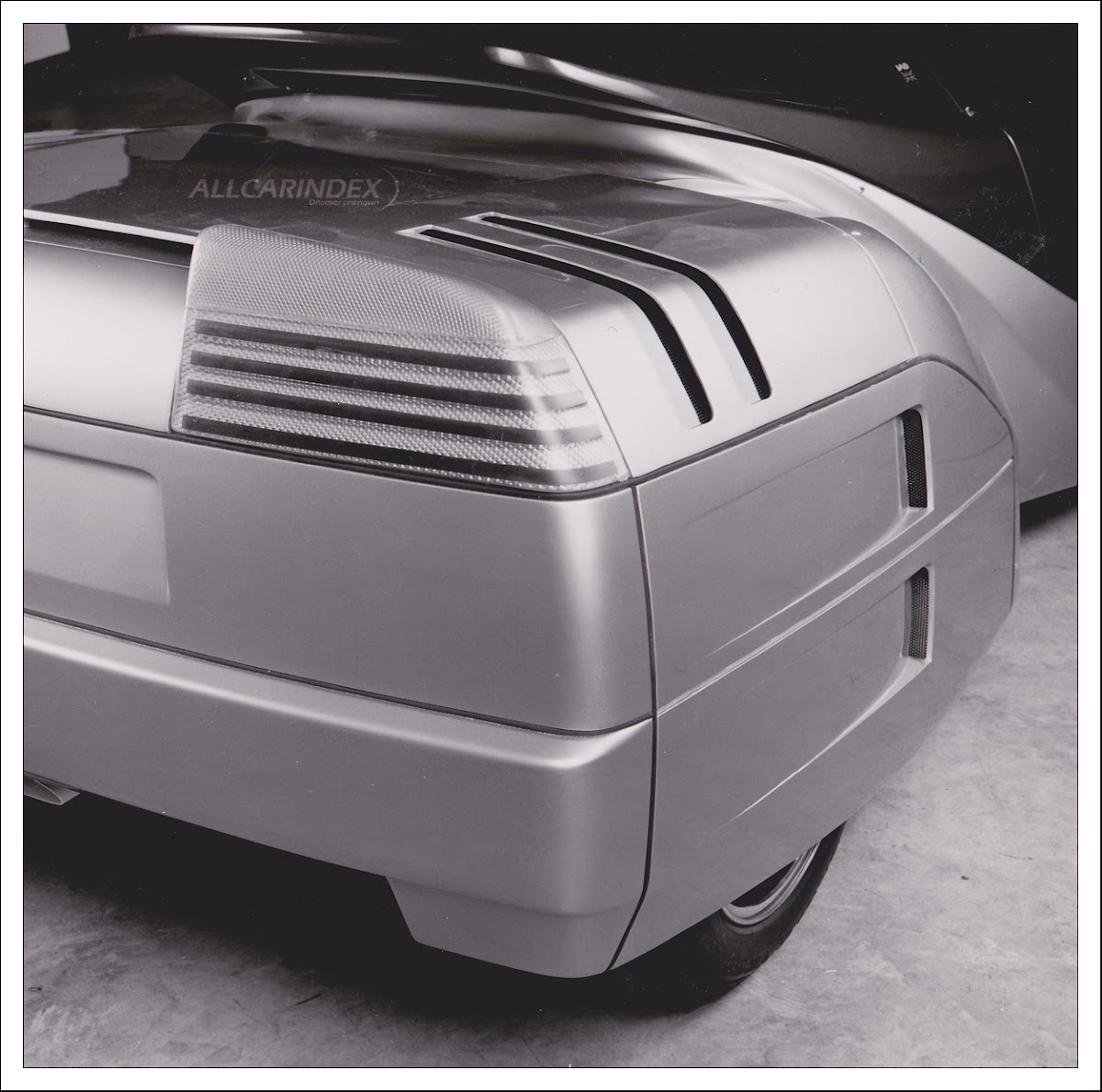
The rear module, more angular in shape and with fully enclosed drive wheels, contained the engine and transmission, with body panels and wheel covers designed to be easily removed. It rode on 205 VR 45 tyres up front and 265 VR 50 at the rear, both on 16-inch wheels. The powertrain was conceived around a 1.6-litre engine, mounted transversely or longitudinally, with the possibility of a turbocharged version; the separation between the passenger cell and the rear engine bay allowed airflow to be directed toward an intercooler if required.
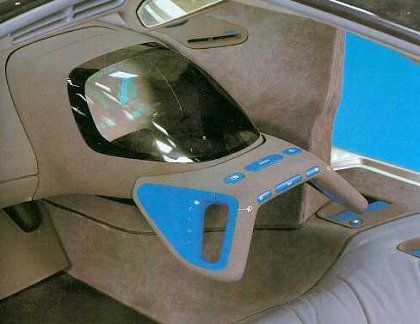
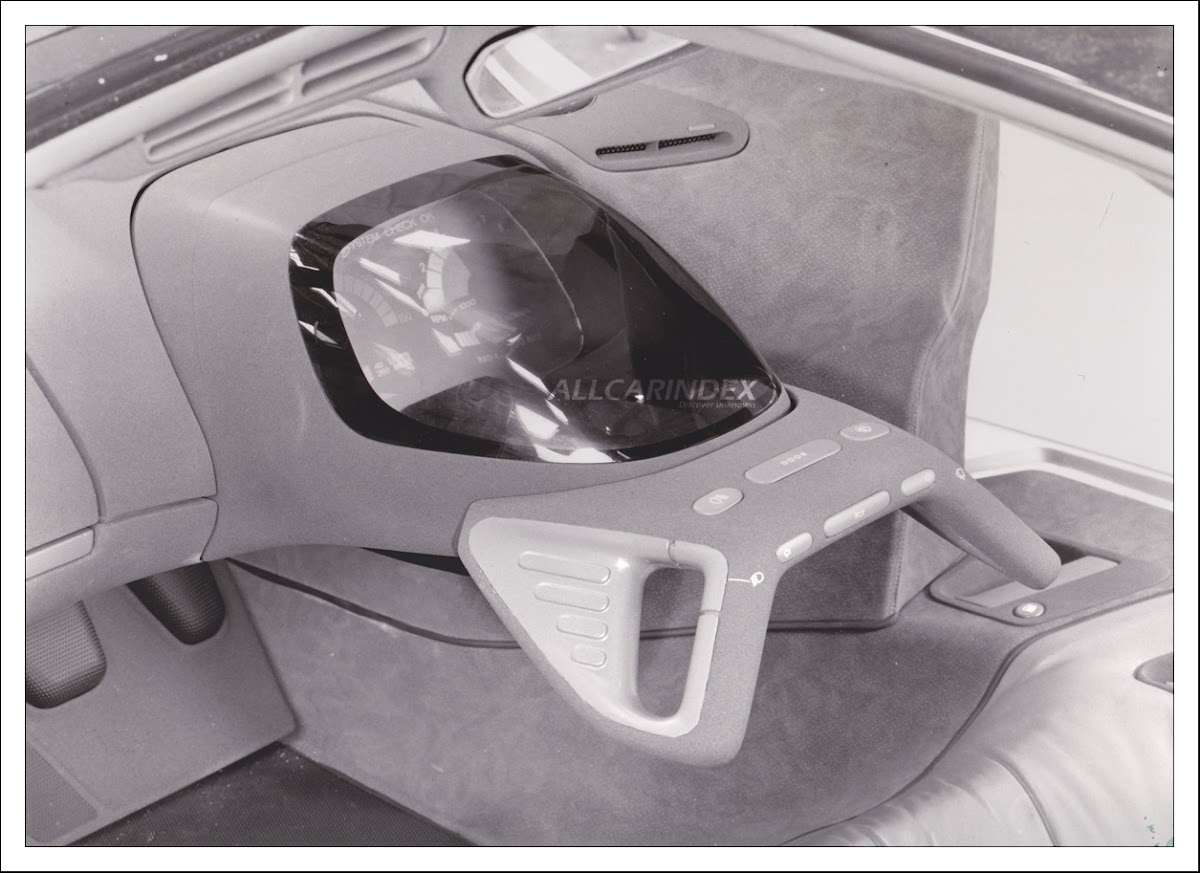
The cabin resembled an aircraft cockpit in styling. In place of a conventional steering wheel, the car used a steering lever with angled grips at each end incorporating all control switches, while a separate control unit on the driver's door managed the trip computer, sound system and seat adjustment. Instrumentation combined analogue and digital displays. The underbody used a modular construction with subframes, and the seat shells were integrated into the central monocoque, using air-filled adjustable cushions for support. Pedals and the steering lever were adjustable, with the lever rising automatically when the driver's door opened. Storage was provided beneath the seats, under the dashboard and behind covers attached to the headrests, accessed via a lifting rear window. The flanks served as impact protection supplementing a roll-cage structure, and the design also envisaged speed-sensitive power steering and automatic climate control.