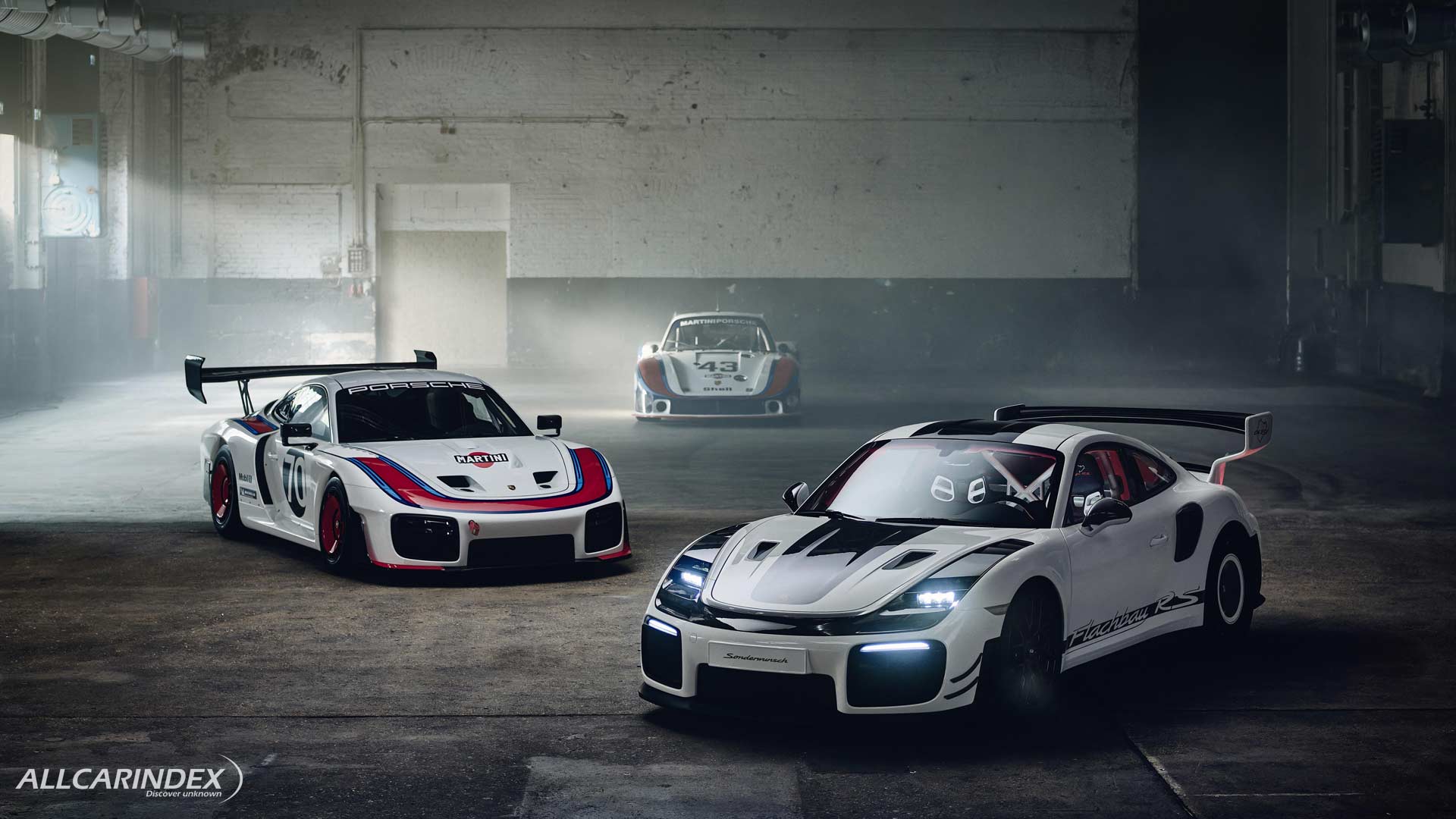
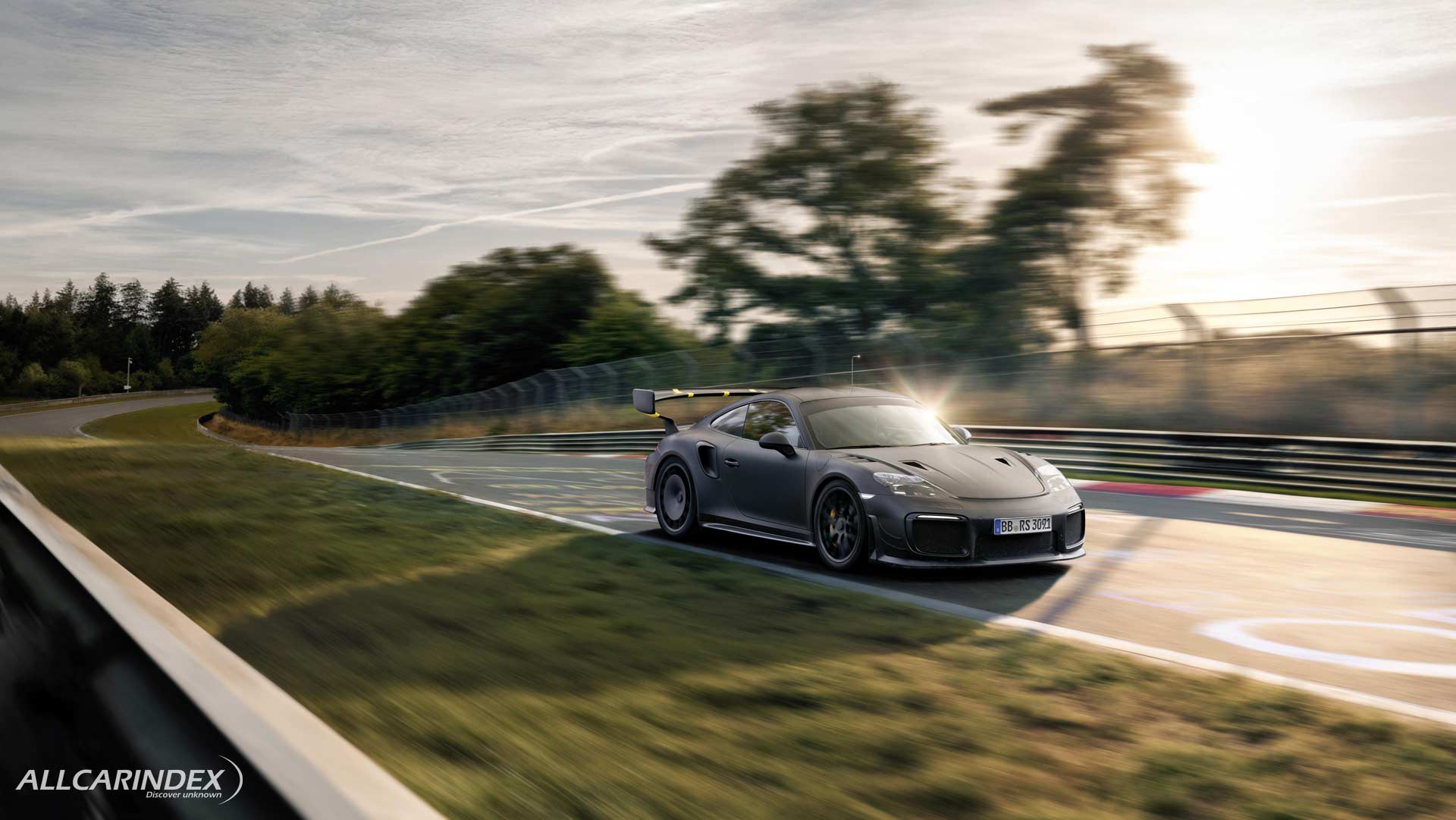
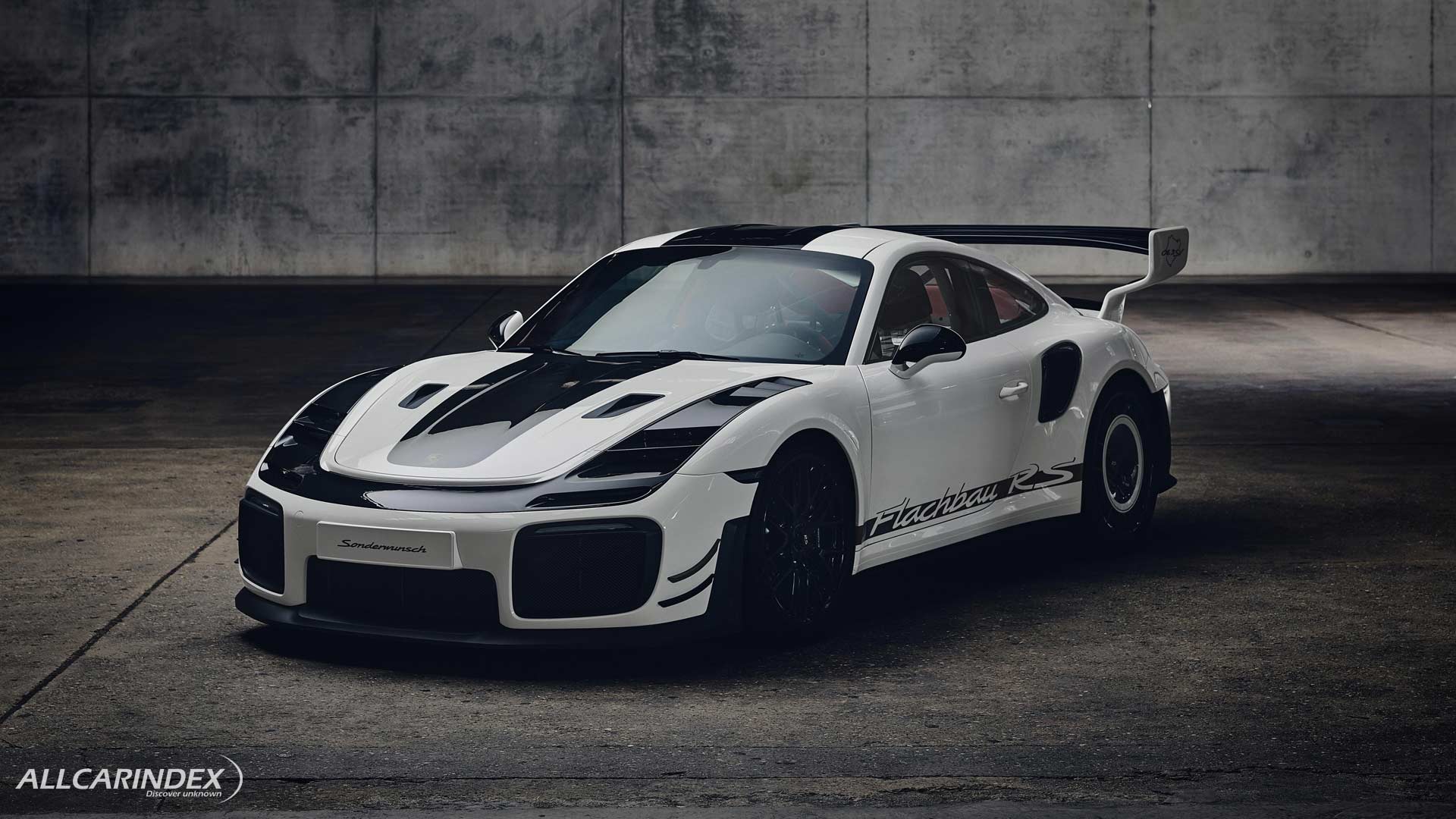
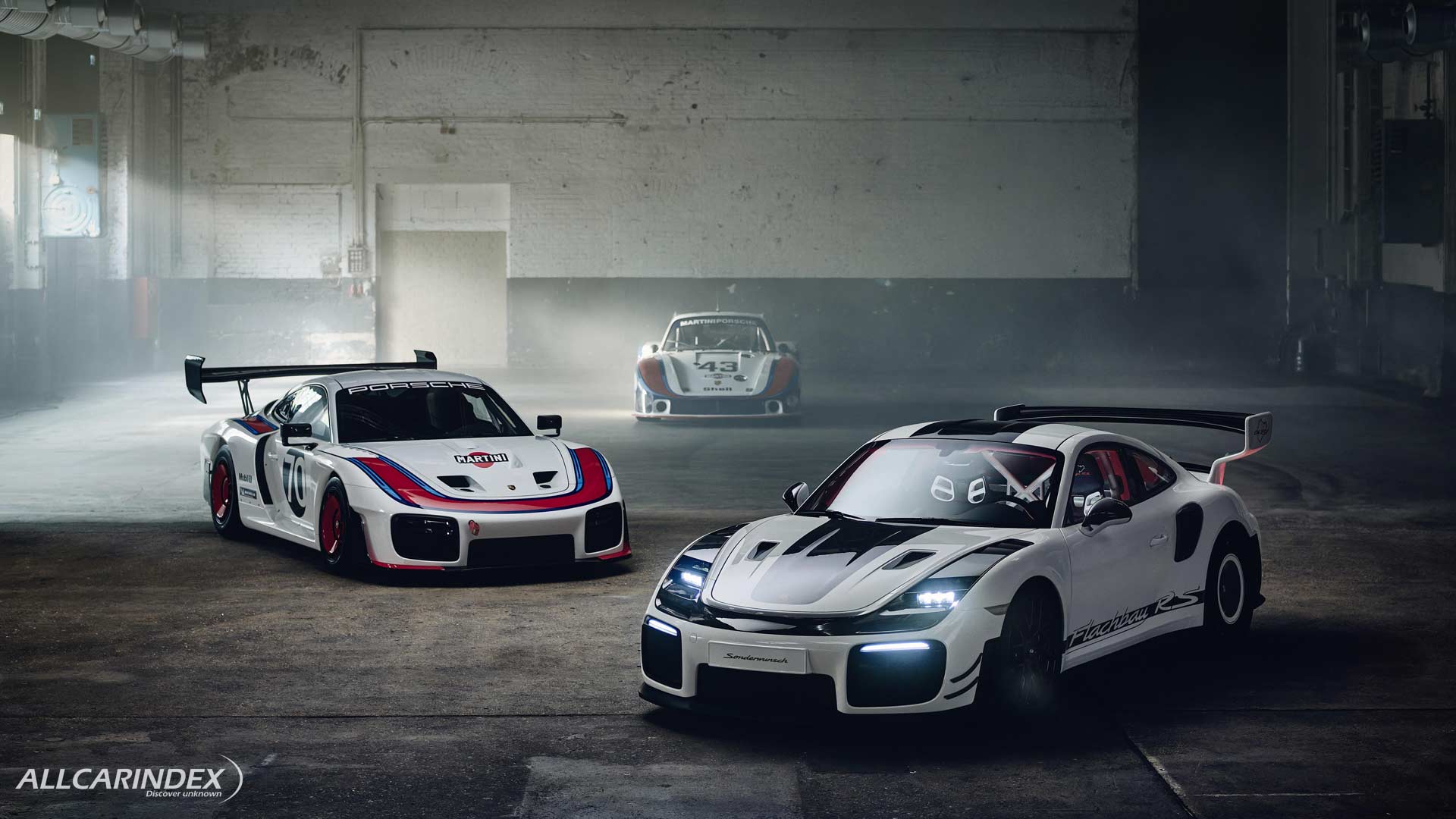
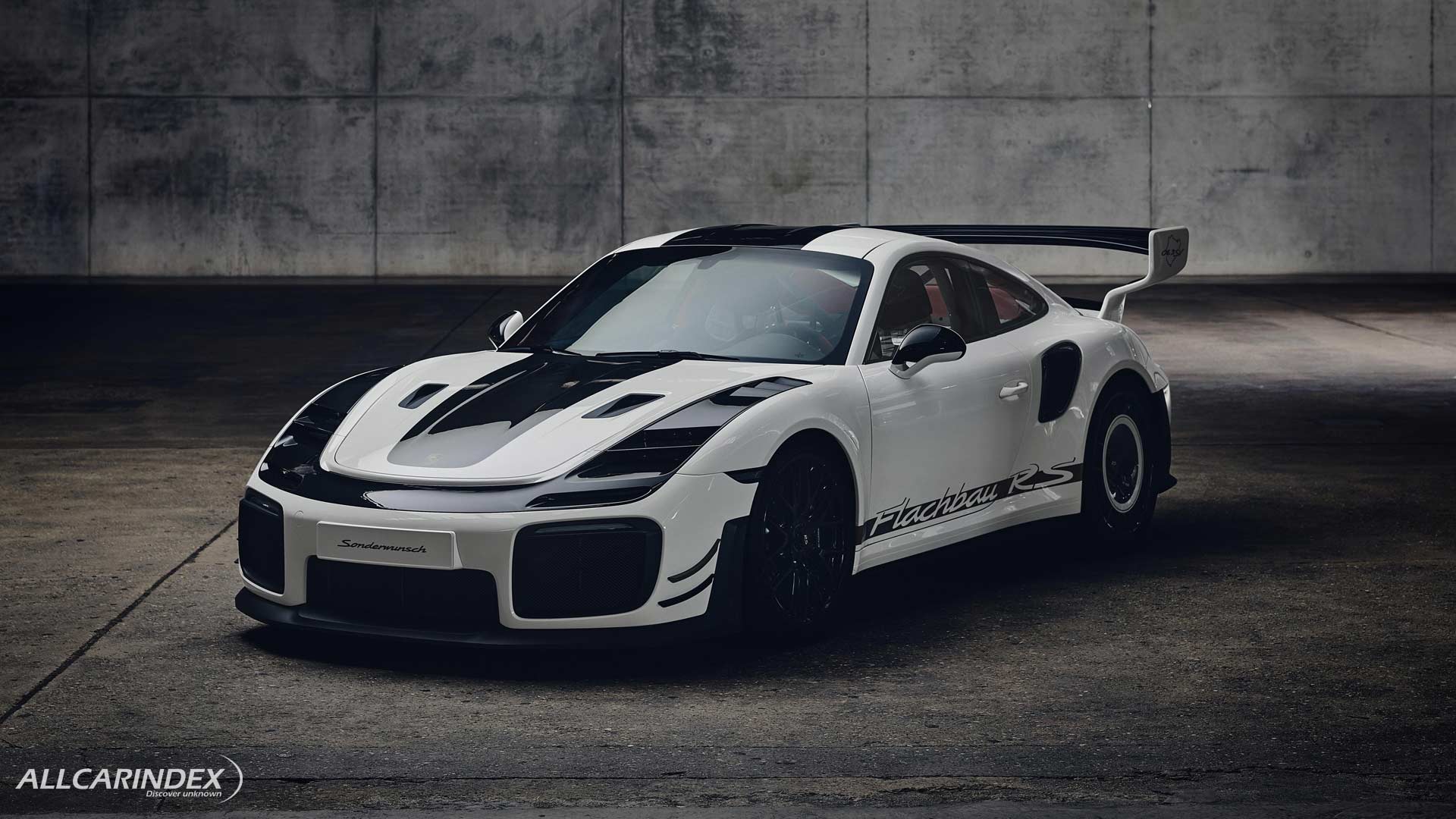
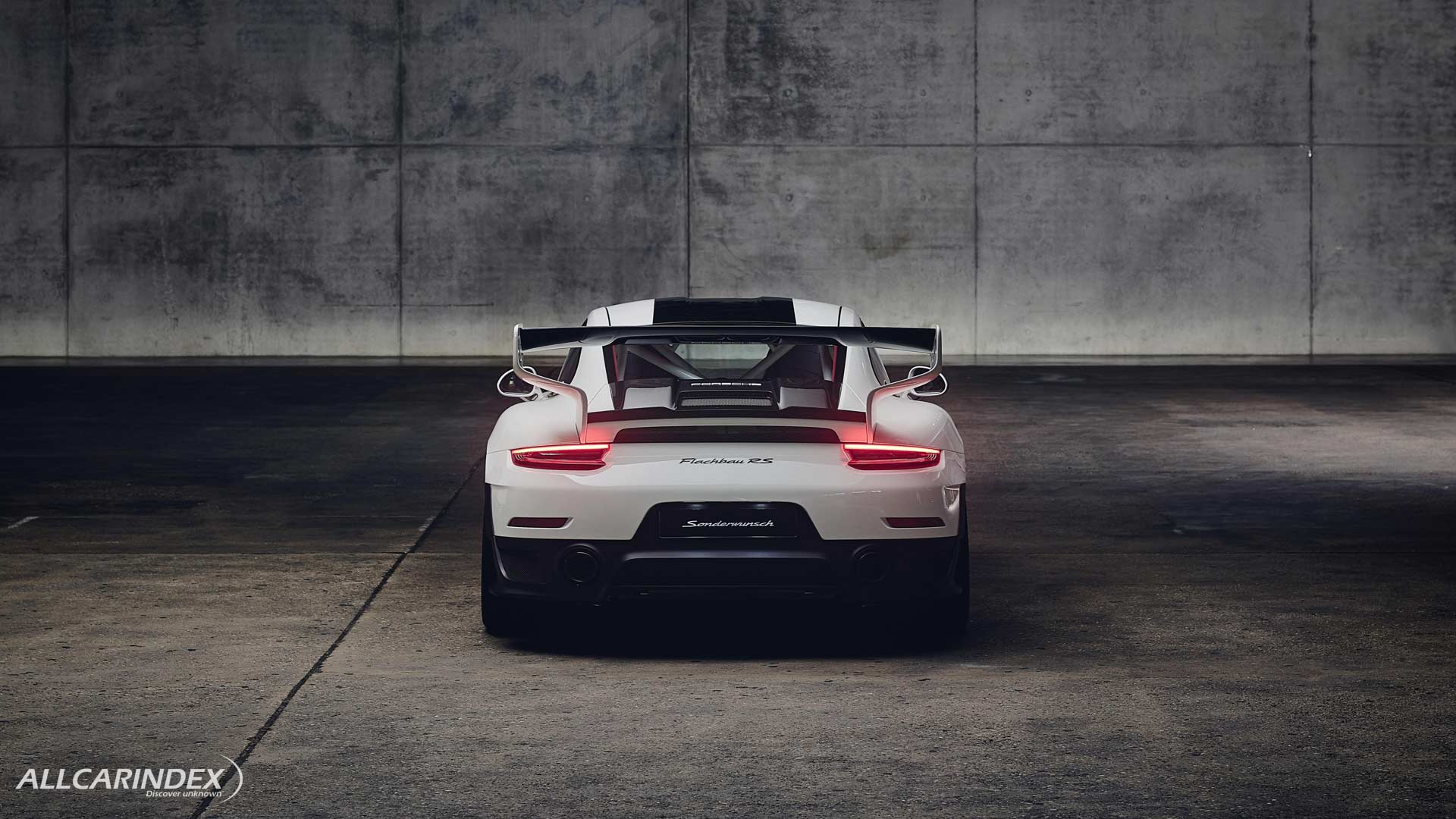
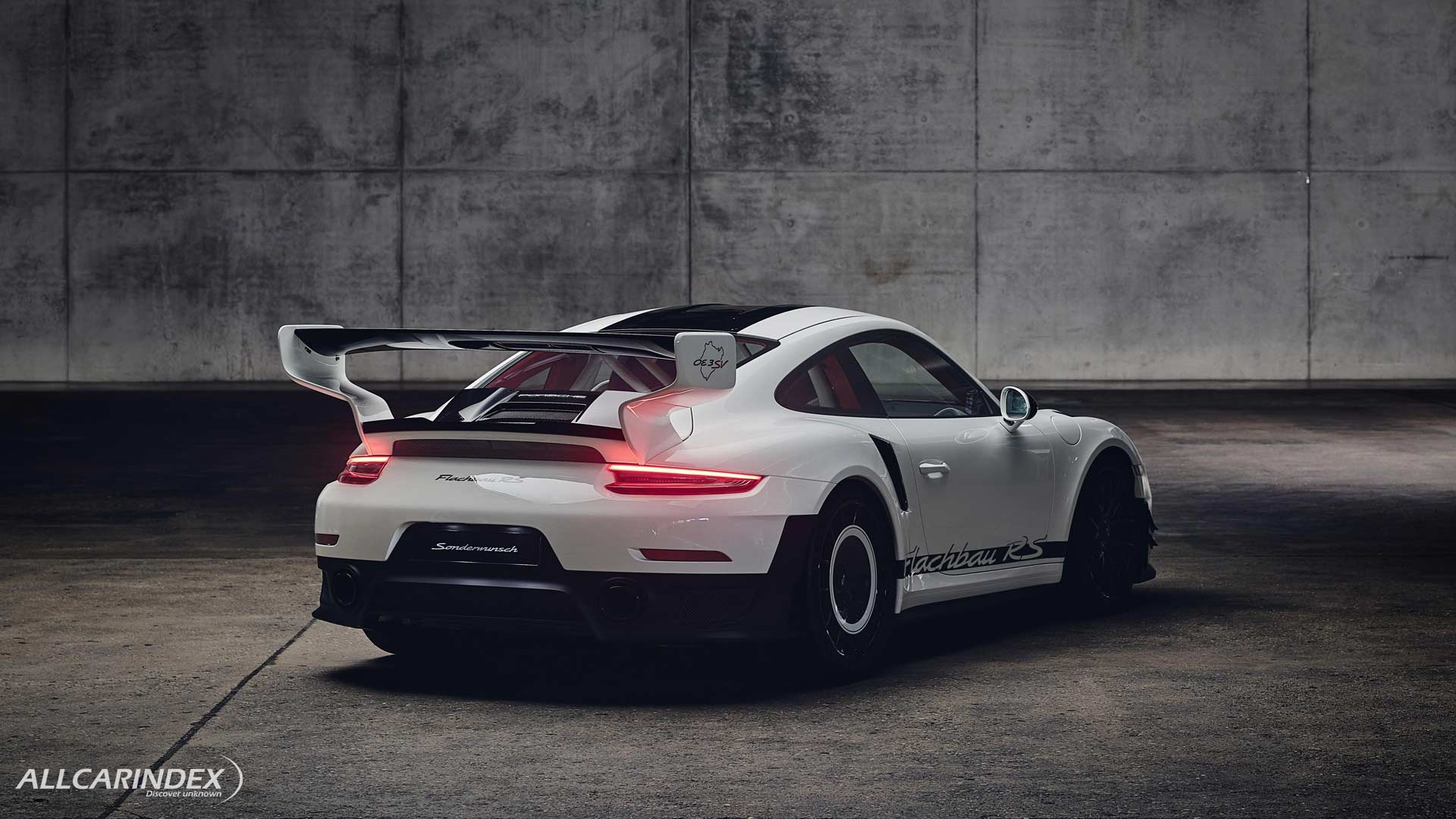
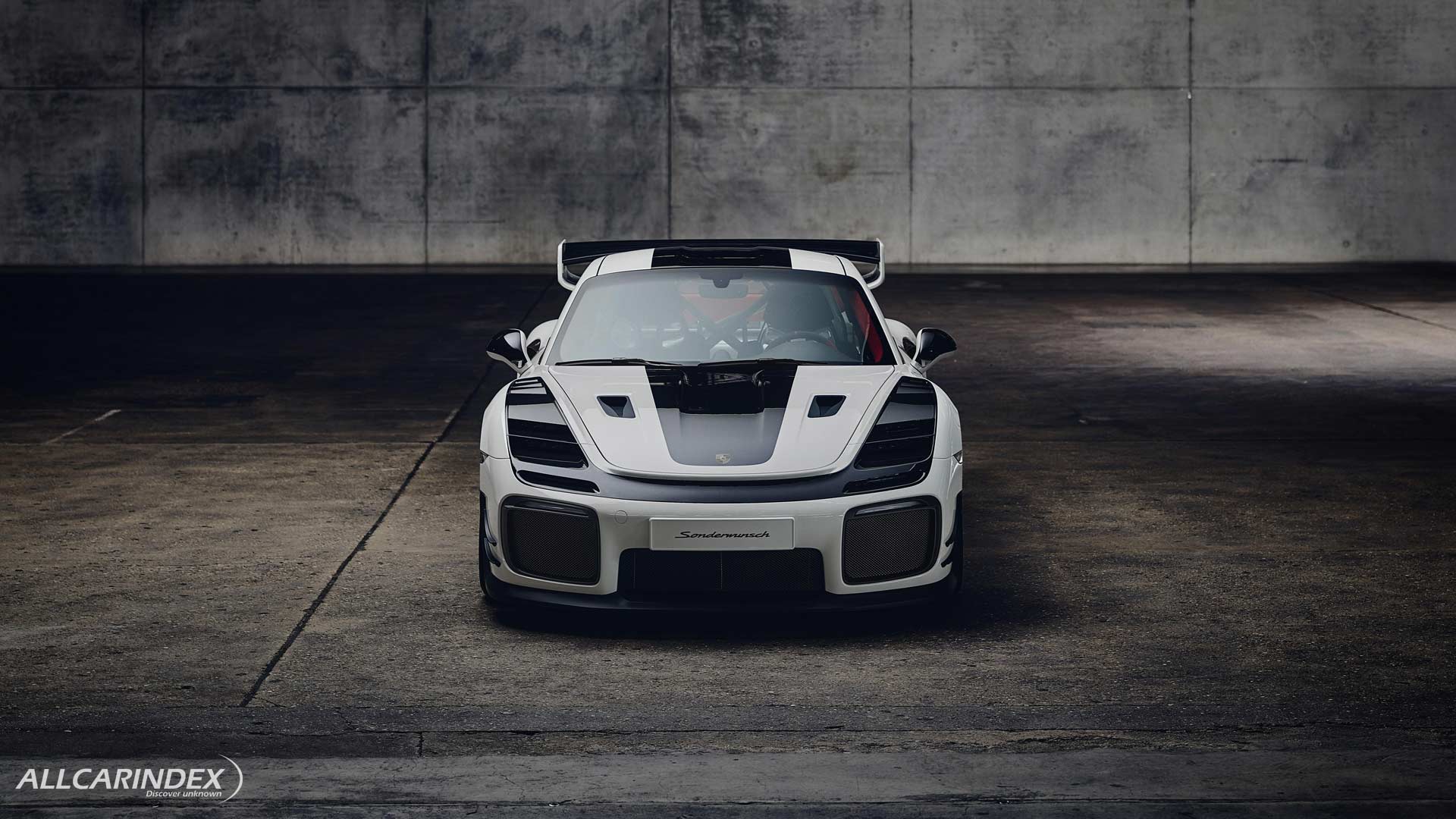

The brief a Porsche enthusiast handed to the Sonderwunsch department was short and specific: even greater performance, a Flachbau look, and a rear wing in the manner of the 911 GT3 R rennsport, please. What came back, after nearly three years of work between Porsche's own specialists and Manthey, was a single, road-legal 911 GT2 RS transformed into something the factory had never built before, its front end tracing directly back to the 935/78 Le Mans racer known to generations of fans as Moby Dick. Porsche calls it the Flachbau RS.
The name itself had already caused a stir before anyone outside the company knew what it belonged to. In May 2025, Porsche quietly registered the model designations Flachbau and Flachbau RS with the European Patent Office, sparking curiosity across the sports car scene and the press. Only now does the brand reveal what the filing was for: this elaborate transformation of a like-new 911 GT2 RS, Type 991.2, fitted with the Weissach Package and built in 2018.
Flachbau, or slantnose, has a long history at Porsche that runs parallel to the Sonderwunsch programme itself. In the 1980s the company offered a modified version of the 911 Turbo, internally the Type 930, with redesigned front wings and pop-up headlights, its design lifted from the legendary Porsche 935 that dominated endurance racing for years. Between 1982 and 1989, Porsche sold 948 examples of that modified version, and even counting later aftermarket conversions, Flachbau cars remain among the rarest variants of the 911 today.
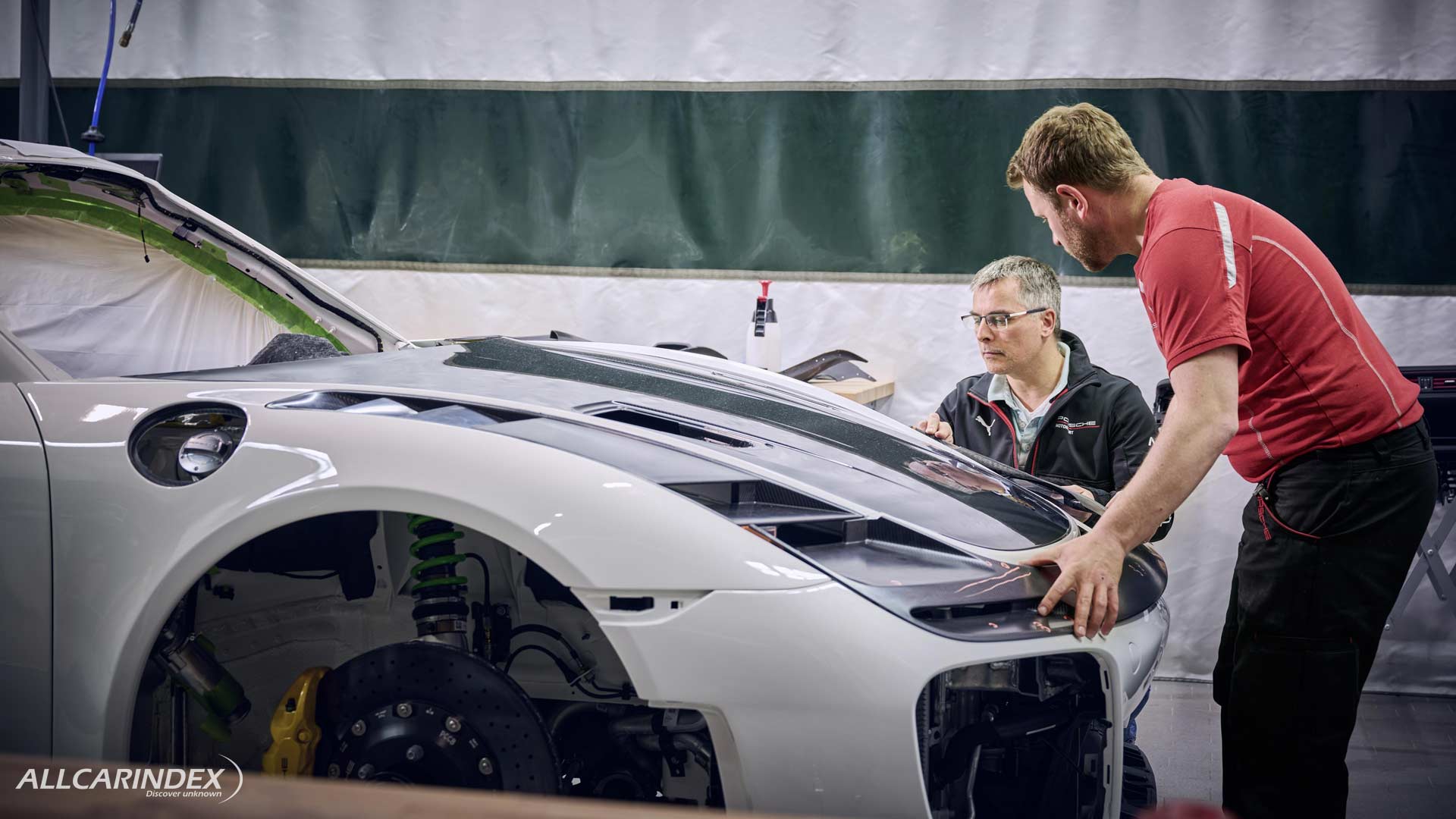
Bringing that shape back onto a modern GT2 RS took a multidisciplinary team drawn from the Sonderwunsch department, Style Porsche, and development engineers from Weissach, Porsche Motorsport and Manthey, working on the project for almost three years. "Converting the car to a slantnose model proved to be very challenging, even though we left the drive unchanged, in agreement with the customer," says Alexander Fabig, Vice President Product Offering & Individualisation at Porsche. "Our aim was to reinterpret the iconic look of the 935 without compromising on safety, technology or road legality." Thorough lightweight measures brought the one-off car in at 31.6 kg less than before, a figure Fabig himself called unspectacular sounding at first, given that the 911 GT2 RS with Weissach Package was already an uncompromisingly weight-optimised car to begin with.
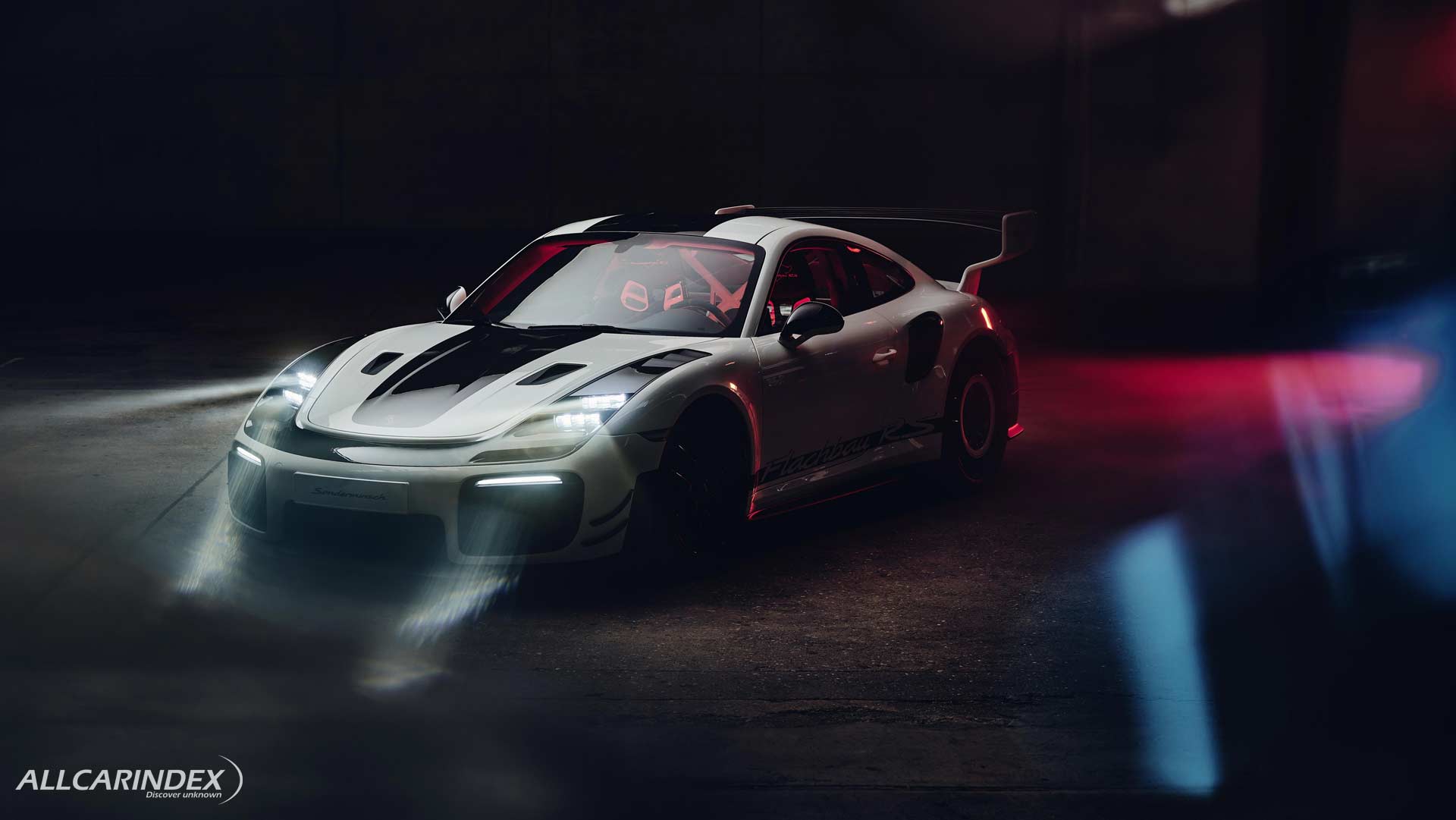
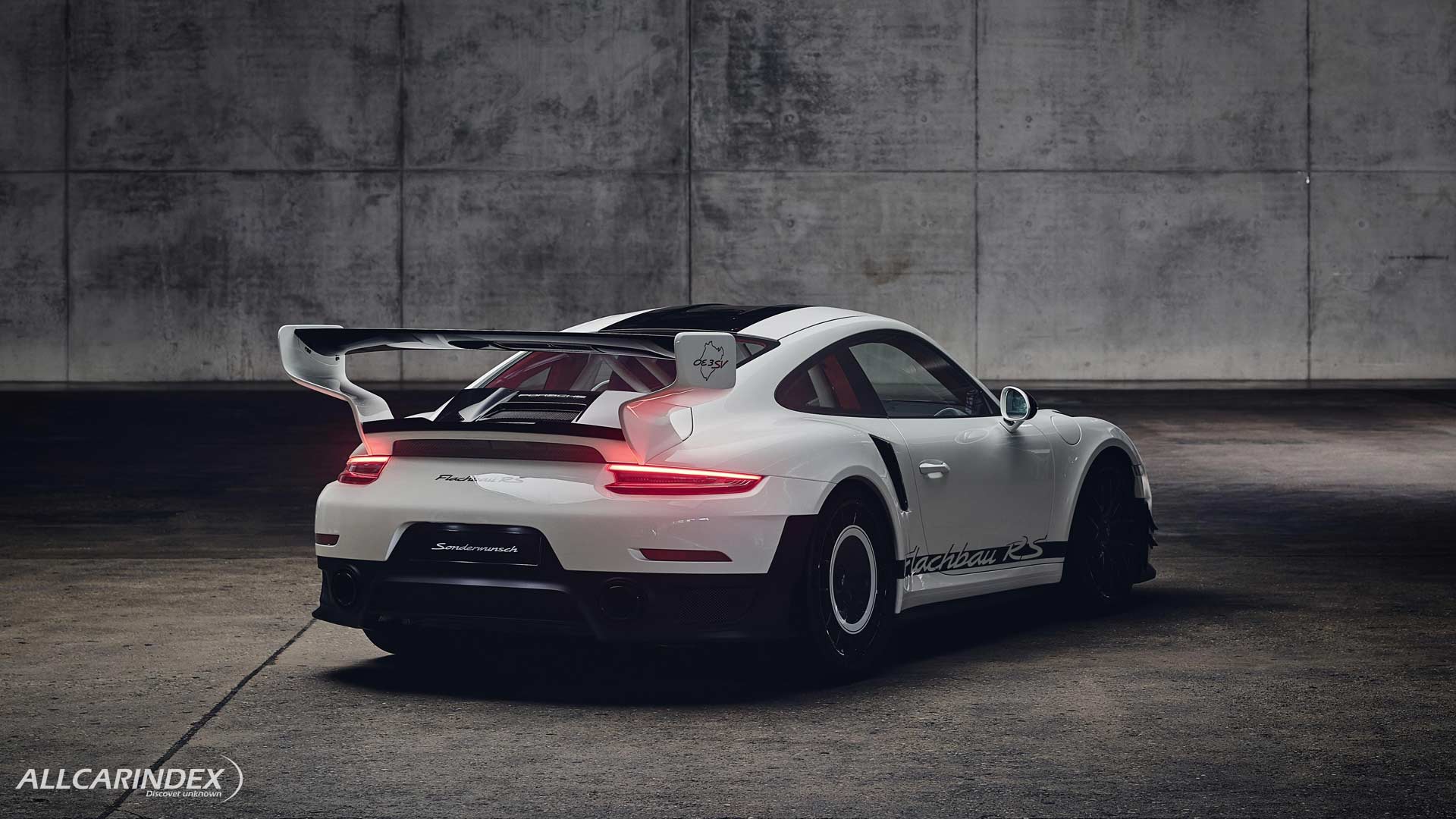
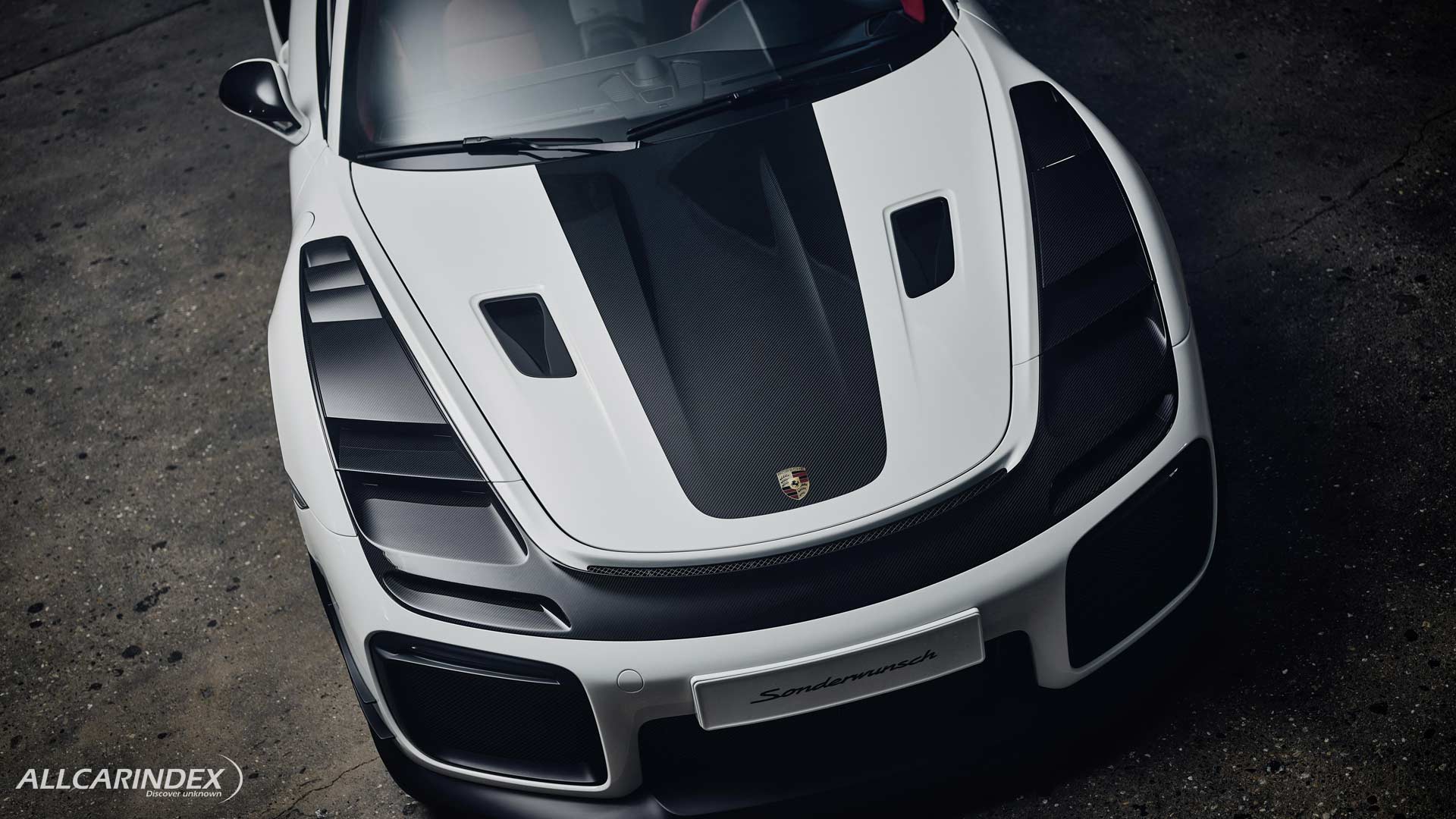
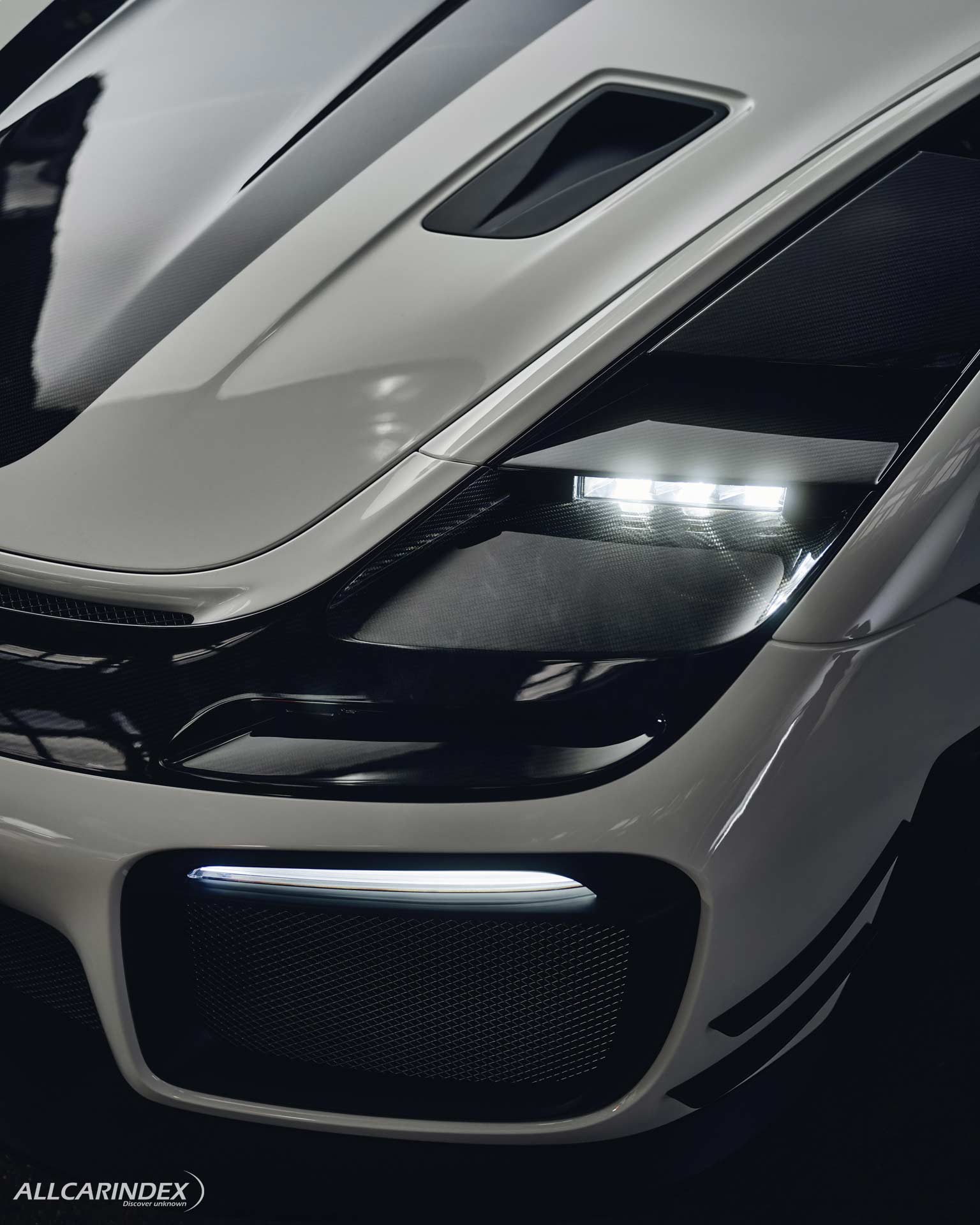
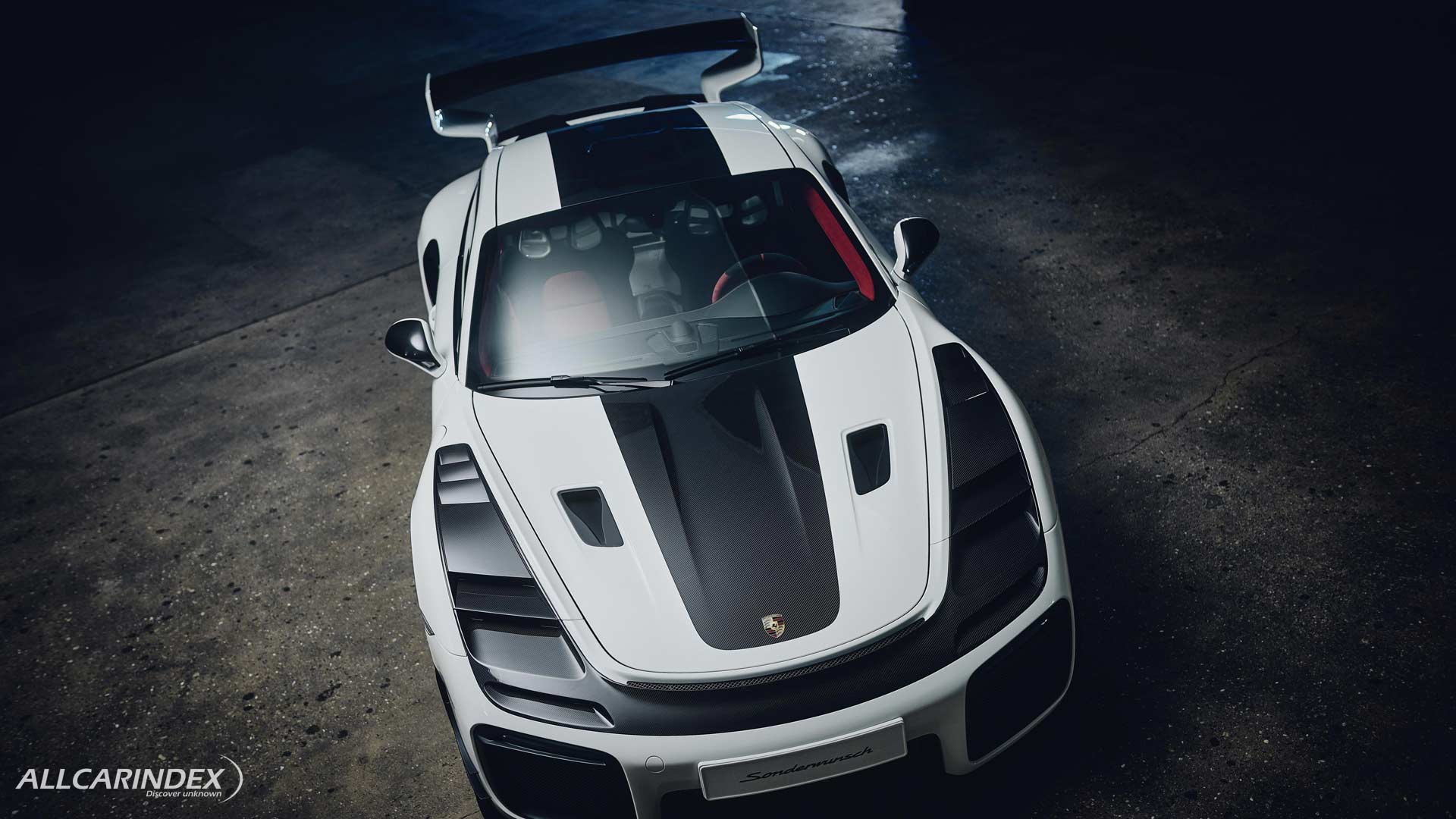
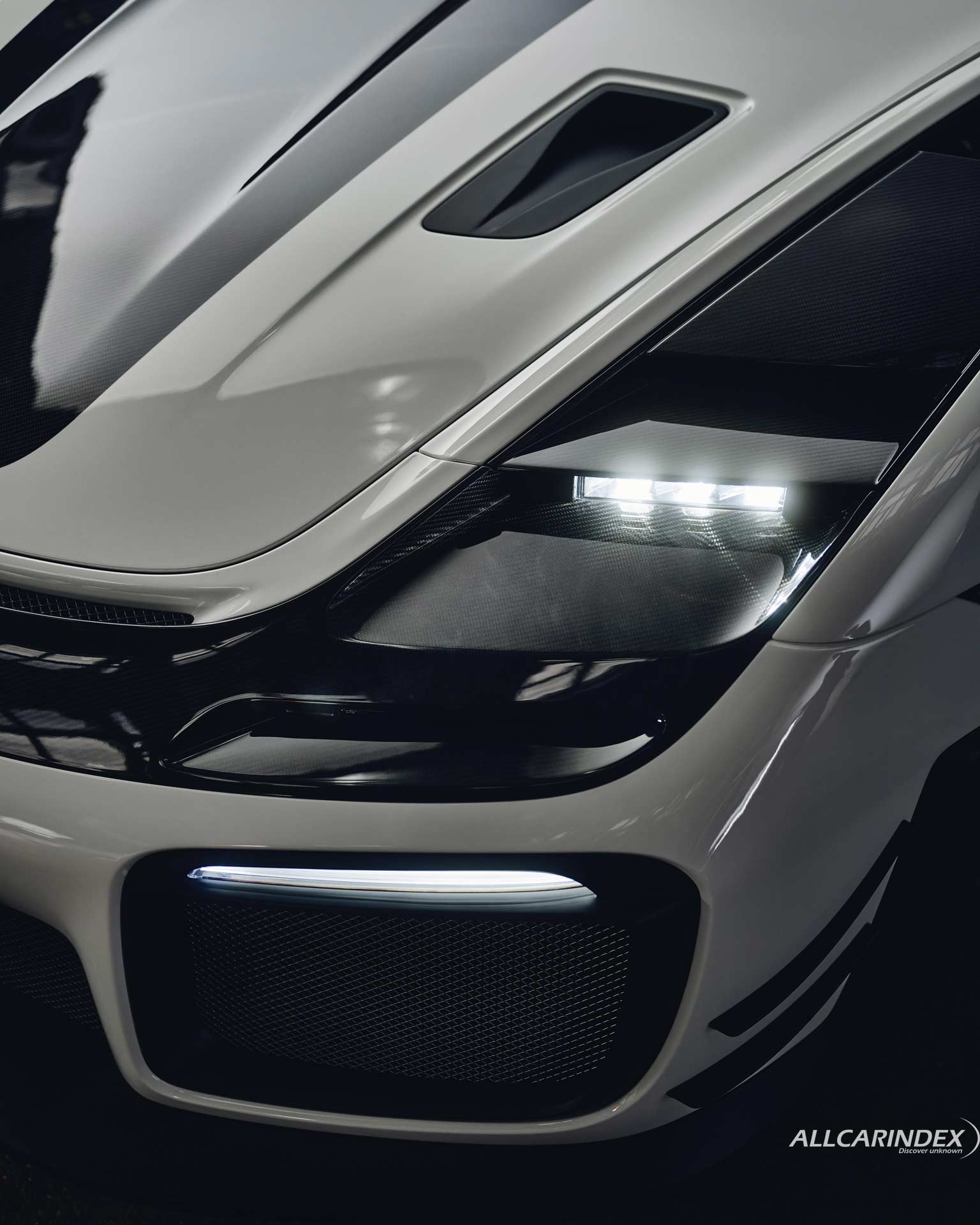
Design fell to Grant Larson, who has since retired from Porsche, a choice that carried its own coincidence, since Larson had also designed the modern interpretation of the 935 that Porsche unveiled in 2018 to mark 70 years of Porsche sports cars. "The new Flachbau RS is a modern, fitting reinterpretation of the iconic 935 Moby Dick design," Larson says. "In addition to the flatter front wings, a key feature is the staggered headlight arrangement with very narrow LED units." The colour scheme was chosen with the same intent, Larson continuing: "We have combined Grand Prix White with sections painted matt black and other areas with exposed carbon fibre. This creates contrast, and the U-shaped contrast element at the front echoes a design feature of the Martini-liveried 935/78." That particular shade of white was developed specifically for the one-off, with Porsche's experts matching it precisely against a historic 911 finished in Grand Prix White from the Porsche AG collection, a colour first introduced for the 911 in 1974.
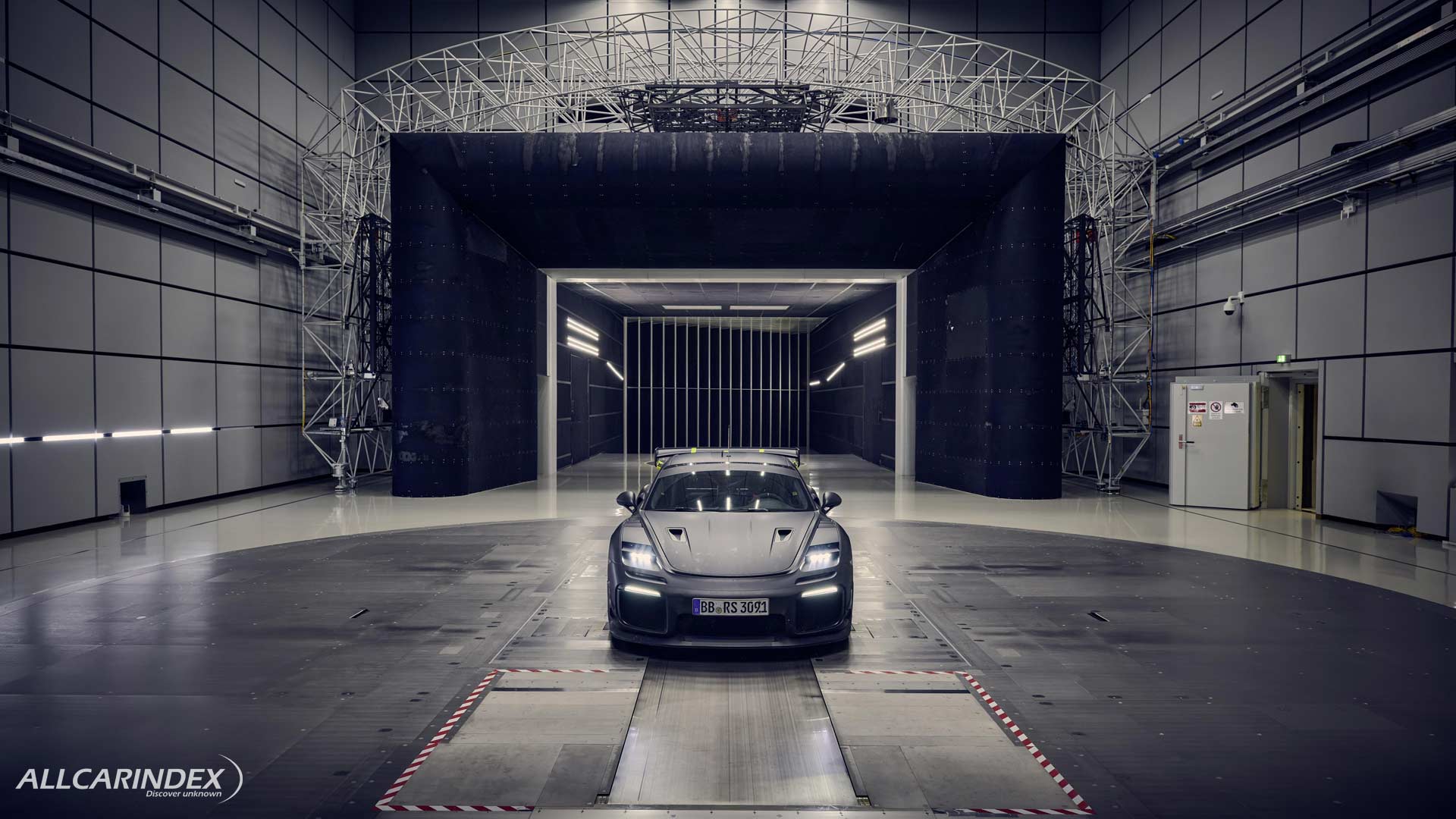
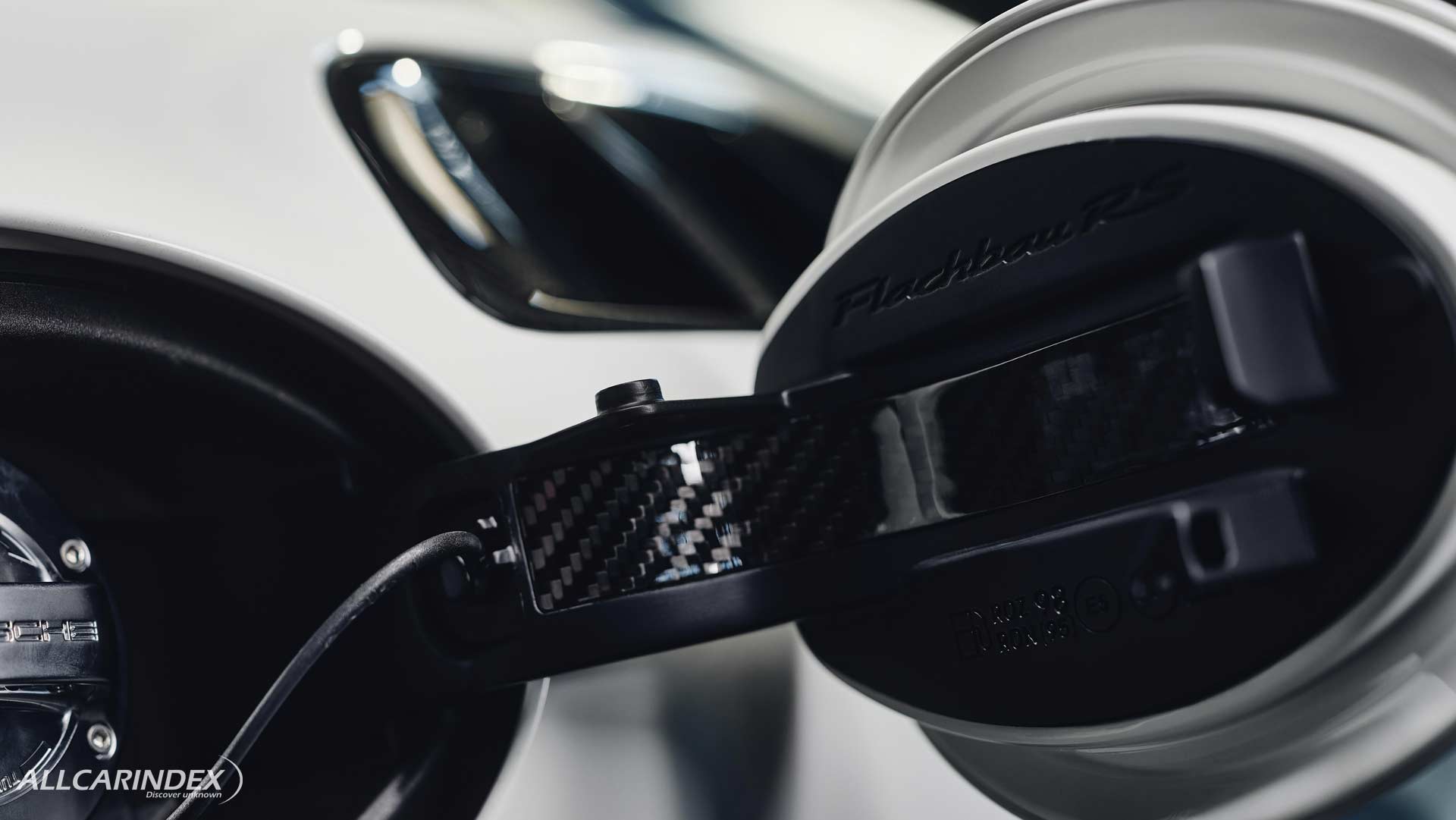
Underneath the paint, the front wings themselves sit lower than standard and carry slatted air outlets that vent the wheel arches and reduce pressure within them, a change that forced Porsche's engineers to modify the fuel filler flap and its underlying mechanism as well, since the new wing contour no longer accommodated the original layout. The front bumper was completely redesigned, with subtle black flaps supplied by Manthey underlining the aerodynamic work at the nose. In place of the standard round headlights sits a tiered lighting system of three LED elements for high beam, low beam and daytime running lights, each unit remarkably slim: the low and high beam units measure just under four centimetres in height apiece, and the daytime running lights come in at less than two. The bonnet and roof stripes are inverted compared with the standard GT2 RS, the centre stripe and U-shaped element rendered in black exposed carbon fibre surrounded by Grand Prix White, while the carbon-fibre aerodiscs on the rear wheels wear the same white finish and the brake calipers are painted deep black.
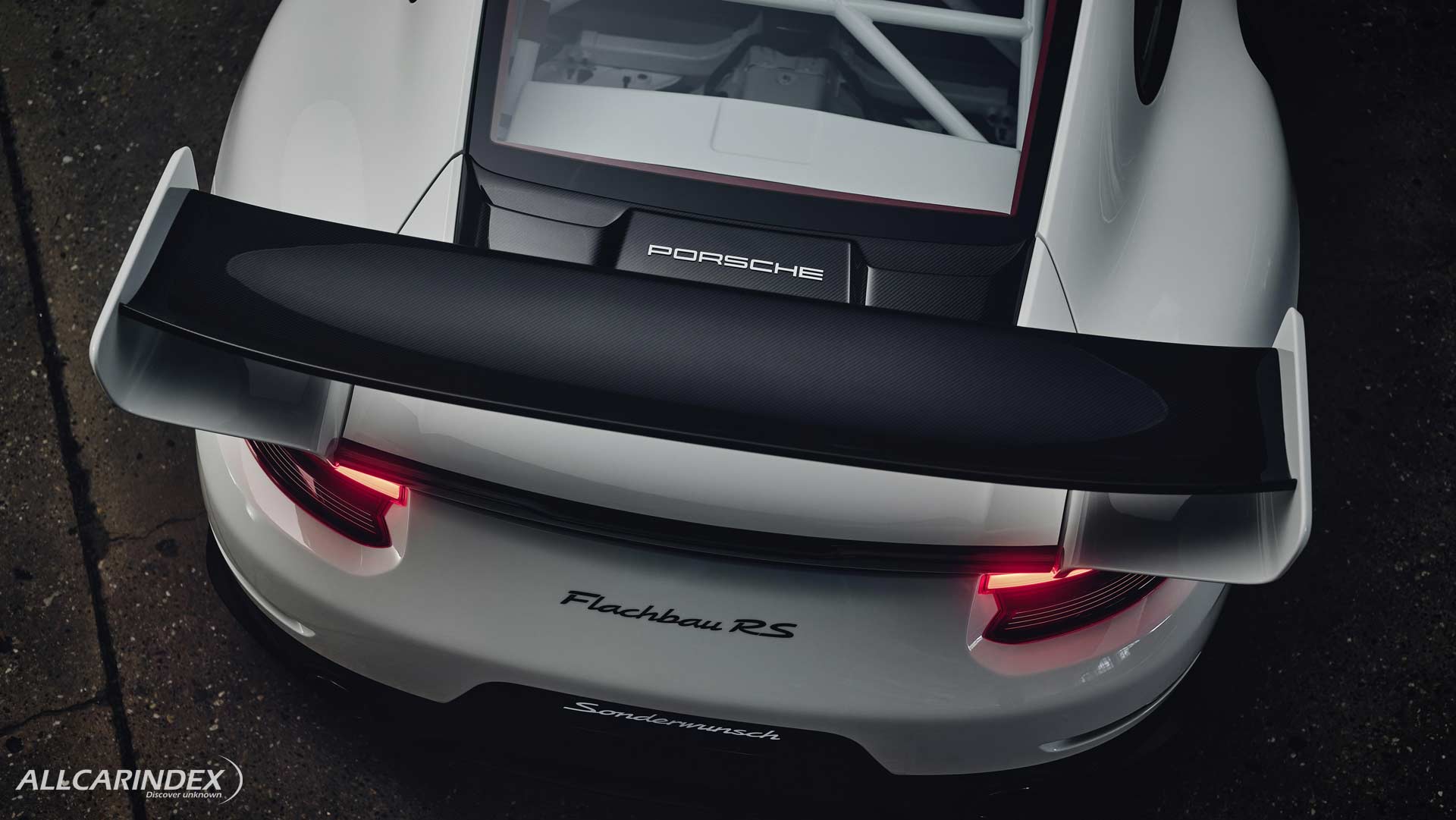
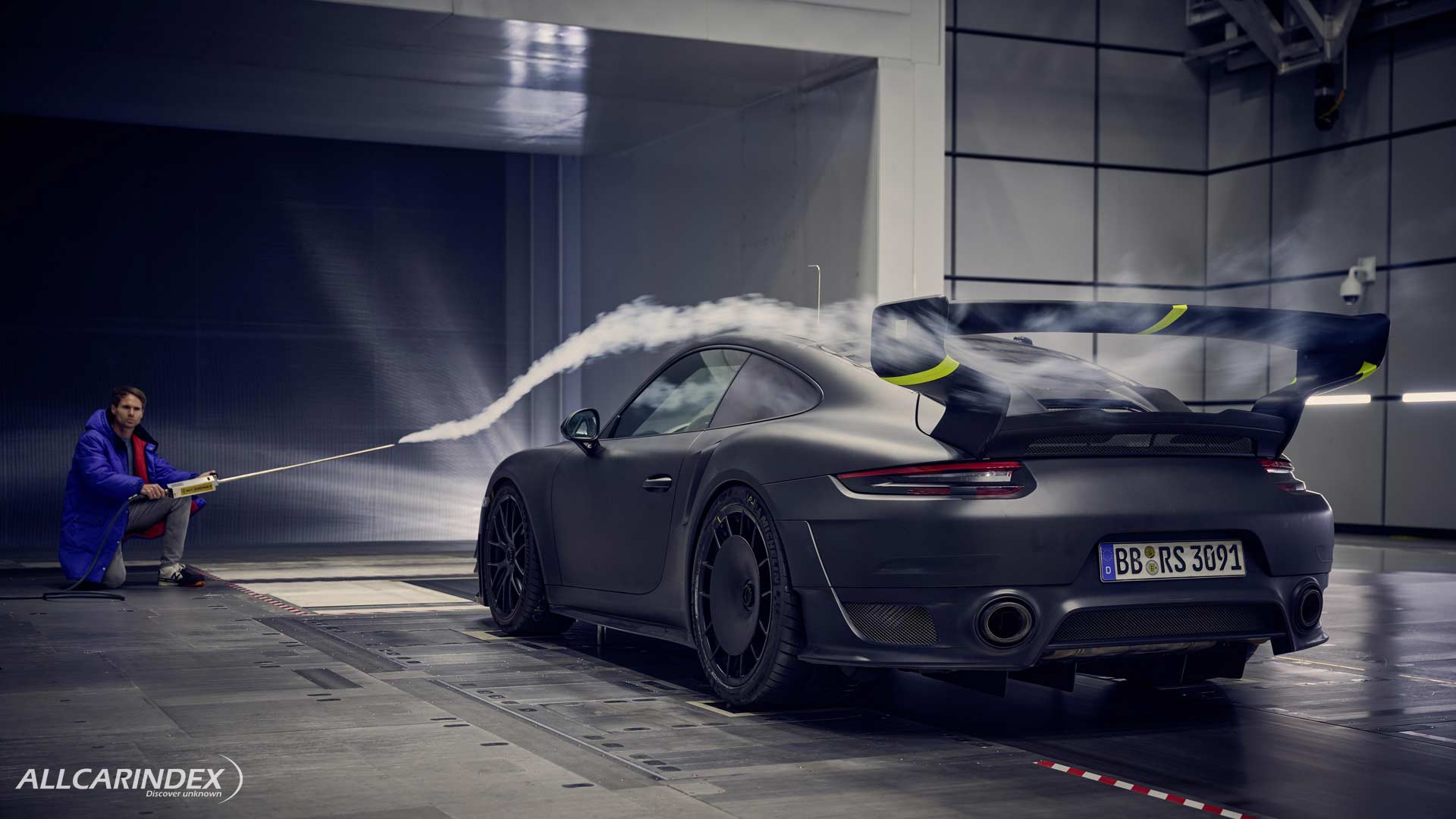
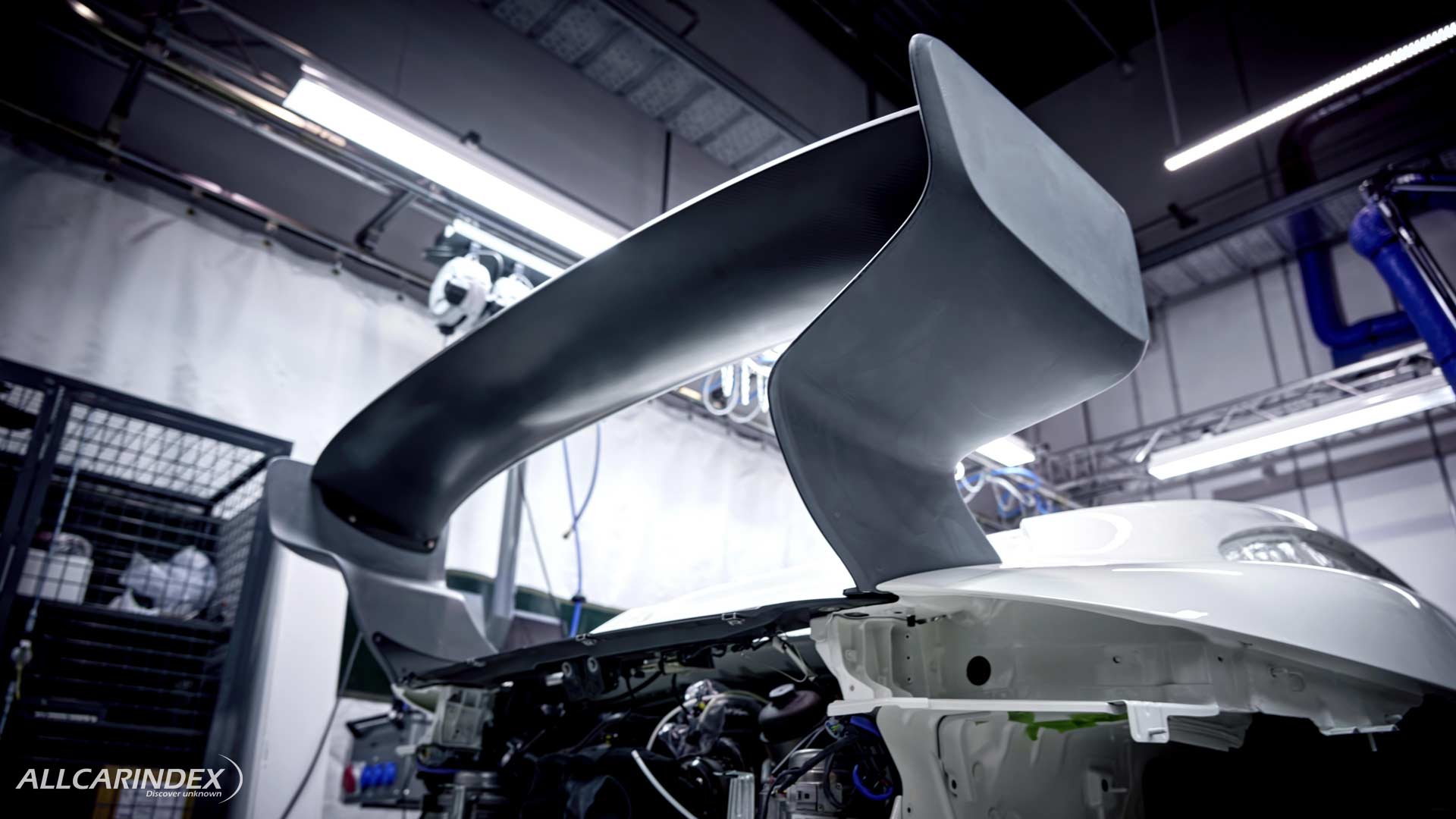
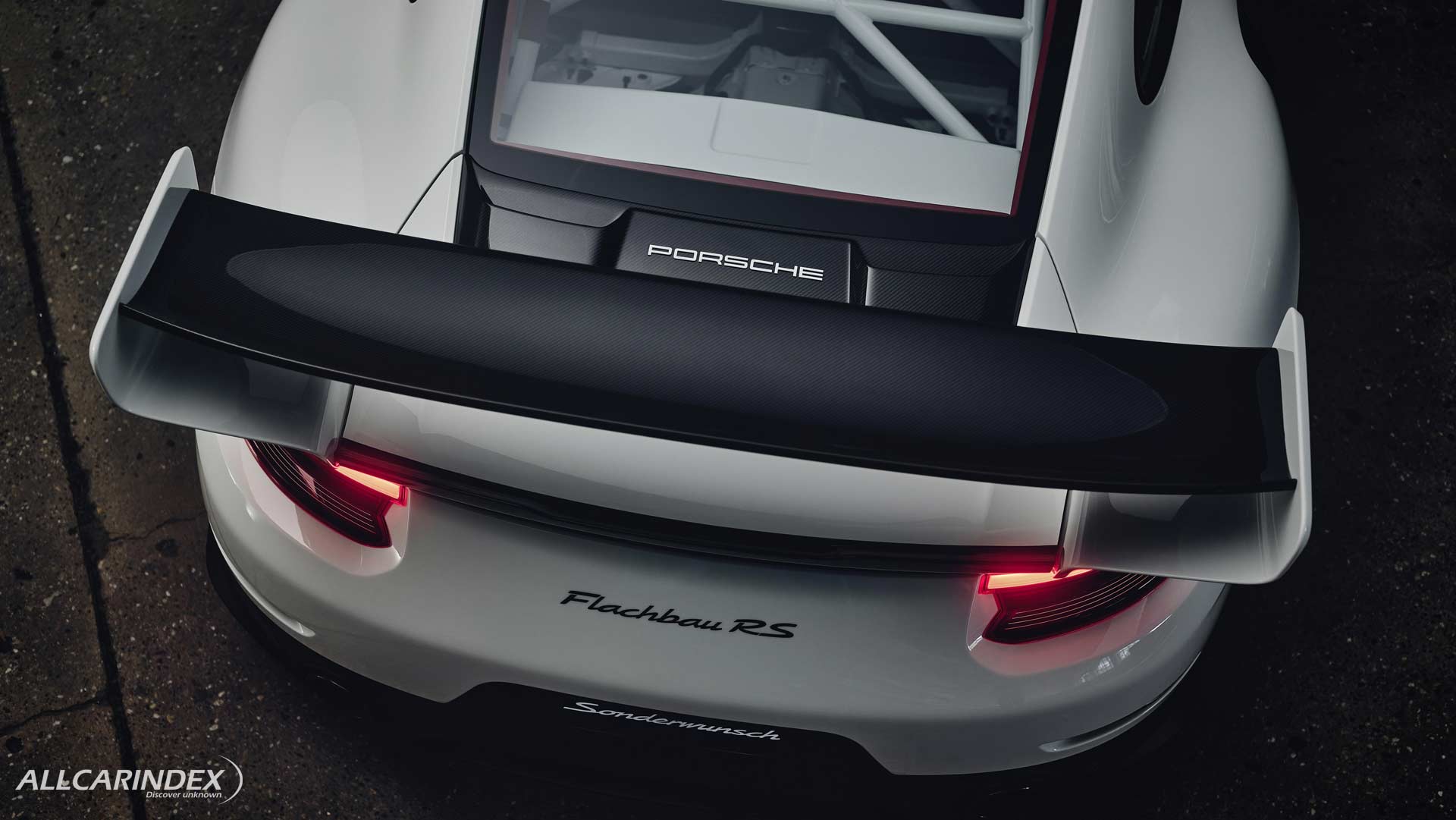
Aerodynamics carry through beneath the car as well as around it. A front splitter works together with the underbody structure of the Manthey Kit, including its rear diffuser, while the carbon-fibre aerodiscs on the rear wheels cut drag on top of their visual role. The rear wing itself, with S-shaped mounts drawing on the 911 GT3 R rennsport, Type 992, sits roughly five centimetres higher on the Flachbau RS than on that car, and can be manually set to three different positions for varying levels of downforce depending on the circuit. In its High and Low Downforce settings, the rear axle sees two and three percent more downforce respectively than a 911 GT2 RS fitted with the Manthey Kit in the equivalent wing positions, and at a top speed of 340 km/h in High Downforce trim, the Flachbau RS produces exactly 554 kg of downforce on the rear axle! Even the wing's adjustment mechanism and its position markings are protected by patent.
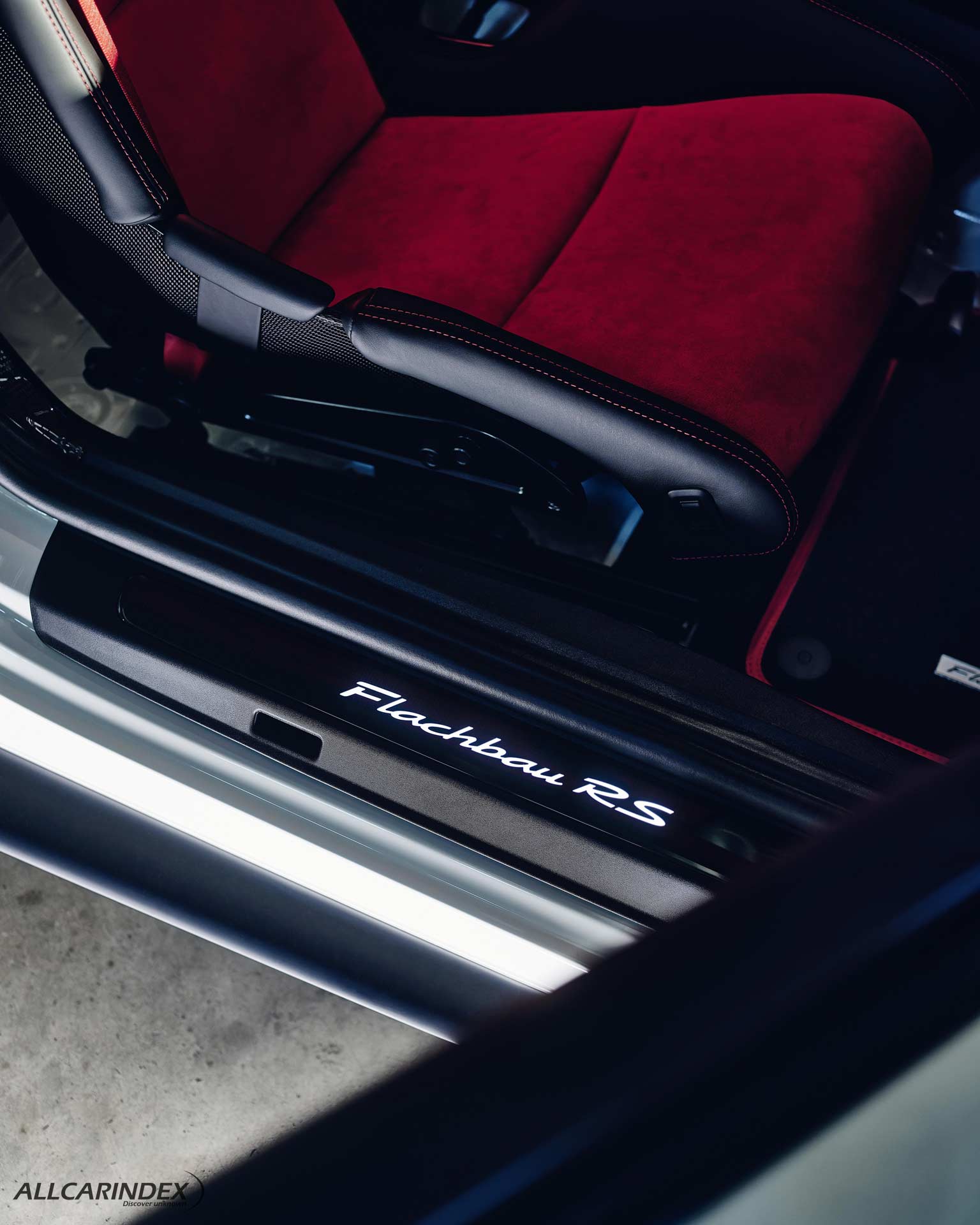
Inside, the cabin tells two different stories depending on where a passenger looks. Ahead of the seats, the original red Alcantara, black leather and exposed carbon fibre trim from before the conversion remain largely untouched, but the space behind the seats has been stripped out much like a racing car's. The Porsche Communication Management system is gone, replaced by a leather-trimmed storage compartment, and every component of the audio system has been removed along with most of the sound-deadening material and floor coverings in both the cabin and luggage compartment. What remains is presented in spartan metal painted Grand Prix White, in the manner of a racing car, with select surfaces such as the armrest extension finished in carbon trim, and the newly laid wiring harness left deliberately exposed under nothing more than protective sheathing, its no-longer-needed wires removed entirely in the pursuit of further weight savings.
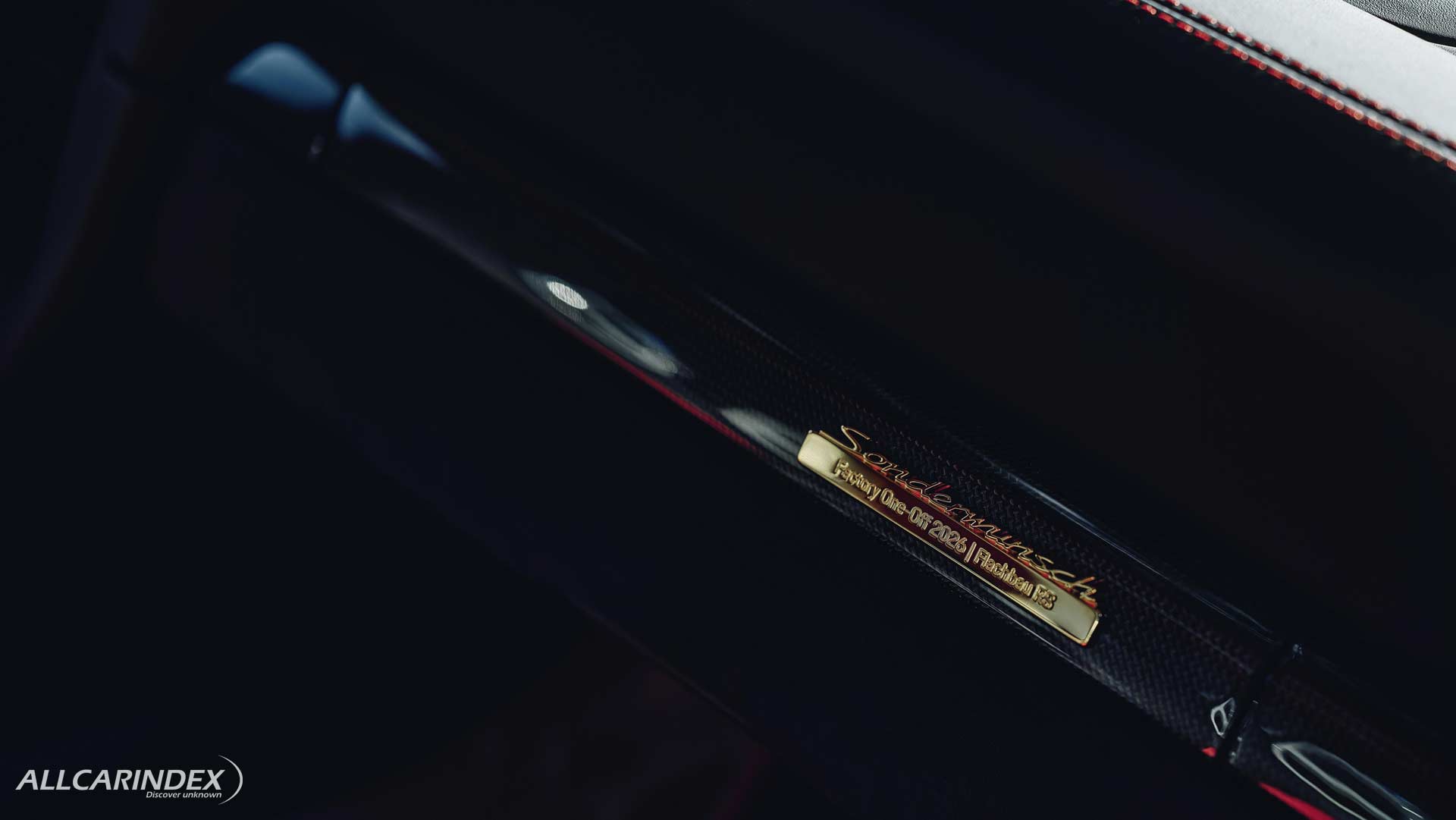
Small details carry the car's identity throughout the cabin. Flachbau RS lettering is embroidered onto the headrests of the carbon-fibre bucket seats, with a stylised outline of the Nordschleife stitched behind it, while the passenger side of the dashboard carries a gold-coloured badge reading Sonderwunsch alongside an engraved plate marked Factory One-Off 2026, Flachbau RS. Even the mandatory road-car equipment got rethought: the conventional mounting points for the warning triangle and towing eye have been removed from the body entirely, those items now housed in a practical emergency box that can be lifted out of the car altogether when it heads to the track, shedding that last bit of weight.
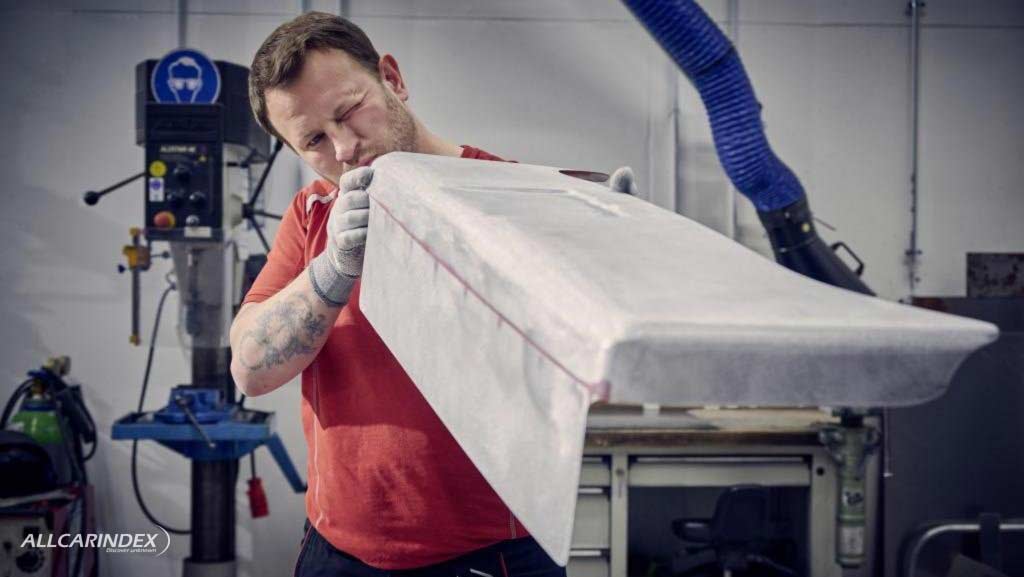
Getting the car road-legal and track-ready took its own campaign. Once the fundamental design details were settled, Porsche ran extensive digital validation first, including simplified crash simulations and airbag deployment tests, alongside detailed structural analysis focused specifically on the loads carried by the oversized rear wing, and aerodynamic calculations run through Computational Fluid Dynamics to refine the overall shape. Only once those virtual tests passed did Porsche greenlight new tooling for the modified components. Physical testing followed, with the new rear wing subjected to extreme vibration on a hydropulse test rig, simulating road conditions to a lesser but still relevant degree, and to static load testing using sandbags. Three test vehicles were ultimately built to carry the validation further, through lighting and wind tunnel facilities and real-world road testing, including numerous runs at the Mendig airfield, fifty laps of the Nürburgring-Nordschleife on their own, and endurance testing at Weissach that simulated a rear-wing load equivalent to roughly 150,000 kilometres of customer use. Porsche test driver Lars Kern, who drove the car on the Nordschleife, described the payoff: "On the Nordschleife, it becomes immediately clear how cleanly aerodynamic concepts work. The Flachbau RS remains extremely stable and precise even at very high speeds. This is exactly the kind of feedback needed in order to validate such a radically altered body design." Even camouflaged, the car couldn't stay hidden for long: when a disguised slantnose test mule was spotted lapping the Nürburgring, footage of the run picked up more than 100,000 views across social media within a few hours.
The car this project reaches back toward earned its nickname honestly. Developed from the Type 930 911 Turbo, the 935 caused a sensation on race tracks from 1976 onward, taking the World Championship for Makes four times in a row, dominating the 12 Hours of Sebring on multiple occasions and the 24 Hours of Daytona, and collecting both class wins and outright victories at Le Mans, a record few other production-based racing cars have matched. It was the elongated shape of the 935/78 specifically that earned the car its lasting nickname, Moby Dick. Porsche had already revisited that legacy once before, at the Rennsport Reunion in 2018, when it presented a modern interpretation of the 935 to mark 70 years of Porsche sports cars, a 700 PS clubsport racing car built in a limited run of just 77 units.
Manthey, the partner Porsche turned to for this latest tribute, has spent 30 years as one of the world's leading Porsche racing teams, based in Meuspath near the Nürburgring and employing more than 350 people under brothers Martin and Nicolas Raeder. Its own record speaks for the choice: seven overall victories at the Nürburgring 24 Hours, six class wins at the 24 Hours of Le Mans, eight FIA World Endurance Championship titles, and DTM teams' and drivers' championships in both 2023 and 2025. Between that pedigree and Porsche's own archive, the Flachbau RS ends up exactly where its owner asked it to begin, in the footsteps of Moby Dick, only built for the road.