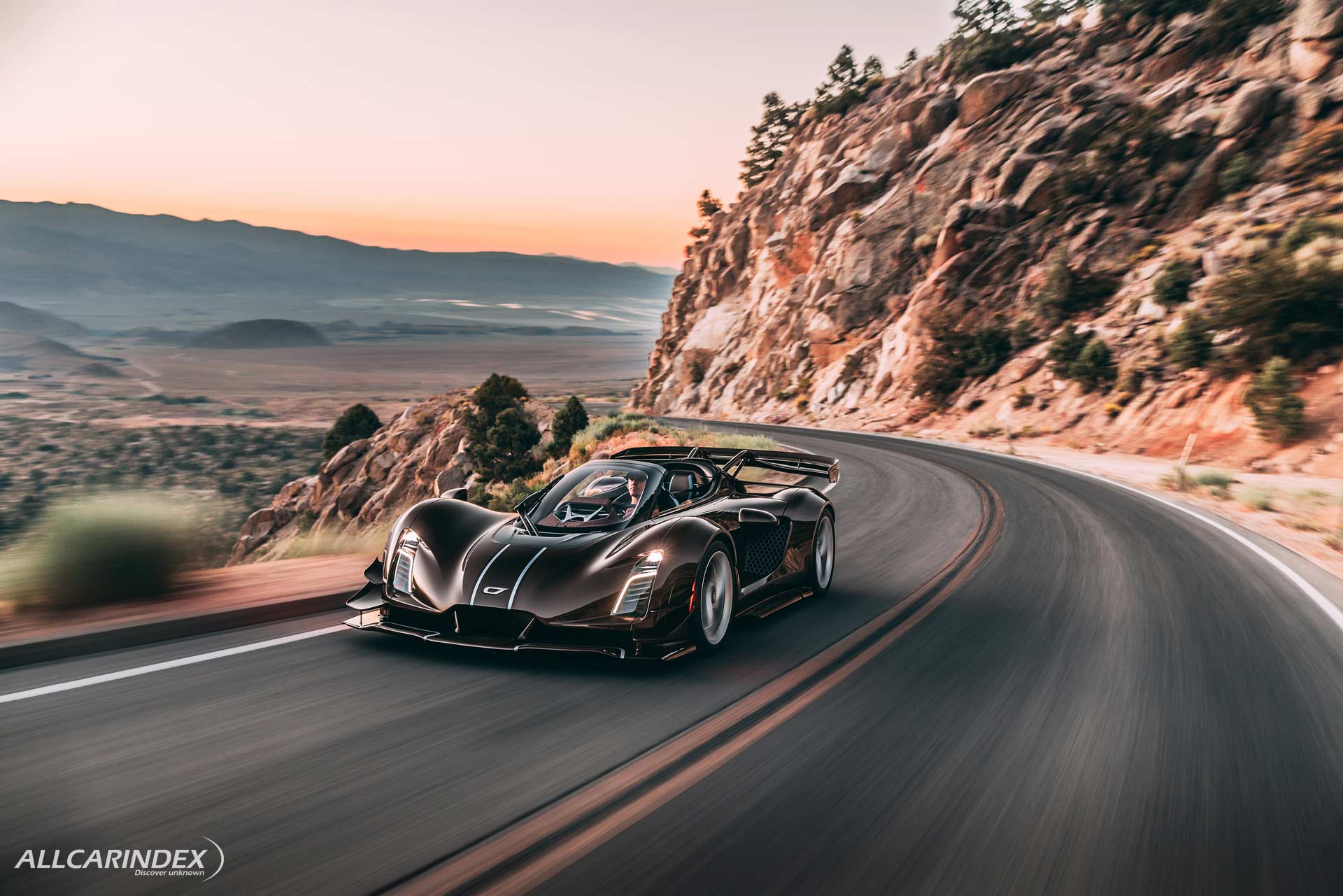



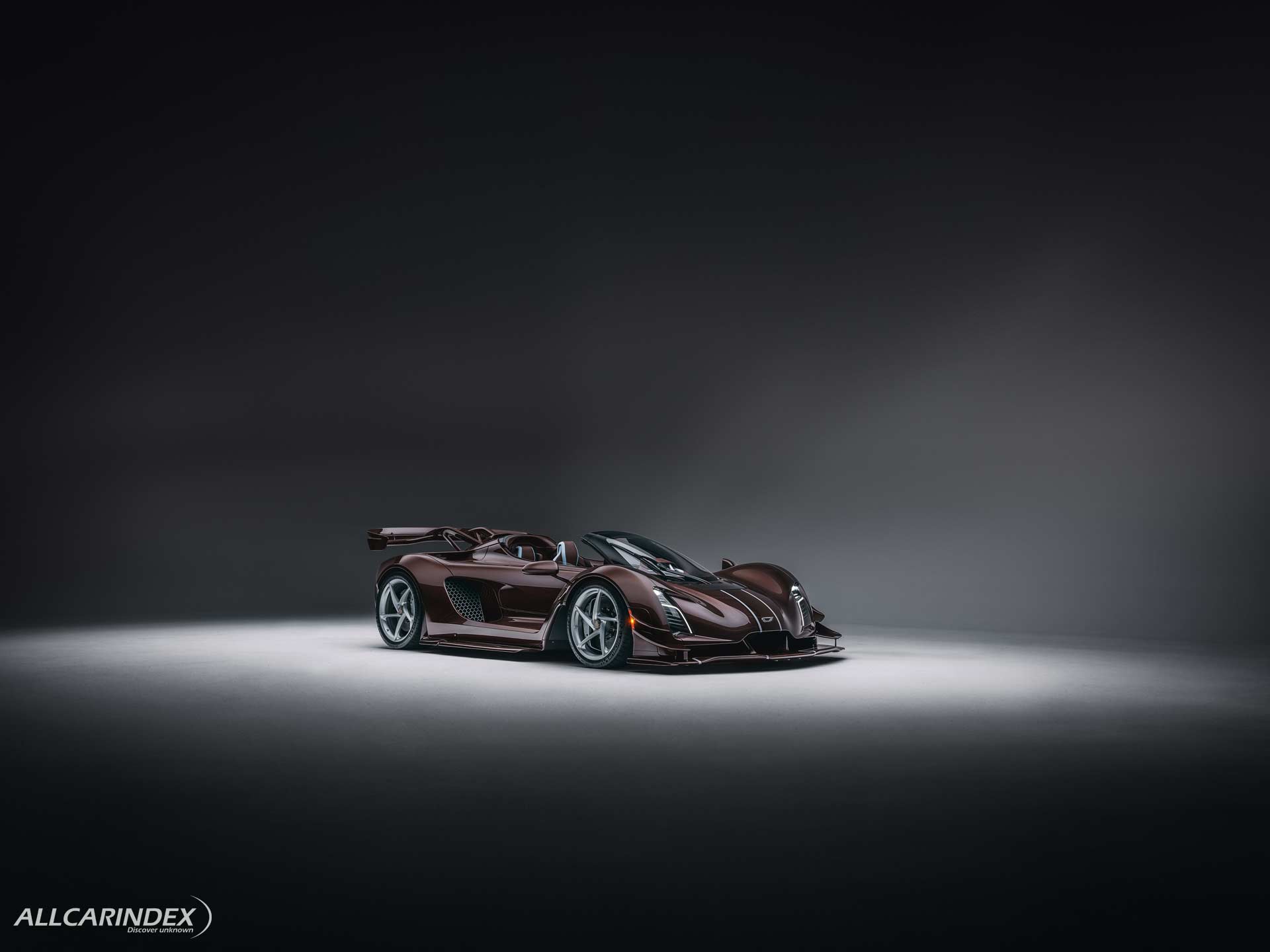
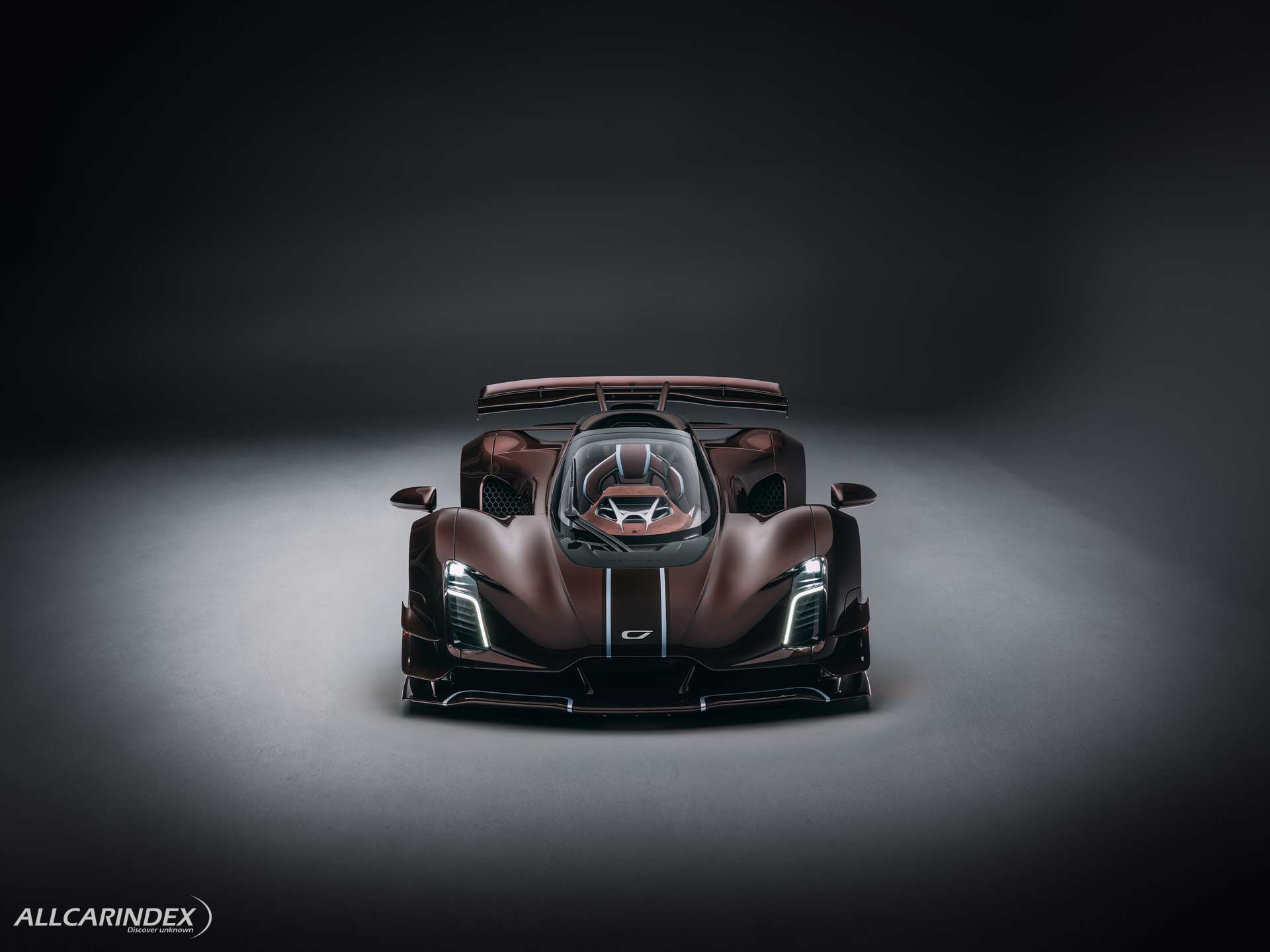
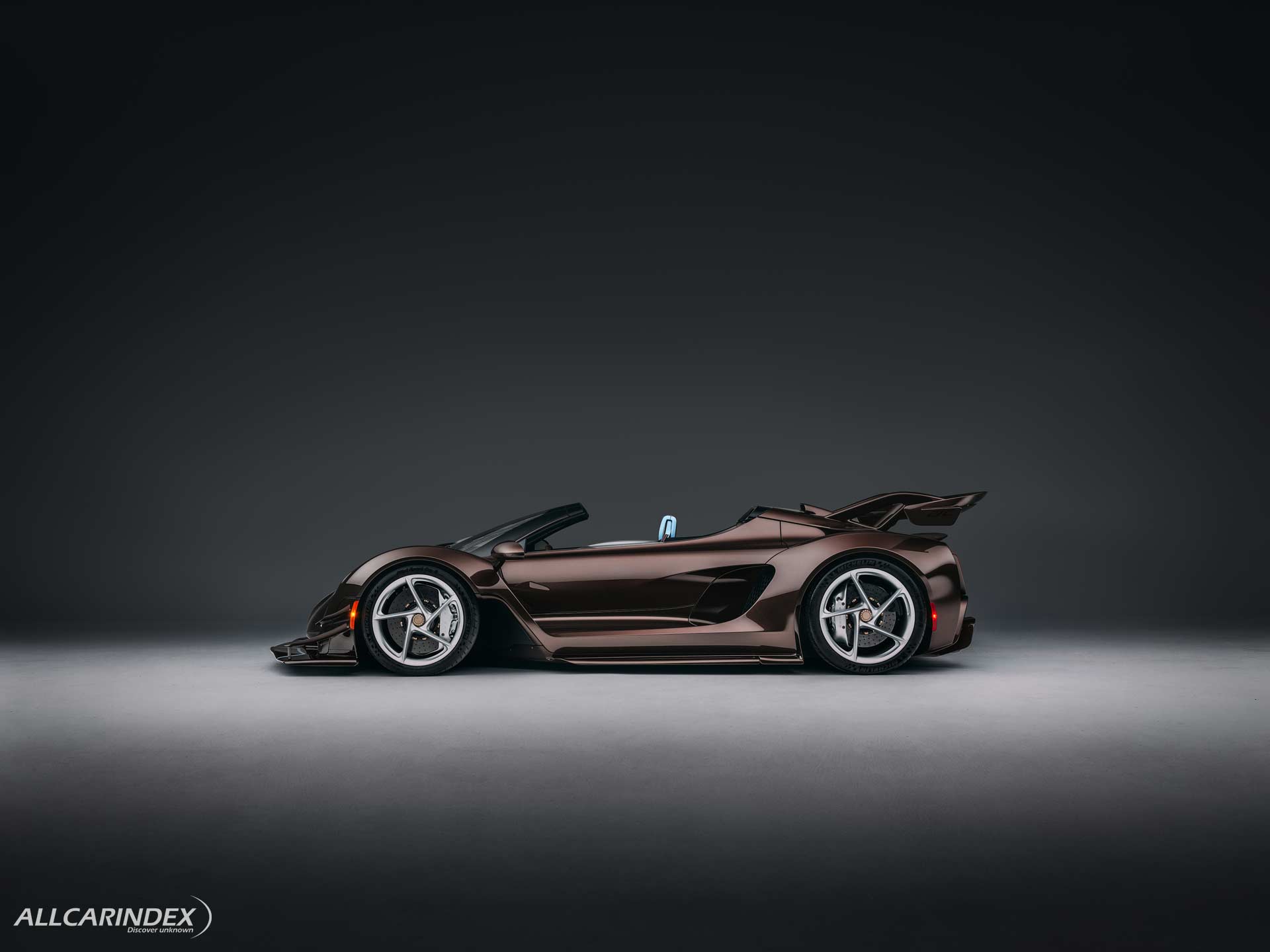
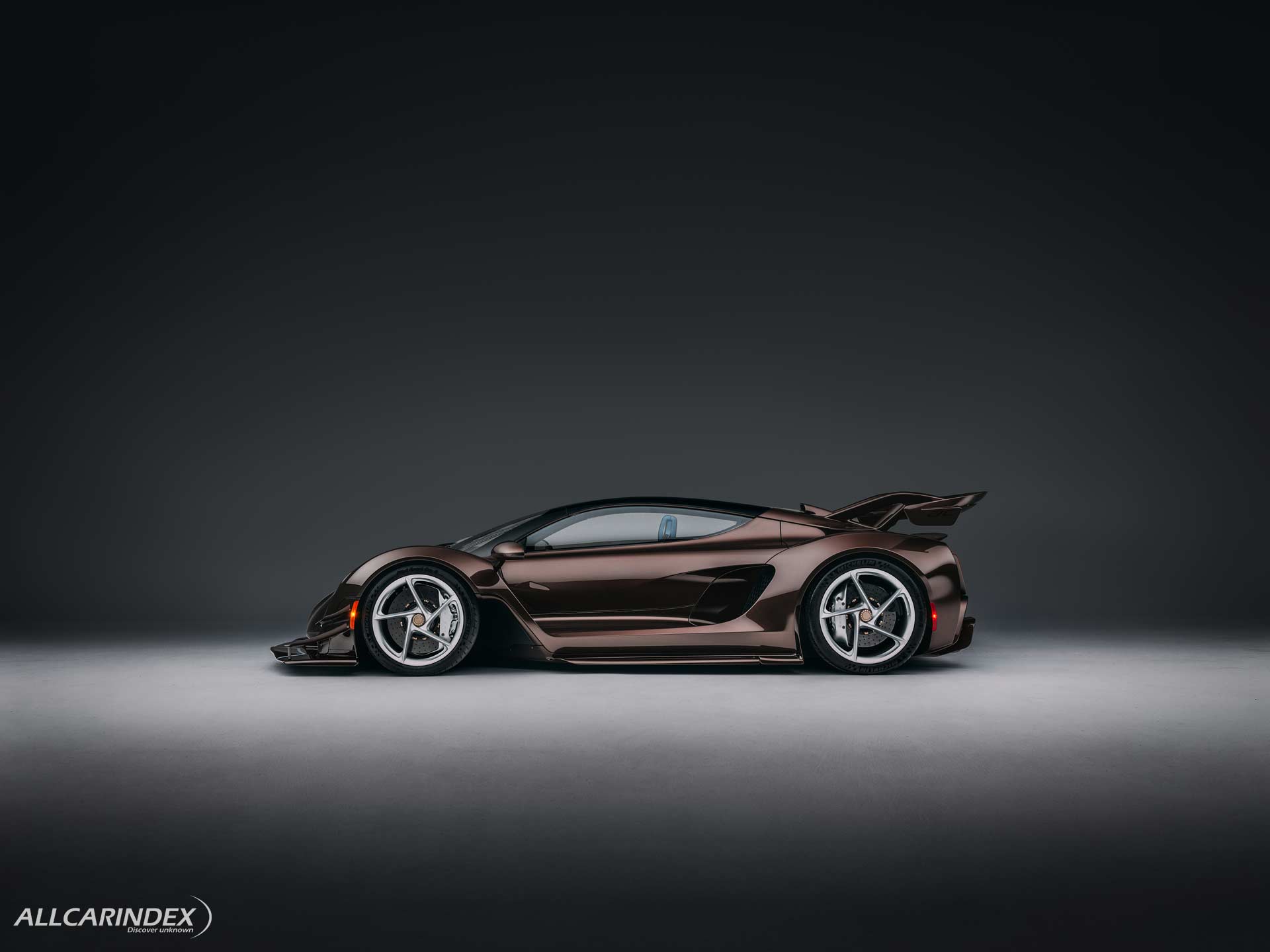


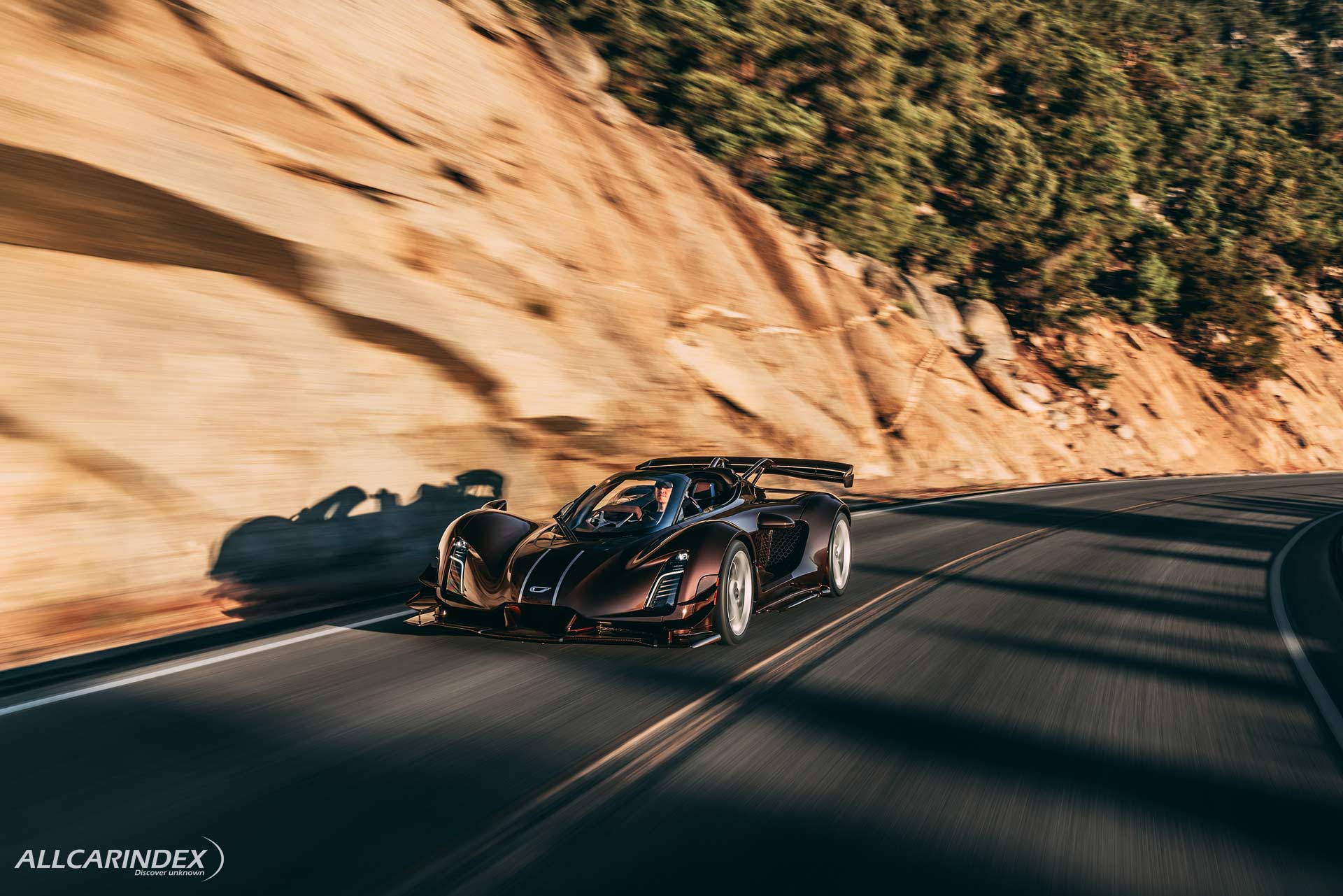

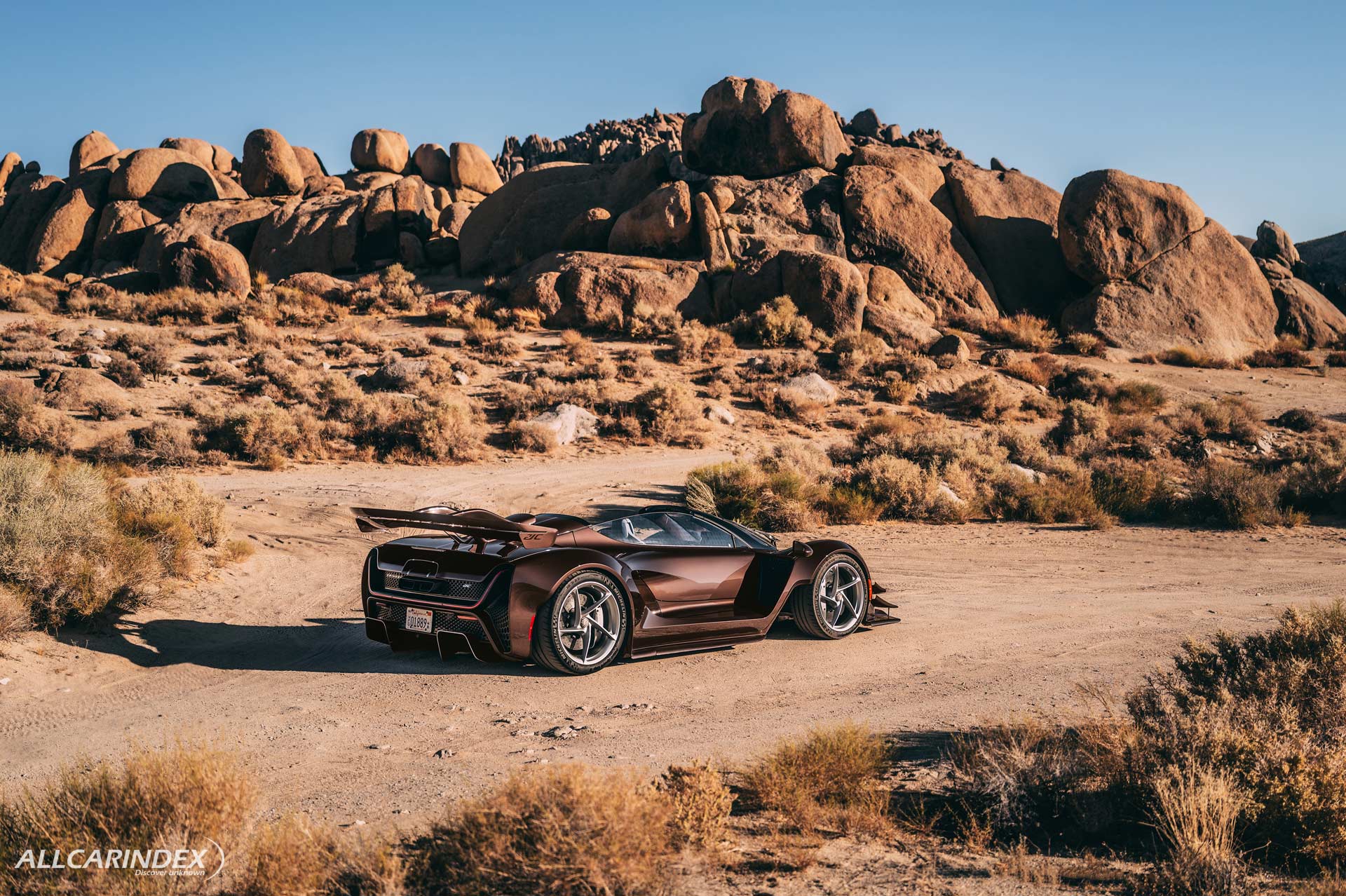


Czinger's 21C had already existed in two forms, the 21C HDF and the 21C VMax, both fully homologated hypercars built by hand at Area 21, the company's production facility in Los Angeles. What neither variant offered was open air. That changes with the 21C Spyder, the third member of the 21C family and the first to remove the car's roof, a decision that pushes the platform's core design philosophy into territory the earlier two cars never touched.
Czinger Vehicles was established in 2019 by Lukas and Kevin Czinger with the stated aim of disrupting the hypercar market through an entirely new method of designing and building performance cars. At the center of that method sits BioLogic™ Engineering, a philosophy in which, as the company frames it, human ingenuity is unshackled from constraints and turbocharged by the most advanced toolset in the industry. Rather than being restricted by the tools and conventions that have historically defined automotive design, the approach is guided by first principles, compressing natural evolution into digital timescales to produce structures that are optimized, stronger, and fully integrated, treating a vehicle as a system rather than an assembly of parts. Lukas Czinger, the company's founder and CEO, described the Spyder in blunt terms: "We started Czinger to build the next era of automotive performance. Not a faster version of cars that have come before, but something fundamentally new. A hypercar designed from the ground up and built using technology the automotive world had never seen. That car is the 21C, and with 21C Spyder, we're going even further, amplifying the driver's connection to the car, debuting world-first technology, and introducing an all-new cockpit experience. The 21C Spyder delivers a drive with no equal."
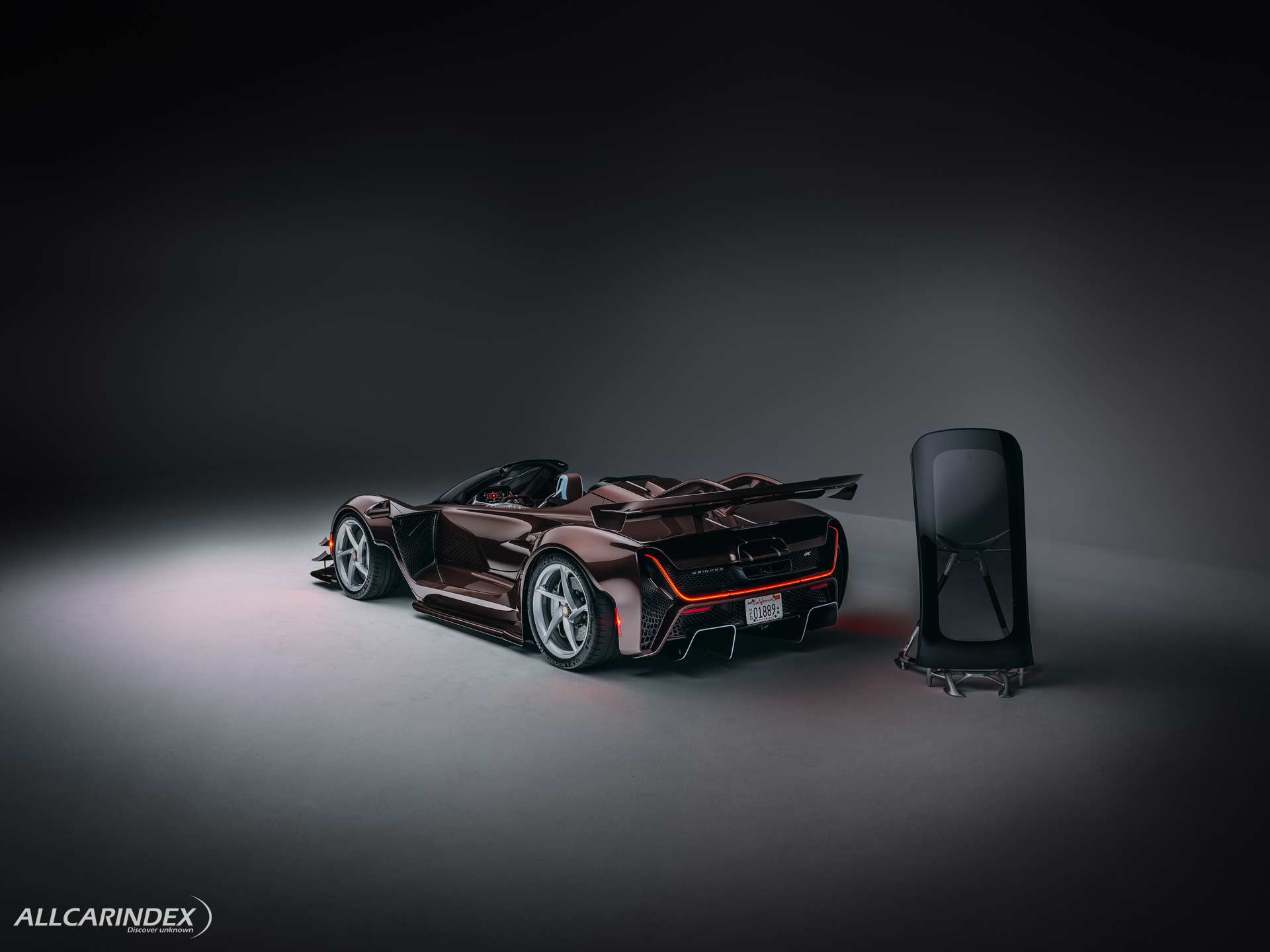
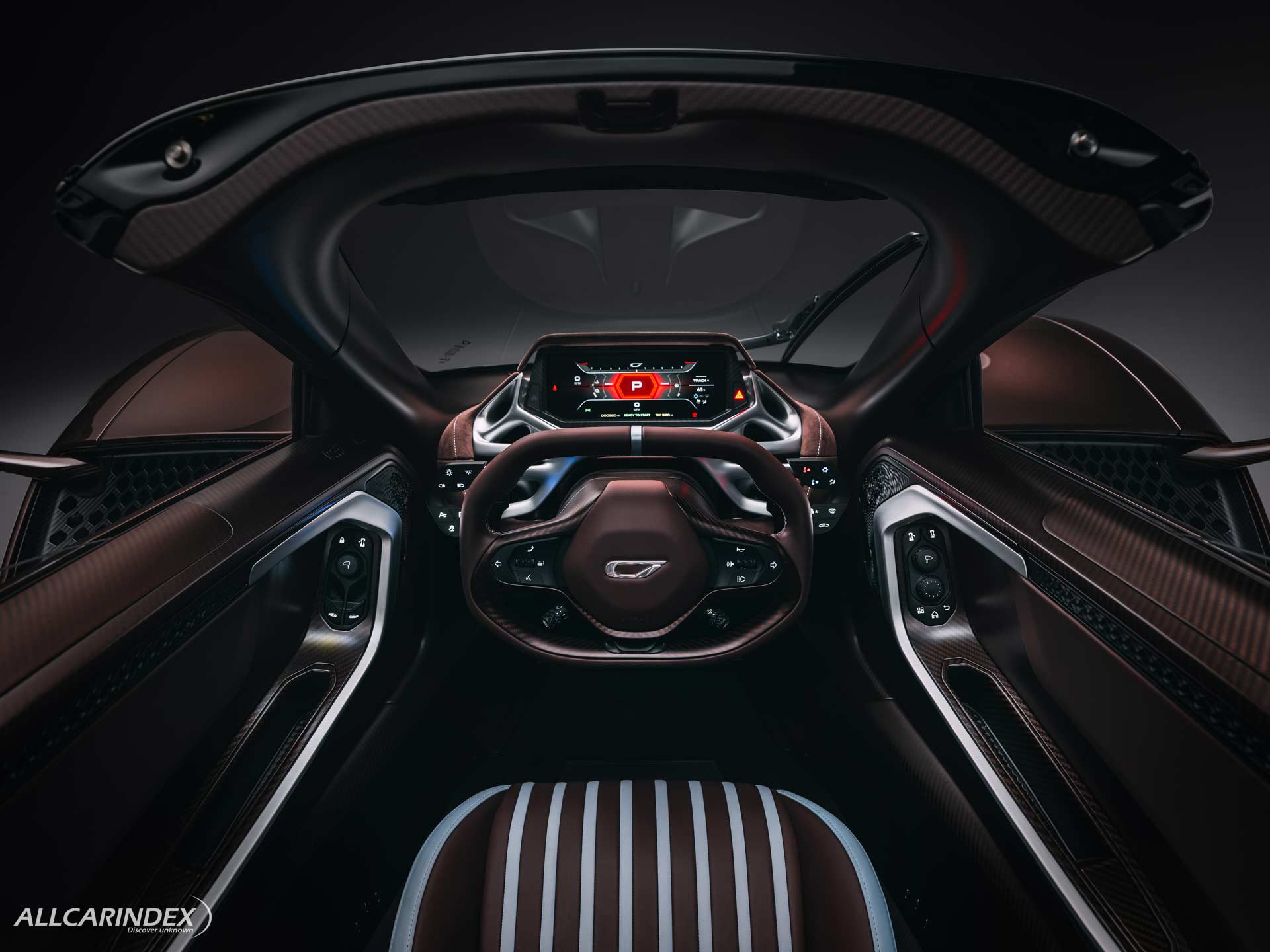
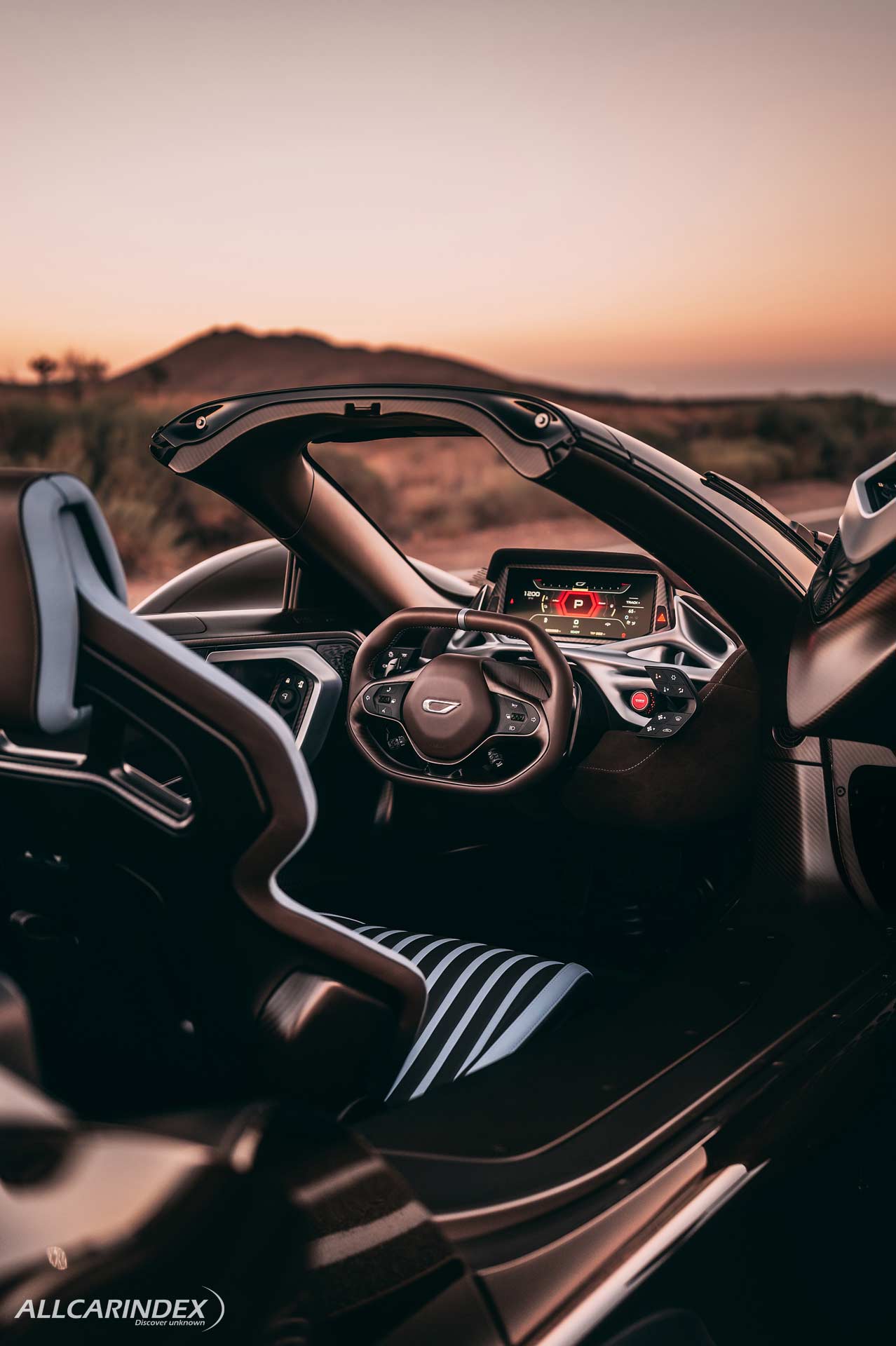
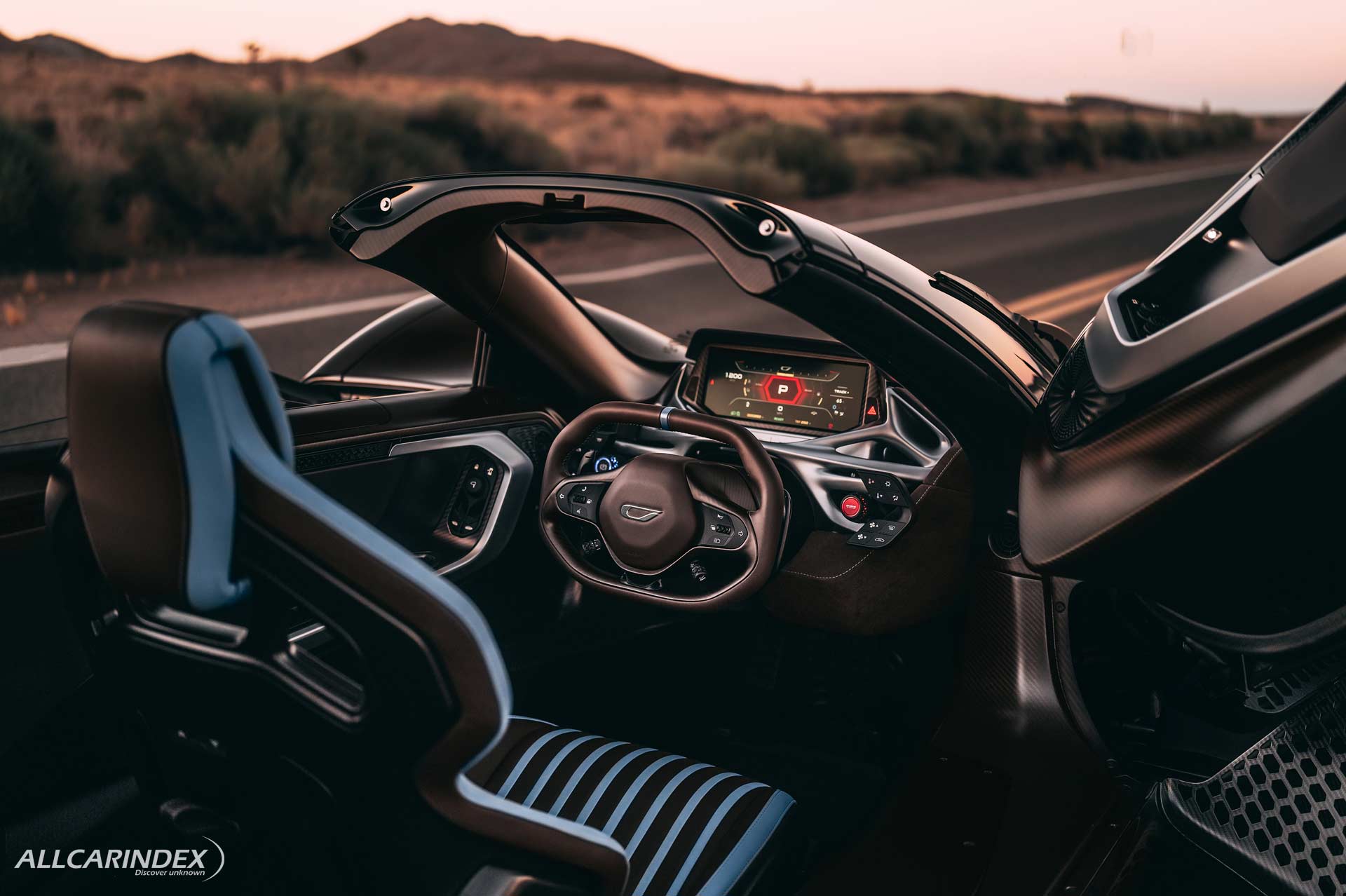
Removing the roof changes the character of the cabin more than any single component could on its own. With the top off, the sound of Czinger's in-house V8 floods the cockpit as it climbs toward its 11,000-rpm redline, every cycle of the airbox now audible through the roof-mounted intake, the rush of wind on either side of the car's central seating layout completing the sensation. That seating position, a fighter jet-like in-line arrangement with the driver at the middle of the car and a second occupant seated aft, was chosen for aerodynamic and experiential reasons alike: it narrows the cabin, minimizes frontal area, and centralizes weight, while the pedals line up directly with the steering wheel and driver's seat to maximize control when left-foot braking. The rear seat was designed to accommodate passengers up to 6'5", so the passenger, positioned close to the roof-mounted air intake, gets an experience the company likens to riding as a fighter jet's co-pilot. When weather turns, the carbon fiber hardtop, weighing just 22 lbs and released by two latches inside the cabin, can be stored on a dedicated BioLogic™ Roof Mount built from additively manufactured aluminum and carbon fiber, while a stowable soft top handles unexpected conditions on the go.
Powering all of it is a bespoke 2.88-liter twin-turbo V8 developed entirely in-house, its compact footprint dictated by the packaging demands of the car's aerodynamics and in-line seating position, which left only a tight space aft of the cabin for the engine to sit. Extensive use of additively manufactured components, including the exhaust and intake manifolds, catalyst assembly, and thermal management system, brought the engine's weight down to 231 lbs, some 100 lbs lighter than the average hypercar engine, while still revving to 11,000 rpm and clearing full homologation in all 50 U.S. states. Running on standard 91-octane fuel, it produces 750 hp, a specific output of 260 hp per liter that the company describes as the most power-dense homologated V8 in production. Two permanent-magnet synchronous electric motors on the front axle add drive to each front wheel independently, while a third motor, the Motor Generator Unit, connects to the crankshaft, primarily charging the car's pair of 2.1-kWh 800-volt batteries while also helping spin the crank to suppress turbo lag. Together the electric motors contribute an additional 500 hp, bringing the combined hybrid output to 1,250 hp and 691 lb-ft of torque, enough for a 0-60 mph run of 1.9 seconds, a quarter mile in 8.7 seconds, and a top speed of 205 mph with the roof closed.
Combustion power reaches the wheels through a seven-speed single-clutch transmission co-developed with Xtrac, built around a 48-volt electrically actuated twin barrel system controlled by three electric motors, one managing the clutch and two operating the gearbox's independent selector barrels, enabling shifts in under 100 milliseconds while torque from the powertrain's own electric motors fills the gaps between gears. The gearbox casing was the first in a production vehicle to be topology-optimized and additively manufactured, a process that helped it reach a torque capacity of 750 Nm per kilogram, the highest of any road car, while the entire transmission system, actuation included, weighs just 242 lbs.
That additive approach extends across the whole car under the Node naming convention Czinger reserves for its most significant consolidations. MegaNode integrates the steering rack, electric motor housings, front suspension components, and front crash structure into a single piece, cutting weight by 25% against those same parts built separately, while the Load-Bearing Manifold folds the engine mount and coolant channels into one compact structure, removing a point of failure and letting the engine sit as close to the car's center as possible. Some 23% of the 21C Spyder is additively manufactured using processes developed by Divergent Technologies, Czinger's vertically integrated sister company, and when those parts are joined to the carbon fiber monocoque, hand-laid with laser-aligned pre-impregnated fabric, they form what the company calls the BioLogic™ Chassis, debuted on the 21C as the world's first Pareto optimal chassis. Because the platform was designed with a Spyder variant in mind from the outset, the monocoque's lower section needed no extra reinforcement for the open-top car, though additional carbon fiber piling was added to the A-pillars to maximize rollover safety given the removable roof. The tub itself weighs only 276 lbs, and the finished car comes in at 3,571 lbs dry, just 22 lbs heavier than the HDF.
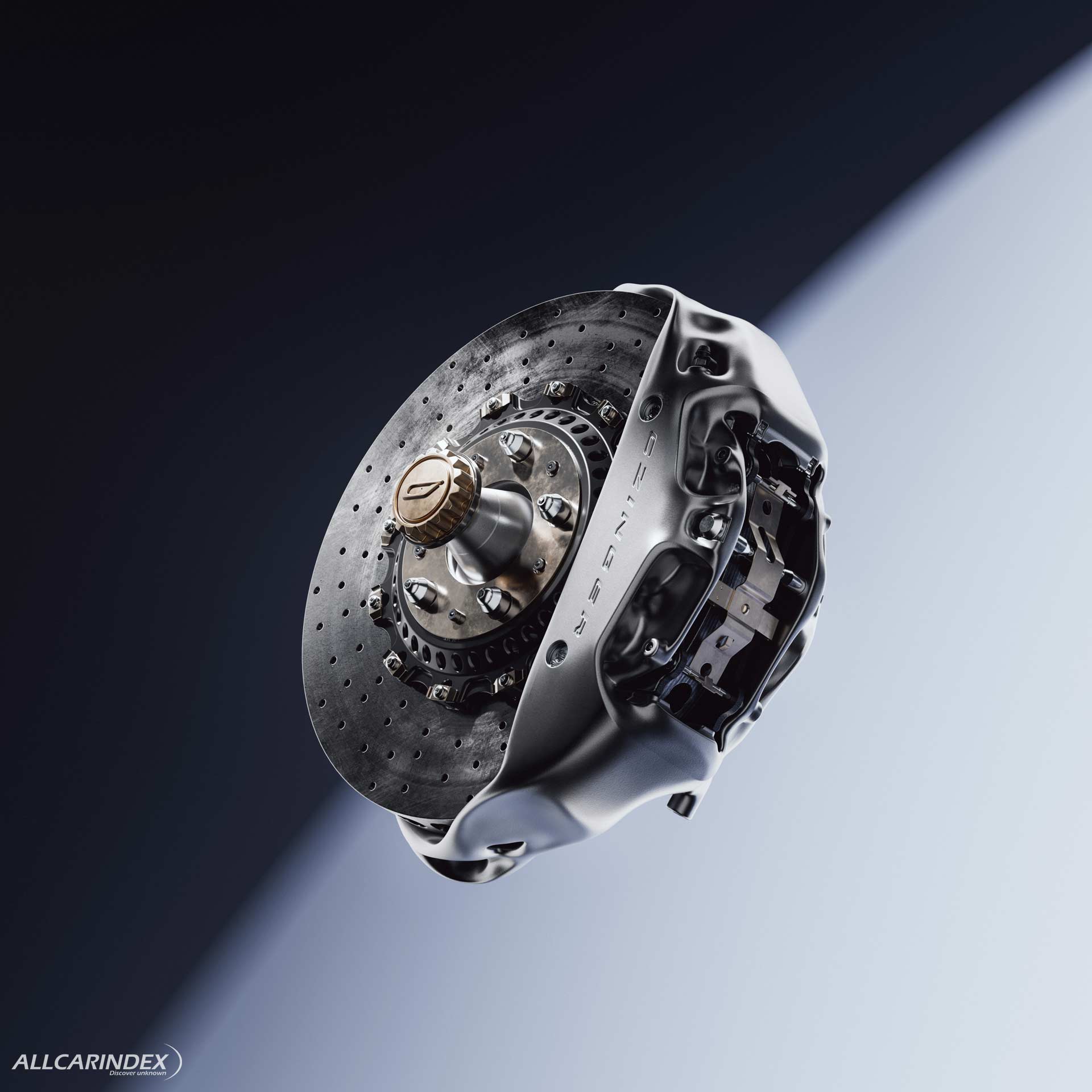
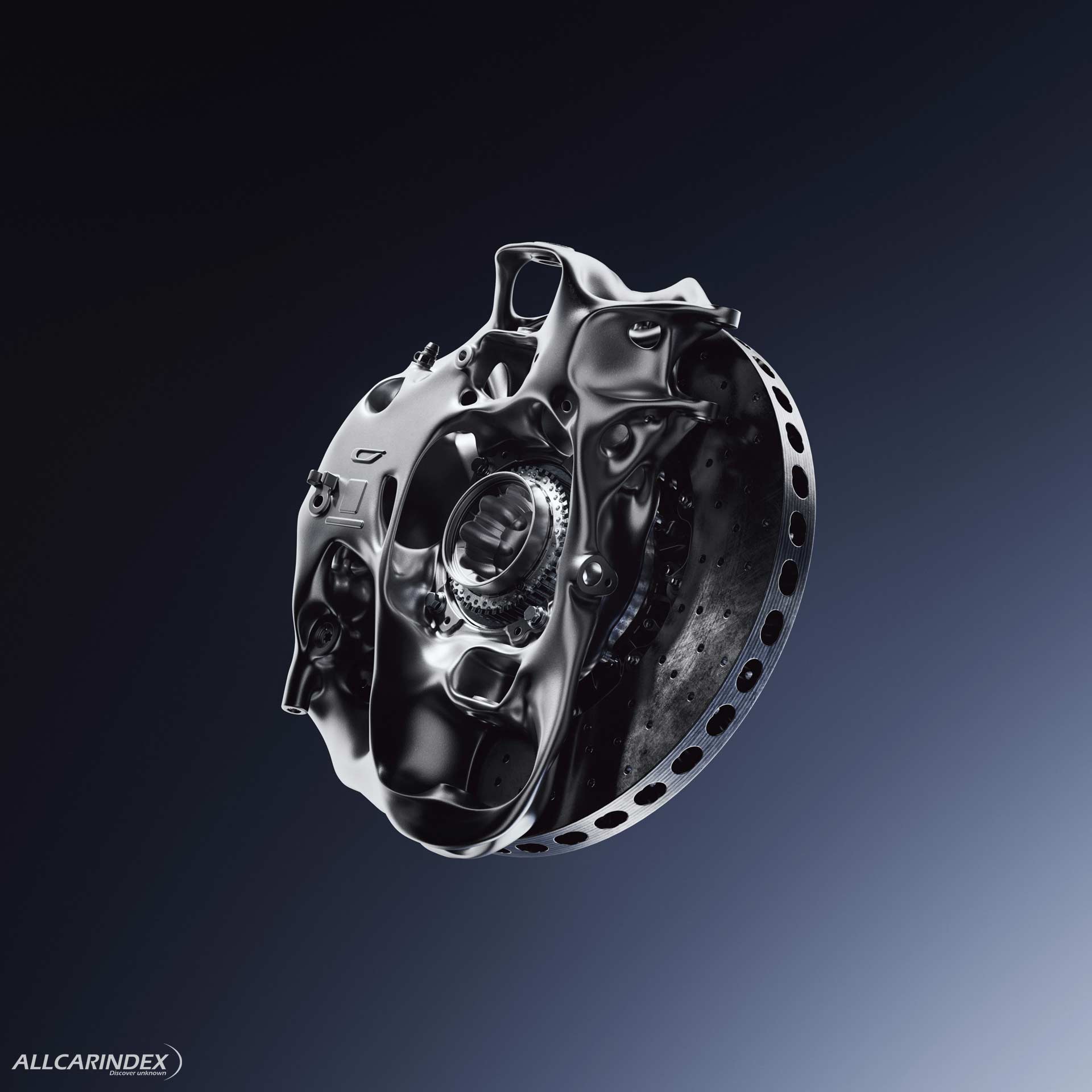
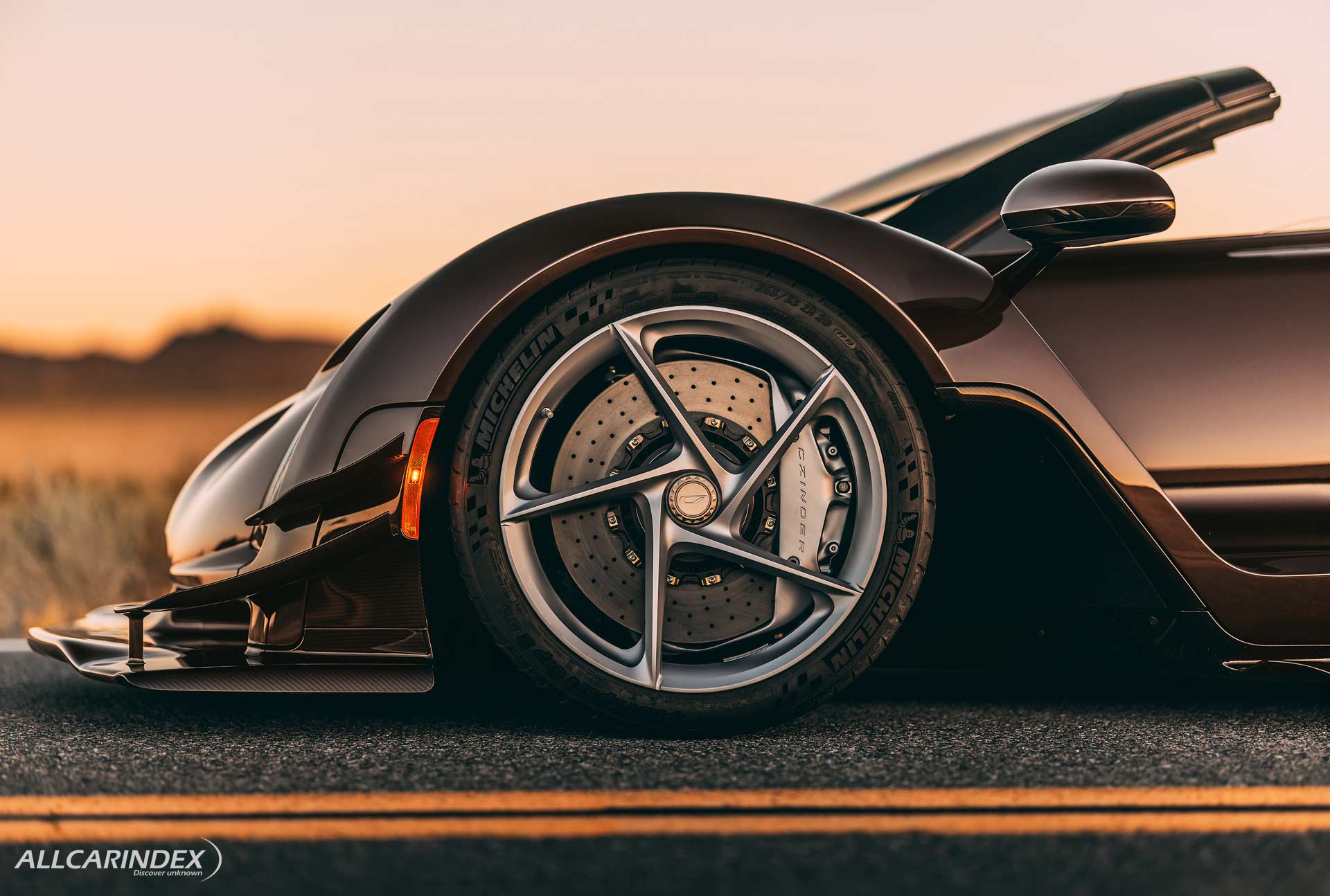
The newest of Czinger's Node components is BrakeNode™, making its production debut here as the world's first fully integrated, topology-optimized, additively manufactured brake assembly, consolidating the caliper, suspension upright, and hydraulic fluid passages that a conventional brake system keeps separate. Built from Czinger's proprietary Z301 aluminum alloy and reliant on reinforced hollow structures for up to 37% of its mass, BrakeNode™ reduces unsprung mass and increases stiffness by up to 30% each against conventional brake structures, cutting total unsprung mass across the car by a further 6 lbs, while stopping distance falls by up to 15%. The component has been tested at up to 500 bars of pressure, no less than eight times greater than the 21C's normal operating pressures. Titanium pistons in the front calipers, a material choice trickled down from Formula 1, keep hydraulic fluid 15% cooler than stainless steel would, while the rear calipers use lighter aluminum pistons since less heat dissipation is required there. The pads clamp onto carbon ceramic rotors measuring 16.1 inches at the front and 15.3 inches at the rear, and because the design allows pads to be reached from the top of the structure and rotors tilted out from the side, servicing is simpler than on a traditional brake system as well.
Likewise the cockpit received its own consolidated structure, called NeuralNode, which replaces the multi-part layout of a conventional dashboard with a single integrated system that encases the instrument panel and channels HVAC air through hollow passages built into the structure itself, useful given the demands of open-top comfort. Two arms extend from the unit toward the additively manufactured, fully upholstered steering wheel, carrying machined metal lighting, drive mode, and climate controls within easy reach of the driver's hands, while matching machined metal finishes the door-mounted mirror, window, and infotainment switches. A bespoke Morel Hi-Fi system, rated at 650 watts across eight speakers including two ultra-thin subwoofers and carbon fiber speaker cones to save weight, rounds out a cabin that also retains full wireless Apple CarPlay through the driver display.
Underneath, the 21C's dual A-arm pushrod suspension carries additively manufactured control arms that cut weight by 20% against a conventional setup while their tapering cross-sections, only achievable through additive manufacturing, reduce drag by 10%. A three-piece Z-bar at the front trades the bulk of a traditional sway bar for a lighter, more compact footprint, with wiring and brake line mounts built directly into the additively manufactured corner assembly. Electronically adjustable dampers shift character across four drive modes: Street, which runs on the front electric motors alone below 60 mph before the rear axle engages automatically above that speed for a total of 1,140 hp; Sport, which keeps the combustion engine running at all speeds for full all-wheel-drive propulsion at the same 1,140 hp; Track, which unlocks the full 1,250 hp and holds gears to the 11,000-rpm redline from second gear upward rather than upshifting automatically; and Track+, which drops ride height by 25mm and stiffens the dampers by 50% for circuit use, a setting the company states should not be used on public roads.
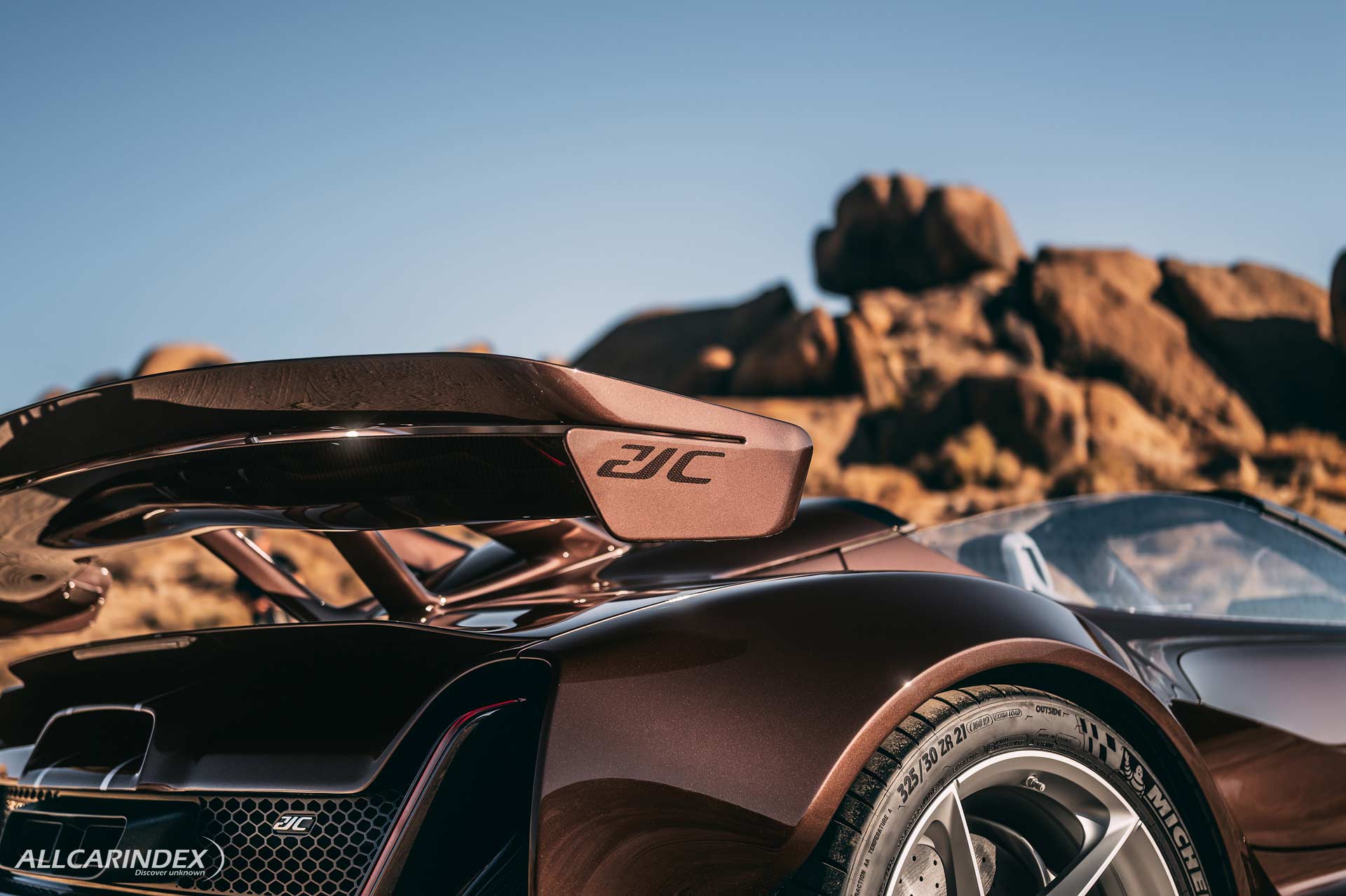
None of that aggressive tuning comes at the expense of the car's aerodynamics, which the in-line seating position made possible in the first place. An extended front splitter works in ground effect ahead of the axle while twin dive planes keep tire wake from disturbing airflow bound for the underbody, and the narrow cabin allows for full-length channeled side splitters on each side of the chassis, a layout the company notes is impossible in a conventional side-by-side cabin. A multi-channel diffuser runs beneath the car to a 76-inch dual-element rear wing, the highest point on the car at 45 inches and adjustable across three positions to suit specific circuits. At 150 mph with the roof removed, the 21C Spyder generates 3,267 lbs of downforce, the most of any open-top road car, rising to 3,307 lbs, identical to the HDF, with the roof installed, 57% of that pressure biased toward the rear.
Getting all of this certified for road use required its own campaign. The 21C underwent more than 35 crash tests during development, with additional roof crush testing specific to the Spyder, and meets both Federal Motor Vehicle Safety Standards and California's CARB emissions and OBD requirements, the latter of which the company calls the most complex certification process in existence for a vehicle at this performance level. A custom controls system monitors every emissions-related component continuously, and a unique startup sequence lets the car begin driving under electric power from its front motors while a cold engine extends its warm-up to bring the catalytic converters to full function.
Only 30 examples of the 21C Spyder will be built, each hand-assembled at Area 21 and finished as a one-of-one through Czinger's specification program, which extends to the color of individual additively manufactured components, custom exterior colors developed from scratch, tinted carbon fiber, and bespoke upholstery and stitching. Pricing starts from $2.75M. What began as a fixed-roof platform designed from the outset with this variant in mind now opens to the sky, the same central seat, the same V8 climbing toward eleven thousand revolutions, only now with nothing standing between the driver and the sound of it.