![Ferrari CZ26 One-Off Reimagines the SF90 Stradale [w/Video] photo 1](/img/blog/2026/2026-08-14-ferrari-cz26_01.jpg?t=mGptcvPL8Fk2FEEvoi3rzVr8eGE2onlC0TZa-2y1I8A)
![Ferrari CZ26 One-Off Reimagines the SF90 Stradale [w/Video] photo 2](/img/blog/2026/2026-08-14-ferrari-cz26_02.jpg?t=uYOidujyy1V8a15Fr8ocujGmZ7fM6AiWknGTGp-v0Xs)
![Ferrari CZ26 One-Off Reimagines the SF90 Stradale [w/Video] photo 3](/img/blog/2026/2026-08-14-ferrari-cz26_03.jpg?t=cpTxCuTvzZ6PbGI3AORk8adCqJHVZ_gfhDWB6Wgul6U)
![Ferrari CZ26 One-Off Reimagines the SF90 Stradale [w/Video] photo 4](/img/blog/2026/2026-08-14-ferrari-cz26_04.jpg?t=Kanwzz3KHYJPhEmNpSUAXbBjbAKE5ruVgWd_iUyK_k4)
![Ferrari CZ26 One-Off Reimagines the SF90 Stradale [w/Video] photo 5](/img/blog/2026/2026-08-14-ferrari-cz26_05.jpg?t=Ql1736rnI8qYlnsfS9fK36GINfM2QFVA0h-R_LV9PvE)
![Ferrari CZ26 One-Off Reimagines the SF90 Stradale [w/Video] photo 6](/img/blog/2026/2026-08-14-ferrari-cz26_06.jpg?t=LQGGyjcI3uzYkGxF4MtQlbu92Ope7m2ZsVjSntobdvk)
![Ferrari CZ26 One-Off Reimagines the SF90 Stradale [w/Video] photo 7](/img/blog/2026/2026-08-14-ferrari-cz26_07.jpg?t=4Vqp9knhevodhHVVsSYKpHjbcxM9f7K-eU-2bVyEZwQ)
![Ferrari CZ26 One-Off Reimagines the SF90 Stradale [w/Video] photo 8](/img/blog/2026/2026-08-14-ferrari-cz26_08.jpg?t=zAN7EFZJJrtfhqWLBXEOST98kcMkoCfnThKUjwGybbo)
![Ferrari CZ26 One-Off Reimagines the SF90 Stradale [w/Video] photo 9](/img/blog/2026/2026-08-14-ferrari-cz26_09.jpg?t=xL_ijzut_dlBvo7UP0pThJf49UJQEW4JSZS3Duh-ZnQ)
![Ferrari CZ26 One-Off Reimagines the SF90 Stradale [w/Video] photo 10](/img/blog/2026/2026-08-14-ferrari-cz26_10.jpg?t=ExlGOQttSvEE2fBYvWx8HQ_dU8fUMhctmemiYbiGzfk)
![Ferrari CZ26 One-Off Reimagines the SF90 Stradale [w/Video] photo 11](/img/blog/2026/2026-08-14-ferrari-cz26_11.jpg?t=jgHbak8T8GC5qPqEScJH3lHZp0m77KYQKRUeXauVmJk)
![Ferrari CZ26 One-Off Reimagines the SF90 Stradale [w/Video] photo 12](/img/blog/2026/2026-08-14-ferrari-cz26_12.jpg?t=Q0zXIwC6VDmFFiJQ4GShkhNvDwVBvlcX8RHGnCMKQ-E)
![Ferrari CZ26 One-Off Reimagines the SF90 Stradale [w/Video] photo 13](/img/blog/2026/2026-08-14-ferrari-cz26_13.jpg?t=FwPXItEmA19ZDfBaXZLAXuqdBv1iOKm3b8_W-UxS-Os)
![Ferrari CZ26 One-Off Reimagines the SF90 Stradale [w/Video] photo 14](/img/blog/2026/2026-08-14-ferrari-cz26_14.jpg?t=ZJUCOYtv3VPq54pv6rBj06gOWYz7qDizza37A30yqAg)
![Ferrari CZ26 One-Off Reimagines the SF90 Stradale [w/Video] photo 15](/img/blog/2026/2026-08-14-ferrari-cz26_15.jpg?t=SfQ4oRcrqf2ZN64QKI_PO_-uTf8MeswZaBuUNhorOuA)
![Ferrari CZ26 One-Off Reimagines the SF90 Stradale [w/Video] photo 16](/img/blog/2026/2026-08-14-ferrari-cz26_16.jpg?t=1xFkrRnMsCbCS01Z6FoQuEk18a0ibQcyzZZcsO-XCrQ)
![Ferrari CZ26 One-Off Reimagines the SF90 Stradale [w/Video] photo 17](/img/blog/2026/2026-08-14-ferrari-cz26_17.jpg?t=3p3SZ0i8xPCH1Kq5Dq2_9pp9QfrPSMyFYryh2pu6Z-U)
![Ferrari CZ26 One-Off Reimagines the SF90 Stradale [w/Video] photo 18](/img/blog/2026/2026-08-14-ferrari-cz26_18.jpg?t=sHbobBlspG2wXTVV9sfVrgz_m6AyUwVLIwtoaHeTo5w)
![Ferrari CZ26 One-Off Reimagines the SF90 Stradale [w/Video] photo 19](/img/blog/2026/2026-08-14-ferrari-cz26_19.jpg?t=rsUGhqESH3eER9291xnj8IZrbR2JADvH-xHgJOqN0lg)
![Ferrari CZ26 One-Off Reimagines the SF90 Stradale [w/Video] photo 20](/img/blog/2026/2026-08-14-ferrari-cz26_20.jpg?t=2oHZSiQClMVYnrdeefJ5dtaivdXEr7UZ9up03760mhk)
![Ferrari CZ26 One-Off Reimagines the SF90 Stradale [w/Video] photo 21](/img/blog/2026/2026-08-14-ferrari-cz26_21.jpg?t=XDjIMgHDPY8y6BB6oqzwwRsJM5JOtFkms0an-Nd1-B4)
![Ferrari CZ26 One-Off Reimagines the SF90 Stradale [w/Video] photo 22](/img/blog/2026/2026-08-14-ferrari-cz26_22.jpg?t=x9TVHh0uRQ70-2SIpE0aOMsfwgrb7xai0FJ0BgSO6lM)
![Ferrari CZ26 One-Off Reimagines the SF90 Stradale [w/Video] photo 23](/img/blog/2026/2026-08-14-ferrari-cz26_23.jpg?t=wJsQwLUYRSTiyXFFalhw1KOTfzvuBLA5H0C1iHkwjZ4)
![Ferrari CZ26 One-Off Reimagines the SF90 Stradale [w/Video] photo 24](/img/blog/2026/2026-08-14-ferrari-cz26_24.jpg?t=gnDDgPbcGS6SZlrtJ42UdHBvGkHLQAGkKh2DtzF2STo)
![Ferrari CZ26 One-Off Reimagines the SF90 Stradale [w/Video] photo 25](/img/blog/2026/2026-08-14-ferrari-cz26_25.jpg?t=s9Po3xB-crllmKcygpI7X9GiGjZGzN1jHJlMbQ21Z84)
![Ferrari CZ26 One-Off Reimagines the SF90 Stradale [w/Video] photo 26](/img/blog/2026/2026-08-14-ferrari-cz26_26.jpg?t=dxzZfgWpLMbyGFaLPA287IXP_WNY53pebu-aANGyXng)
![Ferrari CZ26 One-Off Reimagines the SF90 Stradale [w/Video] photo 27](/img/blog/2026/2026-08-14-ferrari-cz26_27.jpg?t=FYZpfZAUXeeyrDGvpBWHCq1GcYpzflx8j6i5pXjcs0A)
![Ferrari CZ26 One-Off Reimagines the SF90 Stradale [w/Video] photo 28](/img/blog/2026/2026-08-14-ferrari-cz26_28.jpg?t=h9S-8v786NAjuoFgci-uWVv6klTJtyZDTzinTaz3CMI)
![Ferrari CZ26 One-Off Reimagines the SF90 Stradale [w/Video] photo 29](/img/blog/2026/2026-08-14-ferrari-cz26_29.jpg?t=hCo3hJ_zmAhQcPVZu8aLa0_uGOSfvq9APi75osnF5TU)
![Ferrari CZ26 One-Off Reimagines the SF90 Stradale [w/Video] photo 30](/img/blog/2026/2026-08-14-ferrari-cz26_30.jpg?t=2-7L-yUJP--4DNQeR9HW-Gt3o4x3qJXxPK7WeyWsgow)
![Ferrari CZ26 One-Off Reimagines the SF90 Stradale [w/Video] photo 31](/img/blog/2026/2026-08-14-ferrari-cz26_31.jpg?t=SXhsk-uRO7bRgovY7Ut3UM1nXZk5fgfqbfilvZocK7A)
![Ferrari CZ26 One-Off Reimagines the SF90 Stradale [w/Video] photo 32](/img/blog/2026/2026-08-14-ferrari-cz26_32.jpg?t=qHYiKf74o1mfTNoXi6oPaRtQP8aMndIUpH66f7-ejx8)
![Ferrari CZ26 One-Off Reimagines the SF90 Stradale [w/Video] photo 33](/img/blog/2026/2026-08-14-ferrari-cz26_33.jpg?t=rdfxSxnAWNL2upkl-5G0viFbx-cCkQe-xCohTZow0as)
![Ferrari CZ26 One-Off Reimagines the SF90 Stradale [w/Video] photo 34](/img/blog/2026/2026-08-14-ferrari-cz26_34.jpg?t=0psw-GAXjlNuHH6GF5XNlgIMMqZV_sW6nx_0fOxyssE)
![Ferrari CZ26 One-Off Reimagines the SF90 Stradale [w/Video] photo 35](/img/blog/2026/2026-08-14-ferrari-cz26_35.jpg?t=9RQ3_0V1U2PkrX85PXPjCeH4G-jNHb-jByUP41qibxU)
![Ferrari CZ26 One-Off Reimagines the SF90 Stradale [w/Video] photo 36](/img/blog/2026/2026-08-14-ferrari-cz26_36.jpg?t=ToOuM4RS9oDVxpiivUDuuCEYiECQ0MqN9rG0aE61-iA)
![Ferrari CZ26 One-Off Reimagines the SF90 Stradale [w/Video] photo 37](/img/blog/2026/2026-08-14-ferrari-cz26_37.jpg?t=0vQfXyIkby9DE_FQhxSvA60lR1X1E49a6lARYYTqRUE)
![Ferrari CZ26 One-Off Reimagines the SF90 Stradale [w/Video] photo 38](/img/blog/2026/2026-08-14-ferrari-cz26_38.jpg?t=kYMtC-fPGA-3mp_A5_eJUD7GrGry7FoT6vLB2DWSZLs)
![Ferrari CZ26 One-Off Reimagines the SF90 Stradale [w/Video] video 1](https://img.youtube.com/vi/s2oNnUyPiu0/mqdefault.jpg)

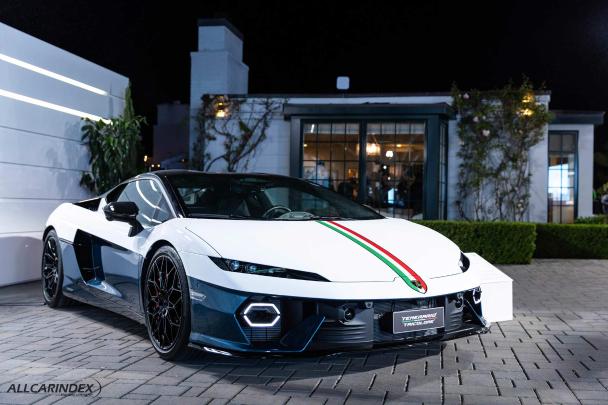
Monterey, in the middle of August, has become one of those weekends when Maranello likes to put something new in front of the world, and on 13 August 2026 Ferrari used it to present a car built for a single owner. It came out of the Special Projects programme, the department responsible for turning one client's idea into a car carrying the Prancing Horse and nothing quite like it anywhere else. The newest result of that process, a fresh addition to the line of so-called One-Offs, is the Ferrari CZ26.
The programme itself follows a fixed path, no matter who the client is or what they ask for. Every project starts from an idea put forward by the owner, then is developed hand in hand with a team of designers from Ferrari's Styling Centre. Once the proportions and forms of the car have been settled, detailed design blueprints and a styling buck are produced, and only then does manufacturing of the new One-Off actually begin. The whole process takes around two years on average, and the client stays closely involved throughout, assessing both the design work and the verification phases as they happen. Needless to say that what comes out the other end is a Ferrari unlike any other in the range, sporting the Prancing Horse logo and engineered to the same standards of excellence as every other car built in Maranello.
For the CZ26, the client was American, and the work was carried out by the Ferrari Design Studio under the direction of Flavio Manzoni. What they arrived at is described as an extremely personal vision of the supersport berlinetta idea, worked through an essential, technological design language with a forward-looking bent to it. Rather than start from nothing, the project drew on the dynamic features and performance of the SF90 Stradale, keeping its technical specification and the essence of a top-of-the-range, ultra-high-performance supercar intact underneath the new bodywork. The stated aim was a car with an immediately recognisable character of its own, one built around strength, precision and formal purity through a much rigorous, identity-led design.
That identity is built on a distinctly horizontal theme and a two-box silhouette that sets the CZ26 apart at a glance. The car reads as a pure central mass, almost capsule-like, held down to the road by four muscular forms gathered around the wheel arches. The whole composition seems to flow forward from the front fascia, as though the body were extruded from a single element, before it comes to rest in a clean, sculpted, truncated tail that mirrors the geometry set up at the front.
At the nose, a full-width functional grille dominates the design, built around specific lighting units with ultra-slim, concealed-effect modules sitting alongside brake air intakes, sensors and other technical components. An unprecedented vertical leading edge underlines the whole front end and gives the car a bold, assertive face. At the back, a truncated tail and cantilevered taillights give the CZ26 a light, sculptural quality, while the diffuser carries the same horizontal emphasis as the rest of the car, visually widening its stance and reinforcing the sense of stability and poise.
Likewise the surfacing follows one rule throughout: functional elements are made to emerge directly from the main body rather than sit as add-ons. The side air intakes for cooling, the front end, the rear diffuser, the cantilevered light clusters and the carbon-fibre pieces that visually stretch the wheel arches are all treated as part of a single design language, one that draws, in this case, on some of the more significant examples of Italian industrial design from the 1970s, filtered through a contemporary eye. Inside, black trim across the roof and pillars ties the cabin into that same language, creating the effect of a cockpit set within the bodywork rather than bolted on top of it, which only adds to the sense of visual lightness running through the whole car.
Colour and finish were treated with a futuristic brief in mind, aiming at something technical and sporty but still refined. The bodywork itself is finished in an exclusive shade called Argento Veloce, a silver with a liquid-like effect that plays up the richness of the surfaces and the precision of the lines running across them. Rosso Lampante details are used to sharpen the contrast against the car's functional, technical elements, and pigmented carbon fibre further underlines how complex the bodywork actually is beneath the paint. The wheels, designed specifically for this car, combine a gloss black painted finish with a shot-peened surface, produced by blasting the metal with microscopic beads to leave a polished effect, while natural-finish titanium tailpipes round off a design that is, at every point, meant to read as technical and high-performance.
That exterior theme carries straight through into the cabin. A bespoke black technical fabric forms the core of the interior, next to seat inserts produced using additive manufacturing to a pattern developed specifically for the CZ26. Rosso Lampante details echo the exterior colour scheme, and an embroidered CZ26 logo adds a further layer of personalisation to the cabin. The contrast between the matte technical fabric and satin-finish carbon fibre is sharpened further by the use of a special gloss carbon fibre woven through with metallic filaments, while body-coloured elements on the door panels and the upper dashboard tie the whole cabin back to the exterior finish.
Aerodynamic work touched every area of the car as well. At the front, the cooling system and airflow management were completely reworked by reorienting the central radiator pack and adding dedicated bypass ducts, a change aimed at both cooling efficiency and the downforce generated over the front axle. The underbody and the vortex generator system were redesigned in full to sharpen the aerodynamic balance, and the outer sections of the front bumper gained an air curtain system to manage the wake thrown off by the front wheels and cut drag. At the rear, a large upper spoiler and a dedicated diffuser were added to increase downforce while keeping aerodynamic efficiency high, and the rear engine cover was redesigned around dedicated vents for thermal management of the engine bay, so heat is dissipated properly under any condition the car is driven in.
Underneath all of that sits the SF90 Stradale, a car that marked a genuine milestone for Ferrari as the first series-production model from Maranello to use a plug-in hybrid architecture. Its name marks the 90th anniversary of the founding of Scuderia Ferrari, and it was built to draw a direct line between what had been learned in motorsport and what could be put on the road. A twin-turbocharged V8 aggregate working alongside three electric motors gives it a combined maximum output of 1000 cv, no less than one of the more advanced examples anywhere of technology moving straight from the track to a road car. At that time, it set new benchmarks in the high-performance supercar segment and introduced a design language of its own, one balancing technological innovation against purity of proportion. In addition to that, it opened up a whole segment underneath it, one that now runs to the SF90 Spider, the 849 Testarossa, the 849 Testarossa Spider, and the sharpened SF90 XX Stradale and SF90 XX Spider.
The CZ26 keeps that donor car's mechanical picture essentially intact. The V8 is a 90-degree turbocharged unit with dry sump lubrication, 3990 cm3 in total displacement and bore and stroke figures of 88 by 82 millimetres, producing 797 cv at 7900 rpm on 98-octane petrol and 804 Nm of torque at 6250 rpm, with a maximum engine speed of 8000 rpm. The electric side of the aggregate adds up to 162 kW, drawing on a 7.9 kWh battery good for 25 km of electric range, and everything is sent through an eight-speed dual-clutch F1 gearbox, with eSSC1.0, E4WD, SCM, FDE2.0, EPS and ABS Evo handling the electronic side of things.
The dimensions follow through in the same spirit: 4762 mm long, 2005 mm wide and 1189 mm tall, on a 2650 mm wheelbase with a 1683 mm front track and 1674 mm rear track, weight split 45 per cent front and 55 per cent rear, and a 68-litre fuel tank. Front tyres measure 255/35 ZRF20 and rears 315/30 ZRF20, with brakes sized at 398 by 223 by 38 mm up front and 360 by 233 by 32 mm at the rear. On paper that is good for a top speed of 328 km/h, 0 to 100 km/h in 2.5 seconds, 0 to 200 km/h in 6.7 seconds, and a stop from 100 km/h in under 29.5 metres, against WLTP figures of 154 g/km in emissions and 6.1 litres per 100 km in consumption.
None of that is far removed, on paper, from the SF90 Stradale it was born from. What changes is everything wrapped around it, two years of design and verification carried out with one client, ending in a single car finished in Argento Veloce and Rosso Lampante that made its debut in Monterey wearing nothing but the Prancing Horse and a name of its own, CZ26.