
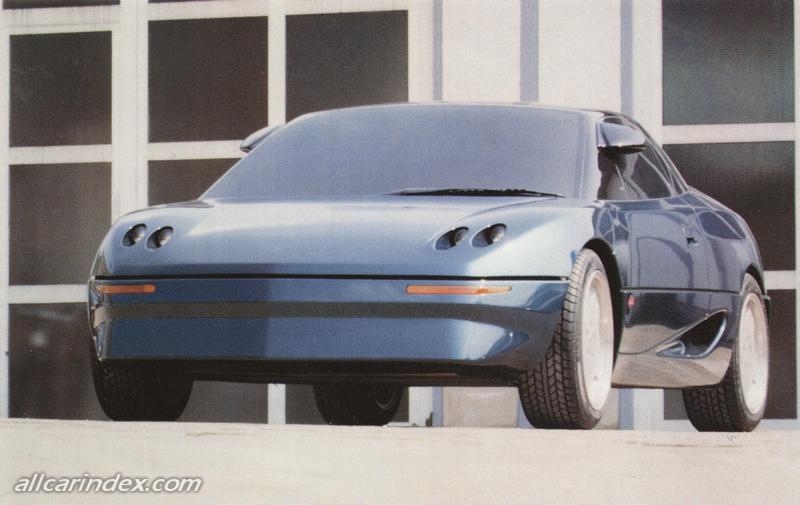
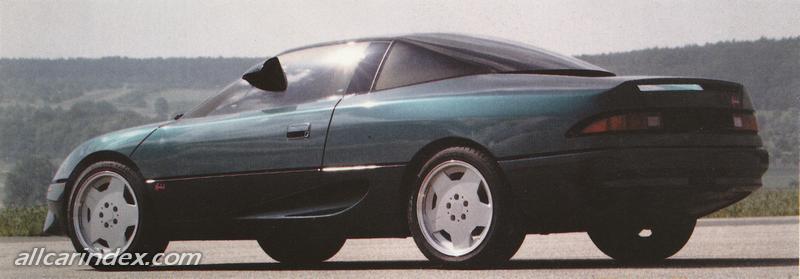
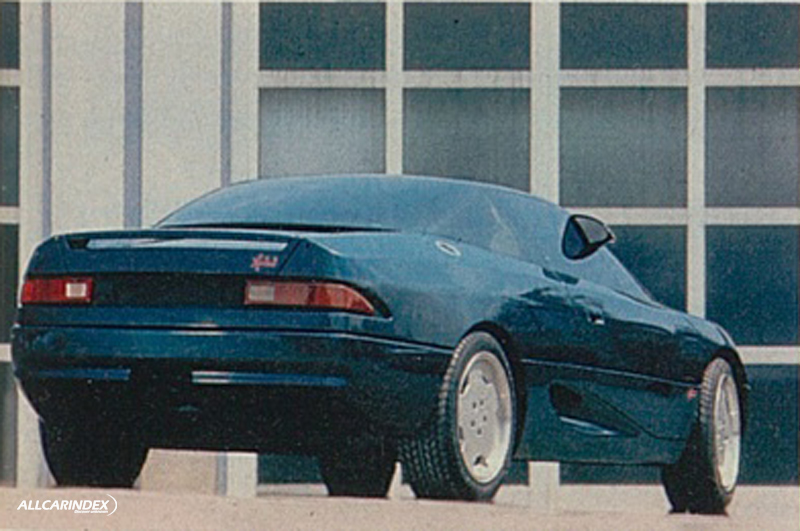
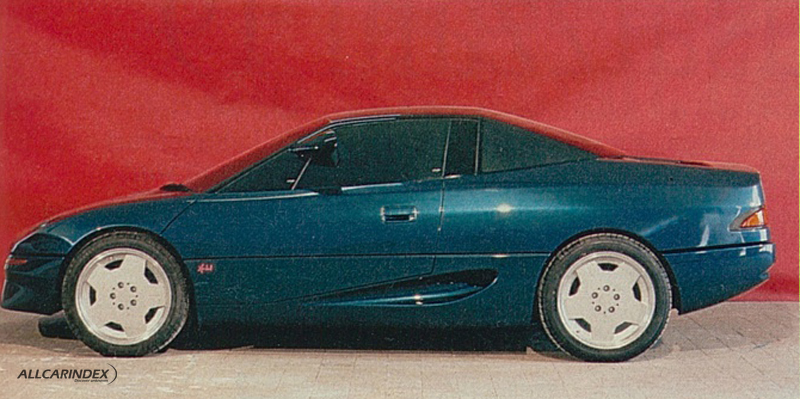
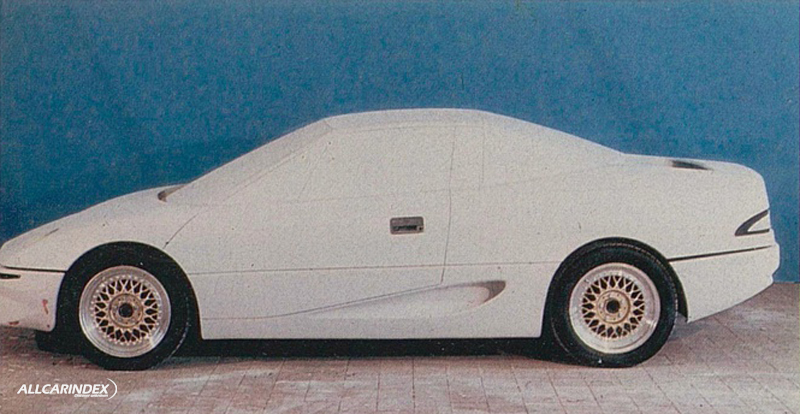
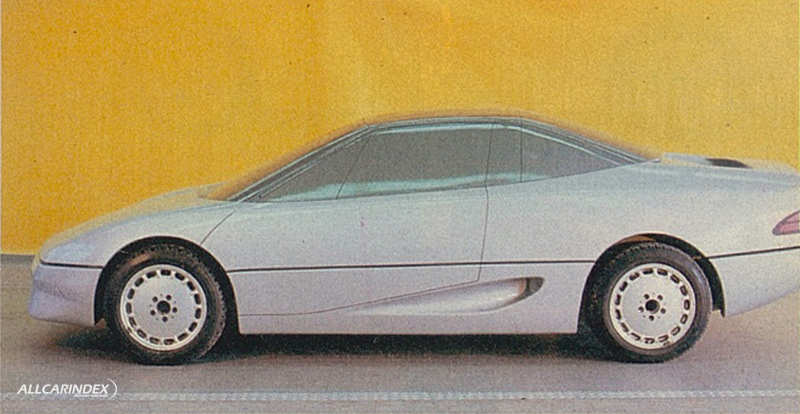
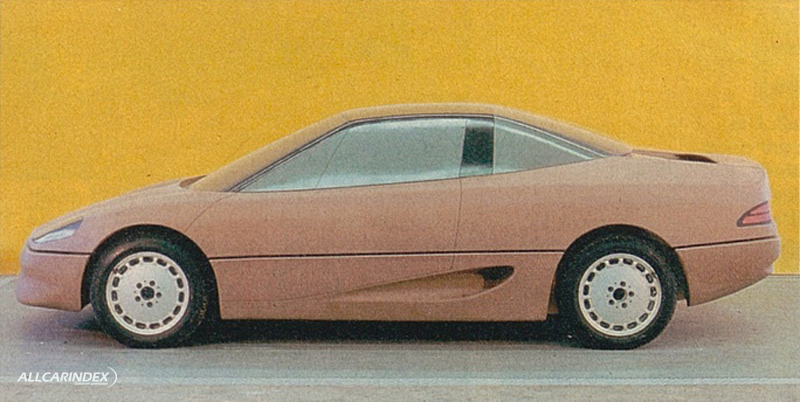
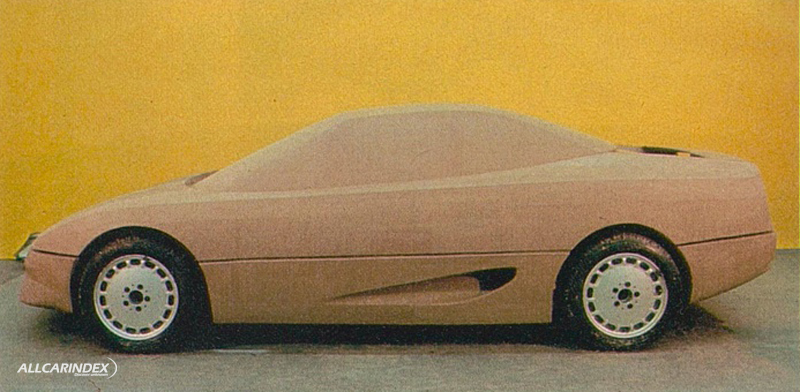
The Xenon was a mid-engined two-seater coupe developed as a design-school project rather than a production car, created at the Fachhochschule für Gestaltung in Pforzheim, Germany. Beginning in 1986, five automotive design students, Frank Pfisterer, Michael Plessing, Frank Spörle, Ingo Feuerherdt and Frieder Lang, spent nearly two years developing the car under the formal direction of Professor Joseph Gallitzendörfer, head of design at Mercedes-Benz AG in nearby Stuttgart, with technical supervision by Dipl.-Ing. J. Tomforde. Its name, Xenon, referenced both the Greek word for "the foreign" and the noble gas. The project aimed to create a high-performance sports car concept emphasizing originality, dynamism and elegance over futuristic styling, with a focus on realistic, market-oriented design.
Development began with sketches followed by four 1:5-scale models differing mainly in front-end treatment and windshield junction, two of which used a one-volume form with the hood and windshield nearly in line. These were refined through wind-tunnel testing, and the design achieving a drag coefficient of just 0.19 was selected. A full-size model followed, built around a steel-tube frame supporting roughly two tons of clay modeling material, mounted on a steerable chassis with a wood and polyurethane-foam covering. The clay shape was transferred from the 1:5 model with proportional adjustments made for full-scale viewing angles, and a final glass-fiber-reinforced plastic (GFRP) body was produced for the best possible surface finish.
Professor E. Prahst of the Technische Hochschule Esslingen contributed a dedicated technical "package" for the car, developed with diploma-level students, giving the Xenon a plausible technical concept. This included a lightweight frame structure, a flat front suspension layout, a technically sophisticated mid-mounted engine, and a novel door-opening mechanism. Financial and logistical backing came from German companies including Teves, Daimler-Benz, Flachglas and Keiper Recaro, along with other contributors.
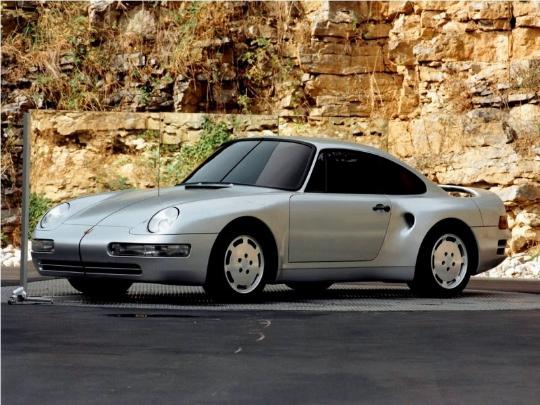
The finished result was a non-drivable but rollable and steerable full-size model. Side air ducts indicated its mid-engine layout, while a heavily glazed roof section featured aerodynamically angled exterior mirrors mounted at the A-pillars. A distinguishing feature was its twin DE headlights using a three-axis ellipsoid system, first used on the Pininfarina Quarz of 1981, which gave the Xenon a smooth-surfaced front end. A rear spoiler was integrated into the tail. Fitted with 215/45 and 235/45 x17 tires front and rear, the car achieved a drag coefficient of 0.281 in wind-tunnel testing at the University of Stuttgart. It measured 4165 mm long, 1830 mm wide and 1200 mm high, with a 2350 mm wheelbase and track widths of 153 cm front and 152 cm rear.
![Pontiac [4] Banshee (1988)](/img/models/b/pontiac-4-banshee_001.jpg?w=720&h=405)