
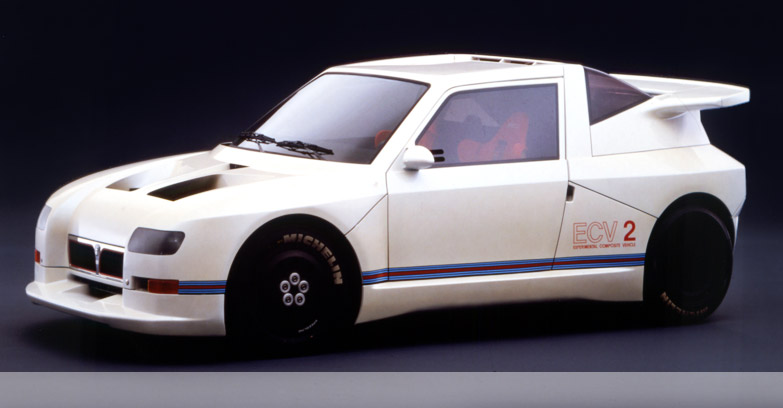
The Lancia ECV2 was a research-oriented concept coupe built by Lancia as a successor to the earlier ECV, whose designation stood for Experimental Composite Vehicle. The original ECV had been developed by Lancia's planning department at the end of 1986, based on the mid-engined Lancia Delta S4 Group B rally car, after the Group B category was withdrawn from competition due to its excessive performance being judged too dangerous. That first ECV had retained much of the Delta S4's outward silhouette.
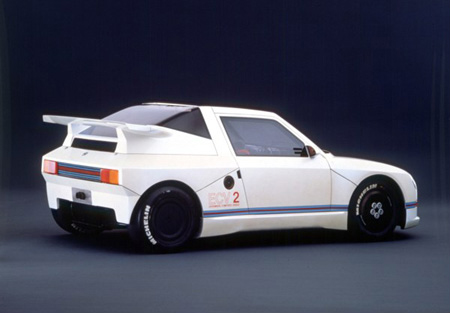
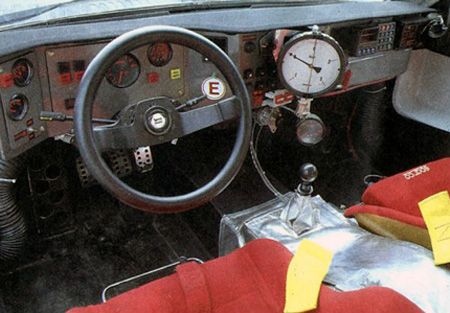
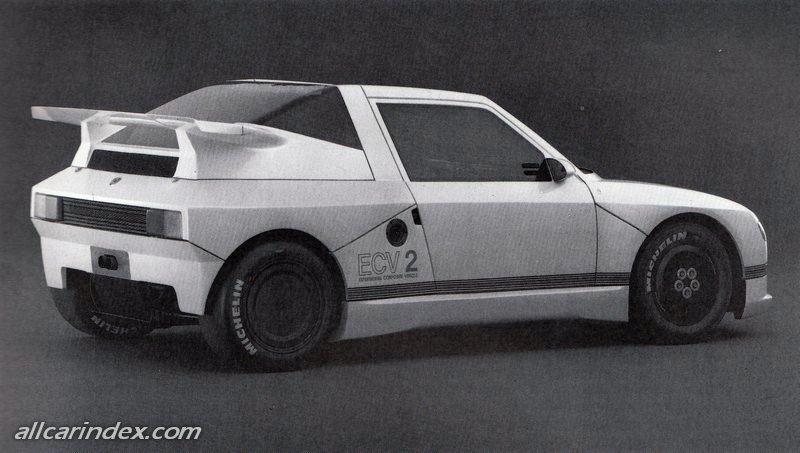
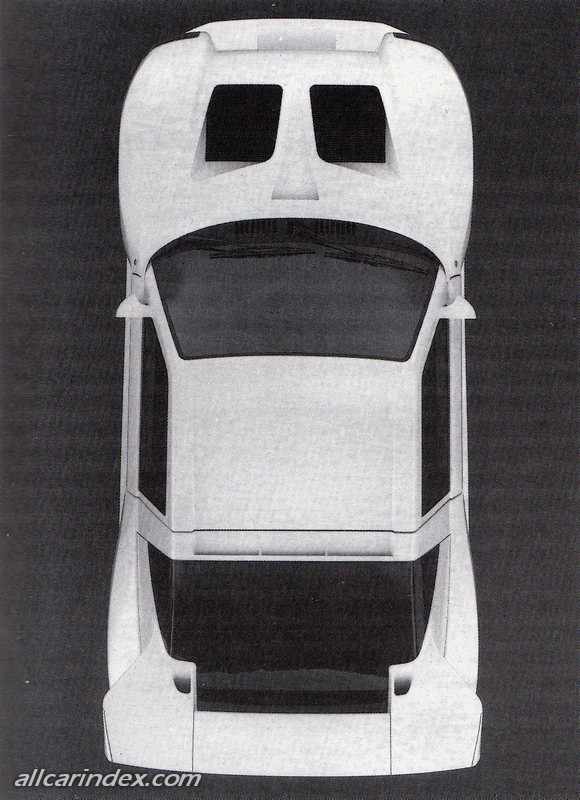
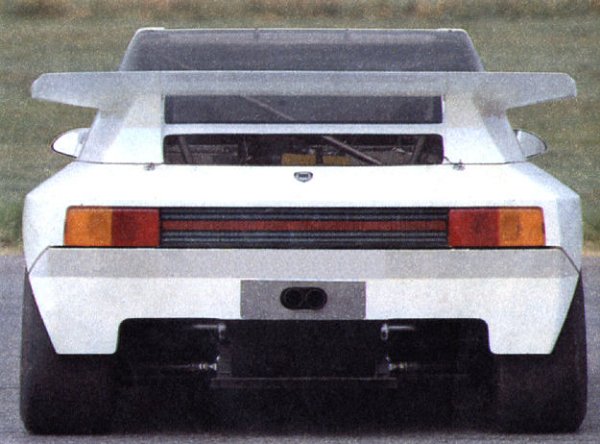
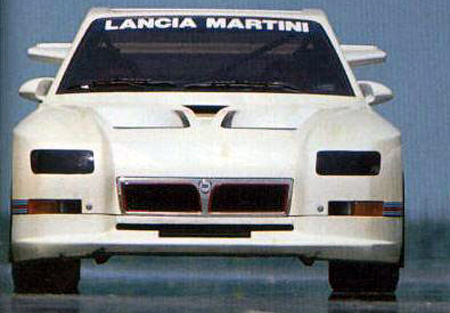
The ECV2, though presented as a concept car for rallying, was built purely for research purposes, since there was no prospect of a competition category existing for it to enter. It carried over the use of composite materials from its predecessor, both for structural elements such as the frame, which used a steel tube framework at the front, and the driveshafts, as well as for non-structural parts including the bodywork and interior trim. The bodywork and frame combined carbon-fibre and Kevlar fibres bonded with epoxy resin, forming sandwich panels with either honeycomb or rigid foam cores, achieving a weight saving of around 20 percent compared with steel-sheet construction. Unlike the first ECV, the ECV2 featured a substantially revised design, becoming a compact fastback coupe with a large rear wing generating downforce. Overhangs were significantly reduced, cutting overall length by 31 cm to 369 cm and improving agility on tight rally courses. All air intakes were relocated to the front of the car to keep the flanks smooth despite the mid-engine layout, with a Lancia-style grille above the front spoiler, cooling air exiting through two openings on the bonnet, a NACA duct ahead of the windscreen for intake air, brake-cooling vents in the front, mirror-integrated cabin ventilation inlets, side window outlets for cabin air, and further vents at the roofline for engine bay ventilation.
The 1.8-litre turbocharged engine, based on the Lancia Delta S4 unit, used a Triflux cylinder head with two crossed intake and exhaust valves per cylinder, as in the first ECV. It introduced a modular twin-turbo system in which a single small turbocharger operated at low revs, with both turbochargers engaging at higher engine speeds; the charge circuit was also shortened and reduced in volume, and the two KKK turbochargers used water-to-air intercoolers instead of air-to-air units. These changes improved throttle response, smoothness and output, with power quoted at 600 hp at 8000 rpm, equivalent to over 340 hp per litre, and torque of 539 Nm at 5000 rpm. Four-wheel drive split torque 30 percent to the front and 70 percent to the rear, running on Michelin 16-inch tyres mounted on Speedline alloy wheels. The two-door, two-seat coupe measured 369 cm long, 186 cm wide and 135 cm high, with a 244 cm wheelbase, front/rear tracks of 150/152 cm, and a weight of 910 kg, giving a top speed of 220 km/h.