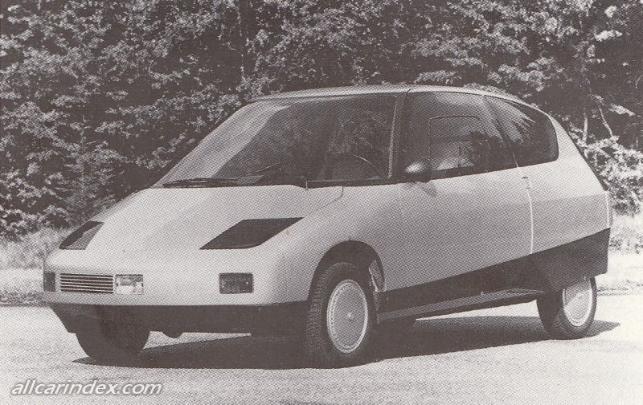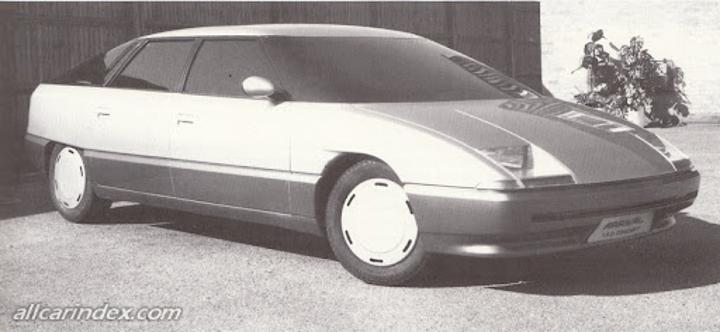

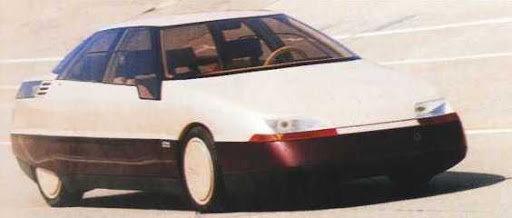
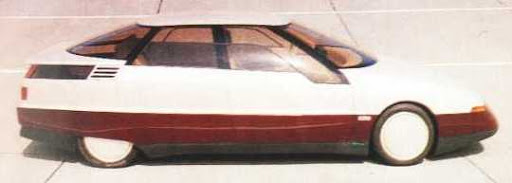
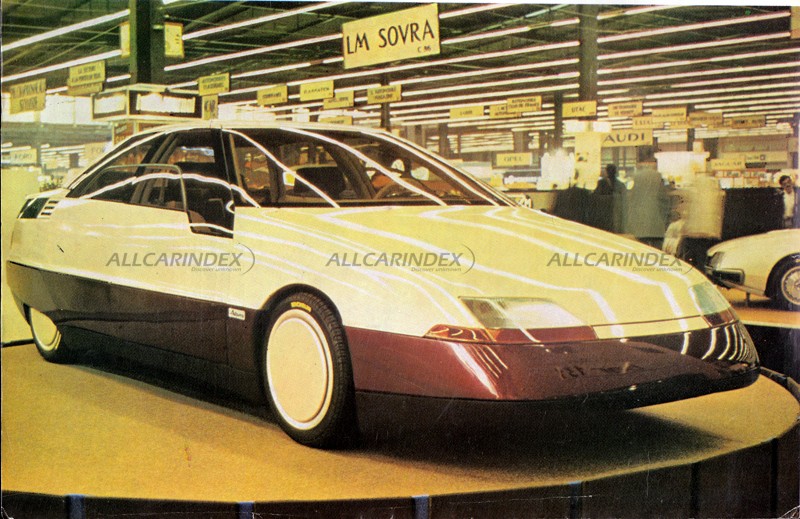
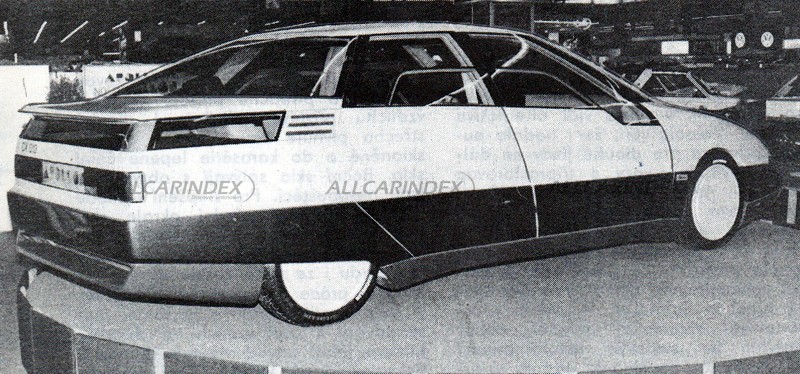
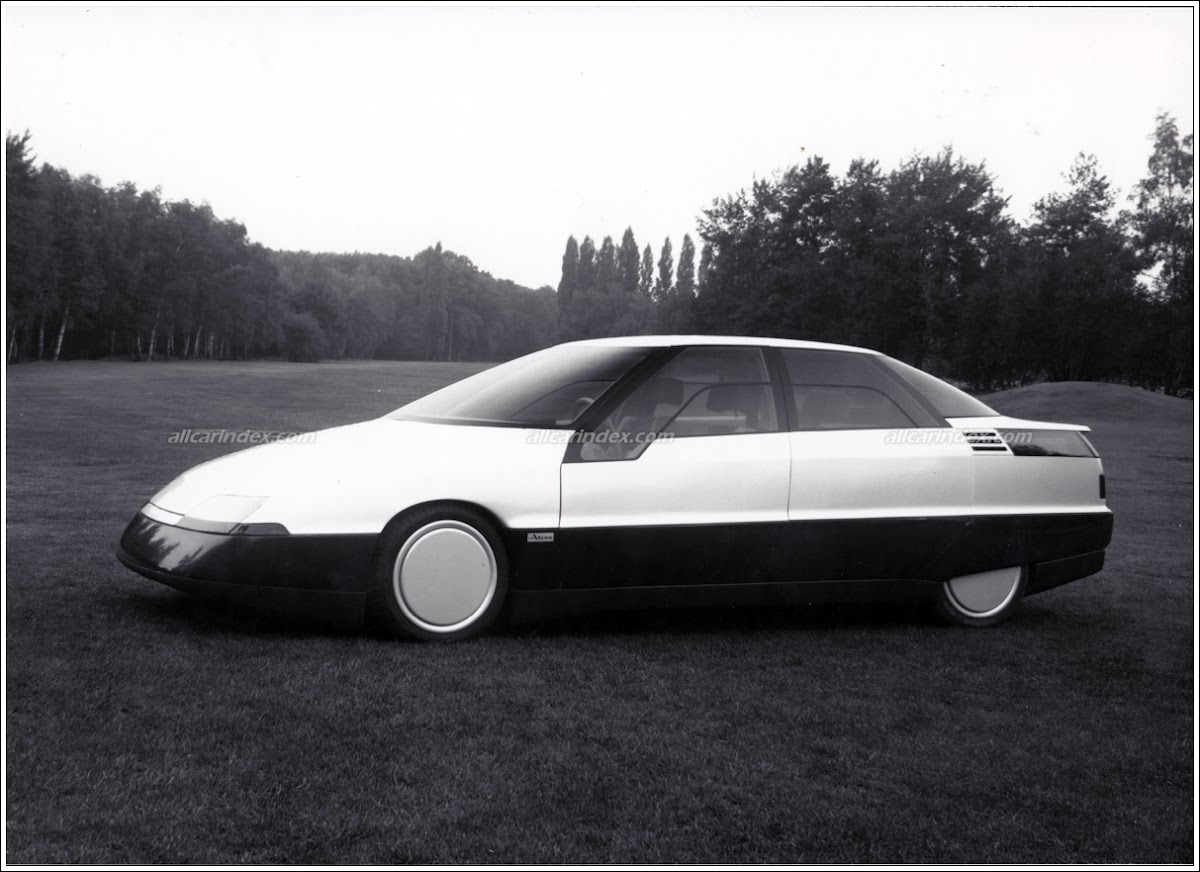
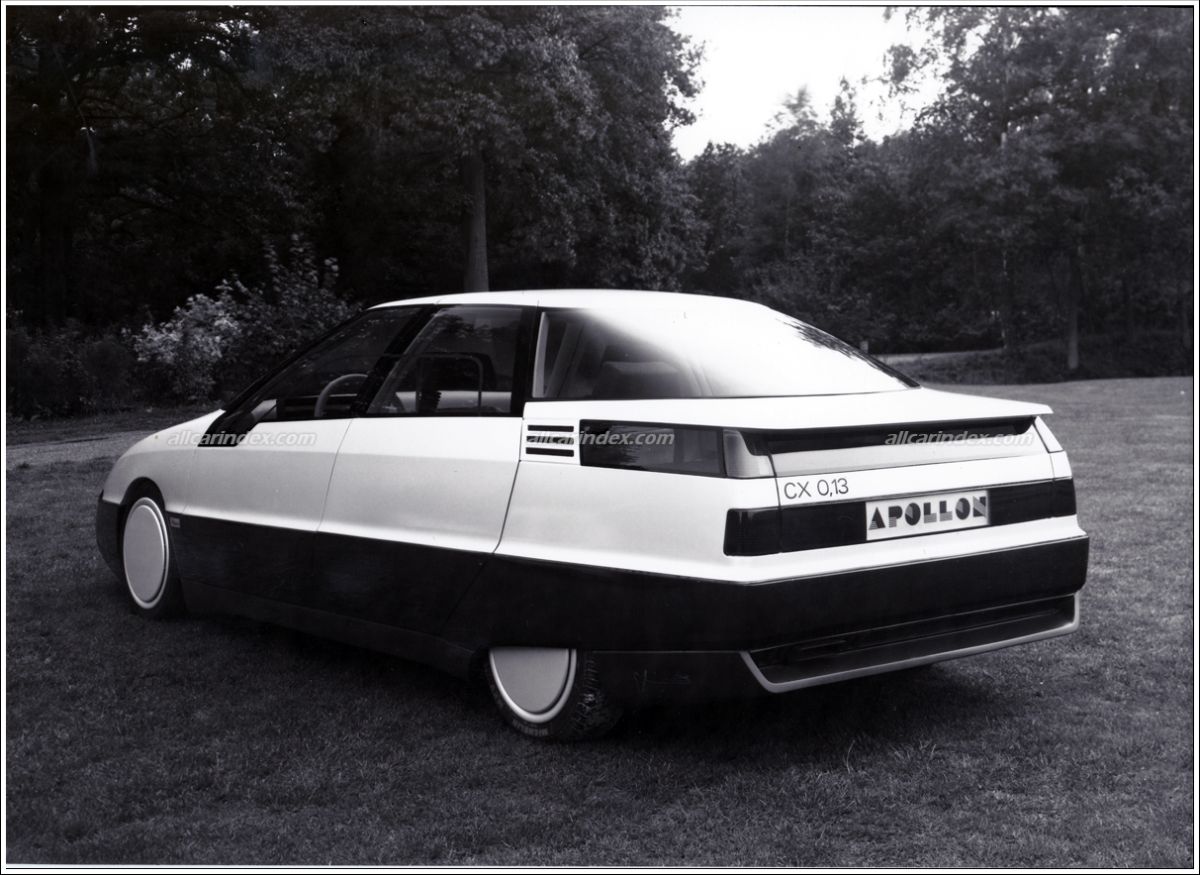
The Apollon was a concept car designed by Antoine Volanis, shown at the Paris motor show about a year and a half after his Helios study. It took the form of a four-door, four-seat notchback saloon and was presented as an exercise in aerodynamic efficiency, with a claimed drag coefficient of 0.13, a figure Volanis described as a world record. As with the Helios, the shape was refined using full-scale 1:1 models tested in the Saint-Cyr wind tunnel, developed gradually over an extended design process.
The car's low drag owed much to a front end that began with an apron-style nose rather than a conventional bumper. Distinctive details included a door window with a cutout that dipped below the beltline to improve visibility, a raised notchback tail with contrasting color panels on its flanks, and a flush-glazed roofline that narrowed toward the rear and extended well back over the body. The wheels wore smooth covers, with the rear wheels additionally enclosed, and air ducts beneath the car generated a ground-effect airflow. Above 120 km/h the body lowered automatically to enhance this effect, reducing ground clearance to just 7 cm. The car rode on Michelin MXV 195/50 VR 15 tires, and had neither exterior mirrors nor conventional door handles, with doors instead opened by infrared remote control.
In size, the Apollon was comparable to the Citroën CX, though at 455 cm long it was 11 cm shorter. It was based on the mechanical underpinnings of the Renault 11 Turbo, a smaller car, whose wheelbase was stretched from 247.5 cm to 262 cm for the project. Renault's Développement Aérodynamique department actively supported Volanis during the car's development. The four-cylinder, 1397 cc turbocharged engine produced 105 hp at 5500 rpm and 162 Nm of torque at 2500 rpm, and reduced aerodynamic drag was intended to make better use of this output. Interior space was generous for four occupants, with a stated comfort dimension of 170 cm.
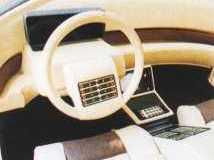
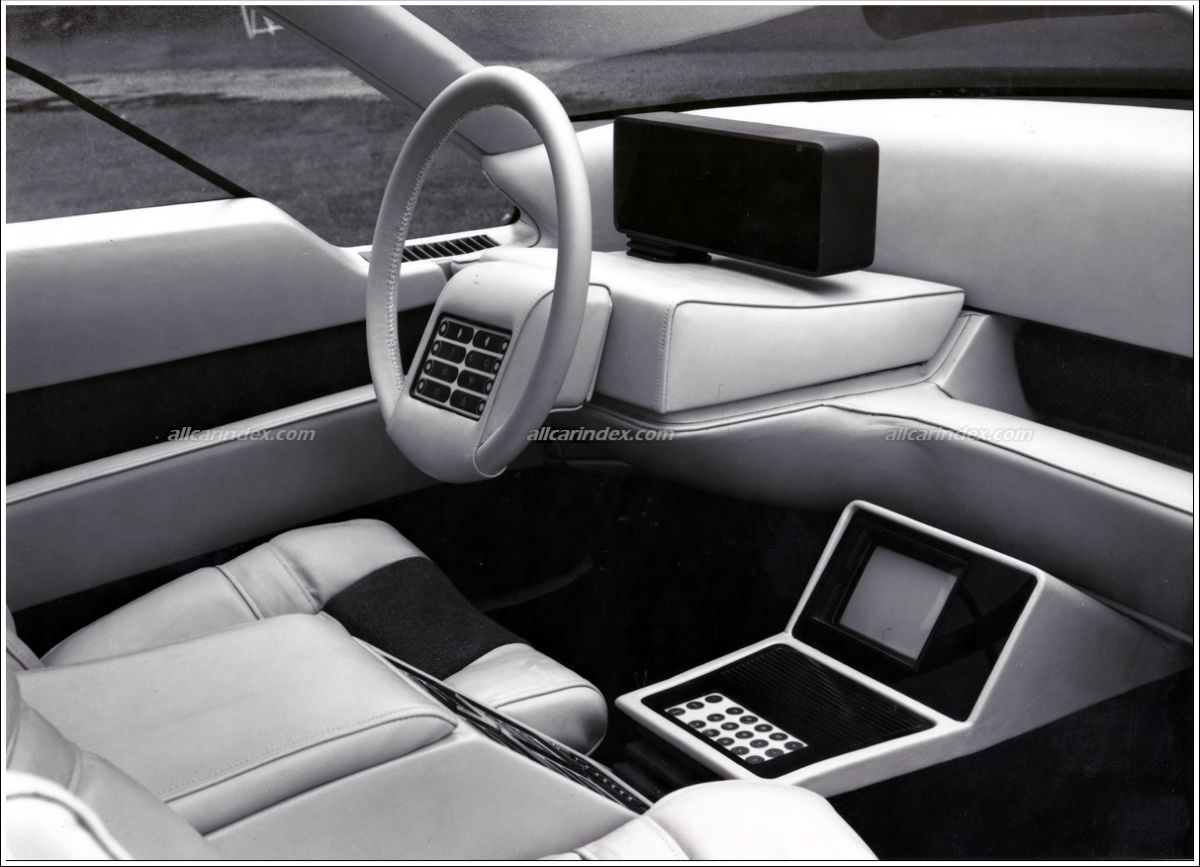
The interior featured four individual seats, light-colored trim, and an unconventional dashboard design. The steering wheel had a wide vertical spoke housing eight controls, and the car was equipped with electronic displays. A low-mounted screen and computer keyboard on the center console served both a Thomson-developed road information system and a video rearview display, alongside an anti-collision radar warning system. Rear passengers had access to a television with automatic channel search and a video player.
Together, the Helios and Apollon drew significant attention to Volanis's ten-person design studio in Argenteuil. Financial cutbacks at Renault, its main client, led to reduced outside design commissions, prompting Volanis to take on more general industrial design work, though he continued to work for PSA, Matra, and the Volkswagen group.