

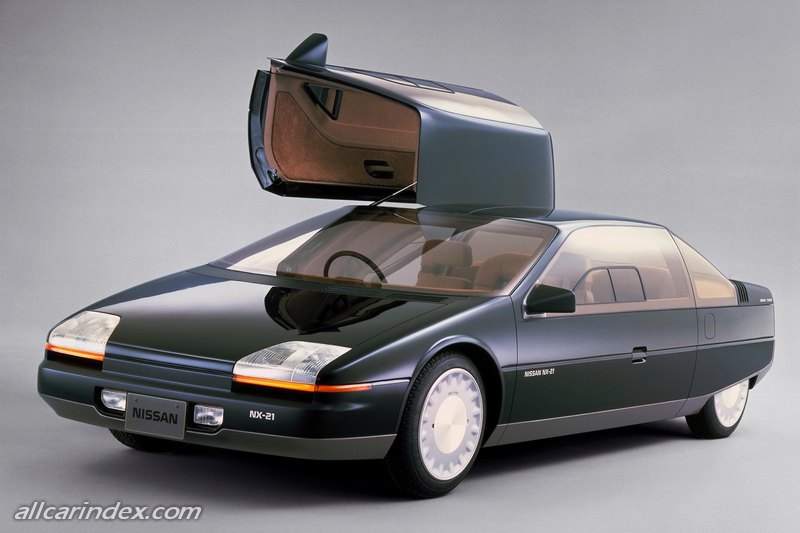
The Nissan NX-21 was a concept car built to mark the 50th anniversary of Nissan, then the second-largest Japanese automaker. It was designed as a highly sophisticated luxury sedan with a rear-mounted gas turbine engine and was developed as a joint Japanese-American project. The underlying technology came from the newly established Nissan Technical Center near Tokyo, the design was created by Nissan Design International in San Diego, California, and the physical prototype was built in Detroit. The car was intended to demonstrate Nissan's vision of how technologically advanced family vehicles might look in the 1990s and into the early 21st century.
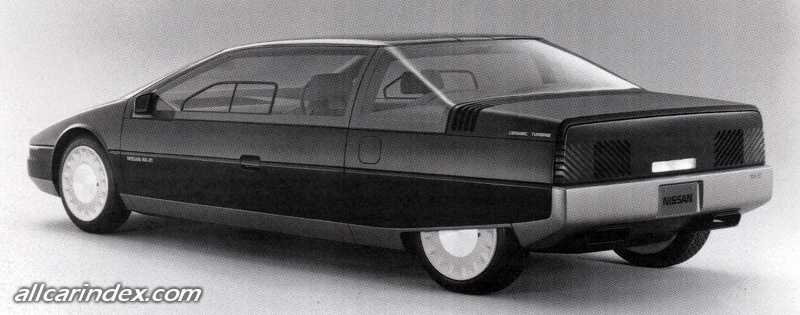
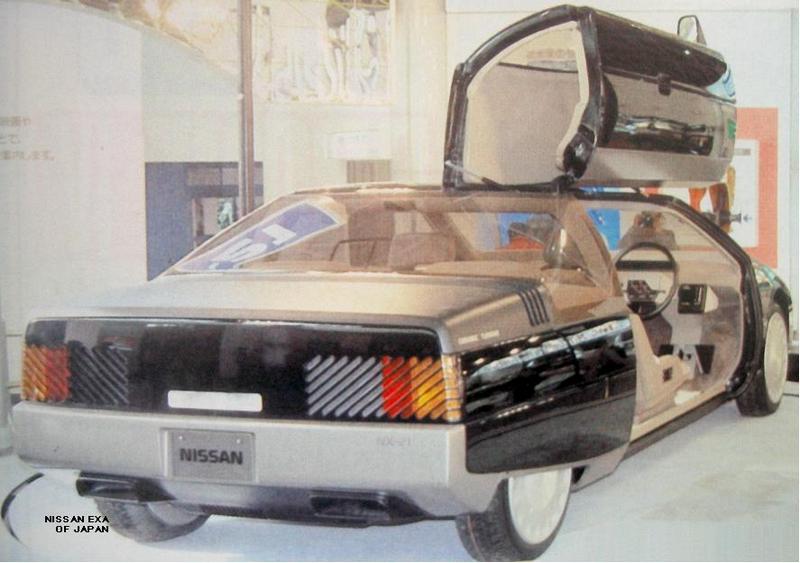
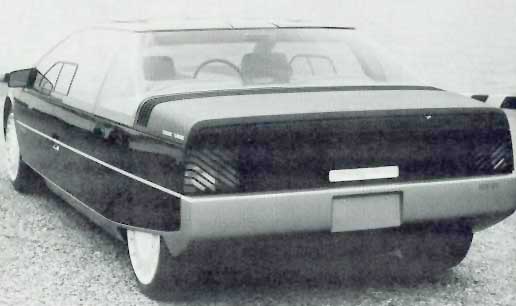
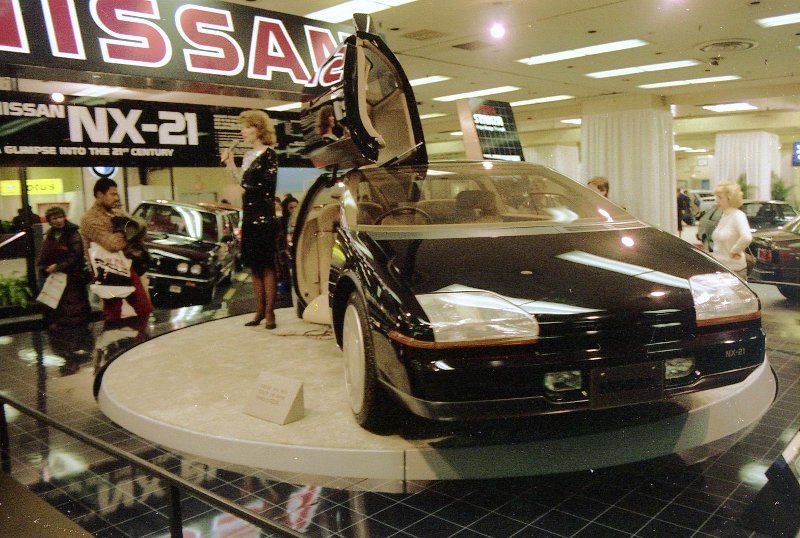
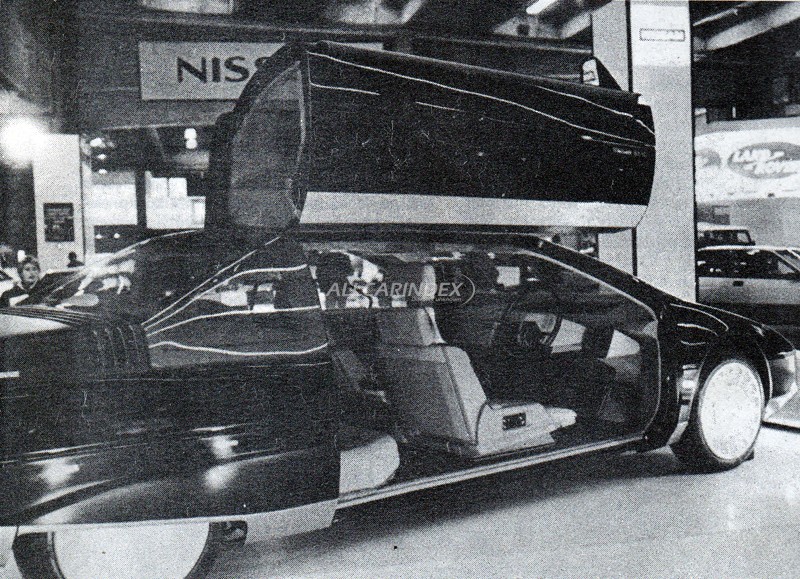
Placing the drivetrain at the rear allowed the front of the NX-21 to be shaped for strong aerodynamic efficiency, including angled glass headlight covers integrated into a wedge-shaped hood and a windshield that followed almost the same line as the hood. The beltline dropped lower behind the streamlined door mirrors. Access to both front and rear seats was provided by long gullwing-style doors hinged at beltline height, allowing them to fold inward at a right angle and swing fully over the roof, a mechanism previously seen on Italian show cars, useful in tightly confined parking spaces. The rear design featured wheel covers that rose toward the back, a wraparound rear window and rear deck, a flush rear panel, and integrated air vents, contributing to a drag coefficient of 0.25 alongside flush glazing with only two small sliding panes for the front occupants.
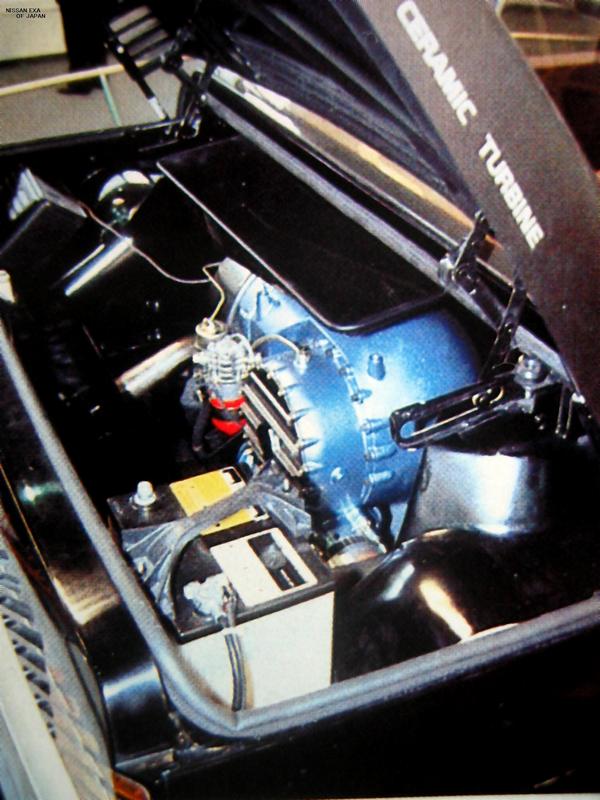
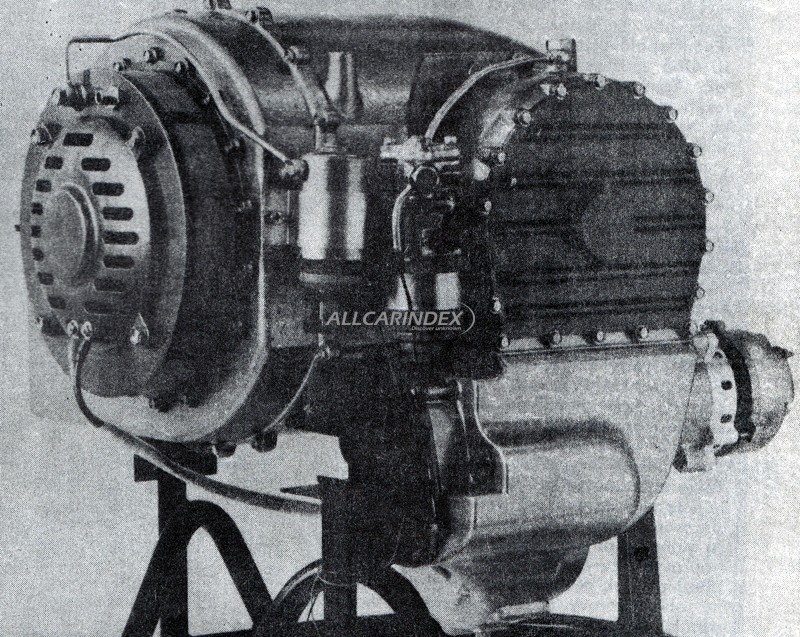
Mounted between the rear wheels was a ceramic gas turbine engine designated YTX, producing a targeted 100 hp. Its compressor turbine ran at 100,000 rpm while the power turbine ran at 75,000 rpm, and it incorporated a heat exchanger while requiring little installation space. It could run on multiple fuels, including kerosene, diesel, and alcohol, with fuel consumption described as lower than that of modern diesel engines, alongside quiet operation and reduced exhaust pollutants. Peak gas temperature reached 1350 degrees Celsius, reflecting the thermal demands placed on its ceramic components.
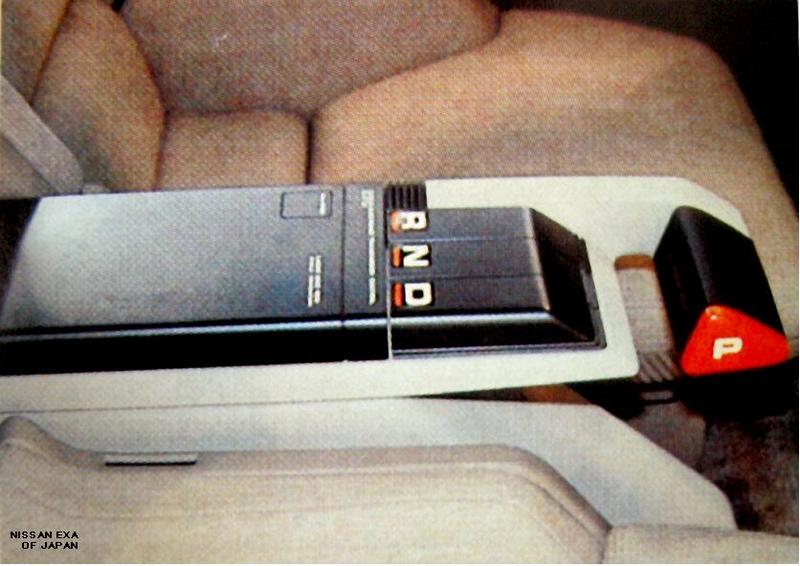
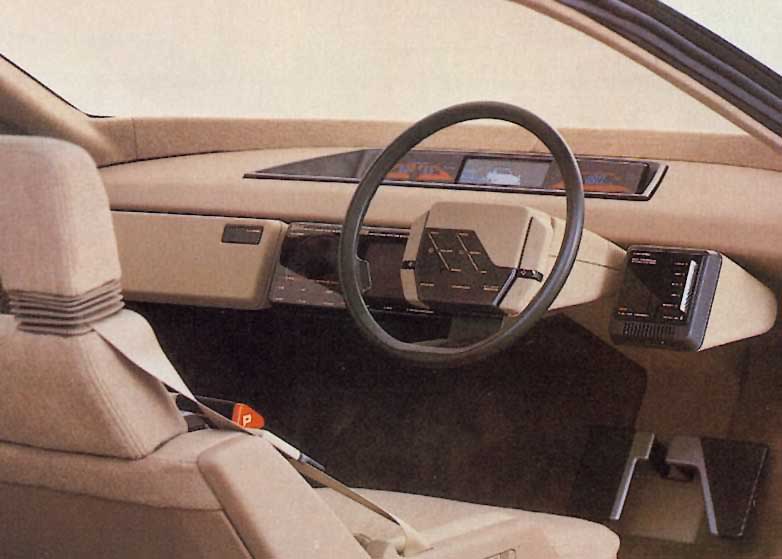
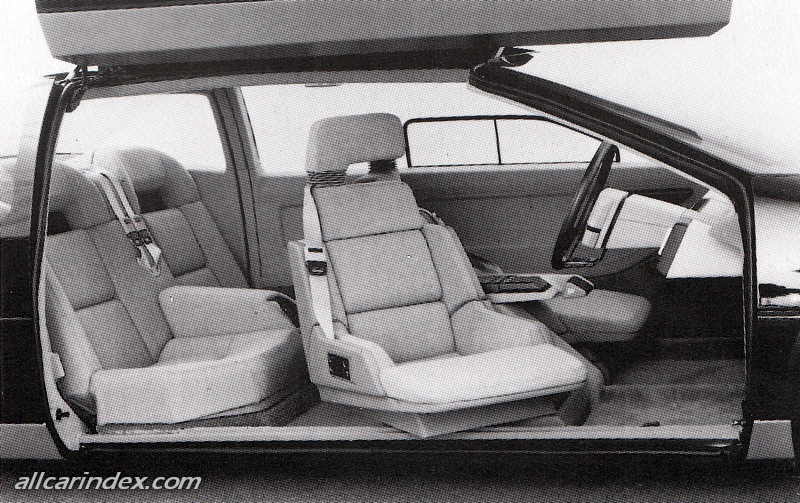
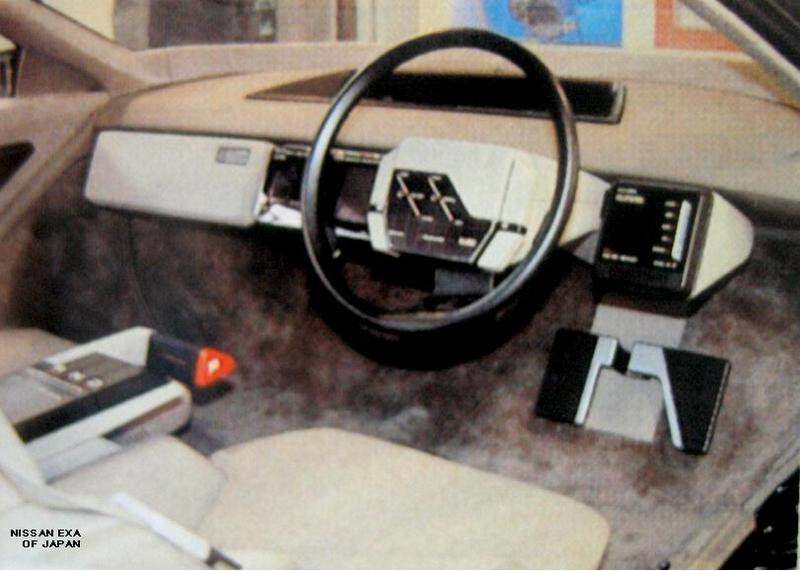
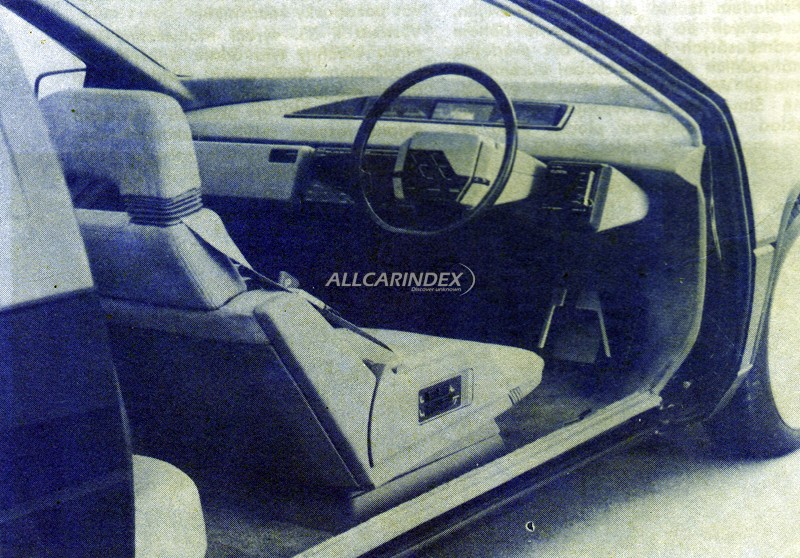
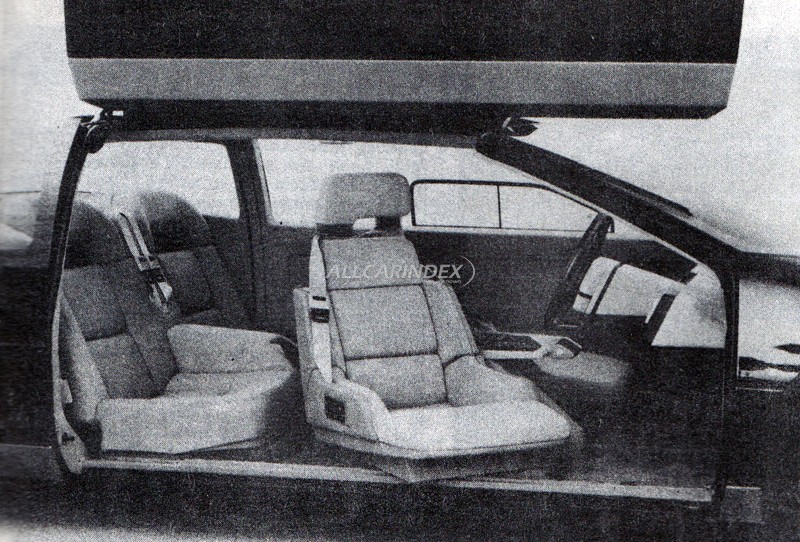
The four-seat interior featured front seats that could swivel outward 45 degrees, seatbelts integrated into shell-shaped seats, and a design language that carried the exterior's cubic forms into the upholstery, dashboard, and pedals. Instruments were digital, mounted low and close to the windshield, and a central screen could display maps, traffic information, and climate or audio system data, alongside a rearview monitor replacing the conventional mirror. The ignition key was replaced by a magnetic card that also stored seat memory settings, and gear selection used electronic push-buttons instead of a lever. The car measured 452 cm in overall length, 179 cm in width, and 128 cm in height, with a 298.5 cm wheelbase, interior length of 192 cm, and a weight of 950 kg, riding on 195/75-14 tires.