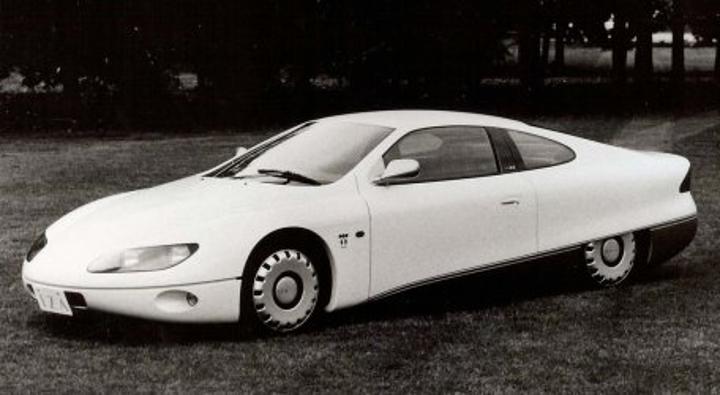

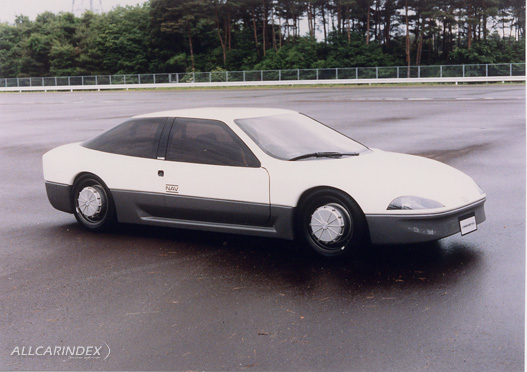
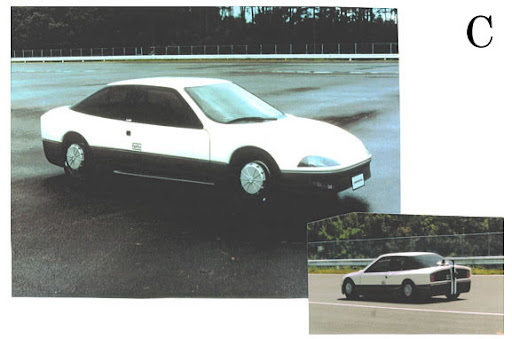
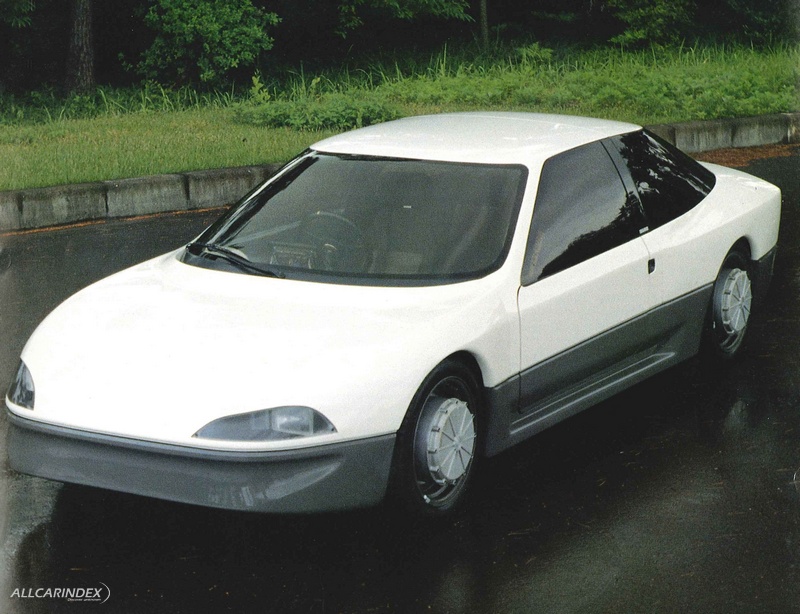
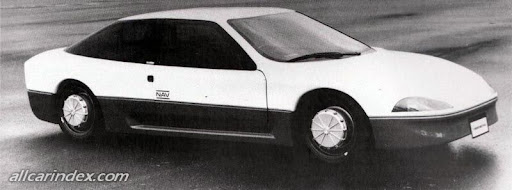
The NAV was a concept electric sedan developed by Tokyo R&D, a Japanese engineering company founded in 1981 that initially worked on large-series production vehicles for the automobile industry before moving into motorsport development. In 1984 the company established contacts with Japanese environmental protection authorities, which led to a collaboration on electric drive technology. After early converted prototypes, construction of the NAV began in 1986. Its name stood for Next generation Advanced electric Vehicle, and the goal was not another small electric city car but a genuinely usable 2+2 to four-seat sedan.
Development was carried out jointly with the major steel company Nippon Steel, with financial support from the environmental authorities. The chassis combined a tubular frame with an aluminium and Kevlar honeycomb sandwich structure, while the body was made of carbon-fibre-reinforced plastic, allowing significant weight savings. Nippon Steel developed the electric drive system, using four direct outboard DC motors mounted at the wheels, together producing 52 kW, with each motor delivering up to 4 x 13 kW (71 PS) and 4 x 20 Nm of torque. The absence of a reduction gearbox and differential reduced friction losses. Bridgestone supplied special 205/50-17 tyres with rolling resistance reduced by more than 30 percent. Wheels were guided by double wishbones, with disc brakes front and rear. Power came from conventional lead-acid batteries, with five 150-Ah units placed between the front and rear wheels on each side; the electronic management system sat above the rear battery pack. The batteries weighed 435 kg in total, out of a 1200 kg overall kerb weight. Range was quoted at up to 240 km between charges at a steady 40 km/h, with a top speed of 110 km/h.
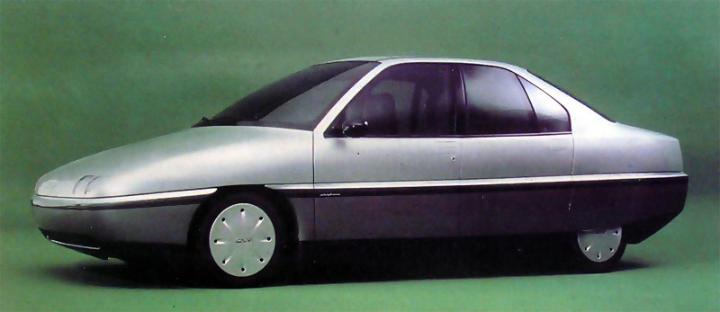
The bodywork, designed by Tokyo R&D, aimed for both aesthetic appeal and comfort. Its aerodynamic front had no air intakes, with headlight housings integrated into the rounded sides, a detail that, along with the wheels, hinted at the electric drivetrain. Flush-mounted windows and rear side glass merged visually into a panoramic rear window, with a short tail framing the back of the car. The estimated drag coefficient was 0.25.
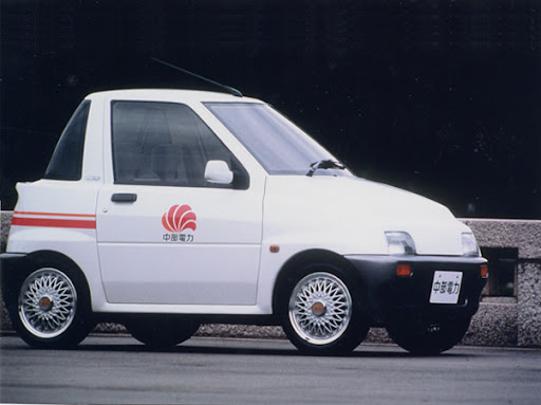
At 444 cm long, the NAV was comparable in size to the Honda Prelude. Rear passengers had ample headroom but limited legroom due to the battery and electronics package at the back. The car was equipped with electronic instrumentation and air conditioning. It was presented at the Low Pollution Vehicle Fair in Yoyogi Park, Tokyo, in early June 1990, following the October 1989 Tokyo Motor Show appearance of the Dream Mini commuter vehicle from Chubu Electric.