

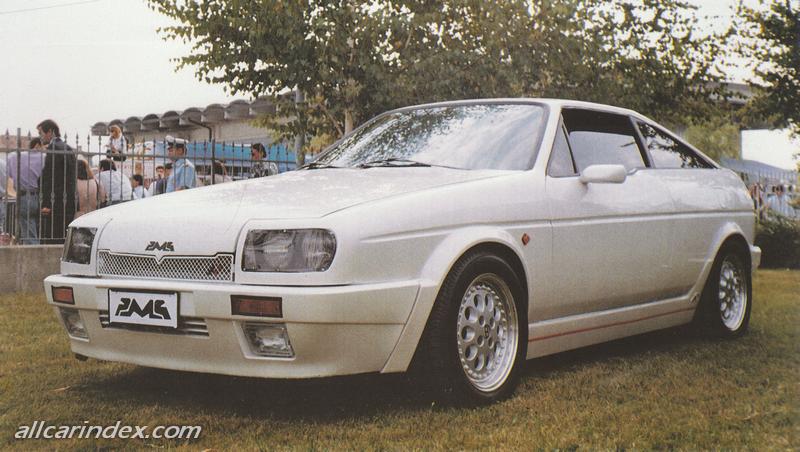
The PMG was a design study created by Dott. Ing. Carlo Morandi, head of a design studio in Padova, together with the Ghedin brothers, who specialized in restoring vintage car bodywork. Morandi first presented his ideas at a small stand at the Geneva Motor Show in 1987, and the concept and a small-scale model evolved into a full-size 1:1 prototype in 1988. Its name, PMG, is understood to stand for Prototipo Morandi Ghedin.
The project aimed to create a 4-meter-long all-round car with three doors, four comfortable seats, and a generously sized luggage compartment. The design envisioned frameless door windows and a removable central roof section that would turn the car into a Targa-style model, with the roof panel stowable flat against the seatback so luggage space was not compromised, though this Targa feature was not yet realized on the prototype itself. The body was a modern, coupe-like fastback with a high tail, a softly rounded front end, a simple grille between glass-covered twin headlamps, and a front skirt with integrated fog lamps. A distinctive kink raised the beltline at the rear of the doors, and conventional door handles were omitted in favor of electromagnetic, remote-controlled door opening. The high tail gave a 300-liter, 55-centimeter-long boot.
The PMG was based on the Alfa Romeo Sprint/33, using its 1490 cc four-cylinder boxer engine producing 105 hp at 6000 rpm and 133 Nm at 4000 rpm, and rode on OZ Racing alloy wheels with 205/50x15 tires. It measured 402 cm long, 162 cm wide, 125 cm high, with a 247 cm wheelbase and weighed 920 kg. Morandi hoped to attract investors for the project.