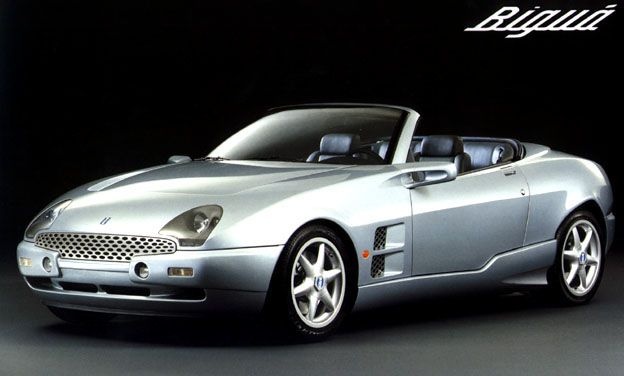
De Tomaso Automobili was an Italian car manufacturer based in Modena. The company was founded in 1959 by Alejandro de Tomaso, who was born in Argentina in 1928 and moved to Italy in 1955. In its early years, the company built six Formula One cars in 1961 before turning to road cars.
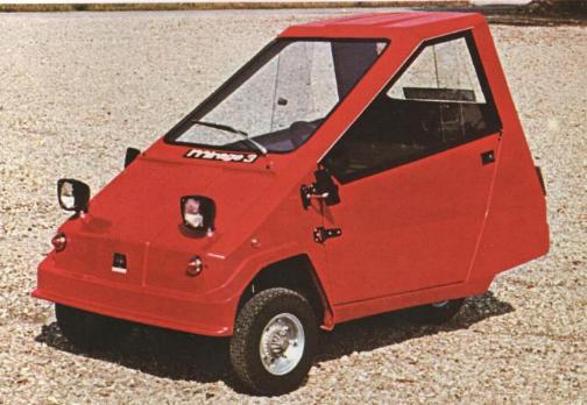
The firm's first road car, the Vallelunga coupé, appeared in 1965 with a mid-mounted Ford Cortina engine. Around 50 were produced, along with an open version called the Pampero. In 1967, De Tomaso acquired the coachbuilder Ghia, financed with support from Rowan Industries of New Jersey, a company linked to de Tomaso through his American wife's family. Rowan had previously shown a prototype electric city car at the 1957 Turin Show, though it never reached production.
In 1969, De Tomaso introduced the Mangusta, a more powerful successor to the Vallelunga, powered by a 4727cc Ford V8 engine paired with a ZF five-speed transaxle, a backbone chassis, a limited-slip differential, and servo-assisted Girling disc brakes. It was capable of 155 mph. This model strengthened the company's relationship with Ford, which deepened further with the 1971 launch of the Pantera. Unlike the Mangusta, the Pantera featured integral construction and a larger, more powerful Ford V8 engine of 5763cc producing up to 350bhp. From 1973, the GTS version reached speeds of 175 mph. The Pantera was distributed in the United States through Lincoln-Mercury dealers.
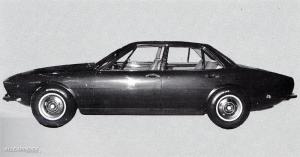
De Tomaso also produced front-engined models, including the little-known 1969 Mustela coupé with a 2.9-litre Ford V6 engine, and the Deauville, a luxury four-door saloon built from 1970 to 1988. The Deauville used either a 4727cc or, more commonly, a 5763cc Ford V8 engine with automatic transmission, and its Ghia-designed styling closely resembled the Jaguar XJ6. A two-door coupé variant on a shorter wheelbase was sold as the Longchamp.
In 1976, De Tomaso gained control of Maserati from Citroën, and the company also acquired the motorcycle manufacturers Benelli and Moto Guzzi, as well as Innocenti, the Italian producer of the Mini. The Maserati connection led to the Kyalami, essentially a Longchamp fitted with a choice of Maserati V8 engines. De Tomaso later sold Maserati to Fiat in 1990.
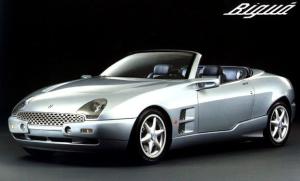
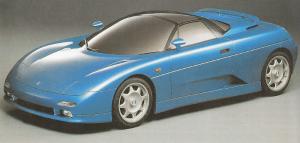
After Ford ended its partnership with De Tomaso in 1974, the Pantera continued in declining numbers but remained nominally available until 1996, by which time around 10,500 had been built. It served as the company's sole product until the mid-1990s, when two new models were introduced: the mid-engined Guara coupé, powered by a 3982cc BMW V8 engine with a six-speed gearbox, and the front-engined Bigua convertible, powered by a 4601cc Ford V8 engine with a five-speed gearbox. The Bigua featured a hardtop that could be adjusted into three configurations—coupé, targa, or cabriolet—and was marketed in the United States under the revived Mangusta name.
By 2000, De Tomaso was the only significant Italian car manufacturer independent of Fiat, although it maintained a strategic partnership with the American parts supplier Visteon Automotive Systems. From that year, production of the Mangusta was taken over by a separate company and the car was sold as the Qvale Mangusta.
From €9.90/month — or €50/year (save 58%)
Subscribe Now