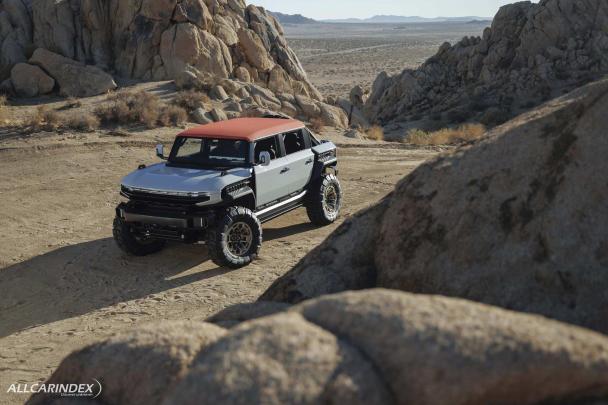

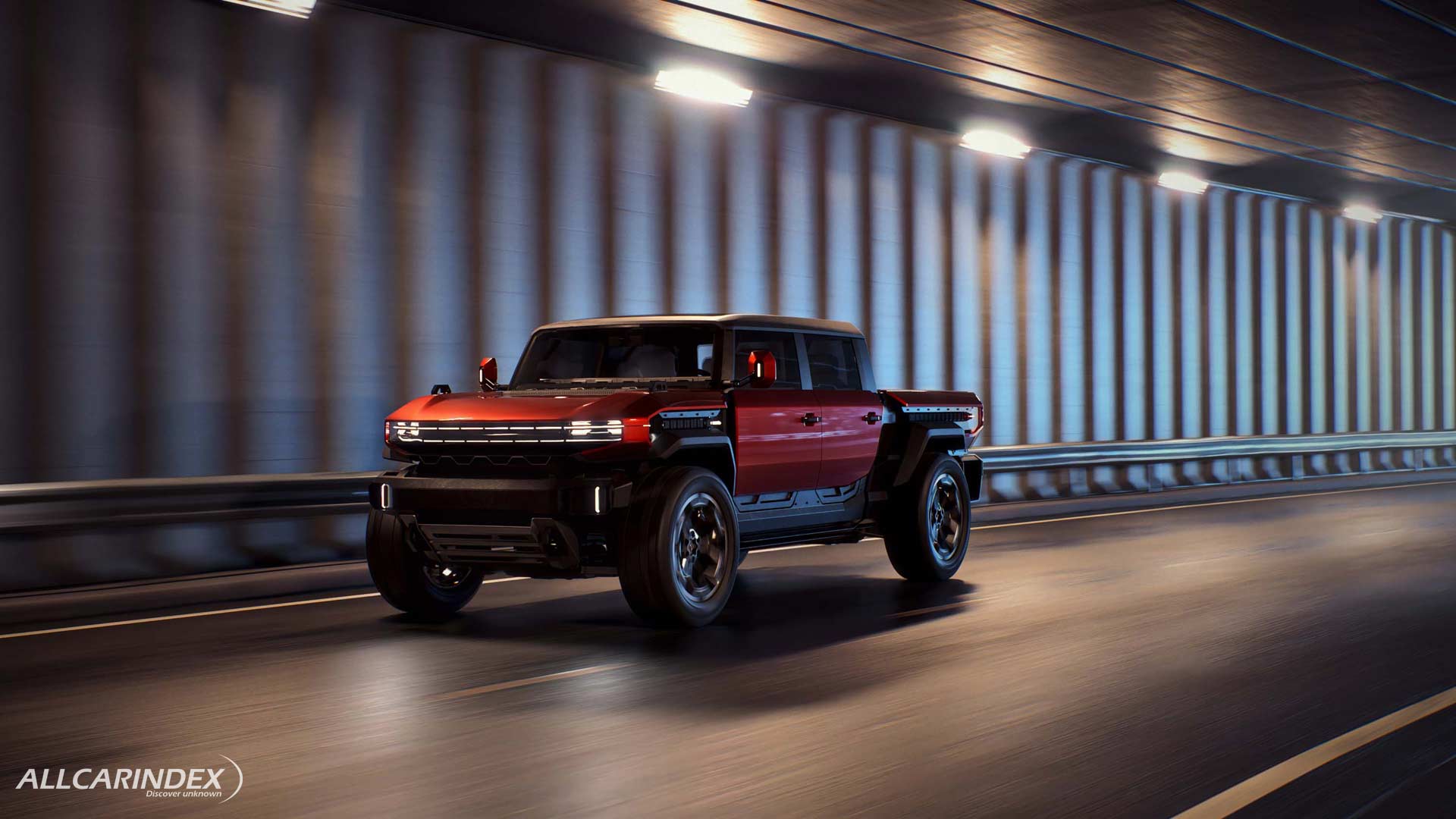
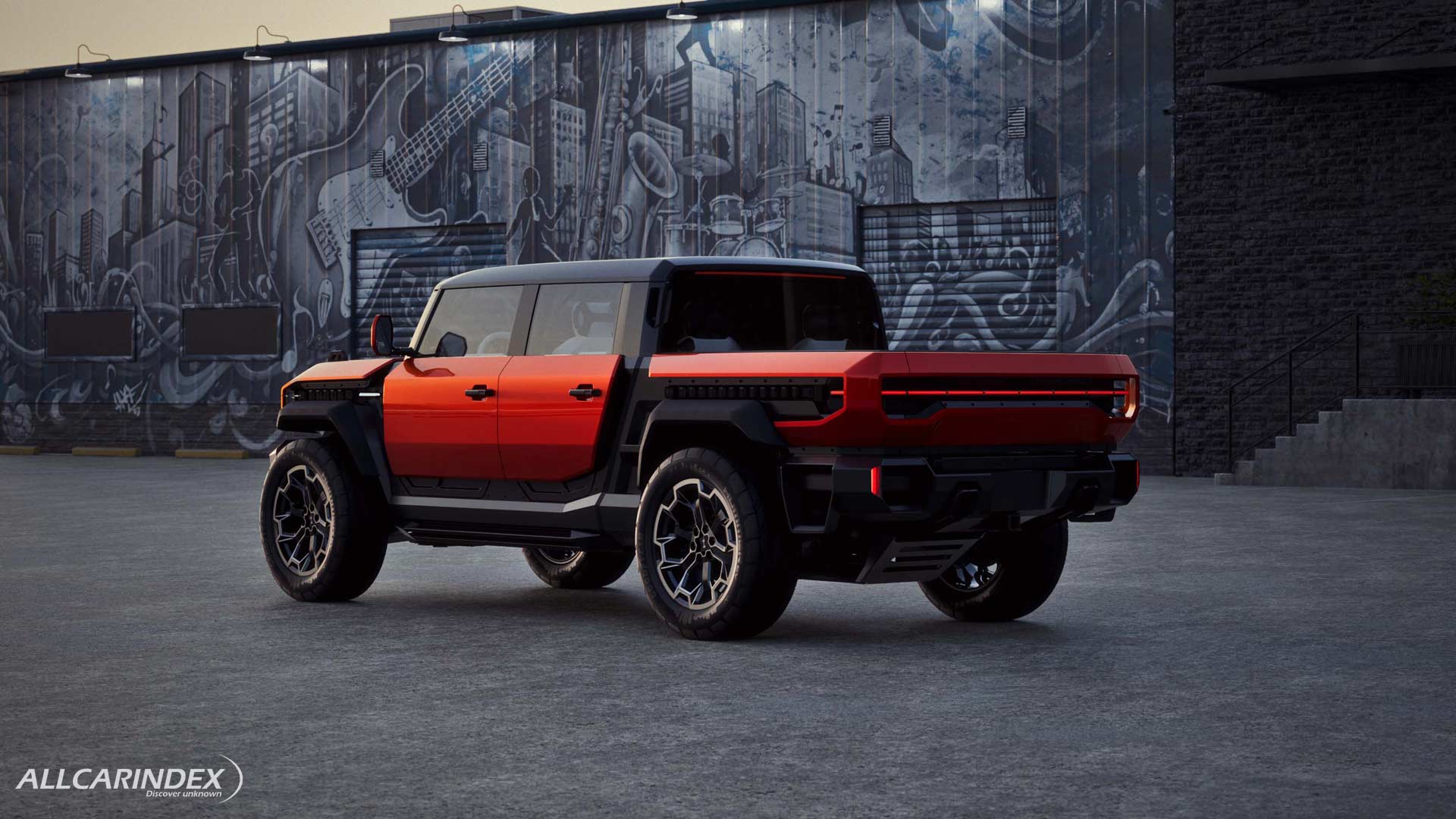
The GMC HUMMER X truck concept made its first appearance at the official opening of General Motors’ Advanced Design studio in Pasadena, California. Revealed together with an SUV version, the electric pickup was developed as part of a wider study into modular construction, adaptable vehicle architecture and new forms of off-road travel.
Although it carries design elements associated with the HUMMER name, the truck does not form part of an announced production programme. It was created as a test platform by GM Advanced Engineering, Advanced Manufacturing and the Pasadena design studio, giving the teams an opportunity to work outside the restrictions of a conventional development cycle.
The project began with the idea that an off-road vehicle could be continuously reconfigured rather than completed in one permanent form. Capability remained one of its principal requirements, but it was considered alongside sustainability, community use and the possibility of changing the vehicle through more flexible manufacturing processes.
At the centre of this work is FLEX FAB, a metal production method intended for rapid, small-volume and on-demand manufacturing. Instead of requiring a separate set of stamping equipment for every component, the system allows several designs to be created using the same machinery.
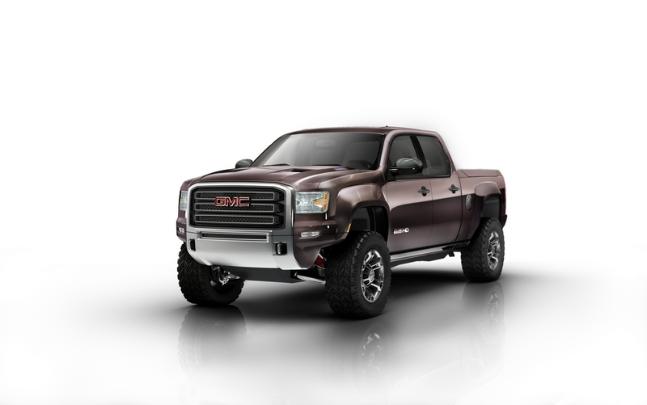
This process accounts for 57 per cent of the HUMMER X truck. It allowed the designers to construct a body using clean, relatively flat surfaces with radiused edges rather than relying on deeply stamped panels. Laser-welded seams and visible precision fasteners remain exposed, showing how the exterior sections are joined together.
The truck measures 5,264.5 millimetres from front to rear and has a wheelbase of 3,318.6 millimetres. Its width is 2,032 millimetres, while the roof reaches a height of 1,854.4 millimetres. These proportions establish the longer format of the HUMMER X platform and distinguish the pickup from the 4,782.5-millimetre SUV displayed alongside it.
Its off-road geometry was developed around a ground clearance of 316.7 millimetres, or 12.5 inches. The approach angle is 41.5 degrees, the departure angle is 29.7 degrees and the breakover angle is 24.9 degrees.
For its public presentation, the truck was fitted with Goodyear street tyres measuring 305/55R22. Their overall diameter is 35 inches, and they are mounted on 22-inch aluminium wheels with accent inserts. The specification differs from the 18-inch wheels and 37-inch rock tyres selected for the SUV version.
The use of road-oriented tyres does not change the project’s underlying purpose as a capable off-road platform. The truck was conceived as a rock crawler, while its longer body and separate pickup configuration allowed the design team to examine how the same manufacturing philosophy could be used for another type of vehicle.
The cab retains the flat-topped profile introduced across the HUMMER X programme. Rounded edges soften the intersections between the individual panels, while exposed fixings remain part of the exterior treatment. The body does not attempt to disguise the methods used to assemble it, making the manufacturing process visible in the finished form.
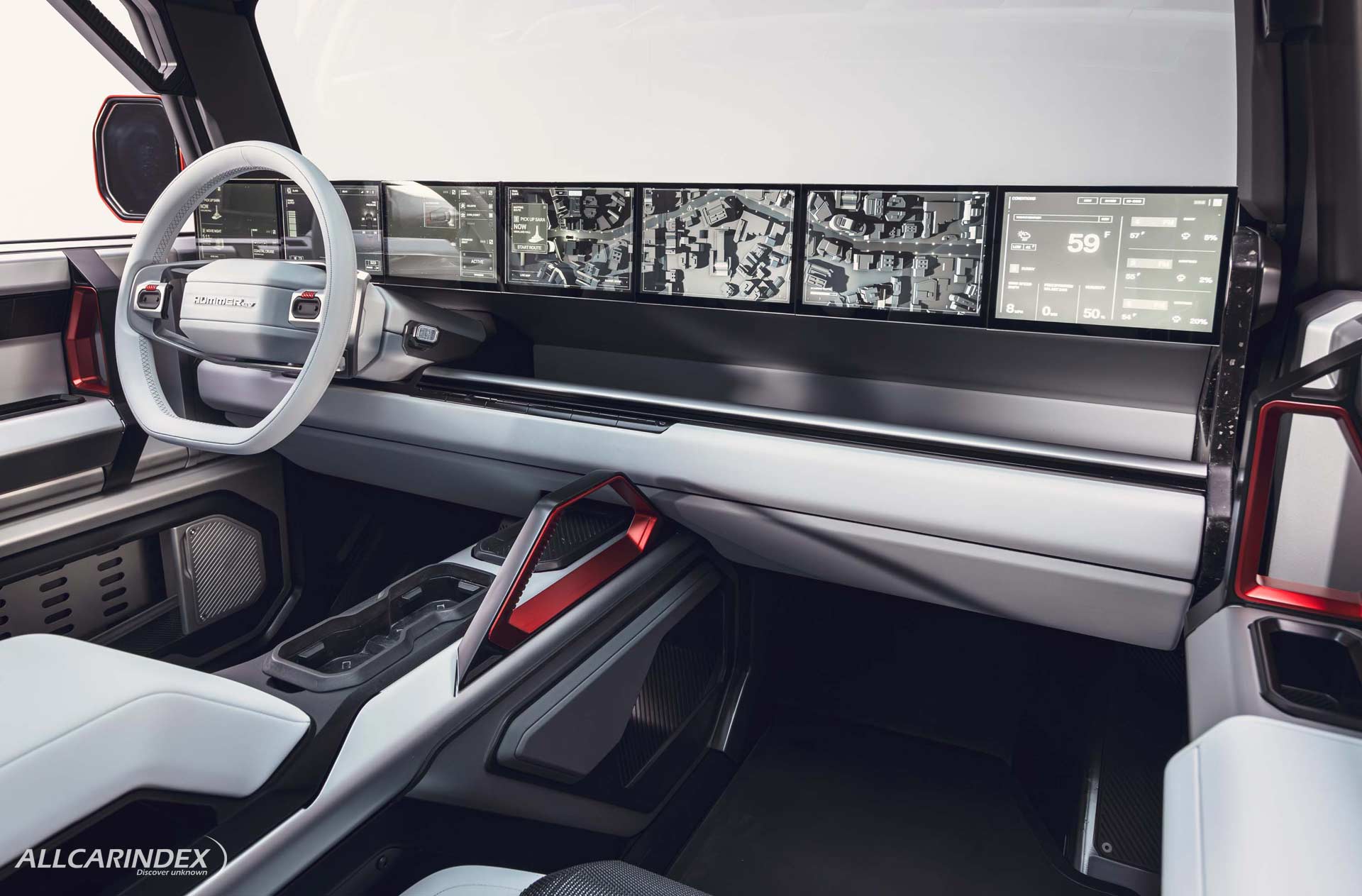
Inside, the conventional fixed arrangement of screens is replaced by stackable displays. Their position and number can be changed according to the type of driving undertaken. A driver preparing for a technical rock section could therefore use a different digital arrangement from one travelling on a trail or along a highway.
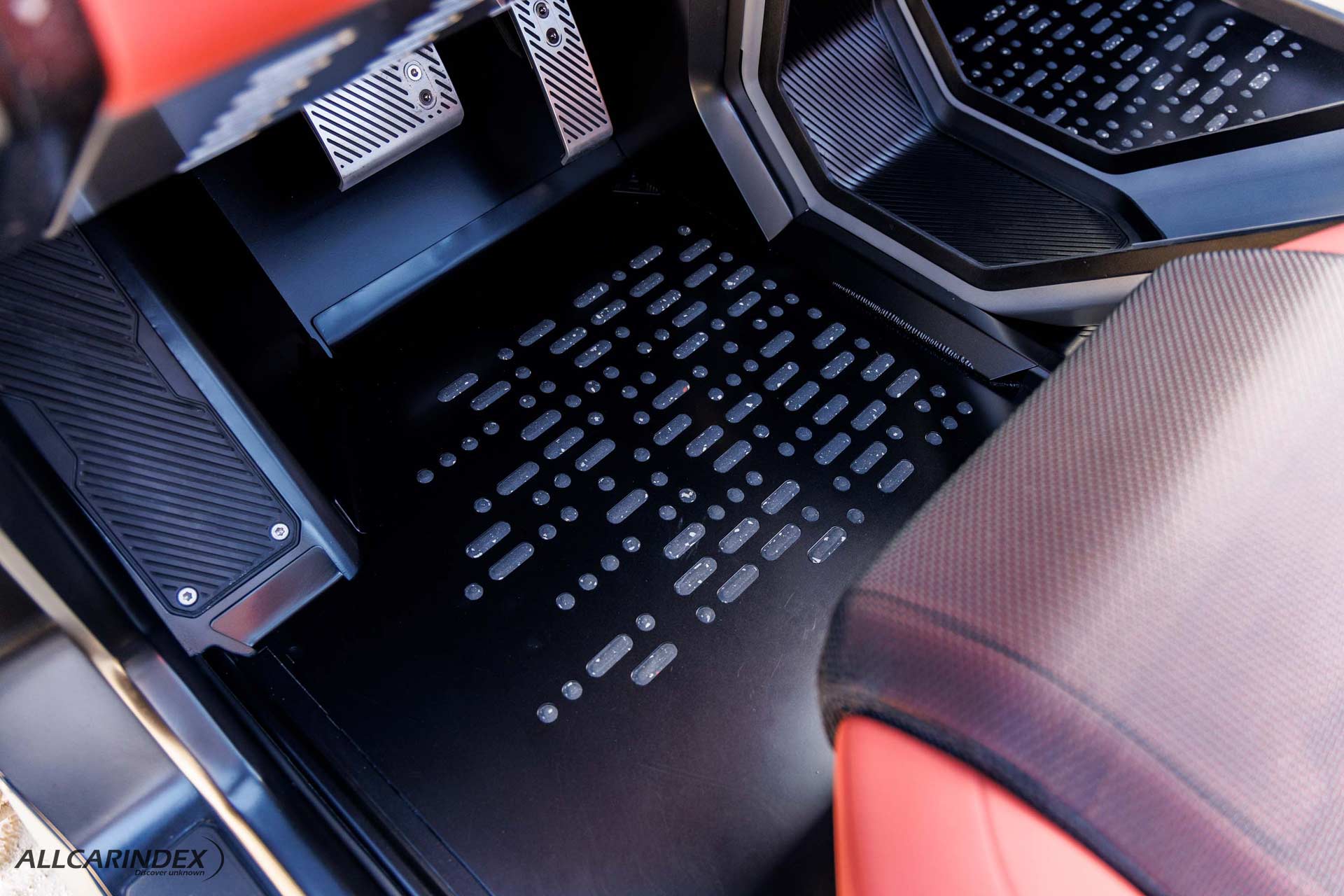
The concept’s environmental direction was established through a working principle based on recording an experience without leaving unnecessary evidence behind. This became part of the development brief rather than an exterior slogan, influencing discussions about sustainability and the way in which the vehicle could support groups travelling together.
The truck was designed at a studio created specifically for advanced concept and mobility projects. GM’s Pasadena campus extends across 148,000 square feet and contains three buildings equipped for clay modelling, fabrication and digital collaboration. Around 100 designers, sculptors, fabricators and specialist artisans work at the facility.
Its location continues General Motors’ long association with Southern California. Harley Earl, appointed as the company’s first design director in 1927, was raised in Hollywood and began his career creating custom cars for film personalities. He later helped establish clay modelling as a central part of automotive design, a process that remains in use at the Pasadena facility.
GM opened its first permanent advanced design operation in Southern California during the 1980s. Studios in the region subsequently contributed to experimental Corvette and Camaro designs as well as the autonomous Cadillac Halo portfolio. The Pasadena campus now joins GM’s other Advanced Design operations in Detroit, the United Kingdom and Shanghai.
The studio is directed by Hussein Al Attar, who takes over from Brian Smith following Smith’s return to the Chevrolet Corvette design team. Smith led the Pasadena operation for four years and was involved in establishing the central philosophy behind the HUMMER X truck and SUV.
Within this programme, the GMC HUMMER X truck provides the longer-wheelbase interpretation of the modular platform. Its 5,264.5-millimetre body, 22-inch wheels, 35-inch tyres and 316.7-millimetre ground clearance are combined with a structure in which FLEX FAB components account for more than half of the vehicle.
The truck remains an advanced design study rather than a production proposal. Its purpose is to examine how an electric pickup can be assembled in smaller batches, altered through a flexible construction system and equipped with an interior that changes according to the conditions in which it is being driven.