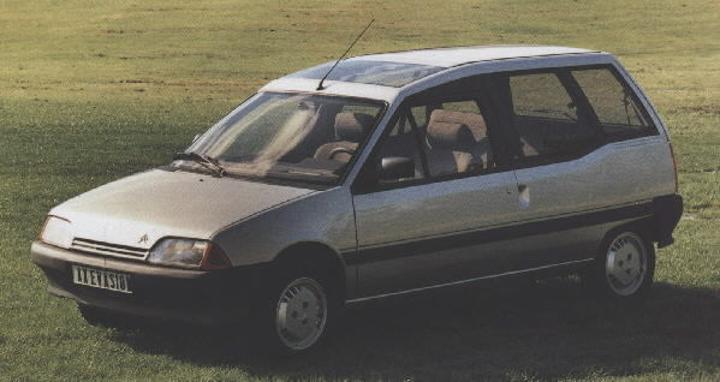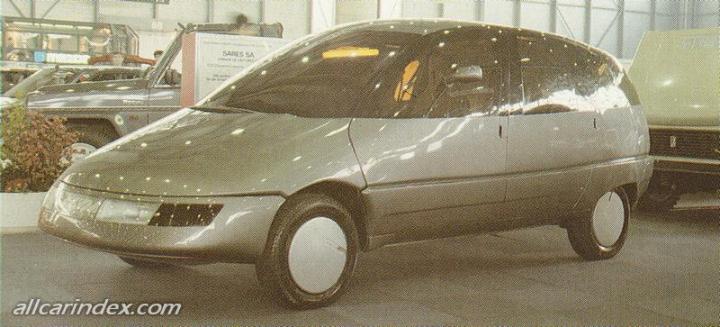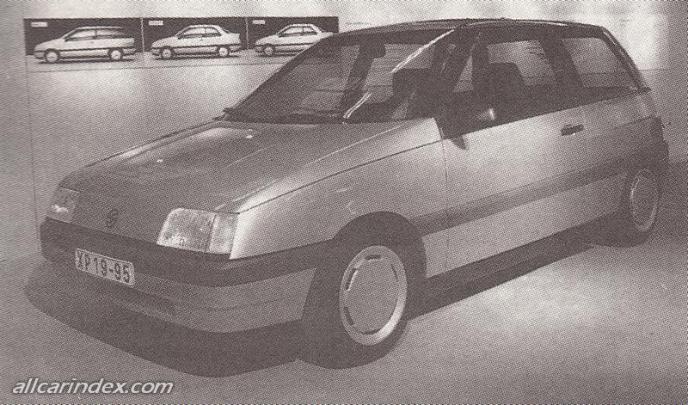
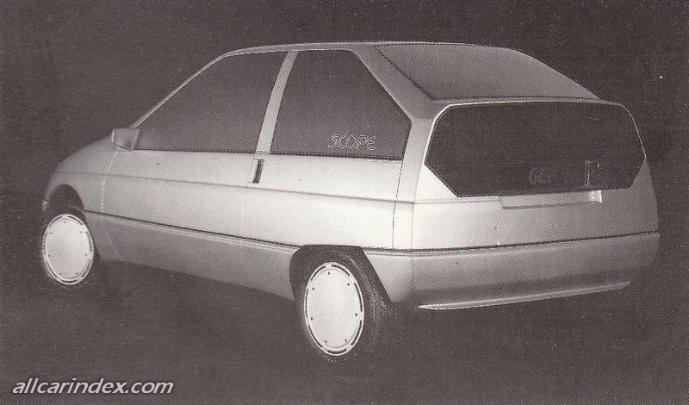

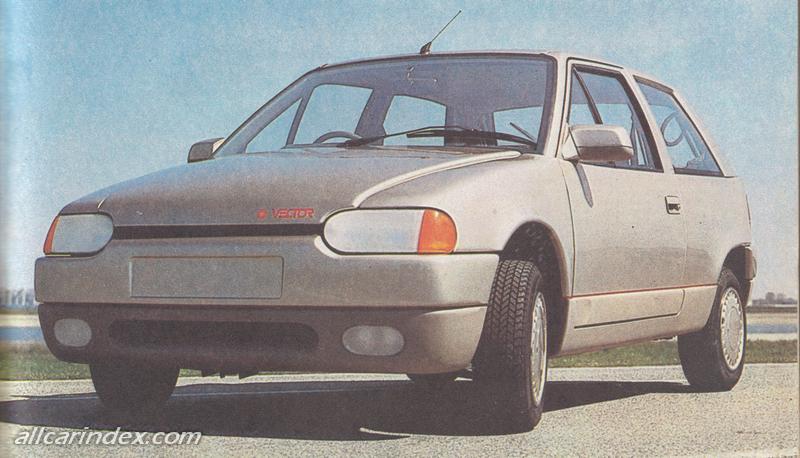
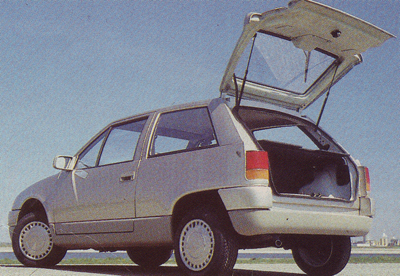
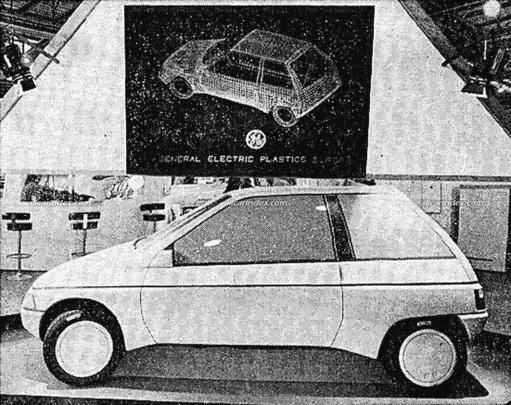
The Vector was a concept car developed by General Electric Plastics Europe to demonstrate the use of engineering thermoplastics and injection-molding techniques in automobile manufacturing. It was shown at the Geneva Sitev show in May 1988 as a prototype for a full-plastic production vehicle. The car was a small three-door, five-seat hatchback built on the mechanical underpinnings of the Citroen AX, and its overall outline closely followed that of the AX as well. General Electric Plastics stressed that the Vector had been built using pre-production tooling of production-ready quality, not simple hand-built mockups.
Dr. Paul van Hoeve, manager of GE's European vehicle program, presented the Vector as evidence that technical thermoplastics would shape automobile construction through the 1990s and into the following century, arguing that manufacturers needed a more economical production process requiring less tooling changeover effort to bring new models and bodies to market more frequently.
About 18 months after the original car's debut, a follow-up version called the Vector II was introduced. It looked nearly identical to the first Vector externally, but incorporated additional plastic components drawn from GE's range of engineering thermoplastics, continuing its role as a rolling test platform for the material supplier's technology.
The Vector measured 3500 mm long, 1560 mm wide and 1350 mm high, with a wheelbase of 2285 mm and track widths of 1380 mm front and 1300 mm rear, dimensions shared with the Citroen AX on which it was based.
![Maggiora [2] AC 4WD (1988)](/img/models/a/maggiora-ac-4wd_001.jpg?w=720&h=405)