
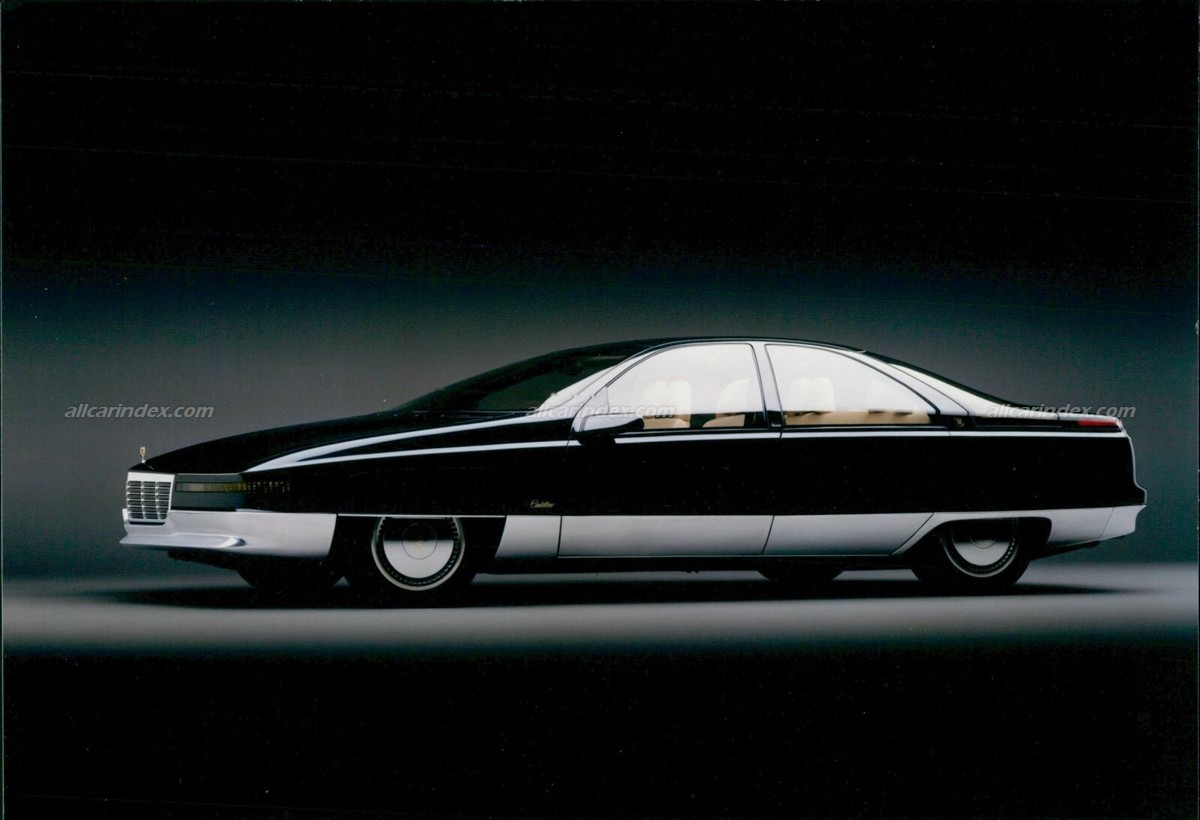
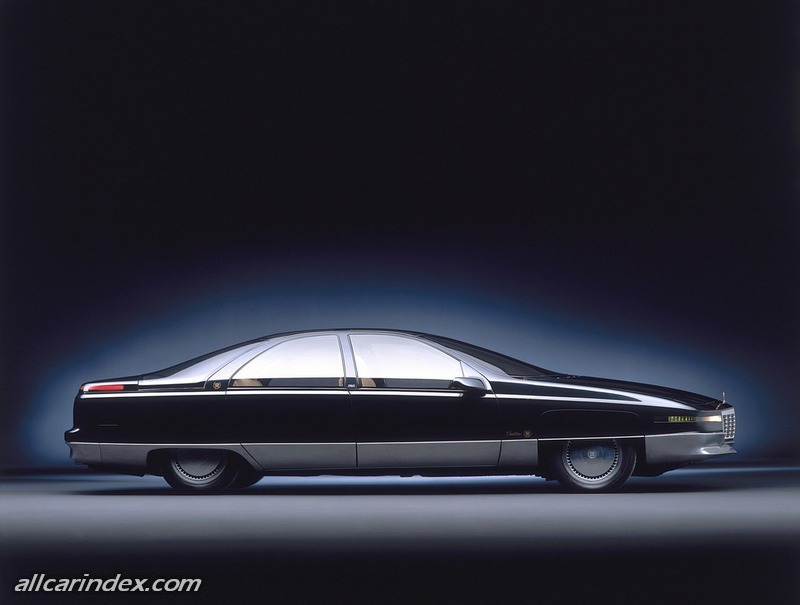
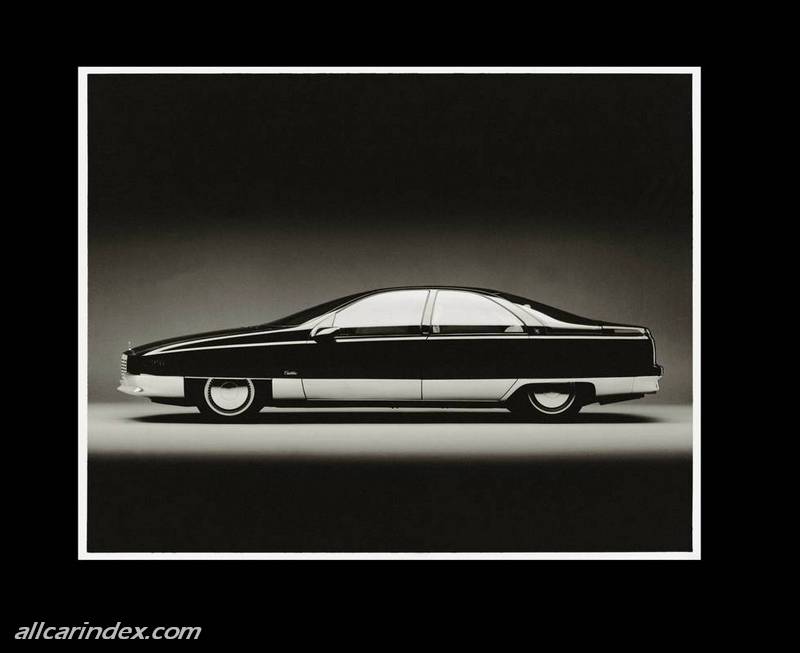
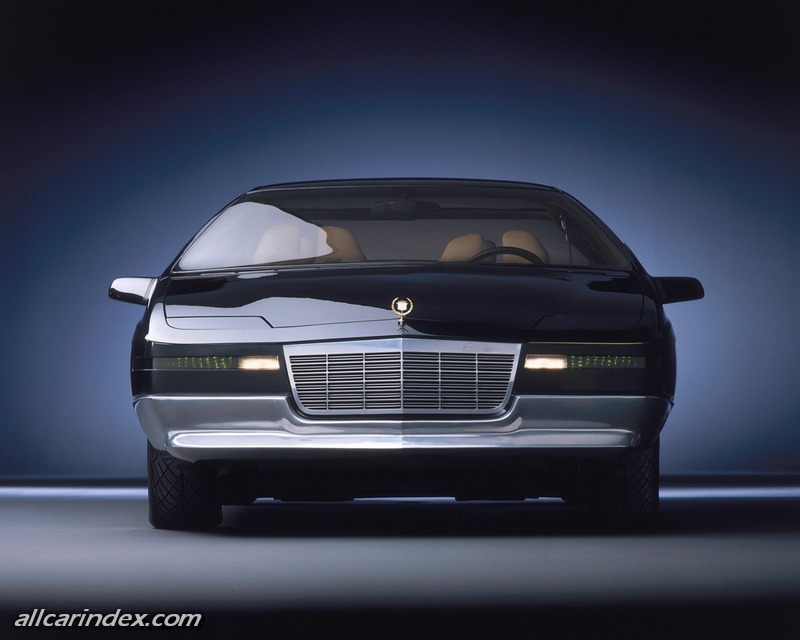
The Cadillac Voyagé was a concept car presented as a "concept car of the 21st century," built as a four-door, four-seat sedan and described by Cadillac general manager John O. Grettenberger as a rolling laboratory. Cadillac struggled with how to render its name, first writing it as Voyàge and then as Voyagé, in keeping with the brand's long history of French-derived model names such as Seville, De Ville, Calais, Biarritz and Allanté, and referencing the French origins of the company's namesake, Antoine de la Mothe Cadillac, founder of Detroit.
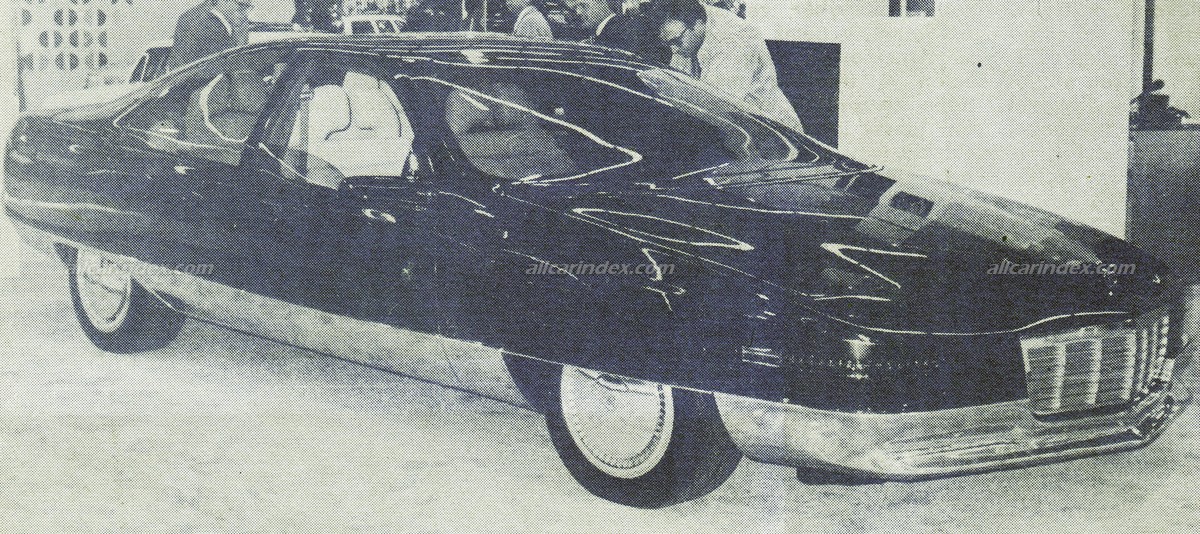
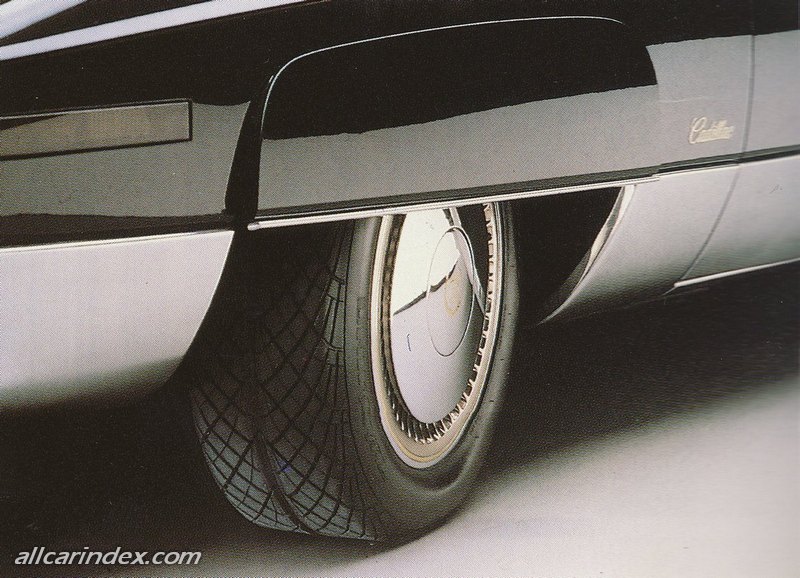
Promotional material for the car suggested that this "projectile-type" vehicle could one day travel at speeds of up to 290 km/h (180 mph) on computer-controlled highways where 110 km/h (65 mph) would be considered the minimum safe cruising speed. The body was designed for low aerodynamic drag, with a claimed drag coefficient of 0.28. The elongated four-door body featured a hood and windshield nearly in line with one another, a windshield, roof and rear window made of continuous tinted high-strength glass, and flush side windows curving up into the roofline. The protruding grille was paired with a front bumper shaped as a spoiler, and the flanks curved inward between partially covered wheels; at full steering lock, the front fender covers opened outward to allow clearance. Despite its bulky appearance, the Voyagé measured 304 cm in wheelbase and 540 cm in overall length, shorter than the contemporary Cadillac Brougham flagship (308.5/562 cm).
Power came from a modified 4.5-liter V8 derived from Cadillac's smaller model range, tuned to produce 279 hp and 447 Nm of torque instead of the standard 157 hp, paired with a four-speed automatic transmission. Cadillac noted that other future engines could also be fitted to the concept. Technical features included permanent four-wheel drive with a viscous coupling for even front-to-rear power distribution, four-wheel disc brakes with ABS, independent suspension, and aluminum wheels fitted with P225/65 R16 self-sealing tires.
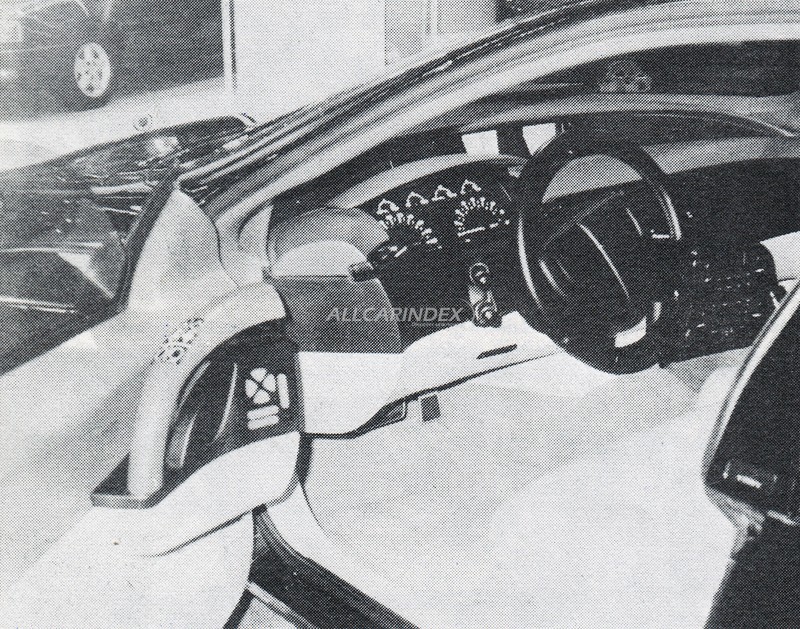
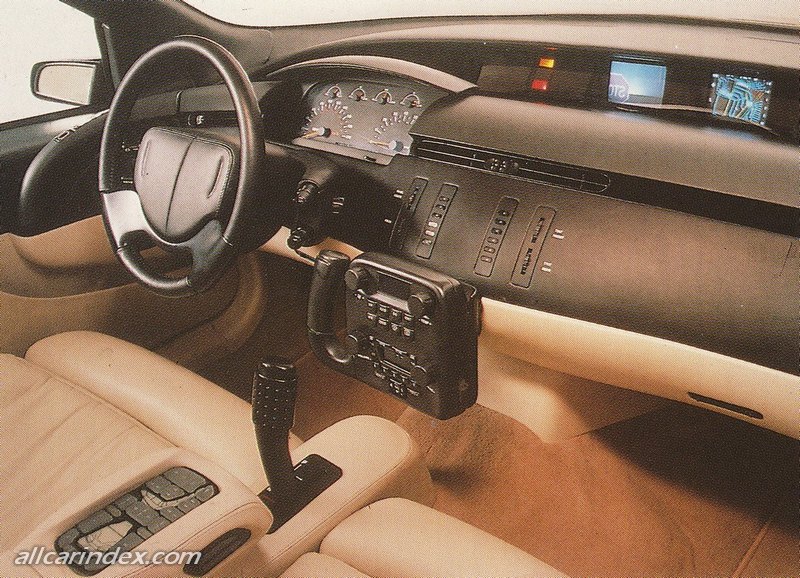
The front end used newly designed small headlamps, while the rear featured a concealed band of LED lighting interrupted by a zoom camera linked to a dashboard display to warn the driver of approaching vehicles from behind. Mirrors used electrochromatic coating for automatic dimming, and the car had automatic hazard flashers that activated when another car approached at night. Windshield wipers were hidden beneath a flap and rose only when needed. Doors opened by remote control, lowering the windows and tilting the steering column upward. Seating position, steering column angle and mirror settings could be memorized for three drivers, the steering wheel adjusted electrically for angle and distance, and the front seats featured 20 adjustable air cushions along with heating and massage functions, controlled via a miniature seat model in the center console. Equipment also included a voice-activated hands-free phone with printed information output and an Etak navigation system with its own display, along with an analog-gauge instrument panel. The Voyagé weighed 1725 kg.