
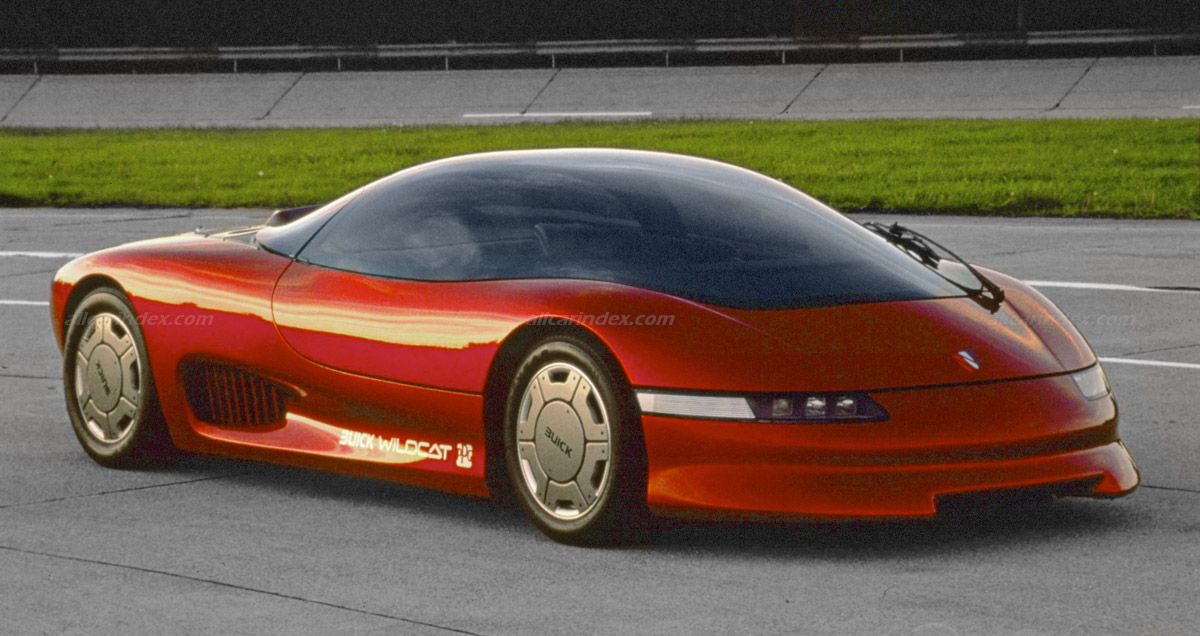
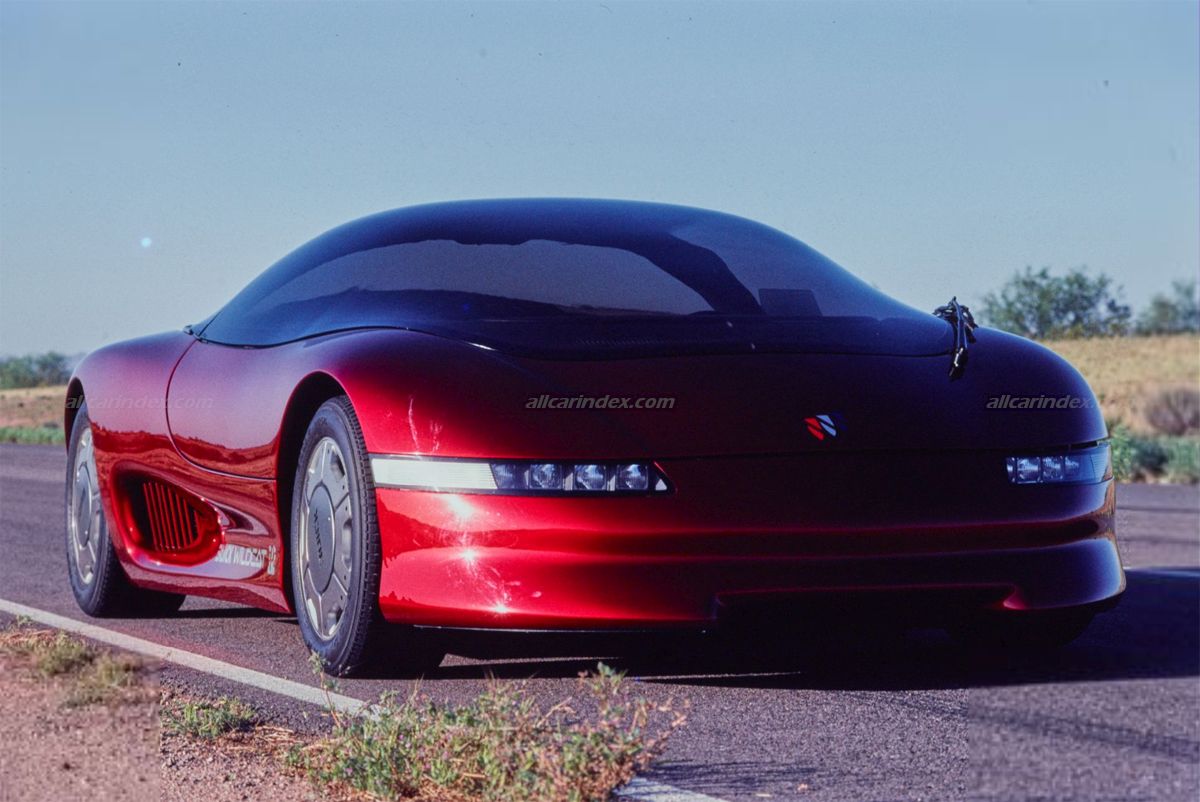
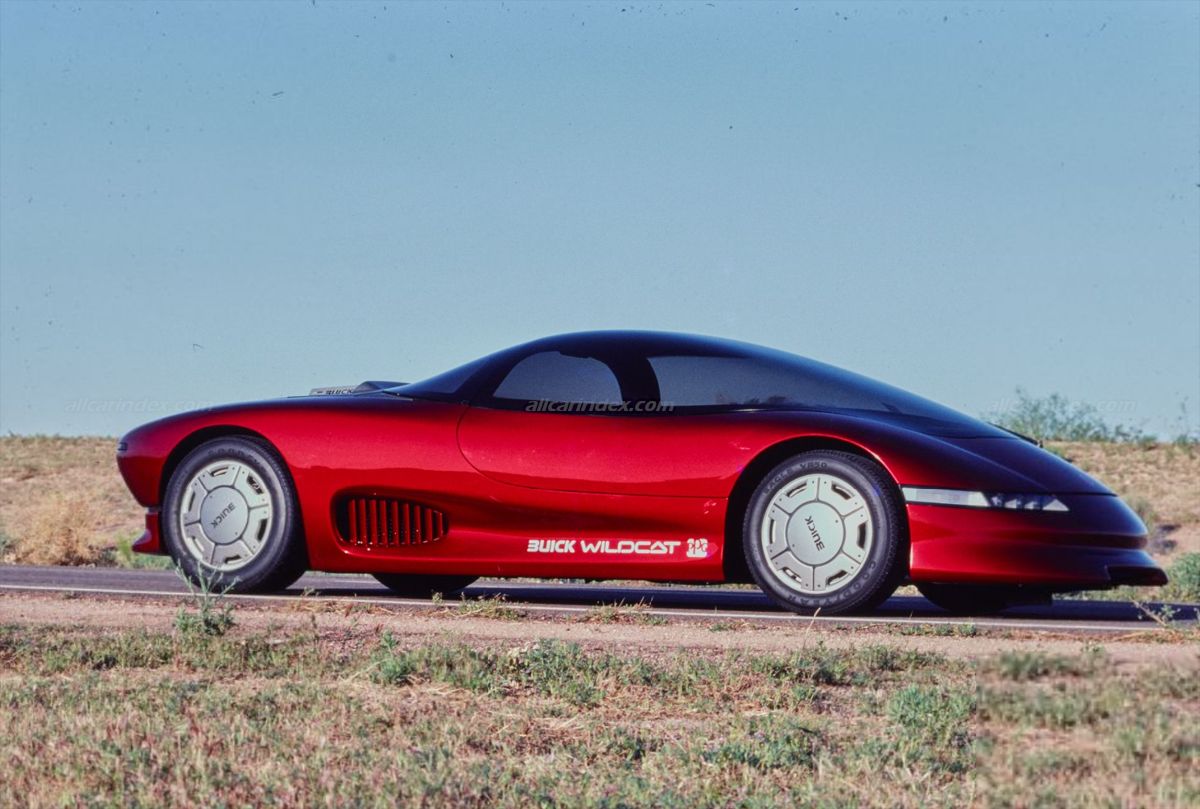
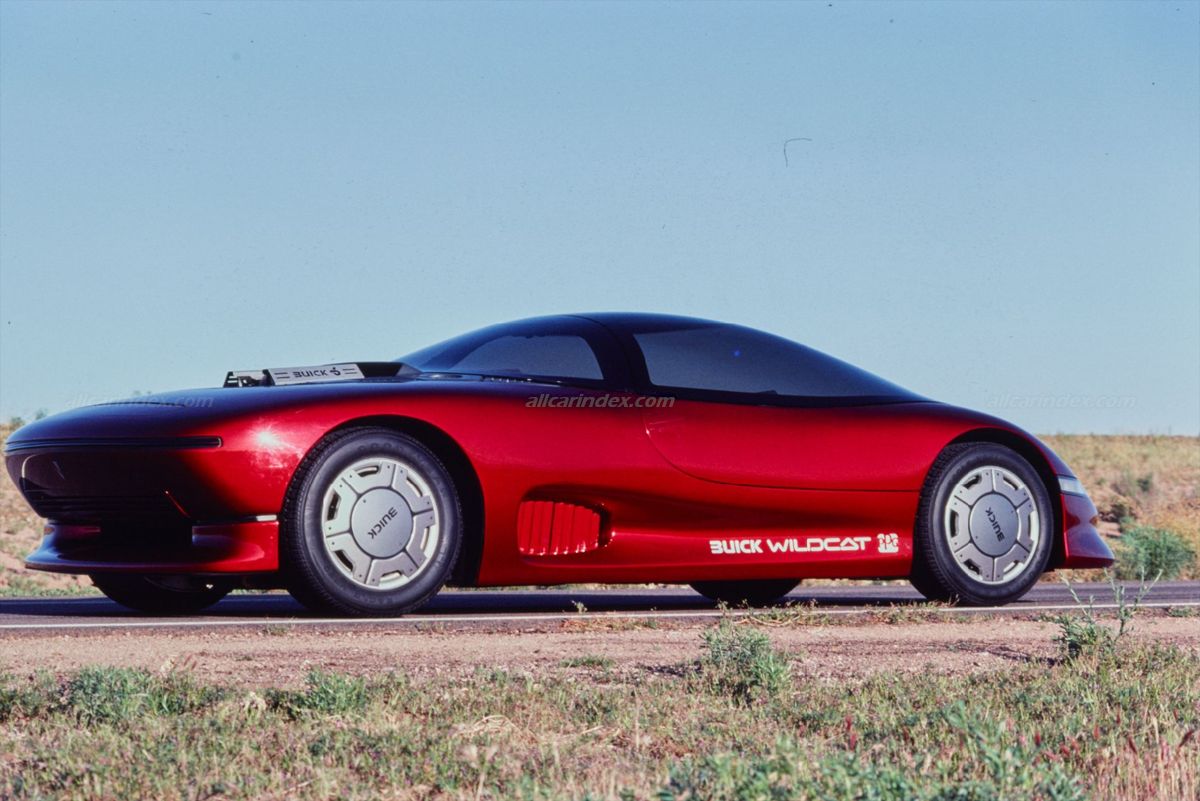
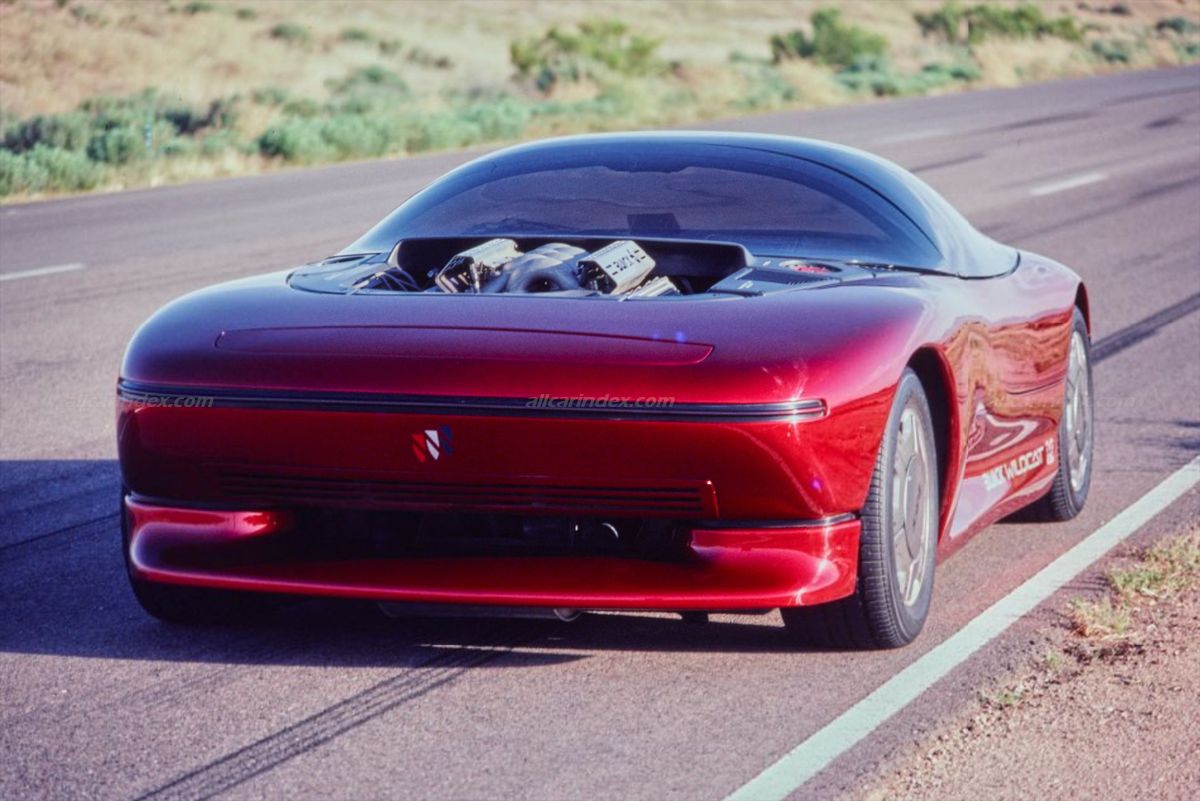
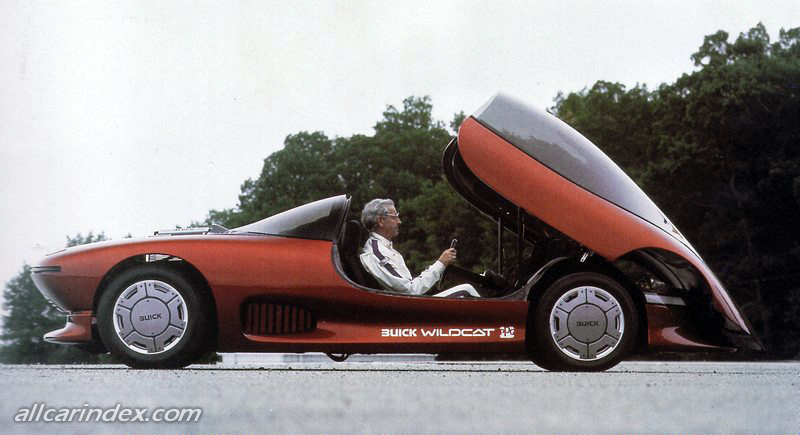
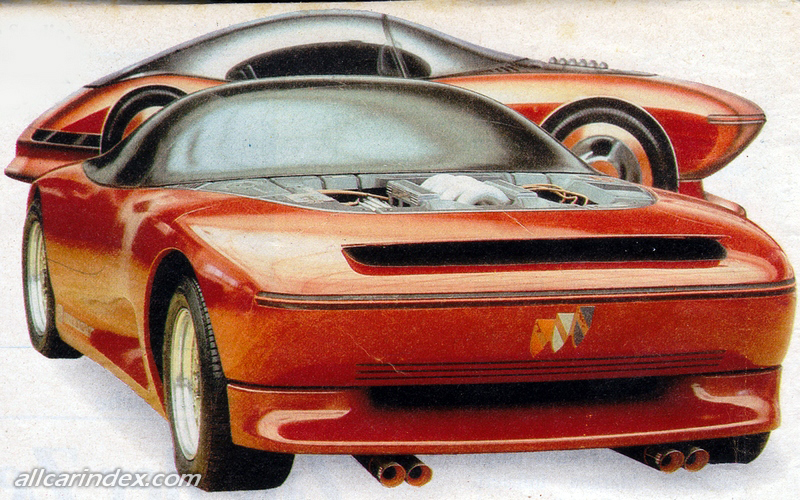
The Buick Wildcat was a mid-engined concept coupe shown by the Buick division of General Motors at the end of 1985. Buick, positioned just below Cadillac in GM's prestige hierarchy, had long carried a reputation for comfort rather than outright performance, so the appearance of a racing-styled mid-engine coupe under the Wildcat name surprised observers at the time, even though Buick had used the Wildcat name on earlier models. The concept combined a low, wedge-shaped lower body with a large flat glass canopy set far forward, sloping gently down at the rear to an exposed engine bay, giving the car a silhouette in which the rear end could be mistaken for the front. Entry was achieved by lifting the entire front section above the headlight line back to the seat backs, with the panel also shifting forward to ease access despite the car's low body sides.
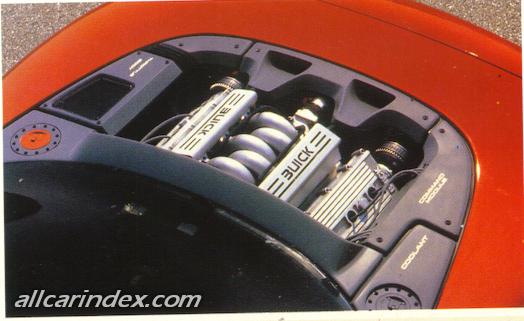
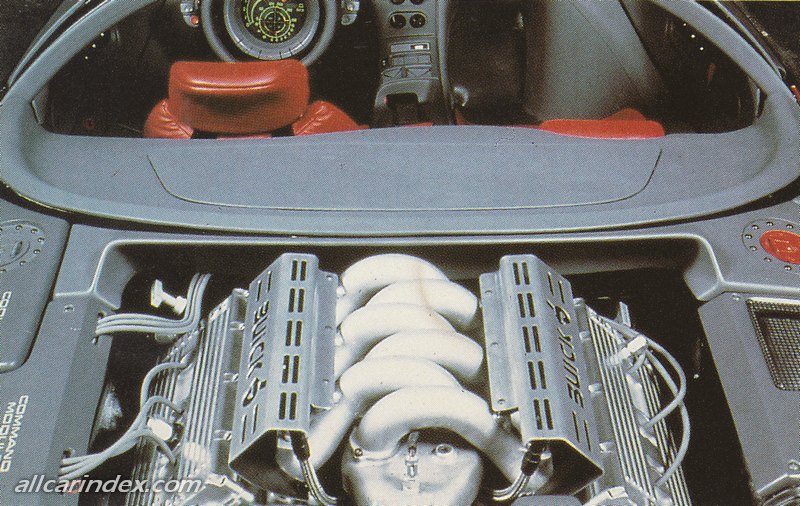
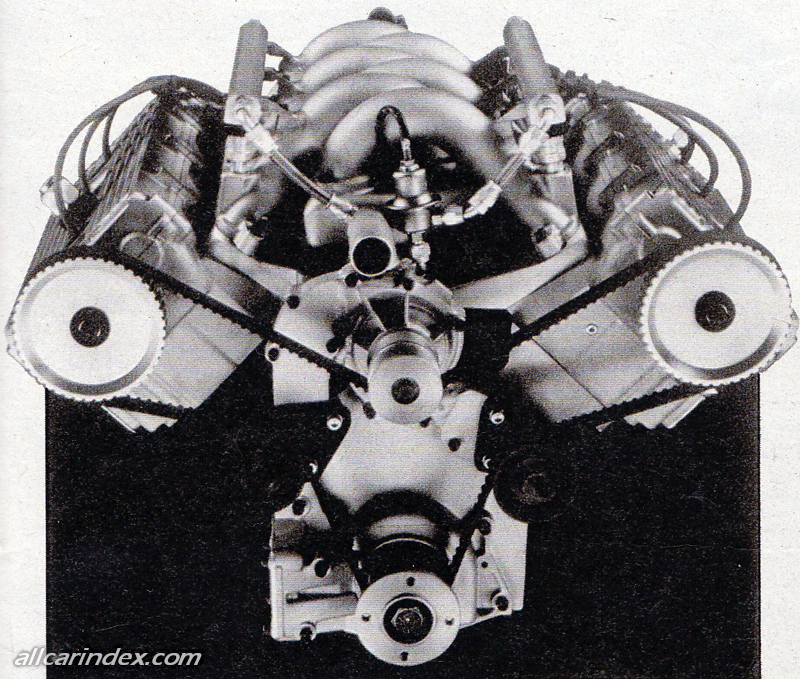
GM described the Wildcat as a test vehicle for exploring technology that might reach production, though it was not specified whether this referred to the four-valve V6 or to the permanent four-wheel-drive system. A related development did occur in 1991, when a double-overhead-cam 24-valve V6 entered GM's regular lineup, though not initially in a Buick. The Wildcat's own 3.8-liter (3791 cc) V6, with DOHC and 24 valves and refined electronic fuel injection, produced 230 hp at 6000 rpm, compared with contemporary production versions of the engine rated between 112 and 152 hp, or up to 238 hp with turbocharging.
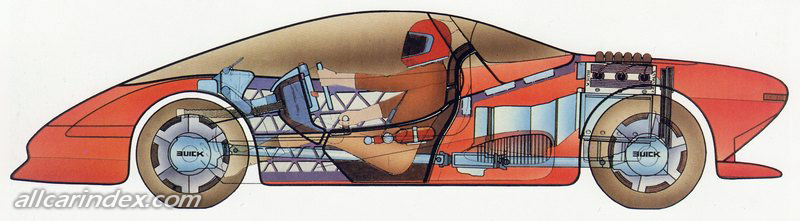
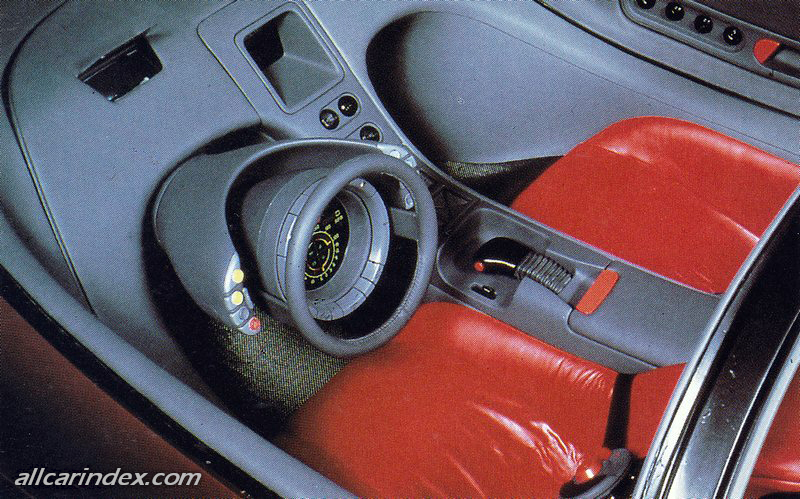
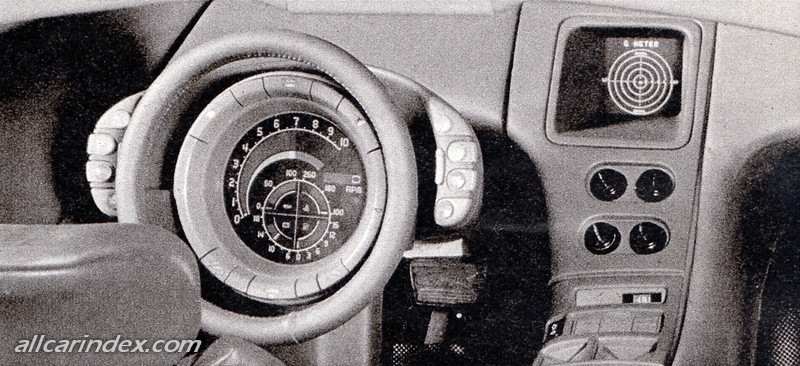
The engine was mounted between the rear wheels facing rearward, placing the transmission behind the seats, and was cooled by two radiators in series, each with its own thermostatically controlled electric fan. Drive went through a four-speed automatic with overdrive that could also be shifted manually by pushbutton, with power sent via chains to a central distribution system and driveshafts running forward and rearward along the right side of the drivetrain. Front, center, and rear differentials used aluminum housings, with front and rear units designed for asymmetric half-shafts; torque split was 35 percent front and 65 percent rear. Suspension followed Grand Prix racing practice, using gas shock absorbers with adjustable damping. The structure combined layered fiberglass with carbon reinforcement and steel members for suspension mounting, without a continuous steel frame connecting front and rear, while the body itself was made from a lightweight carbon-fiber material. The cockpit featured digital displays recessed into a dish-shaped steering wheel.
The car measured 4390 mm in length and had a claimed top speed of 320 km/h. It received the Car Design Award for concept cars in 1985, its third year of presentation, from an international jury.