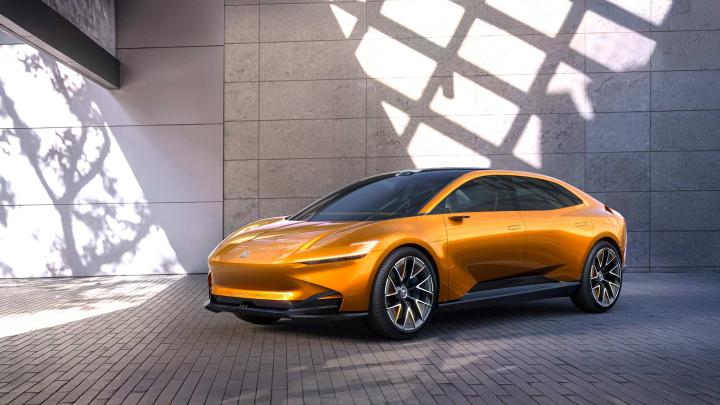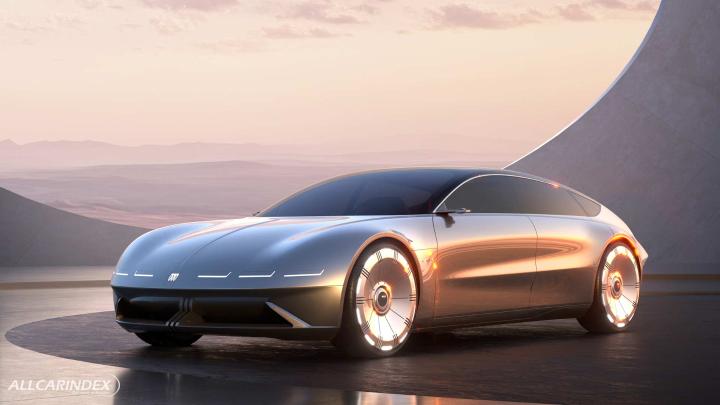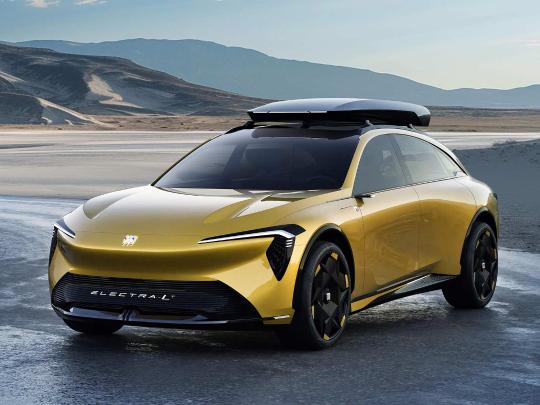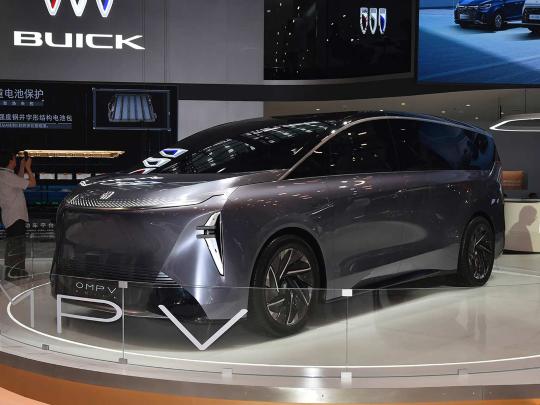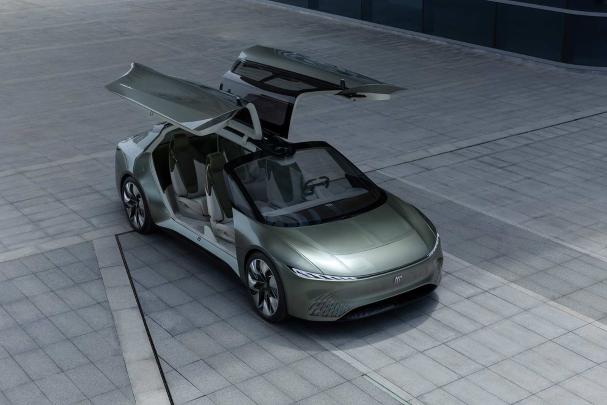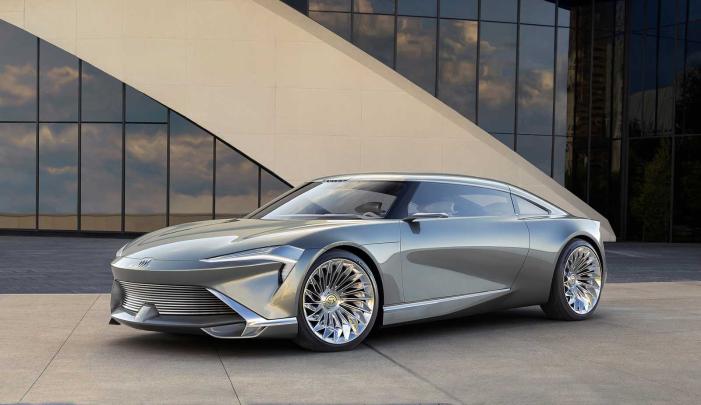
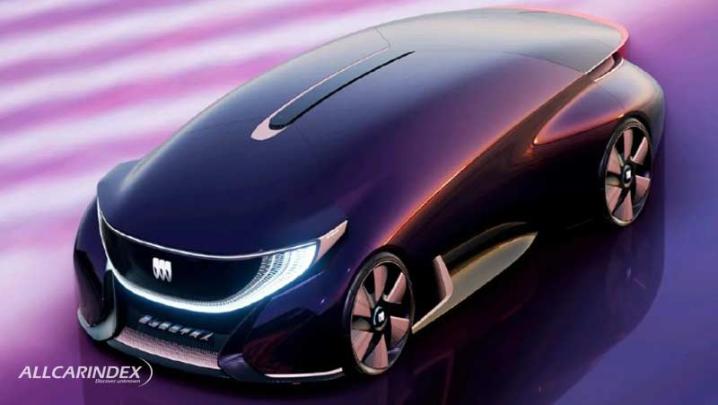

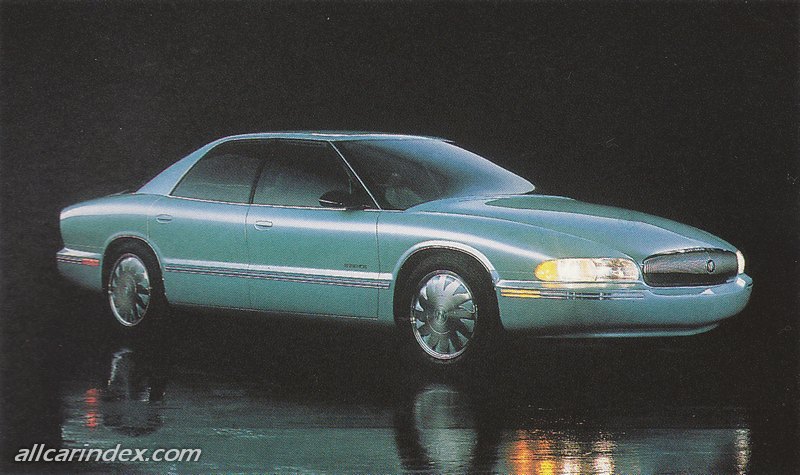
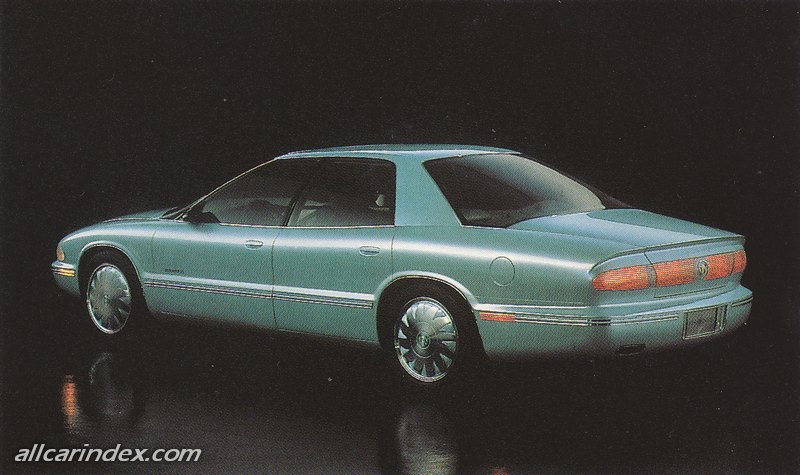
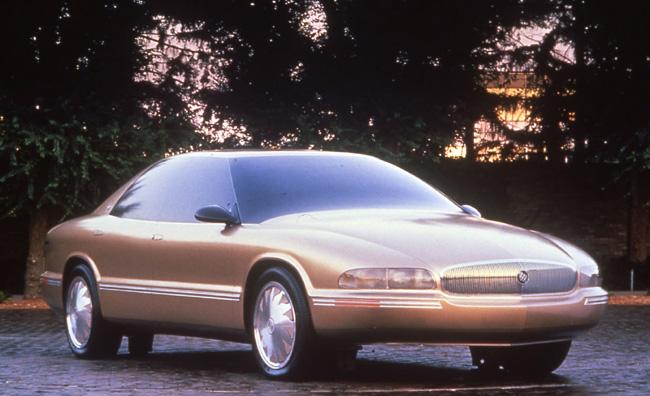
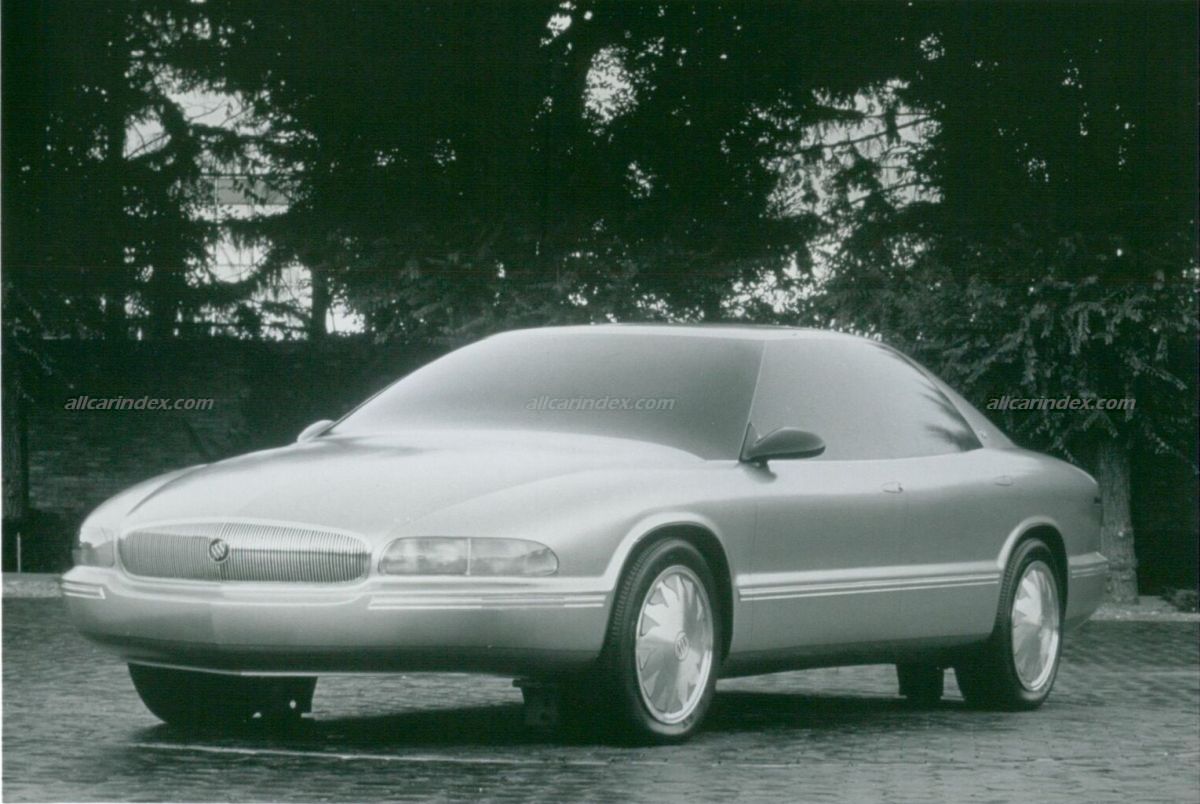
The Buick Park Avenue Essence was a concept car developed by Buick, part of General Motors, presented as a design study pointing toward future production models from the brand. Edward H. Mertz, Buick's top manager, described the Essence as radiating the muscular grace associated with the large Buicks of the past, while Charles M. Jordan, GM's chief of design, characterized it as a fresh direction for luxury sedans, offering a contemporary take on classical design with balanced proportions, elegance, and timeless flair. The car's styling was defined by soft, rounded surfaces and a grille treatment typical of the brand.
At 534 cm long, the Essence exceeded even Buick's largest production sedan of the time, the Electra Park Avenue, which measured just 5 meters. The body retained the same width as Buick's full-size sedans, though the track was widened by about 5 cm, and the car rode on 225/60 R16 wide tires. Like other modern Buicks, it used front-wheel drive with a transversely mounted engine, in this case a 3.8-liter (3791 cc) V6 producing 188 hp at 4400 rpm and 298 Nm of torque at 3600 rpm, compared with 167 hp at 5200 rpm in the standard production engine. A revised four-speed automatic transmission with overdrive allowed acceleration from 0 to 96.5 km/h (60 mph) in about 9 seconds. A windshield raked at 65.5 degrees contributed to an estimated drag coefficient below 0.30.
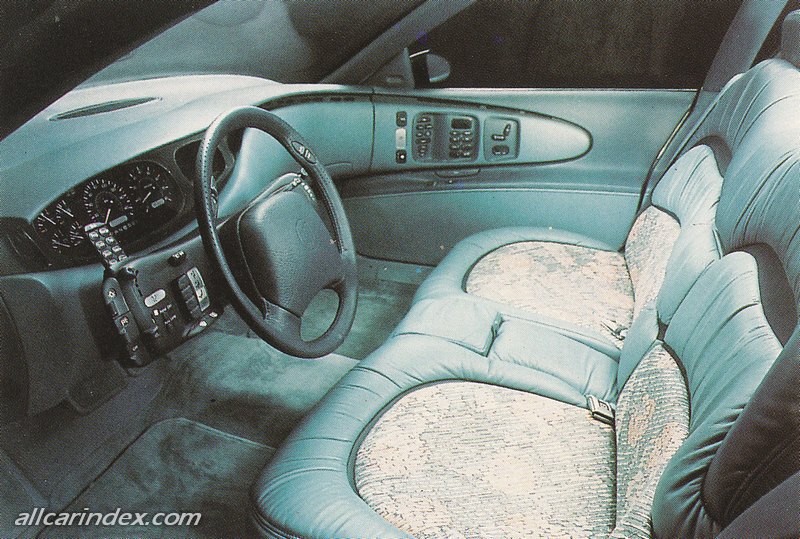
Access to the cabin was through unusually wide-opening doors fitted with new hinge designs, which opened automatically once the door handle was pulled and closed again at the push of a button. The six-seat interior featured a dashboard extending forward in a half-circle shape into the door panels, with round analog gauges and controls mounted on extensions beneath the steering wheel on either side. Front and rear passengers had electrically adjustable footrests, along with indirect lighting, integrated ventilation slots, and storage compartments.
A roof console behind the front seats provided rear passengers with makeup mirrors and a small television screen; a second screen was built into the right side of the instrument panel, functioning as a television only when parked and otherwise displaying the Navicar navigation system, developed by GM subsidiary Delco as an evolution of the Etak system, using an electronic compass and wheel sensors to track the vehicle's position from a set starting point. Four separate climate control units were fitted, and three passengers could each select their own radio, cassette, or CD audio via wireless infrared headphones. The wheelbase measured 289 cm, with a width of 184 cm and a height of 141.5 cm.