
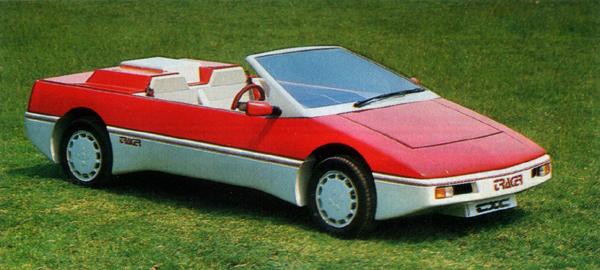
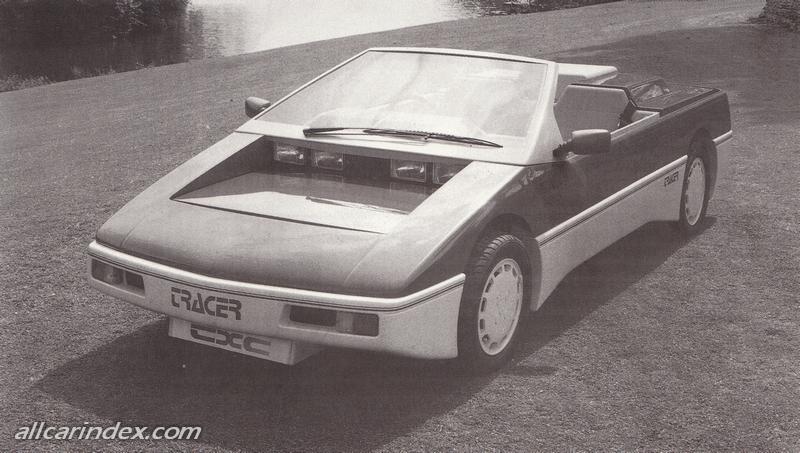
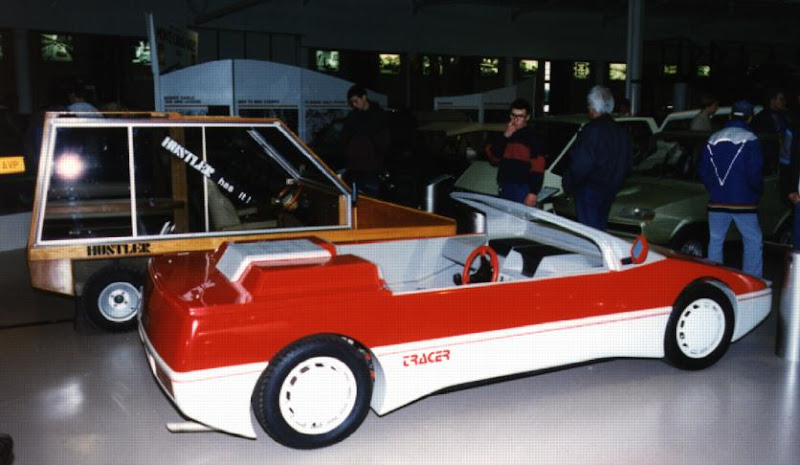
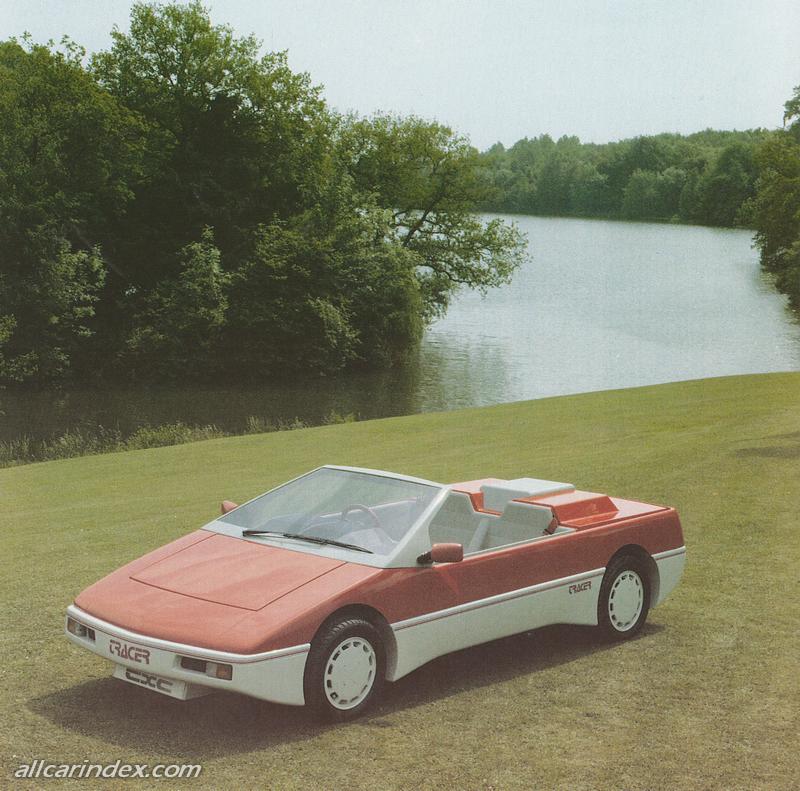
The Tracer TXC was a doorless two-seat roadster concept designed by William Towns, who had previously worked as a designer for Rootes, Rover and Aston Martin. He proposed it as a possible MG two-seater, arguing that a market gap existed for a fully open fair-weather car, and designed it so that it could also have been suitable for production as a kit car.
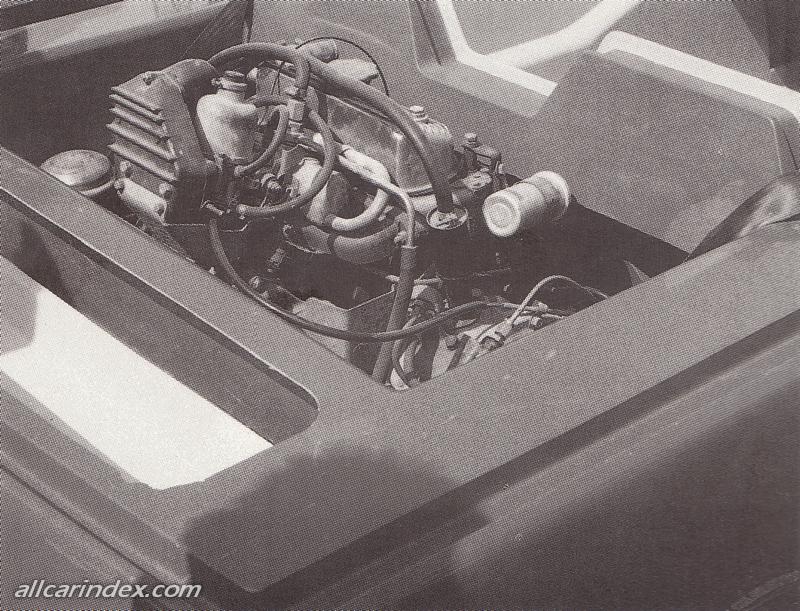
The car used a tubular chassis frame with a mid-mounted engine borrowed from the MG Metro Turbo, a 1275 cc four-cylinder producing 94 hp at 6130 rpm and 115 Nm of torque at 2650 rpm, paired with a four-speed gearbox. Its bodywork was made largely of a single glass-fibre-reinforced plastic unit that also incorporated the interior and seat shapes, with contrasting lower body panels that could be removed to simplify repair and maintenance. Including the front hood, which held the spare wheel and fuel tank, and the rear hood covering the engine bay and a small luggage area, the body consisted of just seven elements, plus a separate dashboard and windscreen frame.
Distinctive headlights sat just below the steeply raked windscreen, tucked between the front wings and revealed when the flap-type front hood was lowered. Like Towns' earlier Hustler designs, the Tracer had no doors, with enough space between the seats and windscreen frame to allow occupants to stand upright when entering or exiting. It measured 3800 mm long, 1500 mm wide and 1060 mm high, on a 2350 mm wheelbase, with a 1310 mm track. It remained a design proposal rather than a production model.