
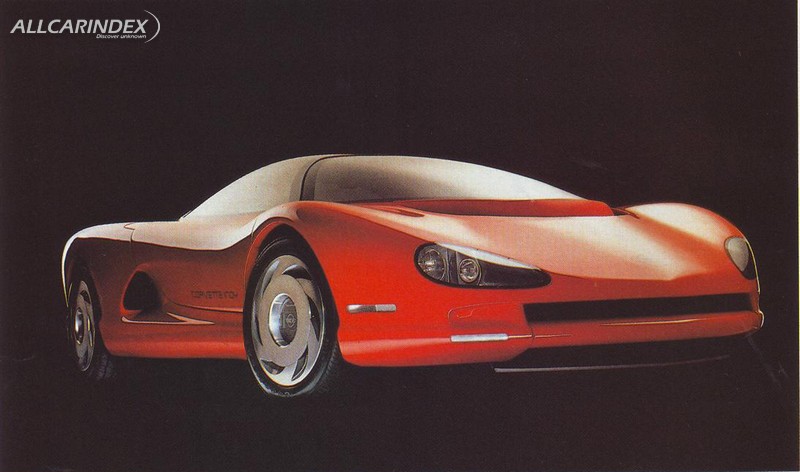
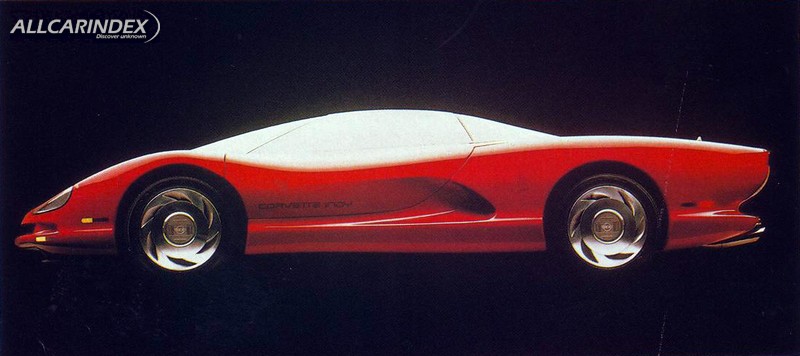
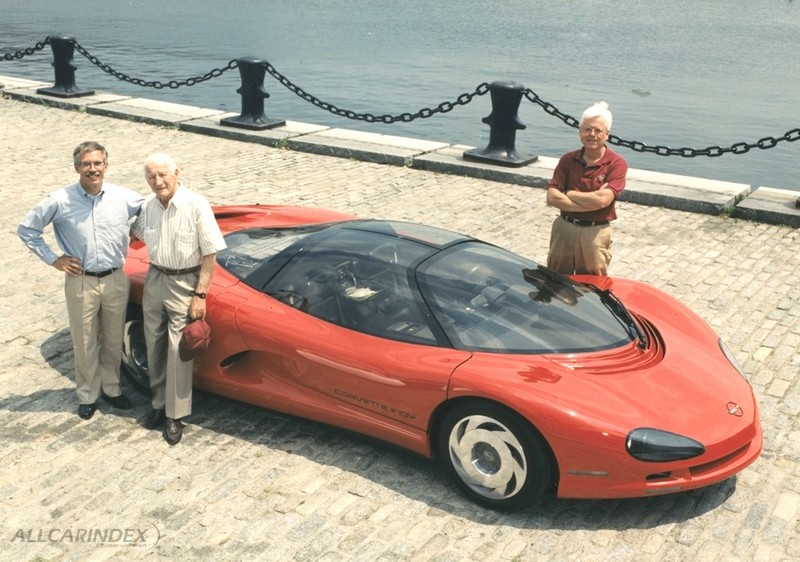
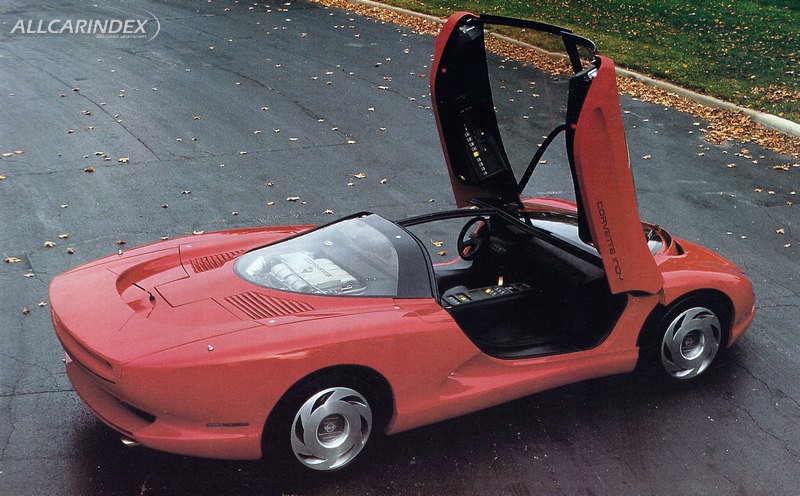
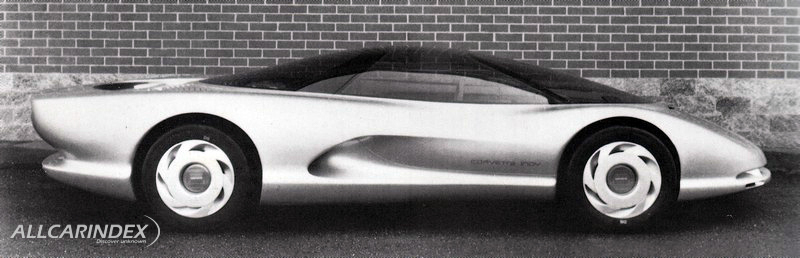
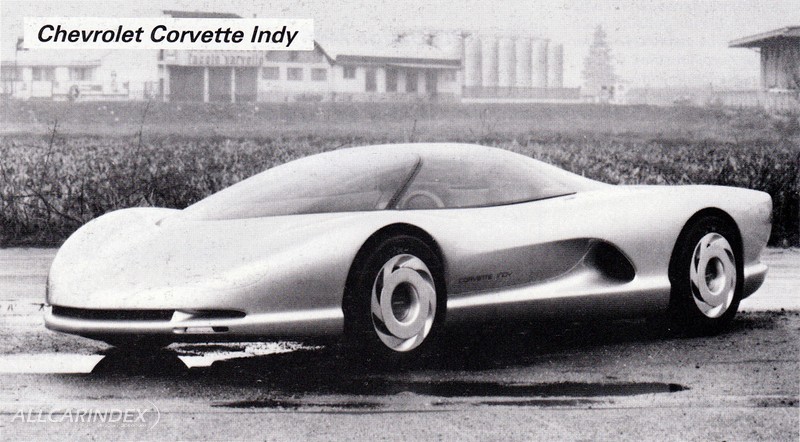
The Corvette Indy was a mid-engined concept sports car built by Chevrolet, part of a line of high-performance Corvette experimental vehicles stretching back to the CERV I of 1959, which had also been followed by the CERV II, Astro II, Corvette XP and the 1977 Aero-Vette, all sharing a mid-engine layout. The Corvette Indy was unveiled at the Detroit Auto Show in early 1986, roughly a year after the project began. Chevrolet chief engineer Don Runkle described it as an unusually early public look at a project still under active development, since the car was not yet finished under its aerodynamic bodywork with a removable roof panel.
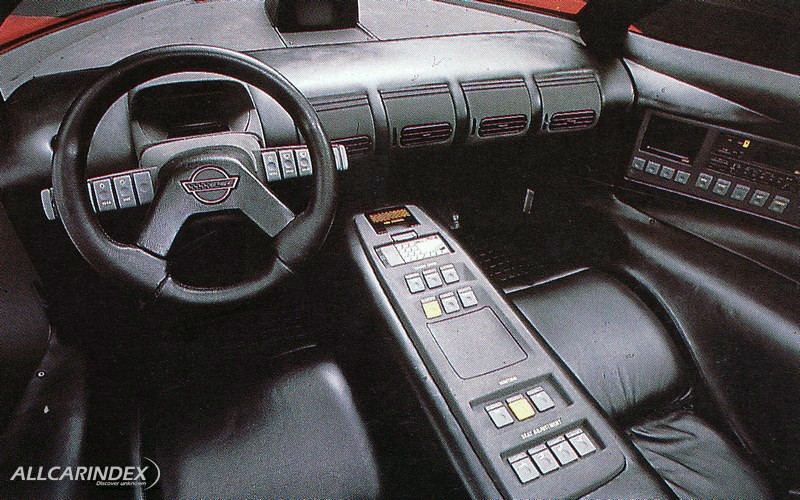
In its original 1986 form, the Indy used a transversely mounted mid-engine V8 derived from the Chevrolet-Ilmor engine developed for American Indy-car racing by Swiss engineer Mario Illien, working in England. This DOHC 32-valve unit displaced 2647 cc and used a twin-turbo system with air-to-air intercooling, producing around 600 PS. The car was built with a honeycomb-structured underbody and a body of Kevlar and carbon-fibre materials, with Kevlar-tub seats, CRT monitors in the dashboard and doors for rear visibility and vehicle information, and separate climate and audio controls in each door. Planned features included permanent four-wheel drive, four-wheel steering, anti-lock brakes, traction control and an electronically controlled active suspension already being tested on 1986 Corvette prototypes, plus a drive-by-wire throttle system.
When the Corvette Indy reappeared two years later, by then in running, drivable form, new chief engineer Fred Schaafsma indicated further versions were likely. This 1988 version replaced the Ilmor racing engine with the experimental Chevrolet 350/32 V8, a 5730 cc DOHC 32-valve aluminum unit developed with Lotus, which General Motors had owned for about a year; this engine reached series production in the Corvette ZR1 from 1989. Rated at 380 hp (quoted elsewhere as 385 PS at 6000 rpm), it gave the Indy a 0-60 mph time of under 5 seconds and 0-100 mph in no more than 10.9 seconds, through a three-speed automatic transmission and permanent four-wheel drive with a viscous coupling splitting torque 35 percent front and 65 percent rear. Four-wheel steering and drive-by-wire were dropped from this version, while the electronic suspension, a head-up display, and an Etak navigation system were retained or added. The related CERV III concept, shown at Detroit two years after the 1988 Indy, was visibly derived from it but was branded under General Motors rather than Corvette.