
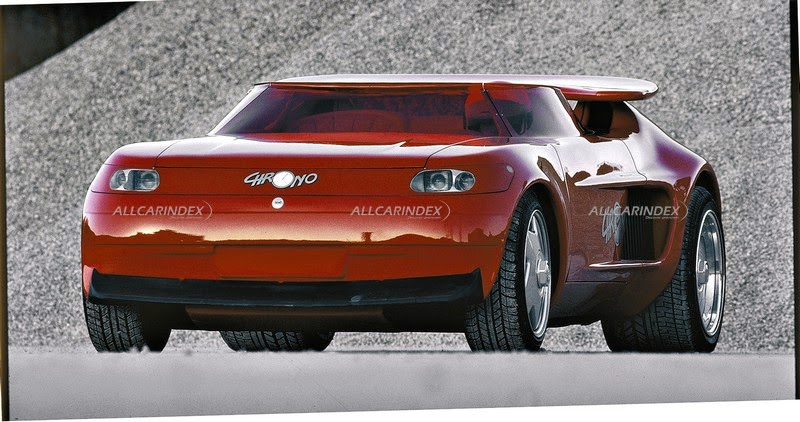
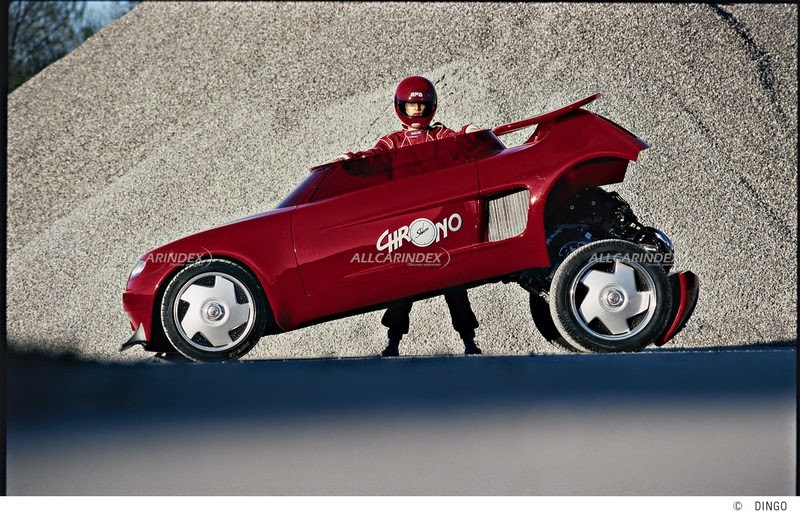
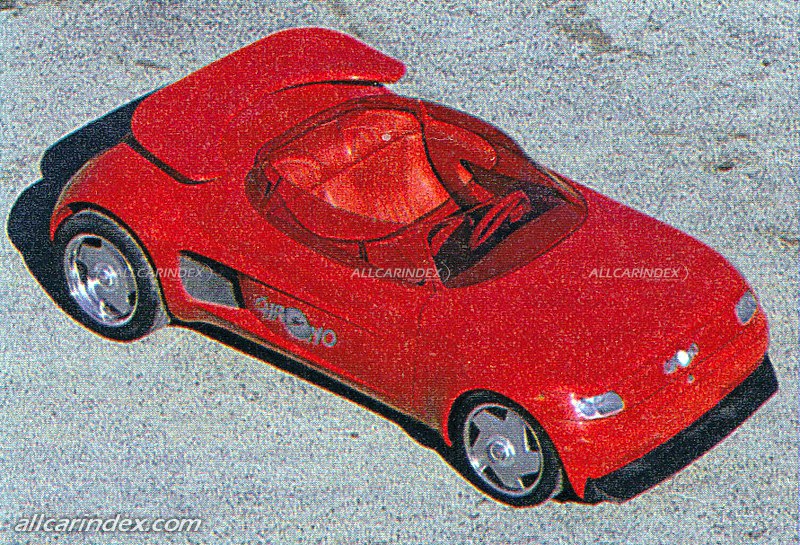
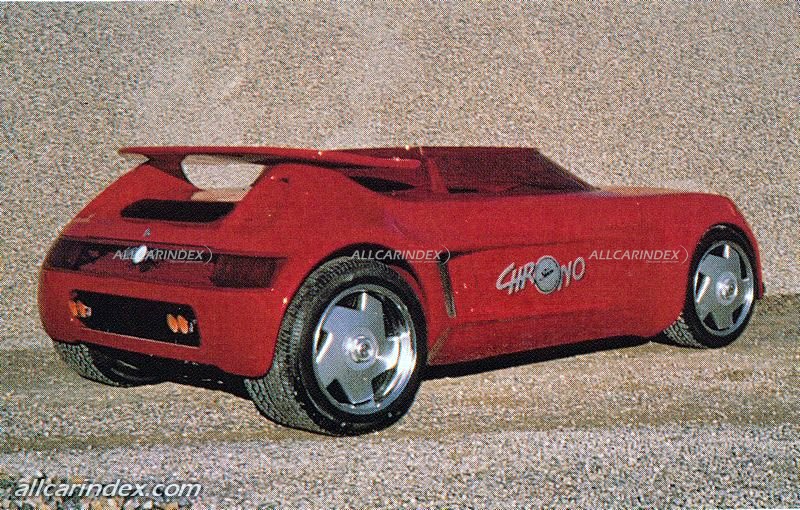
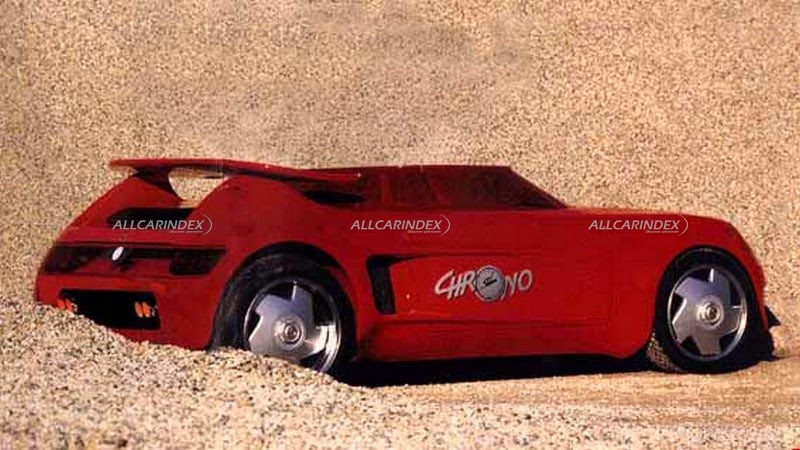
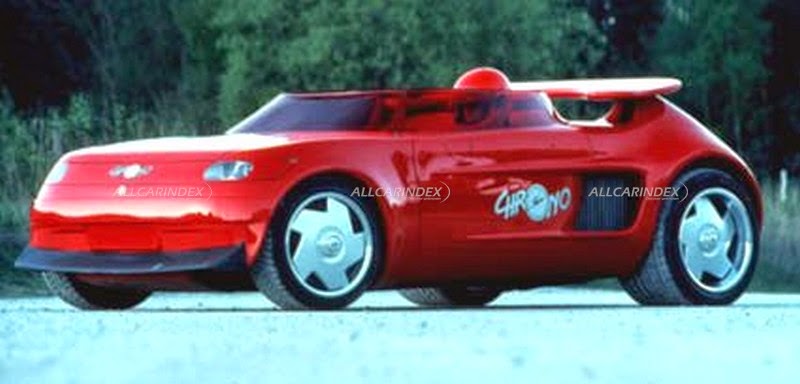
The Sbarro Chrono 3.5 was a concept car built by Swiss manufacturer Sbarro and unveiled at the 1990 Geneva Motor Show, presented on a stand designed by architect Mario Botta with sponsorship from Agip. Its name referred both to the 3.5-litre displacement of its BMW Procar engine and to its performance target of accelerating from 0 to 100 km/h in 3.5 seconds. The car was a compact, roofless two-seat barchetta measuring just 305 cm in length, conceived by constructor Franco Sbarro as a four-wheeled alternative to a heavy motorcycle, with an emphasis on acceleration rather than outright top speed, though it was capable of around 200 km/h.
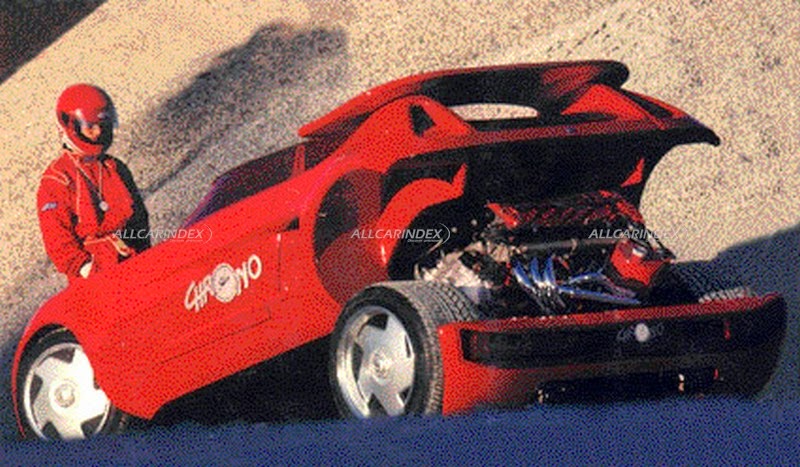
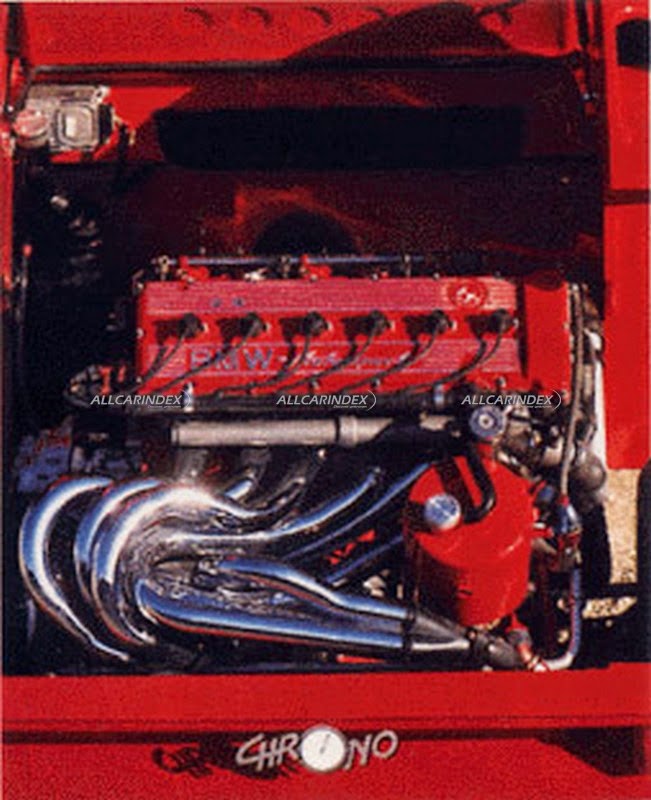
The Chrono 3.5 used a rear-wheel-drive, mid-engine layout with a transversely mounted BMW Procar six-cylinder unit, a derivative of the BMW M1 engine adapted with dry-sump lubrication. It displaced 3453 cc, used a DOHC 24-valve head, and produced around 500 hp at 9200 rpm and 470 Nm of torque at 6500 rpm. Because the ZF gearbox was unsuited to the transverse installation, the car used transmission components from the Ferrari 328 rather than the complete Ferrari V8 powertrain, which Sbarro said would have needed too much space for cooling. The gearing was set up so the car could be started in second gear and driven to 100 km/h without shifting. At roughly 650 kg, the car achieved a power-to-weight ratio of about 1.3 kg per hp.
The chassis combined a plastic composite body with an integrated tubular frame and front axle as one structural unit, paired with a detachable subframe carrying the engine and rear axle, a layout drawing on contemporary racing car practice. Sbarro quoted a torsional rigidity figure of 1200 kg per metre per degree of angle. A button-operated system, previously used by Sbarro a decade earlier on a mid-engined Golf fitted with a Porsche 930 turbo engine, allowed the body and drivetrain to be separated electrically for engine access, tilting the transverse engine rearward. Suspension used triangulated wishbones with Pirelli P Zero tyres in 205/45 ZR 16 and 335/35 ZR 17 sizes, also used on the Ferrari F40, along with ventilated four-wheel disc brakes. Radiators were mounted in the rear body flanks, fed by wide air intakes shaped to flow from the doors.
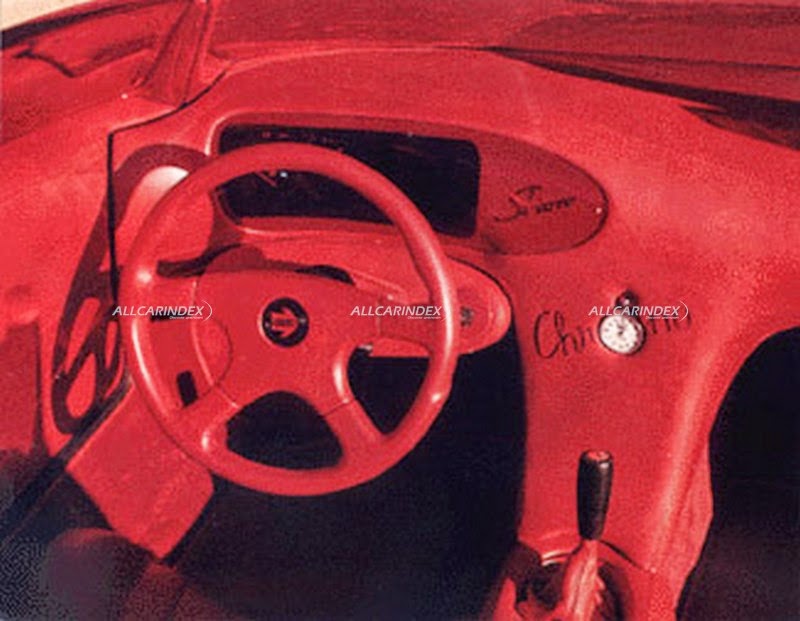
The cabin was fitted out for performance driving only, with a low wraparound windscreen, fixed seats, adjustable pedals, and no luggage space. Dimensions included a 225 cm wheelbase, track widths of 135/150 cm, and overall length, width and height of 305/187/100 cm.