

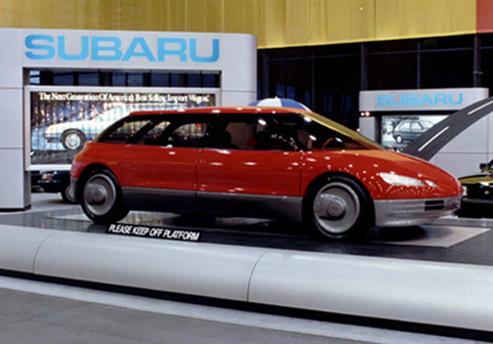
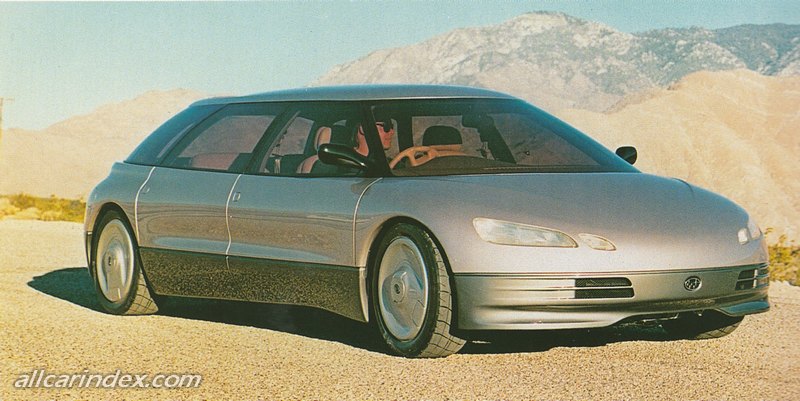
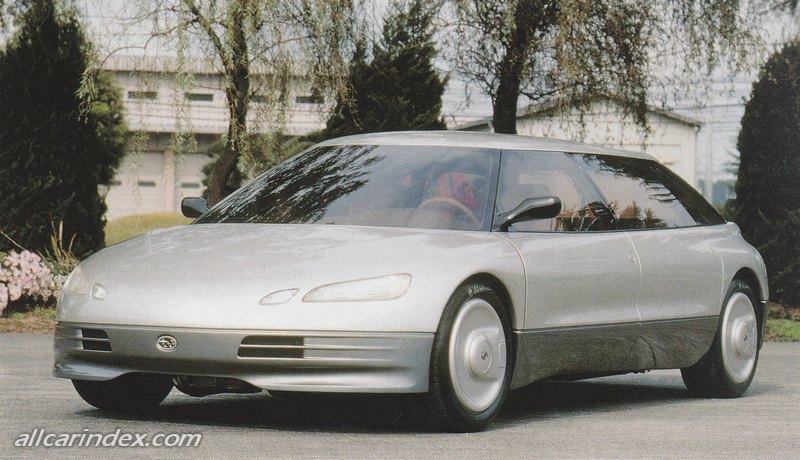
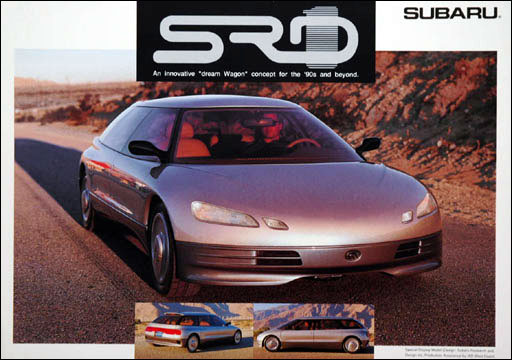
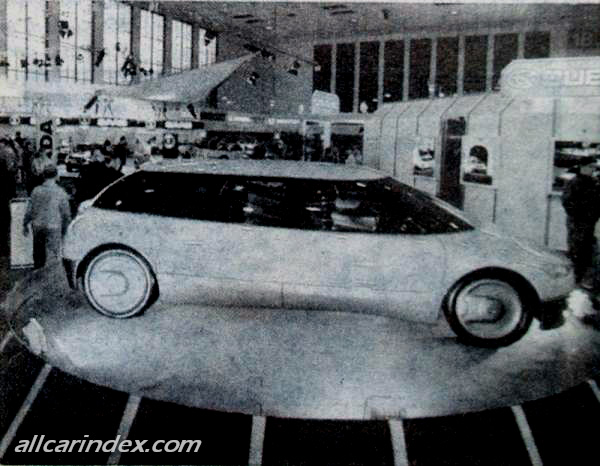
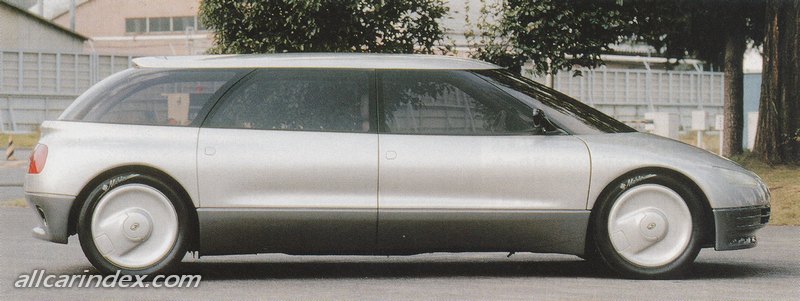
The Subaru SRD-1 was a concept car developed jointly by Subaru Research and Design Inc. (SRD), based in California, and IAD West Coast Inc., the Californian branch of the British design and engineering group International Automotive Design. Presented as a luxury sports wagon study for the mid-1990s, it was built under Subaru's supervision at IAD West Coast's facilities within just 40 weeks, a process that covered computer analysis, interior and exterior modeling, engineering, suspension tuning, the construction of an entirely new underbody structure, a composite-material body, De Vilbiss paintwork, and a leather interior. The car was never put into production.
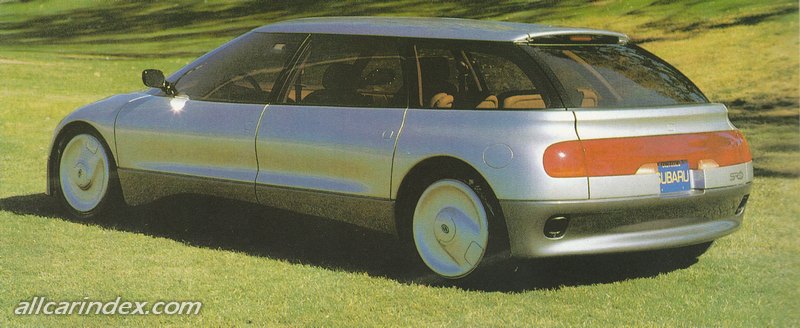
The design aim was to create as roomy an interior as possible without a long overall body. A station wagon layout was chosen instead of a sedan, and the wheels were pushed toward the corners of the car to maximize interior space, producing a wheelbase of 290.5 cm. Overall length was kept to 451 cm, close to that of the contemporary Subaru Legacy (and the Ford Sierra wagon), though the SRD-1 was unusually wide at nearly 2 meters. Its nose was heavily rounded in both width and length, paired with flush-fitting glass for favorable aerodynamics, while the tail was similarly rounded, with body-side creases between the wheel arches and a full-width taillight band adding a sportier note.
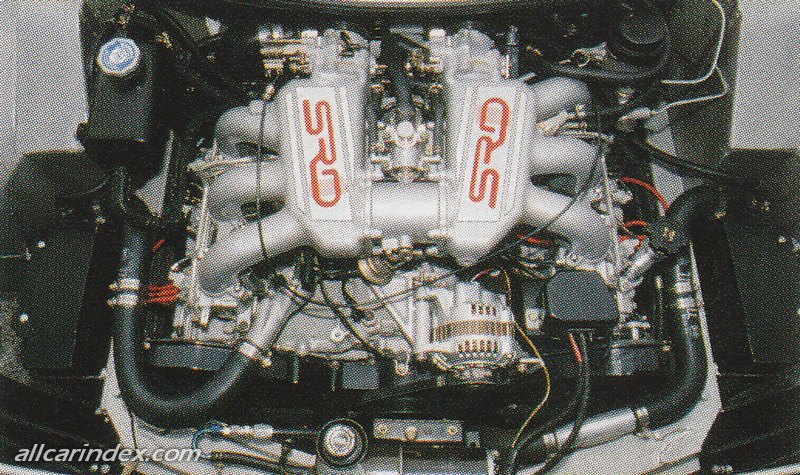
In keeping with Subaru tradition, the SRD-1 used permanent four-wheel drive, distributing power between front and rear wheels according to road and driving conditions. Its low front-end styling was made possible by a 3.3-liter horizontally opposed six-cylinder engine with double overhead camshafts and 24 valves, producing 250 hp at 6400 rpm and 295 Nm of torque at 4800 rpm. This was notably more powerful than the 2.7-liter, 12-valve OHC flat-six offered in the Subaru XT coupe on the American and Japanese markets, which produced 150 hp. The SRD-1 rode on wide 245/40 R17 tires.
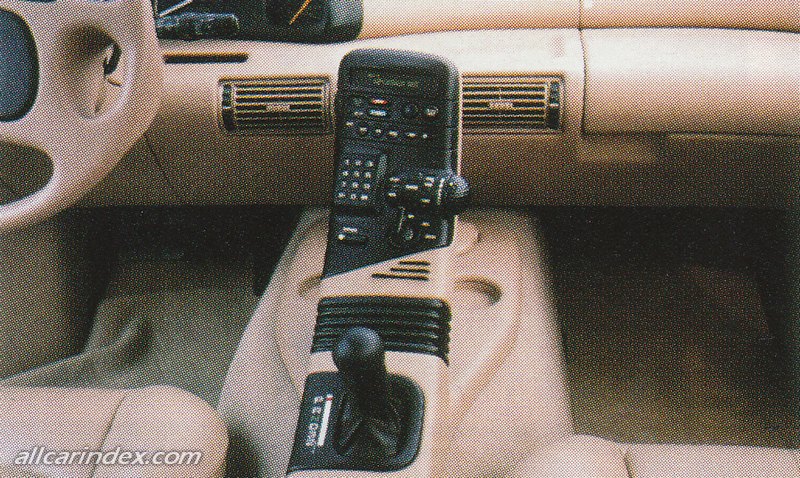
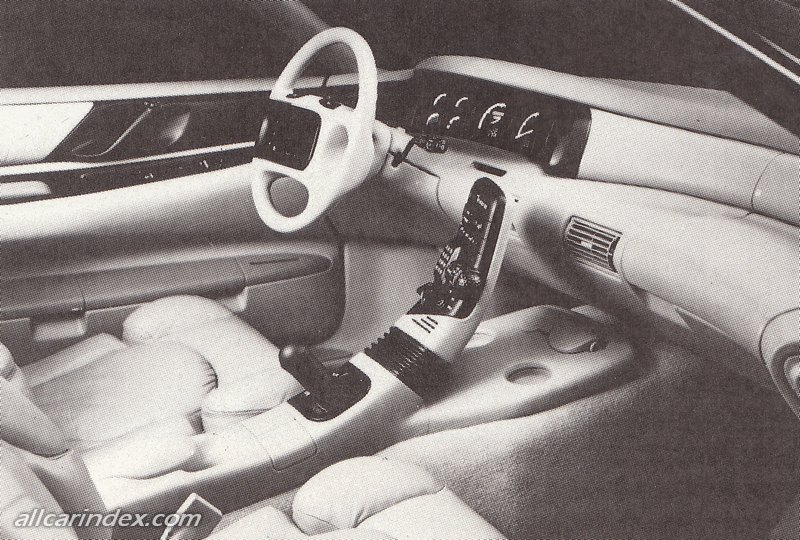
Inside, the asymmetric design of the wheel covers was echoed in a steering wheel with a broad, two-tone horizontal spoke. The instrument panel used semicircular gauges, and an unusual upward-angled control switch panel extended above the console ahead of the gear selector like an arm. Its black trim contrasted with the door panels and the rest of the light beige leather interior.