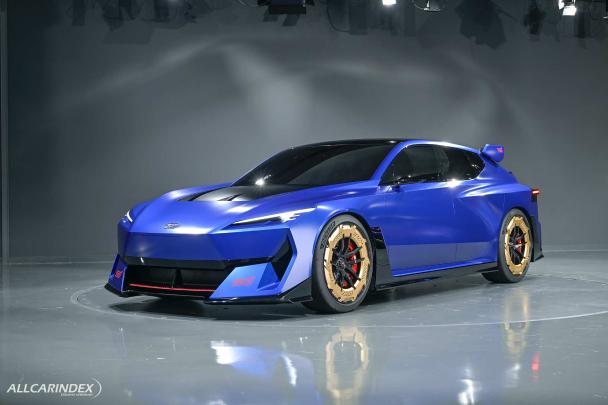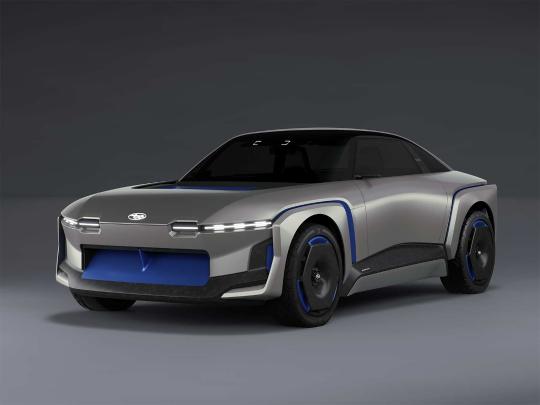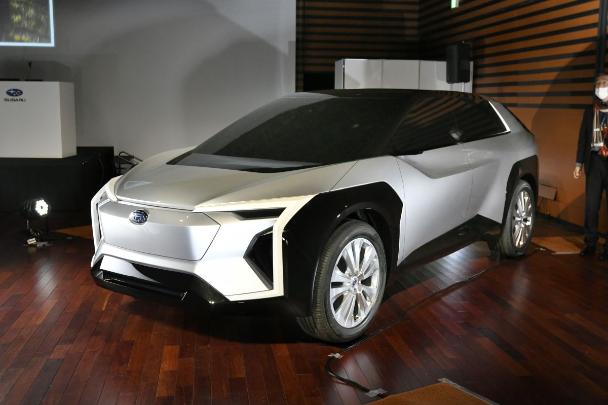

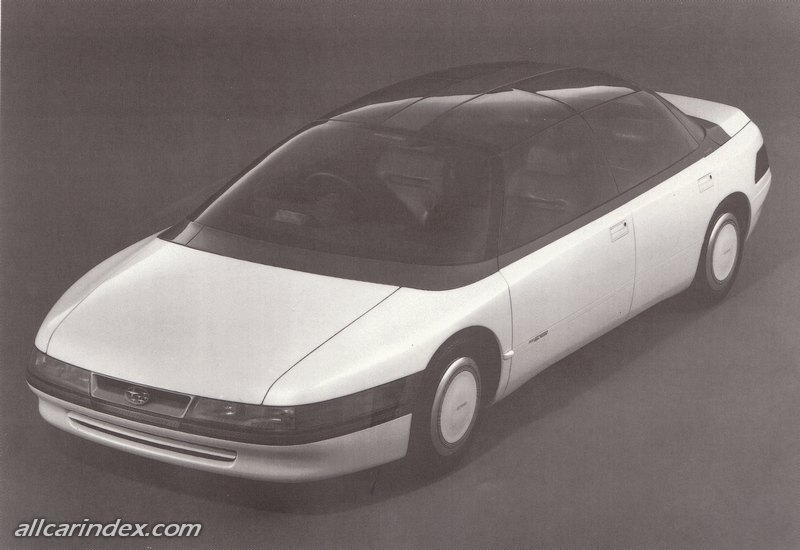
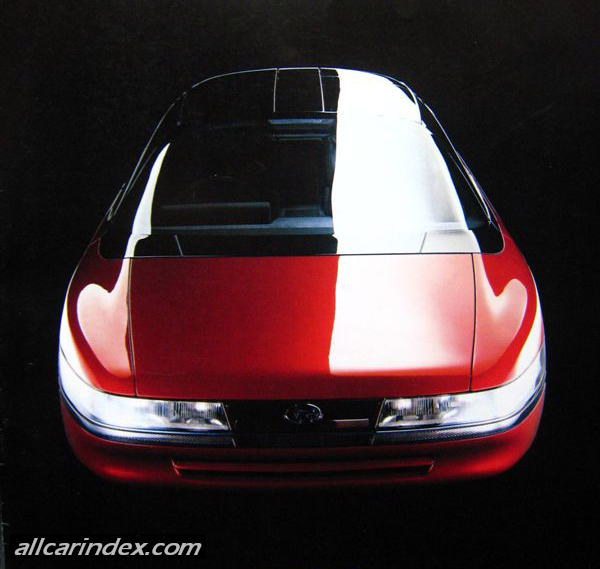
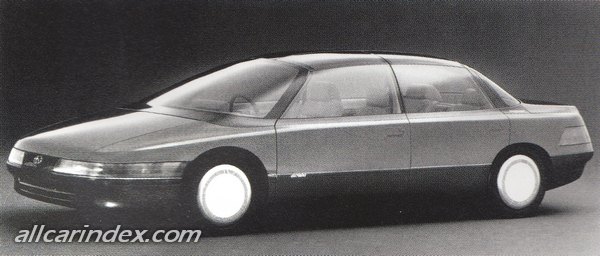
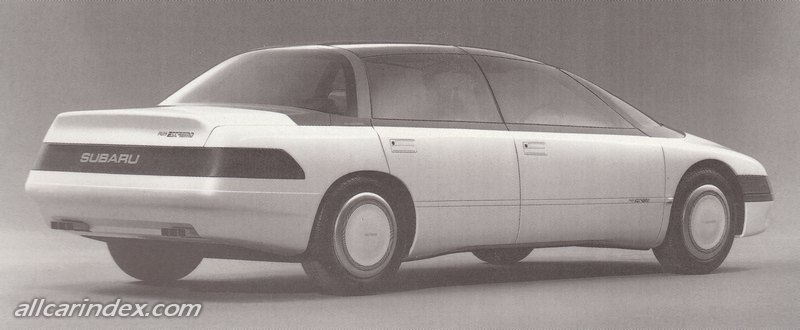
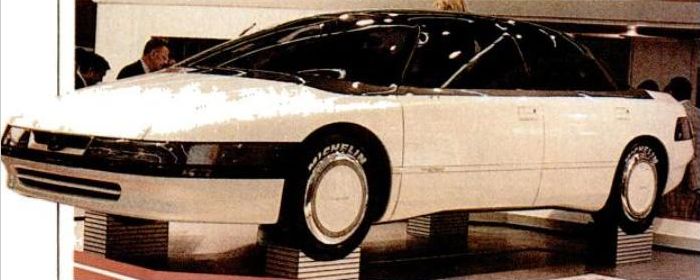
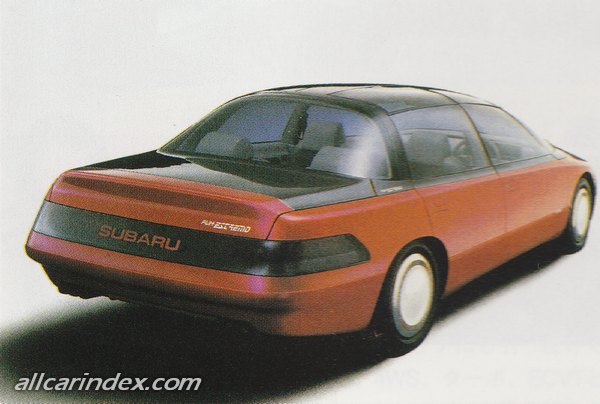
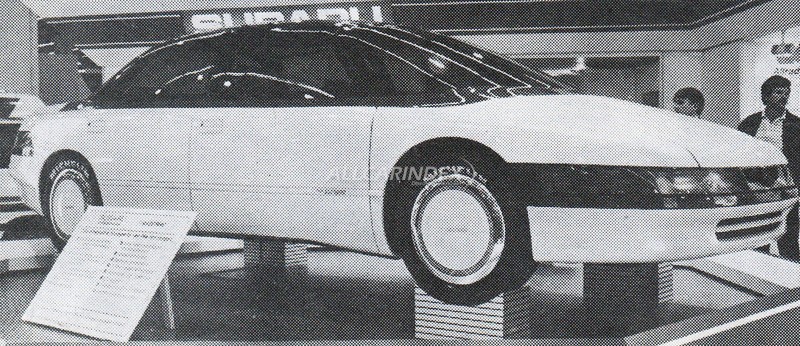
The Subaru F624 Estremo was a concept car shown by Subaru, a brand of Fuji Heavy Industries Ltd (FHI), first unveiled at the Frankfurt IAA roughly a month and a half before the Tokyo Motor Show, where it was also displayed. Like the Toyota FXV-II and Daihatsu TA-X80, it followed the pattern of debuting in Frankfurt ahead of its home-market Tokyo showing. Subaru described "active communication between driver and vehicle" as one of the guiding ideas behind the study. It took the form of a four-door, aerodynamically shaped notchback sedan with a drag coefficient of 0.25, styled in a manner Subaru described as new; only the front end, with its grille set between the headlamps and the brand emblem, echoed the look of the company's production cars.
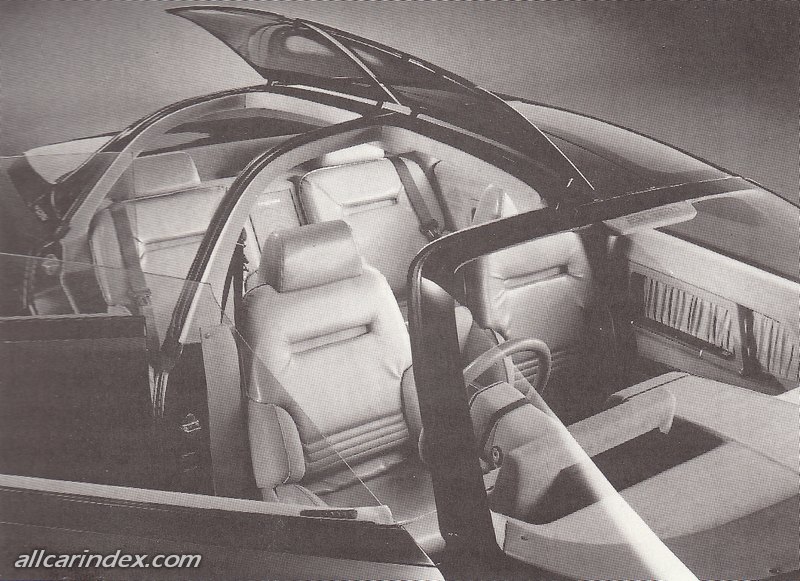
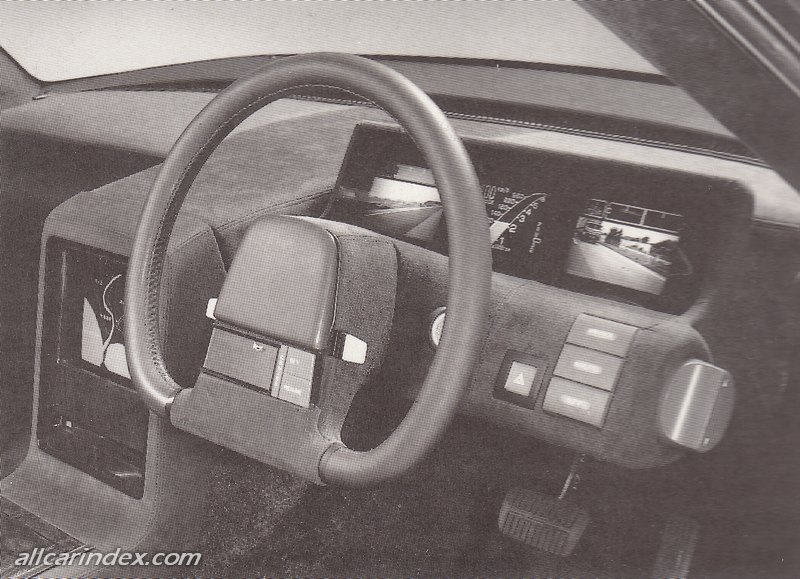
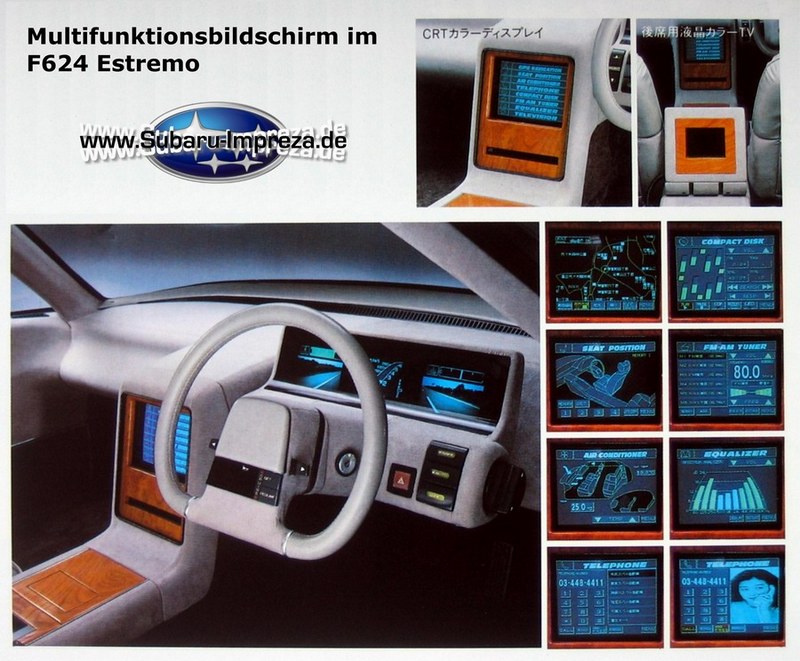
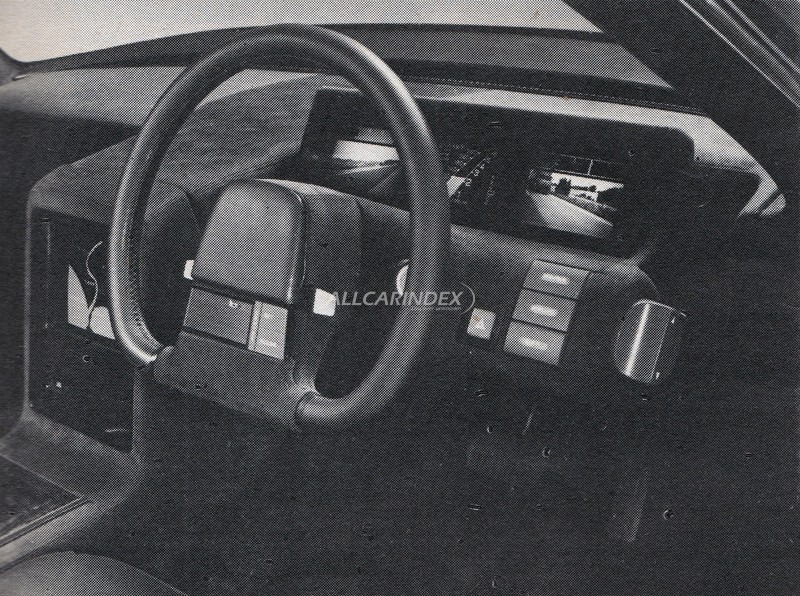
Its most distinctive feature was a glass canopy covering almost the entire roof aside from a narrow central strip, made up of front and rear panoramic screens, frameless curved door glass and four glazed roof inserts that tilted upward about 70 degrees when their respective doors opened, easing entry. The driver's seat and steering column adjusted electrically via memory settings input through the key. Conventional door mirrors were replaced by two monitors built into the dashboard, fed by small cameras mounted behind the front wheel arches. Between the two camera displays sat an LCD readout for driving information, while a CRT-based multi-information system above the center console handled telephone functions and GPS navigation, showing vehicle position on a color map using geostationary satellites and a magnetic compass; a second CRT screen in the rear of the console served rear passengers. The automatic transmission was operated by two buttons on the dashboard, and some controls were built into the flattened lower spoke of the steering wheel.
Power came from a 1991 cc six-cylinder boxer engine with four overhead camshafts, 24 valves, twin turbochargers with intercooling, dry sump lubrication, water-cooled cylinder heads and oil-cooled wet cylinder liners, producing 250 hp at 6500 rpm and 294 Nm at 4500 rpm, giving a claimed top speed of 250 km/h. Electronic fuel injection was paired with a drive-by-wire throttle enabling traction control and ABS based on throttle position and rpm signals. The permanent four-wheel-drive system, called Torque-Split Control, was a development of Subaru's production ACT-4 (Active Torque-Split) system, using a planetary center differential and a bypass axle allowing full torque transfer to either axle. Suspension used an electronically controlled Active Air Suspension System, and electric steering allowed inclusion of four-wheel steering, with rear-wheel angle controlled electronically from front steering force signals; Subaru's R&D director Mitsuo Takahashi indicated a simpler system would likely be used if this feature reached production. Tires measured 205/60 x 15. The car rode on a 2650 mm wheelbase, measured 4620 mm long, 1800 mm wide and 1300 mm high, and weighed 1500 kg.