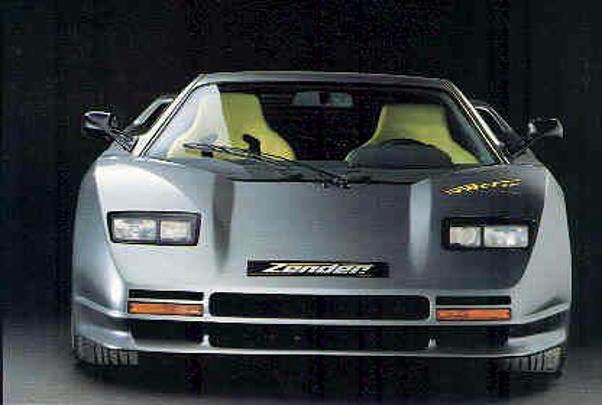

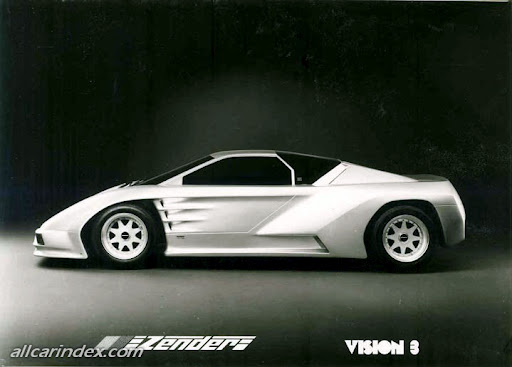
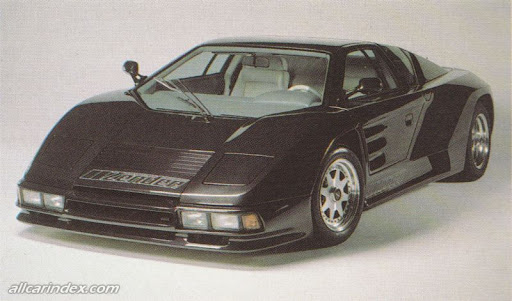
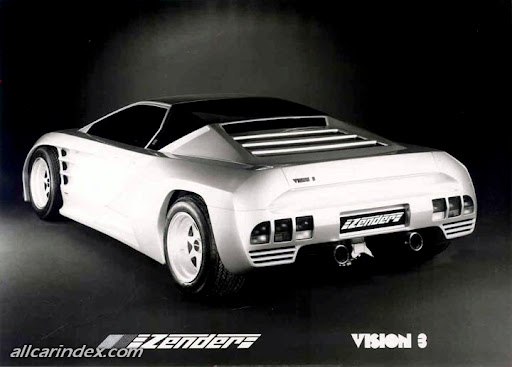
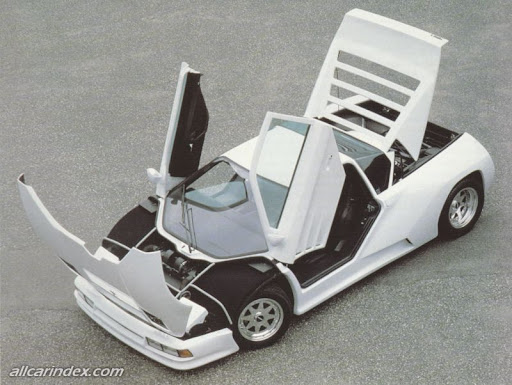
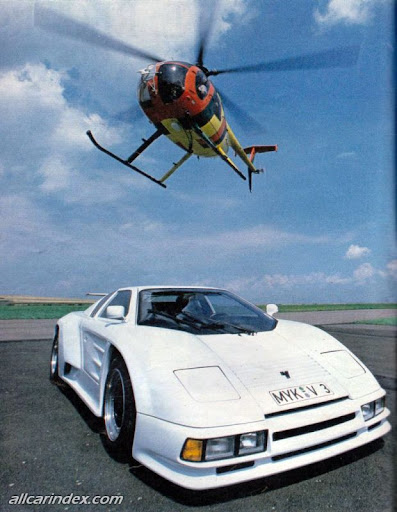
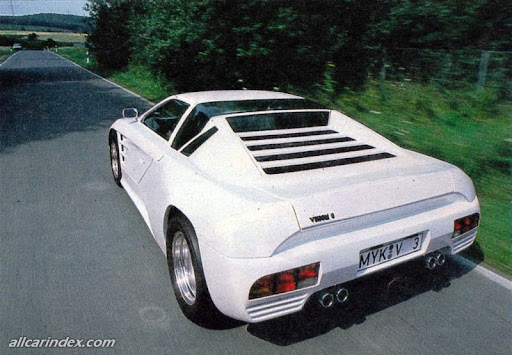
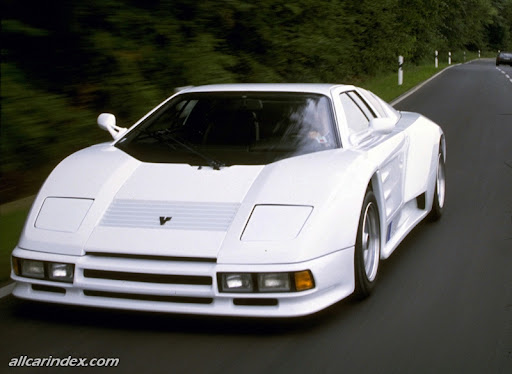
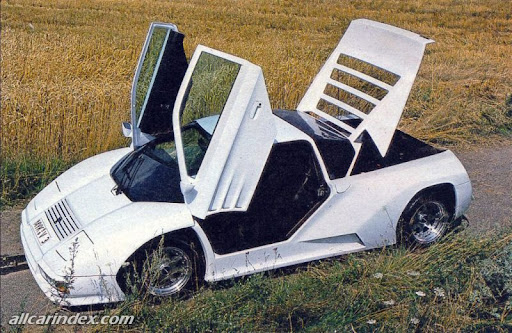
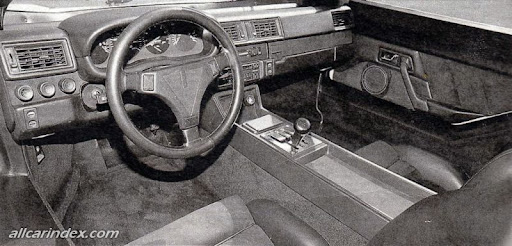
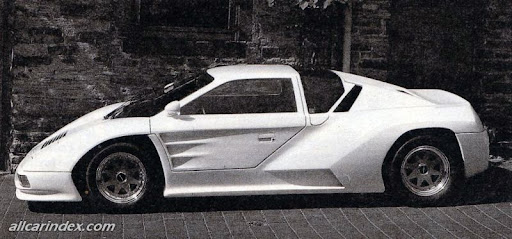
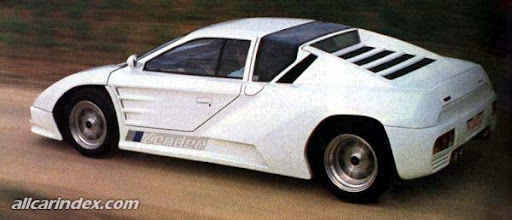
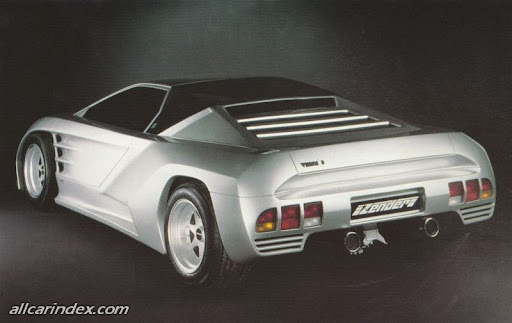
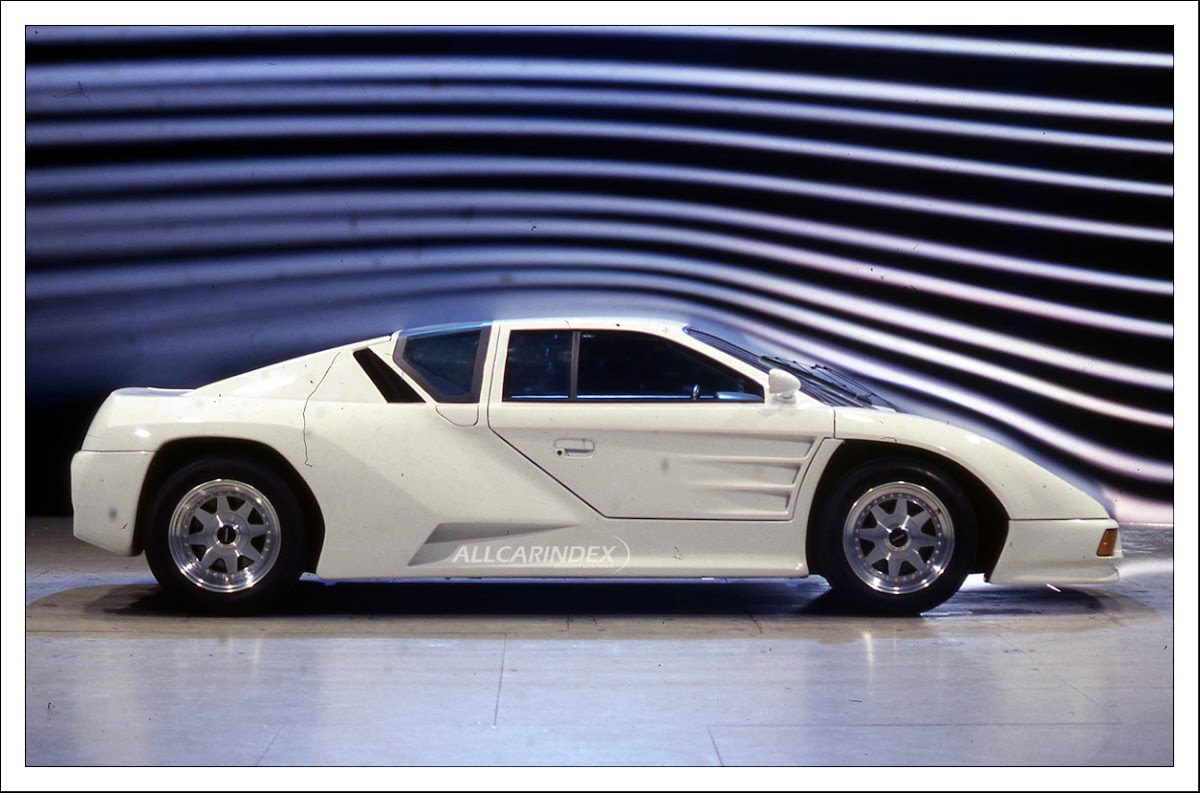
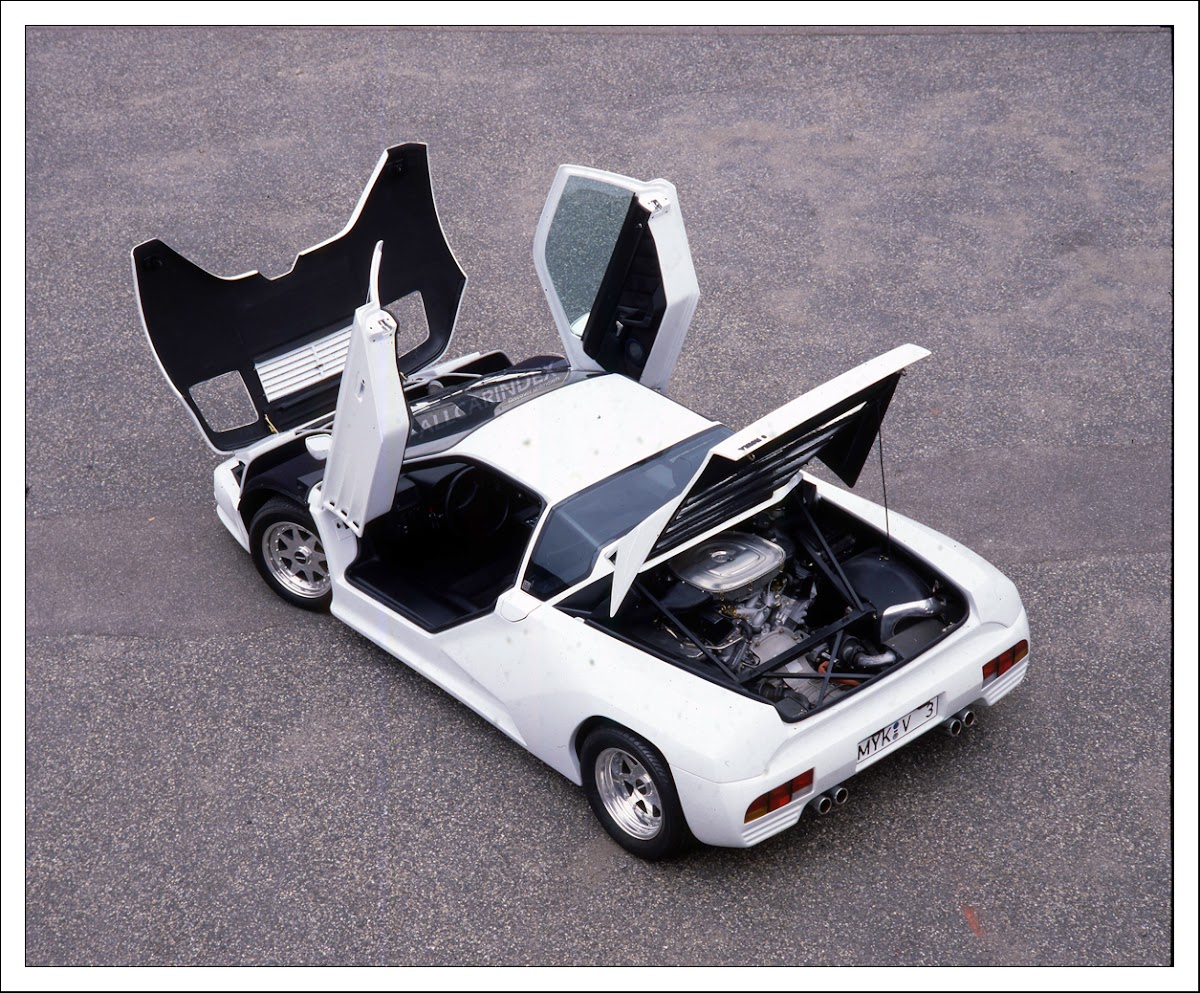
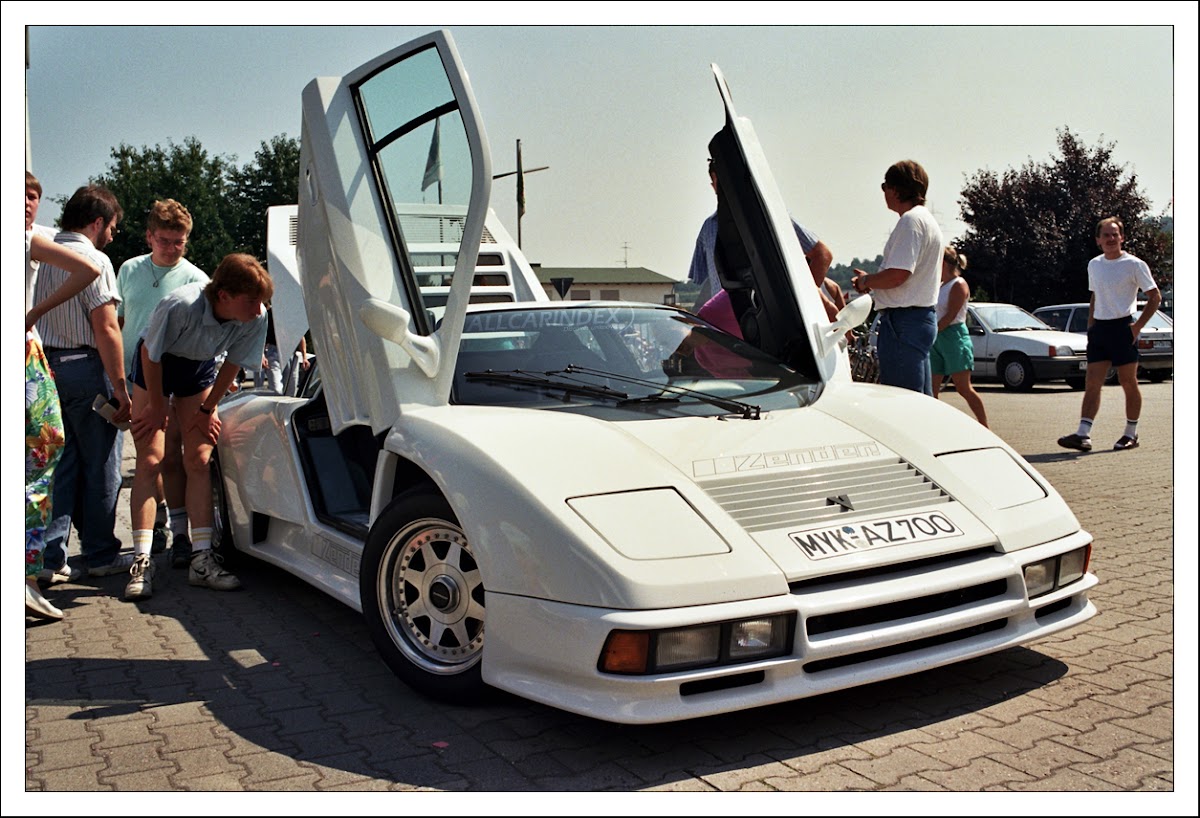
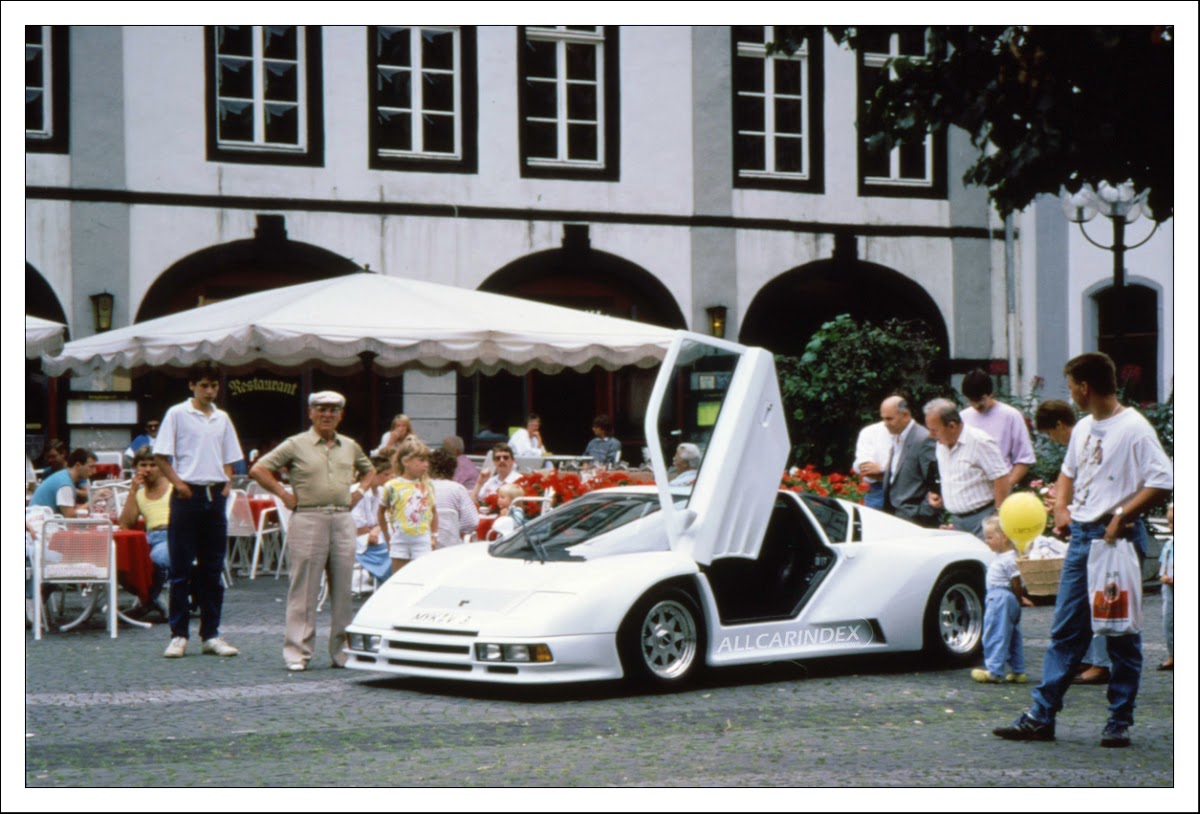
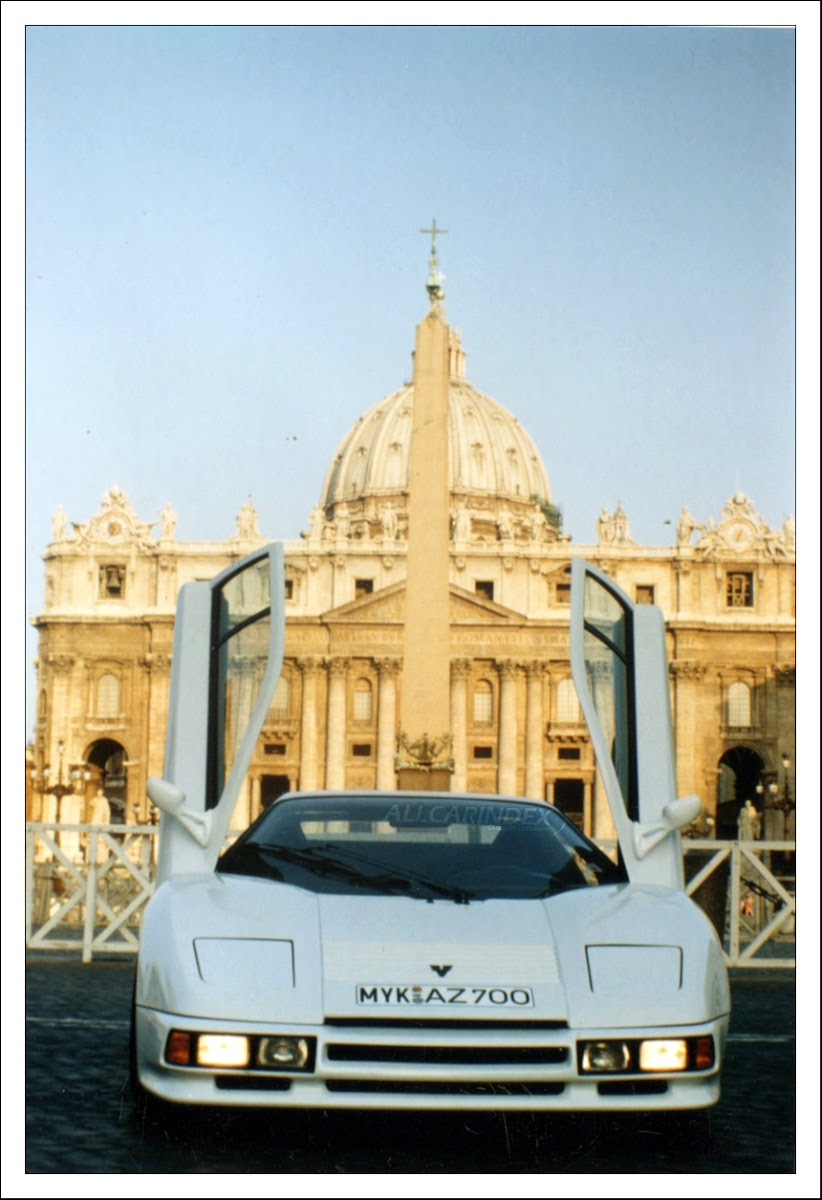
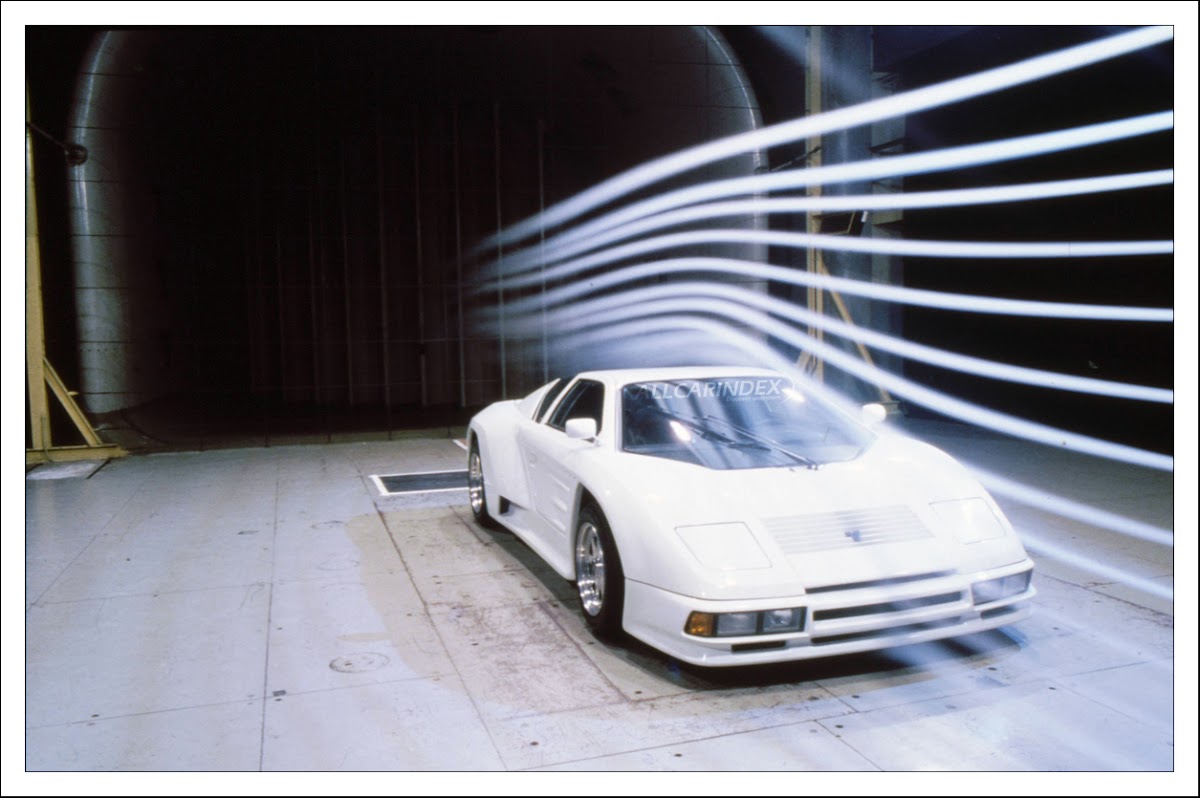
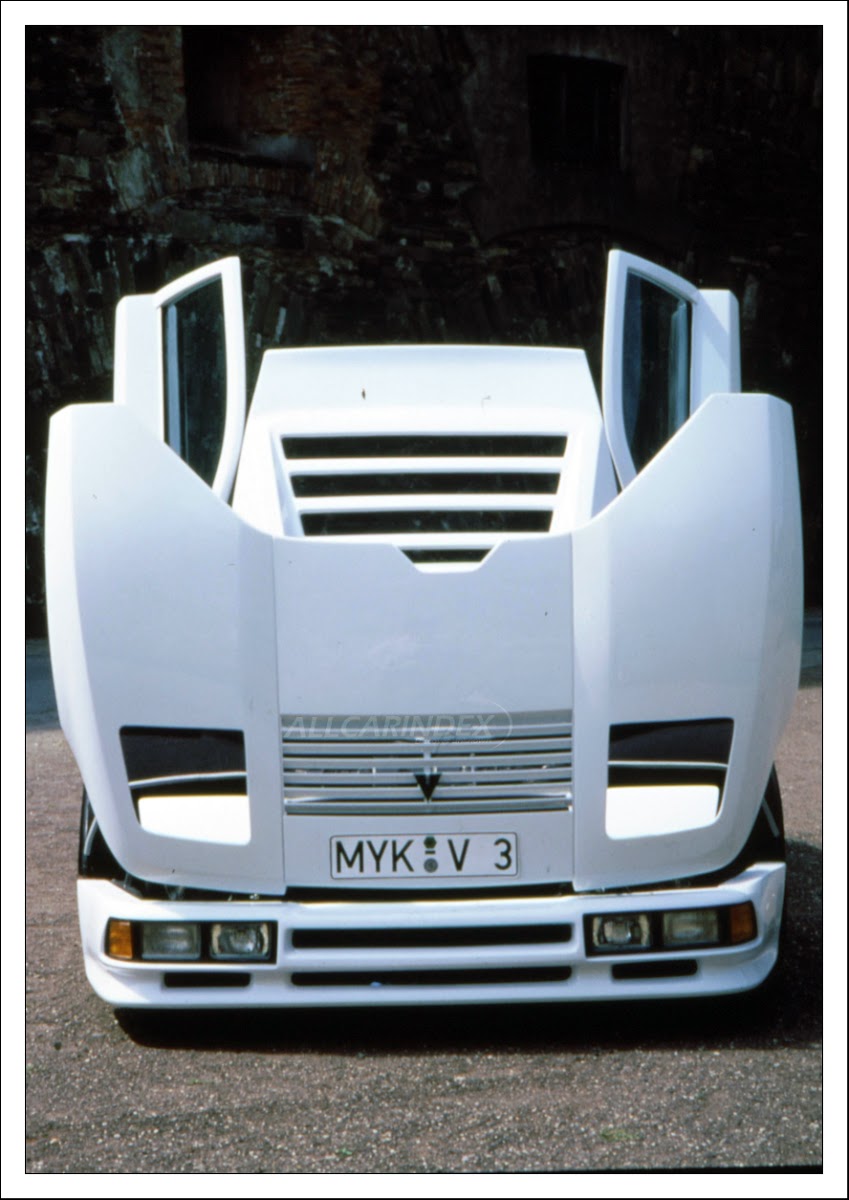
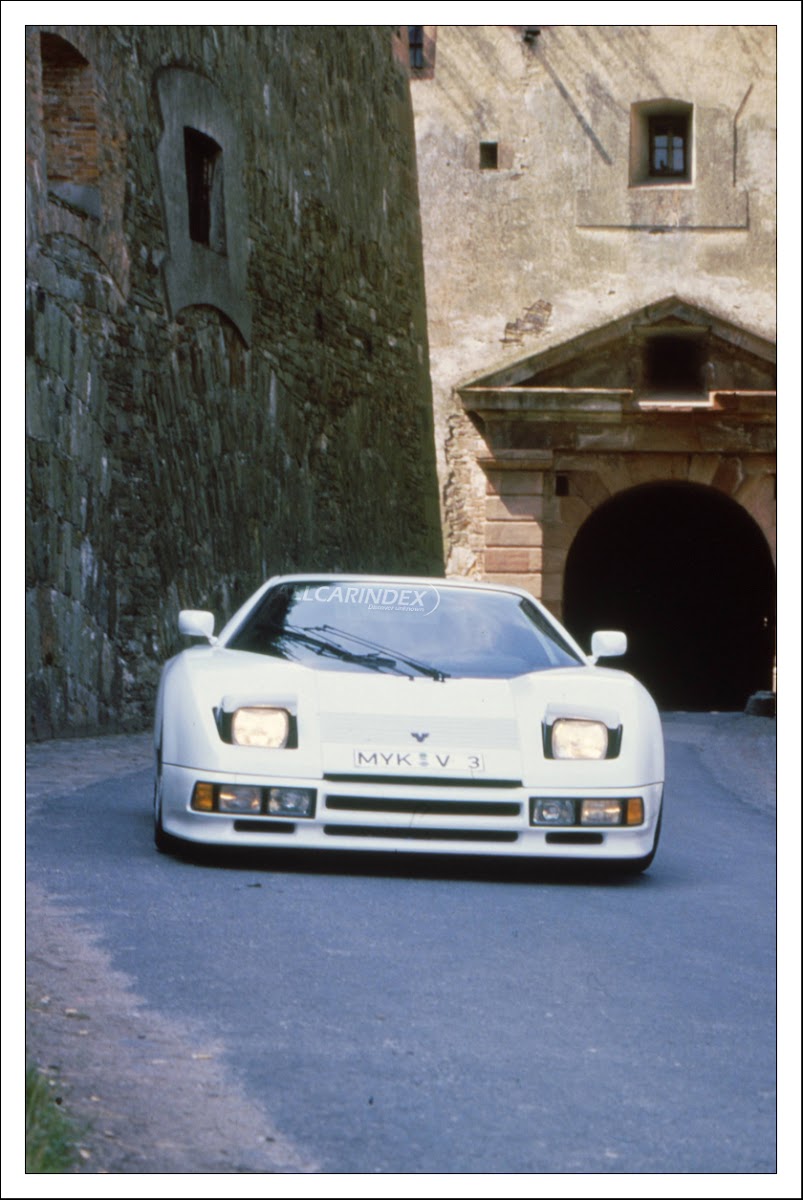
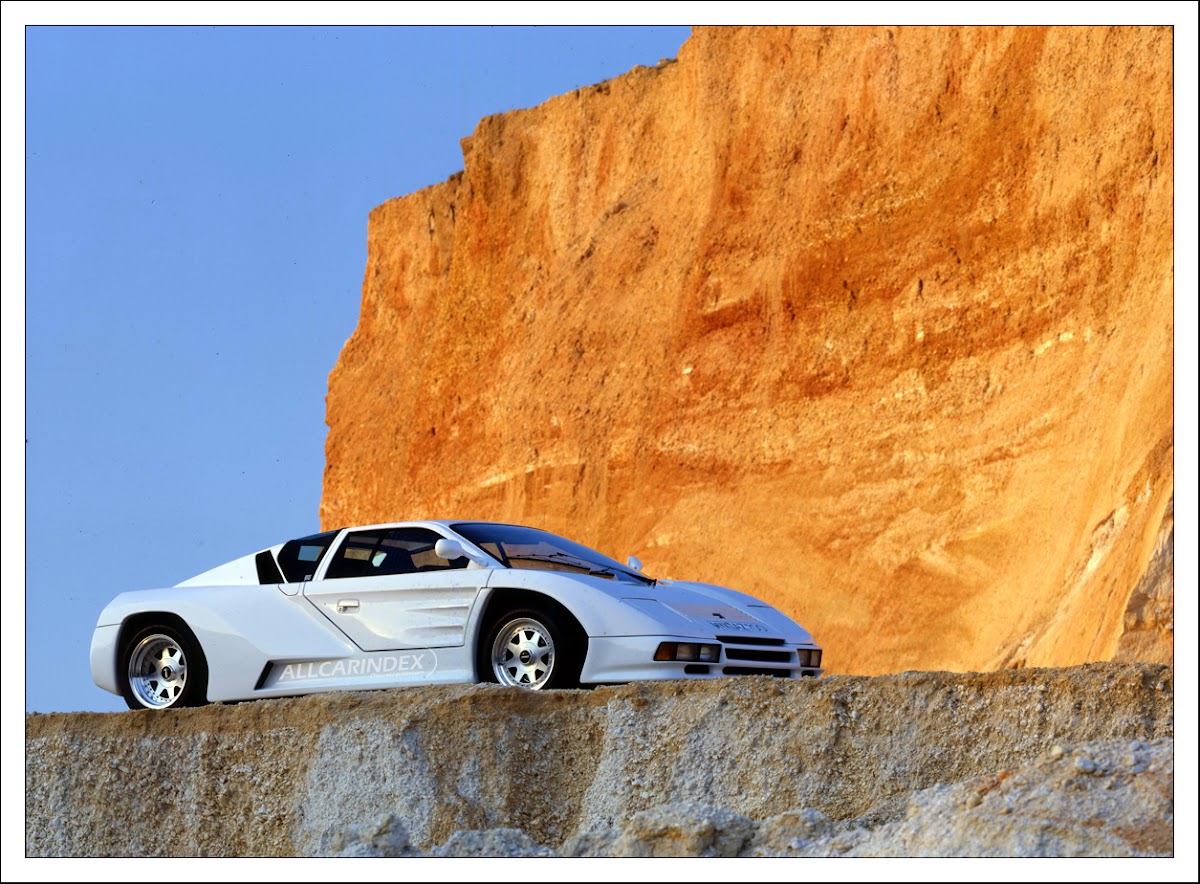
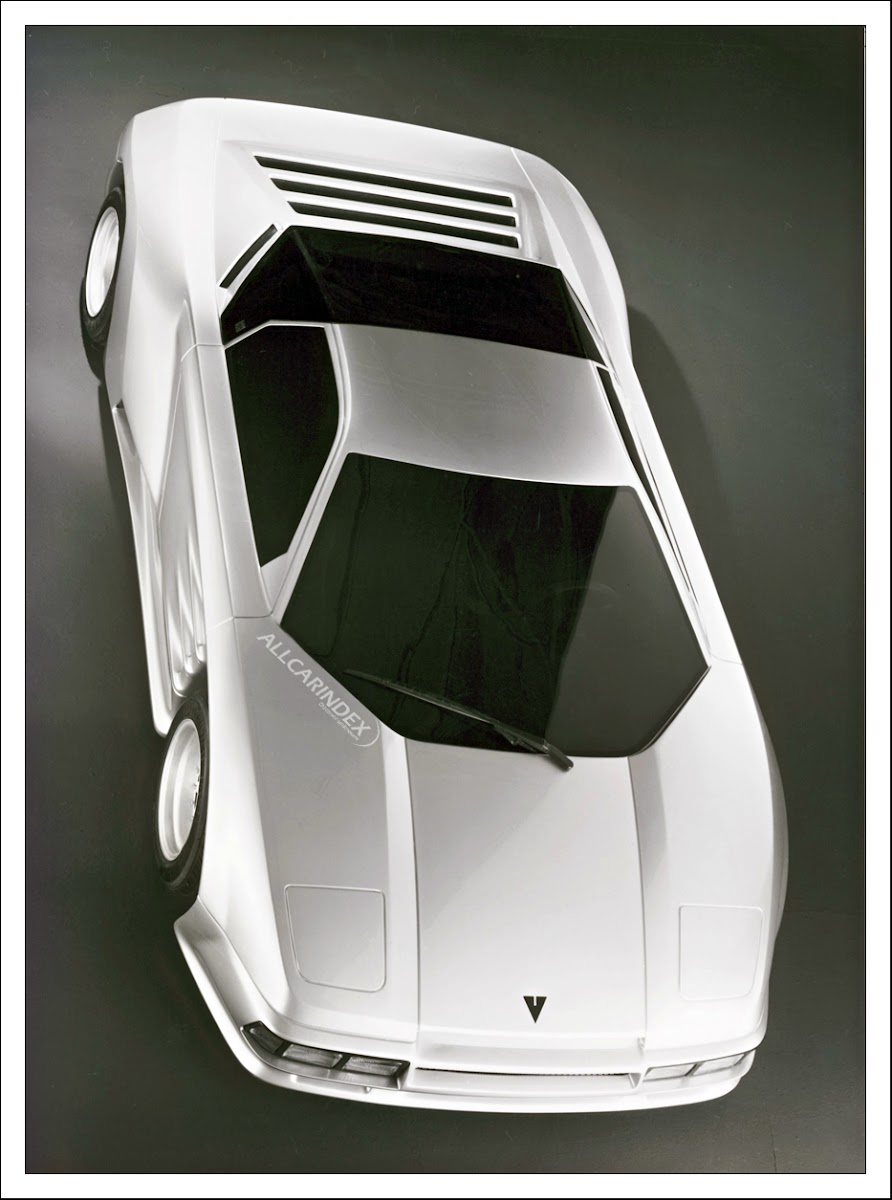
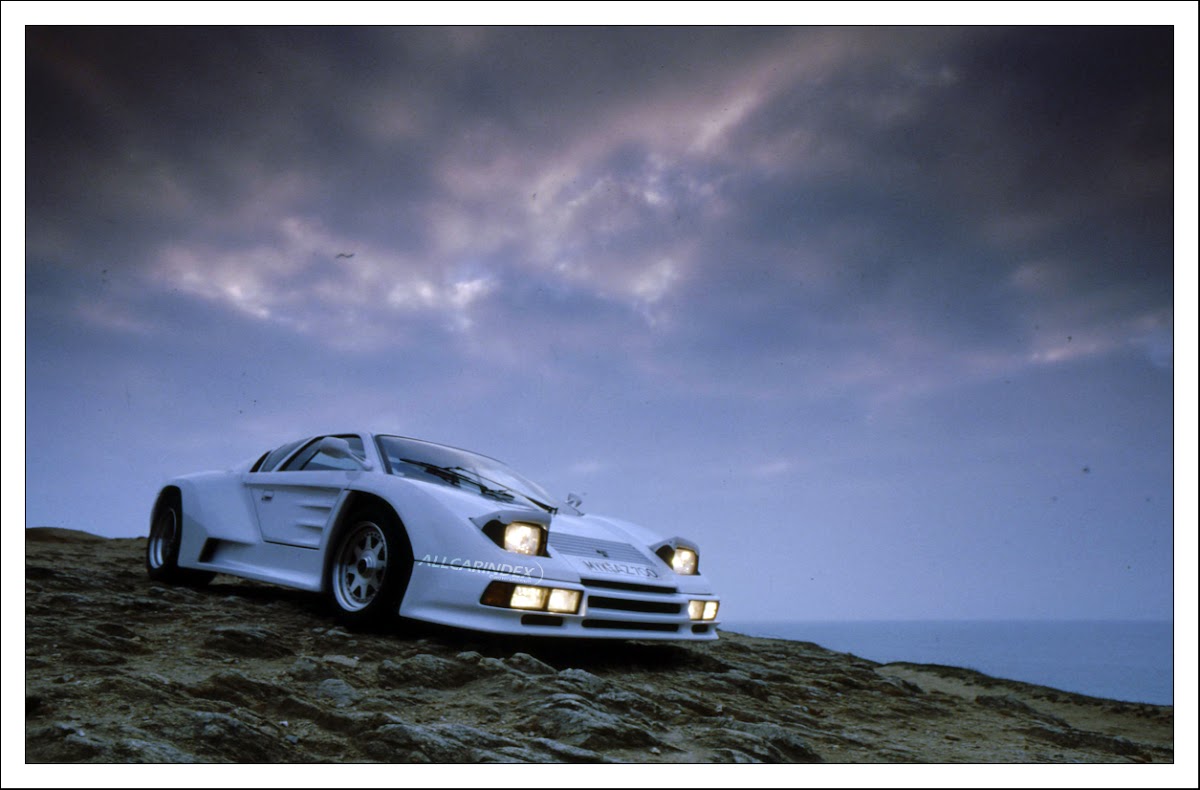
The Zender Vision 3 was a mid-engined coupe from the German tuning and design firm Zender, first shown as a pure bodywork design study at the Essen Motor Show in the autumn of 1986 and again at the Geneva Motor Show in the spring of 1987. A fully driveable version was presented at the Frankfurt IAA in September 1987, which Zender again promoted as a world premiere. Completing the third Vision coupe had taken 15 months. Its styling came from designer Günter Zillner, who had previously worked at Ford and was, by then aged 45, working exclusively for Zender. The front end resembled that of the Vision 2 but was styled in a more restrained manner, while the sides were marked by sharply divided edges that carried through into the fastback roofline. The tail was widened in typical mid-engine coupe fashion, though less heavily than on the Vision 2, with brake-cooling air outlets integrated into the rear flanks. The car retained scissor-type gullwing doors and rolled on Zender's own three-piece Stern light-alloy wheels fitted with Pirelli P7 tyres in 285/45 VR 15 and 345/35 VR 15 sizes. Aerodynamic development took place in the wind tunnel of the Technical University of Aachen, producing favourable downforce figures at high speed, though no drag coefficient was disclosed.
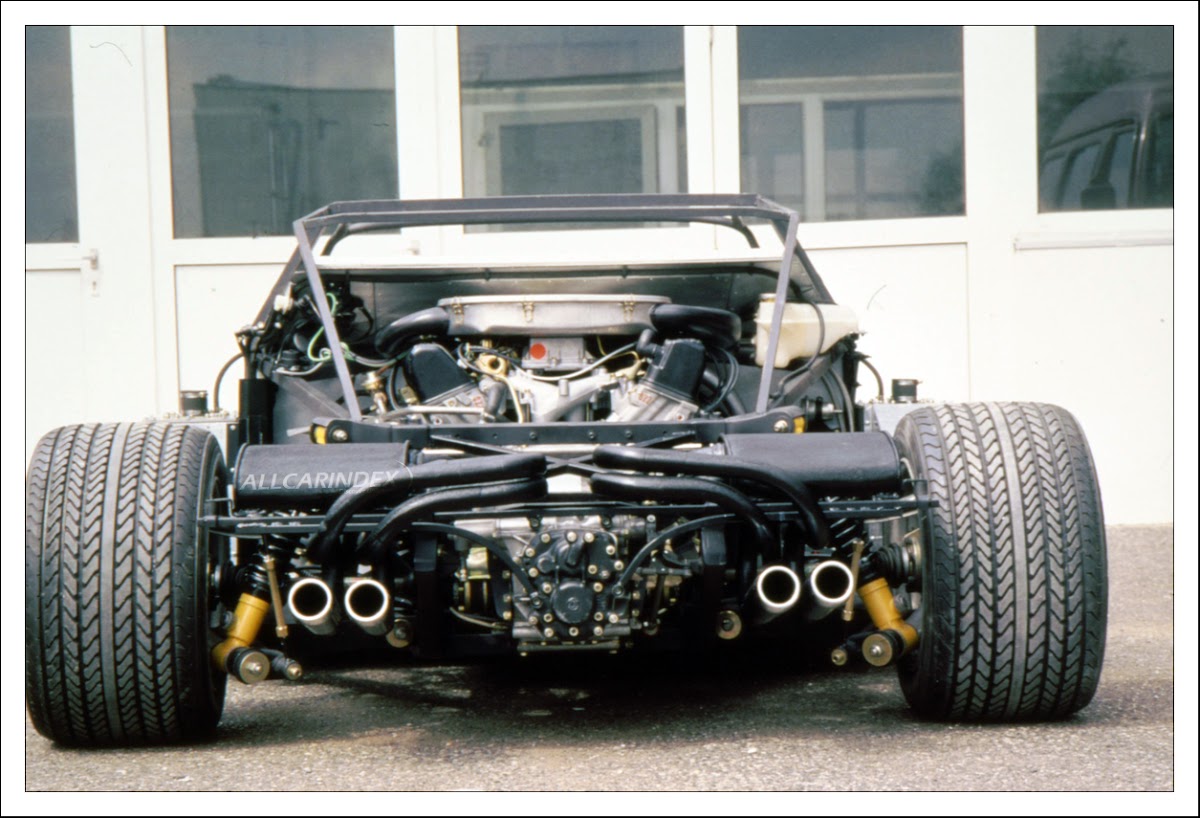
The Vision 3 was built on a tubular steel space frame made from square-section tubing, engineered for stiffness and torsional rigidity and tested by TÜV Köln through 20,000 load cycles. Its longitudinally mounted mid-engine was the 5.5-litre V8 (5547 cc) taken from the Mercedes-Benz 560 SEL/SEC, producing 300 hp at 5000 rpm and 460 Nm at 4000 rpm. Unlike the Mercedes original, which came only with a four-speed automatic, this engine was paired with a twin-plate dry clutch and a sportier ZF five-speed manual gearbox (5 DS 25) with gated shifter. Top speed ranged from 250 to 280 km/h depending on final drive ratio, with 0-100 km/h achievable in 6.2 seconds according to Zender's figures. Suspension used double wishbones front and rear with coil springs, Koni dampers and anti-roll bars, complemented by a rack-and-pinion steering system developed specifically by Zender, and all-round ventilated disc brakes. Weight distribution was 45:55, and two 43-litre honeycomb-structured safety fuel tanks were integrated into the body sides ahead of the rear wheels. The interior featured leather trim, sports seats, a padded impact-resistant dashboard, round instruments, electric windows, a sound system in the centre console and automatic climate control.
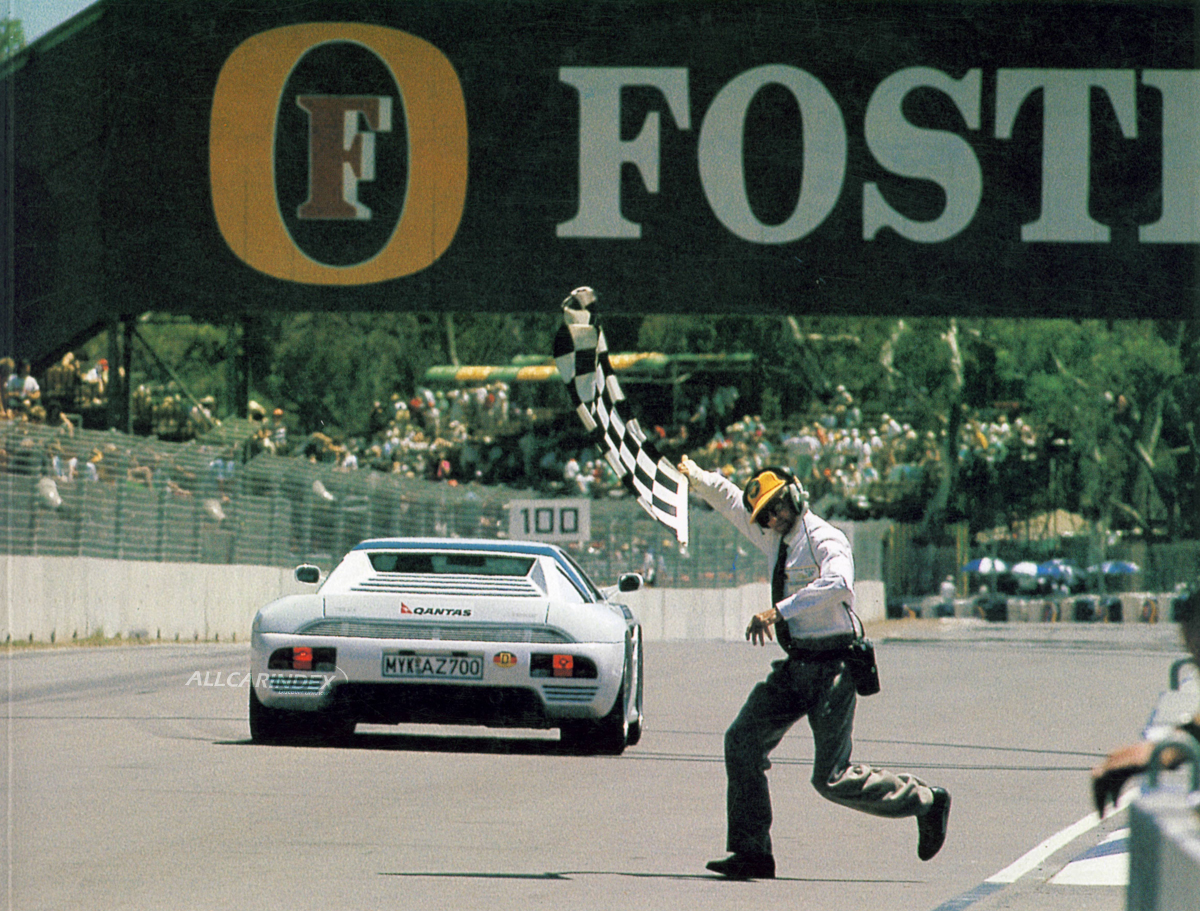
The original Vision 3 covered around 25,000 km in everyday use over a year and was exhibited widely, including in Australia. Hans-Albert Zender subsequently commissioned a second example, completed in autumn 1988, finished in dark grey rather than white, with its radiator relocated to the rear and mounted horizontally above the engine, cooled by two thermostatically controlled Bosch fans, alongside further aerodynamic and chassis refinement. This second car was shown at the 1989 Geneva Motor Show as the Vision 3b.