
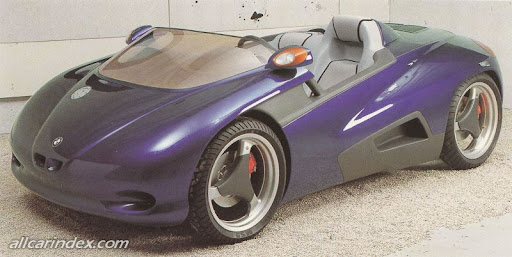
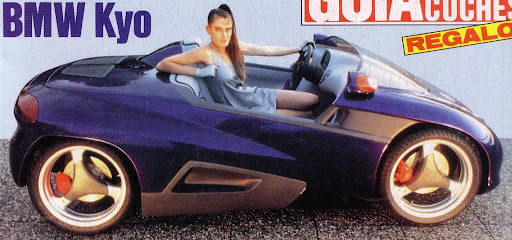
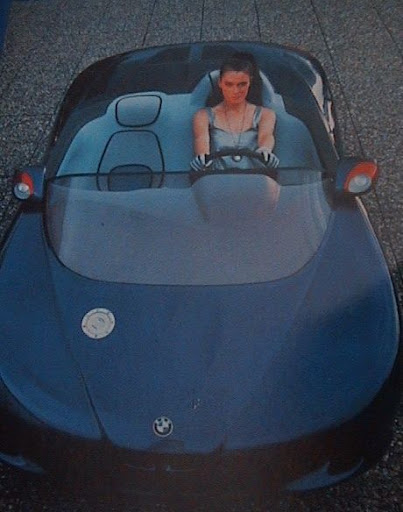
The BMW Kyo was a one-off concept microroadster built in 1990 as a design-school project rather than a factory production model. It was created by transportation design students Michael Pickstone of Canada, Isao Sasaki of Japan and Yves Renaud of Switzerland, working at the European branch of the Art Center College of Design established in the mid-1980s in La Tour-de-Peilz, above Lake Geneva near Vevey, where the first students had begun classes in autumn 1986. The Kyo was the school's first automobile realized at full 1:1 scale, developed with support from German designer Hans A. Muth, BMW Japan and Riviera Couleurs.
The design was completed within just 14 weeks, covering concept, structural layout, and interior and exterior styling. Pickstone handled exterior design, Renaud the interior, while Sasaki, the most experienced of the three, coordinated the project. Work progressed from a 1:5 scale model to a seven-week construction of the full-size body, built around a wooden core shaped with foam and finished in polyester layers before the seats and interior were installed.
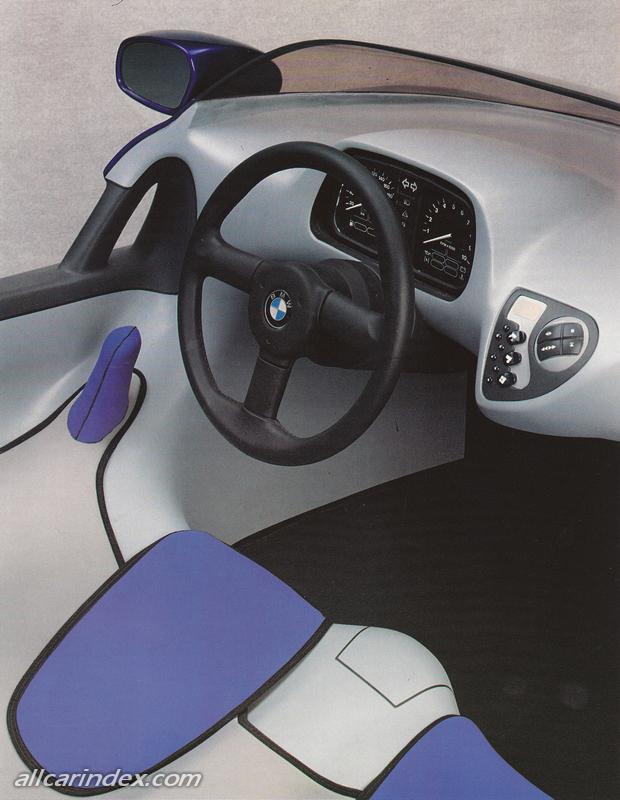
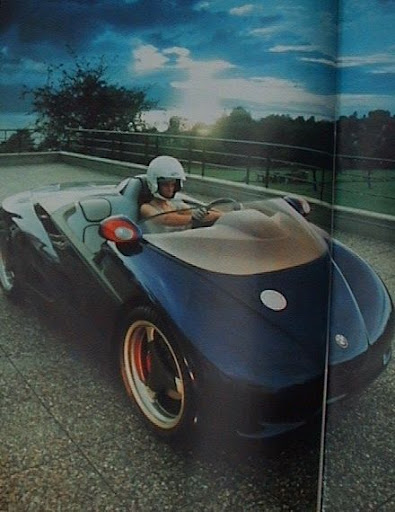
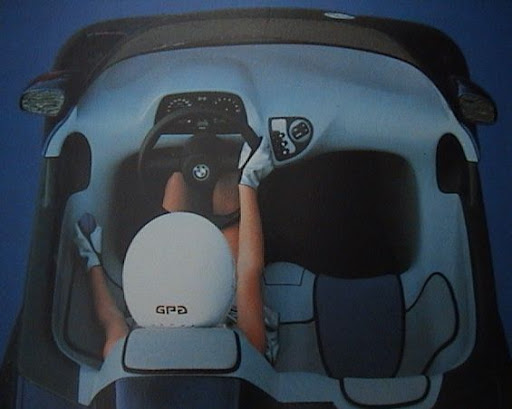
The Kyo had no doors, roof or windows, offering only a low racing screen ahead of the cockpit for wind deflection, and seated two people who entered via molded step recesses in the flanks. The driver's seat sat slightly closer to the centerline than the passenger's, and instead of seat adjustment, the pedals and steering wheel were made adjustable. Power came from the mechanicals of the BMW K1 motorcycle, including its one-liter, 16-valve engine, all four wheels, and its linear gearshift, mounted in a mid-engine layout and paired with a steering wheel and rearranged motorcycle instruments. Small headlights, indicators and mirrors were housed in streamlined pods beside the wind deflector. The car measured 3150 mm long, 1530 mm wide and 980 mm high, on a 2000 mm wheelbase.