
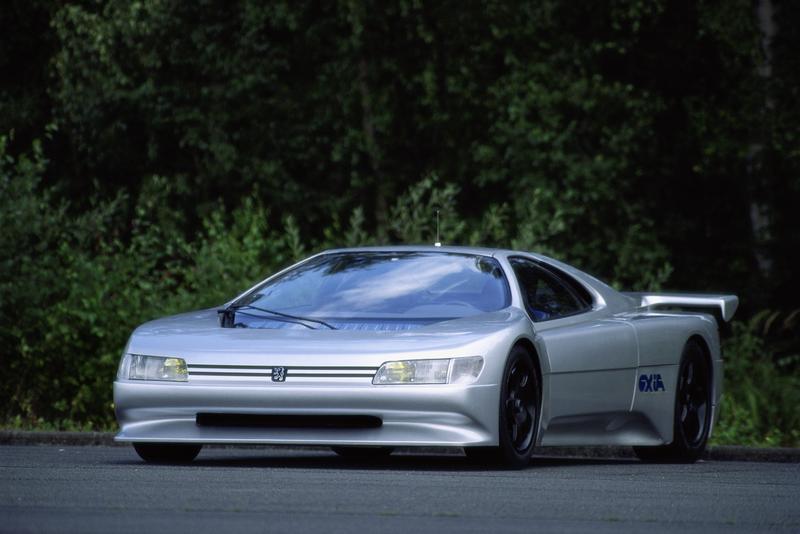
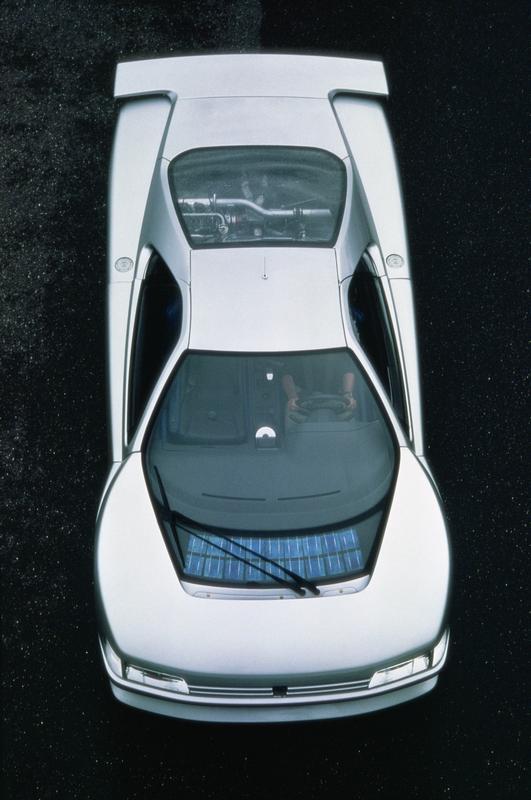
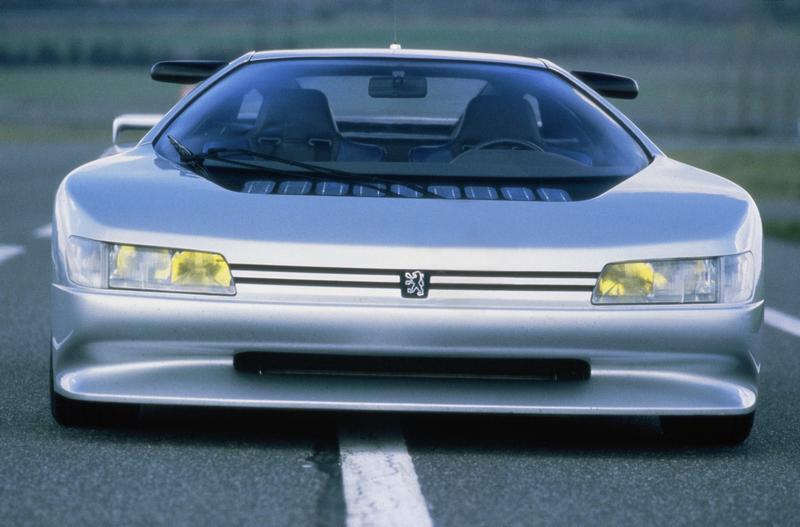
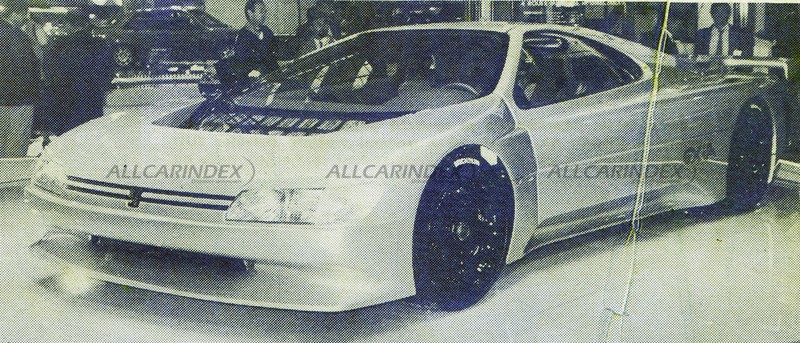
The Peugeot Oxia was a mid-engined concept coupe presented by the French manufacturer, following the Quasar and Proxima as the third in a line of high-performance concept studies from Peugeot. Its name referred to a reference point on Mars. Revealed at the Paris motor show in 1988, the Oxia was a two-door, two-seat high-performance coupe built from carbon fibre, kevlar and epoxy resin, with a front end that resembled the Proxima but with a simpler, cleaner silhouette that no longer exposed its mid-engine mechanicals at the sides and rear. Despite its resemblance to road-going supercars such as the Porsche 959 or Ferrari F40, Peugeot stated it was purely a design study with no production intent. It was, however, considered an indirect forerunner of the Peugeot 905, which competed in the Group C world championship from 1991.
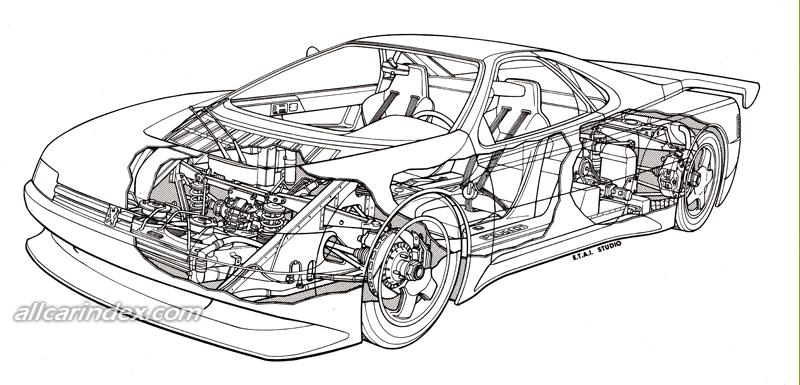
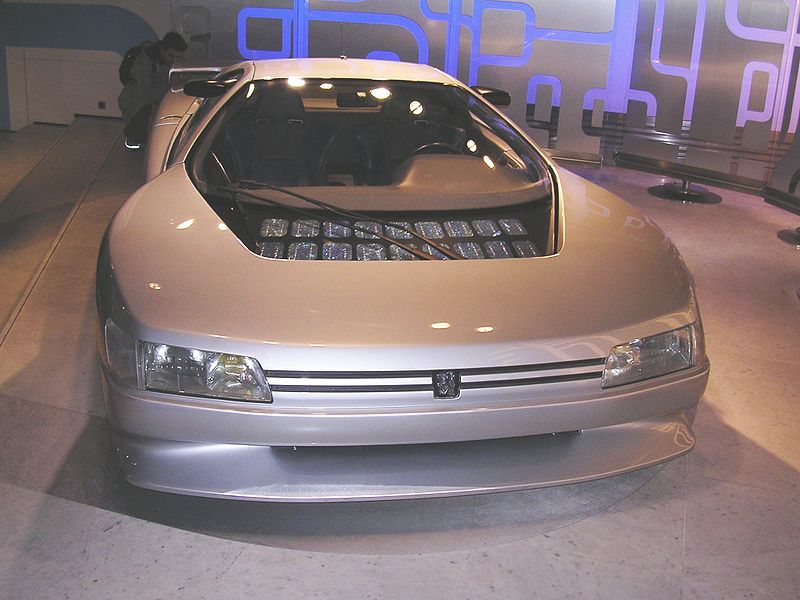
Like the Proxima, the Oxia used four-wheel drive and four-wheel steering, but with a more realistic cockpit design. The passenger cell incorporated roll-over protection, and the one-piece front and rear body sections opened as single units, the front hood pivoting within the nose spoiler and the rear section carrying a large wing that angled from 0 to 3 degrees above 250 km/h. The bonded and riveted aluminium centre structure formed a shell reinforced by three box-section side members, with a honeycomb floor structure and a sealed rear compartment housing the safety fuel tank. Aerodynamic development took place in the S4 wind tunnel at Saint-Cyr.
Power came from a 2849cc PRV V6 engine, as used in the Proxima, fitted with a DOHC 24-valve head and twin Garrett T3 turbochargers running 2.7 bar of boost, producing 680 hp at 8200 rpm and 726 Nm at 4500 rpm, managed by twin-computer Bosch Motronic MP 1.2 engine management. Drive went through a hydraulic twin-plate clutch and a six-speed TK racing gearbox to a planetary centre differential splitting torque 25 percent front and 75 percent rear, with slip limited by a Ferguson viscous coupling; rear-wheel steering was actuated mechanically via a secondary rack and cardan-jointed shaft. Wheels were magnesium-alloy items fitted with Michelin MMX tyres in 235/45x17 and 285/40x17 sizes, monitored by a Michelin Tyre Monitor system.
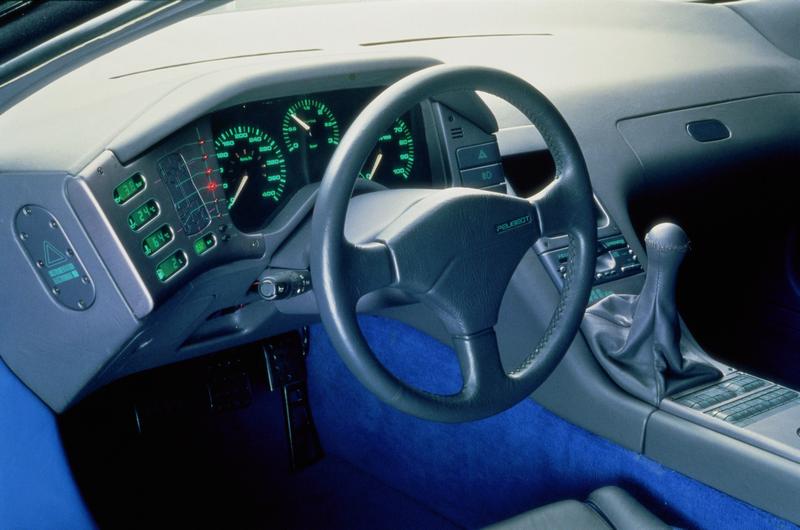
The cabin, developed under Peugeot interior design chief Paul Bracq, featured conventional round instruments, an adjustable steering wheel, carbon-fibre leather-trimmed seats, five-point harnesses, and a communications centre with a PC, colour LCD monitor, keyboard, disk drive, mouse, radio telephone and hi-fi system. The Oxia was demonstrated to the press at Peugeot's Sochaux test track ahead of the 1988 Paris show, and in spring 1989 it reached 345 km/h at Michelin's Ladoux test track, by which point its weight had been reduced from 1375 kg to 1250 kg. It measured 4610 mm long, 2020 mm wide and 1130 mm high, with a 2800 mm wheelbase.