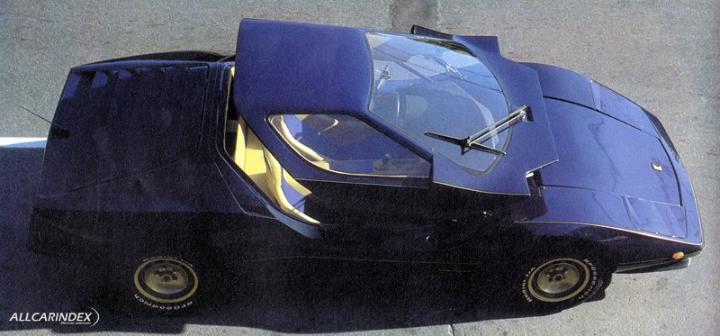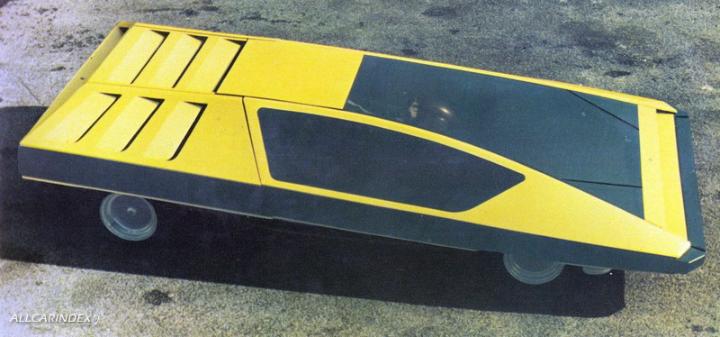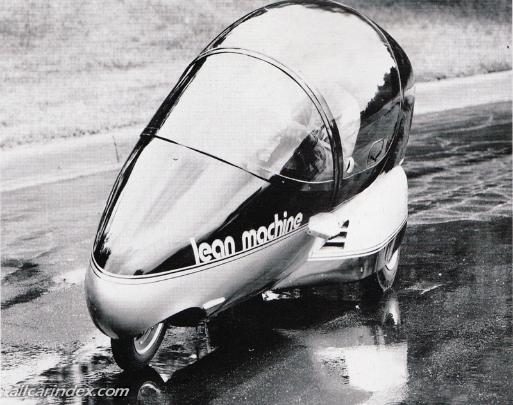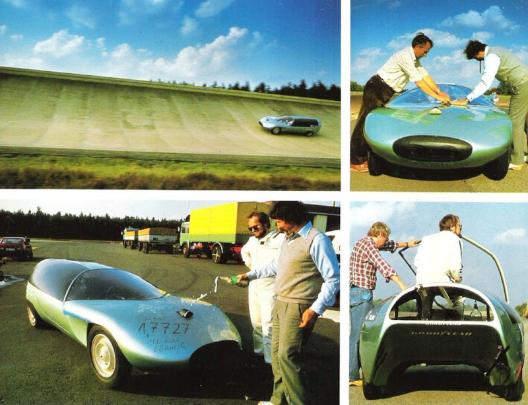
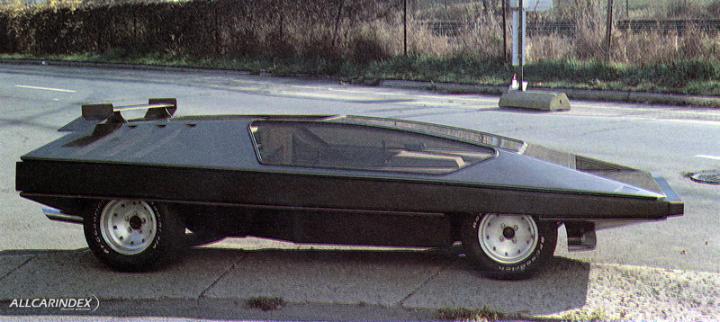

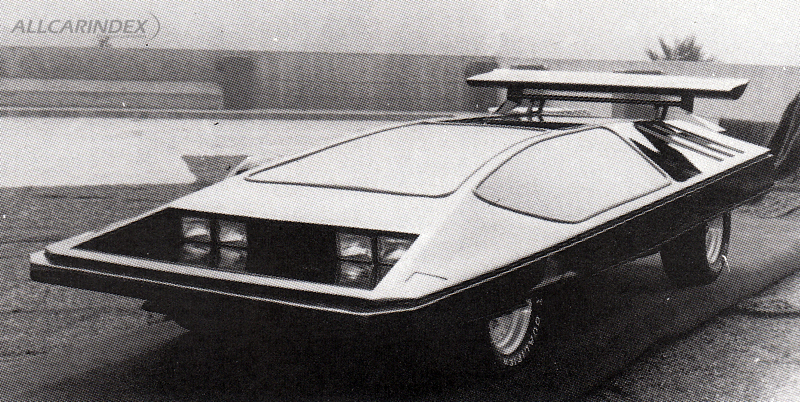
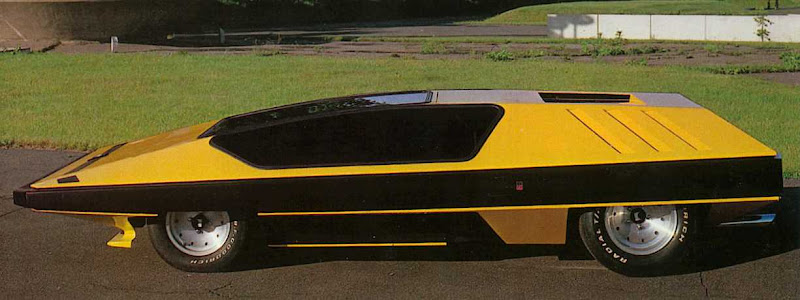
The Concordia II was a design study built in Canada by an aerodynamics study group at Concordia University in Montreal. It was not conceived as a science-fiction film prop, though it later became closely associated with cinema. The car was constructed on a Volkswagen Beetle platform chassis, a common approach for self-built vehicles of its kind, and used a Volkswagen-Porsche 914 engine, said to give it a top speed of around 200 km/h.
Its bodywork followed the group's aerodynamic research aims. Windshield wipers were omitted, reportedly because they would have disrupted the car's aerodynamic shape, and the design also dispensed with conventional doors. Access to the futuristic interior was instead gained through an electrically operated roof hatch. The window glass was only slightly curved, a detail considered impractical despite the car's otherwise aerodynamic intent, while a pronounced rear wing gave it a motorsport-influenced appearance. The car stood just one meter tall.
After being shown at an exhibition, the Concordia II attracted the attention of the producers of the film Black Moon Rising, who were impressed enough to cast it in the title role.