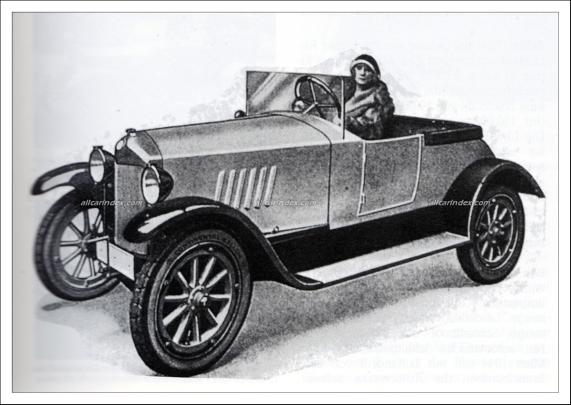
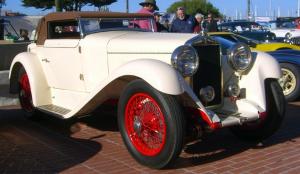
Georges Irat was a French automobile manufacturer whose name first appeared in 1914, when a company called Automobiles Irat was listed in Paris, though no cars were actually produced until 1921. That year, based at a factory in Chatou, Seine-et-Oise, Georges Irat launched a fast tourer powered by an in-house 1990cc overhead-valve four-cylinder engine designed by former Delage engineer Maurice Gaultier. The car featured Dewandre vacuum servo brakes on all four wheels, and apart from the bodywork, the entire vehicle was manufactured in-house.
Production grew steadily through the 1920s, from 150 cars in the first full year of manufacture to around 200 annually by the end of the decade. In 1928, shortly after Gaultier's departure back to Delage, the company introduced a 2985cc six-cylinder model sharing dimensions with the existing four-cylinder car, which remained in production.
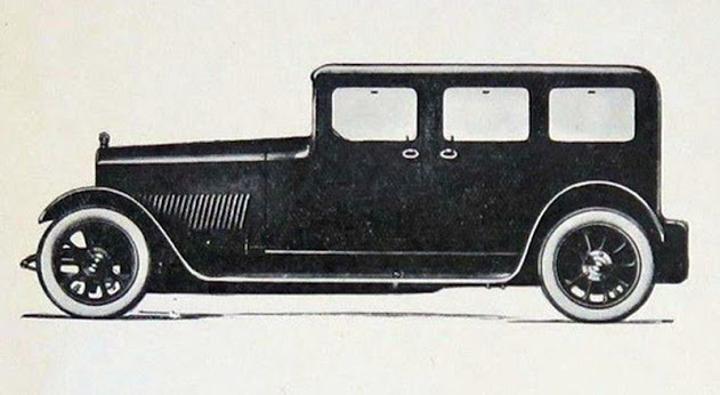
At the end of the 1920s, Georges Irat, like several of his French contemporaries, turned to American engine technology. From a new factory in Neuilly, he built large cars fitted with straight-eight Lycoming engines of 4350cc and 5105cc on a long wheelbase chassis. These were offered with saloon and two-door cabriolet coachwork by Saoutchik, though very few were sold. At the same time, the Neuilly plant produced a smaller 1086cc four-cylinder car designed by Georges Irat's son, Michel, originally sold under the name Michel Irat. Weak sales of both the small car and the large straight-eights brought the company close to financial ruin.
The firm's fortunes revived in 1935 when, backed by engine maker Godefroy et Levecque, Irat introduced a small front-wheel-drive sports car powered by a 1100cc Ruby engine. Offered only as an open two-seater, the 6CV Georges Irat proved commercially successful, with about 1500 examples sold between late 1935 and 1939. A larger car with a 2450cc six-cylinder Lycoming engine was also listed from 1935, though it found few buyers.
In 1938, Irat introduced another front-wheel-drive sports car, this time using a 1911cc Citroën 11CV engine and featuring all-round rubber independent suspension. Roughly 200 were built before production was halted by the outbreak of war. The 6CV continued in parallel, adopting shared styling with the larger model from 1938 onward.
During World War II, the company built a number of small electric cars. At the 1946 Paris Salon, Irat unveiled an entirely new design featuring an 1100cc flat-four engine mounted in a front cradle extension of a magnesium alloy frame, with the gearbox positioned beneath it to drive the front wheels. This design never reached production, nor did a related three-headlamp variant shown at the 1949 Salon. A separate company was also established at Begles-Tartifume, Gironde, to produce diesel engines, which were used to power Isobloc buses, Field Farmer tractors, and a small number of trucks built by Irat.
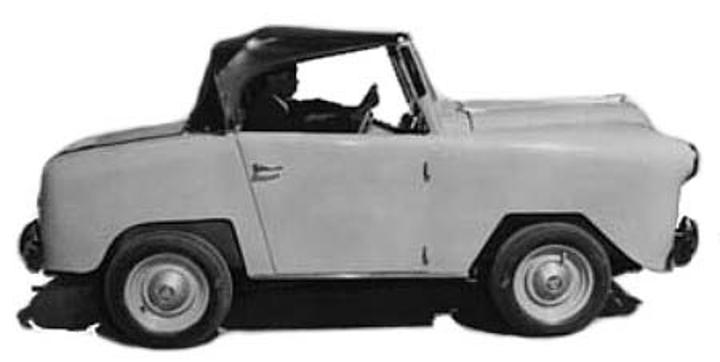
In 1950, the company shifted direction with the introduction of the VDB, or Voiture du Bled, built in Casablanca. This was a lightweight Jeep-type vehicle powered by a rear-mounted Dyna Panhard engine, seating three and supplied with a matching two-wheeled trailer. Production remained very limited, and following the display of a restyled VDB at the 1953 Salon, Georges Irat withdrew from automobile manufacturing entirely.