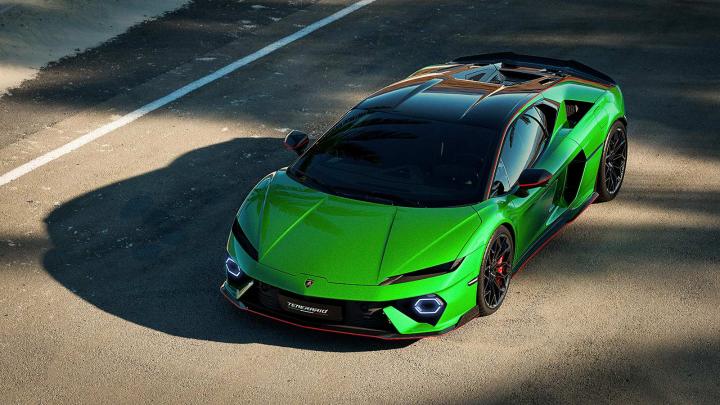





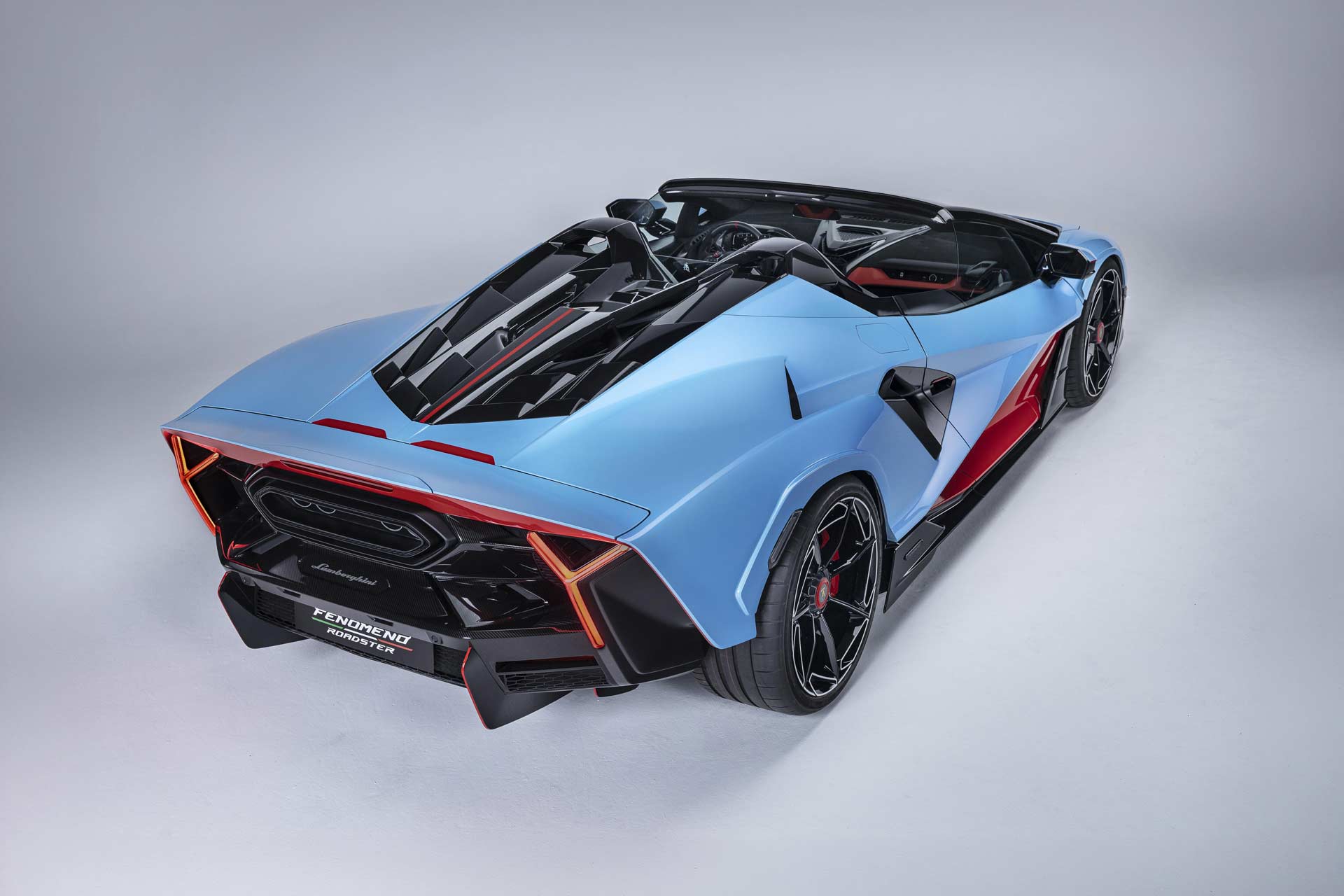
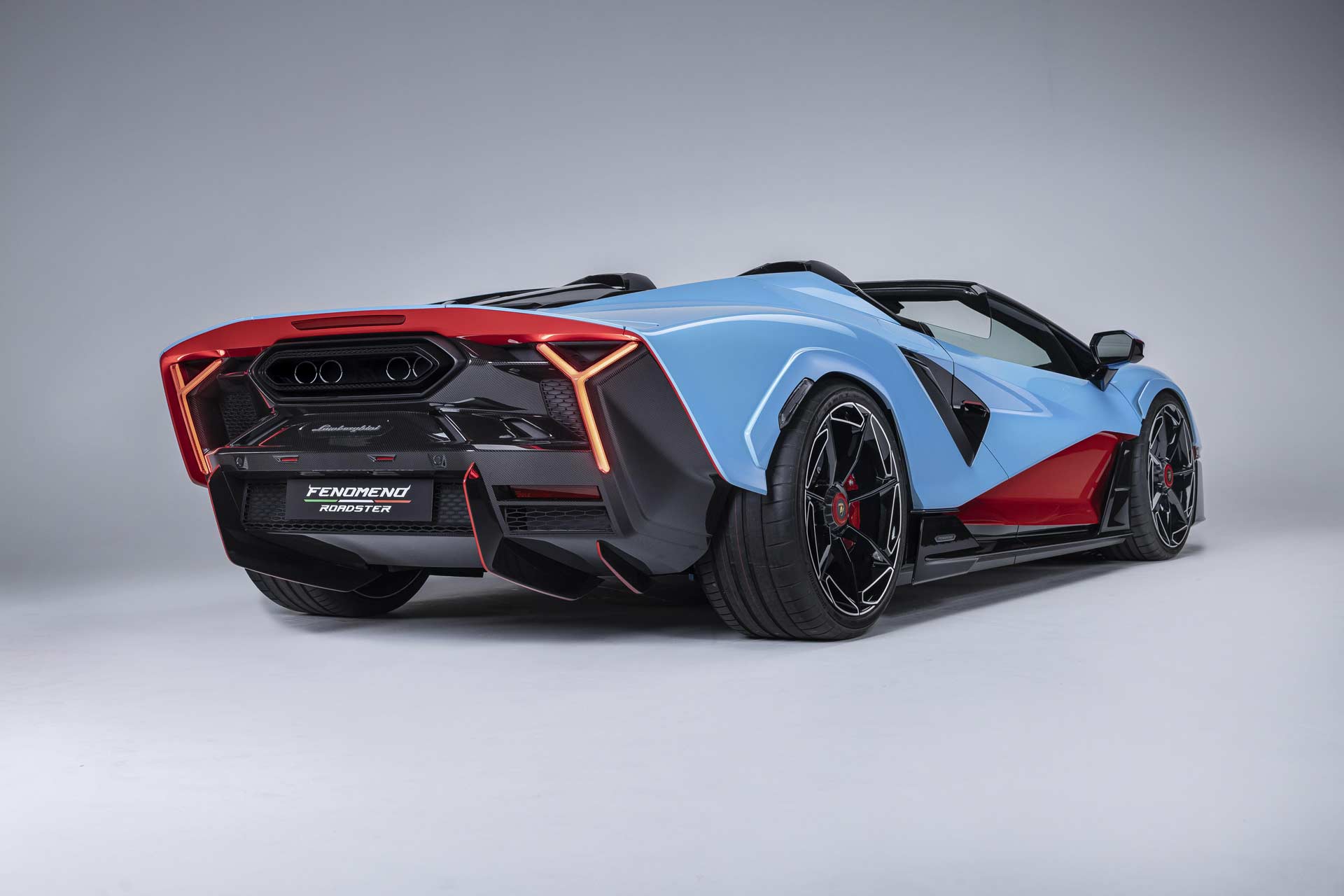


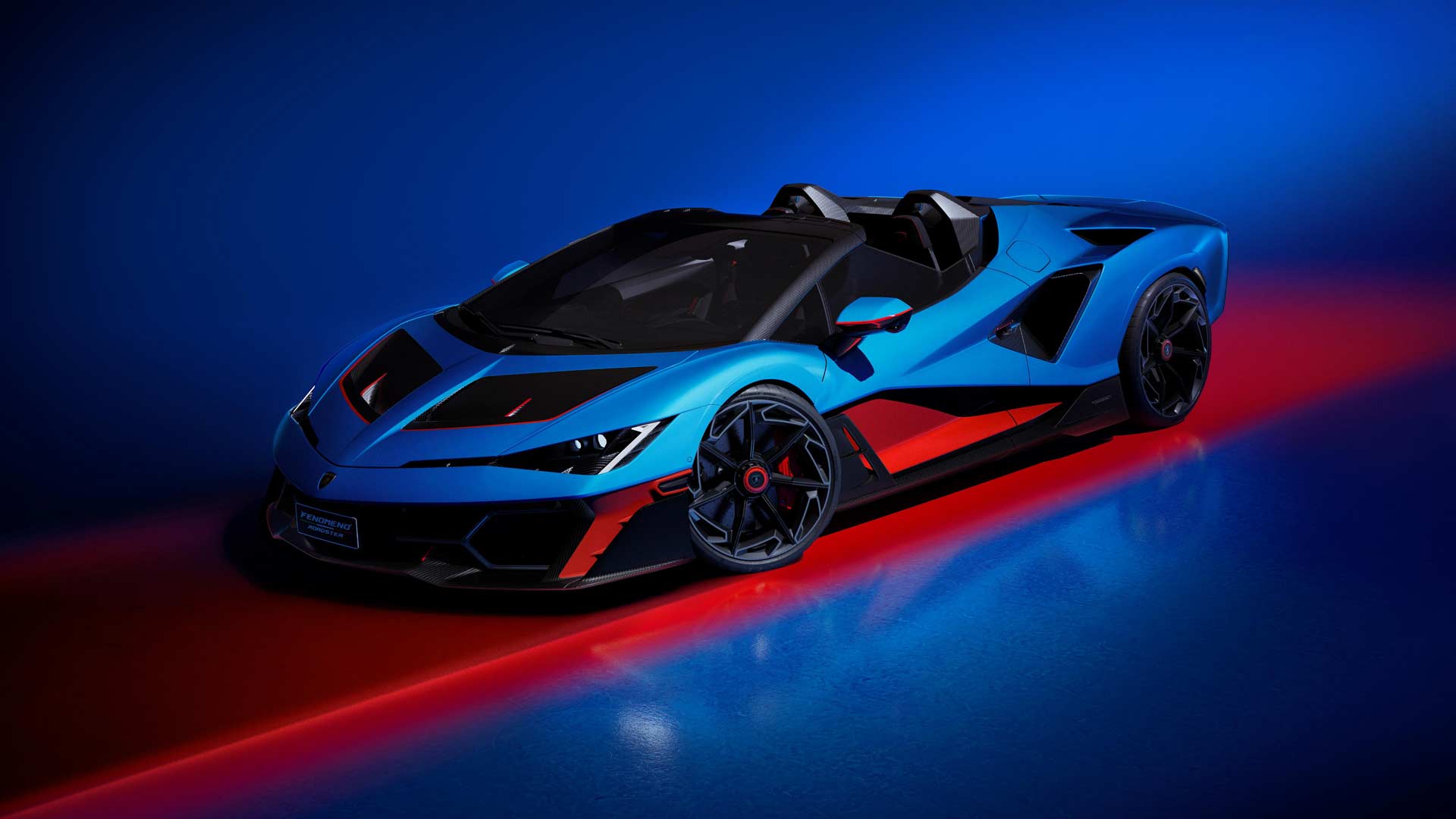








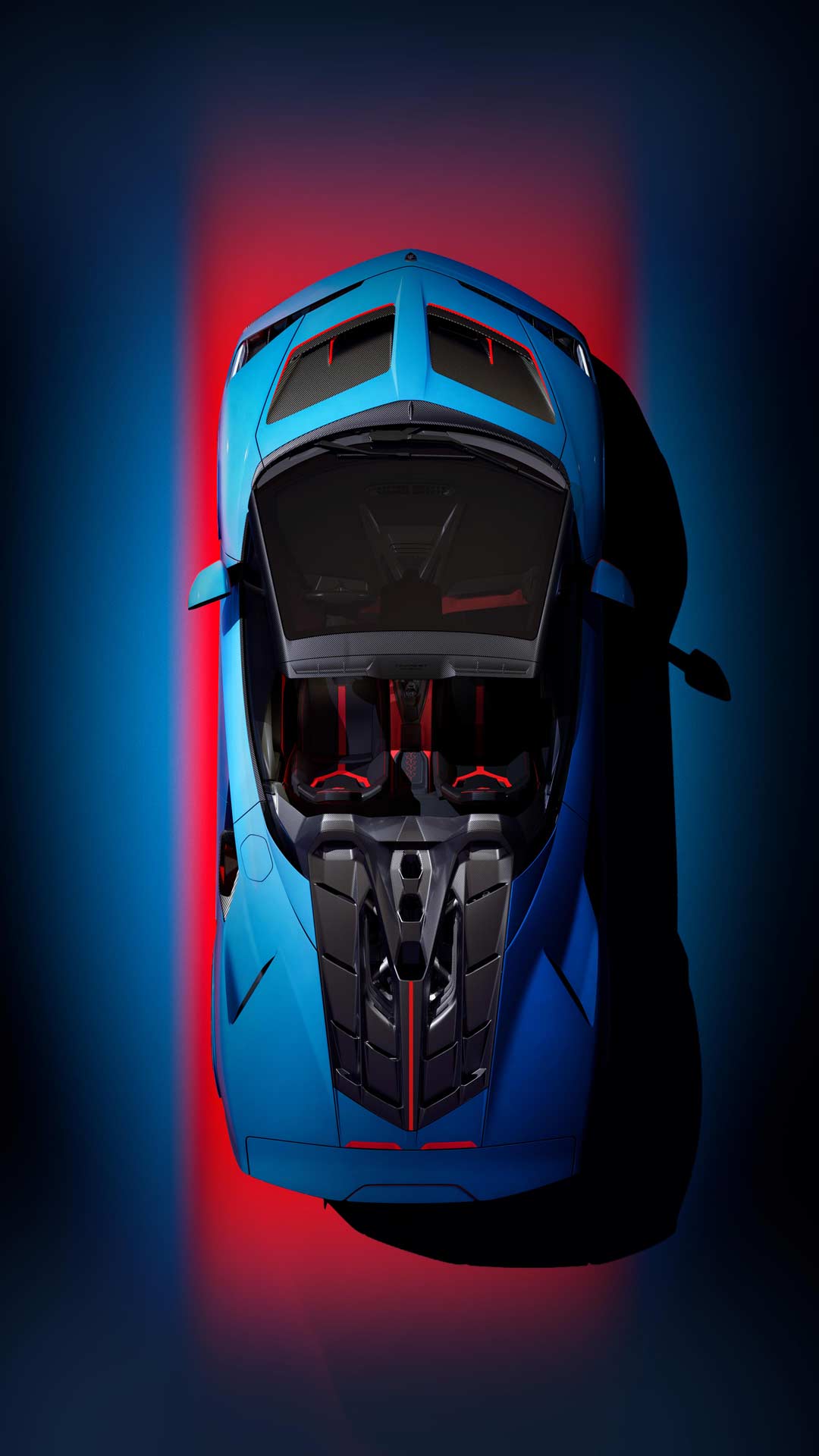
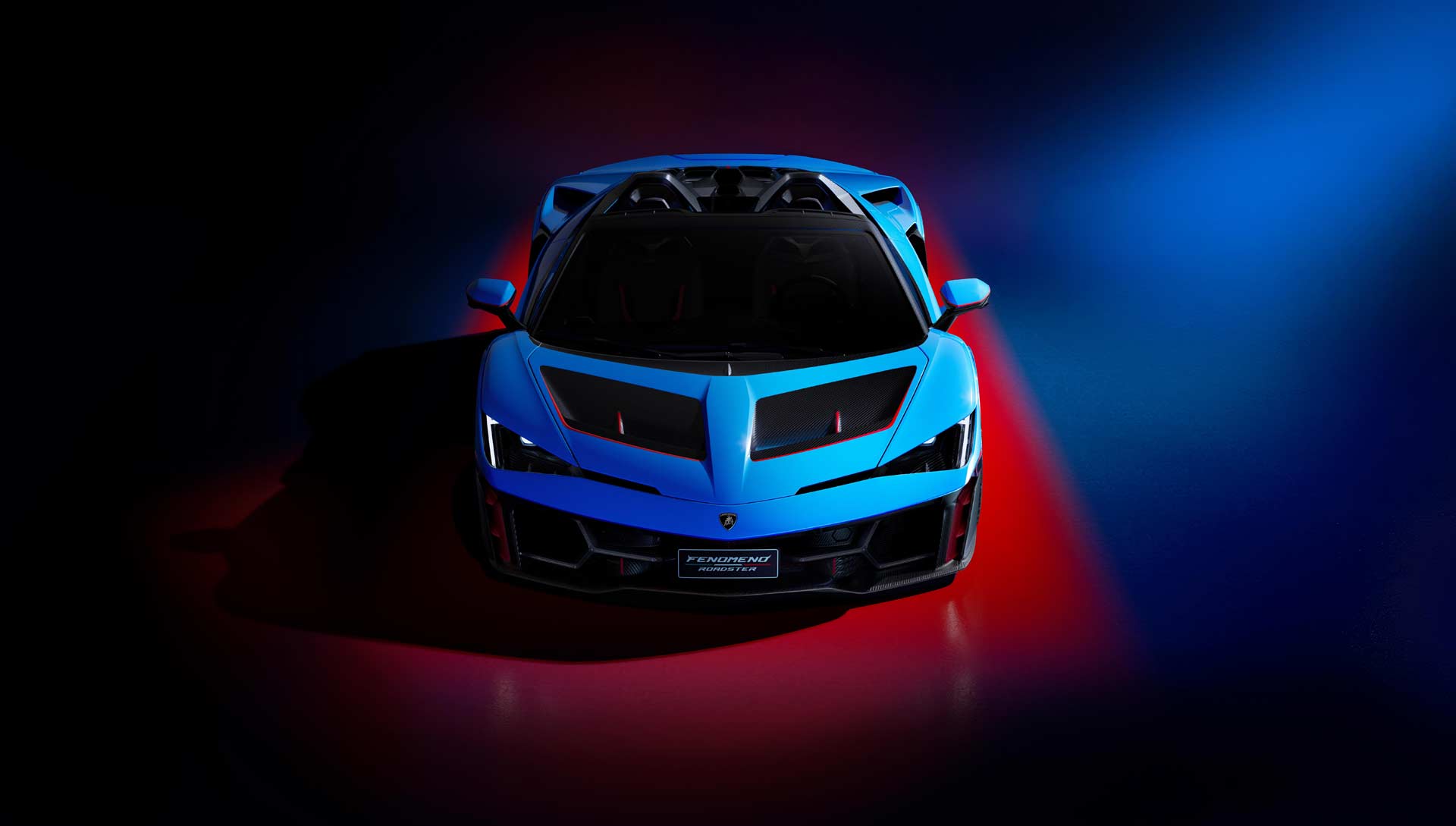
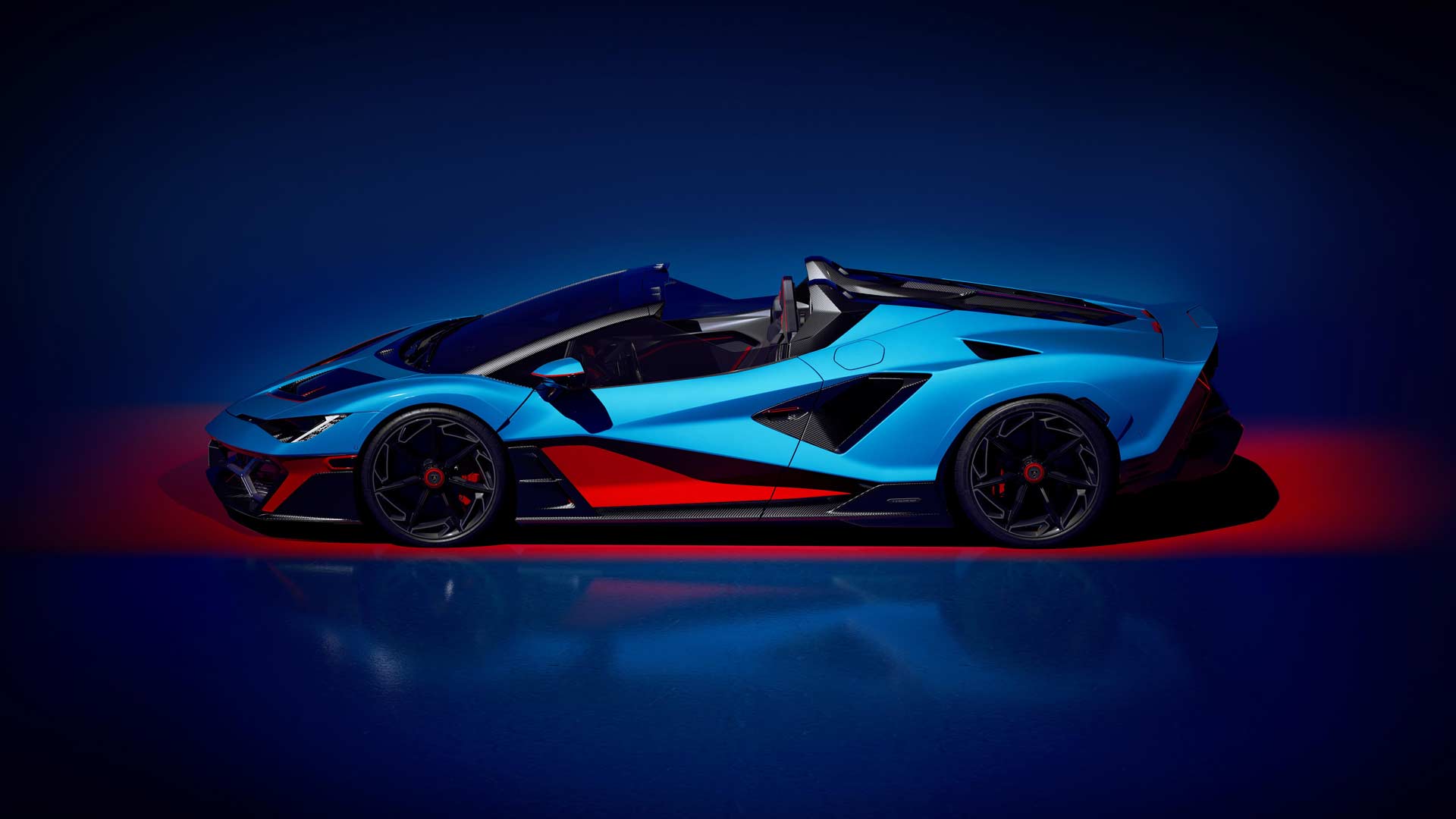
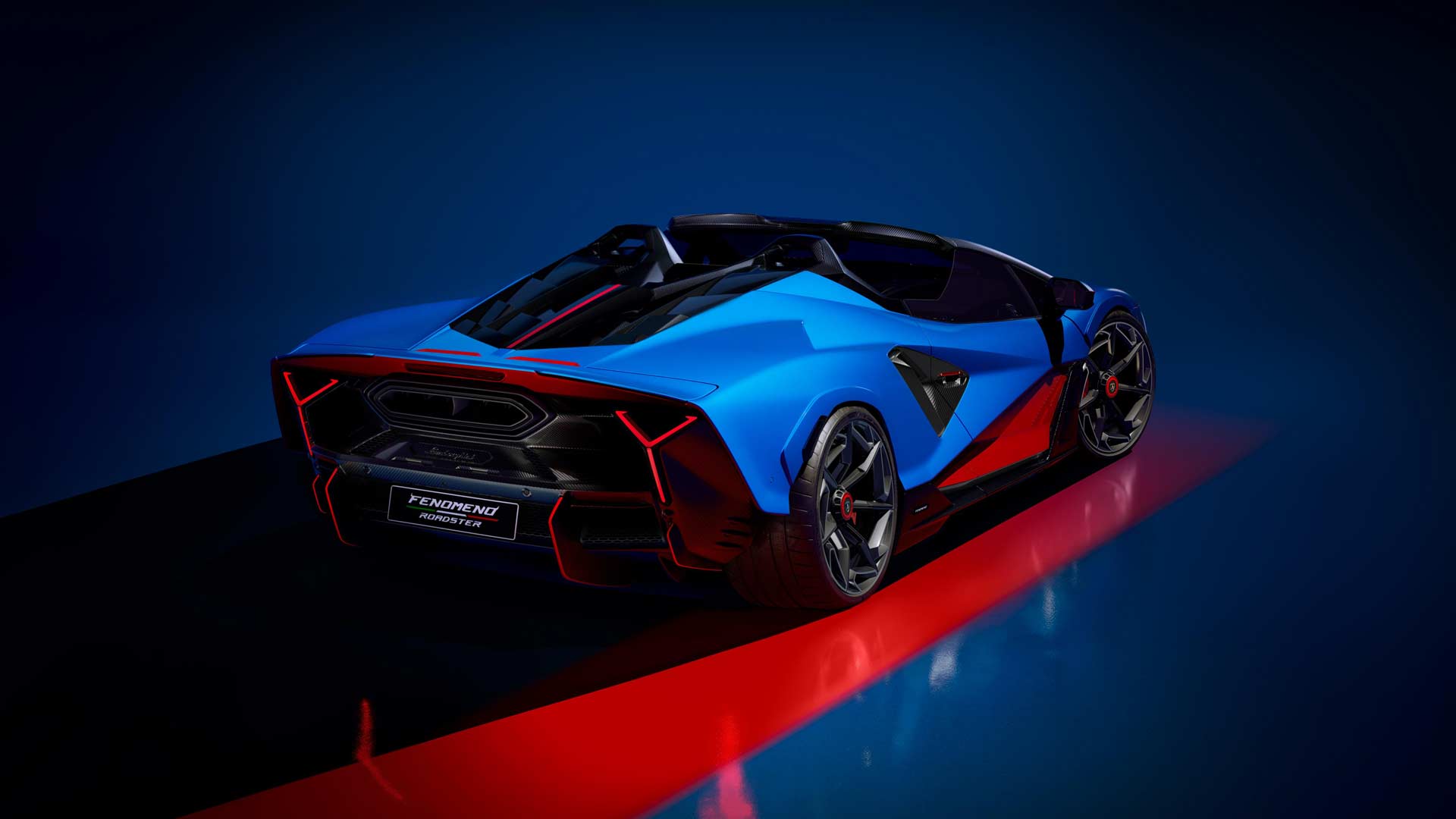
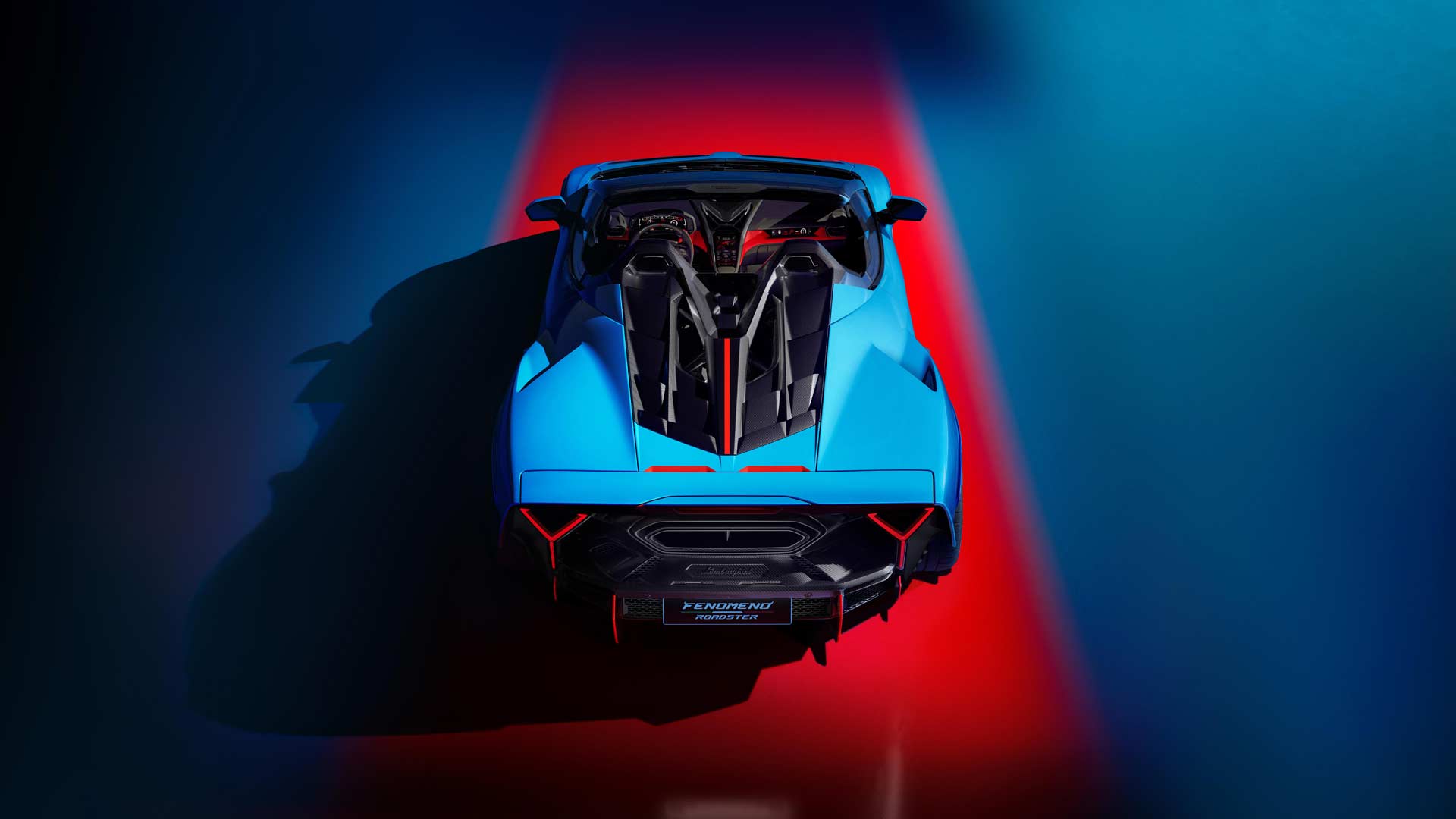
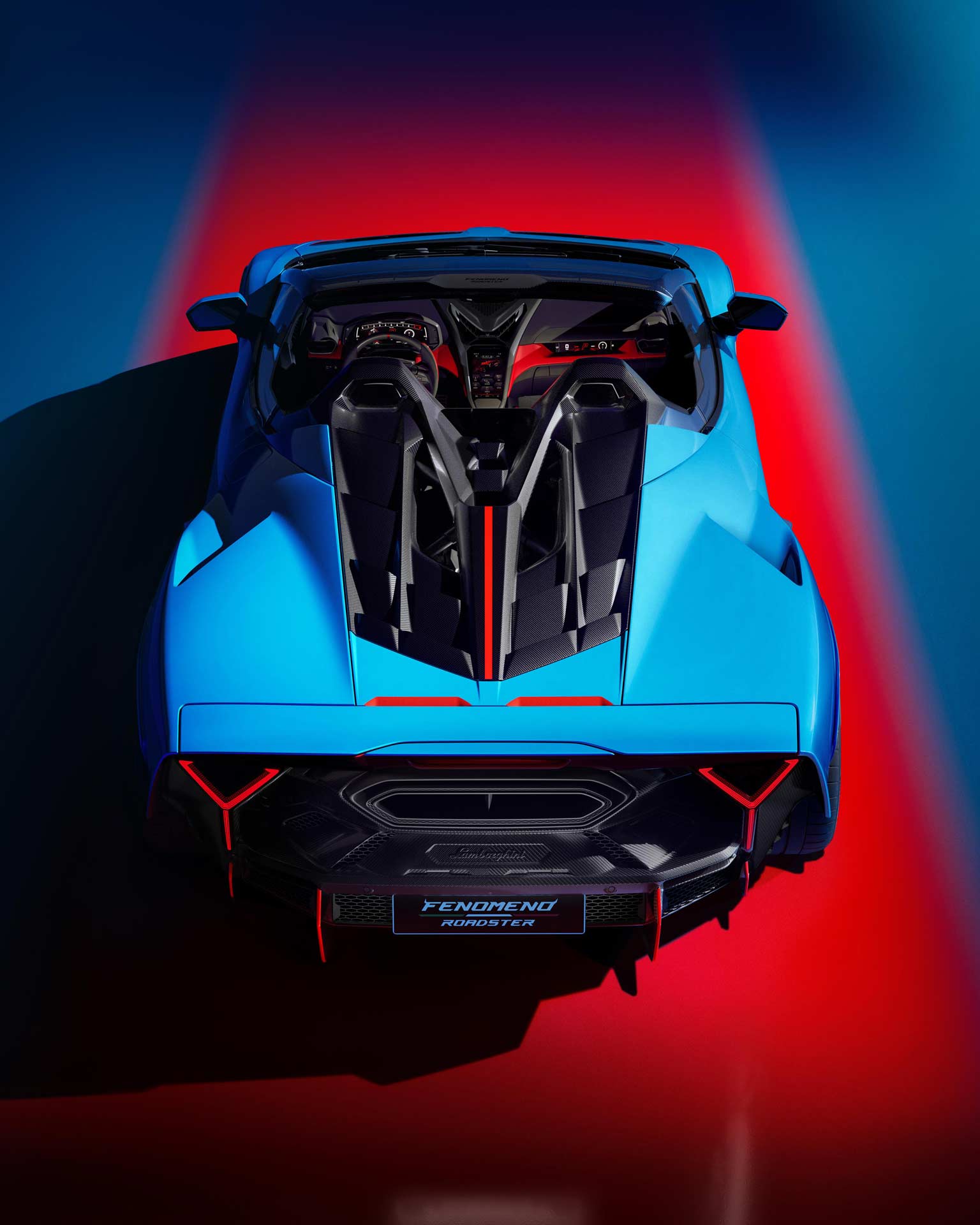
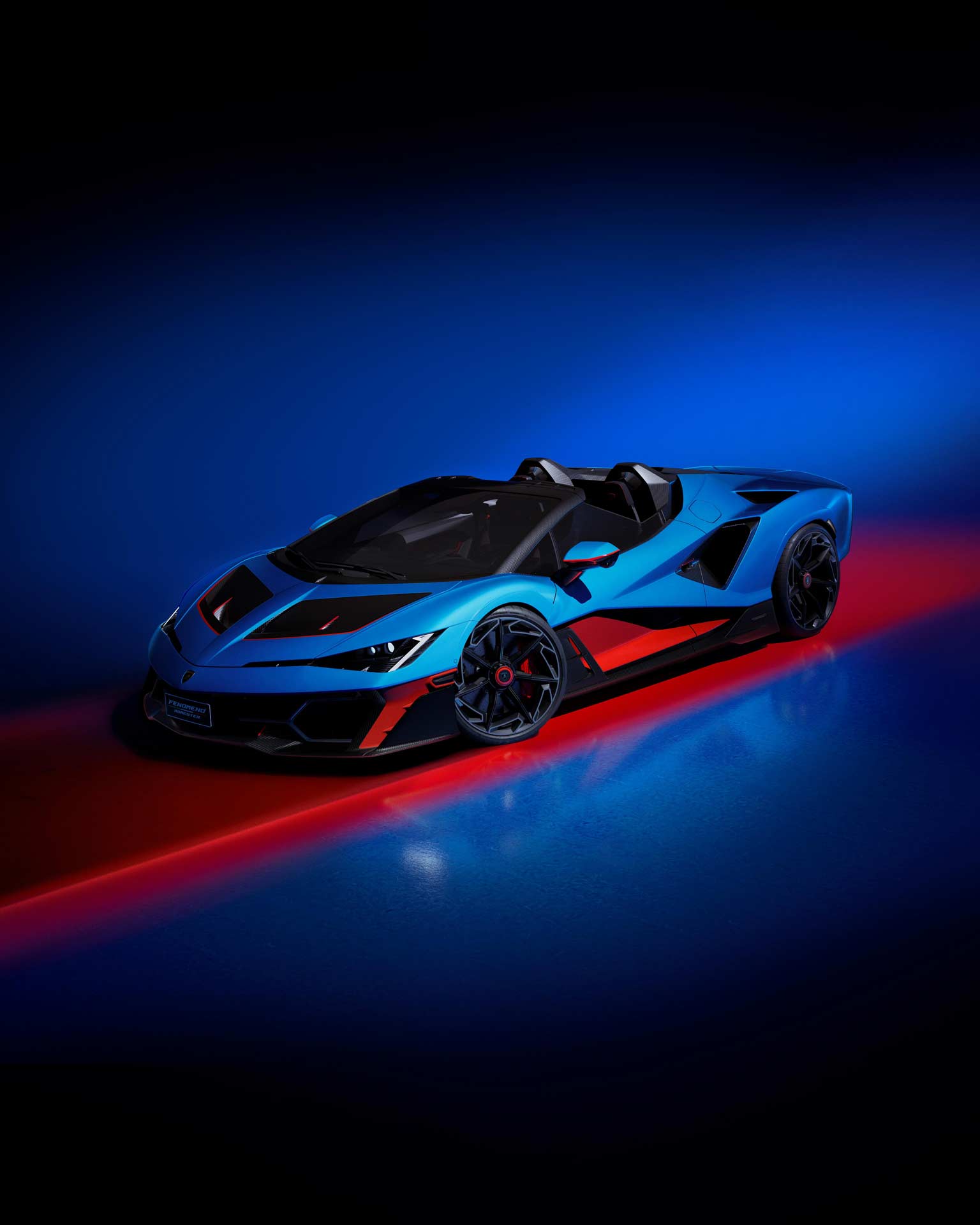

Lamborghini has introduced the Fenomeno Roadster, a new Few-Off open-top model limited to 15 units. Presented at Imola during the second edition of Lamborghini Arena on 9 May 2026, it stands as the most powerful open-top Lamborghini yet, with a total output of 1080 CV from a V12 hybrid powertrain.
The car follows the Fenomeno Coupé shown in 2025, but the Roadster is not simply a roofless version. Lamborghini has given it a dedicated aerodynamic package, revised upper surfaces, and new solutions around the cockpit and engine bay to preserve the performance targets of the Coupé while working without a fixed roof. It also continues the company’s line of open-top Few-Off cars, a sequence that began with the Reventón Roadster in 2009 and later included open versions of the Veneno, Centenario, and Sián.
The name Fenomeno follows Lamborghini’s long-running tradition of using names connected with notable bulls. In Italian and Spanish, the word means “phenomenal,” fitting the positioning of a model built in such small numbers and designed around Lamborghini’s most advanced V12 hybrid system.
At the center of the Fenomeno Roadster is a 6.5-liter naturally aspirated V12, supported by three electric motors. Two motors sit at the front axle, while the third is mounted above the eight-speed dual-clutch gearbox. The combustion engine alone produces 835 CV at 9,250 rpm and 725 Nm at 6,750 rpm, giving it a specific output of more than 128 CV per liter. Together, the system reaches 1080 CV, with performance figures of 0–100 km/h in 2.4 seconds, 0–200 km/h in 6.8 seconds, and a top speed of more than 340 km/h.
The hybrid system also brings electric torque vectoring, regenerative braking, and a fully electric driving mode through a 7 kWh lithium-ion battery. For a car built around a naturally aspirated V12, the electric side of the powertrain is not treated as a secondary detail. It is part of the car’s dynamic control structure and part of Lamborghini’s broader HPEV strategy.
The Roadster uses an aerospace-inspired carbon structure known as a monofuselage, also used in the Revuelto. It combines a carbon-fiber monocoque with a front structure made from Forged Composite®. Key areas such as the front crash structures, front frame, windshield frame, rear bulkhead, and side skirts are integrated into the carbon architecture. Lamborghini says the Roadster achieves stiffness and rigidity close to the Coupé, with only a small weight increase.
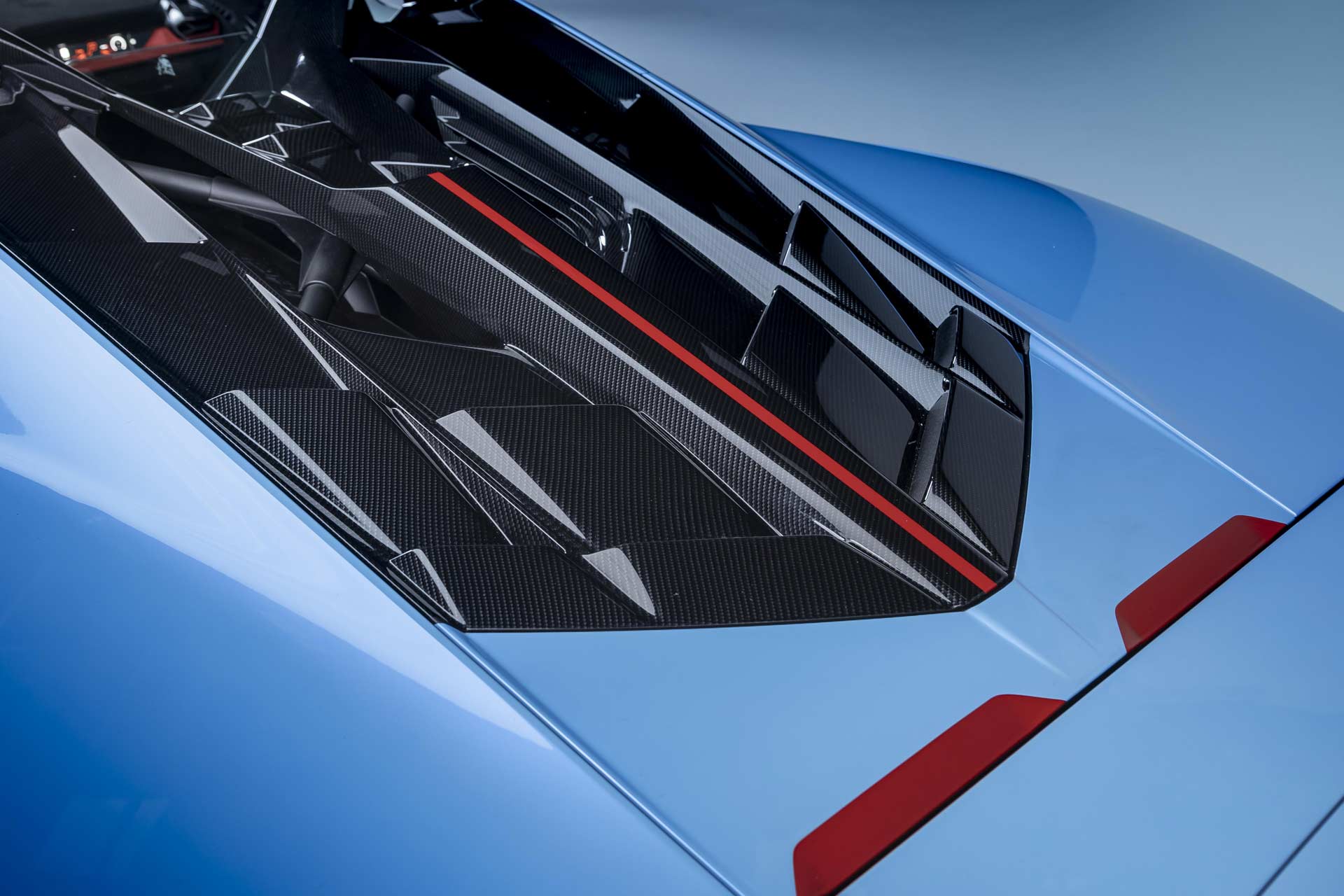
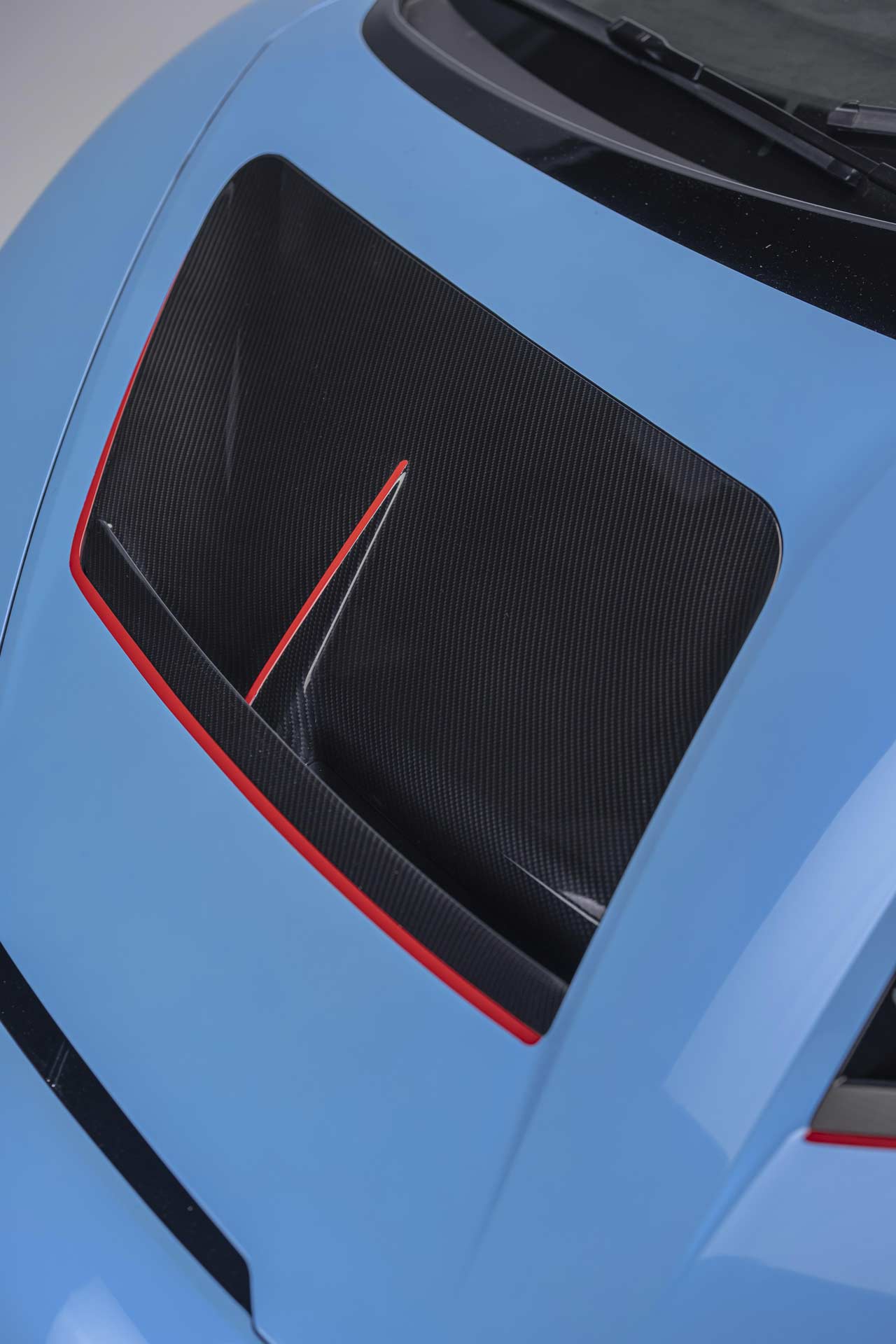
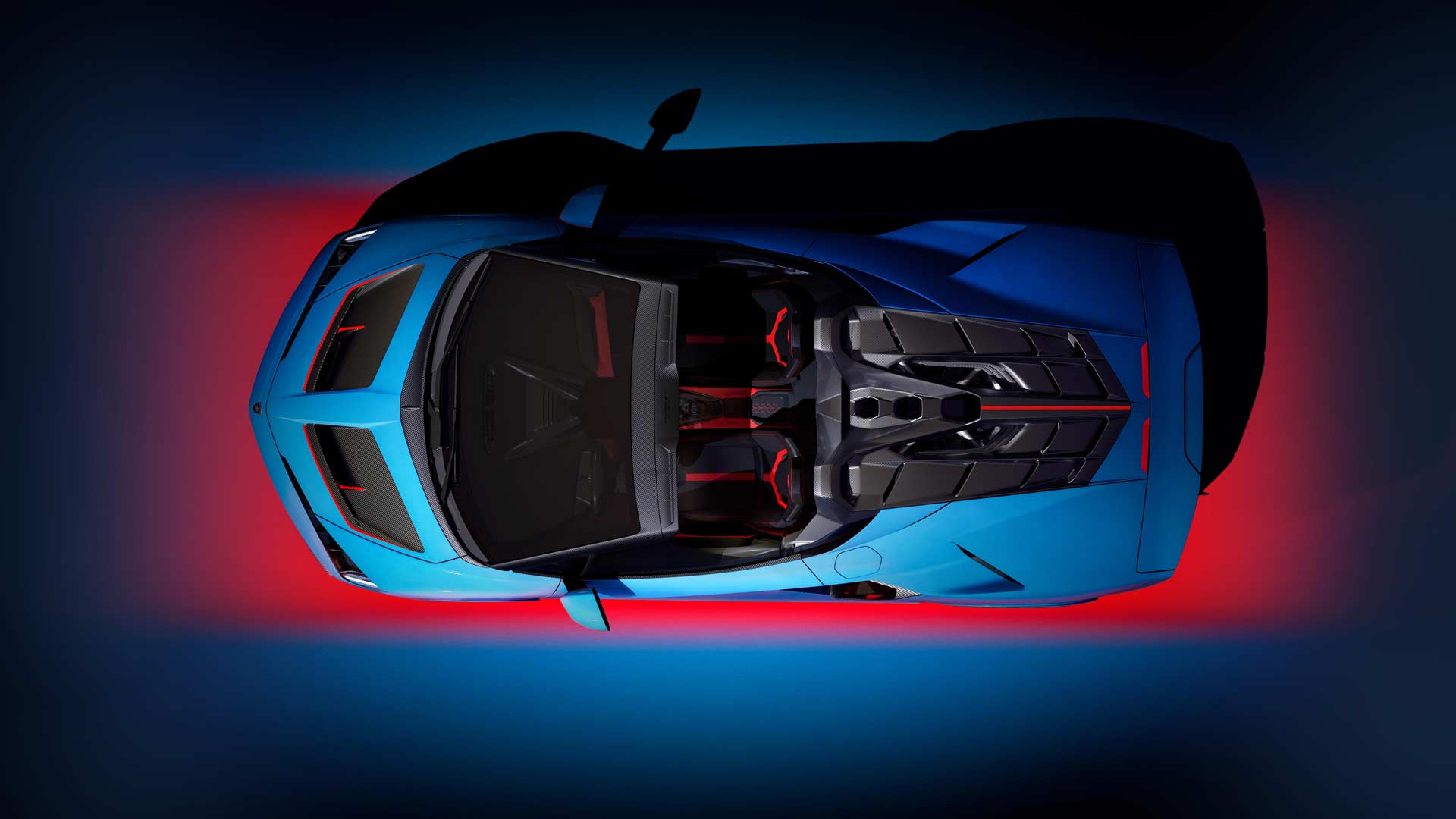
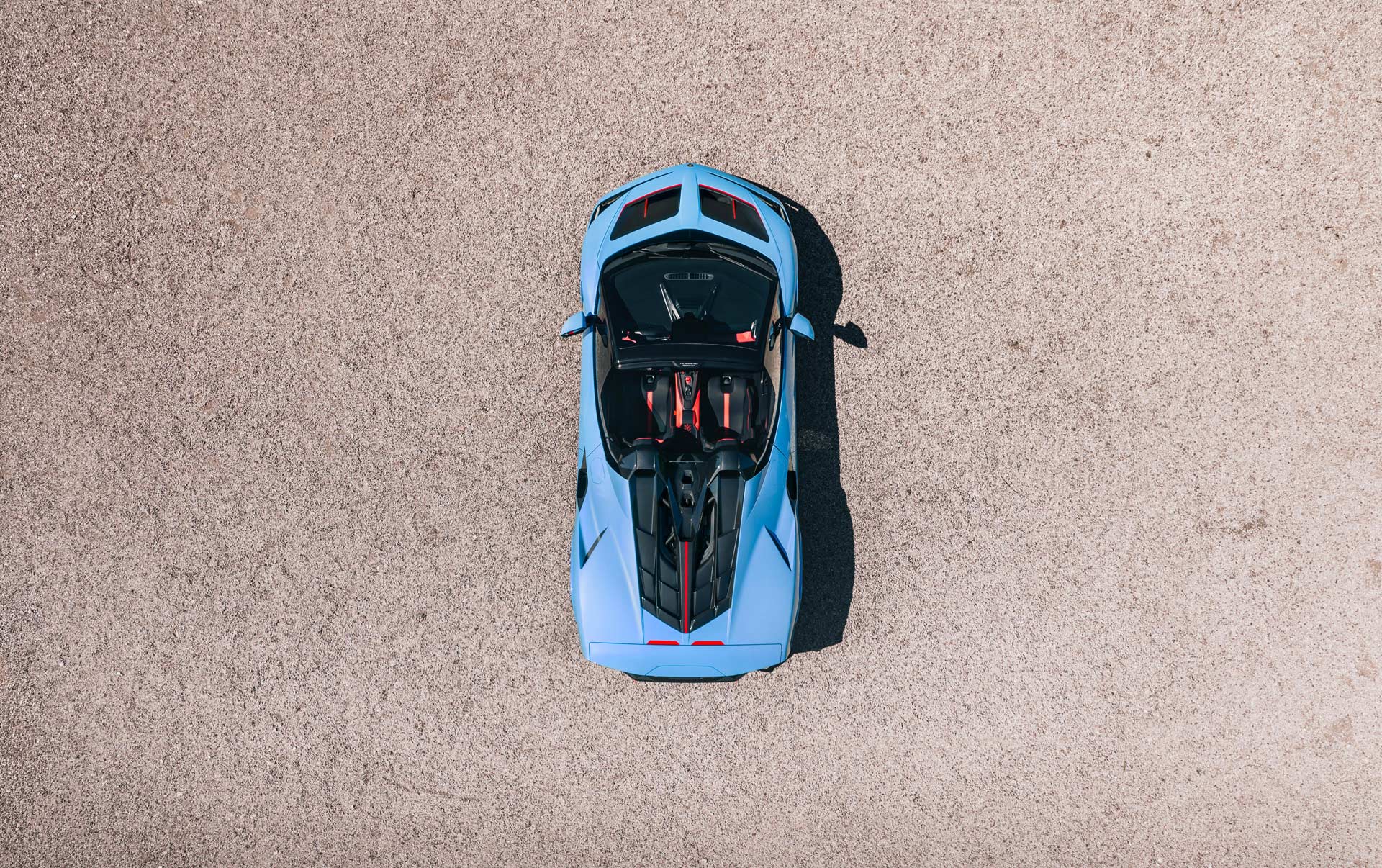
The open-top layout required particular attention to airflow. Without the Coupé’s roof and air scoop, Lamborghini added a spoiler to the windshield to guide air over the cabin and into the engine bay. This helps feed cooling air to the V12 while reducing turbulence and vibration. The rollover protection bars were also shaped to meet both safety and aerodynamic requirements, sitting low behind the seats and flowing into the Speedster-style rear humps.
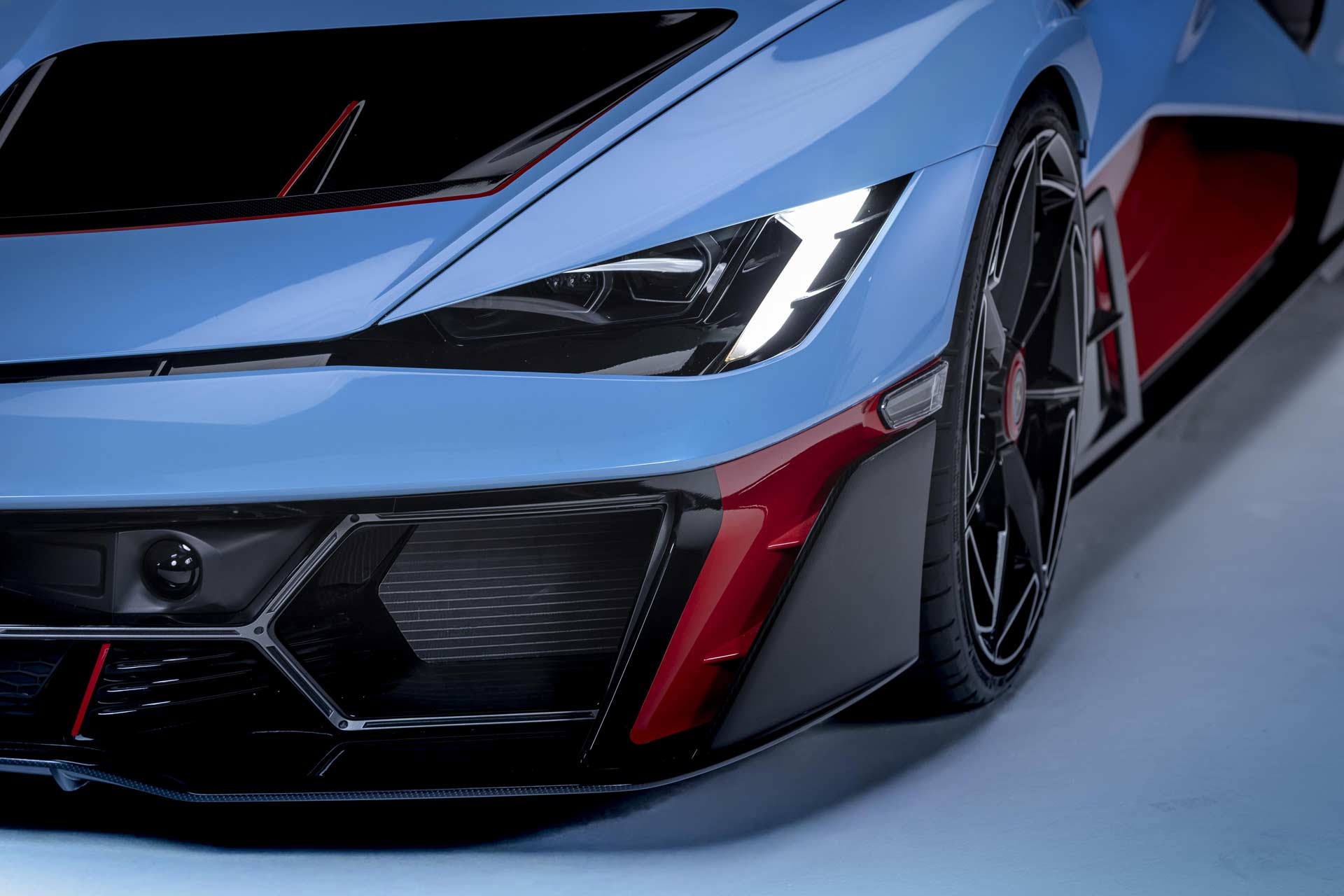
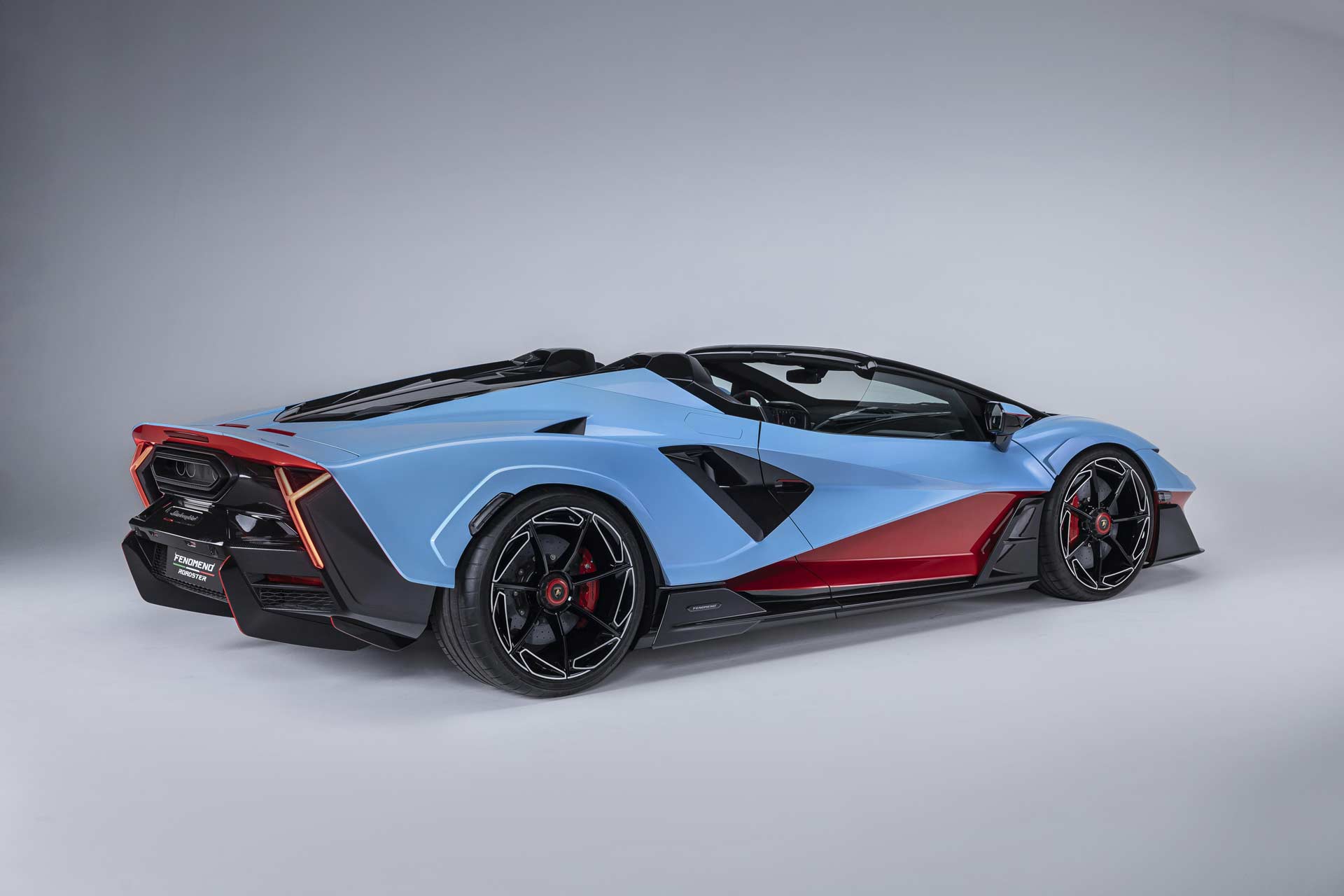
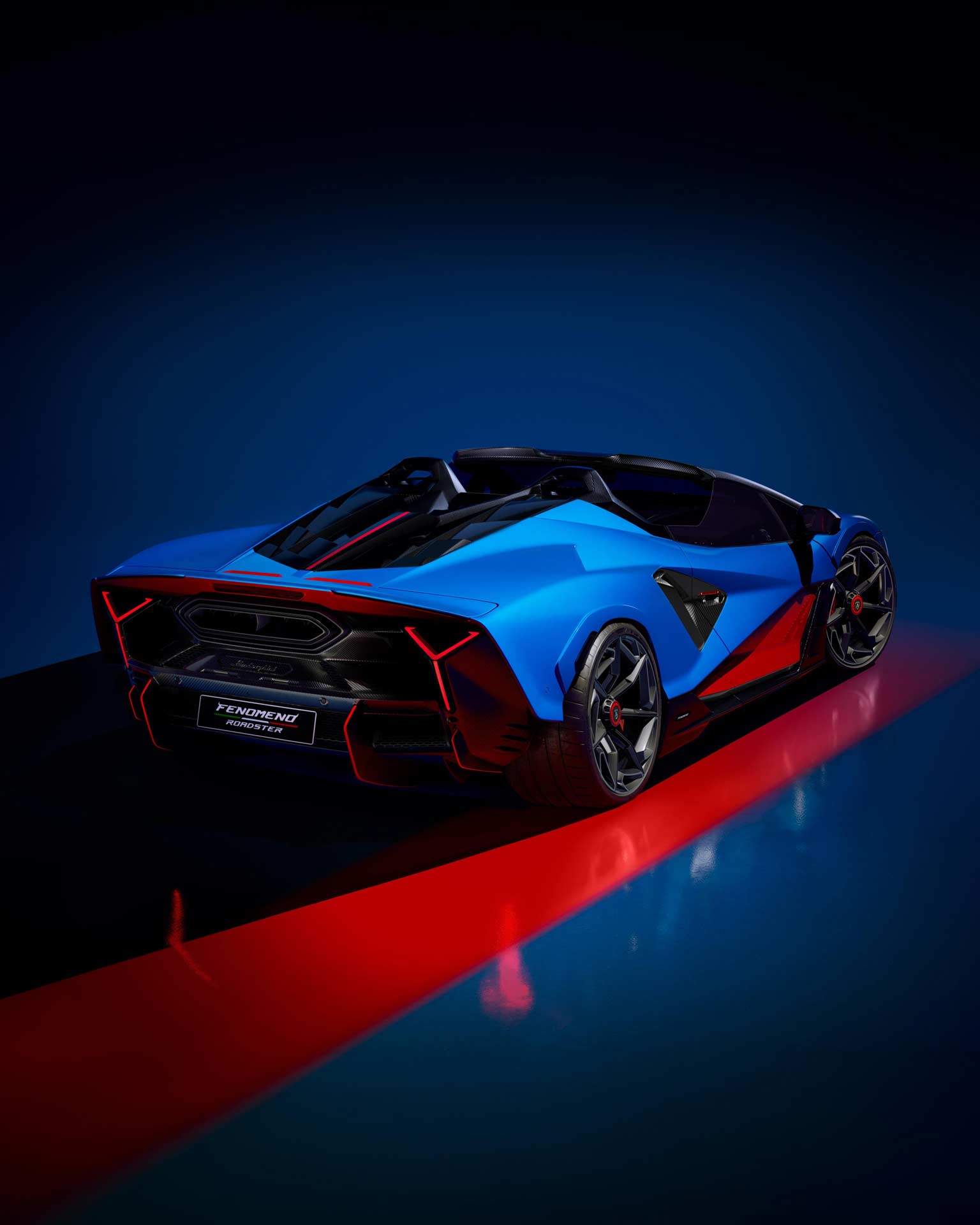
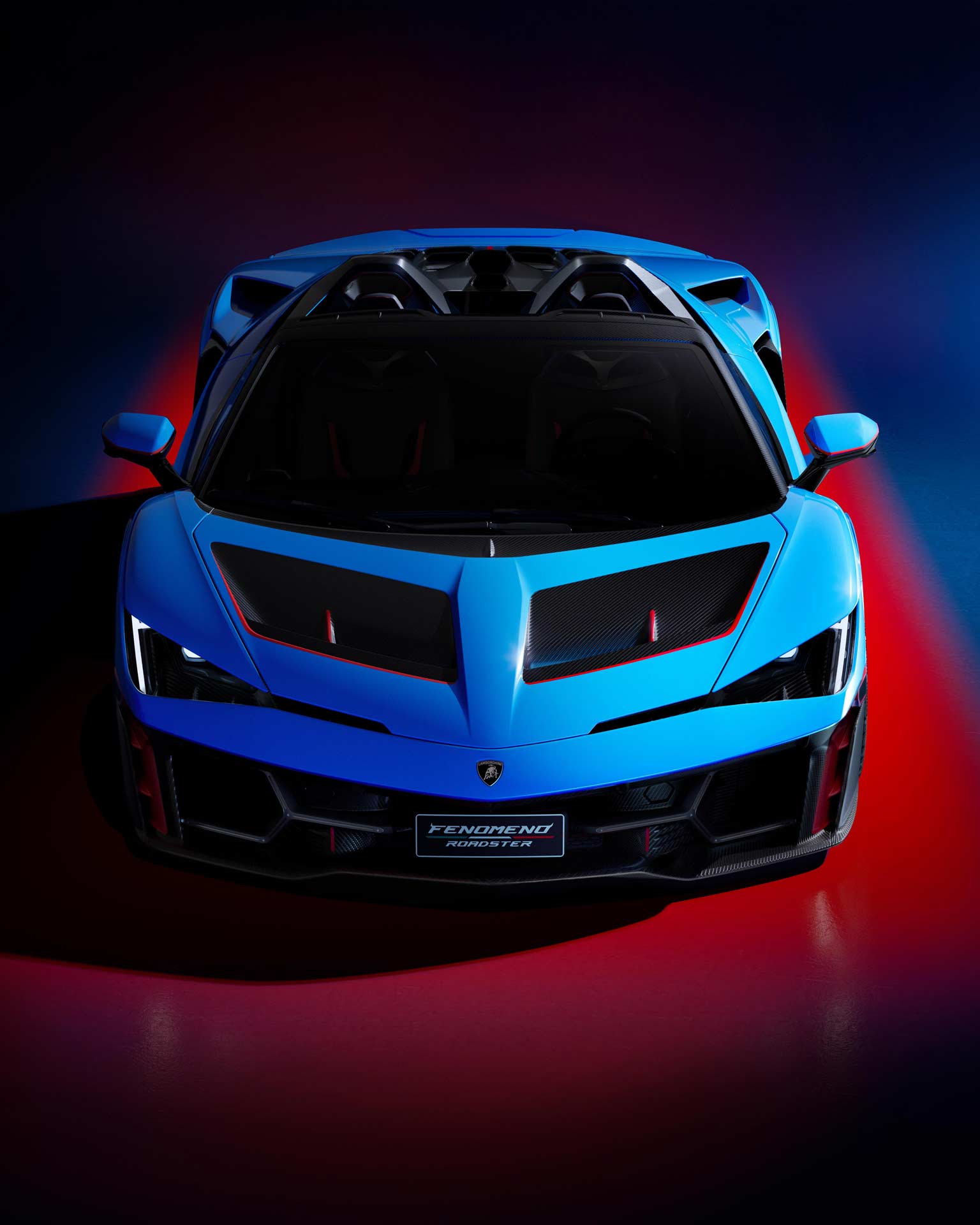
The visual language is unmistakably connected to Lamborghini’s modern Few-Off lineage. The front end is low, sharply cut, and structured around large intakes and hexagonal forms. The side surfaces are deeply sculpted, with large sills and rearward intakes feeding the powertrain. At the rear, the diffuser, active wing, and high-mounted hexagonal exhaust give the car a technical, competition-influenced character.
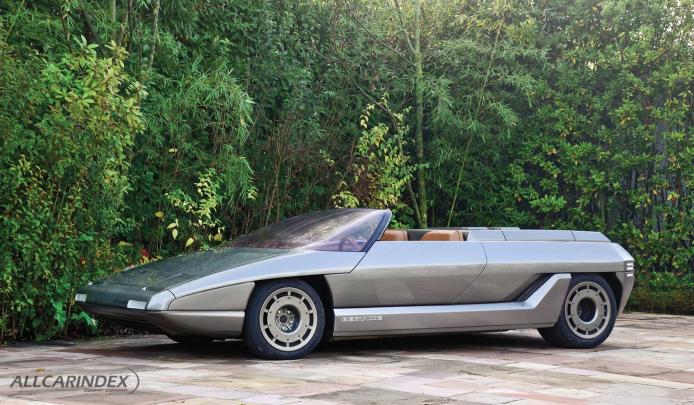
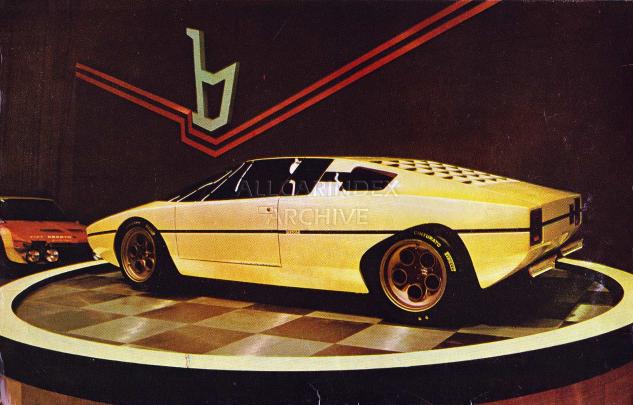
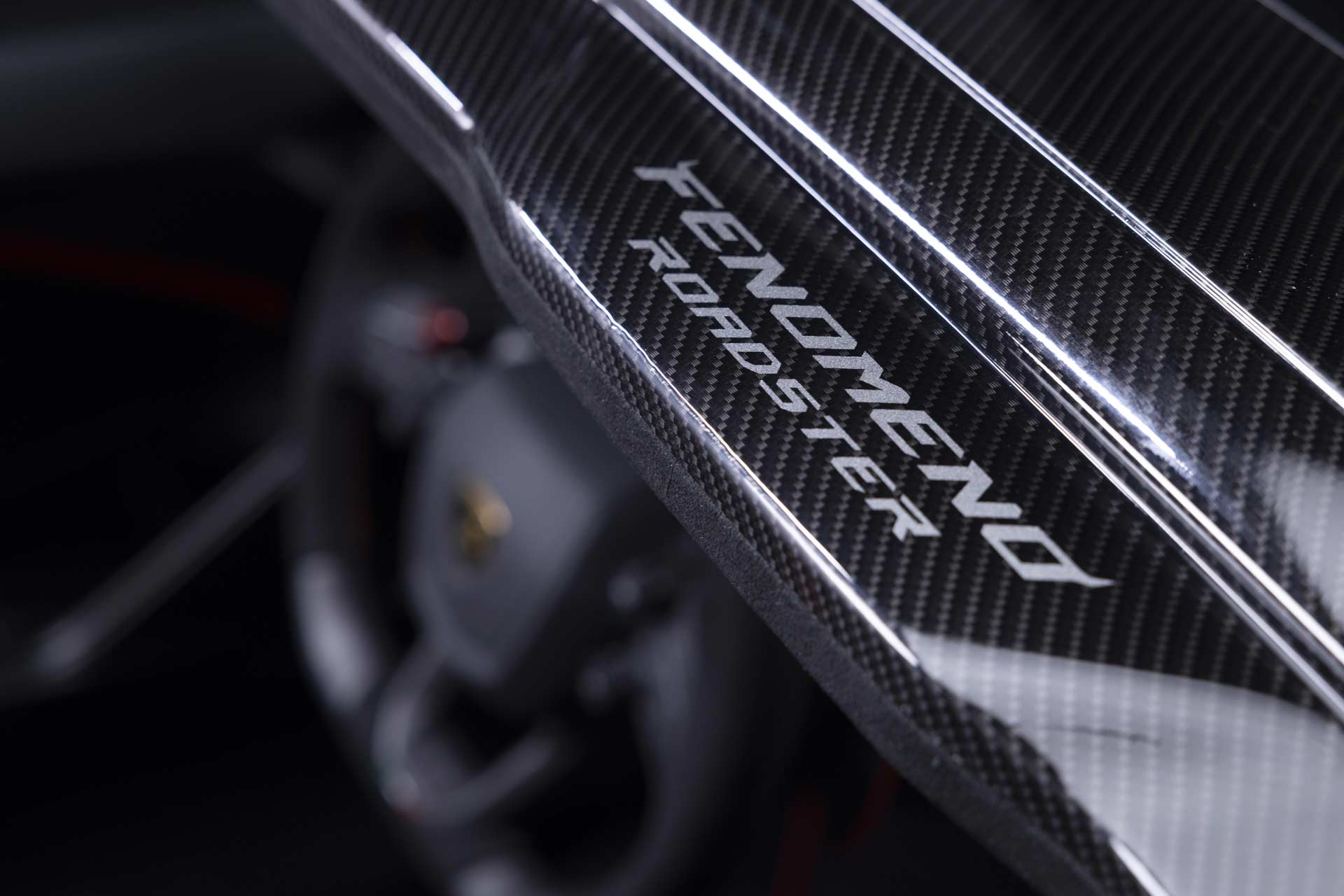
Several references shape the rear design. Lamborghini points to the Essenza SCV12, 1970s racing prototypes, and the Manifesto concept created for the 20th anniversary of Centro Stile. The result is a long, low silhouette with a strong central axis, a flat windshield, and a carbon spoiler embossed with the Fenomeno Roadster name.
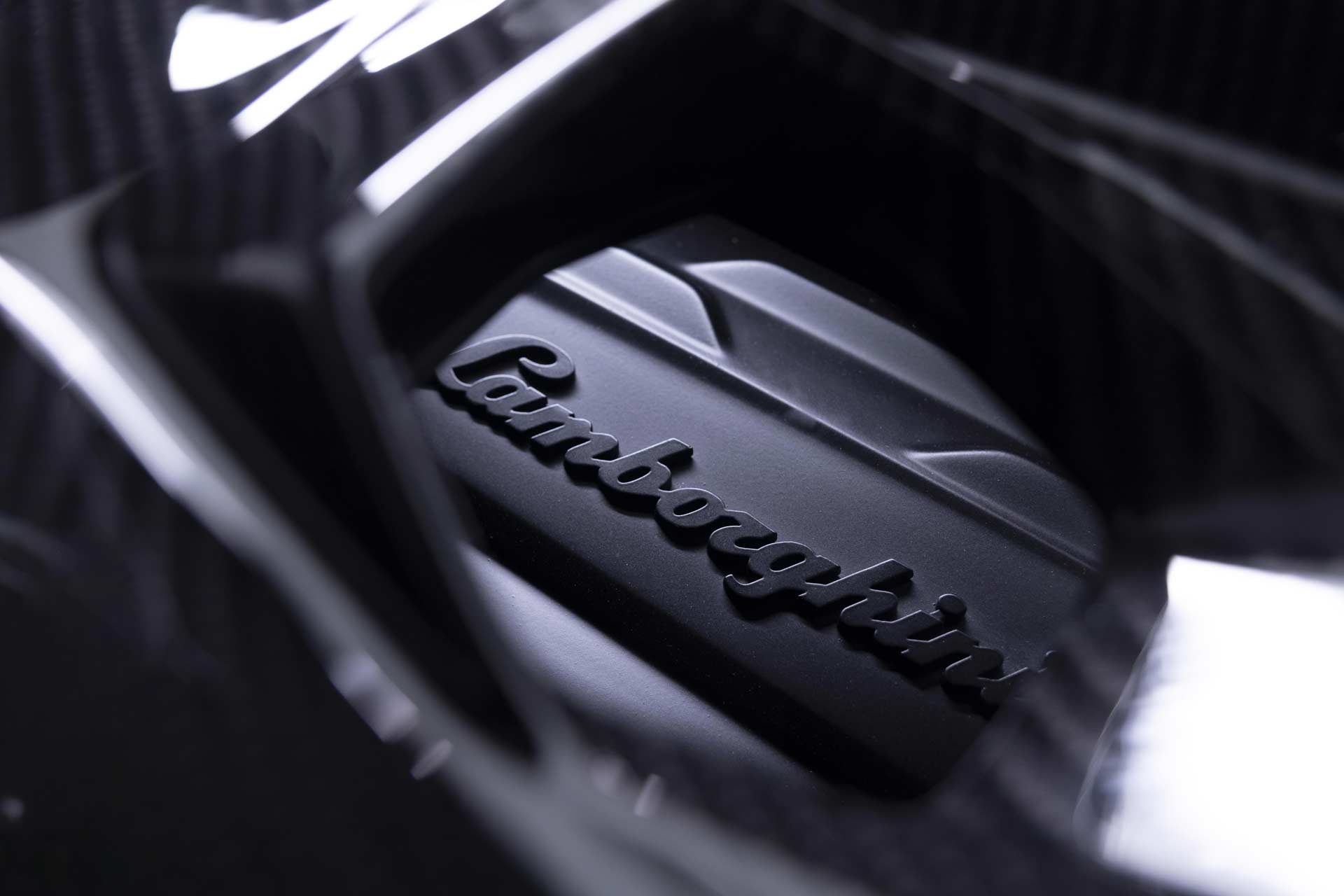
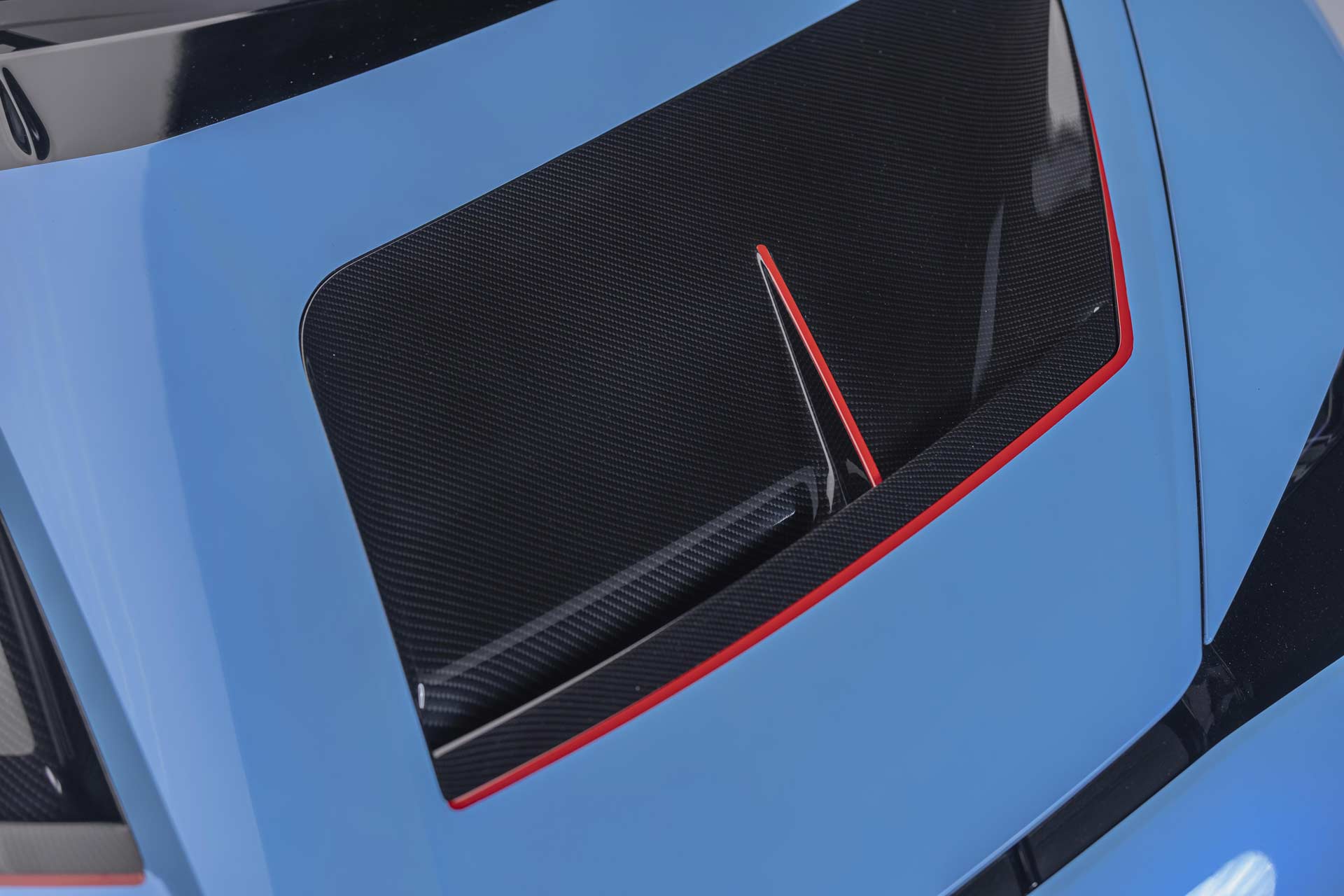
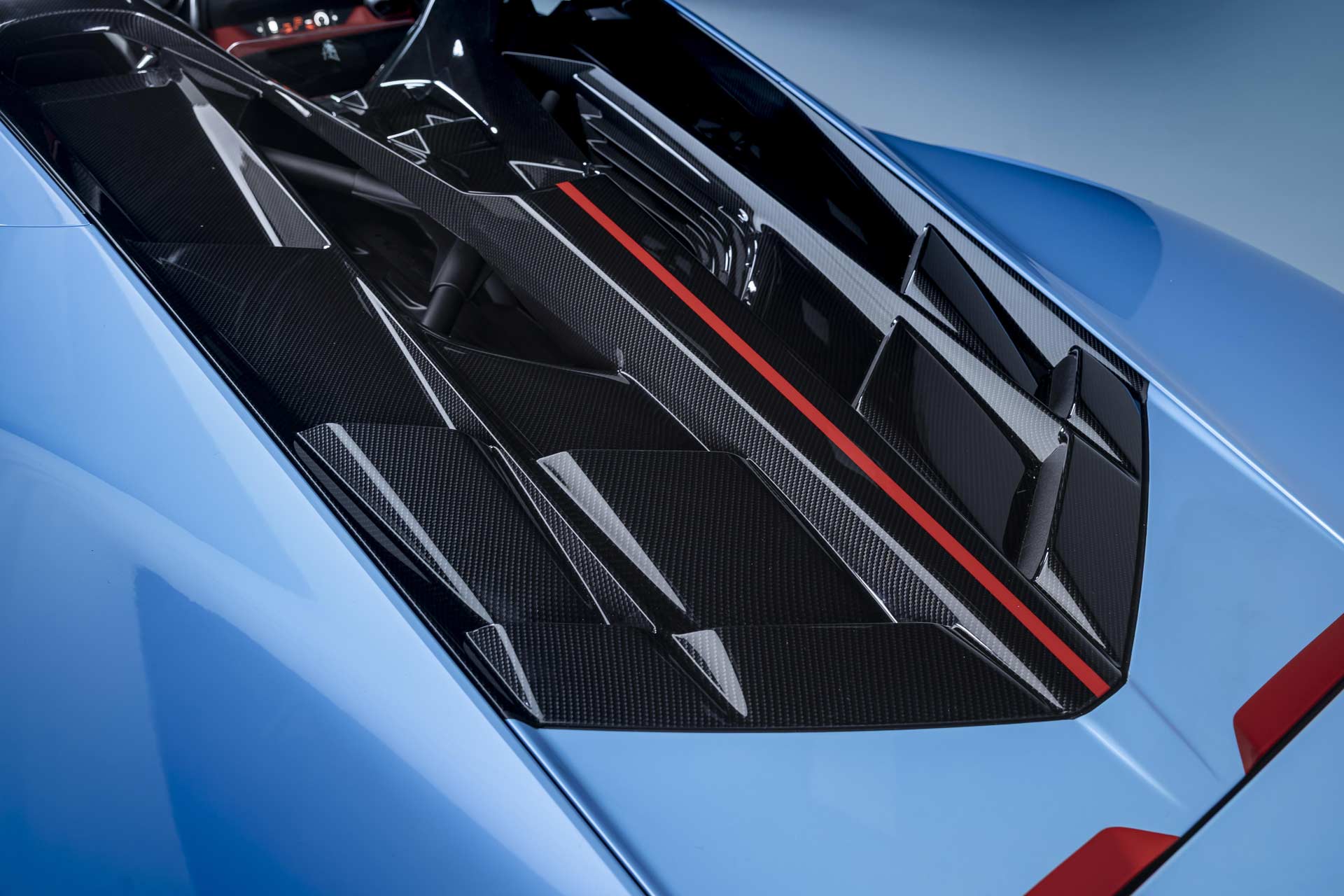
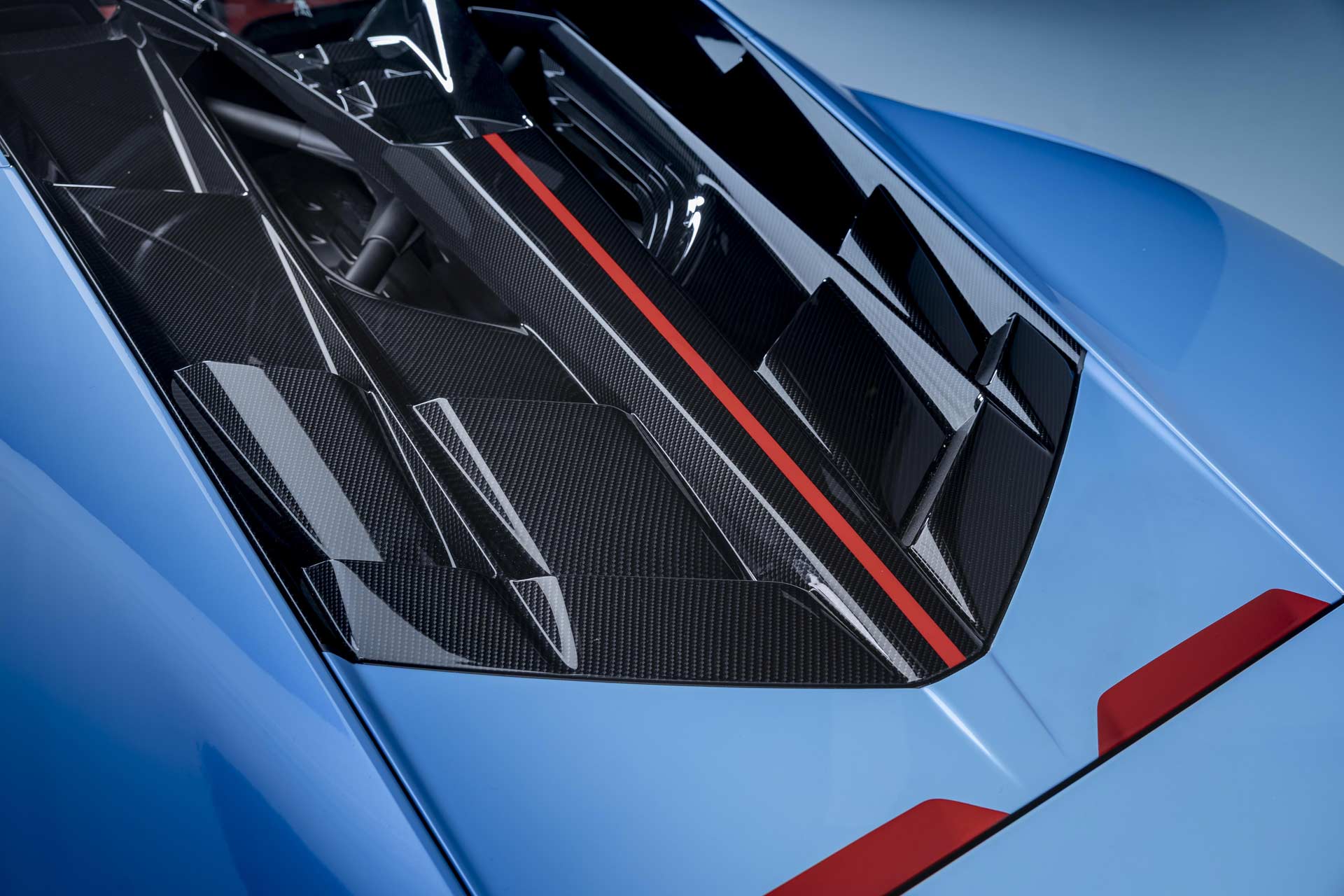
The V12 itself is a major design element. A transparent engine cover exposes the powertrain and includes hexagonal intakes that follow Lamborghini’s Y-themed design language while feeding cooling air to the engine. The hexagon motif continues through the side skirts, wheel arches, air intakes, LED lighting elements, cabin air vents, and instrument graphics.
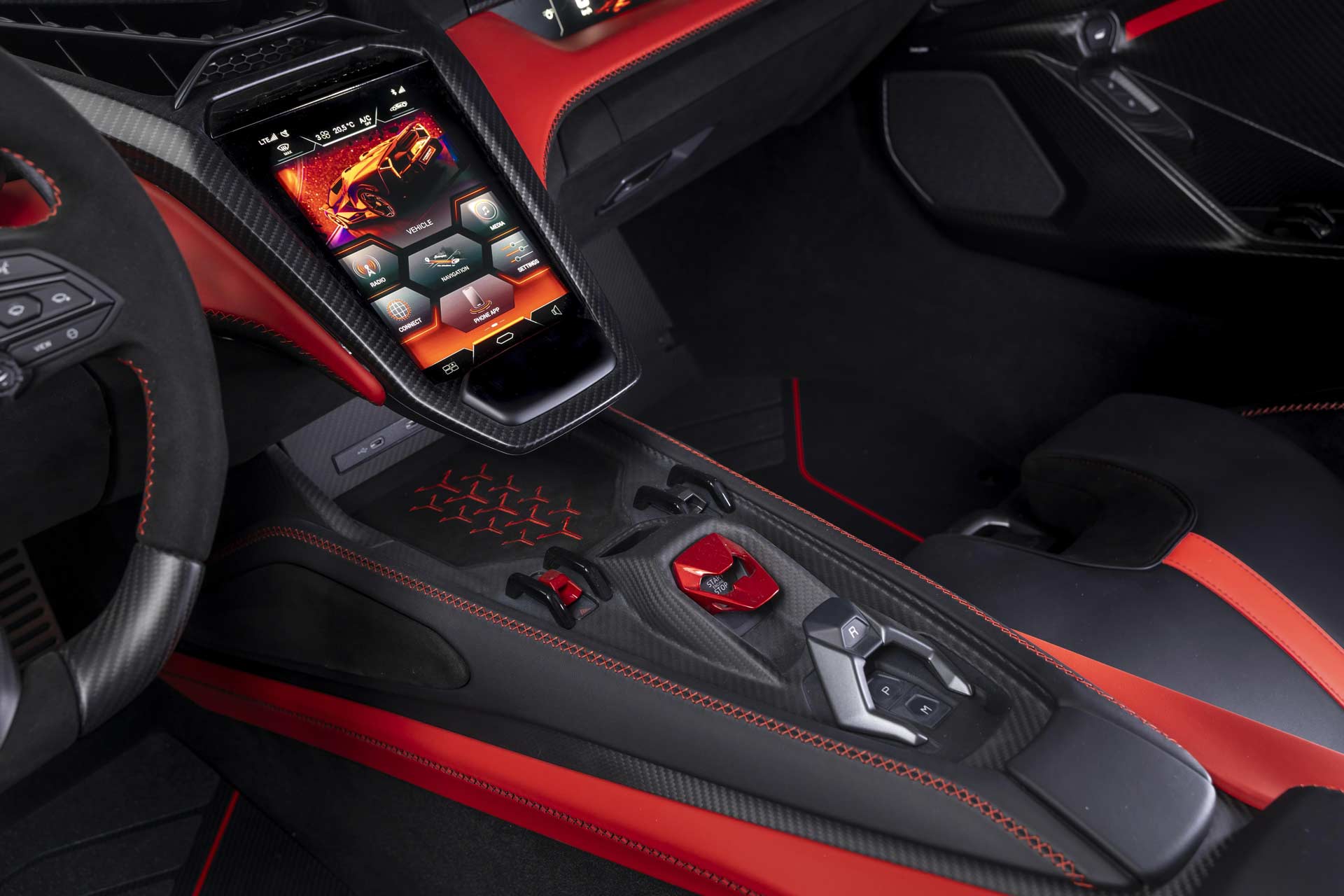
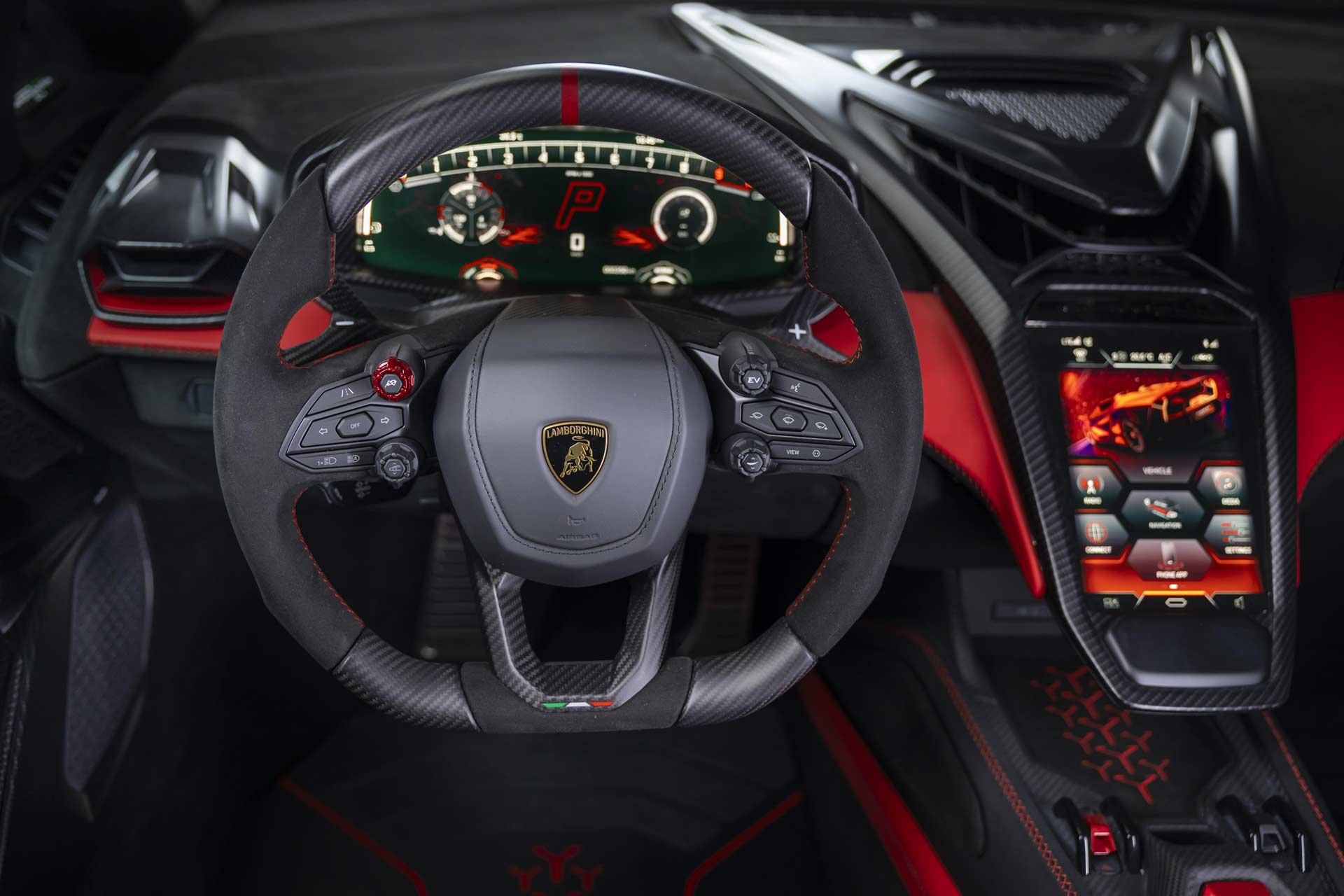
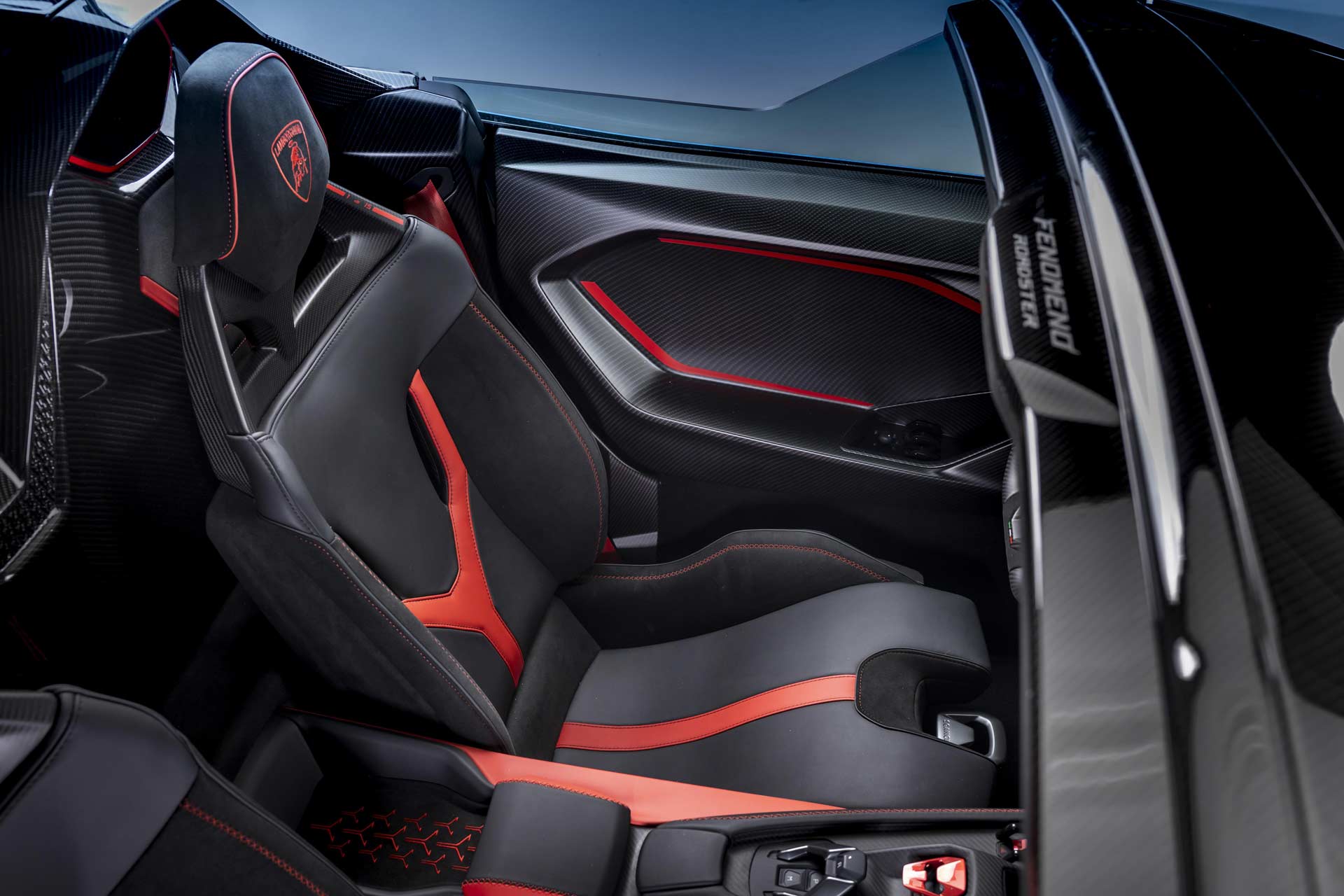
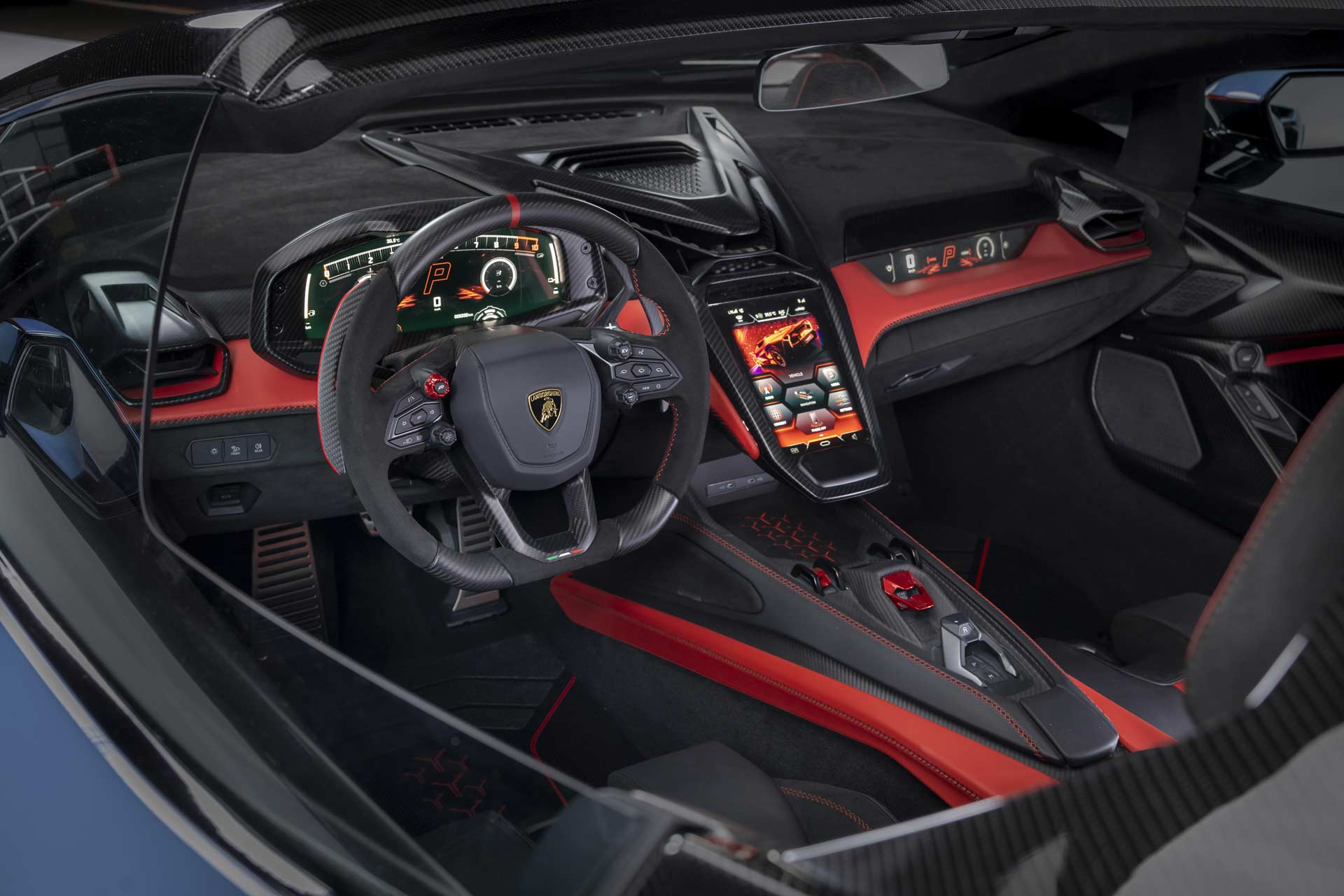
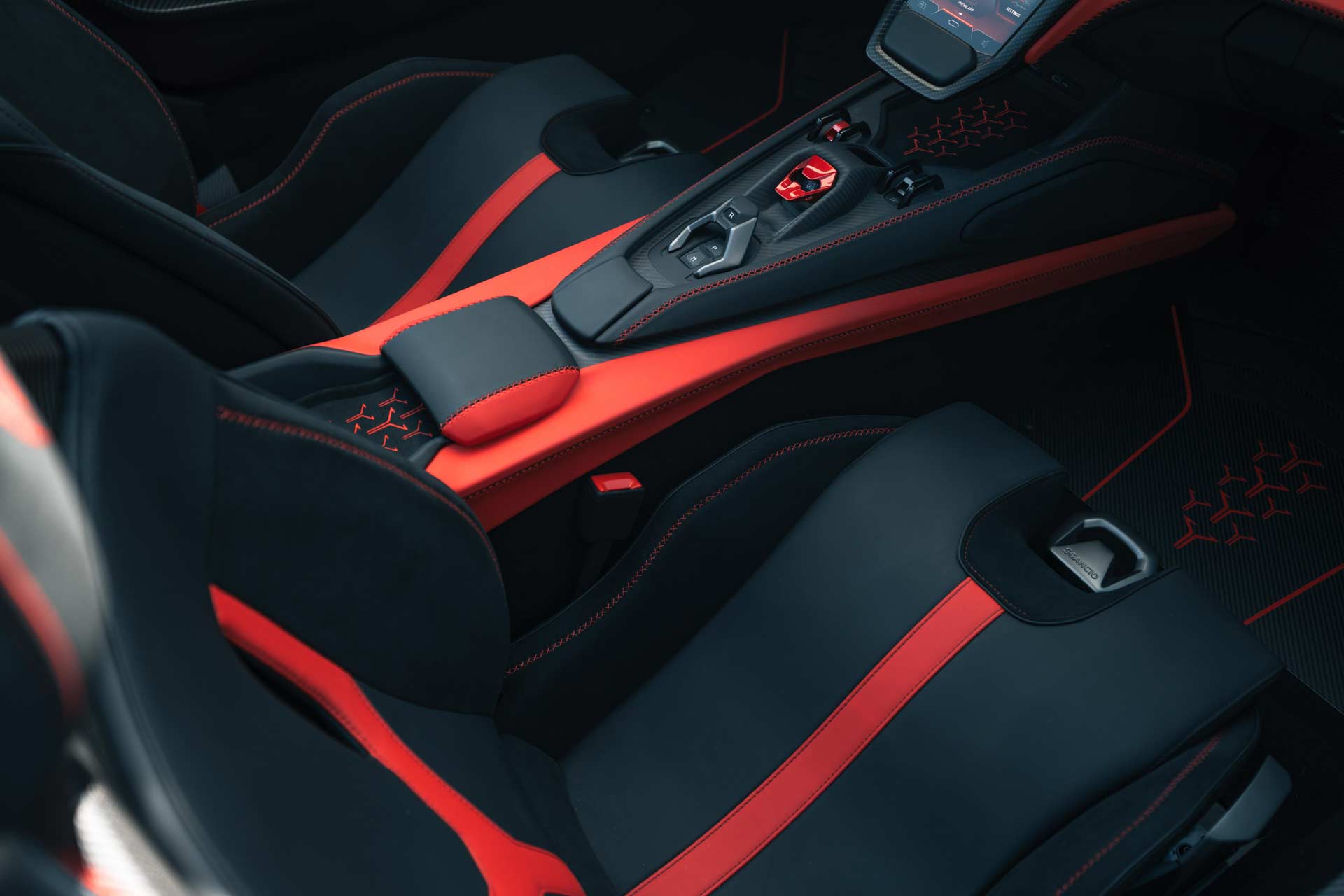
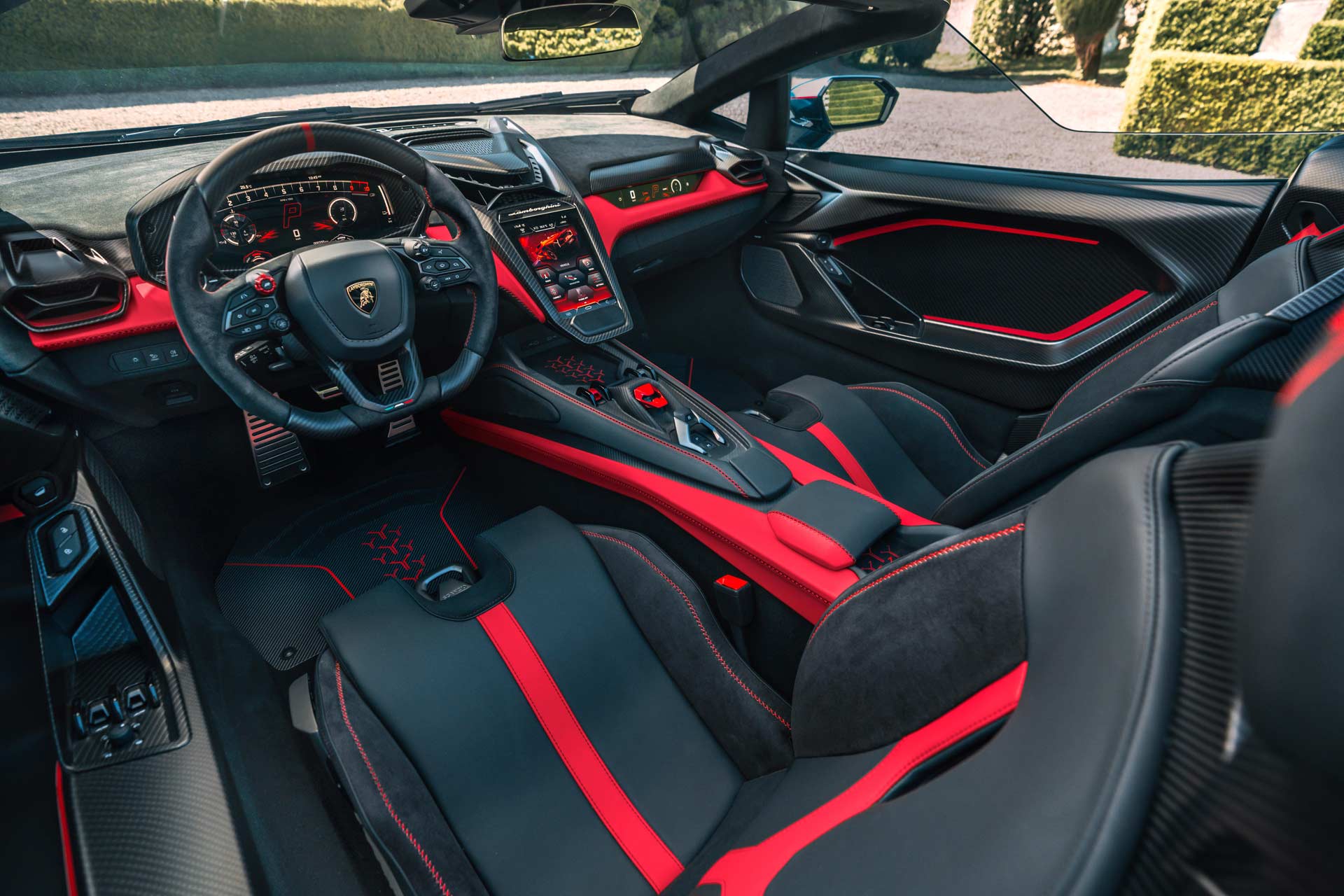
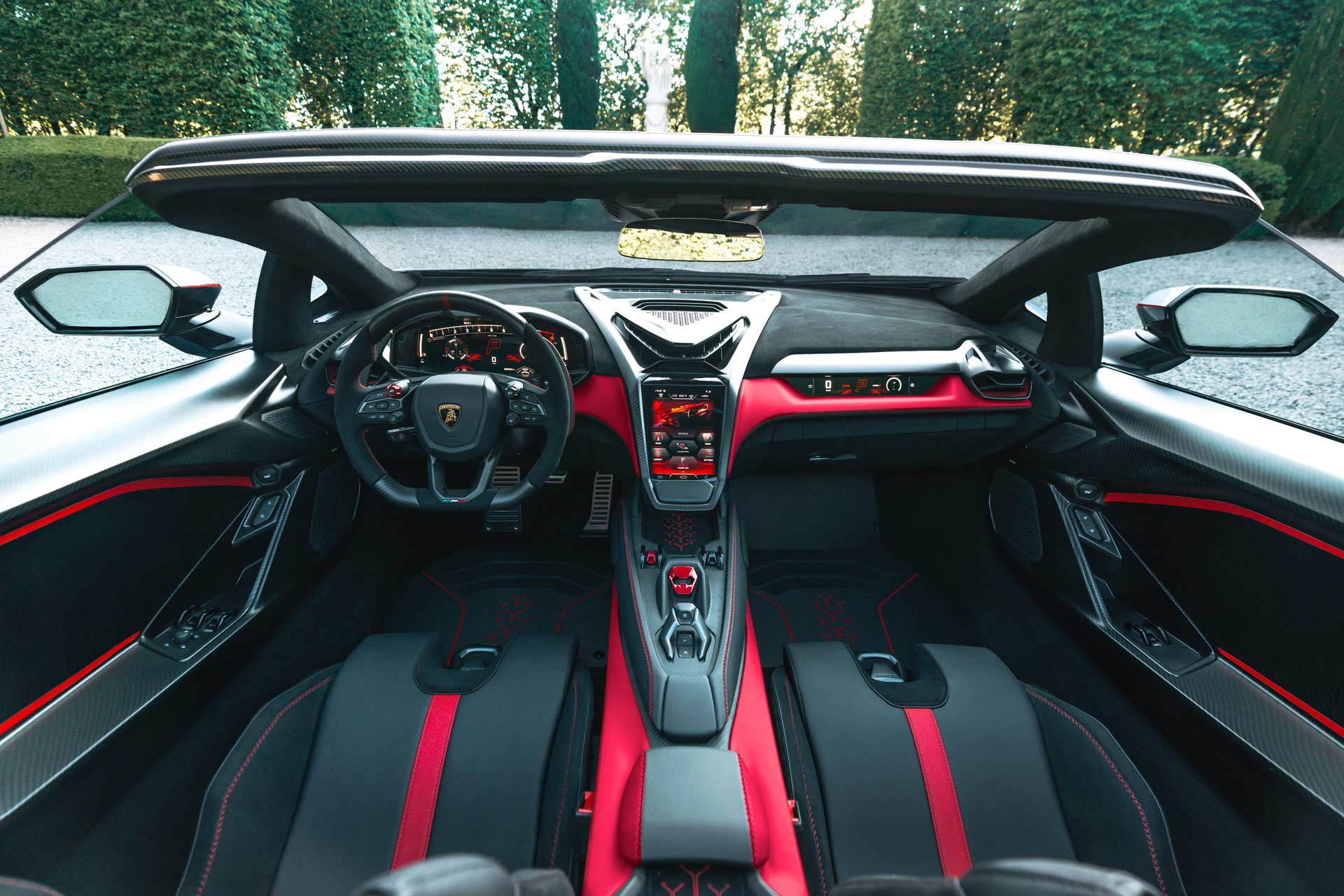
Inside, the Fenomeno Roadster follows Lamborghini’s “Feel Like a Pilot” approach. The cabin uses carbon fiber, Corsatex by Dinamica, and Lamborghini’s patented Carbon Skin material across the dashboard, seats, and cockpit surfaces. The seats are shaped to support the body under high lateral loads, while three digital displays, haptic controls, hexagonal graphics, and aviation-style switches form the “Pilot Interaction” interface.
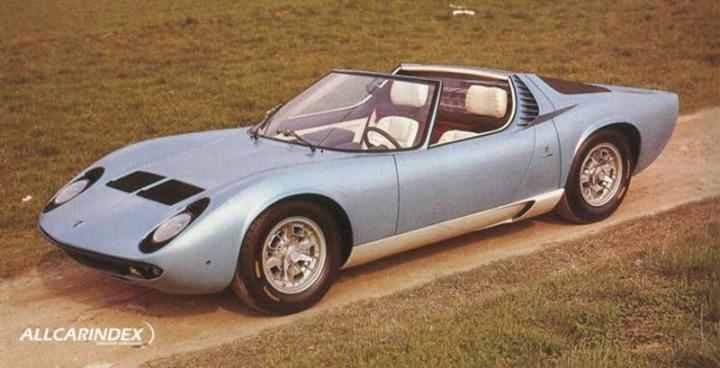
The launch specification uses Blu Cepheus paint with Rosso Mars accents. Lamborghini connects the main body color with the 1968 Miura Roadster, while the red and blue pairing is described as a tribute to Bologna. For a limited-production roadster, the color scheme gives the car a direct link to both brand history and regional identity.
The chassis and suspension package are built around serious dynamic use. The Fenomeno Roadster has manually adjustable racing shock absorbers, allowing ride height and setup to be adapted for road or track conditions. Lamborghini states that the suspension geometry lets the shocks work with an improved relationship between wheel movement and damper movement, supporting body control and track-focused behavior.
Braking is handled by the CCM-R Plus carbon-ceramic system. The discs use a three-dimensional structure of long carbon fibers in a carbon matrix, with a special coating intended to improve the durability of the discs and pads. The system is designed to work with organic racing brake pads and includes ventilation to manage disc and pad temperatures during demanding driving.
Vehicle dynamics are managed through an integrated control system using a 6D sensor positioned near the car’s center of gravity. The sensor measures acceleration and angular velocity across three axes, giving the system data on lateral, longitudinal, and vertical movement, as well as pitch, roll, and yaw. This information helps estimate speed, side-slip angle, and the friction level between tires and road surface.
Bridgestone developed dedicated Potenza tires for the Fenomeno Roadster. The road tire package uses Potenza Sport fitments measuring 265/30 ZRF21 at the front and 355/25 ZRF22 at the rear. These are also available with Run-Flat Technology. A separate semi-slick Bridgestone tire is offered for track use, in 20- and 21-inch sizes, while remaining homologated for public roads. Both tire options carry a Lamborghini-specific marking and were developed and manufactured in Italy using Bridgestone’s Virtual Tire Development process.
The Fenomeno Roadster sits within a very specific Lamborghini tradition. The company’s Few-Off line began with the Reventón in 2007, followed by the Reventón Roadster in 2009. Since then, limited V12 models such as the Veneno, Centenario, and Sián have also appeared in Roadster form. These cars have not only marked particular moments in Lamborghini history but have also introduced design and technical ideas that later influenced wider production models.
With only 15 examples planned, the Fenomeno Roadster occupies the same rare territory as those earlier Few-Off cars. It brings together Lamborghini’s current V12 hybrid technology, an open-top body, a dedicated aerodynamic package, carbon-intensive chassis construction, and a design developed by Centro Stile around the powertrain as the central visual element.