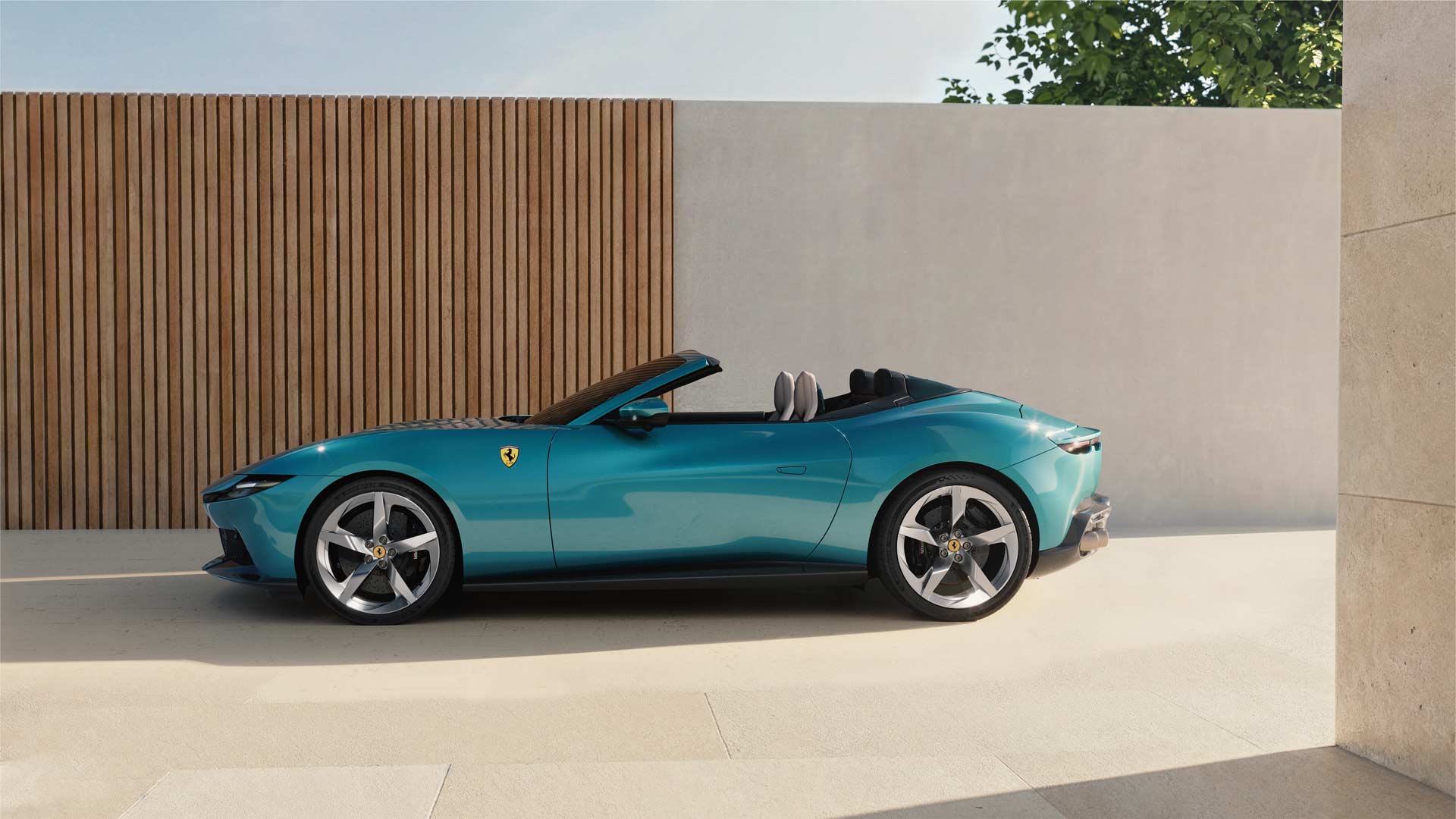
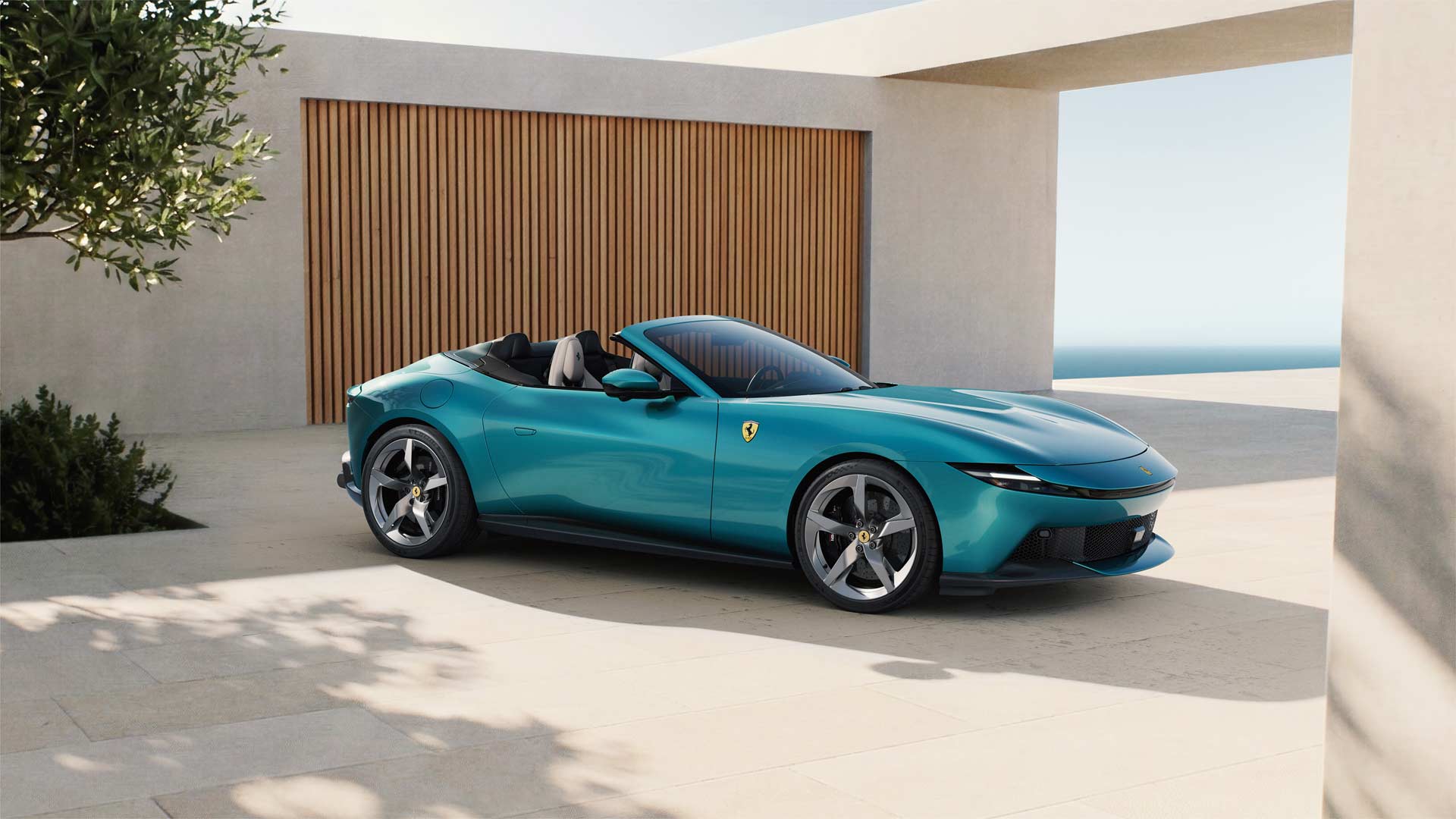
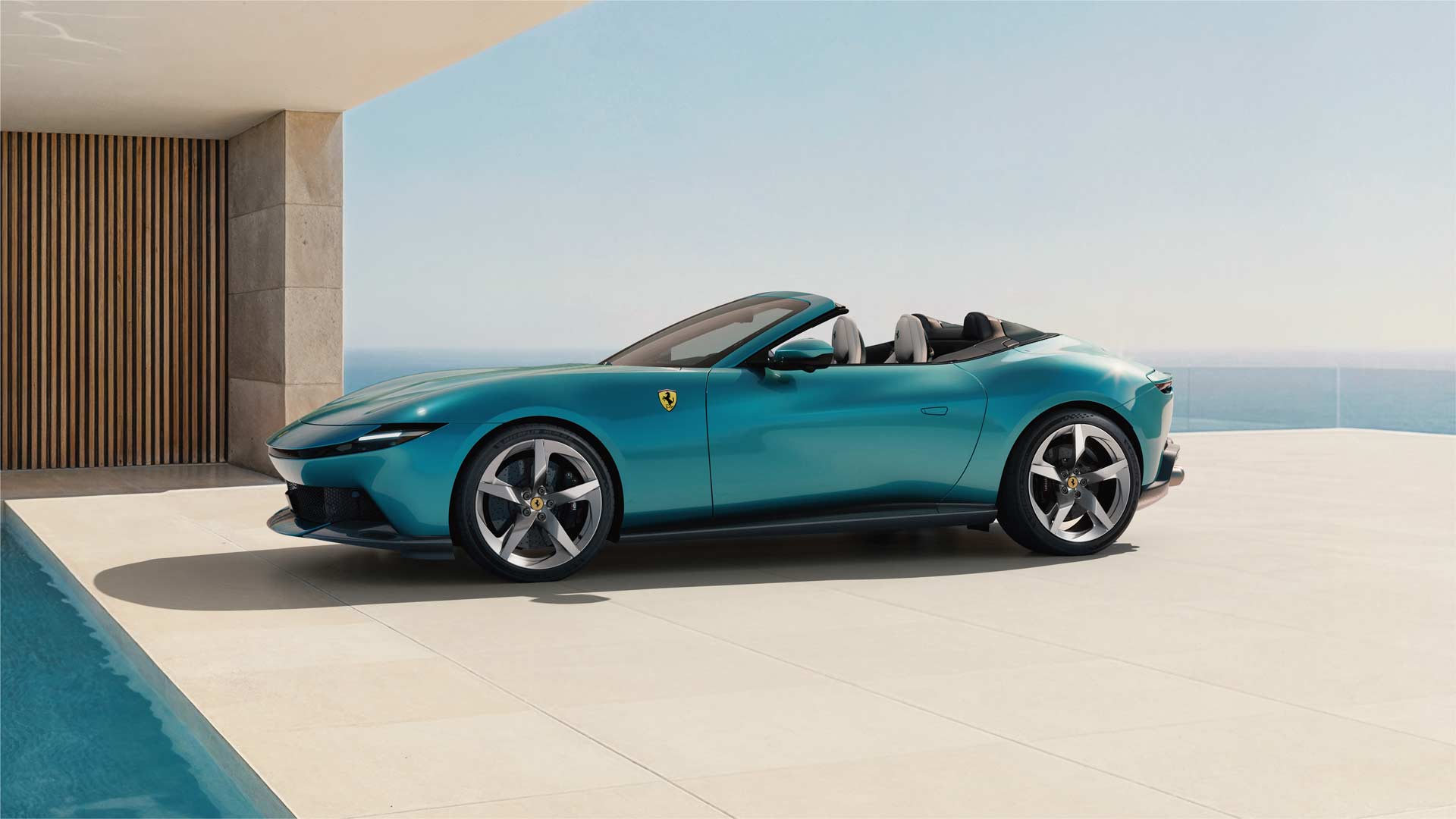
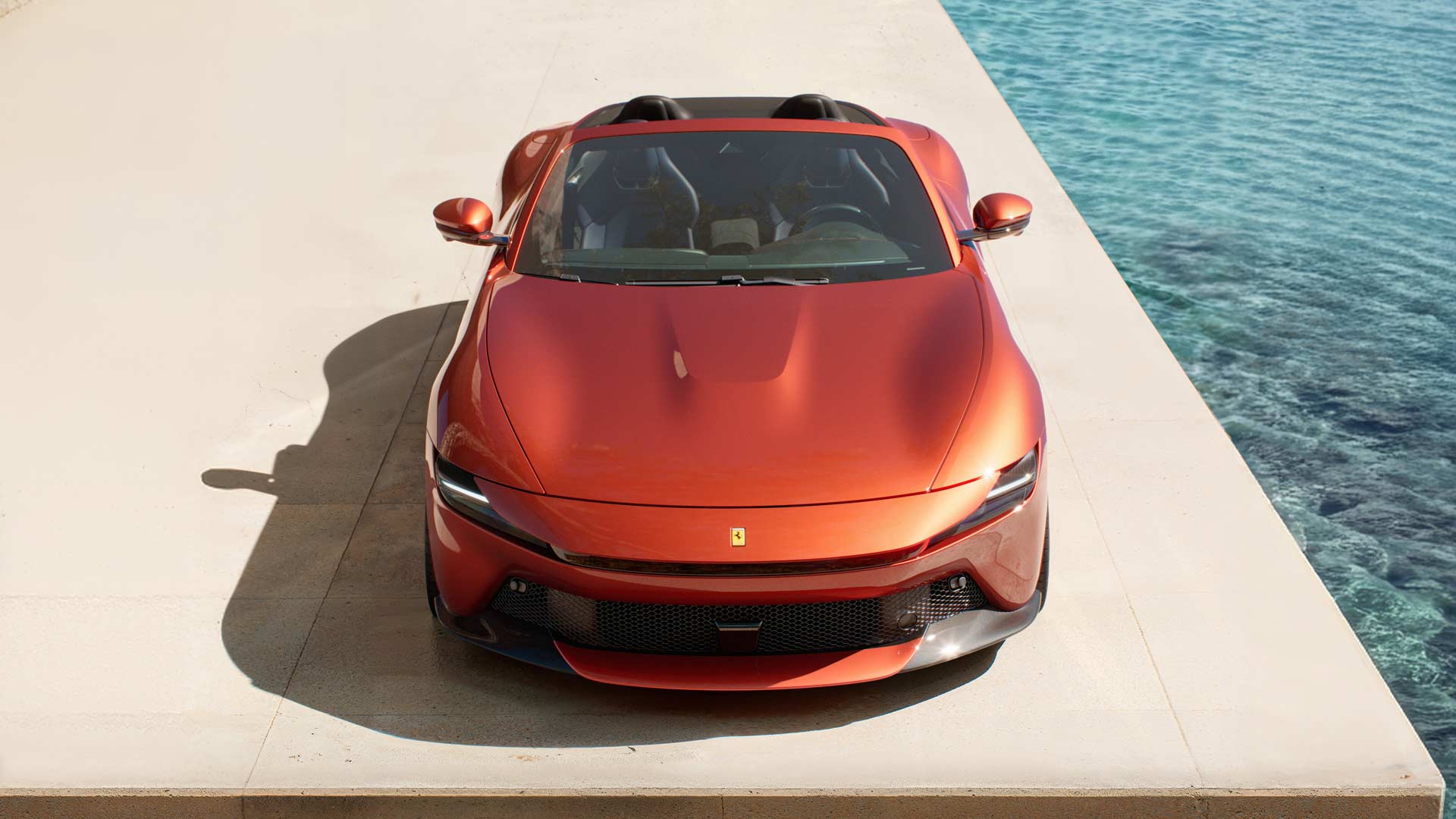
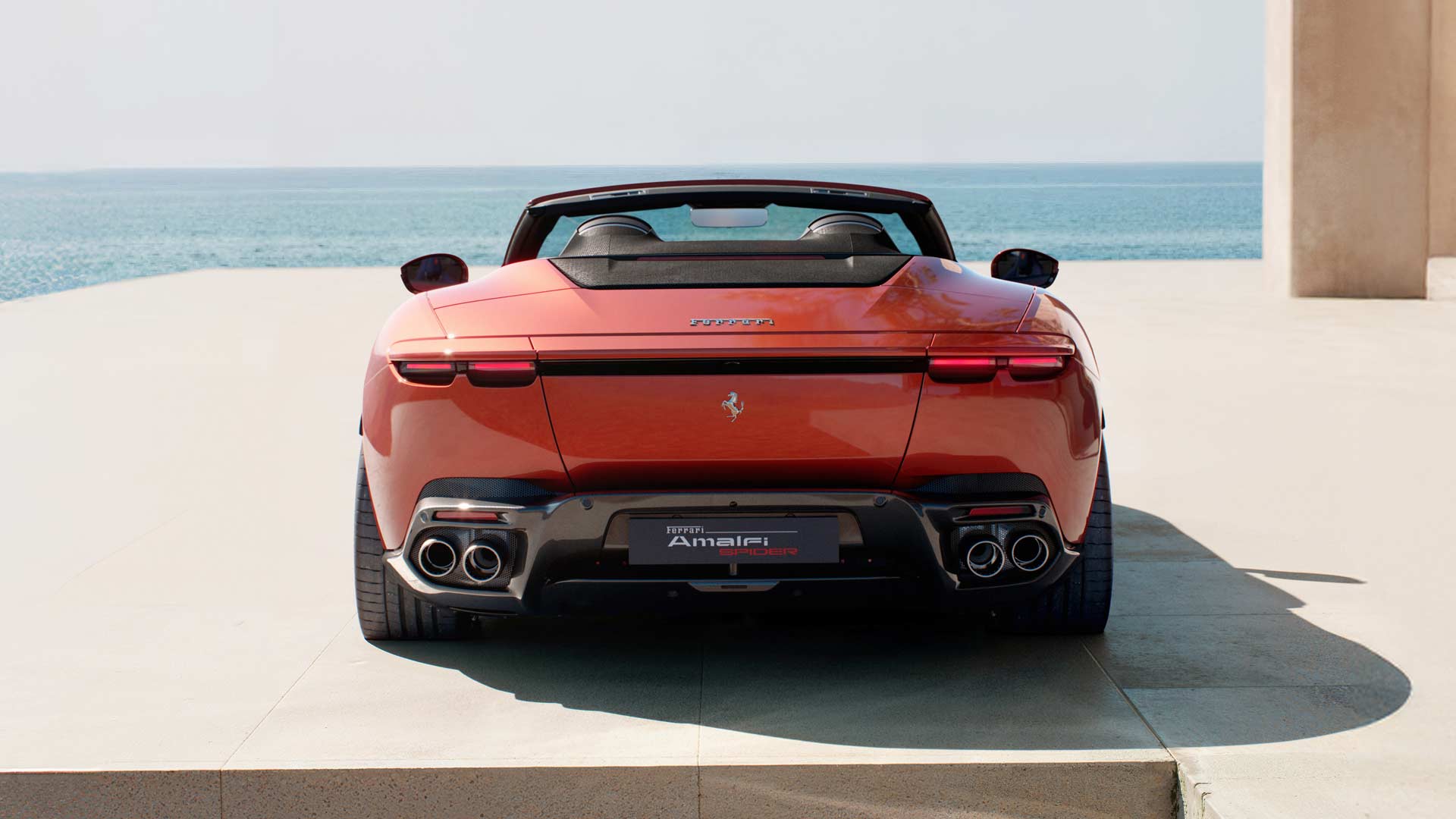
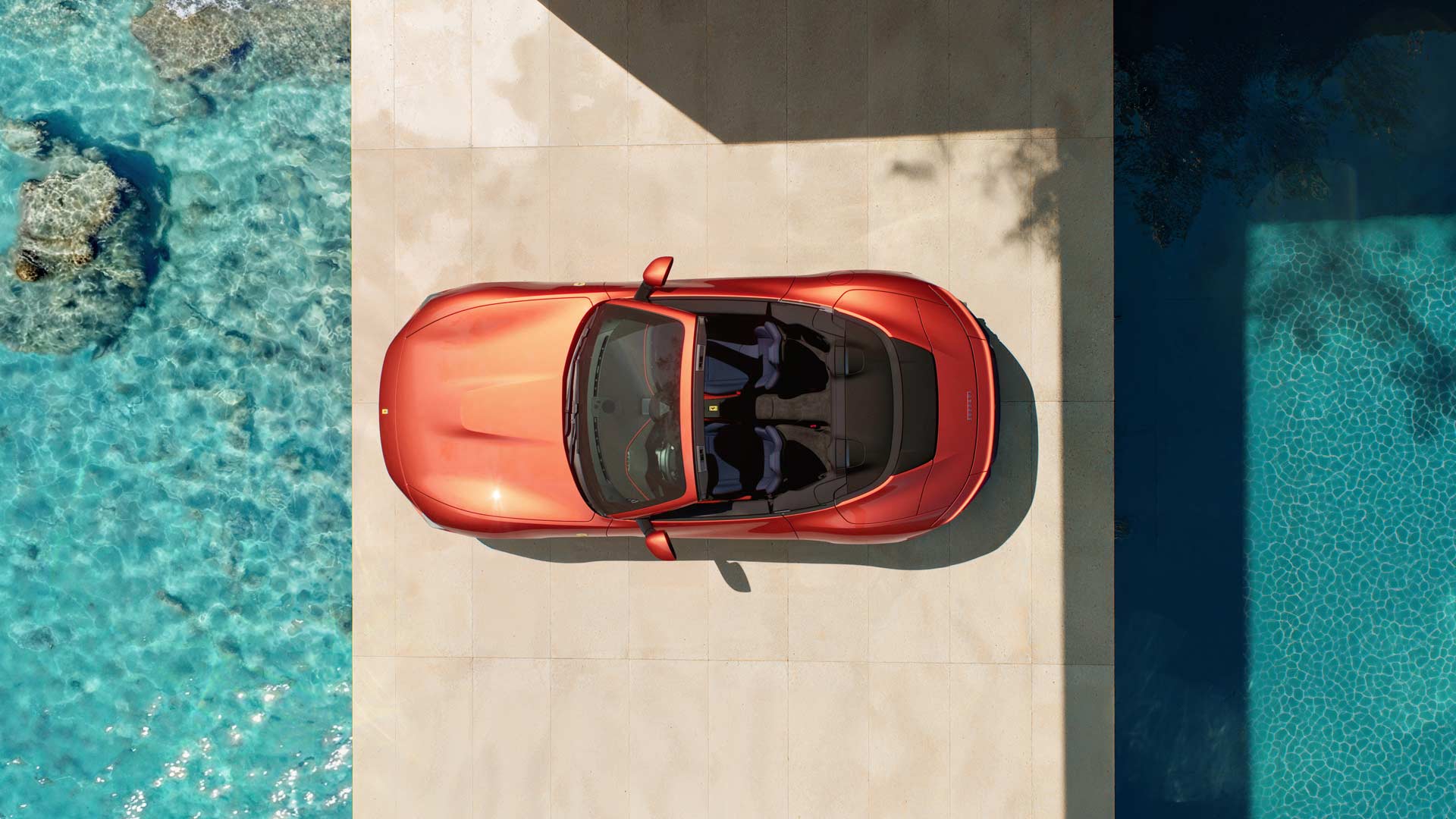
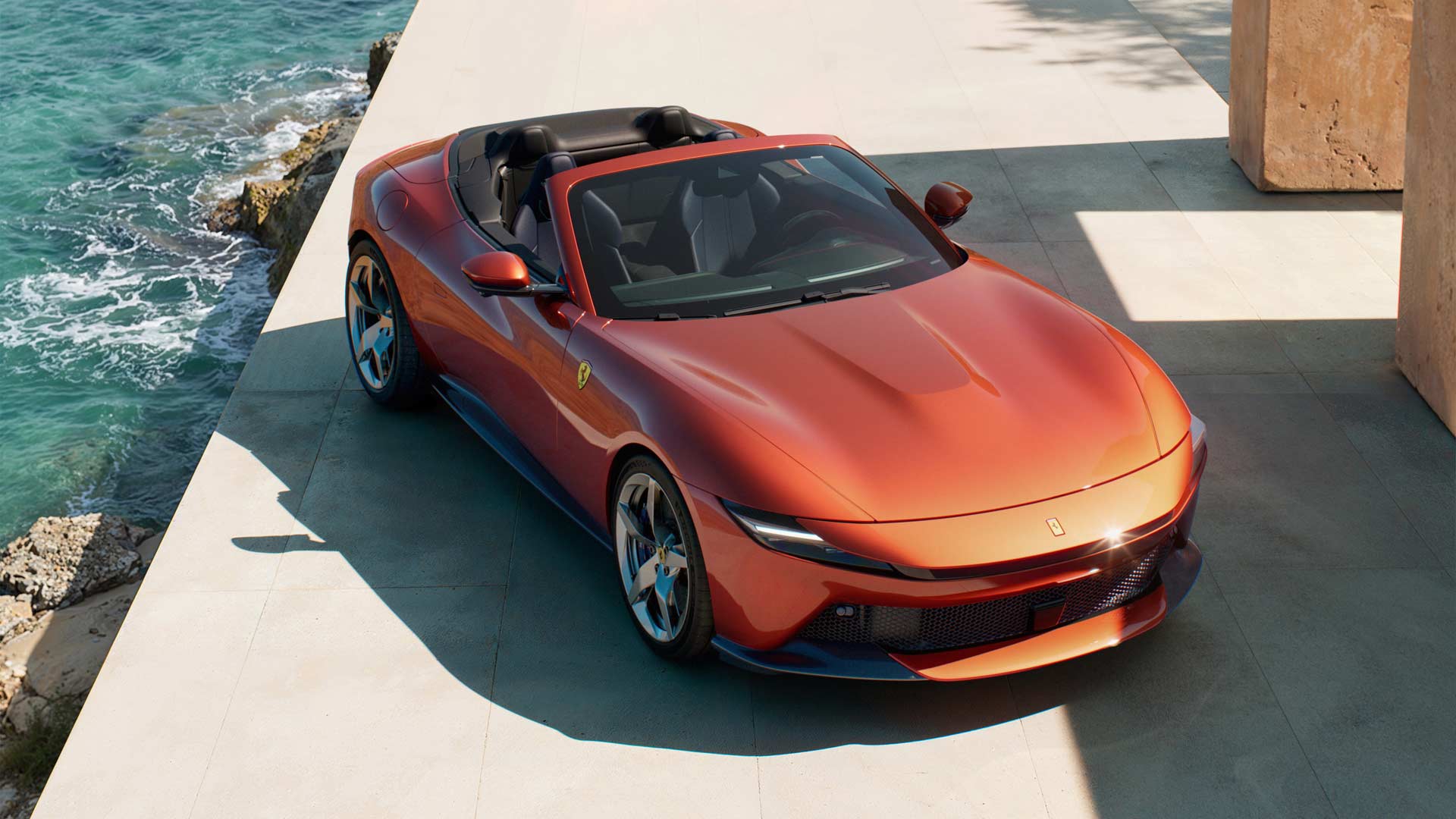
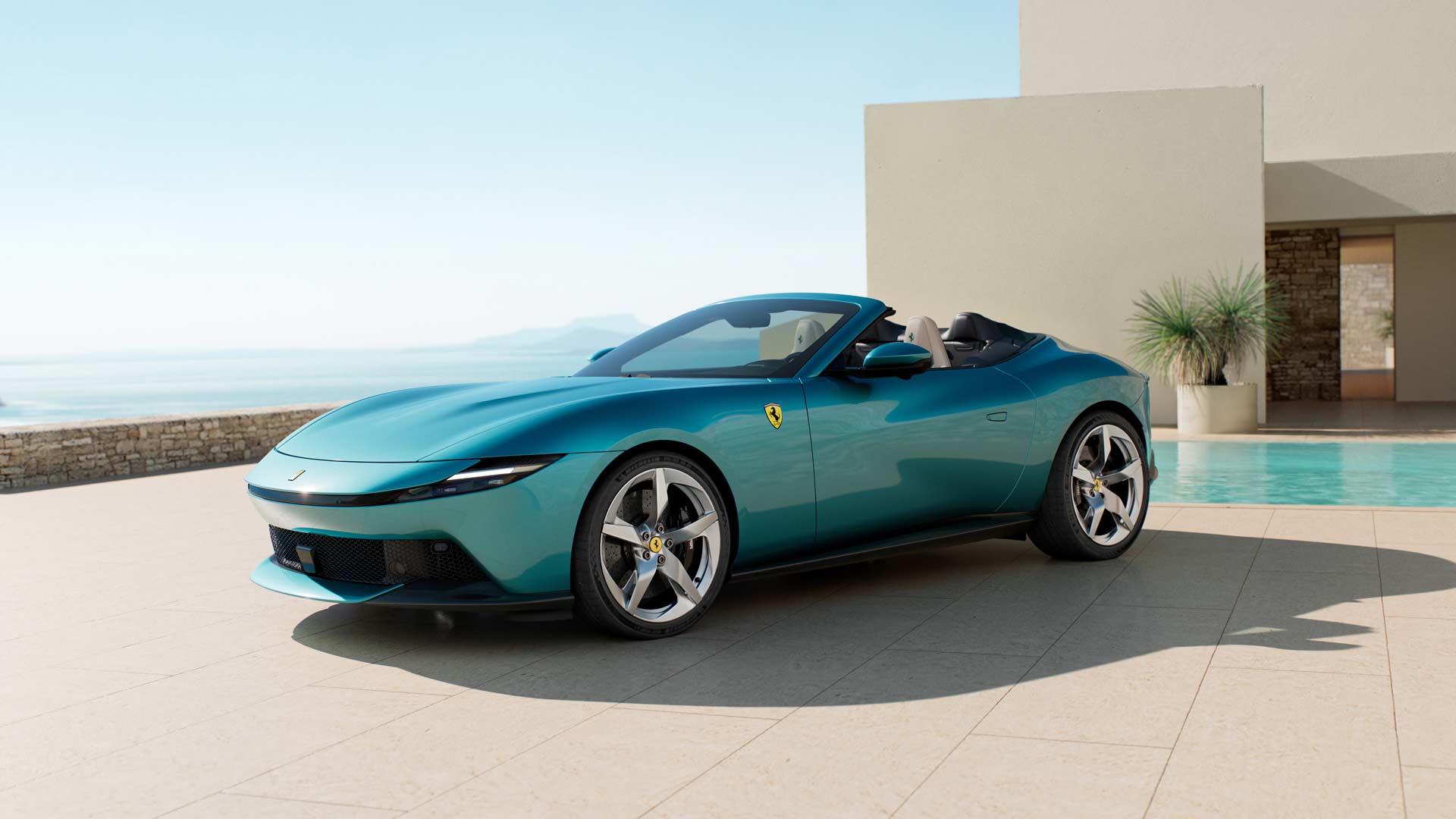
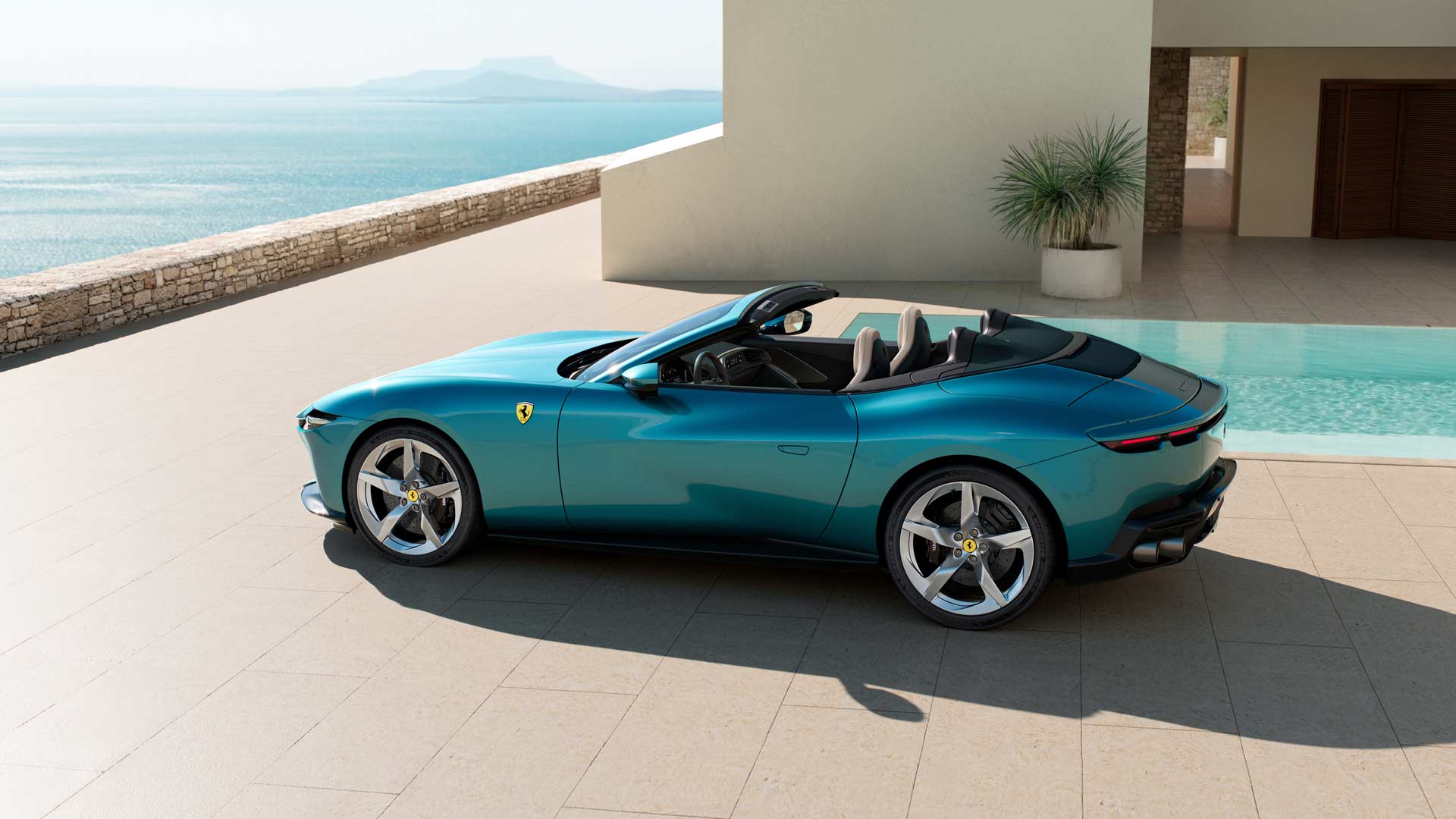

Ferrari unveils the Amalfi Spider as a front-mid-engined V8 2+ convertible that sits right at the intersection of speed, style and usability. This is not a stripped-out weekend toy pretending luggage does not exist, nor is it a soft grand tourer that happens to wear a prancing horse. Ferrari positions it as a performance-driven lifestyle car, and on paper at least, the Amalfi Spider makes a strong case for itself by blending open-air drama with the kind of versatility owners can actually use.
At the centre of it all sits Ferrari’s latest evolution of the 3,855cc twin-turbo V8 from the F154 family. Here it produces 640hp at 7,500rpm and 760Nm from 3,000 to 5,750rpm, revs to 7,600rpm, and sends its power through an eight-speed dual-clutch transmission. Performance is exactly where a modern Ferrari spider needs to be: 0-100km/h takes 3.3 seconds, 0-200km/h takes 9.4 seconds, and top speed stands at 320km/h. Those are serious numbers, but Ferrari’s emphasis is not just on output. The company says turbo management is more advanced, throttle response is sharper, and the entire powertrain is tuned to deliver a more immediate, progressive feel across a wide range of driving conditions.
Ferrari also works hard to keep the engine character intact while meeting tougher modern requirements. The Amalfi Spider gets a revised silencer layout, a new bypass valve strategy and a catalytic system designed to reduce activation times, all while preserving the marque’s signature V8 tone. That matters, because a spider lives or dies by the quality of the experience with the roof down, and Ferrari clearly knows that open-top theatre needs more than just stopwatch performance.
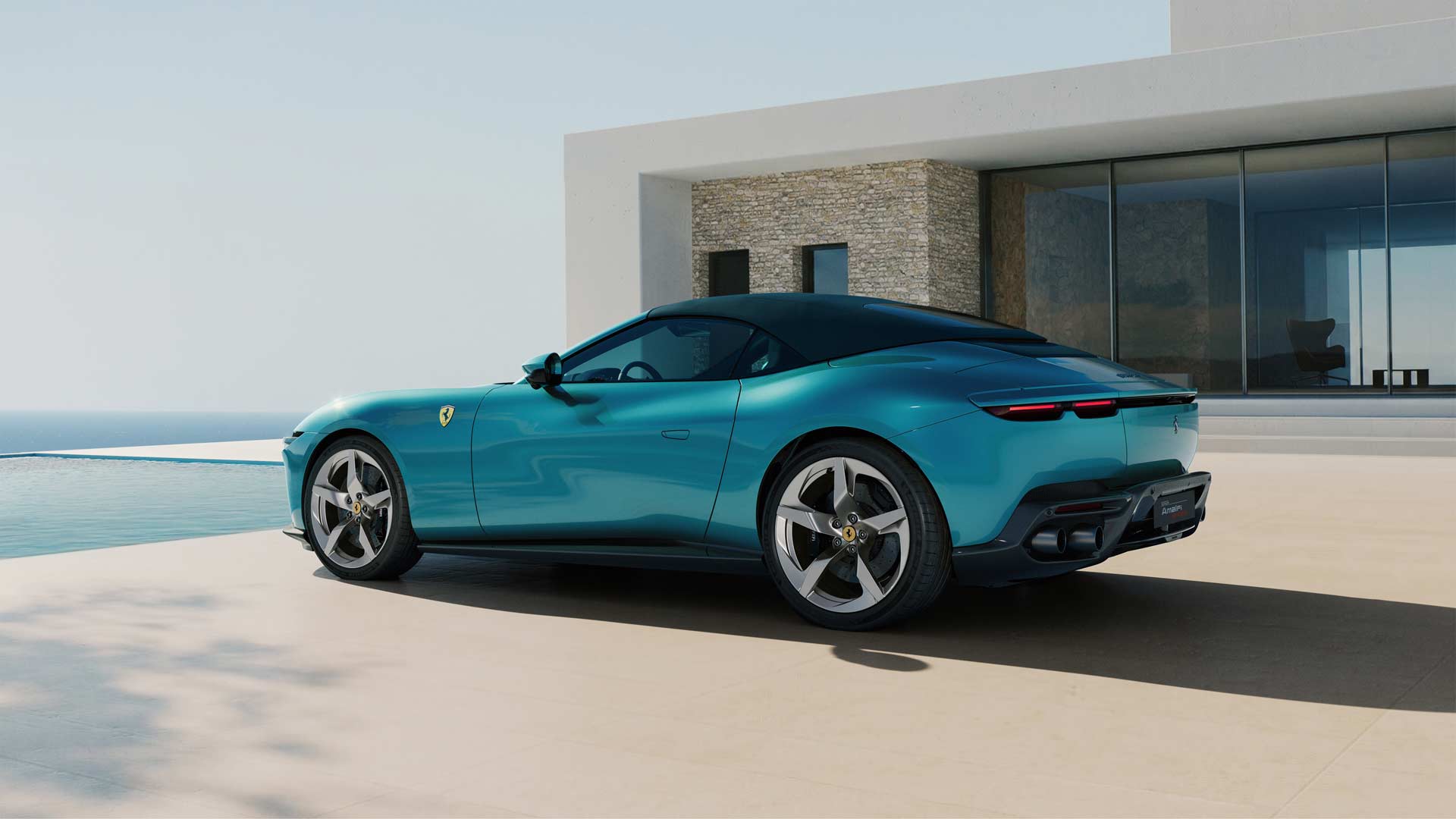
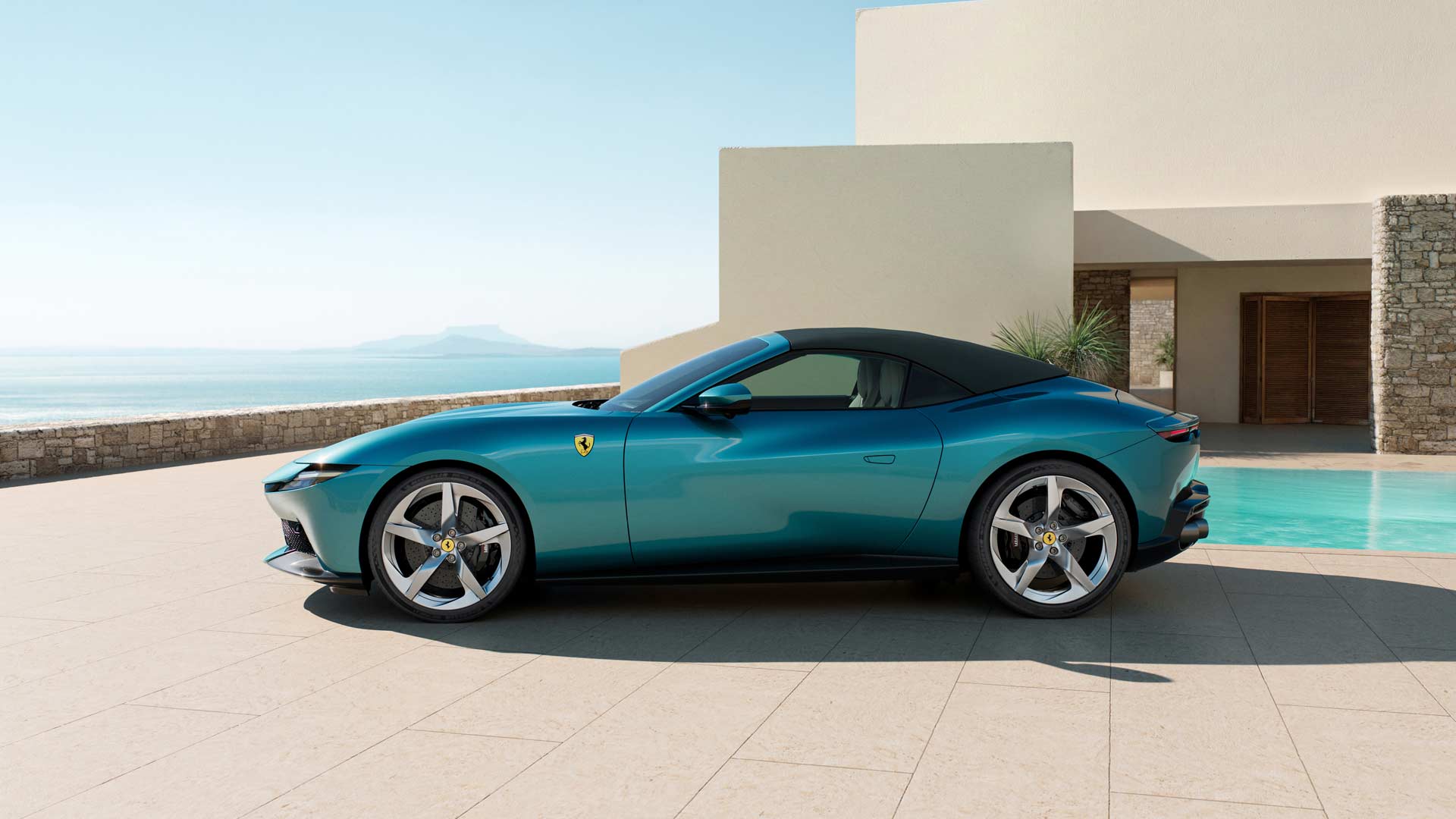
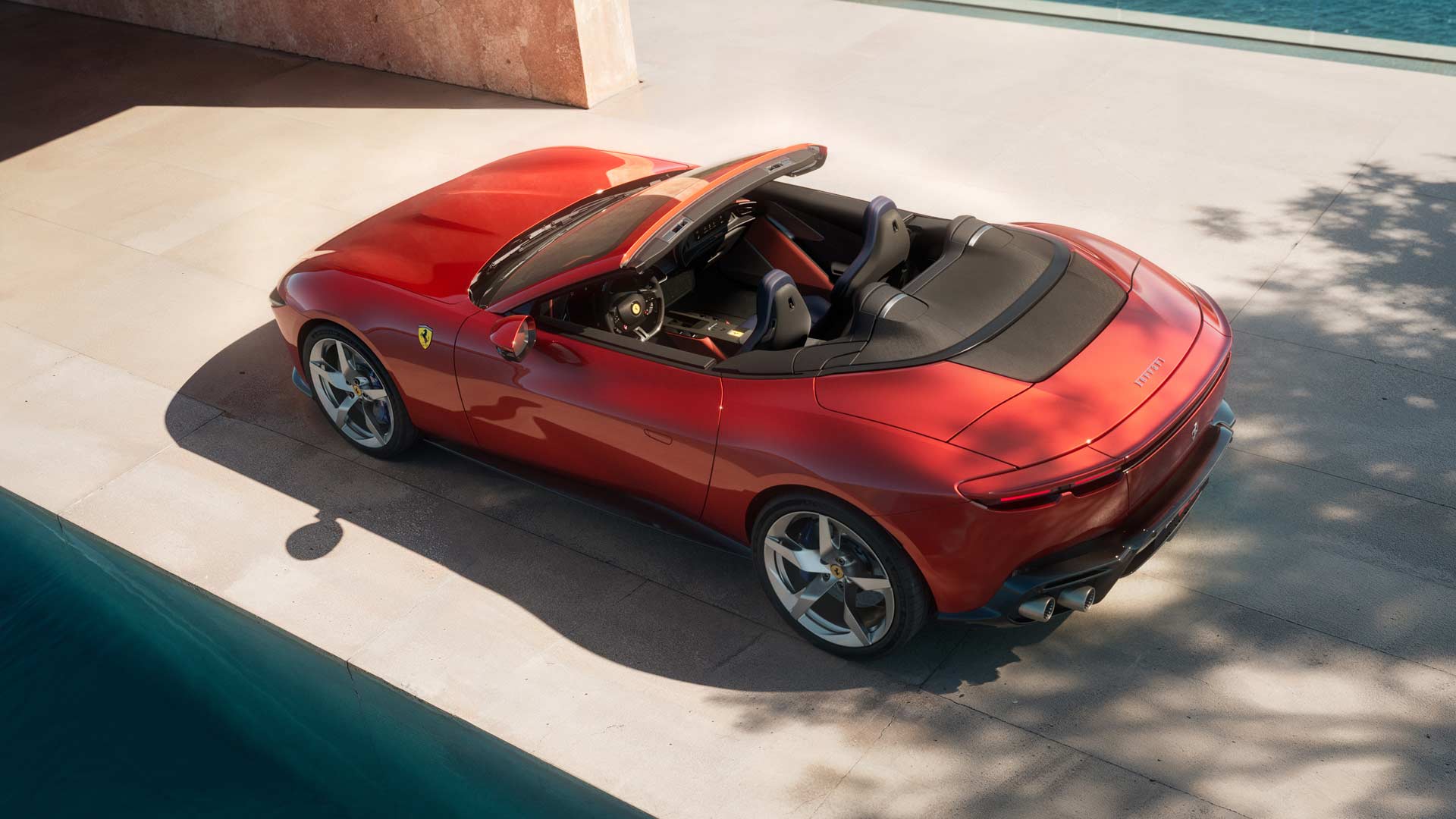
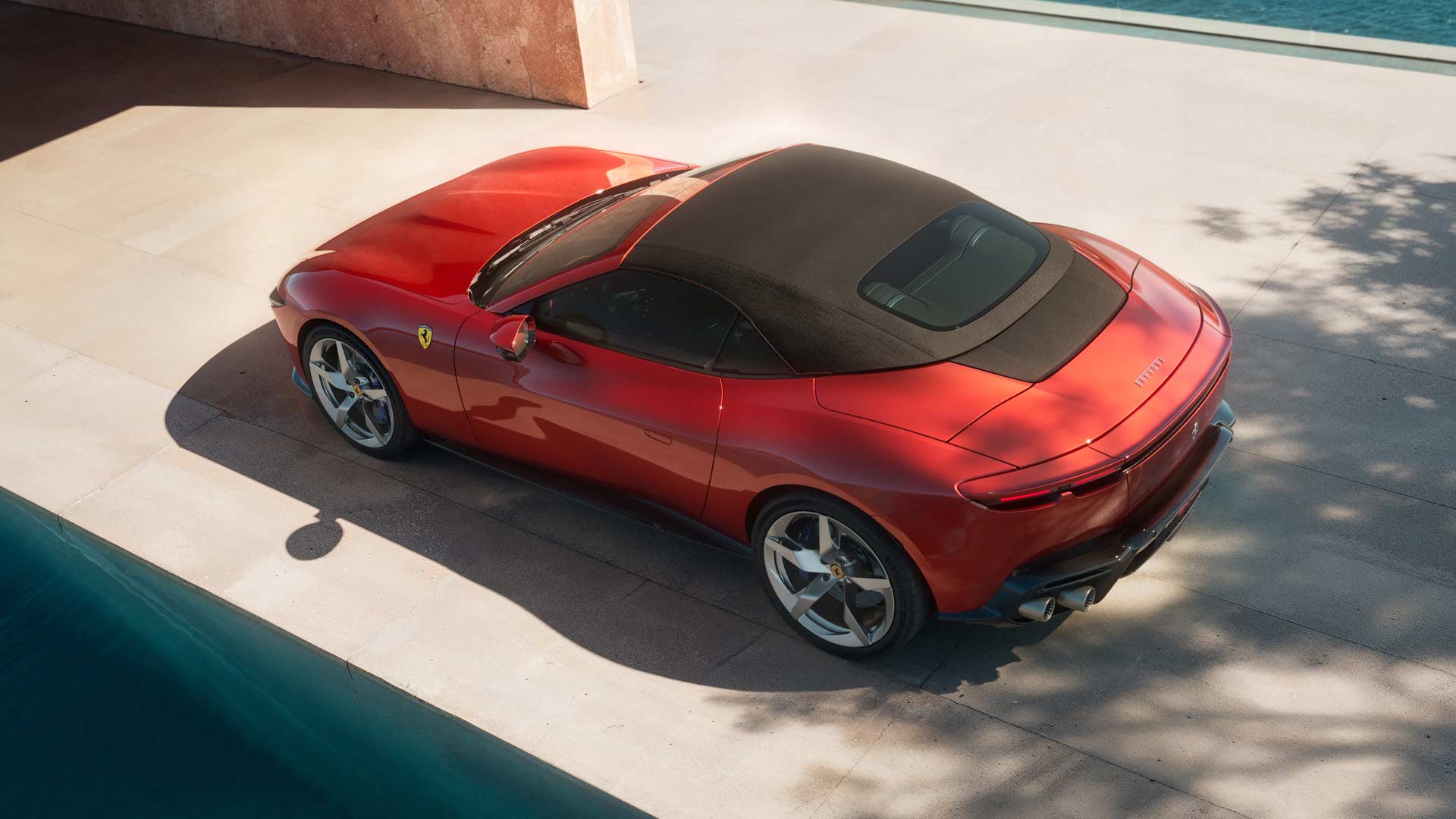
The roof itself is central to the Amalfi Spider’s identity. Ferrari chooses a fabric soft top rather than a folding hard top, and it opens in 13.5 seconds at speeds of up to 60km/h. That alone is useful. More impressive is the packaging: when folded, the mechanism is just 220mm thick, which helps preserve both the car’s proportions and its practicality. Boot space reaches 255 litres with the roof closed and 172 litres with it open, putting the Amalfi Spider among the leaders in its class. That is enough to make the car feel like a genuine long-weekend machine rather than a compromise wrapped in expensive bodywork.
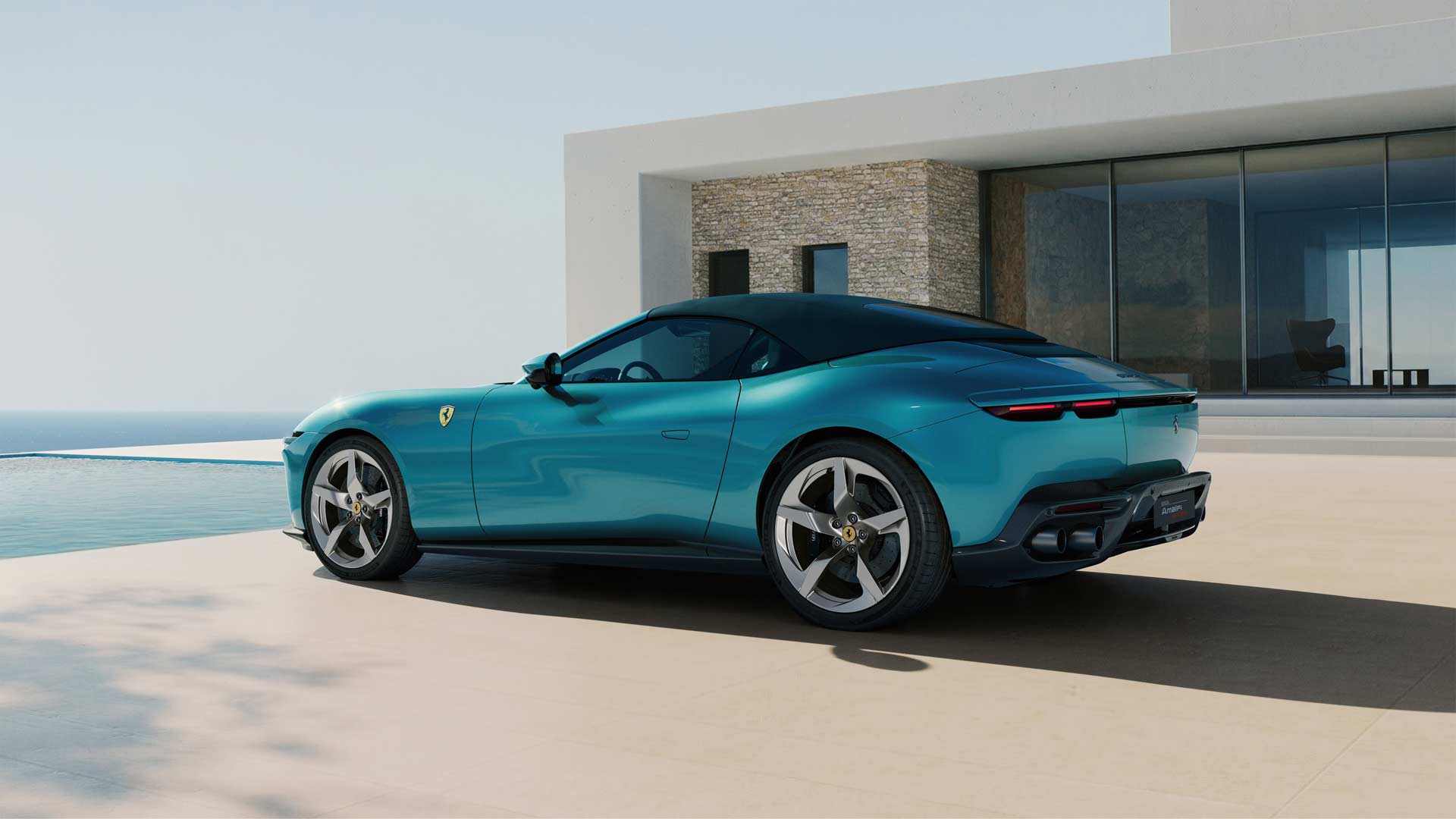
Ferrari says the soft top is available in four tailor-made fabric colours and two technical-fabric finishes, including the new Tecnico Ottanio. The technical fabric brings a distinct weave and a shimmering, three-dimensional effect, while optional contrast stitching further sharpens the balance between sportiness and elegance. In other words, Ferrari does not treat the roof as an afterthought. It treats it as part of the design language.
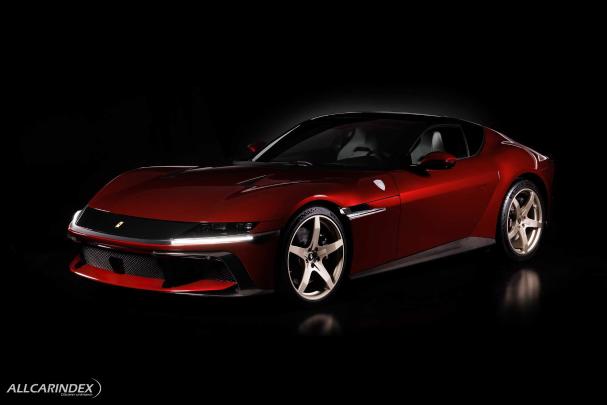
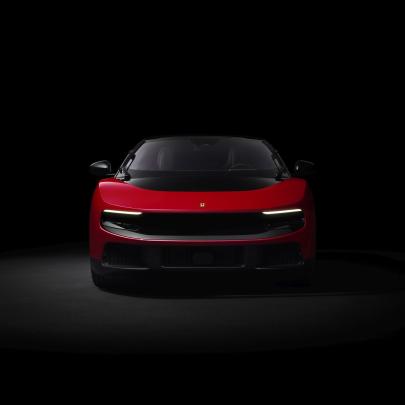
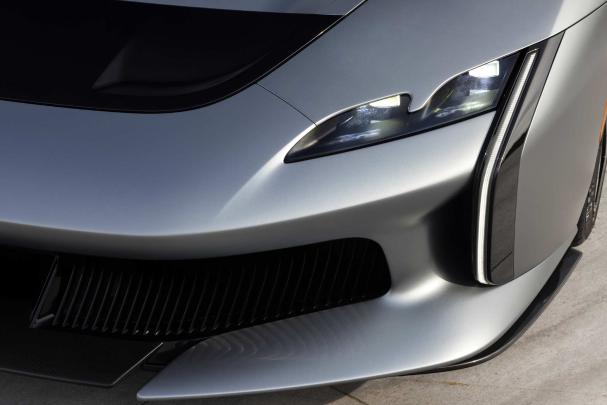
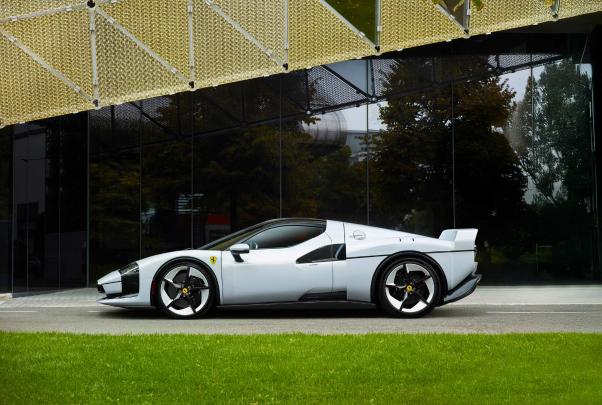
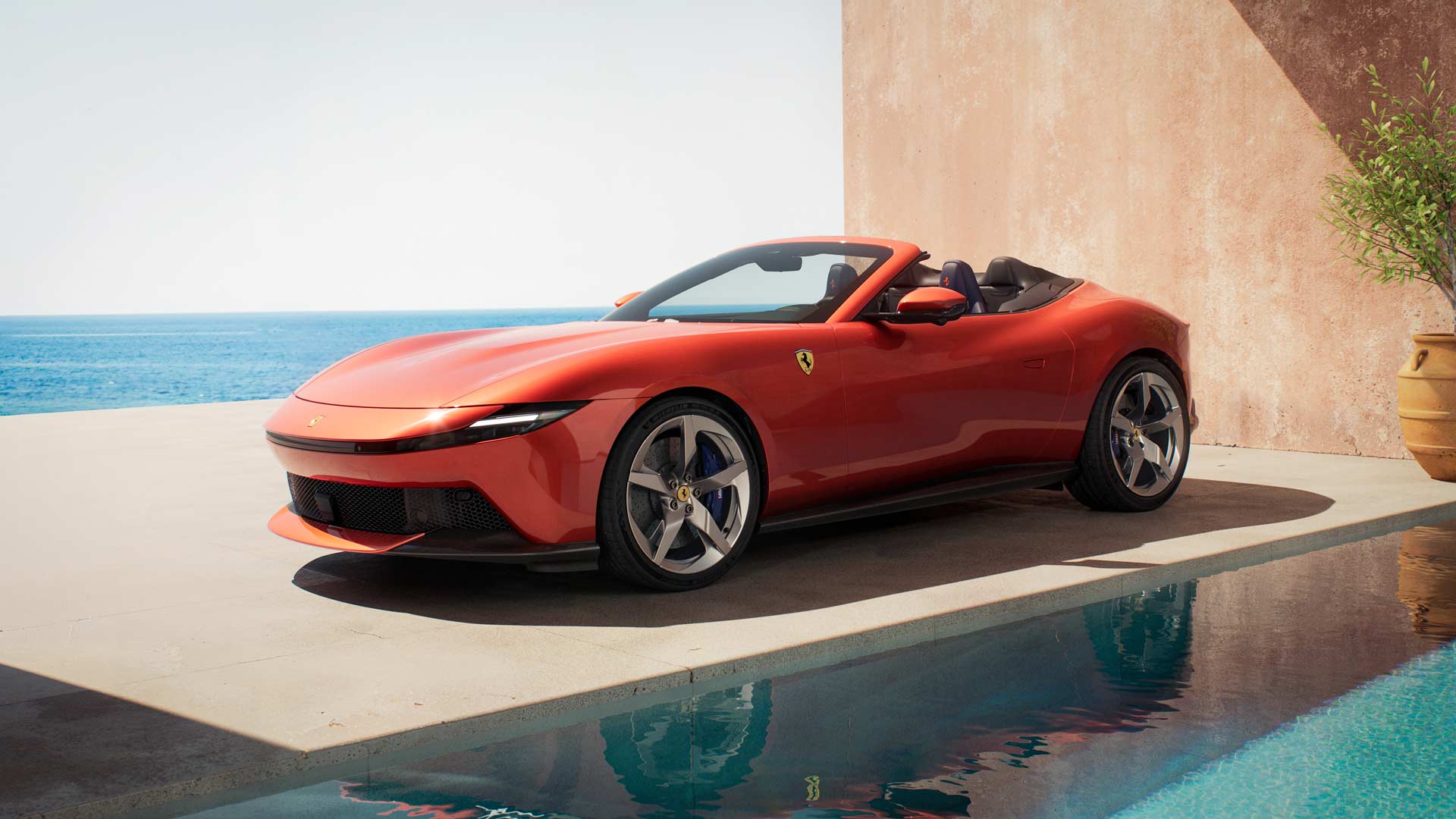
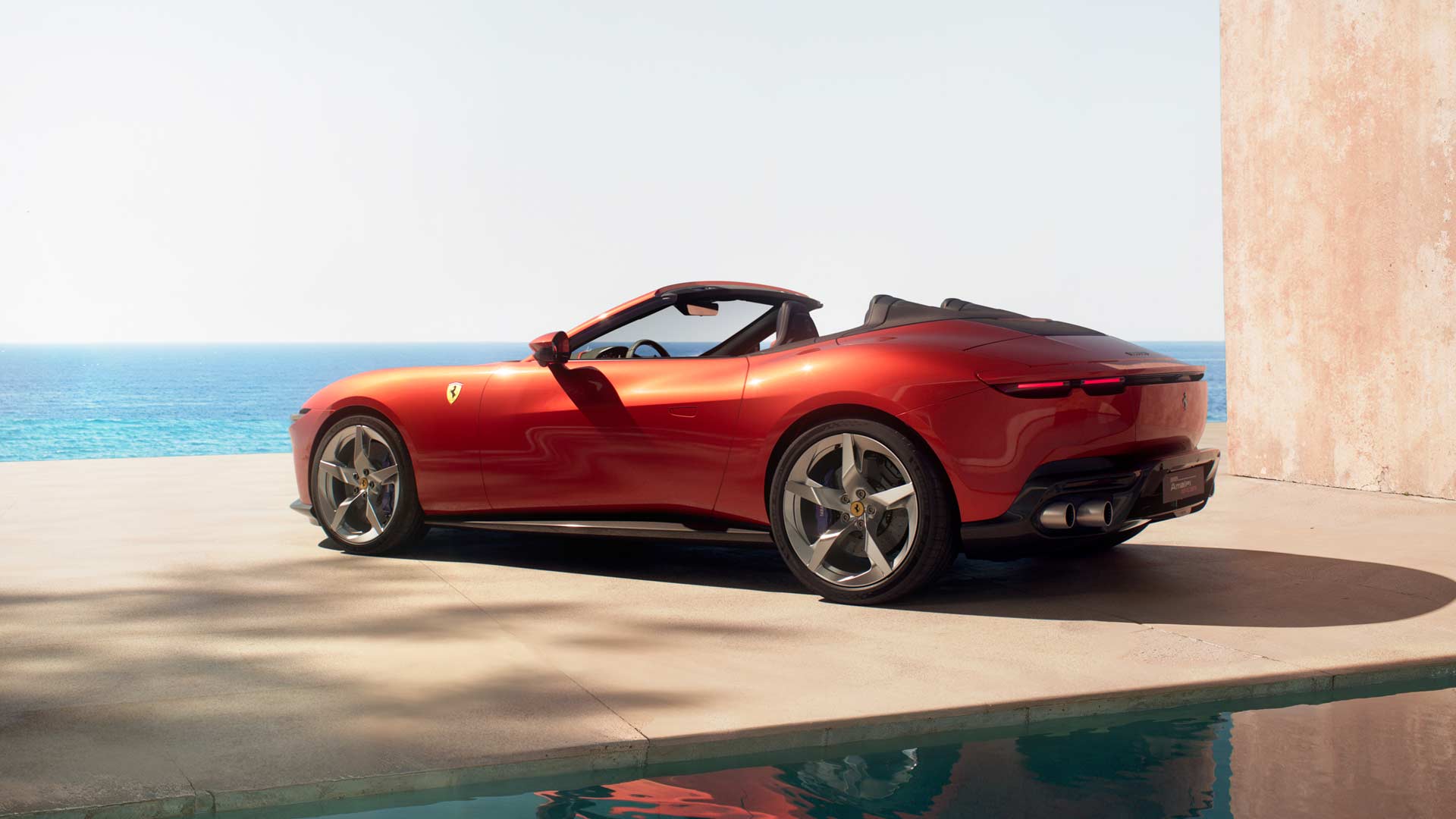
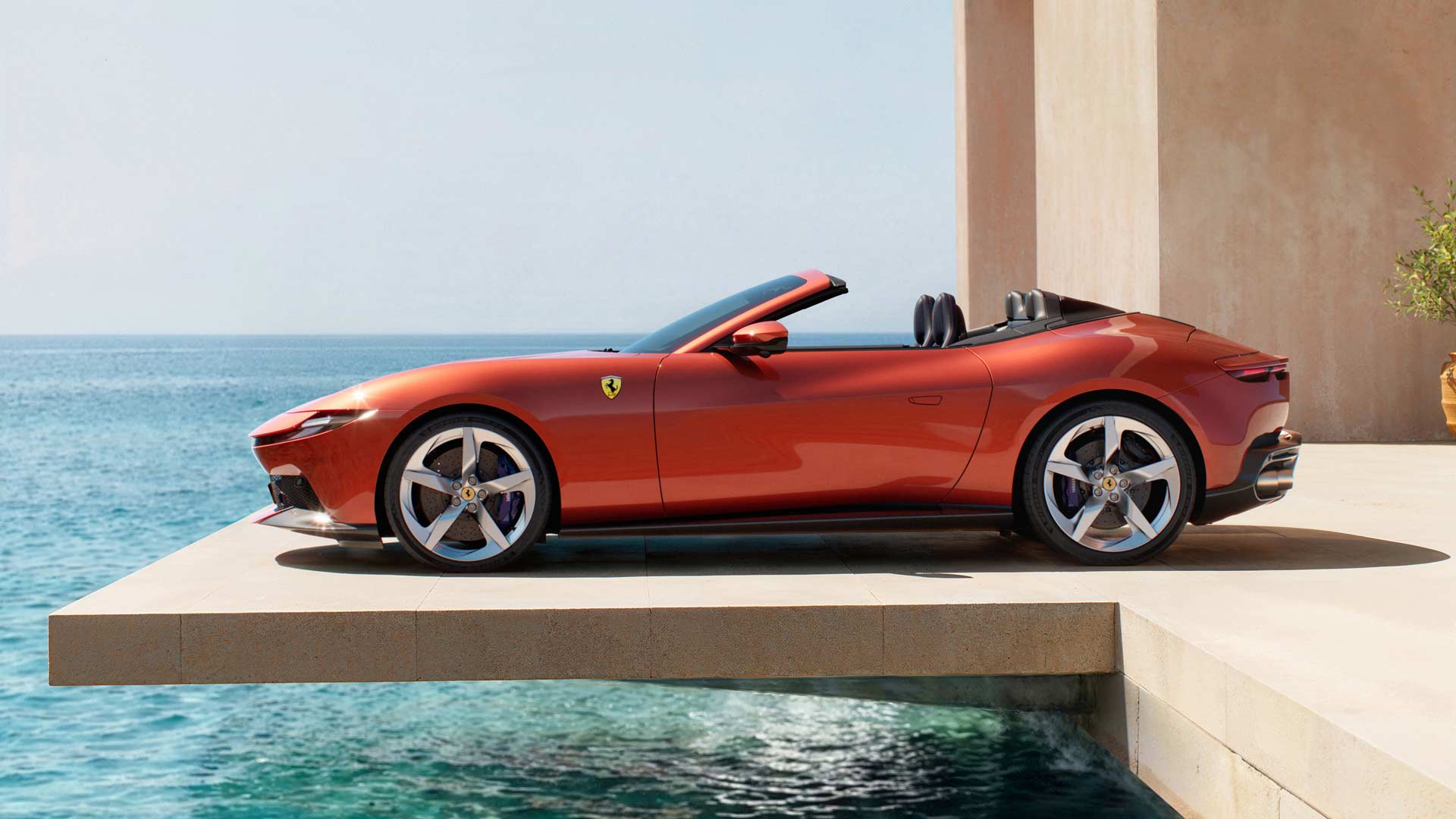
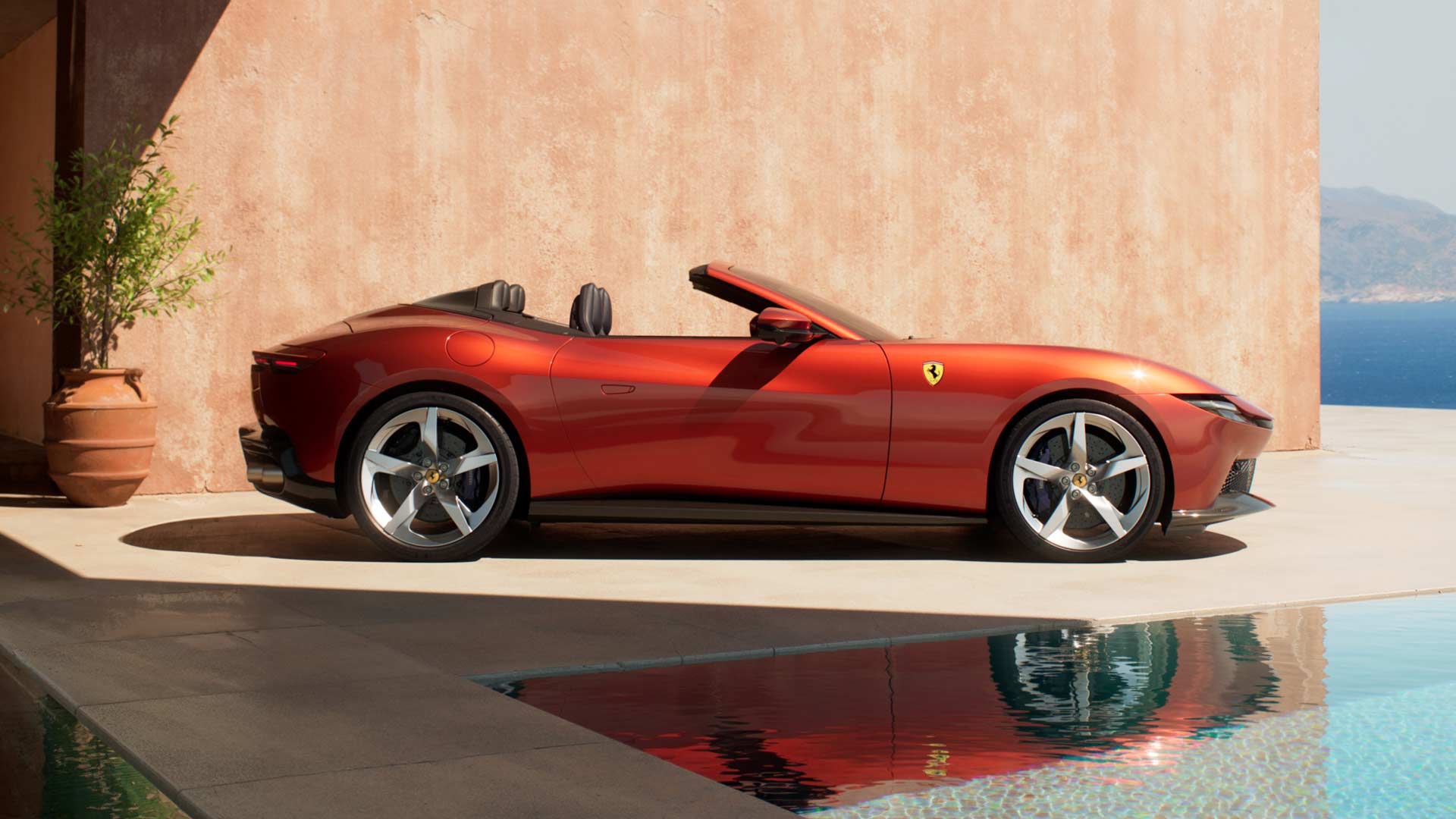
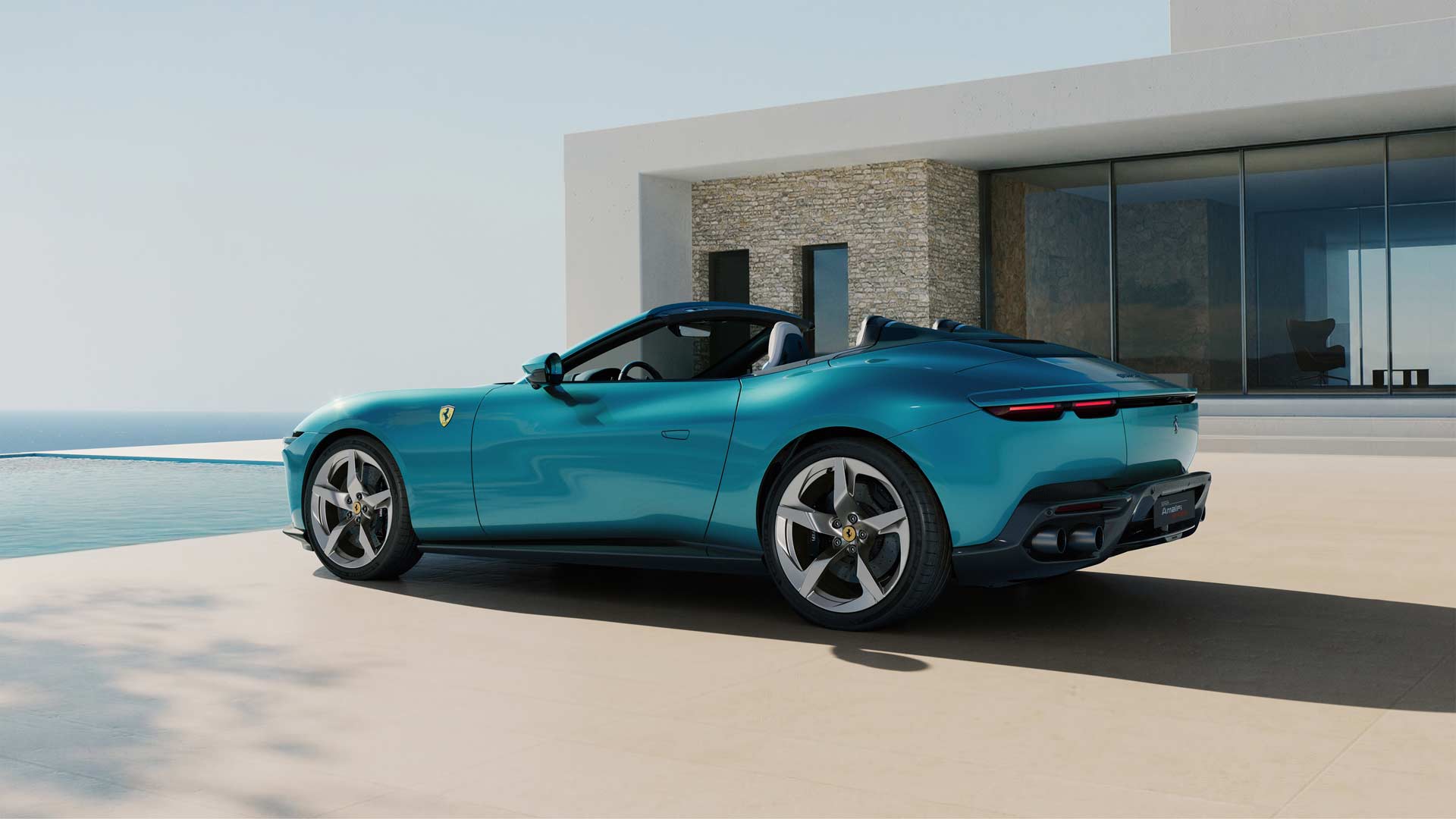
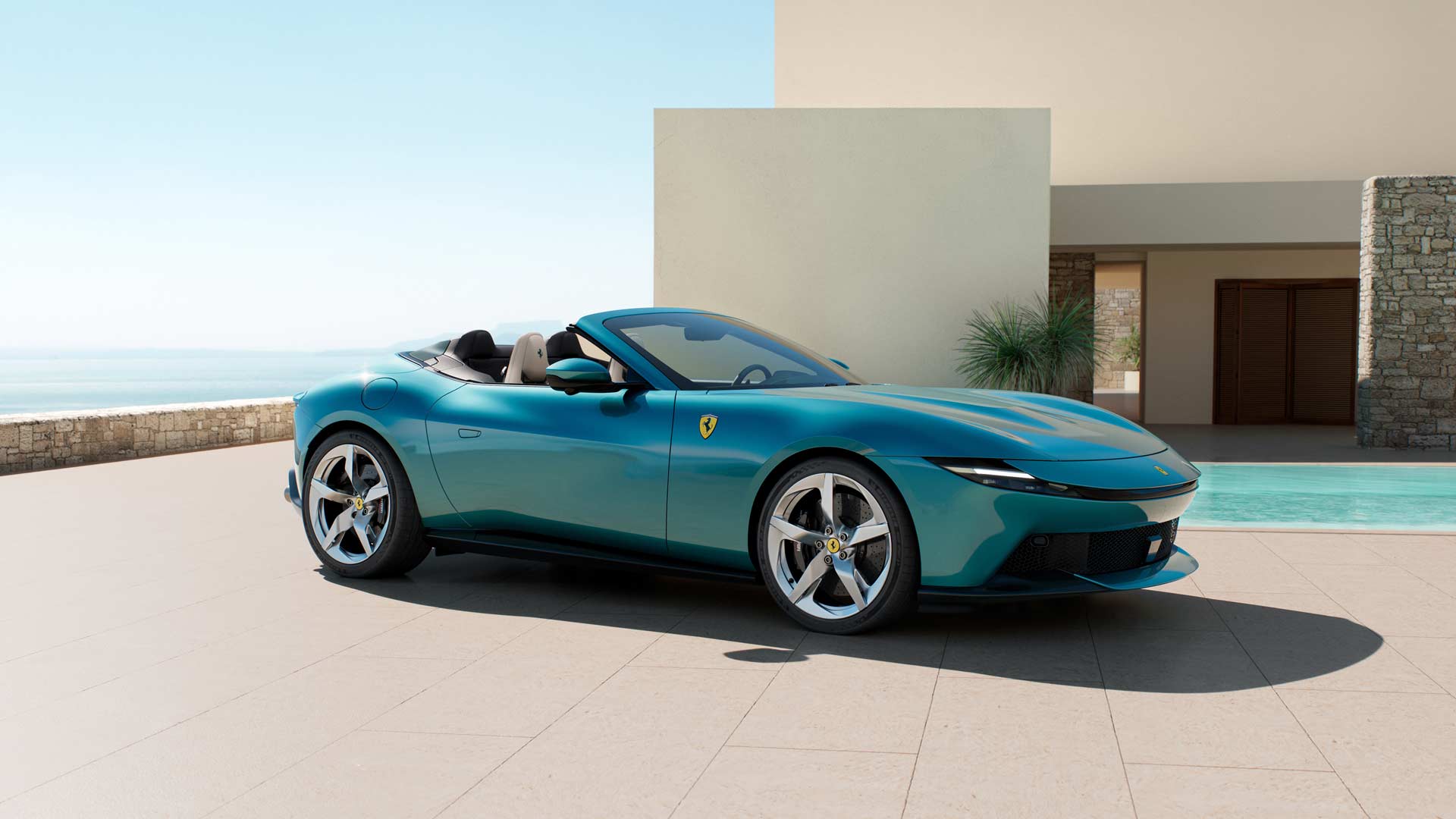
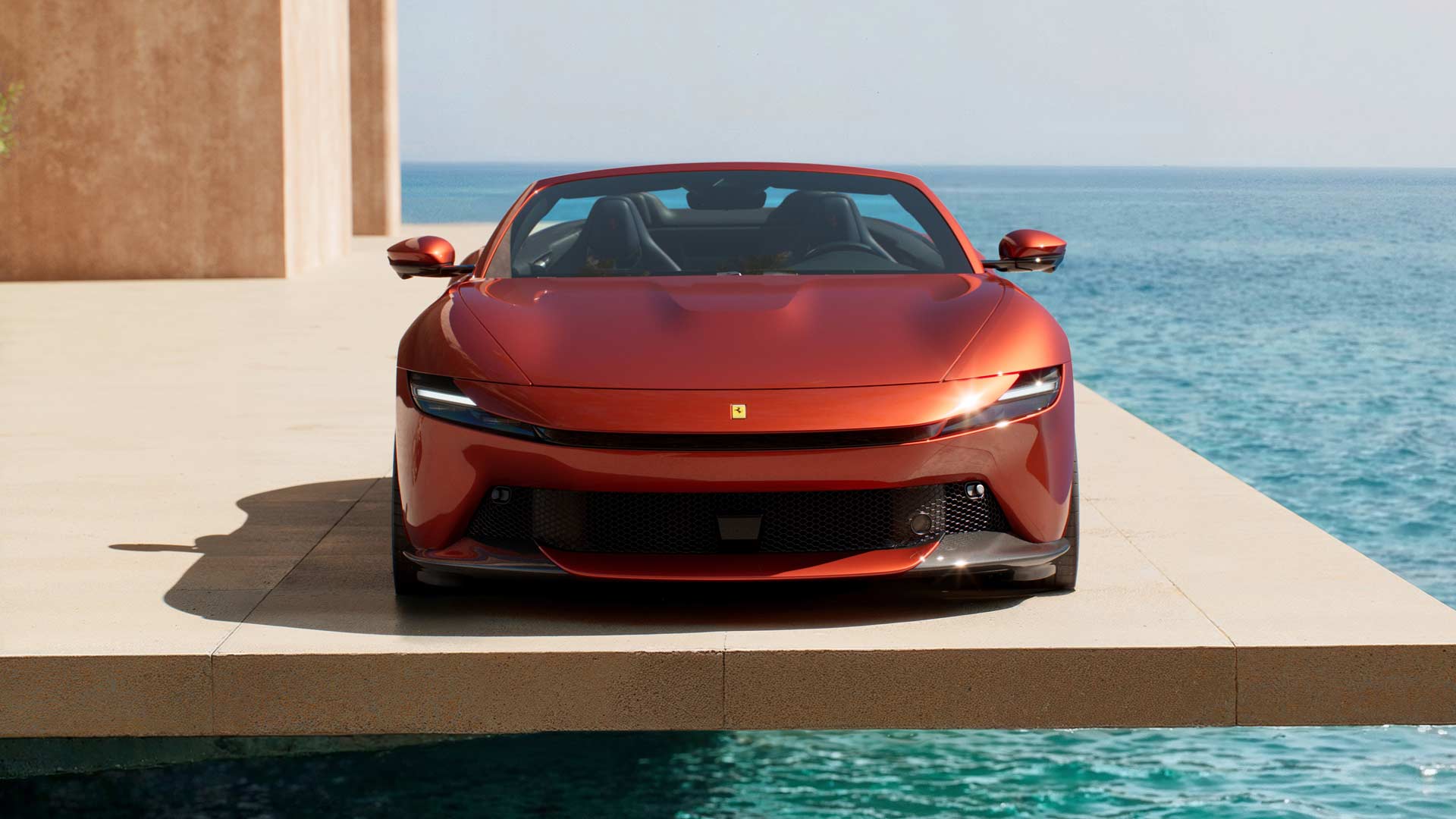
And design is clearly a major part of the Amalfi Spider’s appeal. Styled by the Ferrari Design Studio under Flavio Manzoni, the car preserves the proportions and flowing silhouette of the Ferrari Amalfi even in open configuration. Ferrari describes the form as fluid, monolithic and sculptural, with clean surfaces and carefully controlled volumes. The front is defined by a large air intake and a long bonnet wrapped around the turbocharged V8, while the rear integrates an active spoiler into a tail that looks taut and purposeful rather than decorative. Forged wheels and carbon-fibre detailing finish the job.
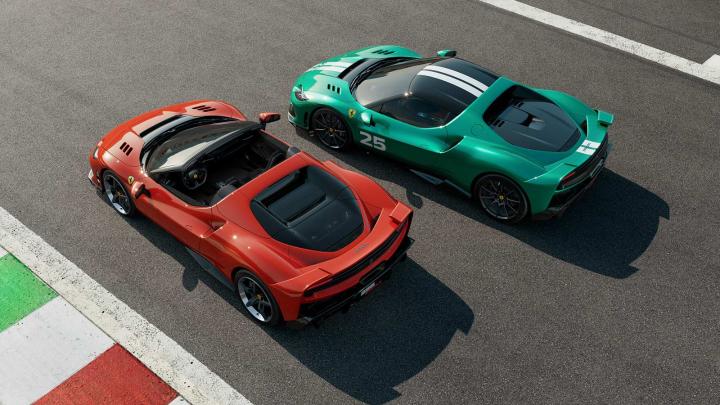
The launch colour is Rosso Tramonto, a new shade inspired by the Amalfi Coast and positioned as the chromatic counterpart to the earlier Verde Costiera. Ferrari says it sits at the boundary between sea and sky at dusk, with subtle orange undertones that echo the light of sunset. In less poetic terms, it sounds like exactly the kind of rich, layered red a front-engined Ferrari spider ought to wear.
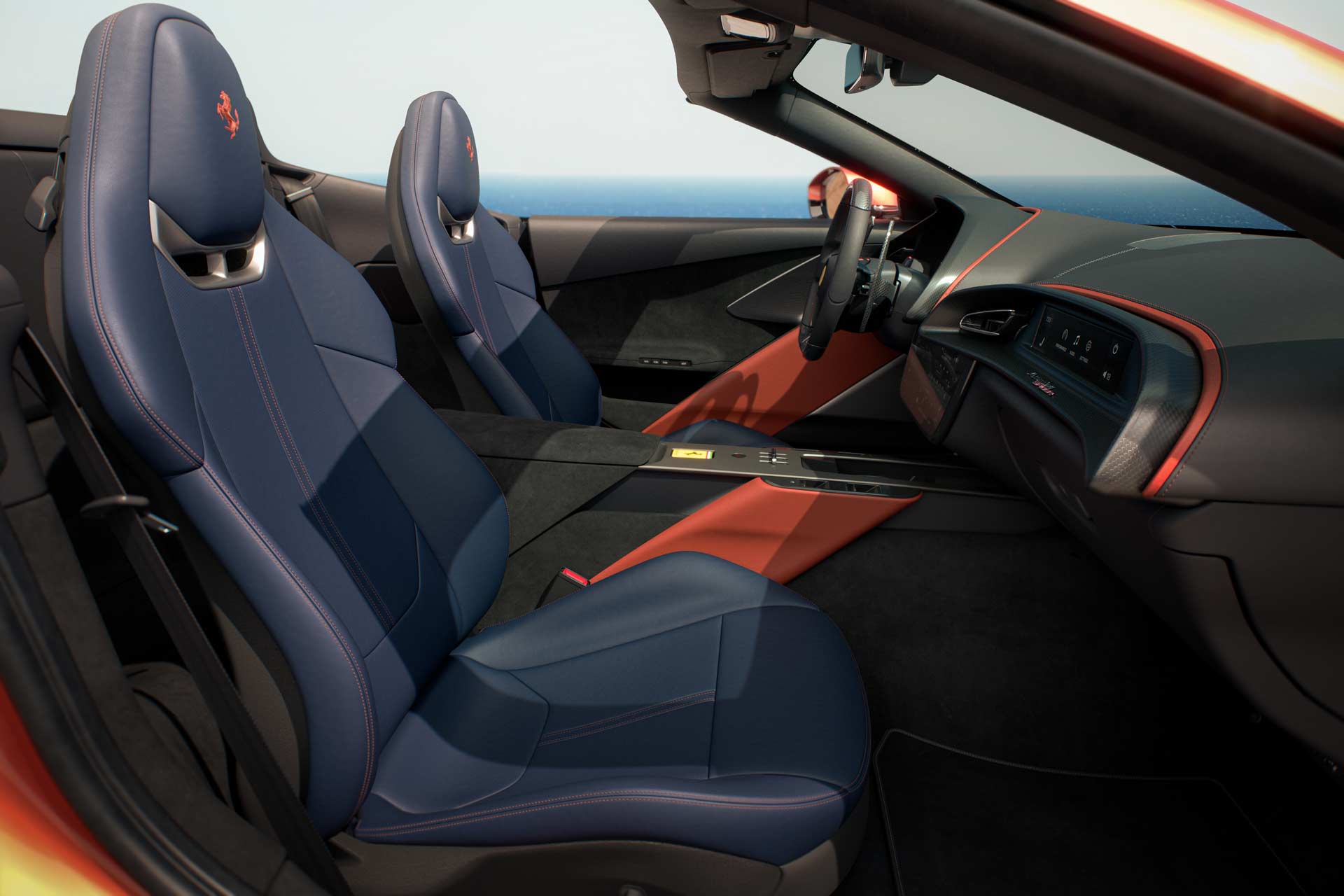
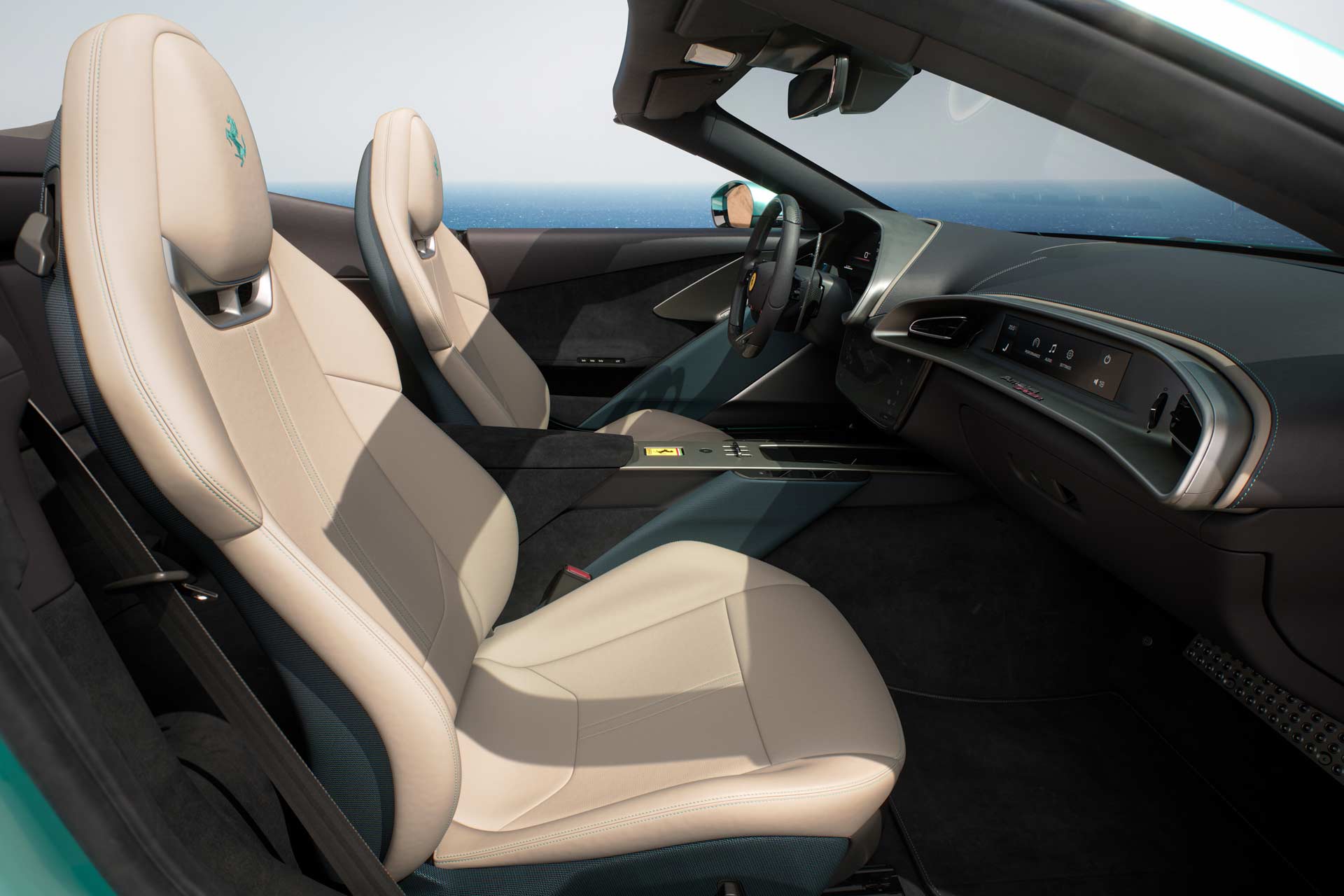
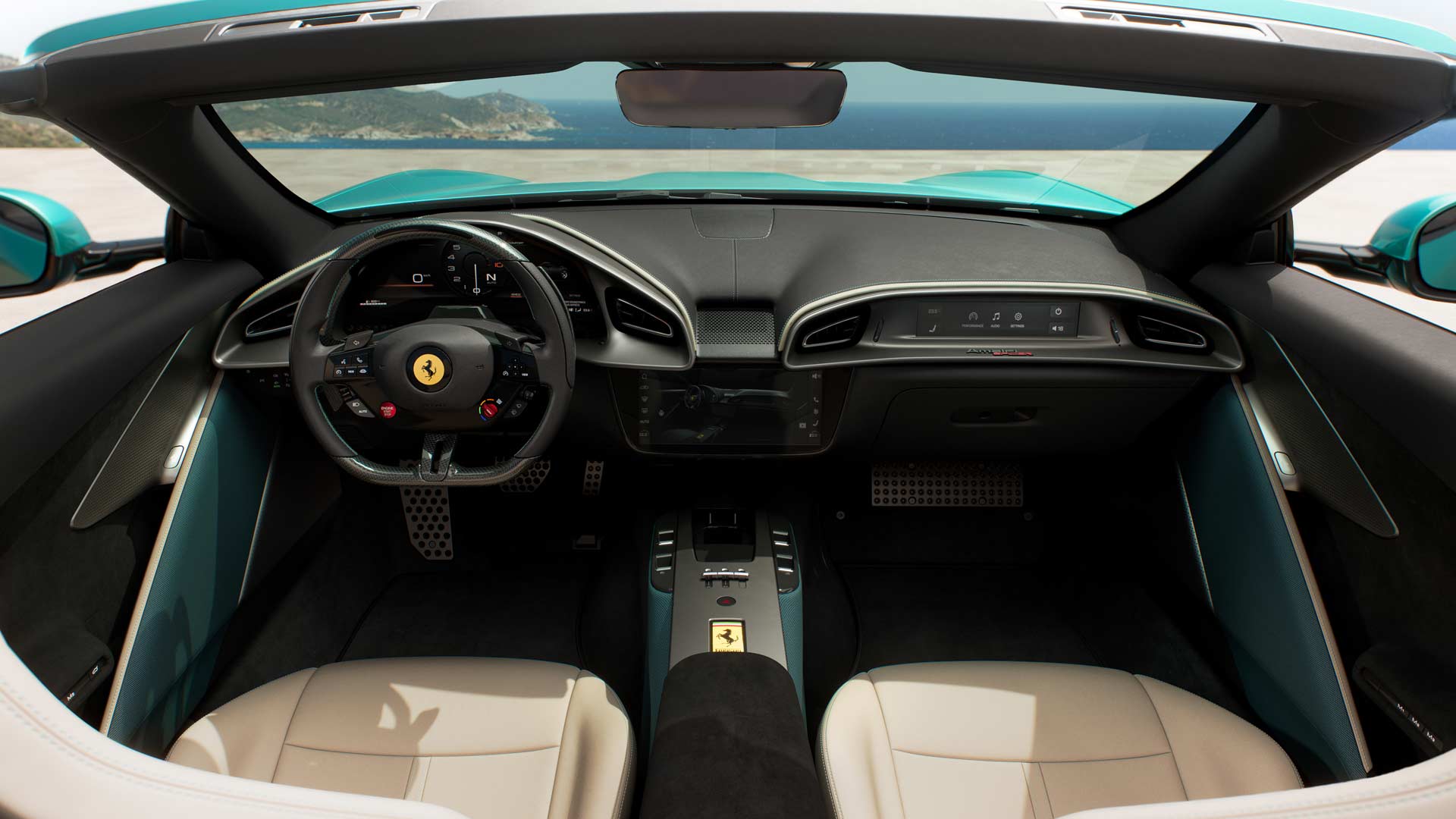
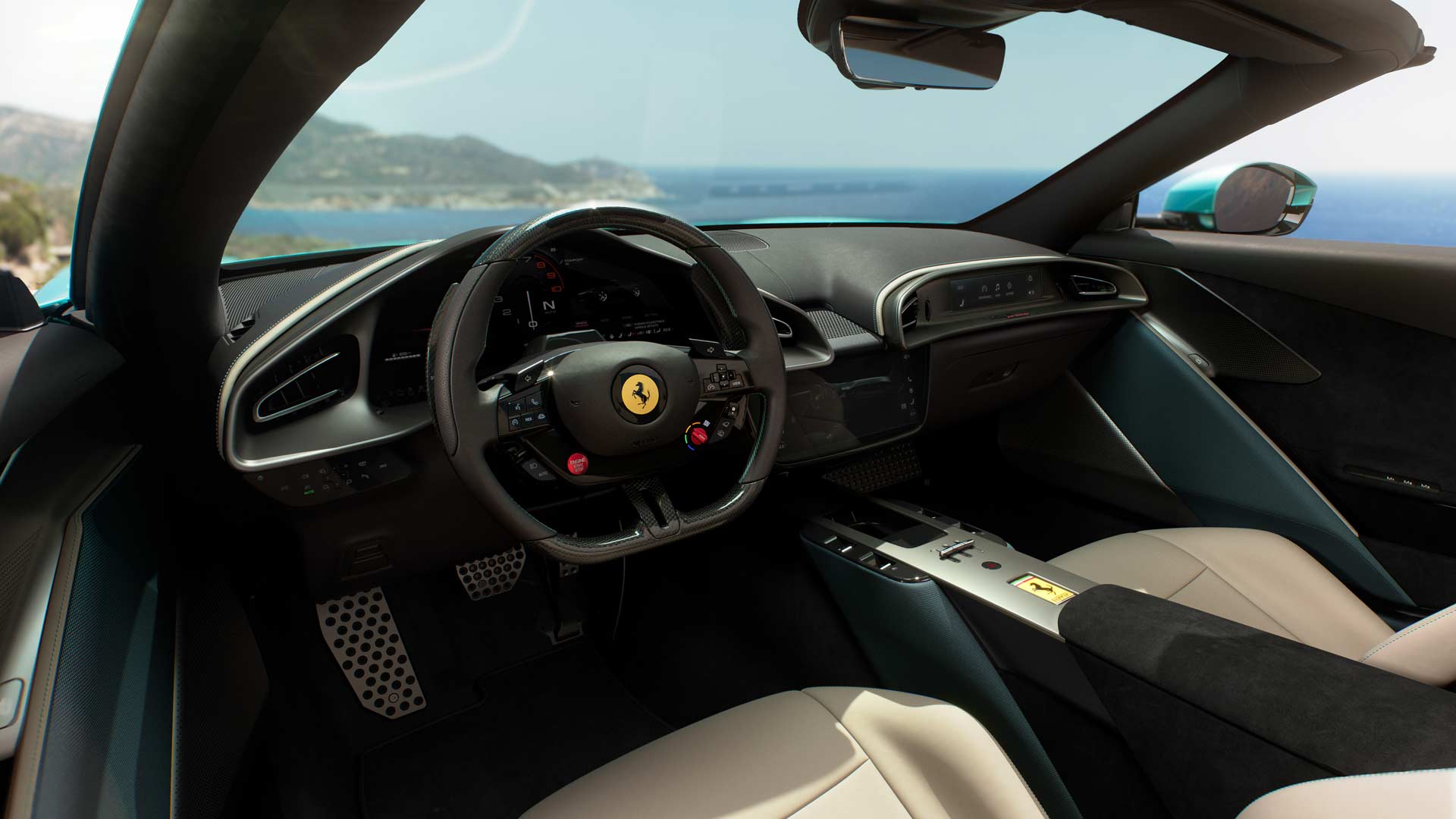
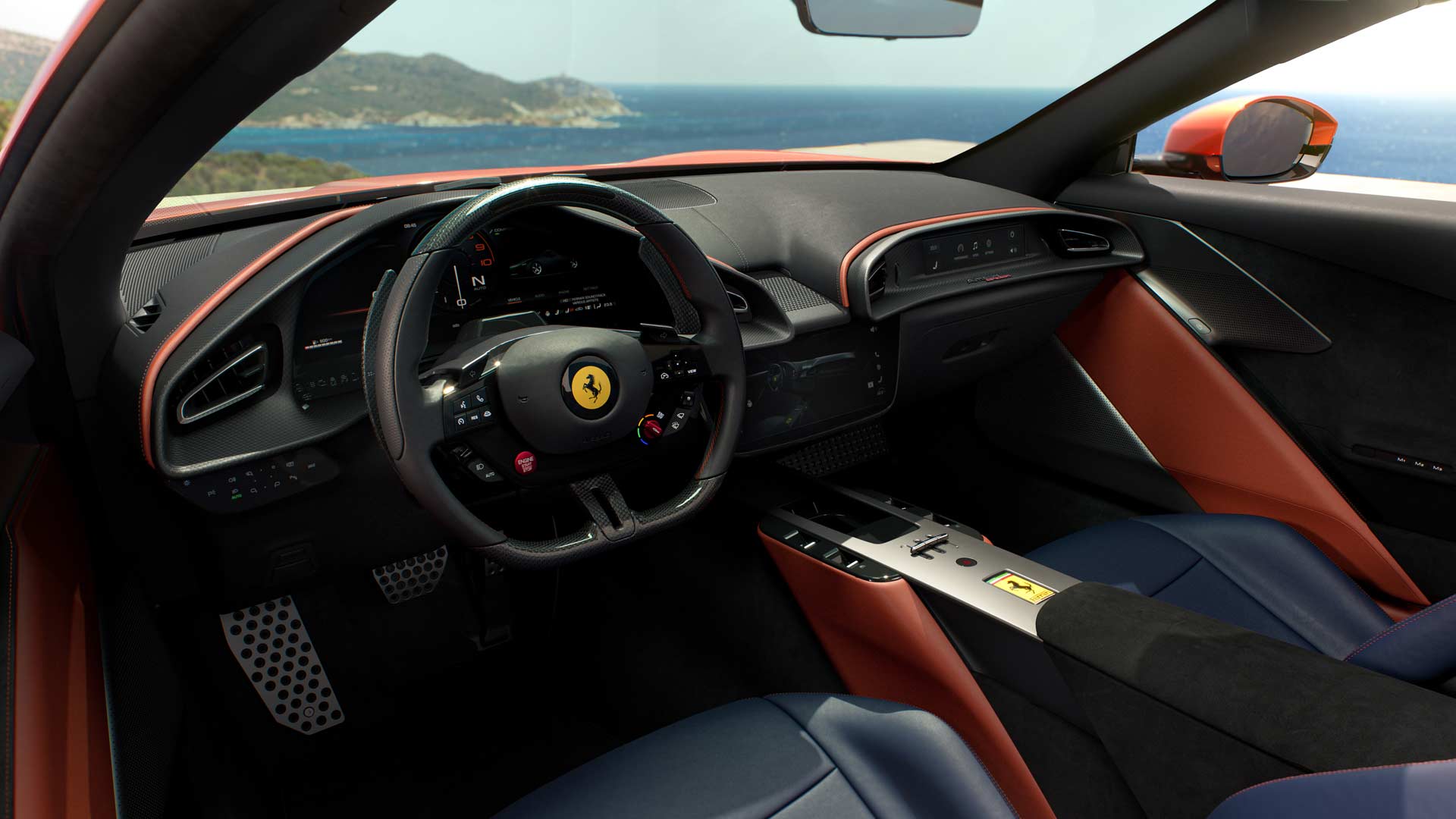
Inside, the Amalfi Spider follows Ferrari’s current thinking but adds a stronger sense of usability. The dual-cockpit layout creates two visually connected spaces for driver and passenger, while the cabin remains clean, minimalist and contemporary. Ferrari introduces a monolithic arrangement that brings together the instrument cluster and air vents, and the central tunnel takes the form of a suspended aluminium bridge housing the main controls. The rear seats remain secondary in visual terms, but they matter because this is still a 2+ and therefore more practical than a strict two-seater. They are suitable for children, and they also add load flexibility when needed.
The driver interface gets one particularly welcome development: the return of physical buttons on the steering wheel. Ferrari pairs that with the return of the iconic aluminium start button, restoring a more tactile, immediate connection between driver and machine. The interface is built around three displays: a 15.6-inch digital instrument cluster, a 10.25-inch central capacitive display for multimedia and vehicle functions, and an 8.8-inch passenger display showing data such as revs and G-forces. Apple CarPlay, Android Auto, wireless charging and MyFerrari Connect are all part of the package, so the technology brief is thoroughly modern without abandoning the sense of occasion.
Ferrari also pays proper attention to comfort with the roof down. A wind deflector integrated into the rear backrest deploys at the touch of a button and reduces turbulence and noise, especially around the occupants’ heads. It operates at speeds up to 170km/h and helps create a more stable bubble of air in the cabin. Combined with the five-layer fabric roof, which Ferrari says provides acoustic and thermal insulation comparable to a retractable hard top, the Amalfi Spider aims to make open-top driving feel refined rather than exhausting.
Underneath, Ferrari backs up the grand-touring brief with serious engineering. The Amalfi Spider adopts brake-by-wire for improved braking precision, reduced pedal travel and better modulation, while ABS Evo works across all grip conditions and all Manettino settings. Ferrari’s Side Slip Control 6.1 coordinates the broader dynamic systems, and the grip estimation logic based on the electric power steering is now faster and more accurate, even on low-traction surfaces. The five-position Manettino—Wet, Comfort, Sport, Race and ESC-Off—gives the driver the expected range of personalities, with Ferrari saying the Sport and Race settings now feel more dynamic than those of the Roma.
Aerodynamics also play a major role. Ferrari develops the Amalfi Spider with the goal of matching the aerodynamic performance of the coupé-like Amalfi while maintaining open-top comfort. The rear wing features three active positions—Low Drag, Medium Downforce and High Downforce—and in its most aggressive setting it generates up to 110kg of extra load at 250km/h for less than a four per cent drag increase. The front gets detailed flow-management work too, including a bypass above the headlights, underbody vortex generators and fairings ahead of the wheels. The result is a spider that does not merely cope with speed, but actively uses it.
Dimensionally, the Amalfi Spider measures 4,660mm long, 1,974mm wide and 1,305mm high, with a 2,670mm wheelbase and an 80-litre fuel tank. Dry weight is 1,556kg, with a 48:52 front-to-rear distribution. Ferrari fits 20-inch wheels as standard, wrapped in 245/35 R20 tyres at the front and 285/35 R20 at the rear, developed with Pirelli, Goodyear and Bridgestone specifically for this application.
Safety and assistance systems are extensive too. Adaptive cruise control, autonomous emergency braking, blind-spot detection, lane departure warning, lane keeping assist, automatic high beam, traffic sign recognition and driver drowsiness monitoring all come as standard. Optional features include Surround View and Rear Cross Traffic Alert. For a Ferrari spider, that is a notably comprehensive ADAS package, and it reinforces the point Ferrari keeps making: this is a car intended to deliver excitement without making everyday driving a chore.
There is also the usual seven-year Genuine Maintenance programme, covering scheduled maintenance across the first seven years of the car’s life, with annual servicing or every 20,000km, original parts, and work carried out by technicians trained in Maranello. That remains one of Ferrari’s stronger ownership arguments and fits the Amalfi Spider’s role as a car meant to be driven regularly rather than admired from behind glass.
So the Amalfi Spider arrives with a very clear brief. It delivers 640hp, a 13.5-second roof, a genuinely useful cabin and luggage space, a sharp new interior interface, and the full suite of Ferrari’s current aerodynamic and dynamic technology. More importantly, it does all of that while preserving the elegance expected of a front-engined V8 Ferrari. The result is a spider that does not ask buyers to choose between performance and usability. It simply offers both, with the sky removed.