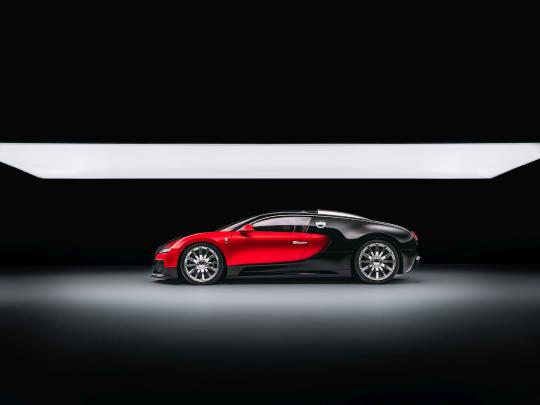























Monterey Car Week each August turns a stretch of the Californian coast into an open-air court where machines are looked over, argued about, and occasionally rolled across the lawn at Pebble Beach for a panel of judges to weigh. Bugatti has a new entrant for that stage this year, and it is built on an unusual premise: strip away every wing, vent and aerodynamic device, and let a car be judged on proportion alone. It takes Bugatti's most extreme track car, the Bolide, as its starting point and turns that engineering into something built for elegance rather than for the clock. It is the third one-of-one build to come from the Bugatti Programme Solitaire, and its name is Destrier.
Destrier borrows its name from the strongest and most prized breed of horse a medieval knight could ride into battle, and the choice frames what Bugatti was trying to do here: take the most extraordinary engineering package the company has ever assembled and present it without a single aerodynamic addition, so the proportions alone carry the design. What comes out the other side reaches barely one meter in height, lower than anything else Bugatti currently builds. The wheels grow to match, 20-inch fronts and 21-inch rears, a clear rise from the Bolide's 18-inch wheels, and against a body pared to its simplest volumes they look enormous.
The two Solitaire commissions before it, Brouillard and F.K.P. Hommage, were each rooted in a particular story and steeped in company history. Destrier takes a different path, built instinctively as a piece of sculpture first rather than as a history lesson. And yet the underlying idea is true to the marque all the same. The Type 57 chassis once carried both the streamlined Type 57G and the Type 57C Tank, cars which took overall victory at Le Mans in 1937 and again in 1939, and, next to this, that same chassis underpinned the Type 57SC Atlantic, a car many regard as the most beautiful ever built. A racer and an objet d'art, sharing one foundation. Destrier and the Bolide follow that same pattern today, one chassis producing two completely different cars, a link made permanent through a hand-laser-engraved plate above the windscreen that pairs images of the Type 57G Tank with the Type 57SC Atlantic.
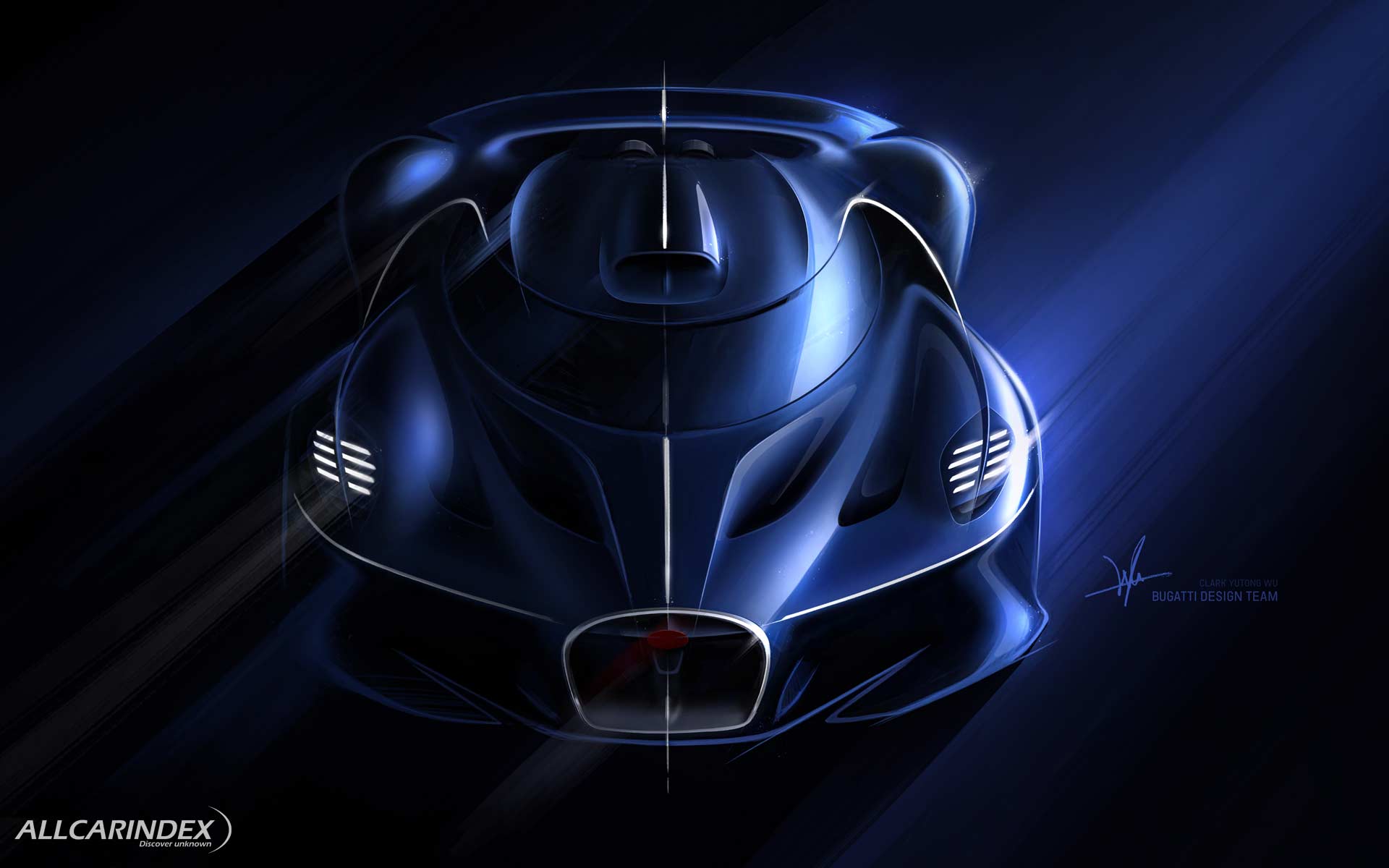
Destrier sits on the Bolide's own carbon fiber tub, but the surfacing on top of it opens a new page in how Bugatti draws a car. The C-line that normally runs unbroken down each side of every Bugatti, a single stroke of brightwork, lifts away just ahead of the front wheel arch here, letting the bare panel show through before it picks back up on its way to the horseshoe grille. That grille sits wider than the one on the Bolide and sets the tone for a front end built around restraint rather than aggression, while at the rear a blended wing recalls the one on the Chiron Profilée, closing the shape with the same calm.
The proportions do the rest of the talking. Because the Bolide's mechanical package lets the cabin sit low between the two front fenders, Destrier holds the posture of a horse gathered to spring, even parked and still. Behind the doors the body narrows hard at the waist, then broadens again above the back wheels into a wide hip line, the kind of exaggeration usually confined to an early design sketch and rarely allowed to survive into a finished car. Gorgeous.
The paint is called Sapphire Celeste, blended specifically for Destrier and the person who commissioned it, a multi-layered blue with a diamond-like sparkle built into the structure of the paint itself, set off by polished aluminum trim. There is history folded into that choice: the Type 57SC Atlantic with chassis number 57591, known as the Pope Atlantic, was originally blue before its present owner had it painted black. The visible carbon fiber on Destrier, kept to the front splitter and rear diffuser, has been tinted to sit alongside the Sapphire Celeste precisely, and under the bodywork the engine-bay trim carries a hammered finish as well, a quiet reference to the beaten armor a knight, and his horse, once wore.
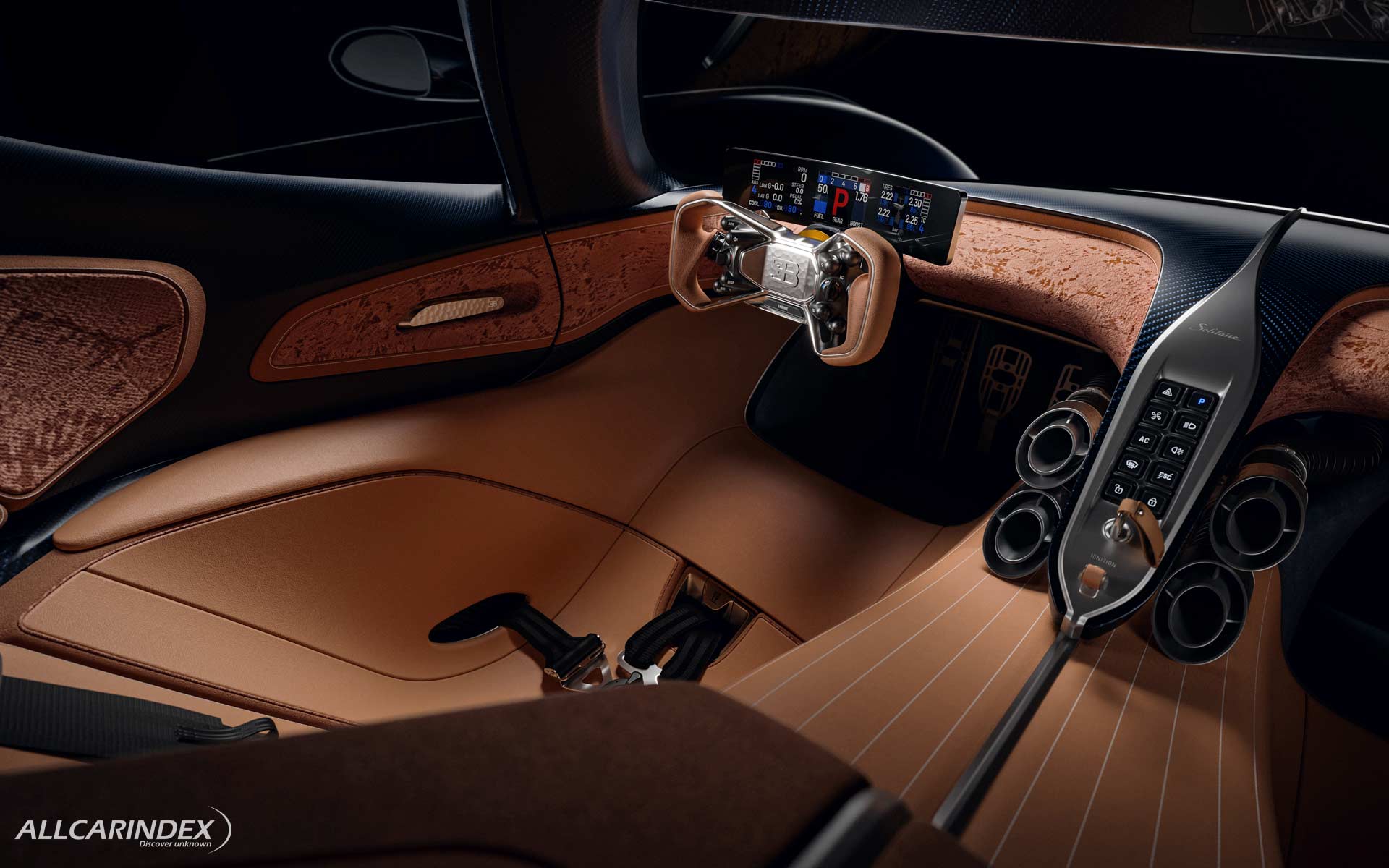
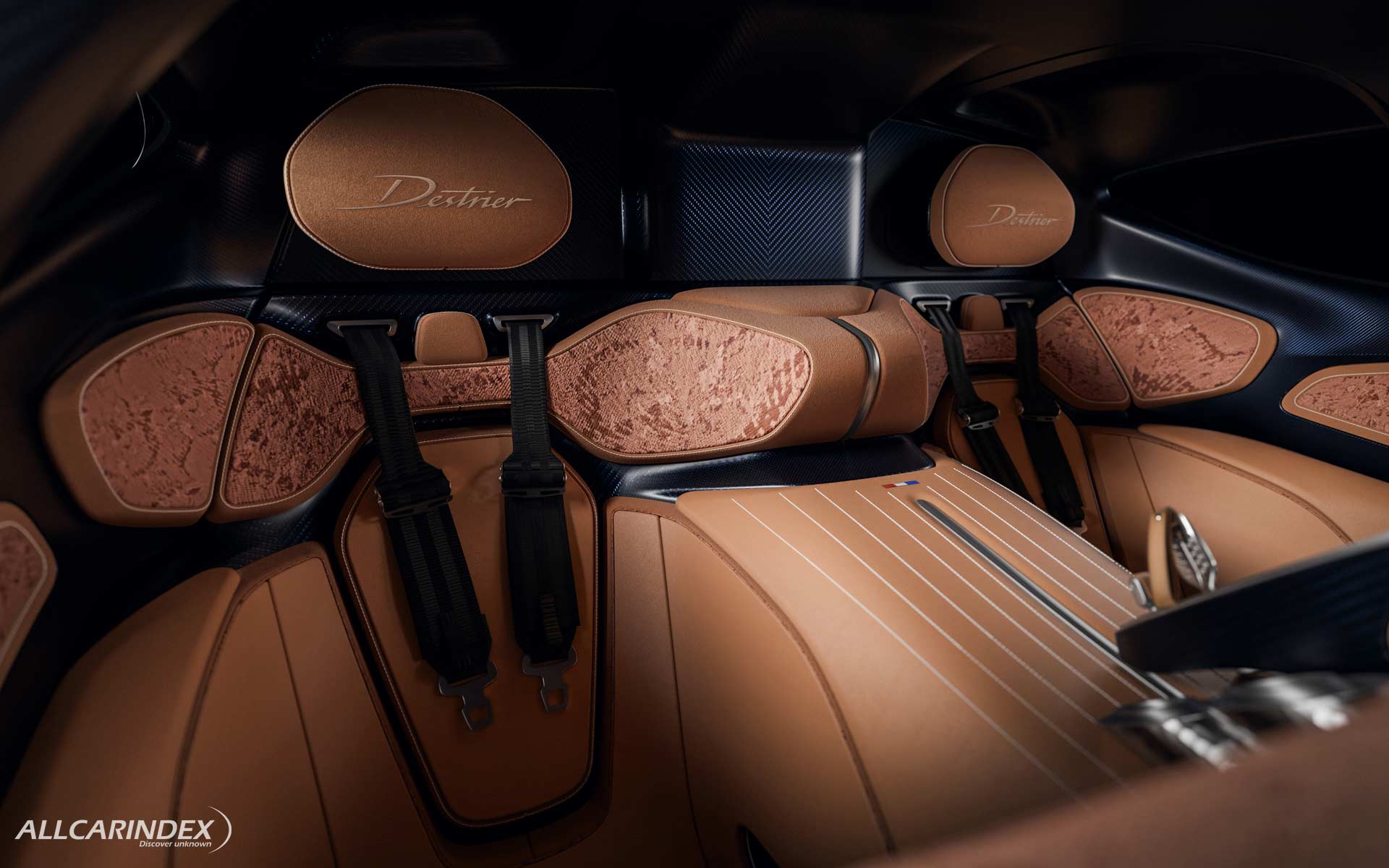
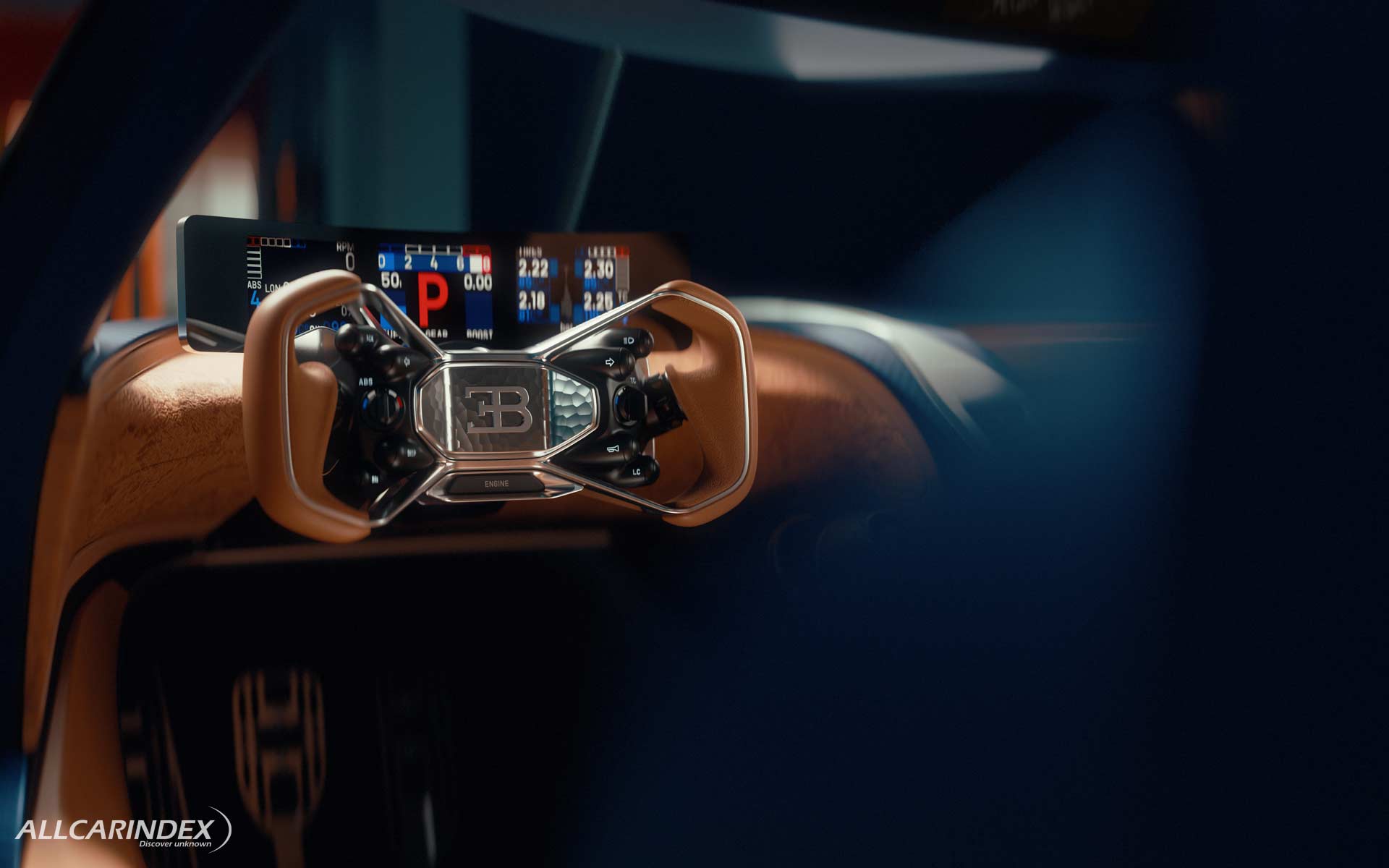
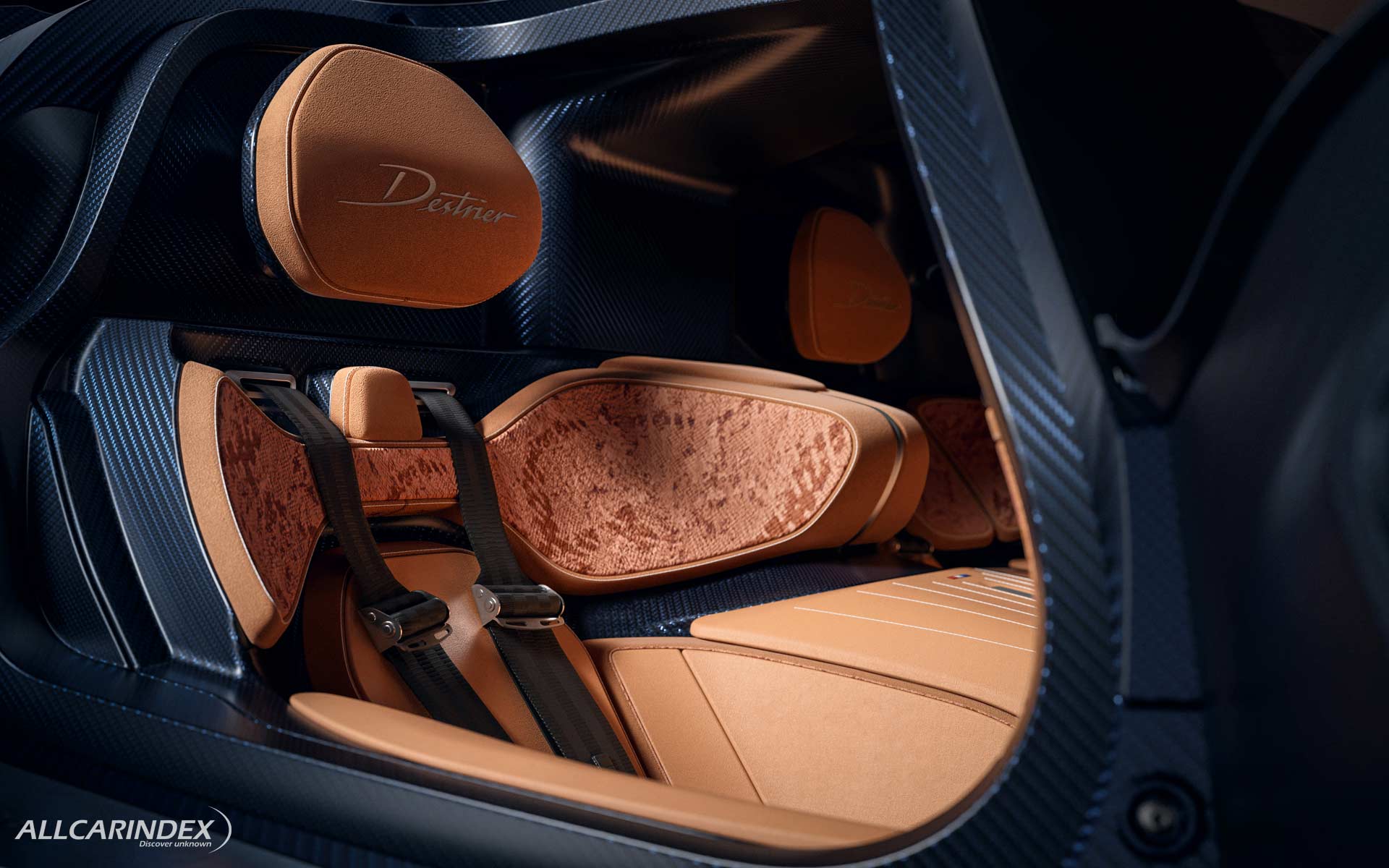
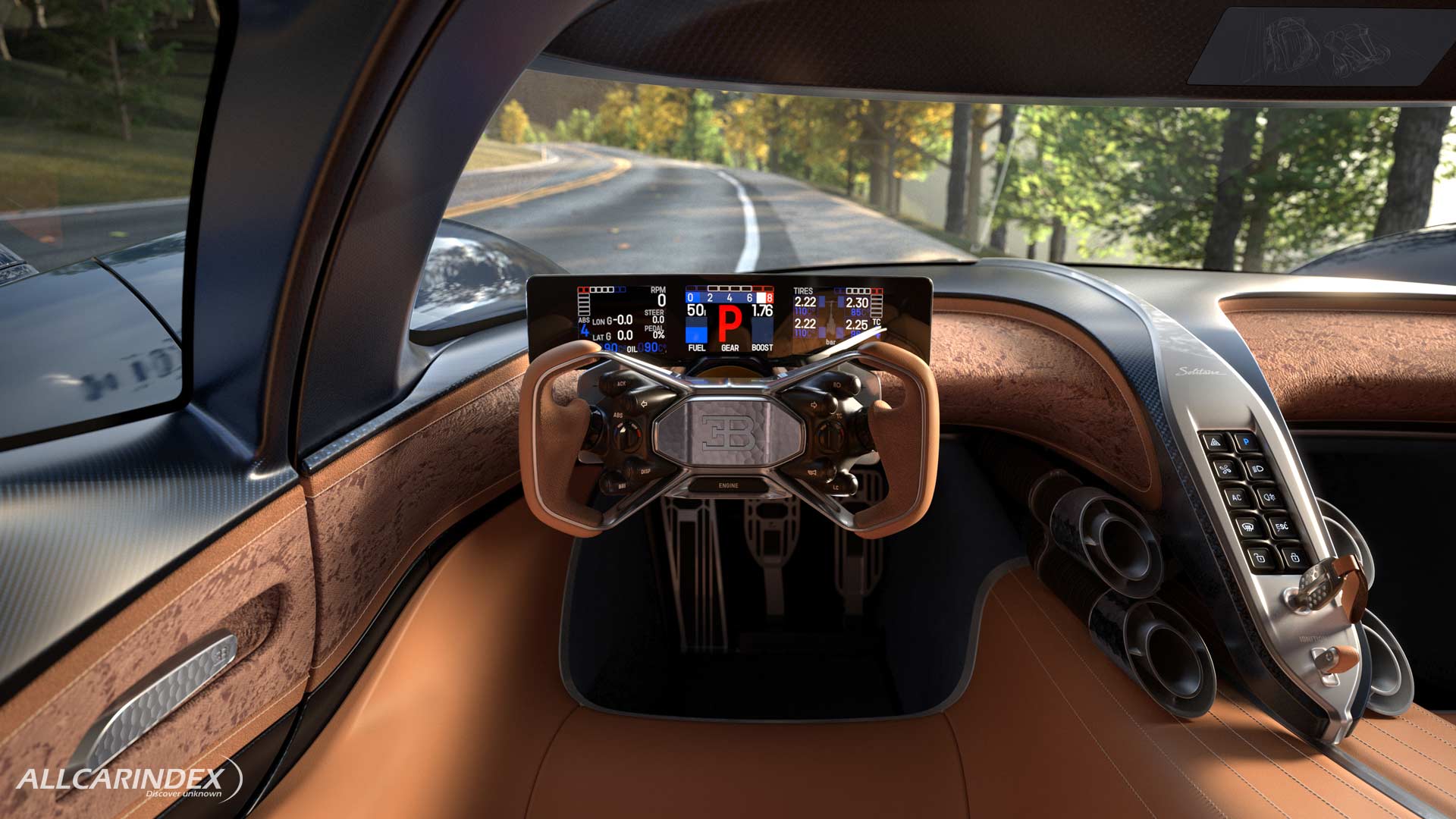
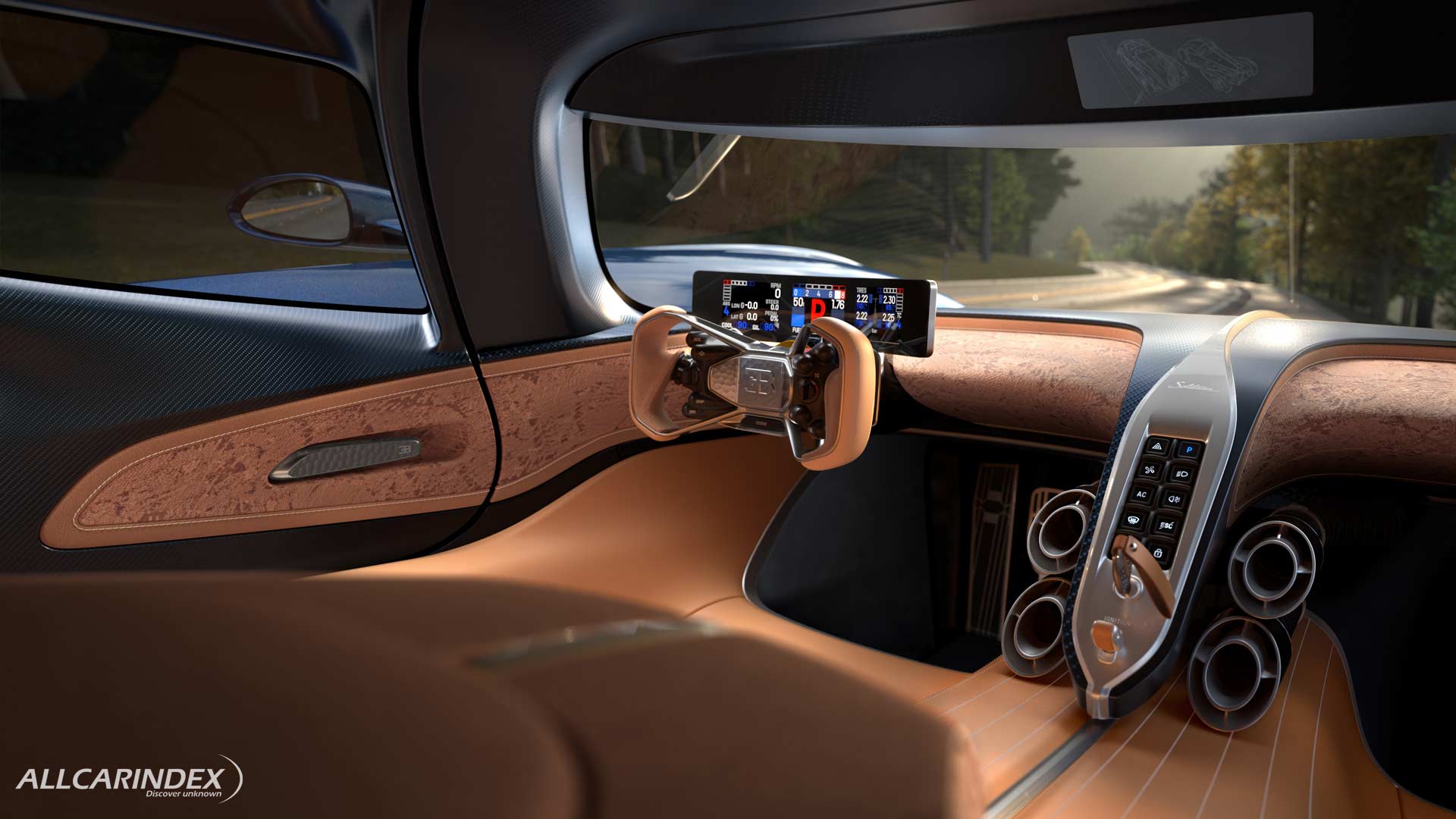
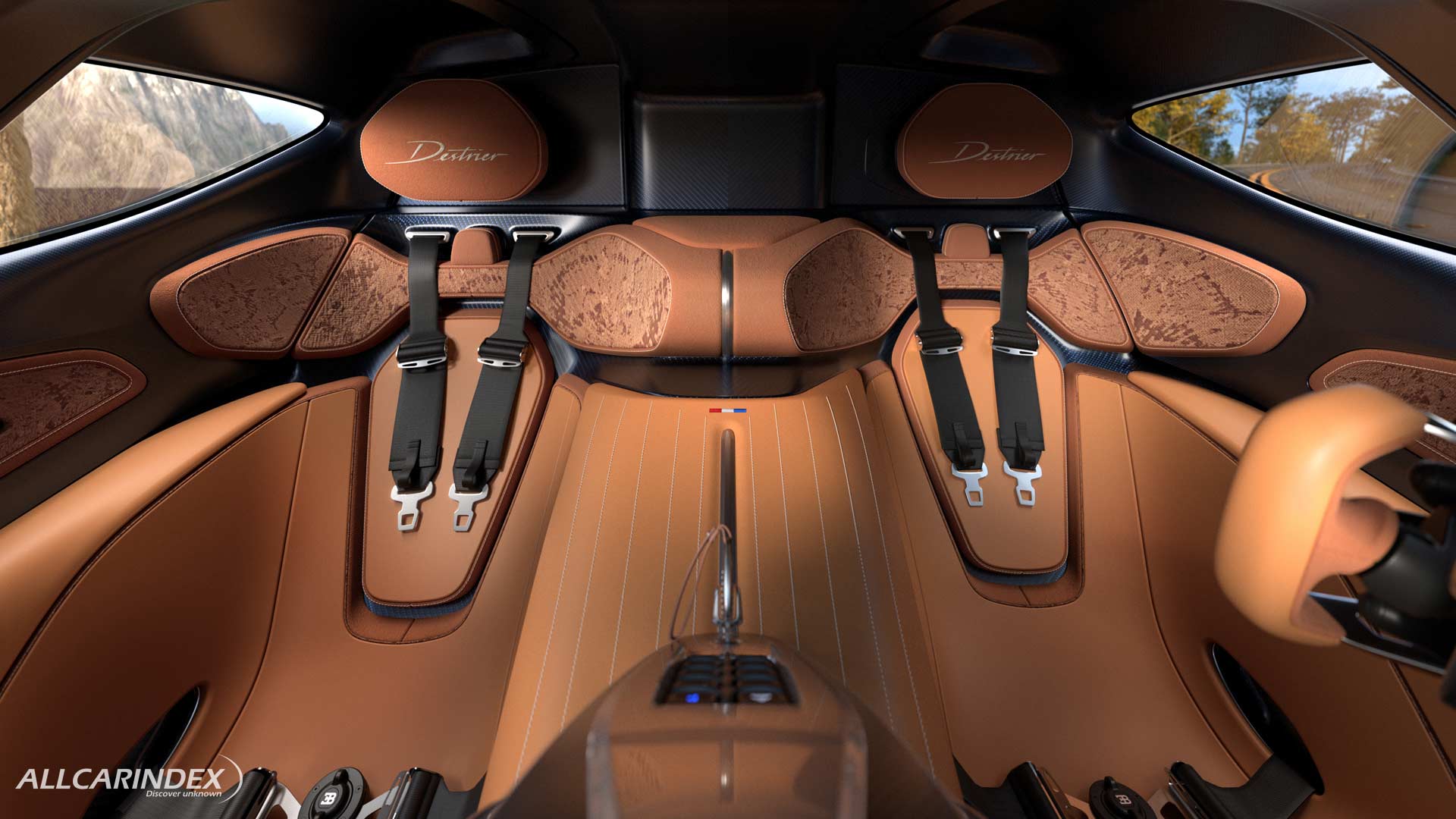
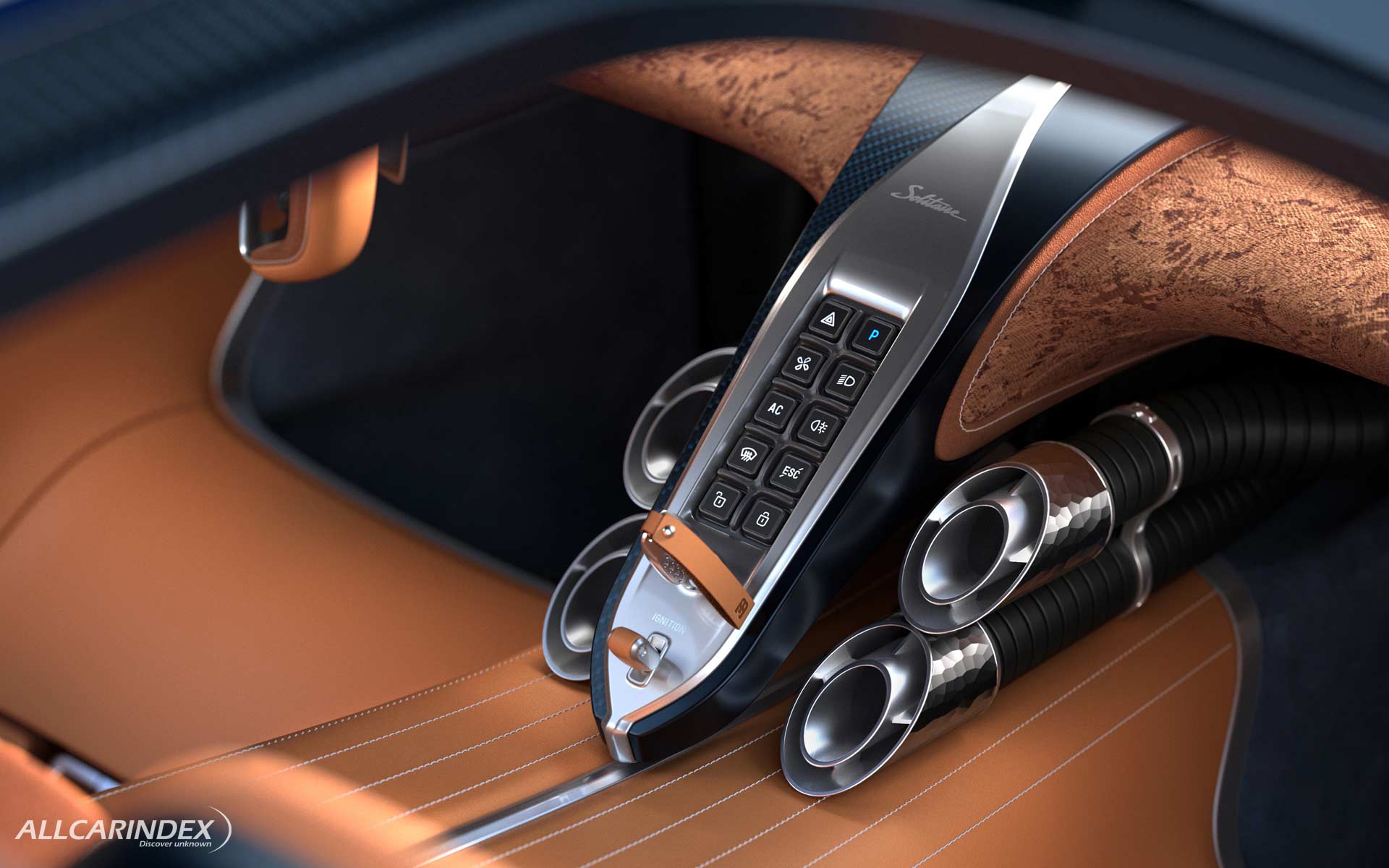
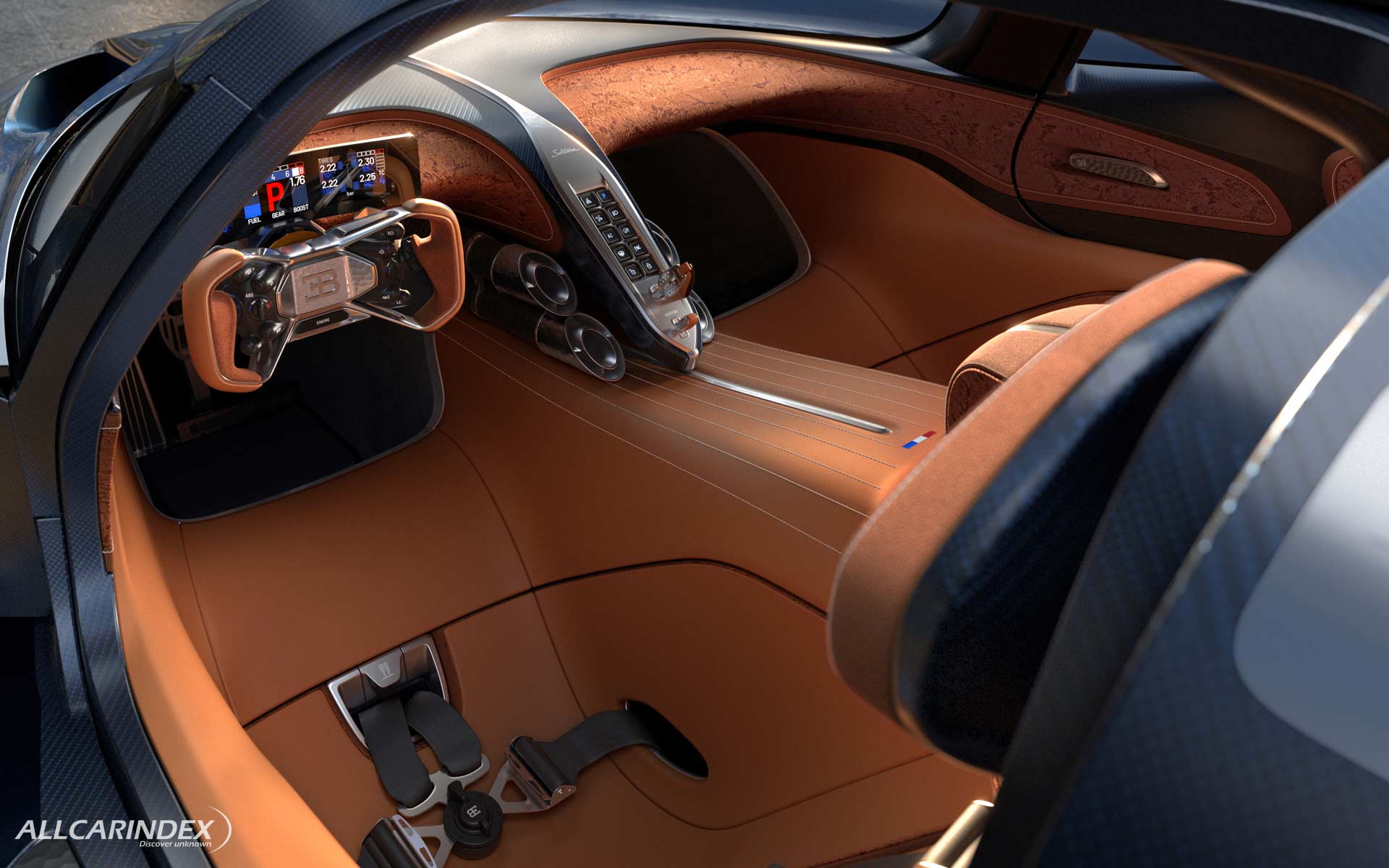
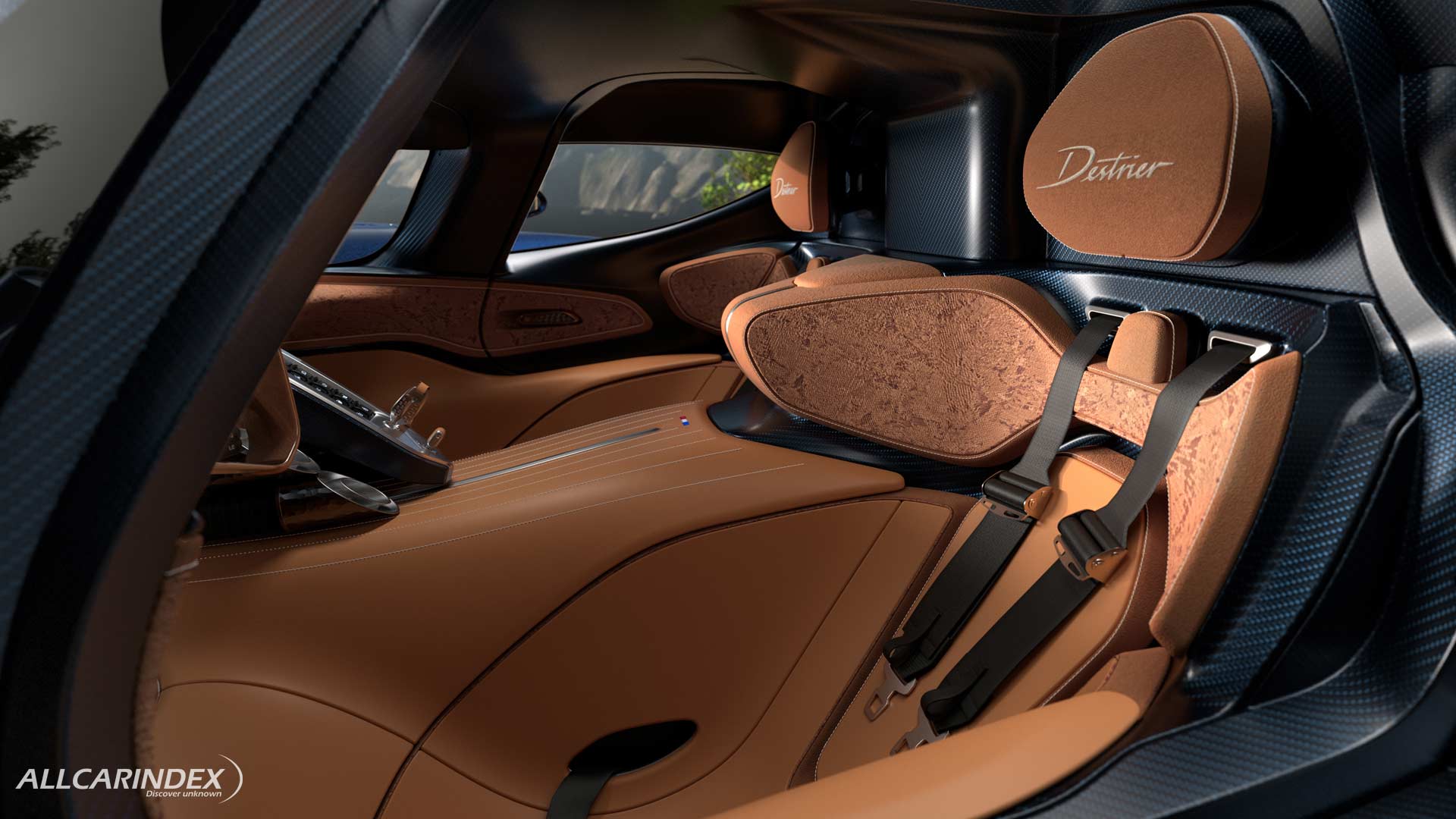
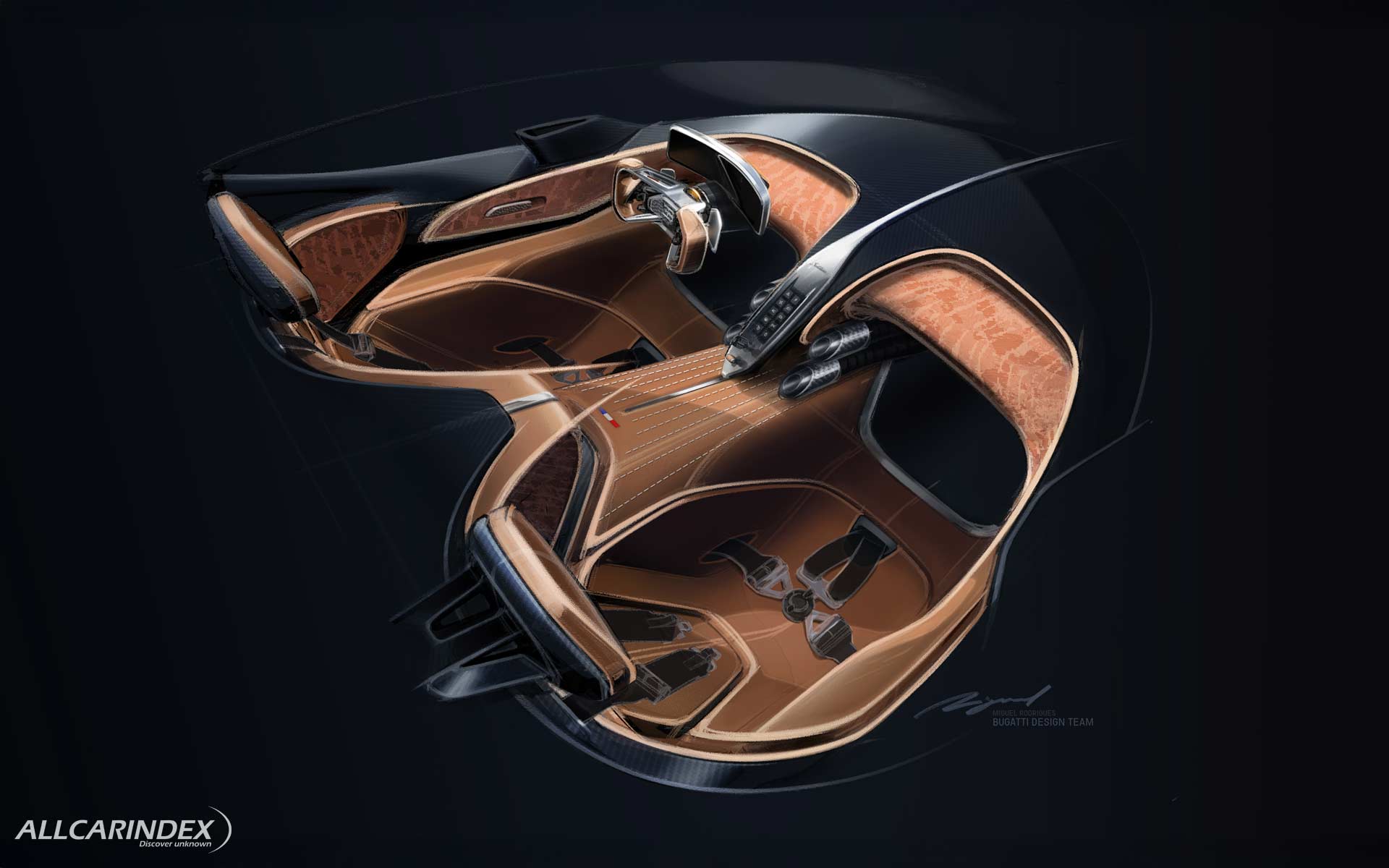
Inside, Destrier steps well away from the Bolide's stripped, motorsport-focused cockpit and reaches instead for the feel of a tailor's workroom, warm and considered, with every material chosen one by one and every surface built around its single owner. Three materials carry the cabin: a leather and nubuck pairing dyed in the warm brown of Ambre Voyageur, and an advanced 3D-knitted textile pulled from techniques used in haute couture and sportswear, forming curved surfaces that feel as considered as they look. Copper thread runs through that knit as a sparkling highlight, worked into a circular halo pattern that wraps the cabin, while contrast stitching traces the shape of each component and reappears in the headrest embroidery and along the center console. Likewise the exterior, the hammered trim finish returns indoors, across four separate touchpoints, the door opener, the air vents, the steering wheel hub and the entry plate, and a small French flag sits at the center of the cabin as a nod to where the marque began. Parametric patterns run through the head and tail lamps too, and the oil filler cap, a visible mark of the car's place as Bugatti's third Solitaire build, carries the Destrier emblem next to its 1/1 designation.
Under all of it sits the Bolide's full W16 power aggregate, a quad-turbocharged 8.0-litre unit at the very top of its development, good for 1,600 PS. It is mentioned here almost as an afterthought, because, like the great Concours-winning cars before it, Destrier is a story told through proportion and craftsmanship rather than outright performance.
Destrier will be unveiled during Monterey Car Week, with its formal debut coming at the Pebble Beach Concours d'Elegance on August 16, 2026, taking its place among cars built to be looked at rather than timed. A knight's horse, barely a meter off the ground, finally at rest on the lawn it was built for.