aci-logo

De Dion-Bouton

1883-1932

Brand Data

De Dion-Bouton was a French manufacturer of automobiles and railcars that operated from 1883 to 1953. It was founded by the Marquis Jules-Albert de Dion, along with Georges Bouton and Bouton's brother-in-law Charles-Armand Trépardoux, after de Dion agreed to finance the pair's engineering ambitions following his encounter with a toy locomotive. The company was initially established in Paris as Trépardoux et Cie before becoming De Dion-Bouton, growing at one point into the world's largest automobile manufacturer, recognized for the quality, reliability, and durability of its vehicles.

The firm's early years were devoted to steam power. Its first steam car, built in 1883, was destroyed in a fire during trials, and a second vehicle, named La Marquise, followed the next year with more conventional steering and rear-wheel drive and seating for four. This car was entered by the Marquis de Dion in an 1887 trial regarded as Europe's first motoring competition, which it completed as the sole entrant. The vehicle survived and later took part regularly in the London to Brighton Veteran Car Run.

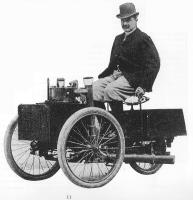
Following this early success, De Dion-Bouton produced steam tricycles and later larger steam tractors capable of towing trailers, sometimes referred to as "steam drags." These tractors introduced what became known as the De Dion axle, or "dead" axle, in which the weight-bearing axle beam was separated from the drive shafts or chains. The company also entered a steam vehicle in the 1894 Paris–Rouen race, where it was disqualified for requiring both a driver and a stoker despite completing the course. Steam buses and trucks continued to be manufactured until 1904, and the steam car itself remained largely unchanged in production for about a decade, even after Trépardoux resigned in 1894 over the company's shift toward internal combustion vehicles.

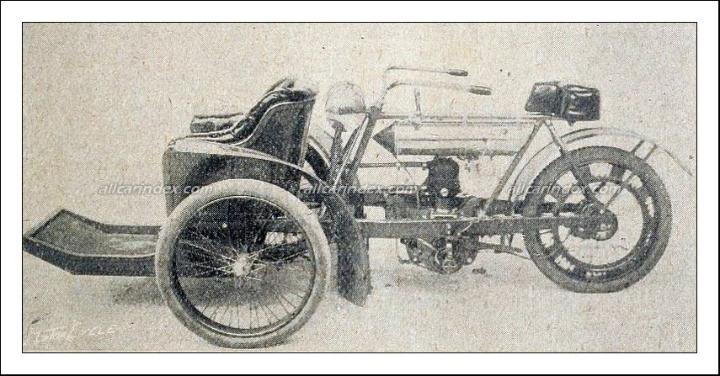
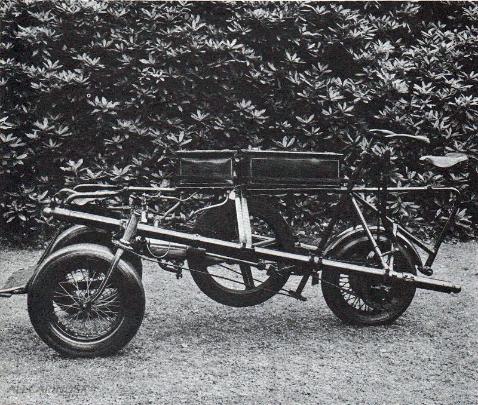
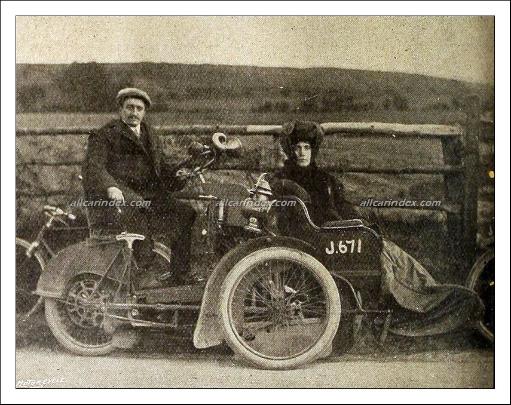
With Trépardoux's departure, the firm became De Dion, Bouton et Compagnie and increasingly focused on internal combustion engines. In 1895, Bouton developed a small one-cylinder engine that, despite early mechanical problems at its designed operating speed, proved capable of exceptional performance once run at higher revolutions. This engine was fitted to a tricycle frame equipped with Michelin pneumatic tires and entered production in 1896, with progressively larger versions introduced in subsequent years. The tricar line continued until 1901, with engine output growing considerably over its production life, and specially tuned racing versions reaching even higher power figures.

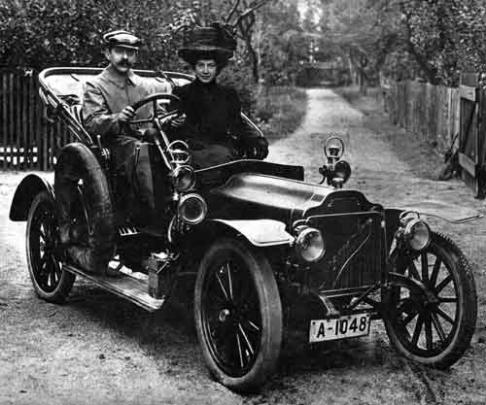
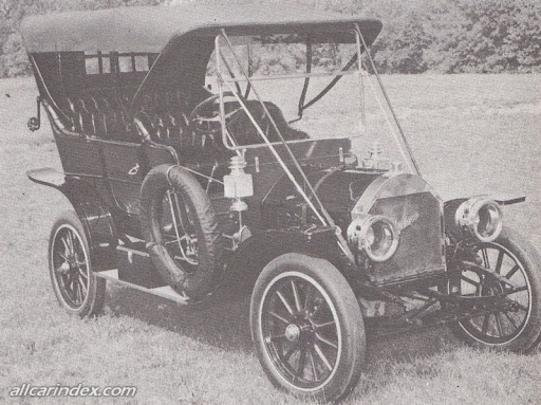
The company later expanded into four-wheeled vehicles, introducing a voiturette model in 1900 with an engine mounted under the seat and a distinctive vis-à-vis seating arrangement in which the passenger faced the driver. This model evolved through several successive versions with increasing power output, alongside progressive mechanical developments such as multi-speed gearboxes and a distinctive decelerator pedal system used until World War I. A small number of electric cars were also produced in 1901.

Beyond building its own vehicles, De Dion-Bouton became a significant supplier of engines to other manufacturers, providing power units that were adopted by various automobile makers of the period.

Subscribe for Full Access

  • Brands and models — Full galleries and interactive map
  • Exotic car catalog — Full brand details and model specs
  • Documentation archive — Full scans, plus PDF and ZIP downloads
  • Ad-free browsing

From €9.90/month — or €50/year (save 58%)

Subscribe Now
Test your car knowledge

Take a quick quiz or try the Mystery Car of the Week — can you name the car?