
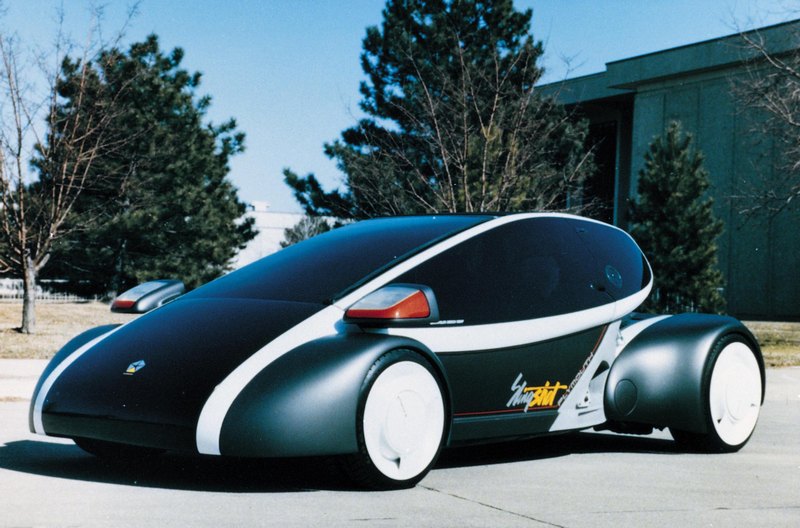
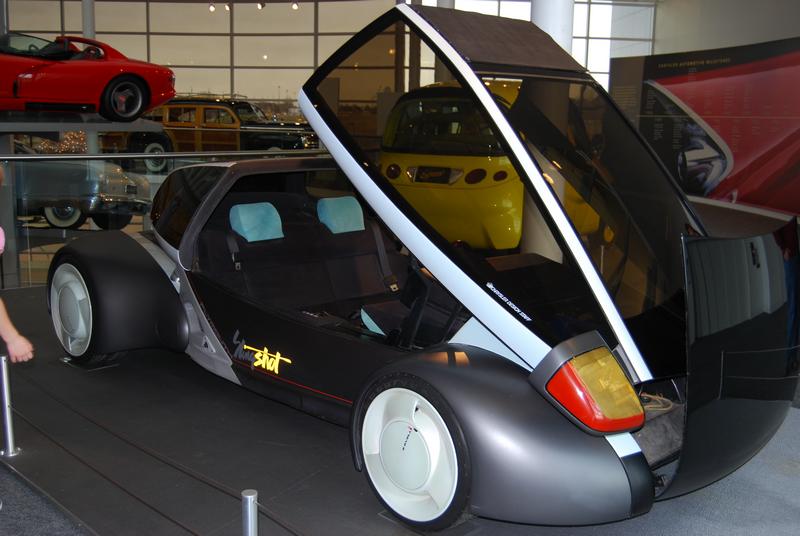
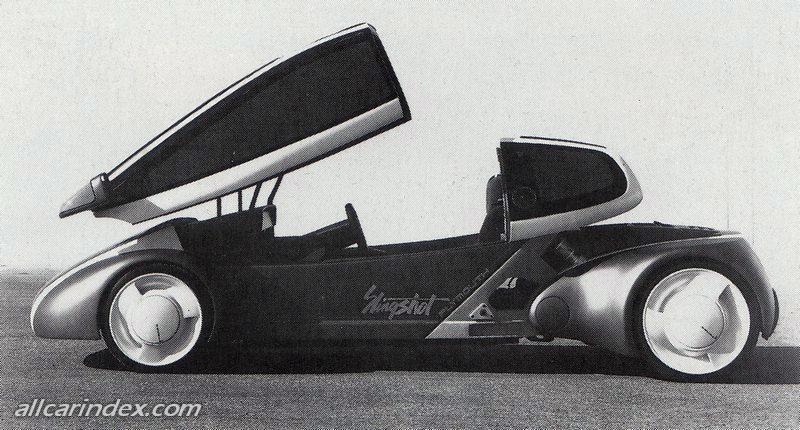
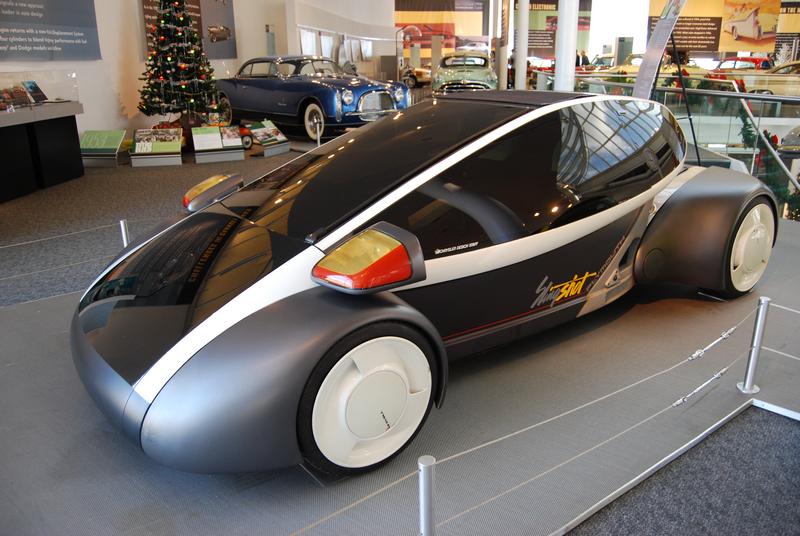
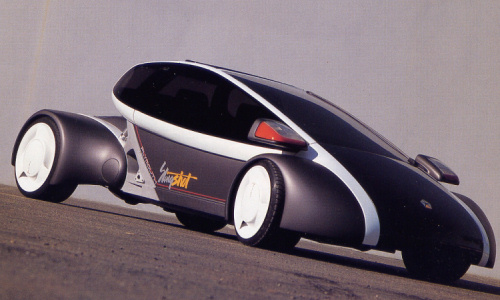
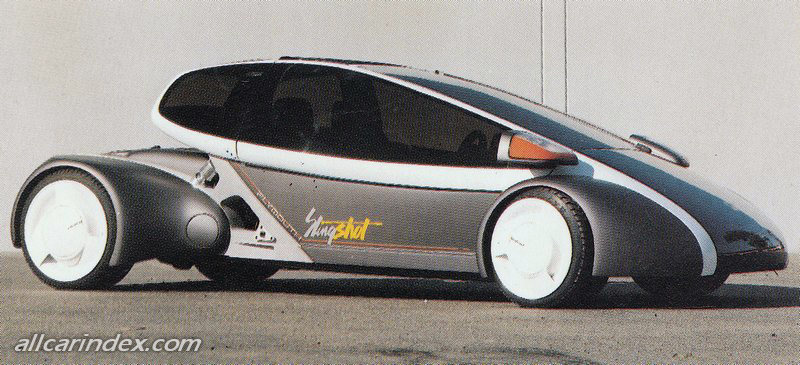
The Plymouth Slingshot was a concept car developed by Chrysler and shown to the public for the first time not in Detroit but at the Greater Los Angeles Auto Show, a choice reportedly made because California was thought to offer more receptive ground for such a bold design. The name, meaning a catapult-like slingshot, was considered fitting given the shape of the car when viewed from the rear. It was conceived as a high-tech two-seat sports coupe aimed at a future youth market, and its futuristic, imaginative contours were the product of collaboration between Chrysler designers and university design students, working as a special project team with an average age of 25.
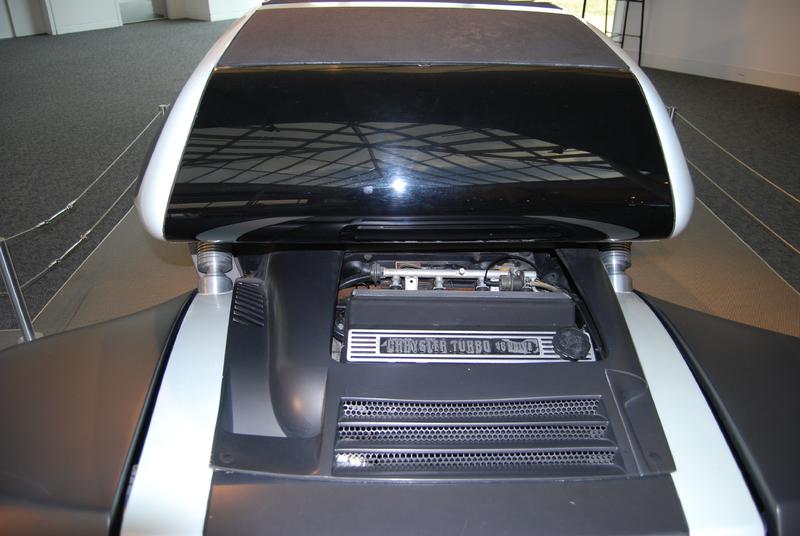
The Slingshot combined an aircraft-style cockpit with a monocoque body built around a particularly rigid carbon fiber chassis. Its front section, including the glass canopy and windscreen, could be raised and swung forward on a scissor mechanism to grant access to the two-seat cabin, though occupants still had to step over relatively high door sills. The rear section was designed as a separate module, its styling appearing as if fitted onto the main body, and it offered a partial view of the mid-mounted engine. Flexible fenders made of elastic material wrapped tightly around the wheels while standing clear of the main body, and the front housed combined headlight, indicator, and mirror units. Apparent shock absorber struts were visible between the upper and lower body sections ahead of the rear wheels.
Power came from a mid-mounted 2213 cc four-cylinder engine with double overhead camshafts, 16 valves, and a turbocharger, producing 228 hp at 6000 rpm and 305 Nm of torque at 3500 rpm. No official power figures were released at the time of the car's debut, though it was known that a related Chrysler four-cylinder unit fitted to the contemporaneous Dodge Intrepid concept produced 225 hp; Plymouth stated only that the engine was economical to run. Drive went through a six-speed ratchet-type shifter resembling a motorcycle gearchange. Alloy wheels carried dual tires front and rear, sized 125/70 R15 at the front and 125/85 VR16 at the rear, and the four-wheel independent suspension was adjustable.
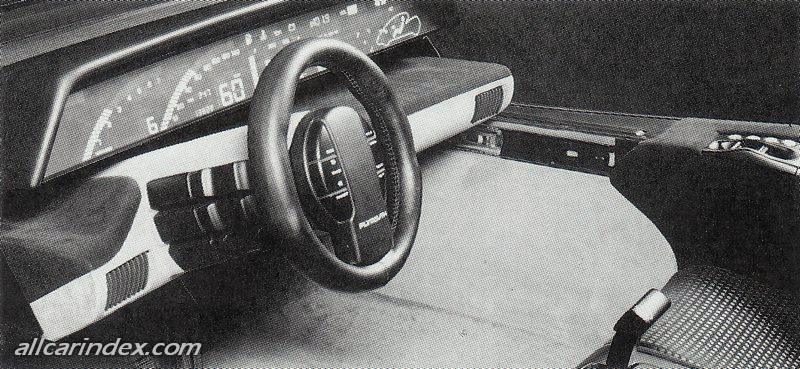
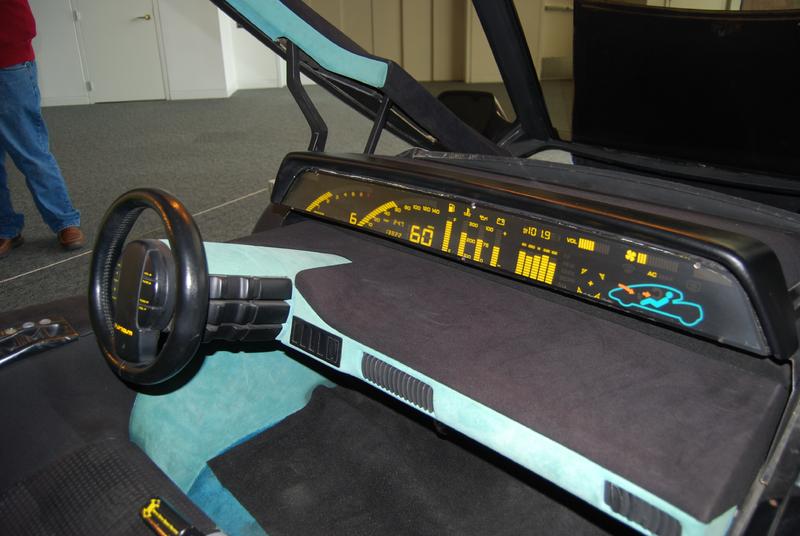
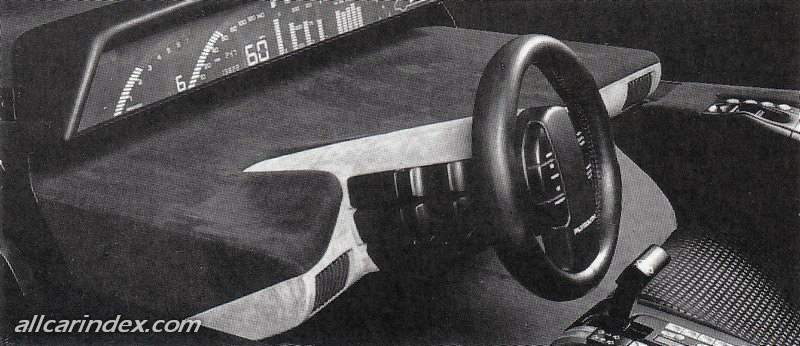
Safety equipment included an integrated roll bar, an impact-absorbing honeycomb structure at the front, high door sills, racing-style seat belts, and driver and passenger airbags. The glass canopy and windscreen could be opened using a magnetic card, and the seats could be raised and lowered automatically to ease entry and exit. The cabin featured a large electronic instrument display spanning the width of the dashboard, beneath which a drawer-like panel holding the steering wheel and pedals could slide fore and aft across the full interior width. The thick-rimmed steering wheel incorporated various control buttons in its hub, and the radio mounted in the center console could be removed and carried by the driver on leaving the car.
The Slingshot measured 3780 mm long, 1730 mm wide, and 1210 mm high, with a wheelbase of 2615 mm. It remained a concept car and was never put into production.