
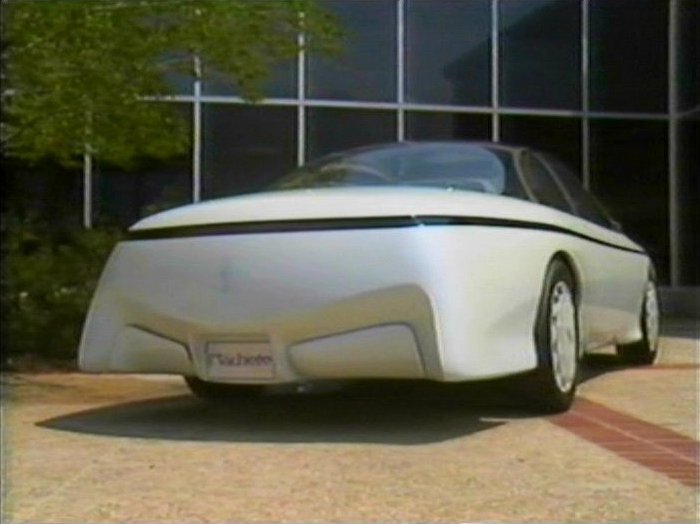
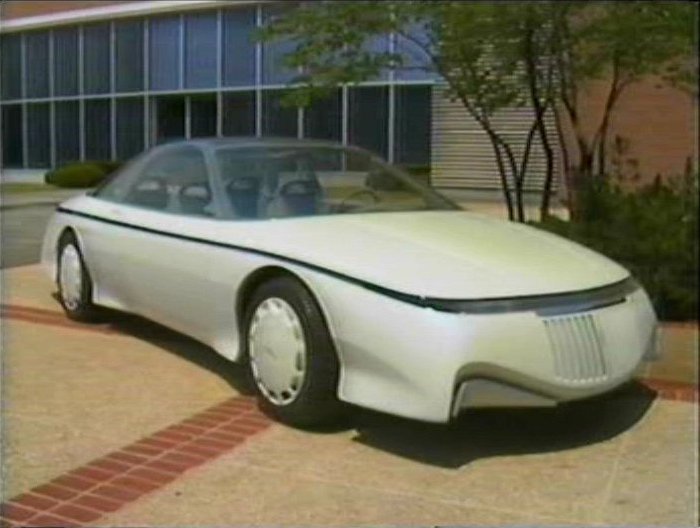
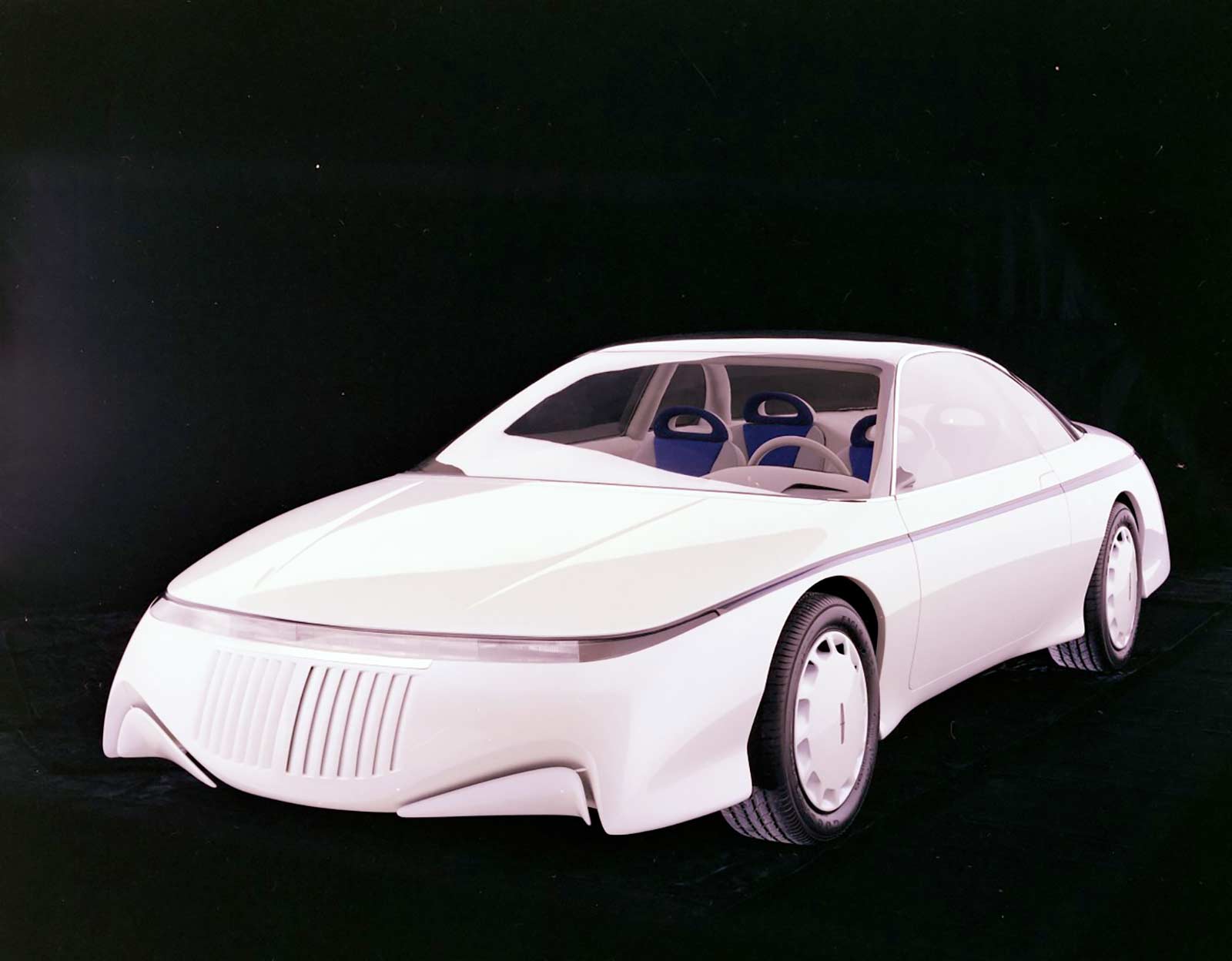
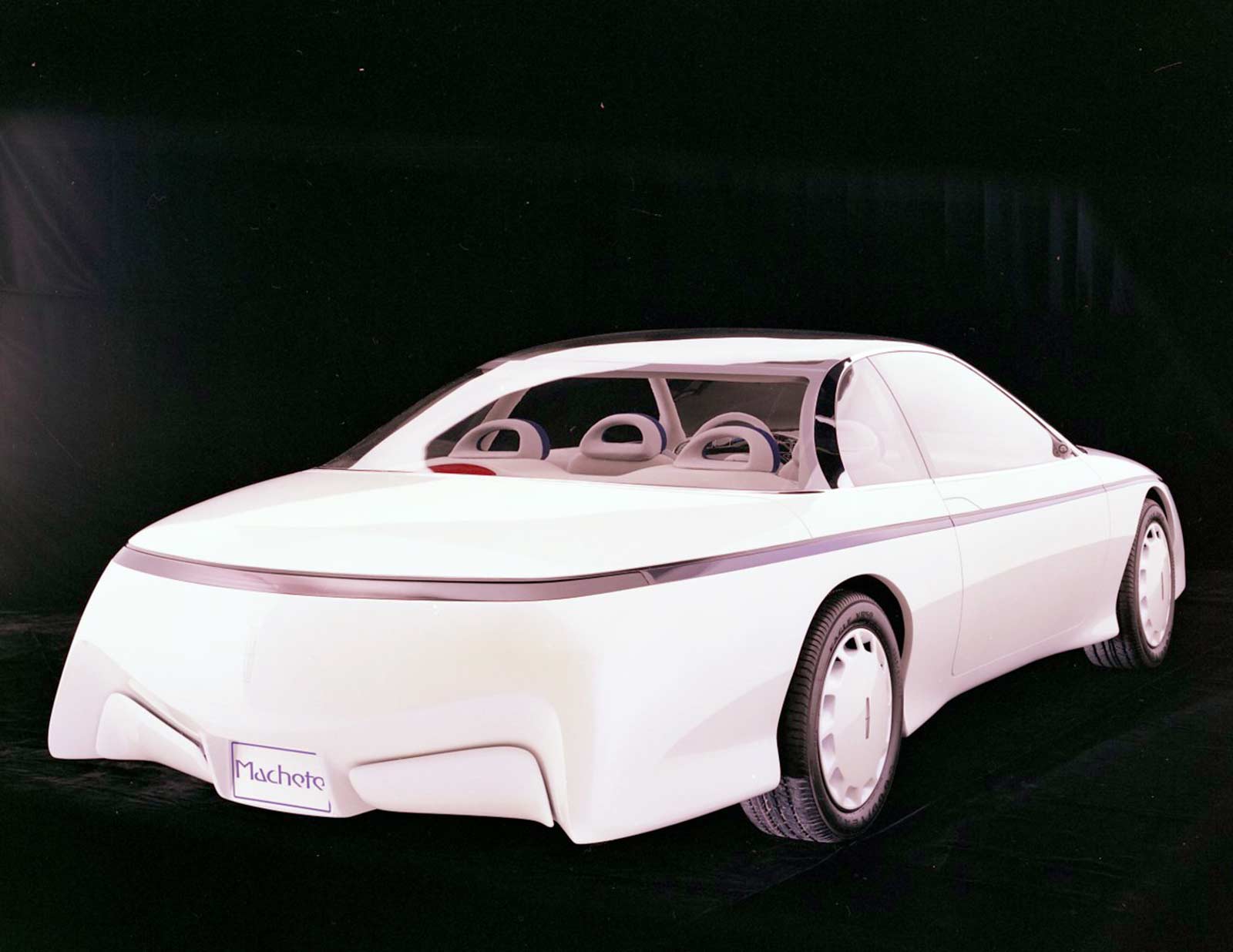
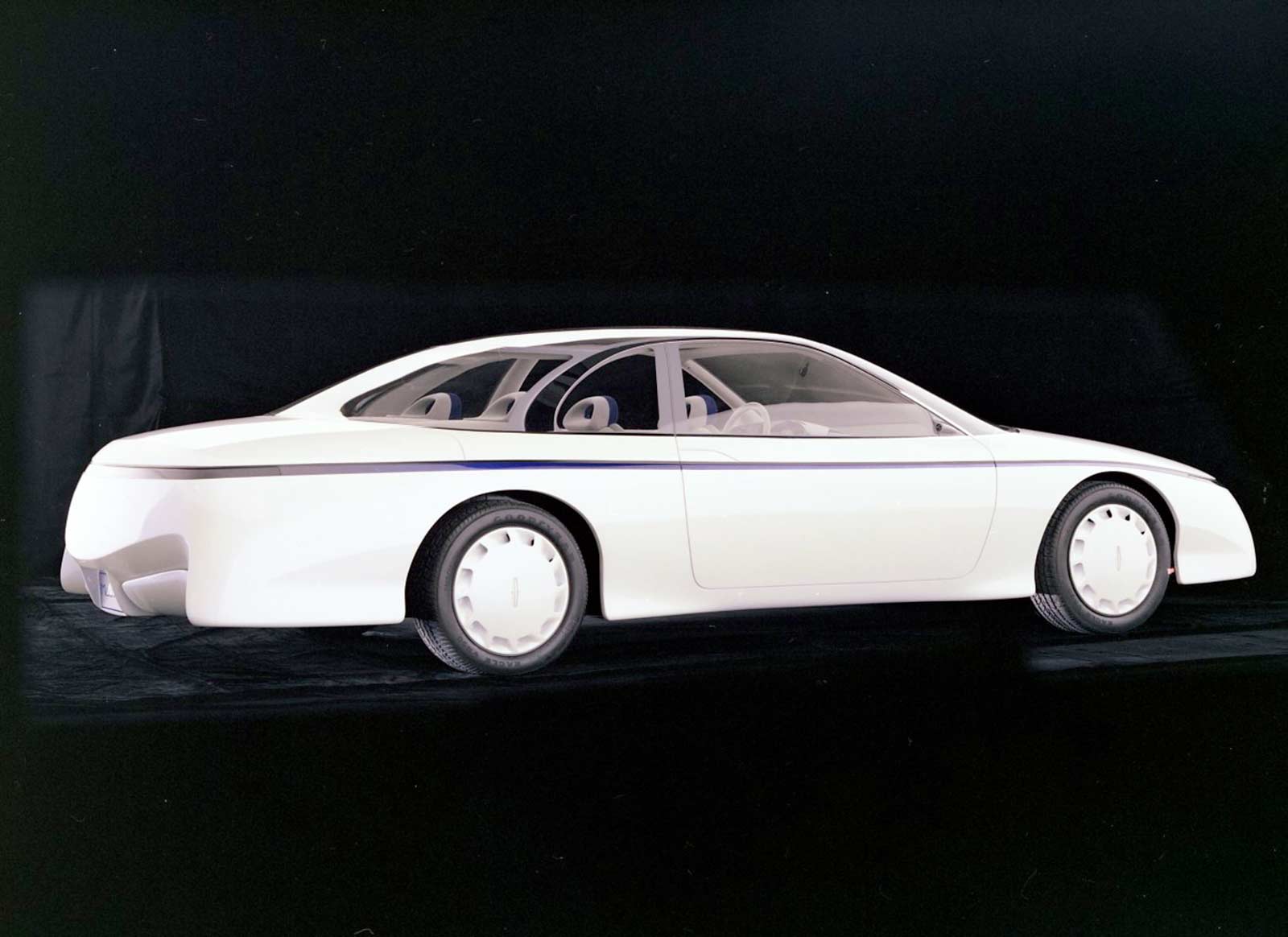
The Lincoln Machete was a concept car built by Ford Motor Company and presented under the Lincoln-Mercury brand as a luxury four-passenger coupe with two doors. It was previewed at the Chicago Auto Show, held at McCormick Place, where it was shown in the Lincoln-Mercury display for the duration of the public show. The car was developed by Ford's Design Center as an exploration of sculptural forms in aerodynamic design, intended both to create a distinctive shape and to improve road-handling characteristics. Jack Telnack, Ford's vice president of Design, said the design study was meant to prove that not all concept cars need to look alike, describing the Machete as one further shape that future aerodynamic designs could take.
The bodywork achieved a coefficient of drag estimated at 0.25, calculated using fluid dynamic techniques. Its front end departed from Lincoln convention, presenting a wide, low nose in which the traditional Lincoln grille was reduced to vertical slits with no chrome trim. The lower body sides curved outward ahead of and behind the wheel openings, and the smooth-surfaced body sloped gently down toward the rear. Deployable lift control devices were sculpturally integrated into the front and rear of the car; when extended, they increased downforce for improved high-speed handling and added drag that assisted braking.
The passenger compartment was topped by a full glass greenhouse and an all-glass roof, providing extensive visibility. A fully engineered version of the car would have used Switchable Privacy Glass, a Ford Glass Division development using liquid crystal technology, previously installed in the Ghia HFX Aerostar concept vehicle. In its viewing mode the glass allowed about 85 percent of ambient light through; when activated by a switch on the instrument panel, light transmission dropped to under 5 percent, giving privacy and sun protection. Headlights and taillights used a technology called Thin Film Lighting, which needed roughly 50 percent less space than conventional units of the time, freeing up trunk and underhood room while also being credited with lower production cost, reduced weight, and superior light output exceeding government standards.
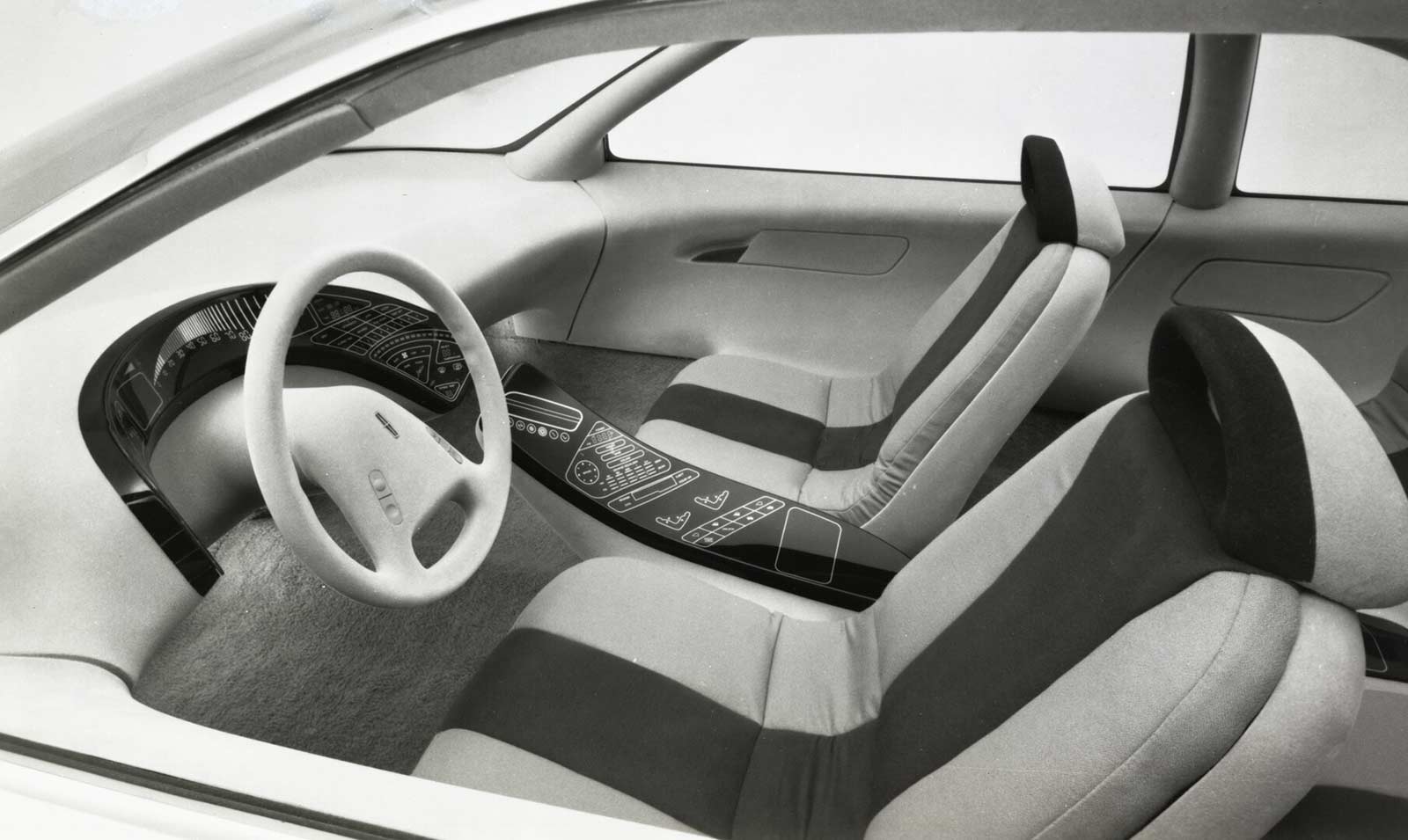
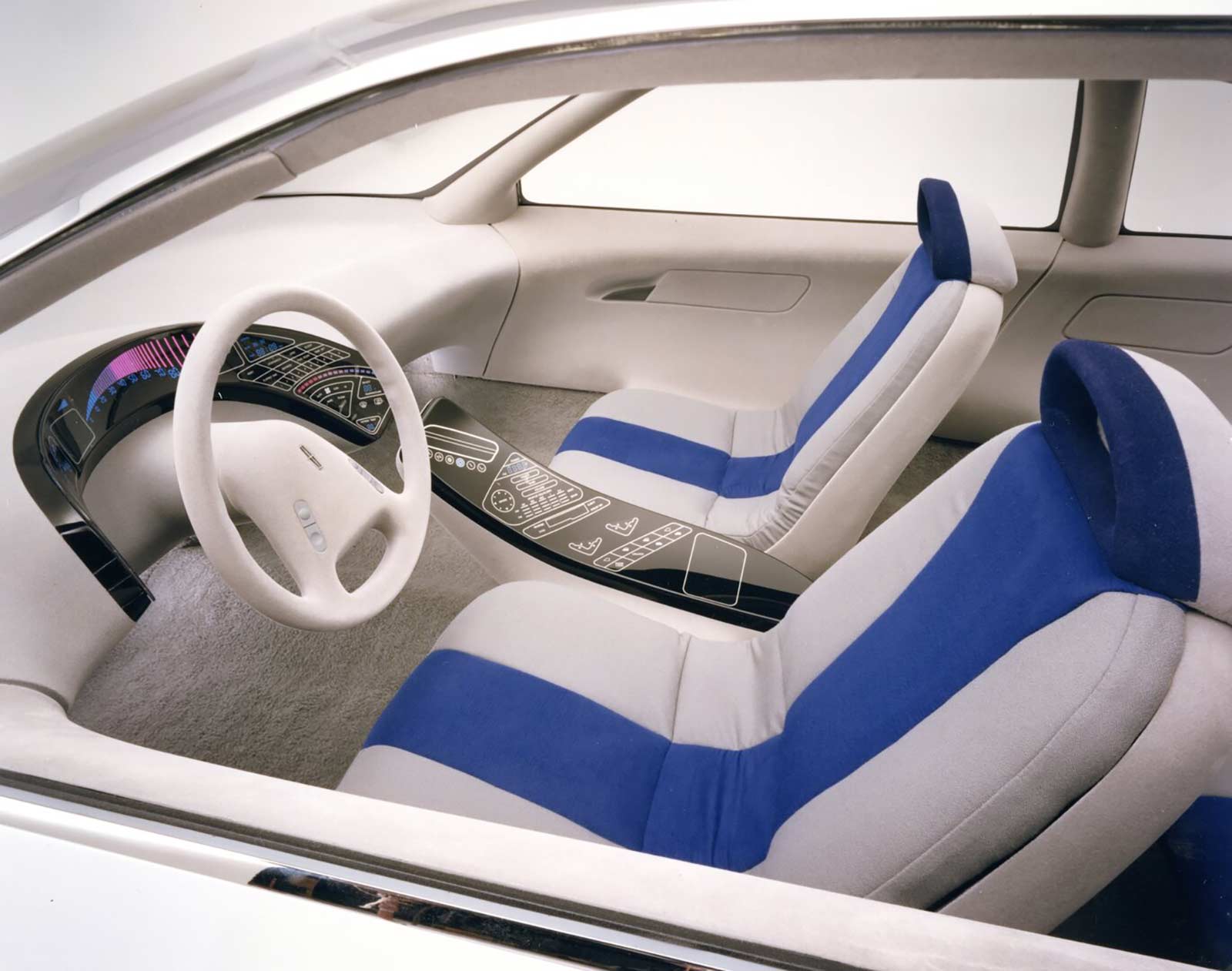
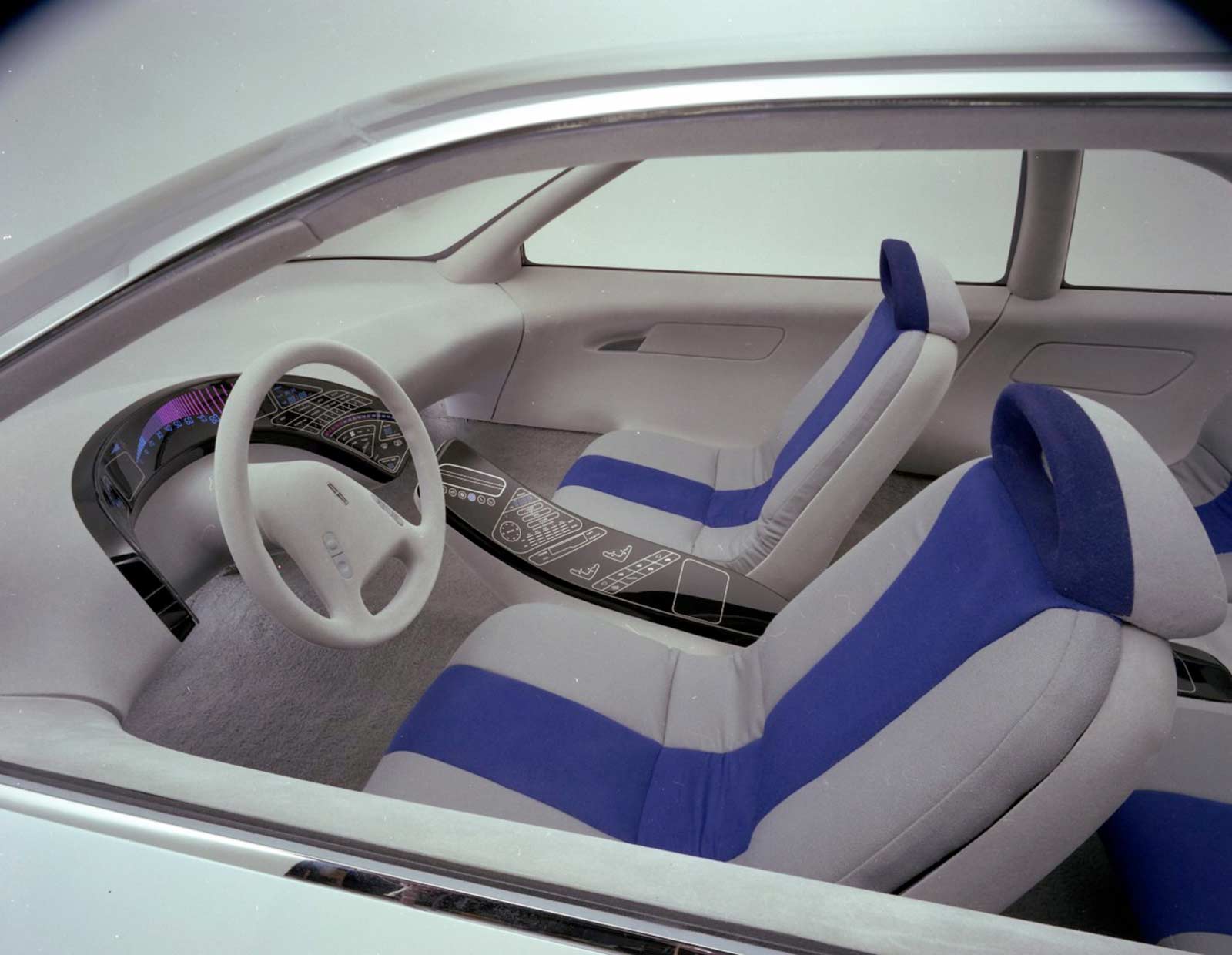
The interior carried the exterior's sculptural theme through to a single, integrated design language. The driver's seat and center console were built as one assembly, so the transmission selector, door lock, hood release, and stereo controls stayed in a constant position relative to the driver regardless of seat adjustment. Conventional exterior mirrors were replaced by miniature television cameras mounted in the doors, which used fiber-optic transmission to send side and rear images to two small screens positioned directly in front of the driver, eliminating the aerodynamic drag associated with protruding mirrors.
Telnack said the Machete demonstrated that form and function had been combined in an innovative way, and that the Design Center team was interested in seeing how visitors to the auto show would react to the car's shape. The Lincoln Machete remained a concept vehicle and was not put into production.
![Lincoln Aviator Concept [2] (2018)](/img/models/a/lincoln-5-aviator-concept-2_001.jpg?w=720&h=405)