

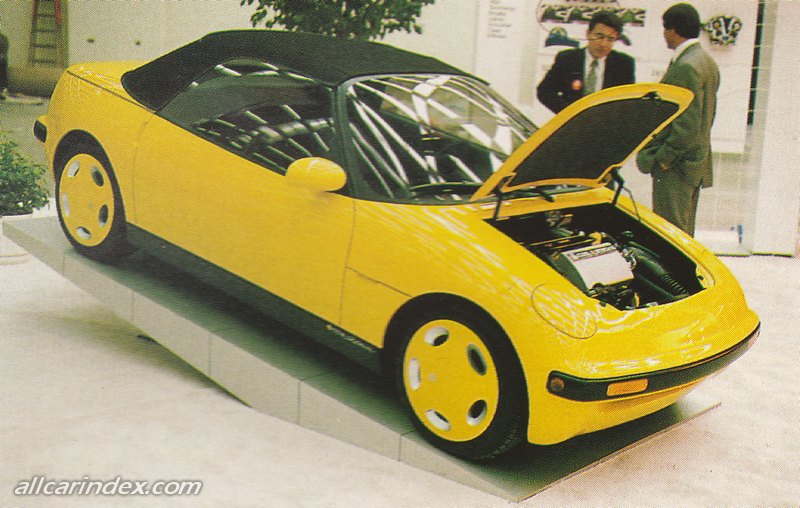
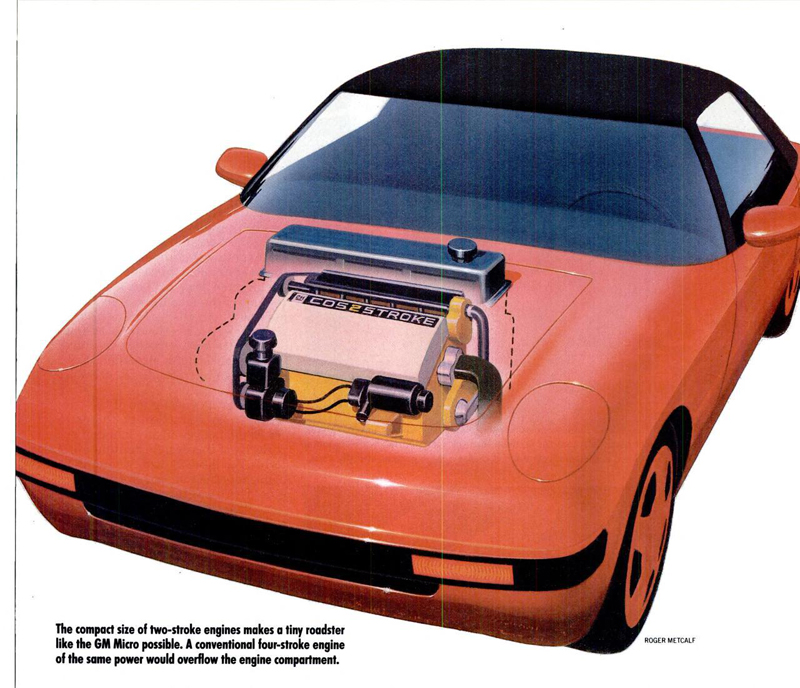
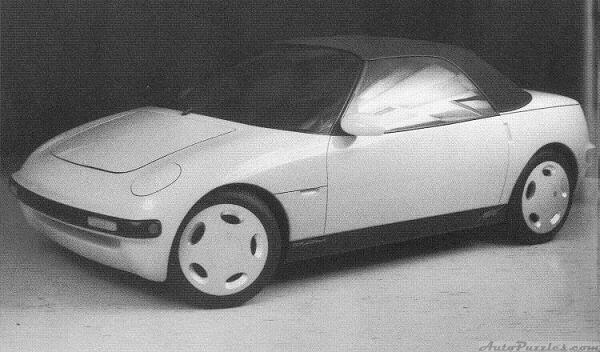
The Micro CDS 2-Stroke was a concept car built by General Motors as a demonstration platform for a new-generation two-stroke engine rather than as a vehicle intended for production. Described as a sporty commuter car, it took the form of a small two-door, two-seat convertible with a plastic body, and existed initially as a mock-up without a finished interior. Its design featured simple, smooth-surfaced plastic bodywork and relatively large wheels finished in the body color.
The car's purpose centered on showcasing the CDS-2 engine, a 1.5-liter three-cylinder two-stroke unit mounted transversely under a short hood, marked with the inscription "GM CDS 2 Stroke." CDS stood for computer-controlled, direct injection, stratified charge, a design incorporating air admixture. The engine produced 110 hp at 5500 rpm and 180 Nm of torque at 2500 rpm, and required only a little more than half the installation space of a comparable four-stroke engine while also being considerably lower in height, a trait GM presented as beneficial for aerodynamic vehicle front-end design.
The two-stroke technology originated with Australian engineer Ralph Sarich, who shifted his development work toward a new two-stroke engine in 1984 through his Orbital Engine Company, accumulating around 400 patents and engaging early with Ford, GM, and other manufacturers. Donald L. Runkle, GM's vice president of advanced engineering, highlighted the aerodynamic packaging benefits but acknowledged uncertainty over whether the two-stroke principle could meet tightening American emissions regulations.