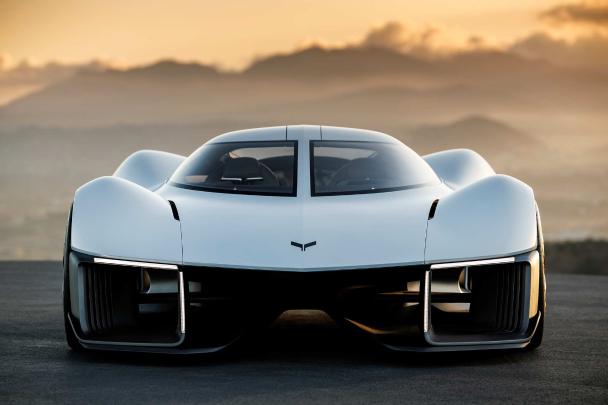

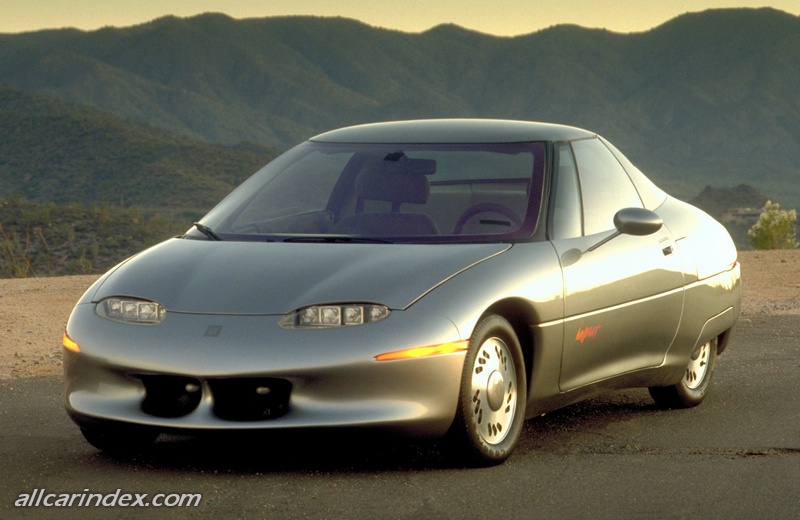
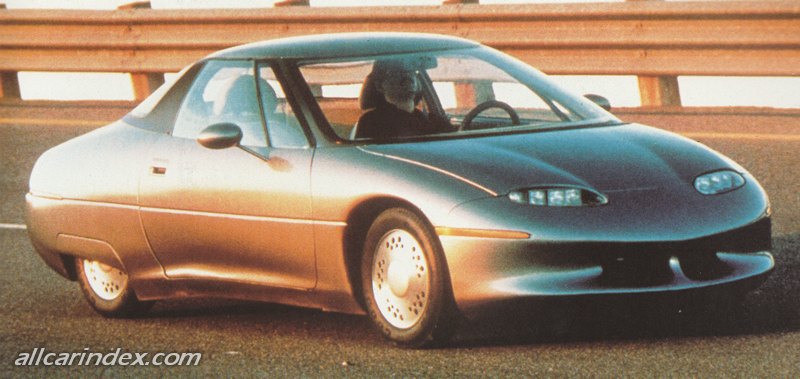
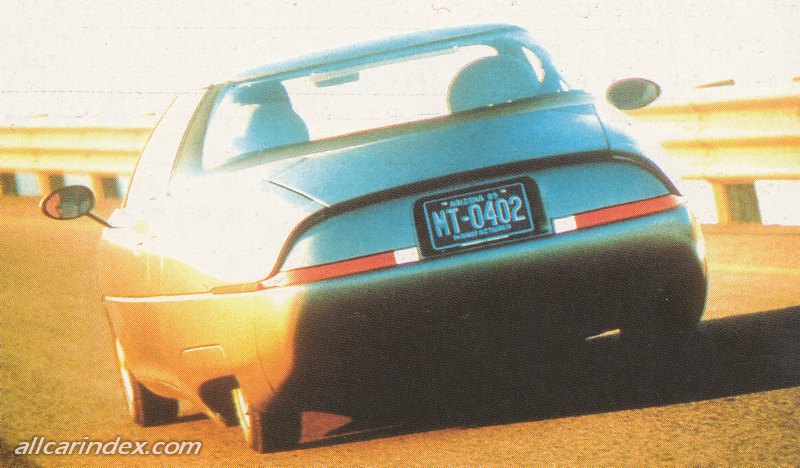
The Impact was an electric sports coupe concept developed by General Motors and shown in January 1990 at the Los Angeles Auto Show, where it stood as the sole future-study exhibit at that event. General Motors publicly stated at the time that no production plans existed for the car, although remarks made by GM chairman Roger B. Smith were widely interpreted as suggesting the car would reach series production, leading to speculation in the press that a sale launch was imminent.
The Impact followed earlier GM electric-vehicle prototypes shown in the late 1970s, which had been described at the time as intended for production by the mid-1980s. Unlike earlier electric vehicles, which had largely been small-scale efforts by niche manufacturers aimed at commuting and short trips, the Impact was conceived as a genuine sports coupe with performance figures considered unrealistic for an electric vehicle at the time. Testing at the Mesa proving grounds recorded 116 hp of combined output, a top speed of over 160 km/h (electronically limited to 120 km/h), a 0-60 mph time of 8 seconds, a range of 193 km (120 mi) at a steady 55 mph, and an urban range of 200 km (124 mi). In acceleration testing, the Impact reportedly outperformed both the Nissan 300ZX and Mazda MX-5. These results were achieved using conventional lead-acid batteries rather than more exotic technology.
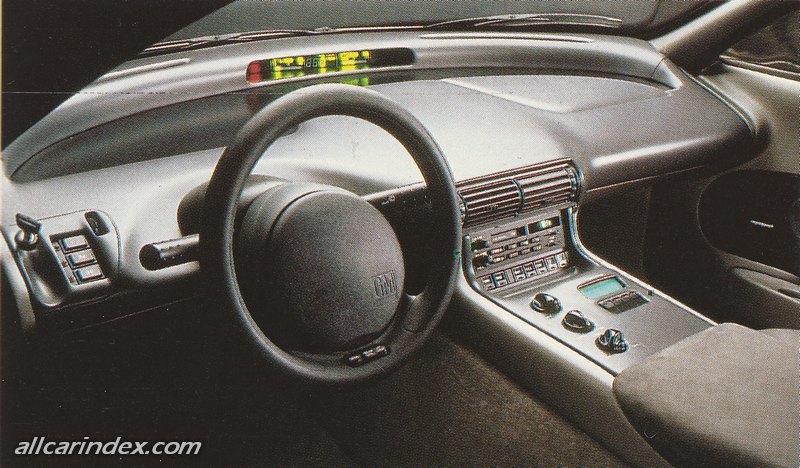
Development involved 17 GM divisions and subsidiaries along with five outside suppliers, coordinated through GM's Advanced Concepts Center in Thousand Oaks, California, under a team of 30 specialists led by John Schinella. Wind-tunnel and model testing produced a drag coefficient of 0.19, aided by the shape of the rear window and front air intake; door panels for the fiberglass-bodied coupe were supplied by Adam Opel AG. A central tunnel housed the 395 kg battery pack and doubled as a structural spine, while lightweight plastic seats and forward-mounted instruments were used to keep the driver's eyes near the road.
Propulsion came from two 58 hp AC-Delco three-phase asynchronous motors, each driving a front wheel through a planetary gearbox integrated into the motor housing, with no conventional transmission. The 100 kW power electronics module weighed 28 kg, and the lead-acid battery pack from GM's Delco Remy division comprised 32 10-volt batteries wired in series, rated for a service life of 32,000 km and capable of near-full recharging in two hours via an onboard charger. Goodyear developed special P165/65R14 tires with roughly half the usual rolling resistance, mounted on Alcoa aluminum wheels, paired with regenerative front disc and rear drum brakes using aluminum components. PPG's Sungate glazing was fitted to limit cabin heat buildup.
The two-door, two-seat coupe measured 414 cm long, 173 cm wide and 121 cm tall, with a 241 cm wheelbase and a total weight of 1000 kg, of which the battery pack alone accounted for 395 kg. Combined motor torque was rated at 128 Nm across 0-6000 rpm, with output peaking at 116 hp at 6600 rpm and a recorded top speed of 121 km/h at 11,900 rpm.