
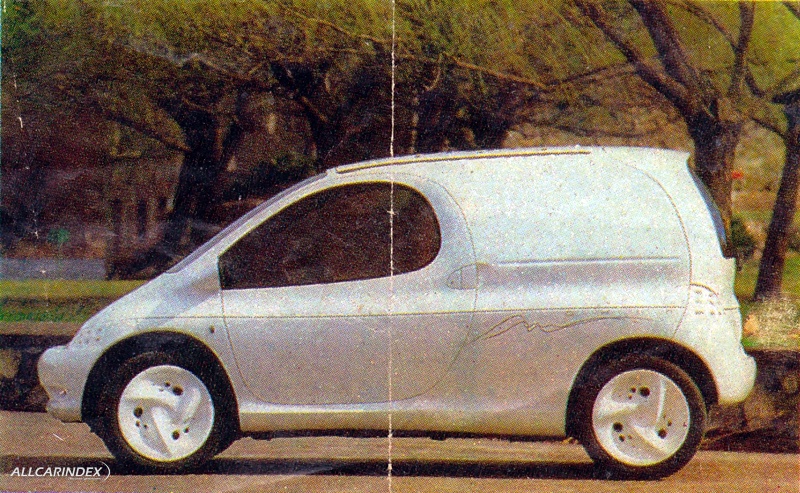
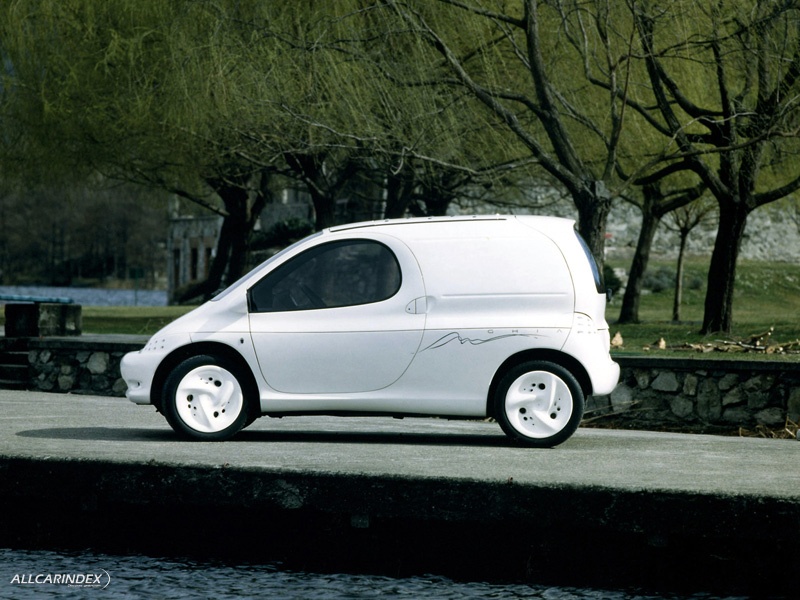
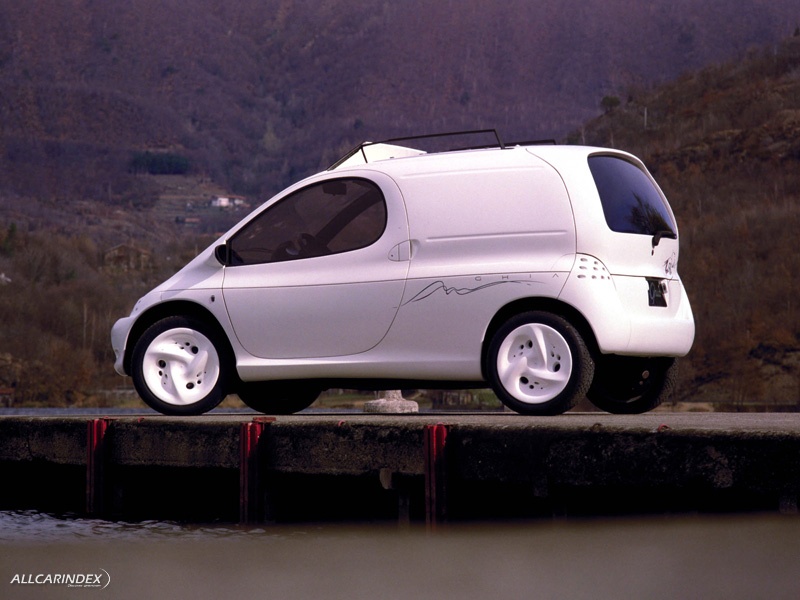
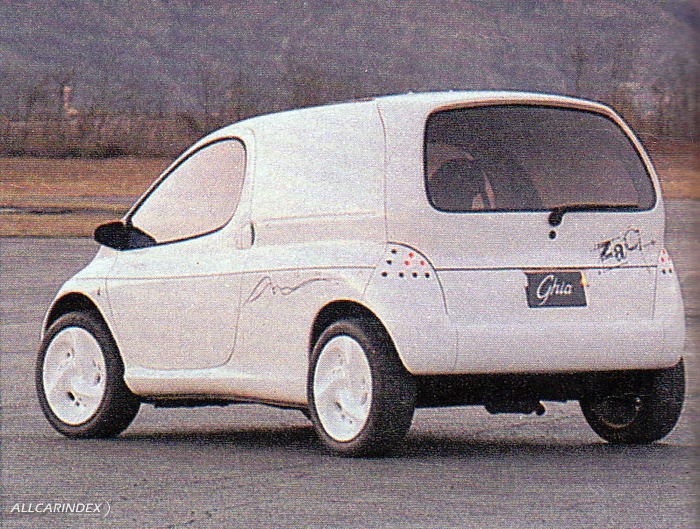

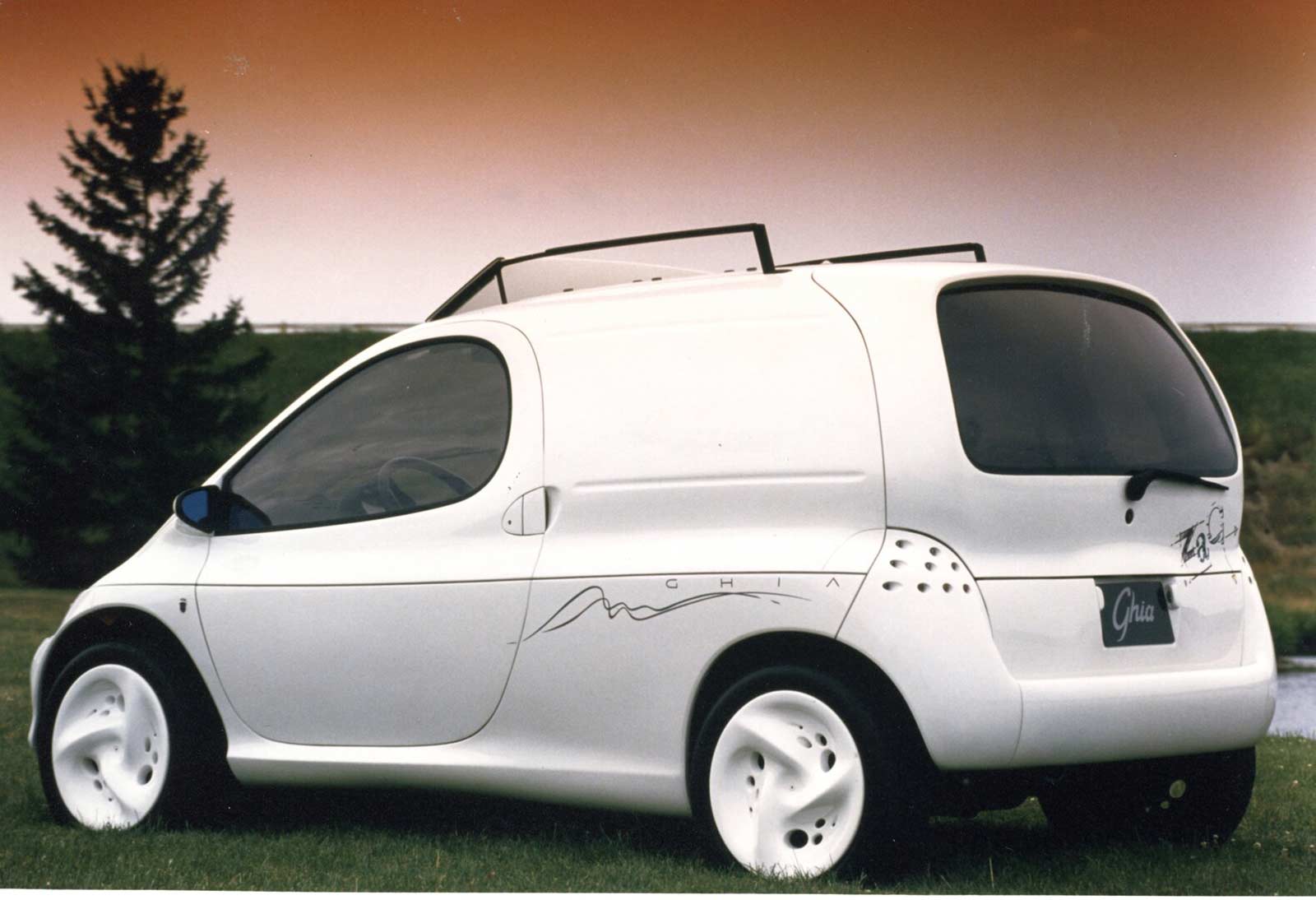
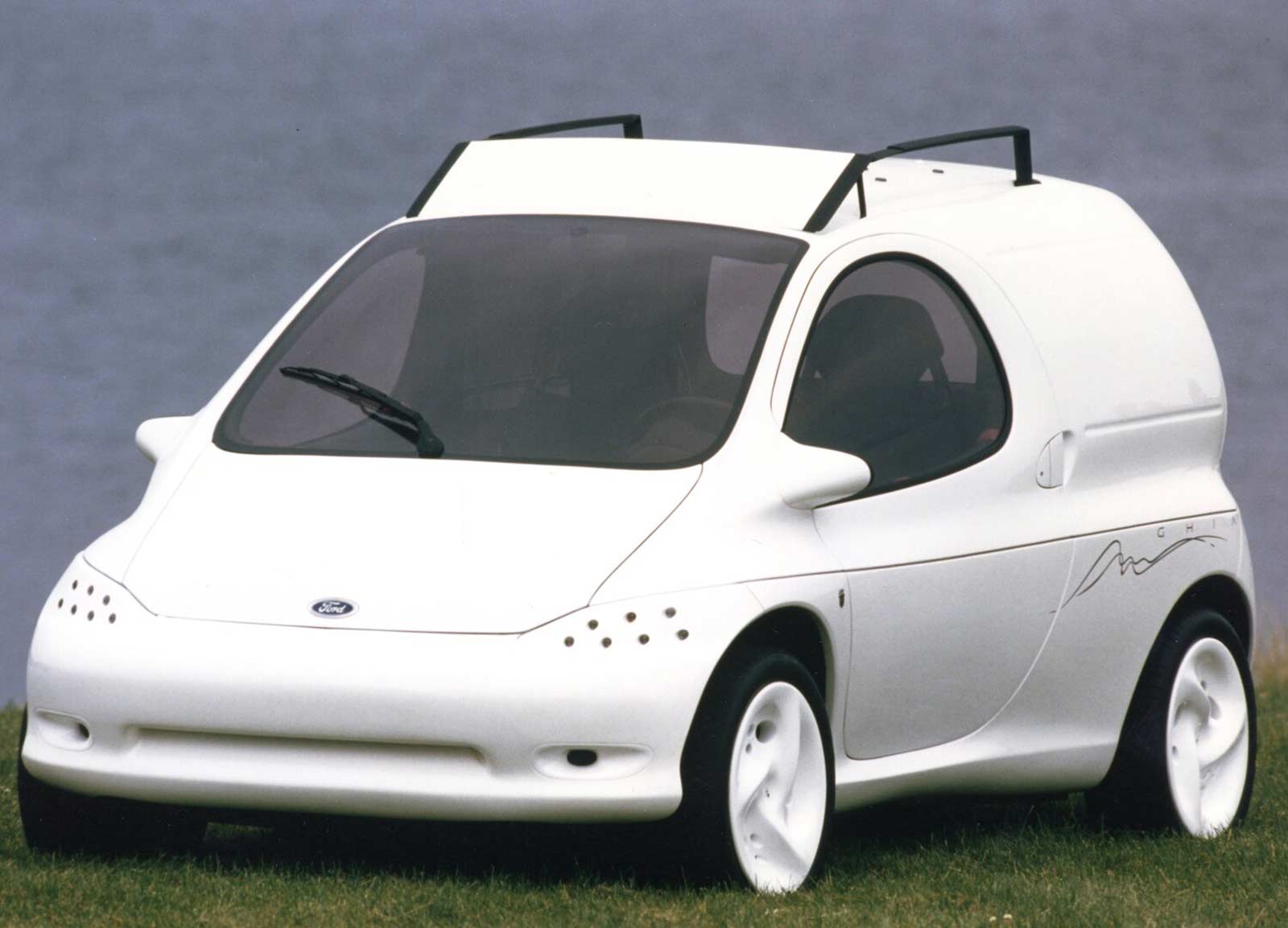
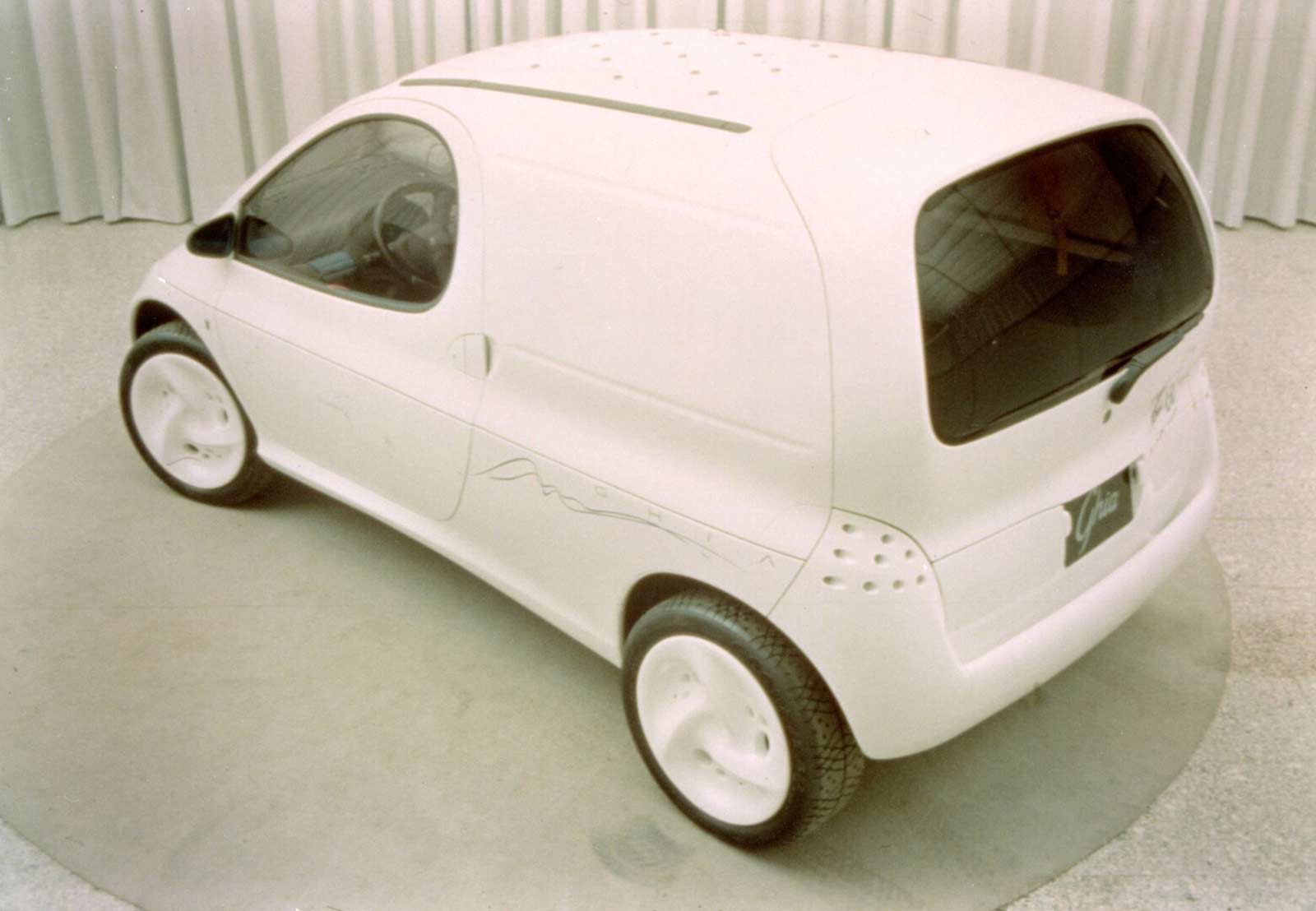
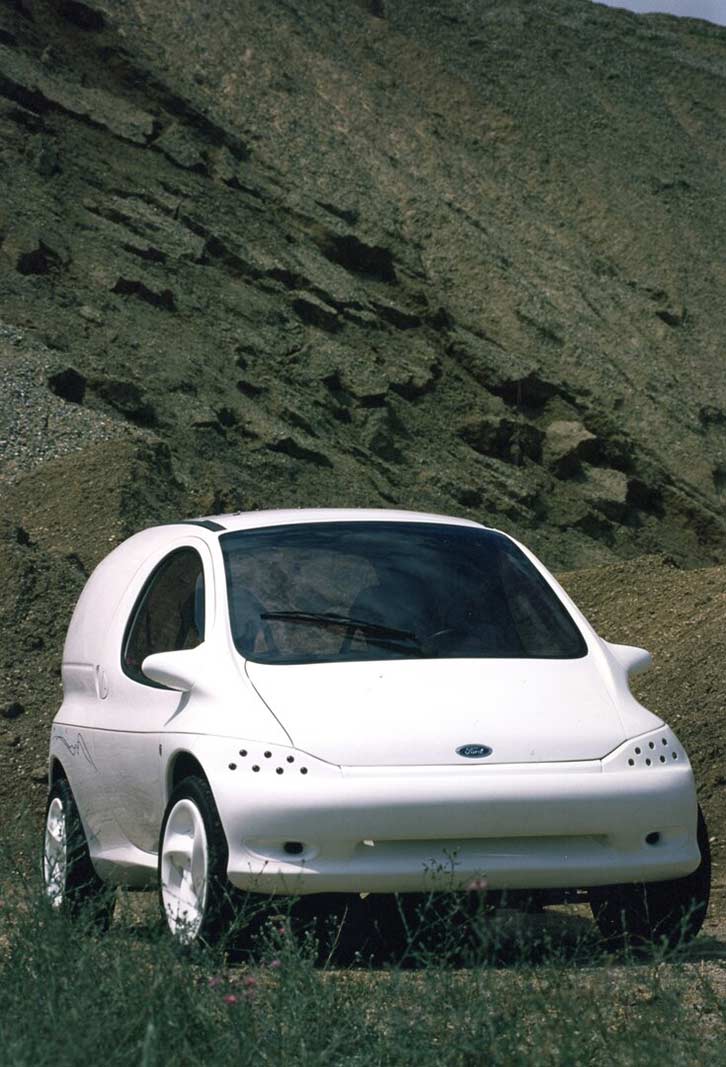
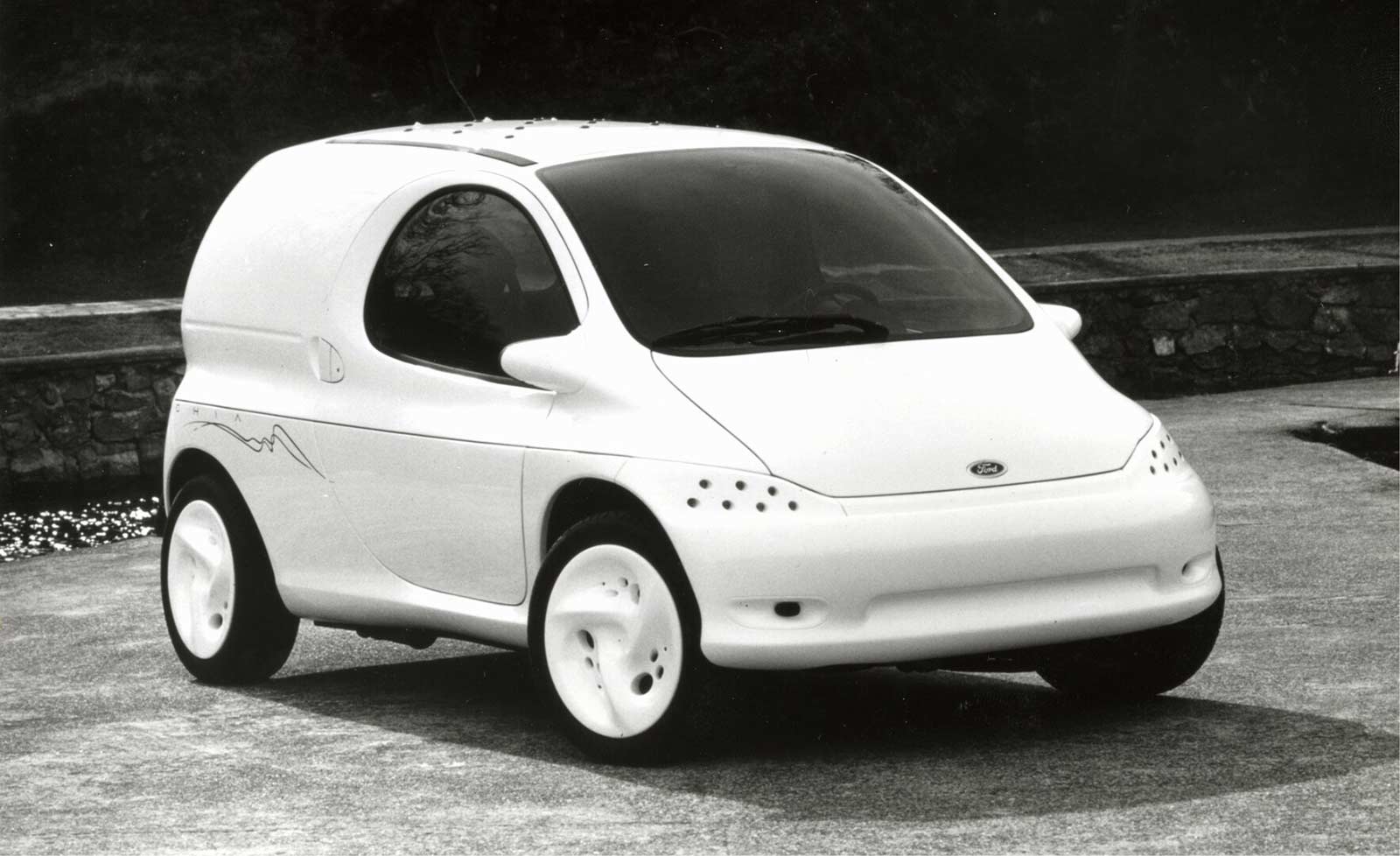
The Ford Zag was a concept van developed by Ford's Ghia design studio in Turin and shown alongside its sibling, the Ghia Zig, as a Ghia design study at the 1990 Geneva International Motor Show. Both vehicles shared a common underpinning based on the Ford Fiesta, which had been reintroduced in a new generation in spring 1989, using a lightly modified version of its drivetrain and drawing on its equipment features. According to Filippo Sapino, Ghia's managing director, the modular configuration shared by Zig and Zag was conceived so that it could underpin an entire family of vehicles, including sports coupes, sedans, pick-ups, and vans.
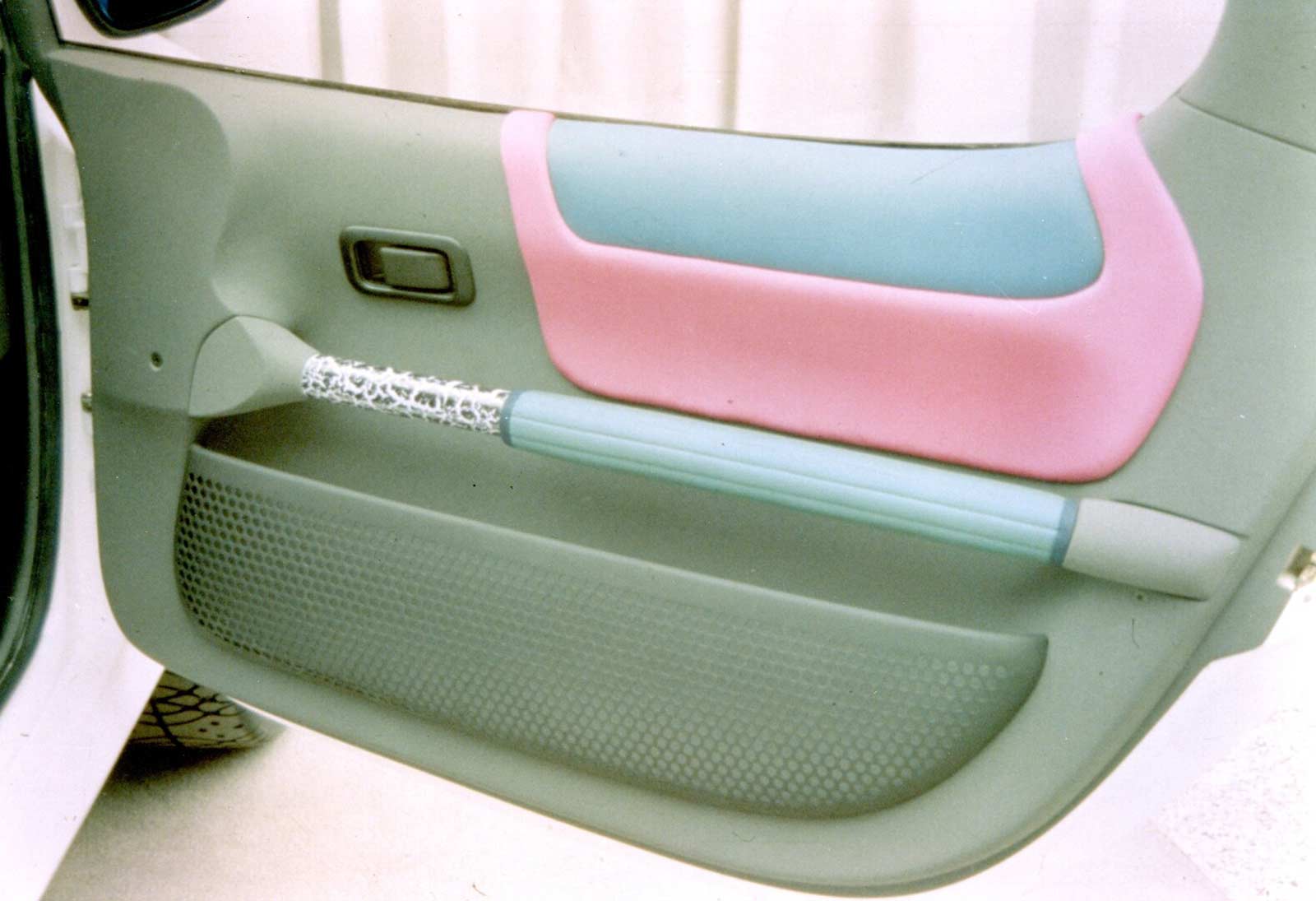
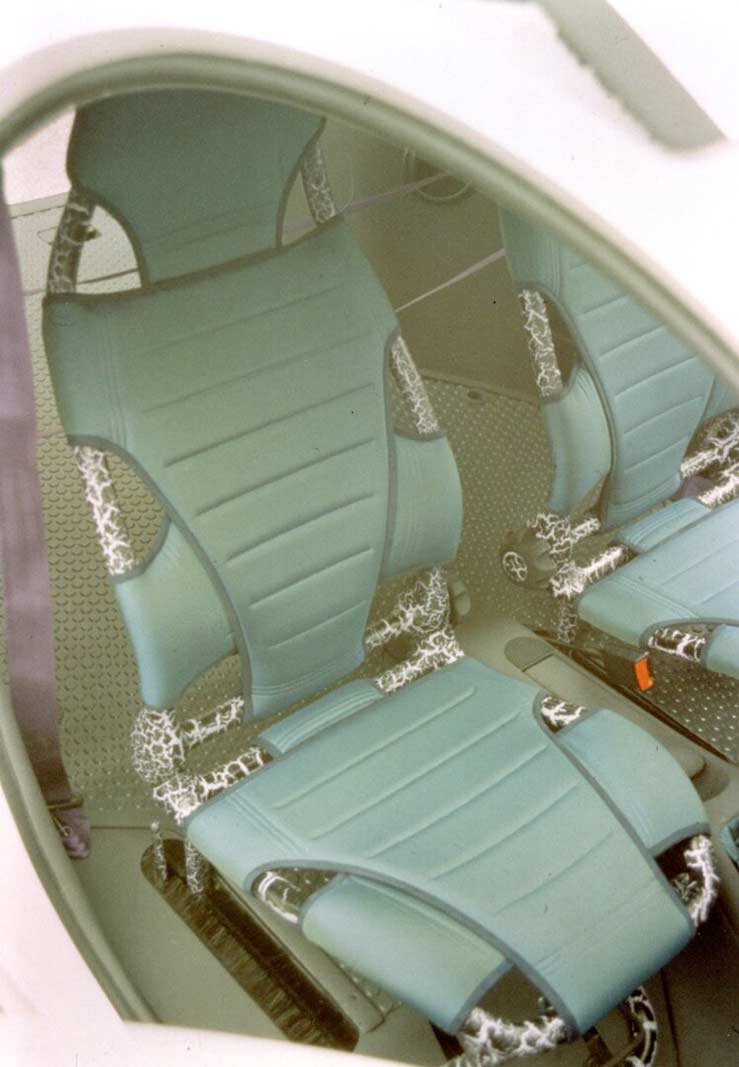
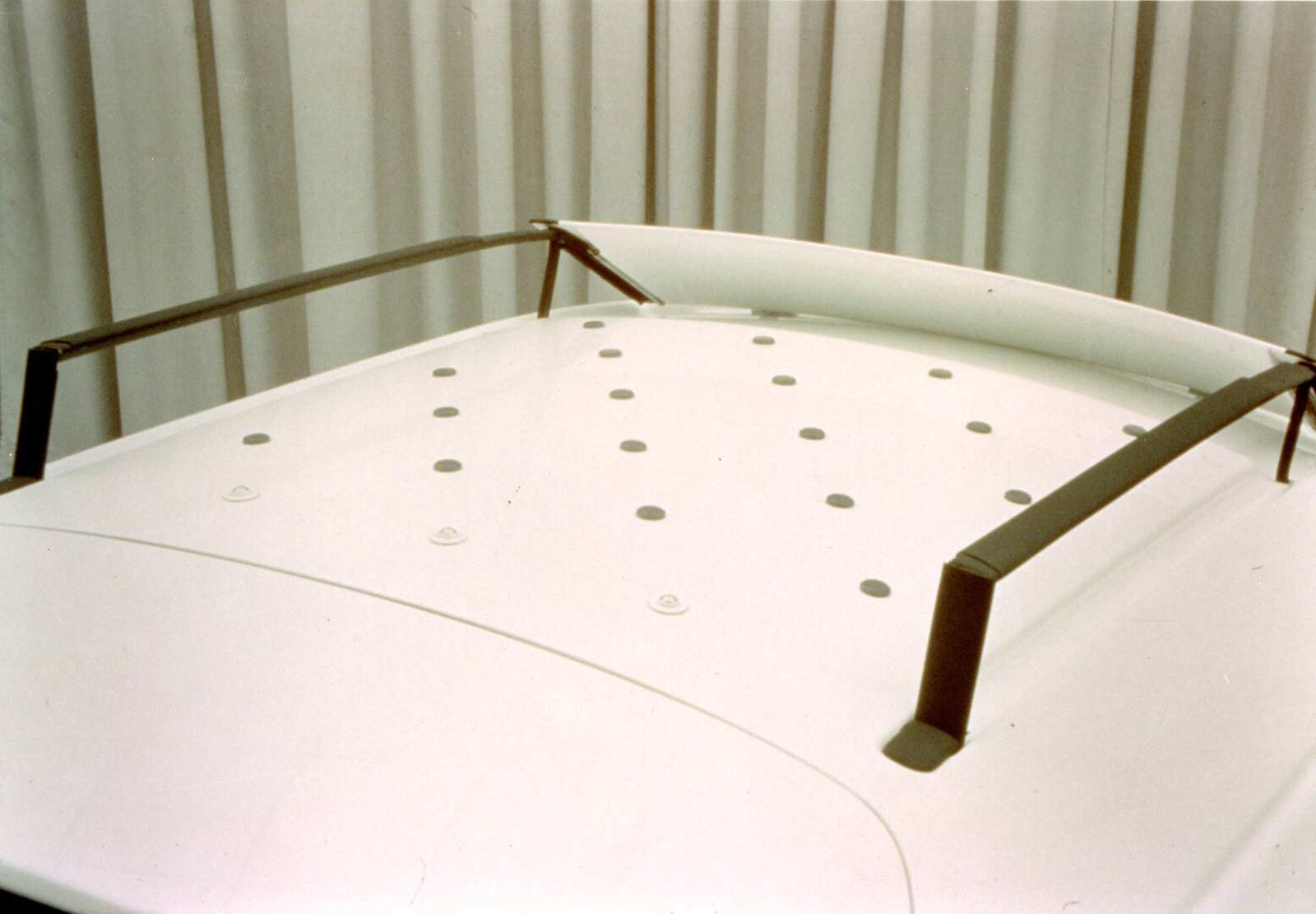
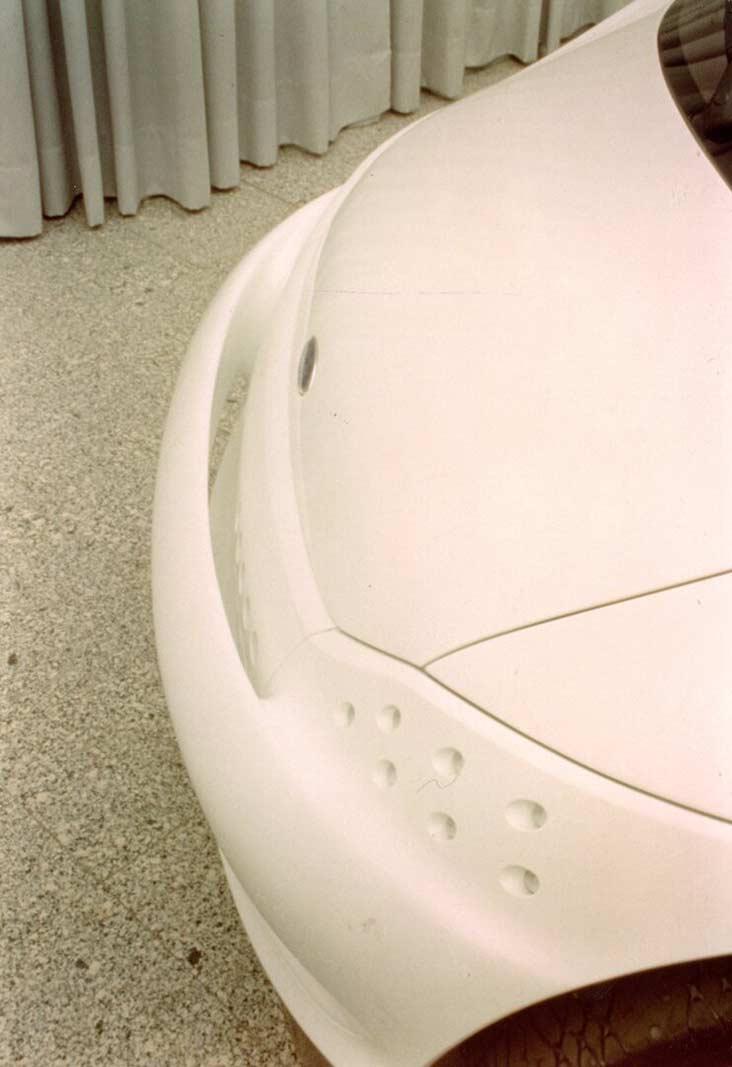
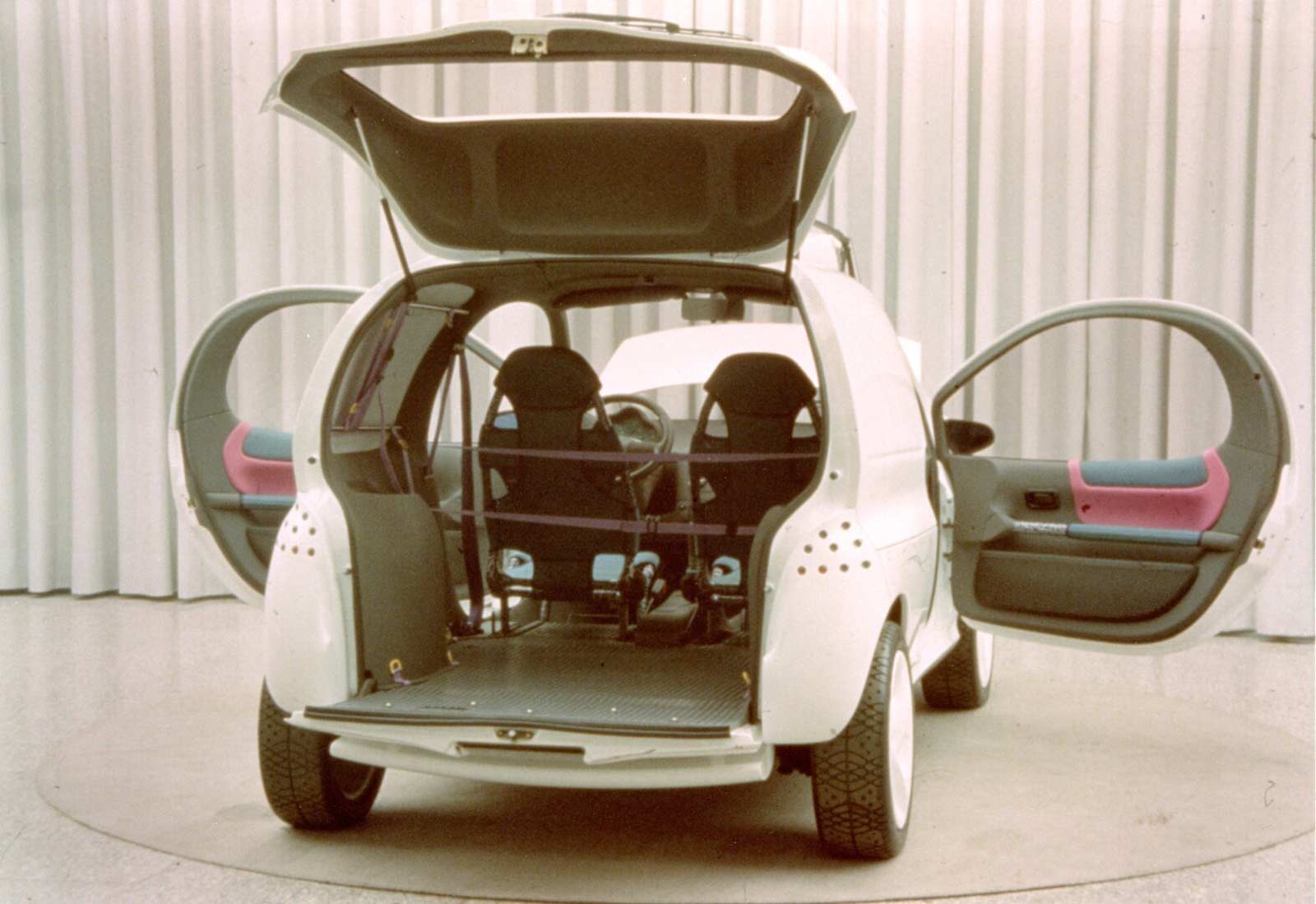
Zag was presented as a versatile leisure and recreation vehicle finished in white, with room for four occupants and substantial luggage capacity. Its interior used bright colors and durable nylon-covered seats, with removable rear seats and a removable, fully forward-sliding front passenger seat. A retractable roof rack allowed for carrying items such as surfboards or mountain bikes. The tailgate curved upward into the sides of the body and was split horizontally at taillight height, with its lower section integrated into the bumper and foldable to extend the load area, incorporating numerous built-in fixings. The seats, with partially exposed tubular frames, and the dashboard had an unconventional design.
Zag was originally fitted with the Fiesta's 1119 cc four-cylinder engine, producing 55 hp at 5200 rpm and 86 Nm at 2700 rpm, paired with a four-speed gearbox. At the Barcelona motor show in May 1991, it was unexpectedly shown fitted instead with a three-cylinder two-stroke engine of similar displacement, developed jointly by Ford and Australia's Orbital Engine Company. It had a wheelbase of 223 cm and measured 339 cm long, 160 cm wide, and 149.5 cm high.