
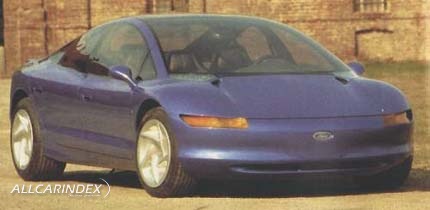
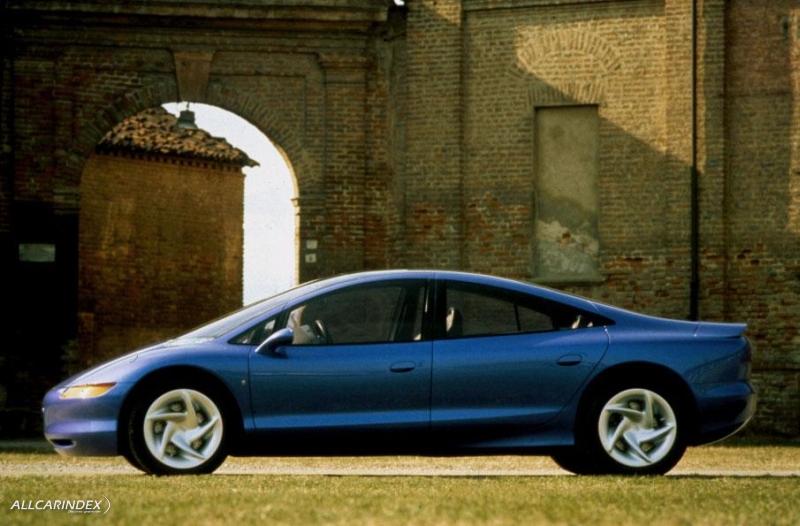
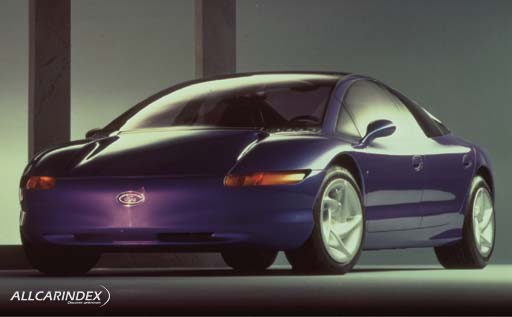
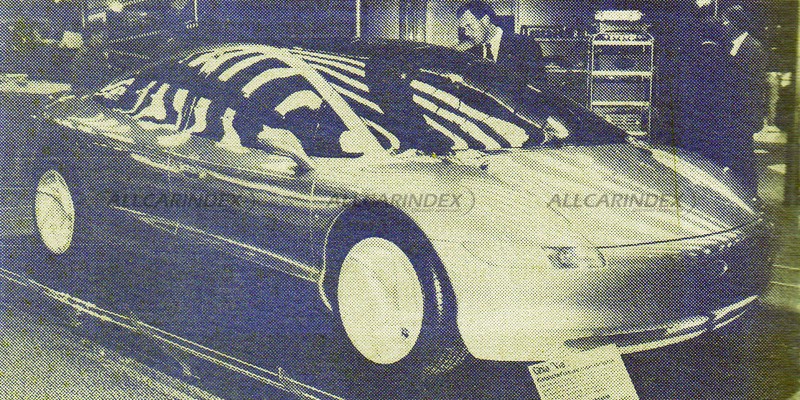
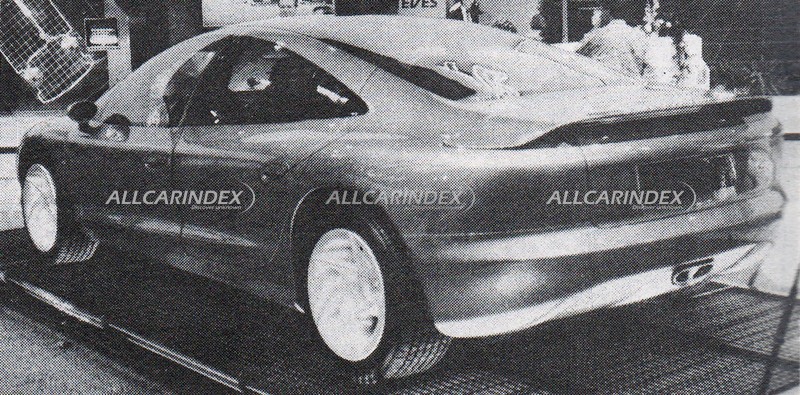
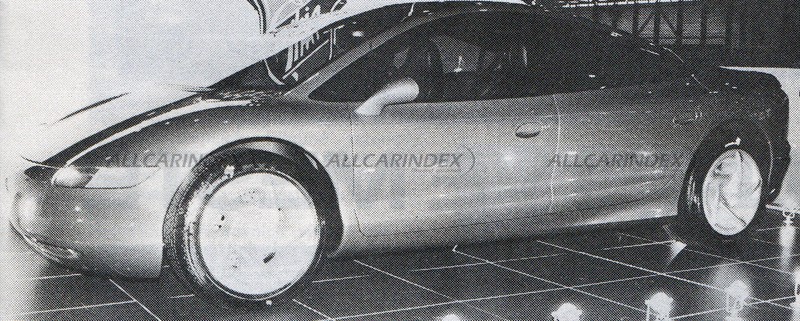
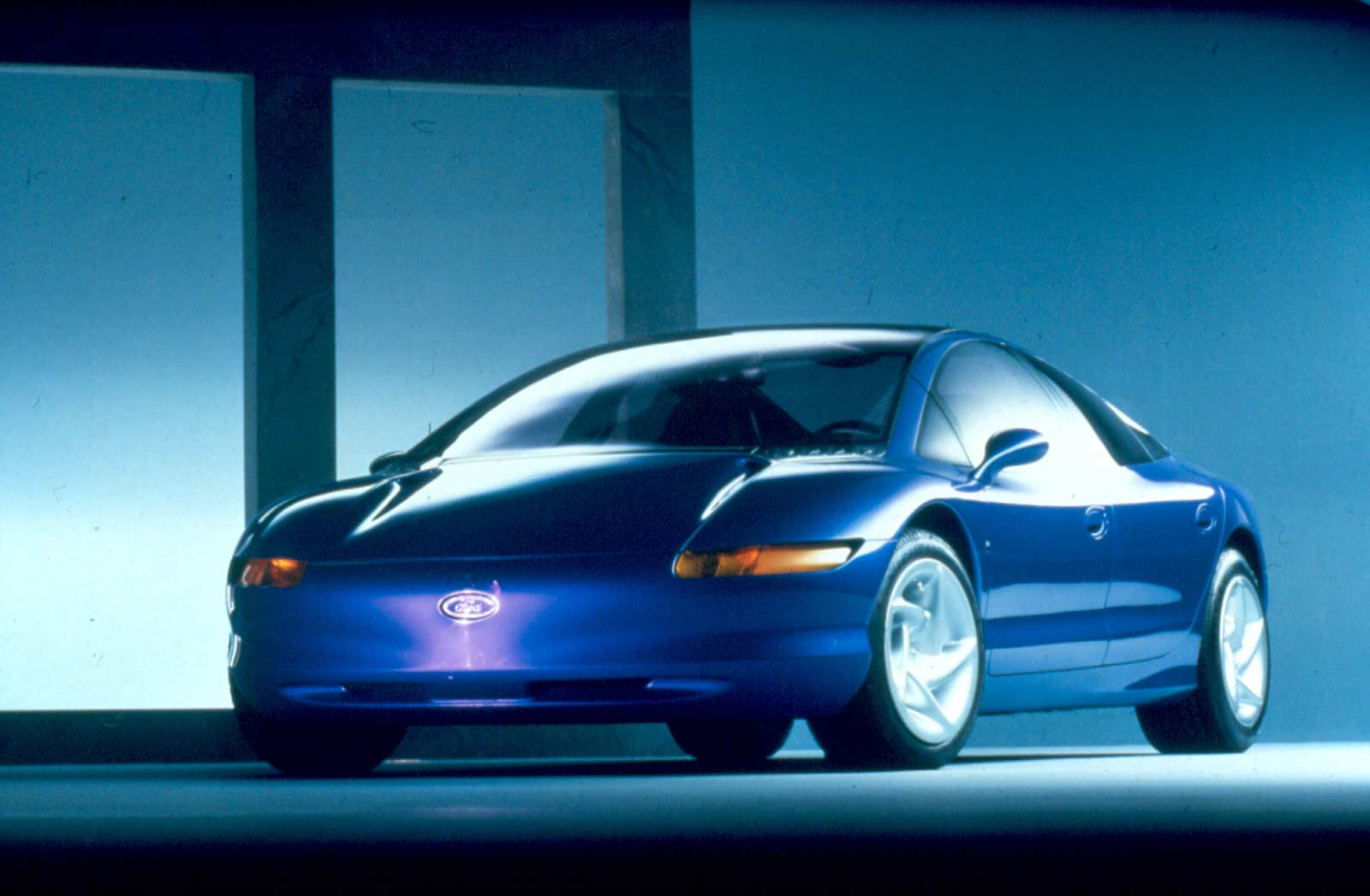
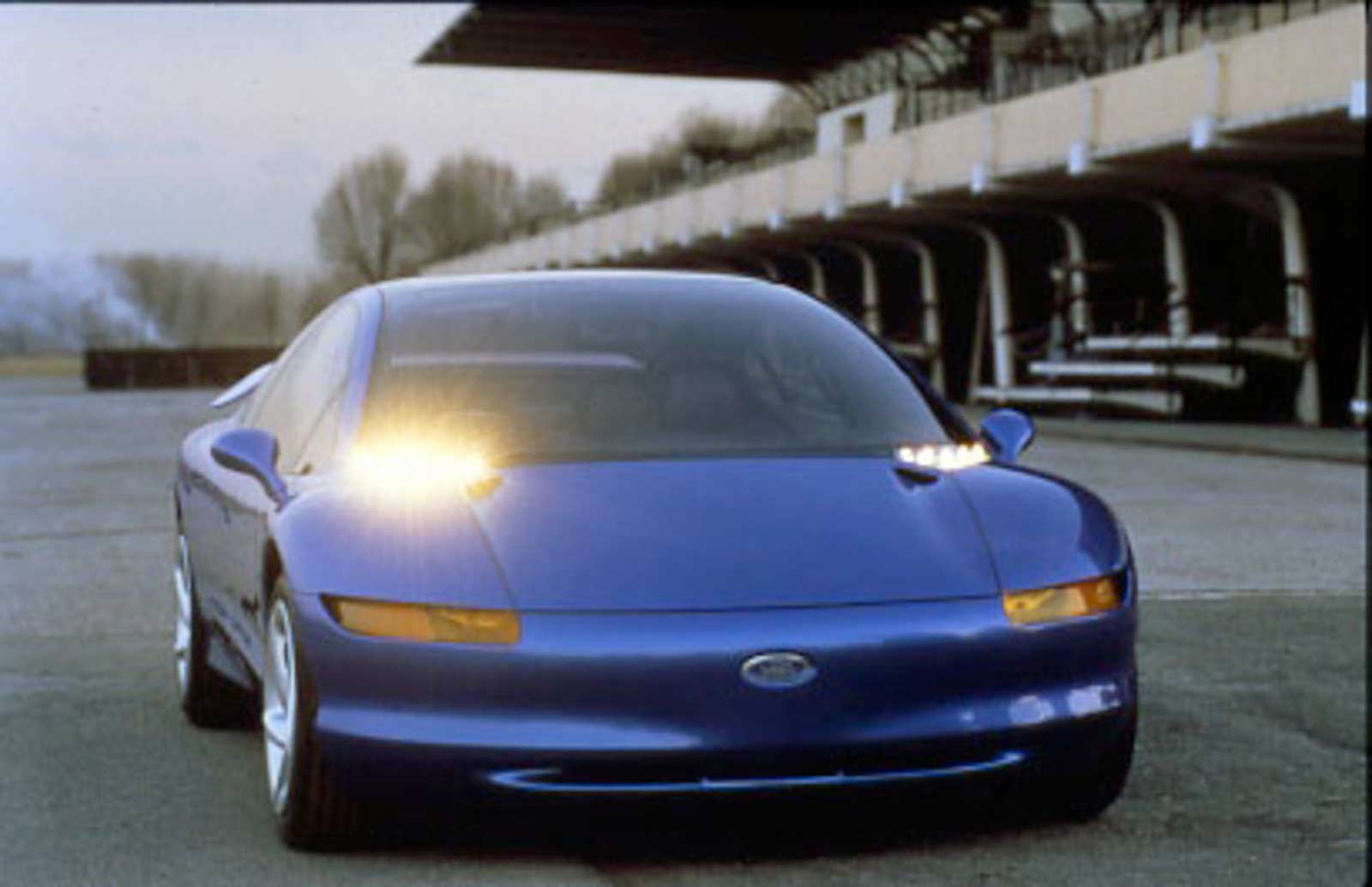
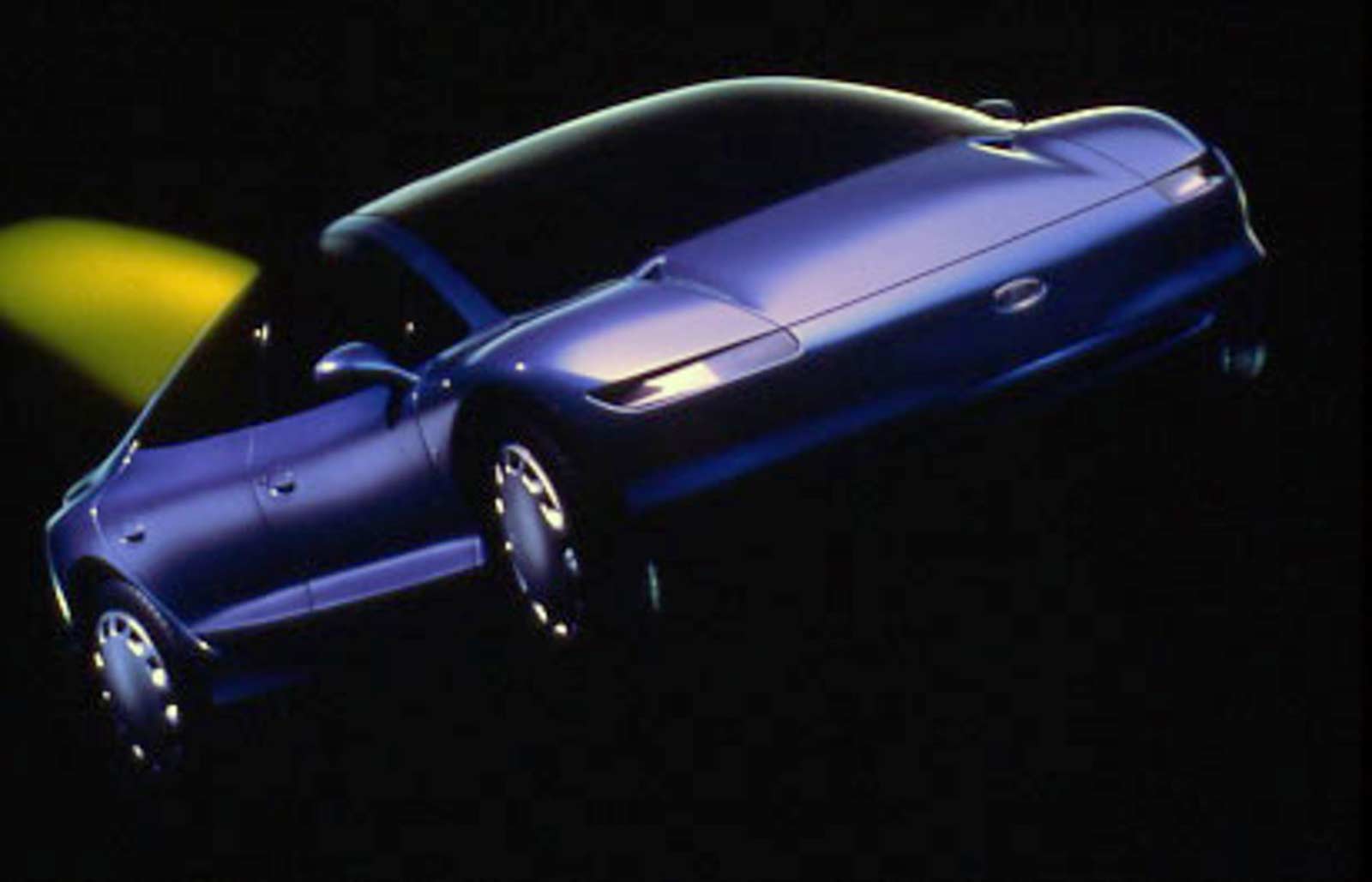
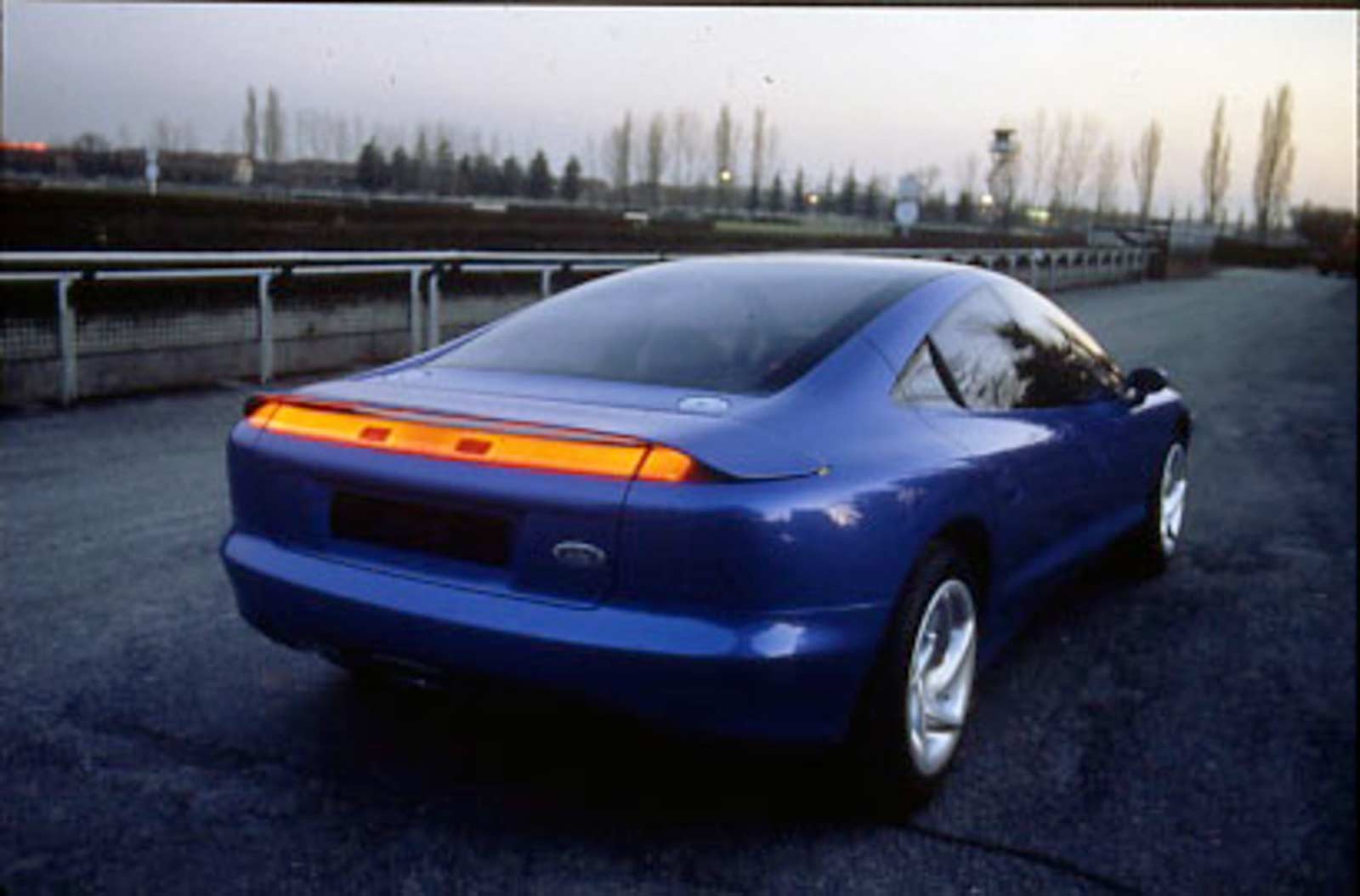
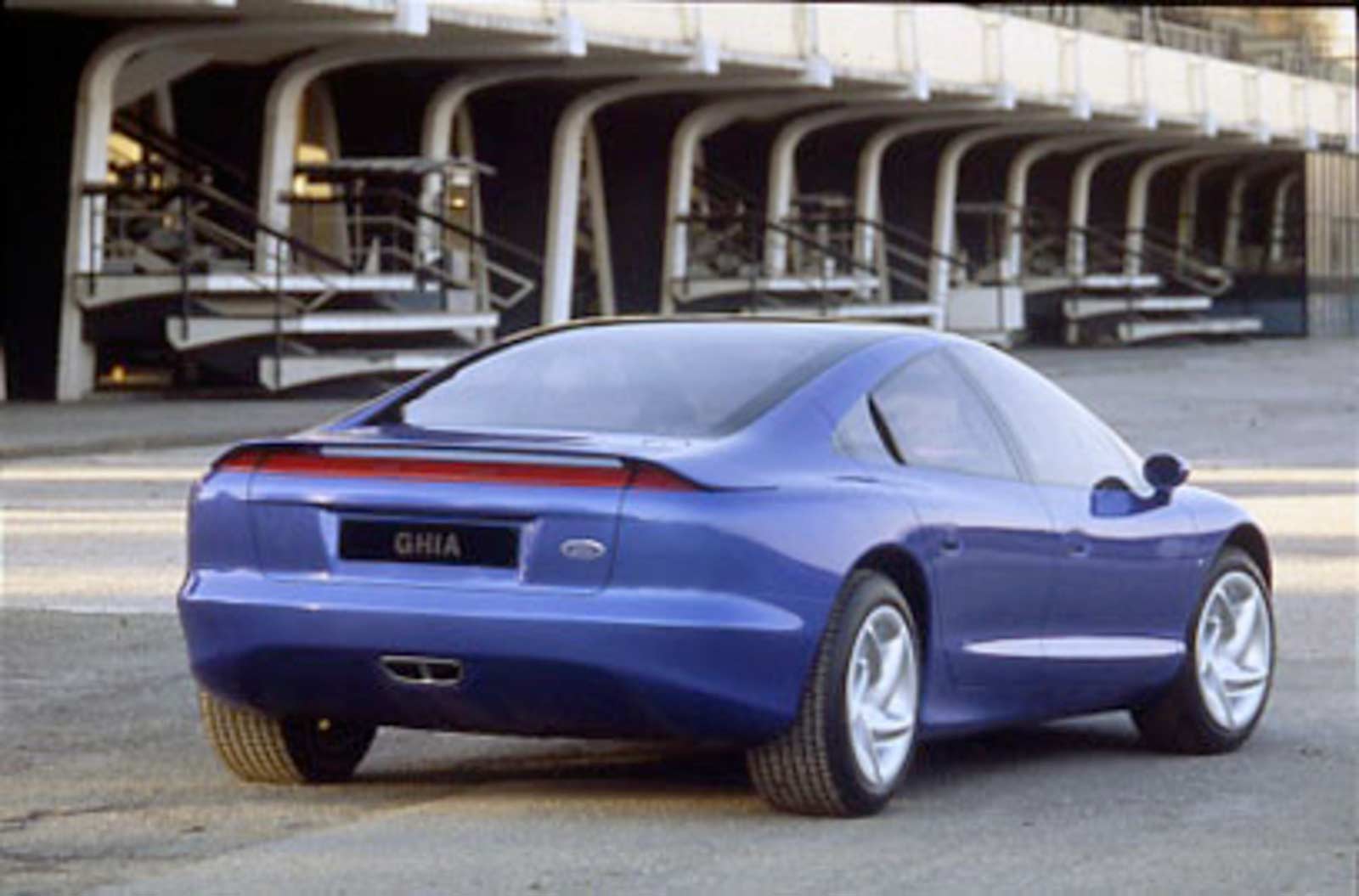
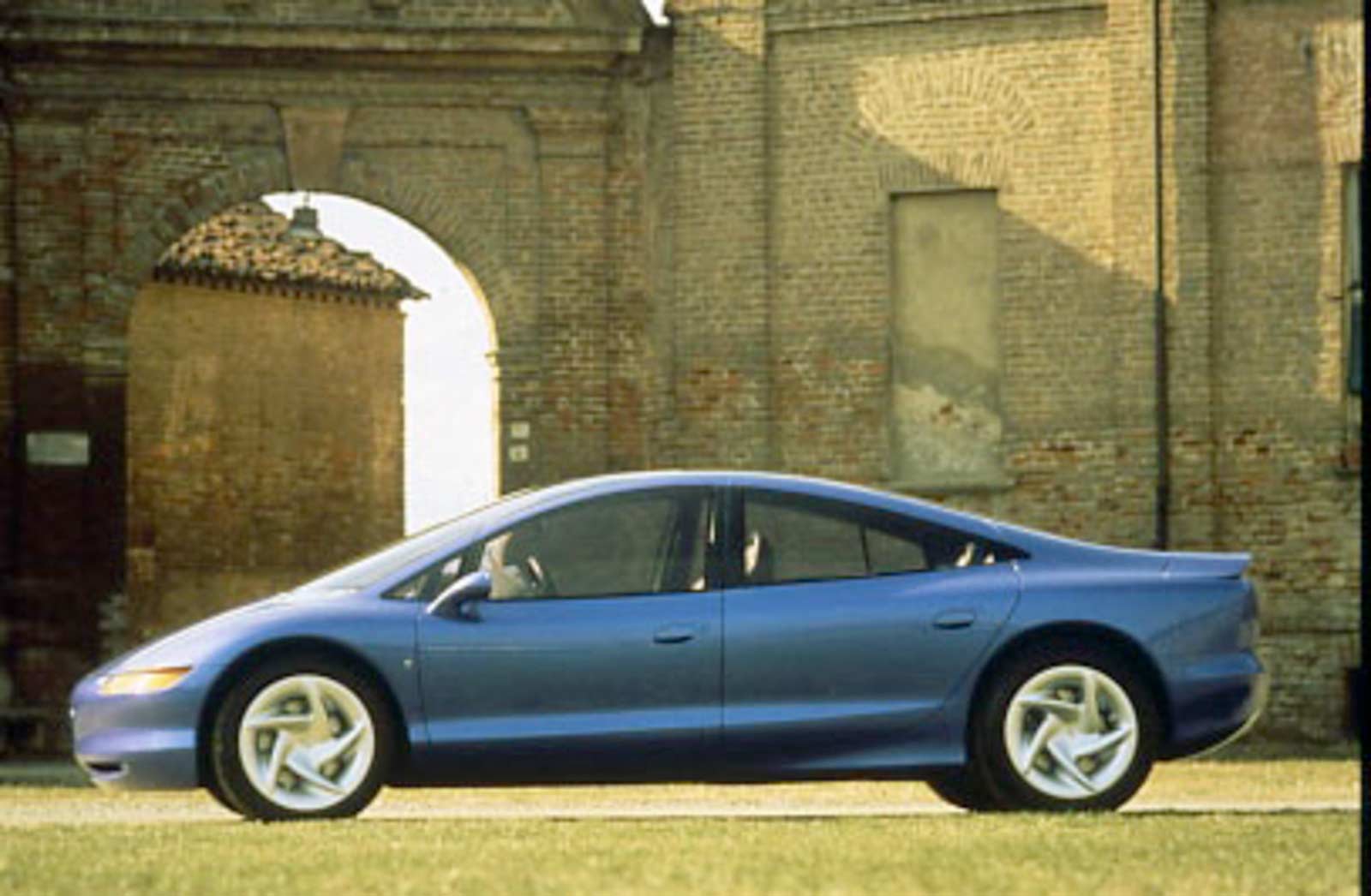
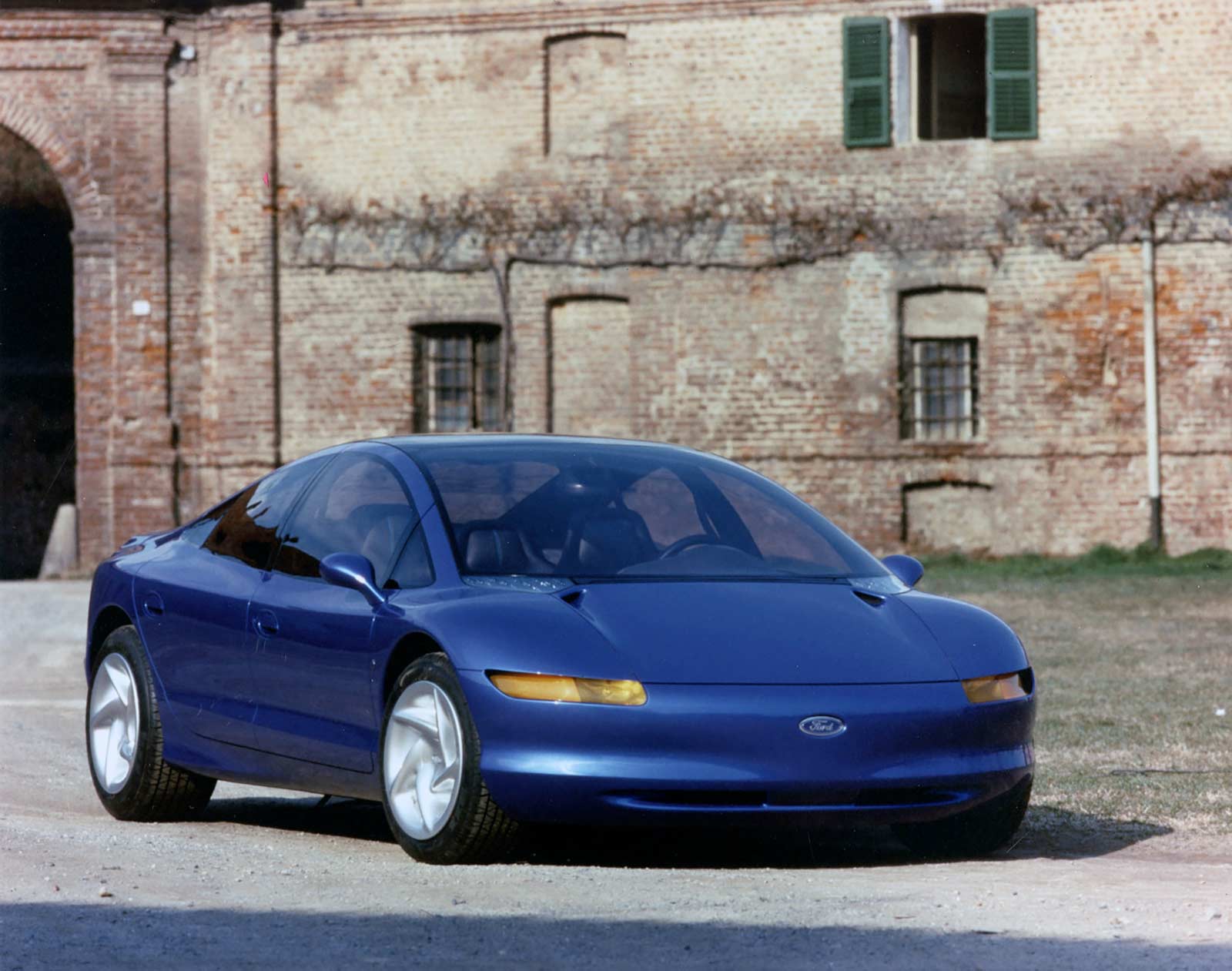
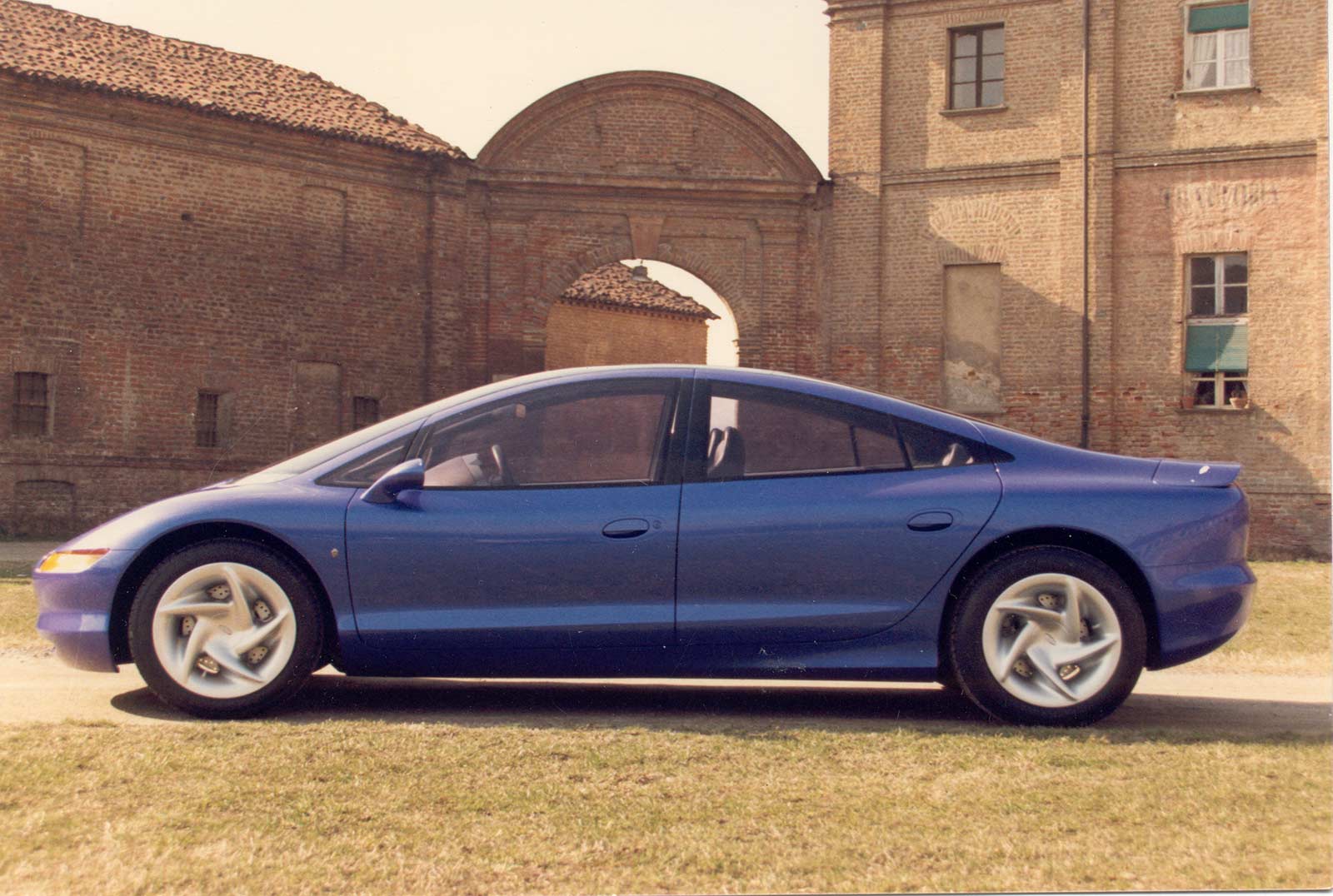
The Ford Via was a concept car designed by Ghia, Ford's Turin-based design studio, and presented as the world debut at the Geneva Salon of that year, held March 9 to 19. Ghia described it as its vision of the sports car of the year 2000, and it was also billed as a "four-passenger concept sports car of the year 2000." The design combined the classic lines of a four-seat sports coupe with a fastback four-door sedan body, aerodynamic detailing, and advanced technology. Its aerodynamic profile, with a roofline sloping sharply forward into an arched shape, was closely related to that of the Ghia Saguaro, which had been shown at the same Geneva show a year earlier, though the Via's tail was stretched noticeably longer and incorporated a deployable rear wing.
Ghia Managing Director Filippo Sapino, who led the international design team at Ford's Turin studio, said the project had been approached in the spirit of Ford's design philosophy, aiming to give occupants maximum interior space while minimizing the space taken up by mechanical components. He noted that although the Via used advanced techniques, it was conceived with an eye toward feasible production by the mid-1990s.
Mechanically, the Via was intended to use a transversely mounted turbocharged V8 engine paired with a 6-speed transmission and permanent four-wheel drive. Ford-sourced components were planned for use in the drivetrain. The underbody was shaped according to aerodynamic principles to create a venturi, or ground-effect, style of downforce, and the concave rear window was designed as a complementary aerodynamic element, allowing stale cabin air to vent through a narrow slot. A rear spoiler sat flush with the bodywork at low speeds but was raised automatically, under control of an onboard computer, as speed increased to counteract lift; a panel closed off the spoiler housing when retracted to preserve aerodynamic efficiency. Indicator lamp housings incorporated ducts that channeled cooling air to the front brakes.
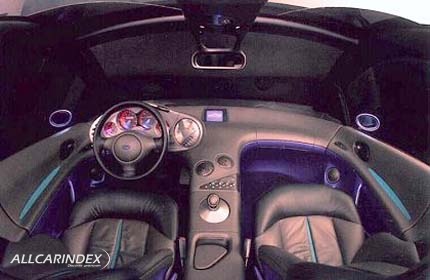
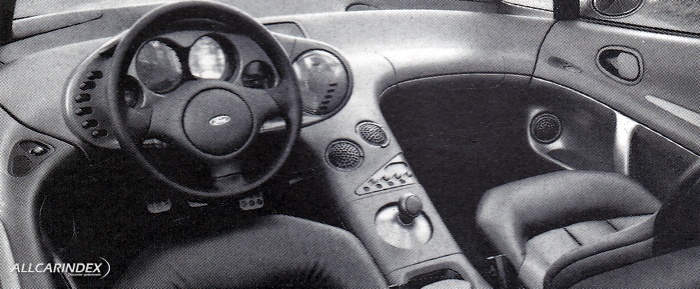
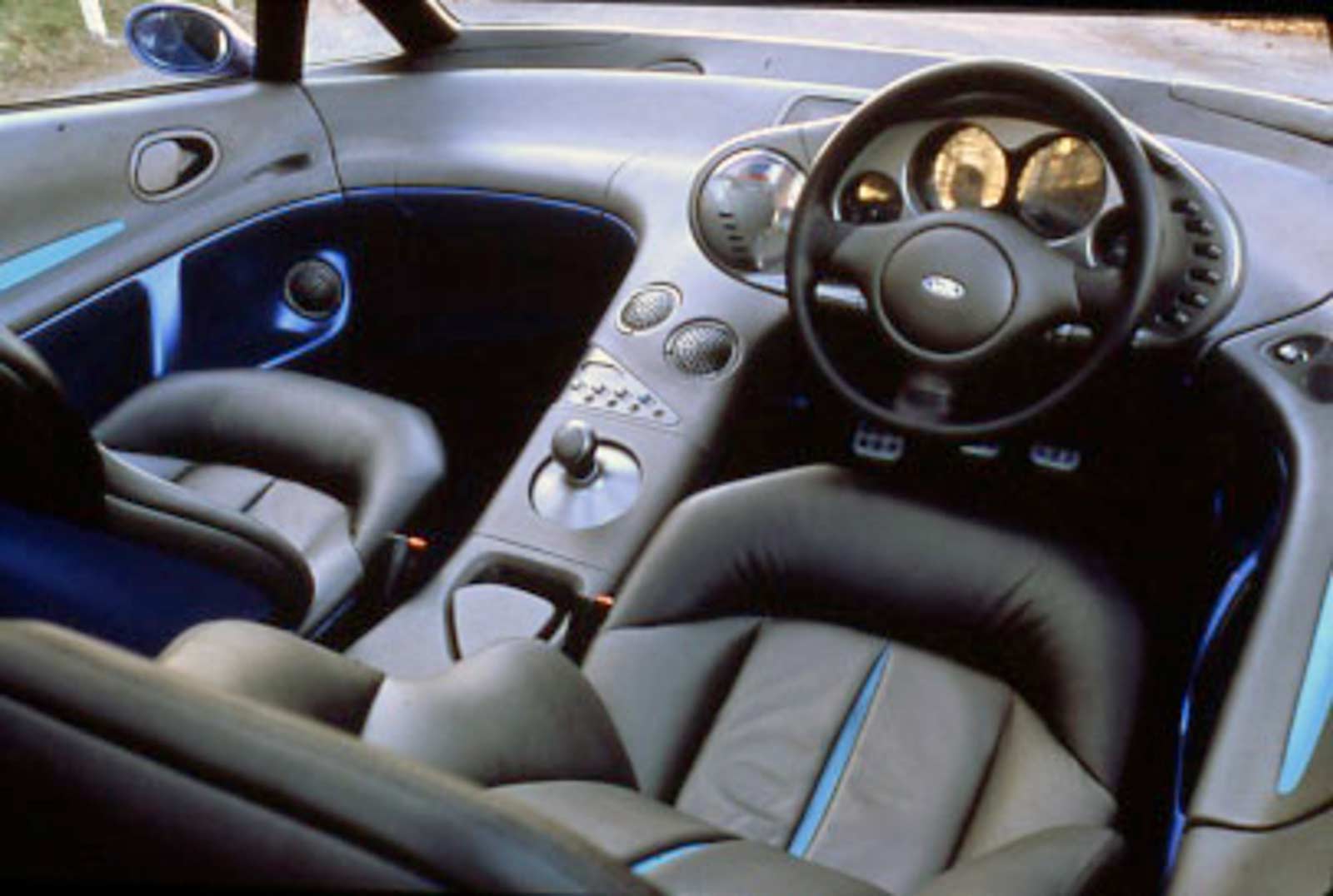
One of the Via's most distinctive features was its lighting system, based on fibre-optic technology. Two clusters of intensive light points, each made up of nine fibre-optic light units fed from a central source, were mounted flush into the bodywork just ahead of the windscreen frame on either side, taking the place of conventional headlamps. Despite being only about a centimetre deep, these units matched the output of halogen headlamps, and each could be programmed to function as a spot lamp or fog lamp. The same fibre-optic approach was applied to the instrument panel, producing what Ghia called a "phantom" effect, in which illuminated instrument needles appeared to float within a transparent binnacle.
Minor controls were arranged in a semicircle along the edge of the instrument panel, positioned so the driver could reach them without taking hands off the steering wheel. Additional controls and a small monitor for a built-in diagnostic computer were housed in the center console, which rose at an angle between the front seats and blended into the twin-semicircle shape of the dashboard. The front bucket seats were upholstered in soft, grainless leather, described in period materials as having a brushed titanium finish with pleated blue leather inserts on the back panels, and were electrically adjustable in all directions; climate control and the audio system could be adjusted individually for each seat. The center section of the roof was made of removable, photosensitive glass intended to filter ultraviolet radiation, in a Targa-style configuration, and the flush-glazed side windows were power-operated.
Externally, the Via measured about 4.46 to 4.5 meters in length and 1.92 to 1.97 meters in width, dimensions comparable to those of a Ford Scorpio, and it was finished in a mica-based metallic paint in a shade described as Zaffiro blue. Recorded dimensions include a wheelbase of 2794 to 2800 mm, an overall length of 4459 to 4460 mm, an overall width of around 1920 mm, and an overall height of 1260 mm.
The Via remained a concept vehicle and was never put into production. It served primarily as a design and technology showcase for Ghia and Ford, illustrating fibre-optic lighting and instrumentation, active aerodynamic devices, and four-wheel-drive turbocharged V8 packaging in a four-seat sports coupe format.