
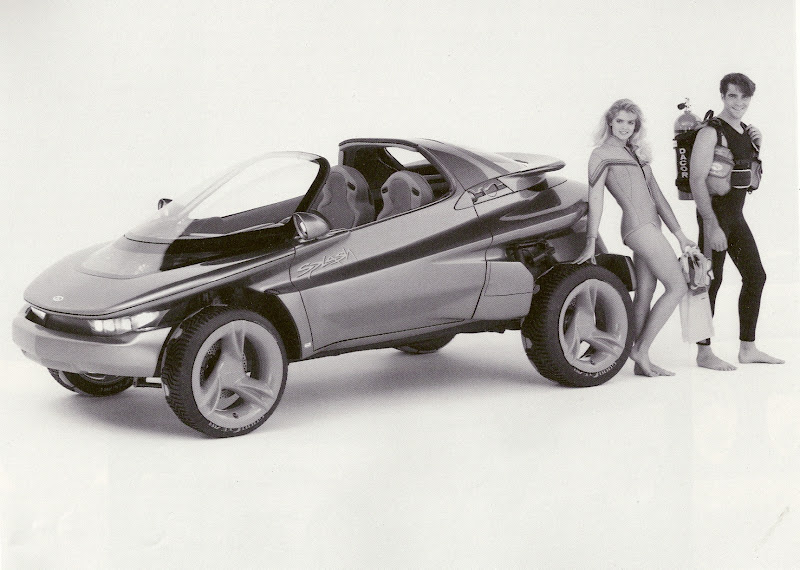
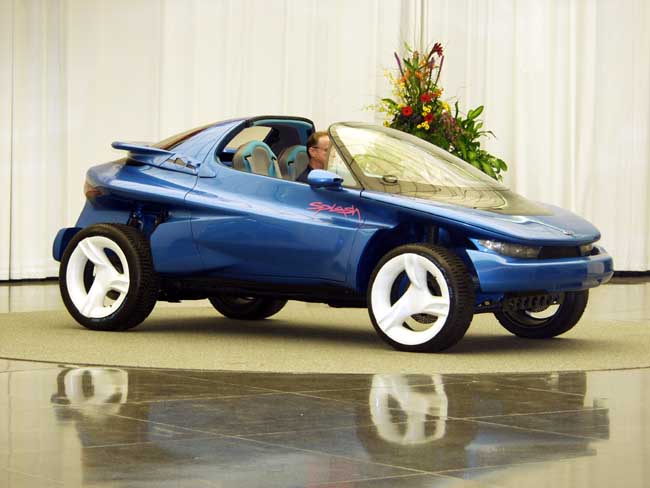


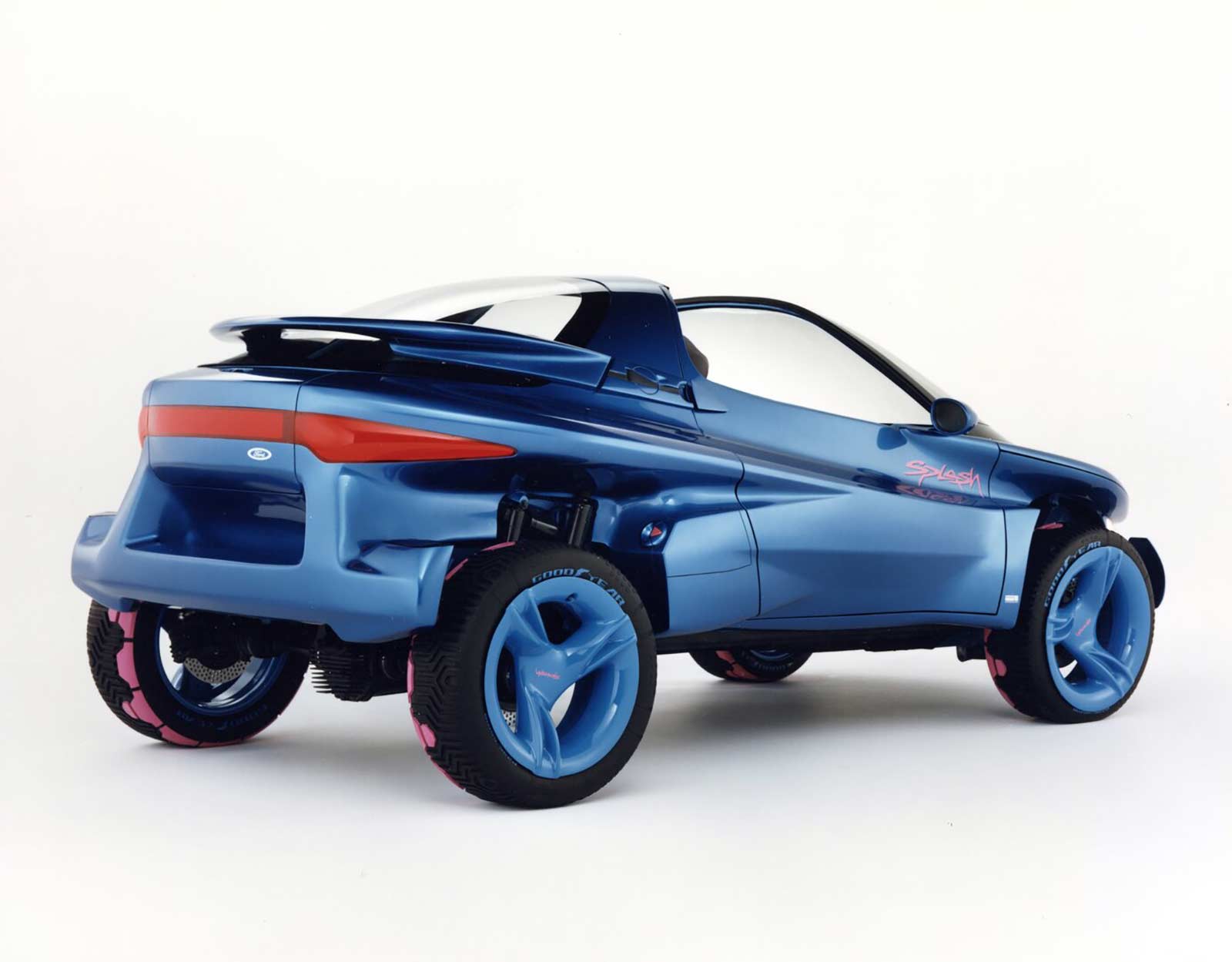
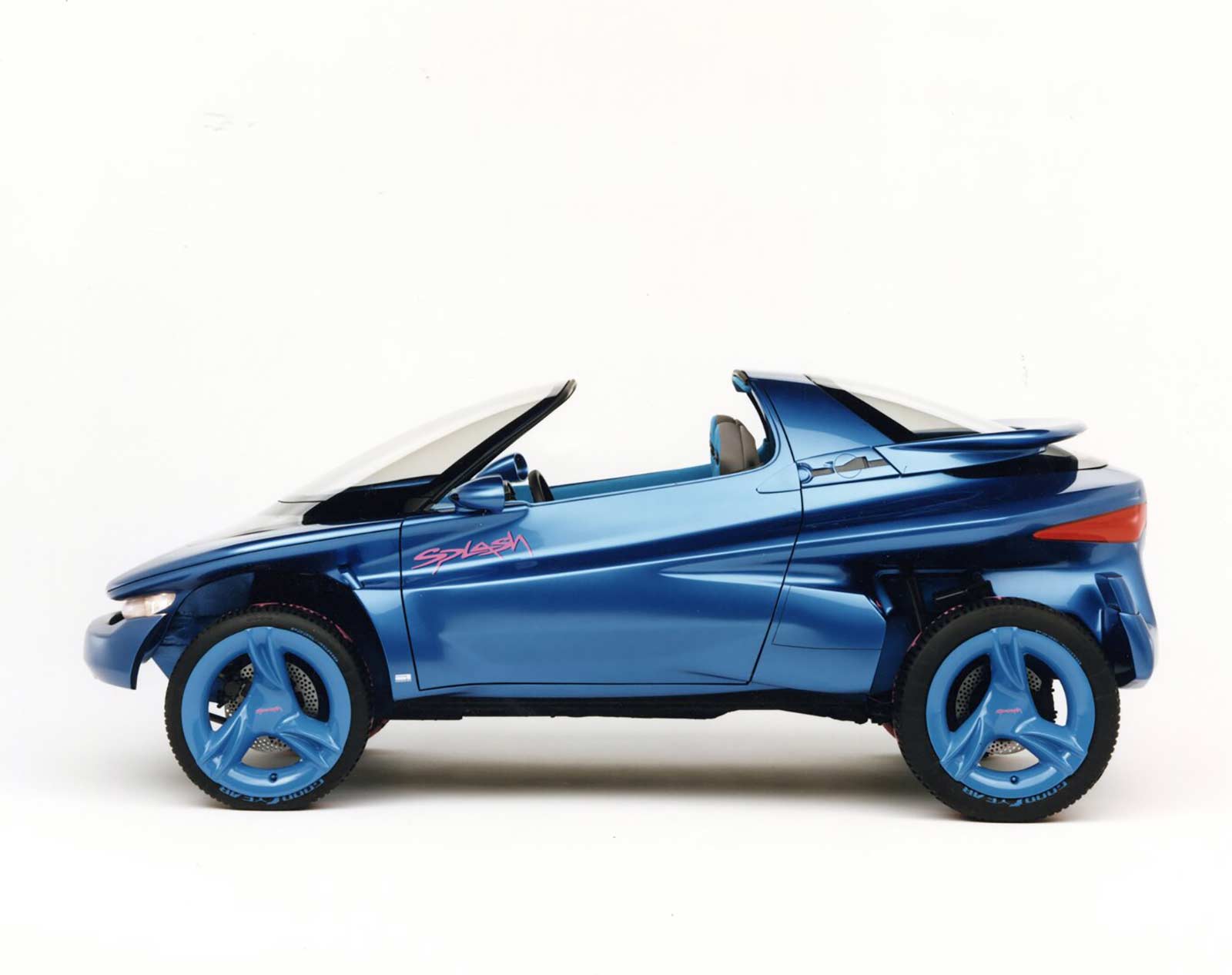
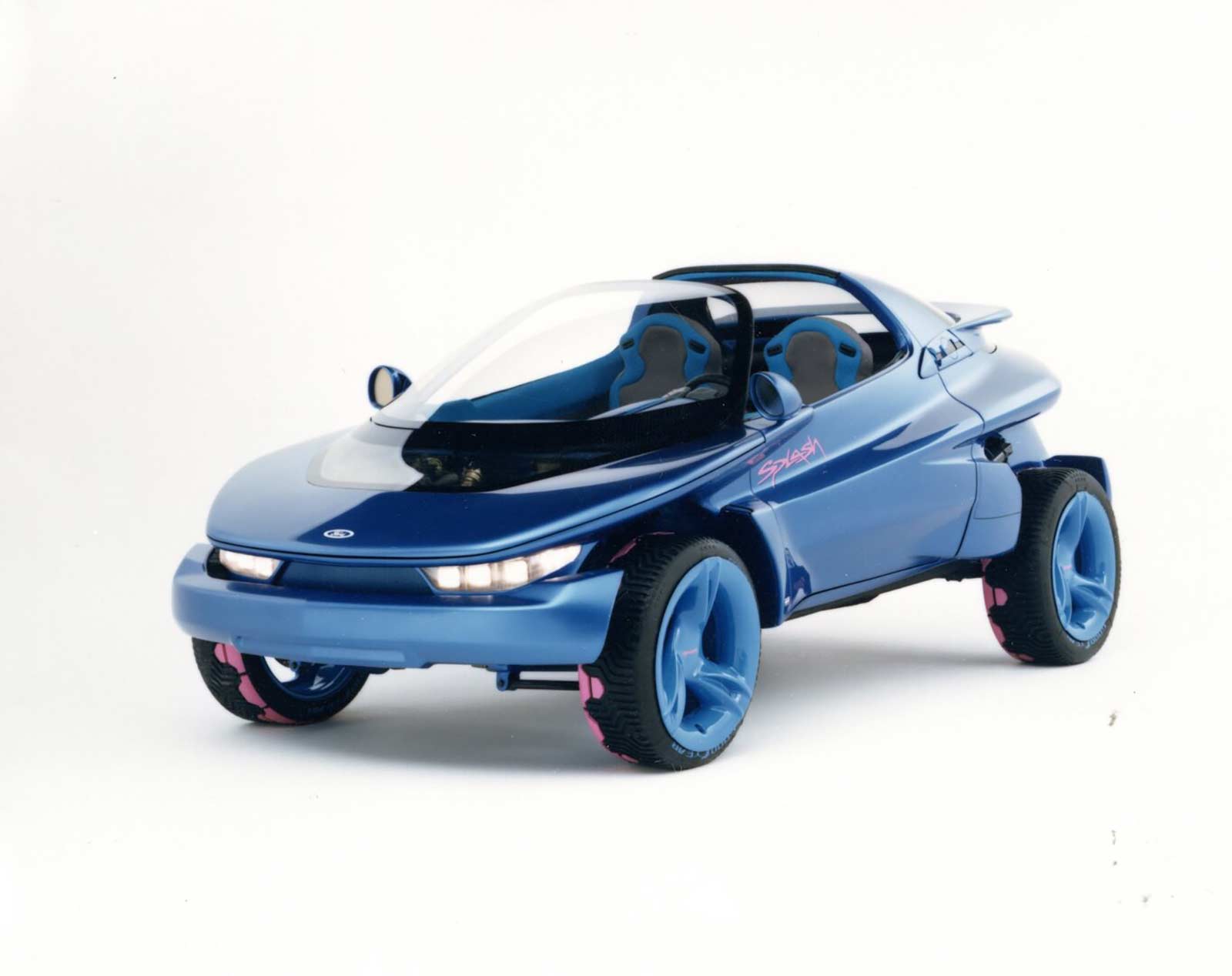
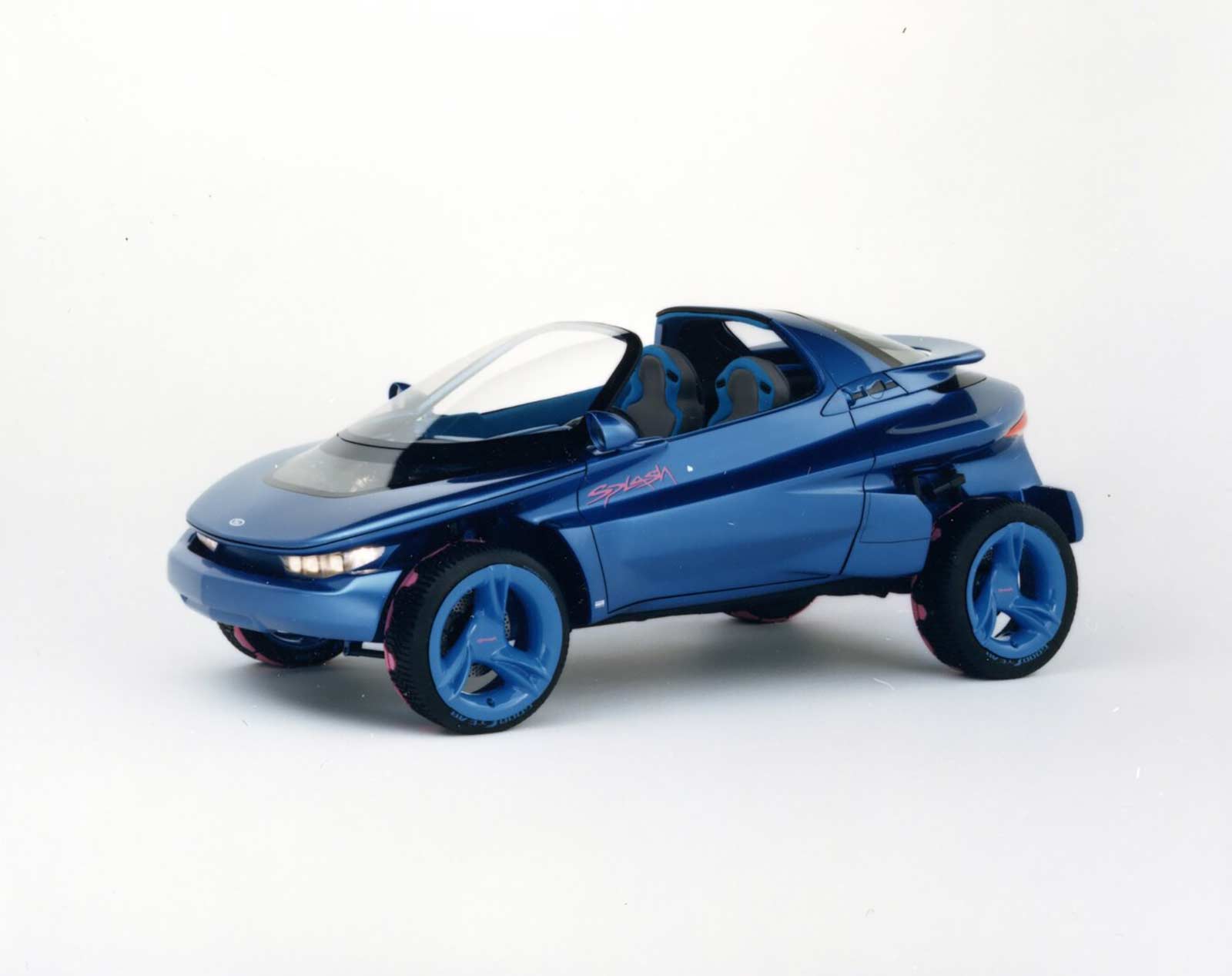
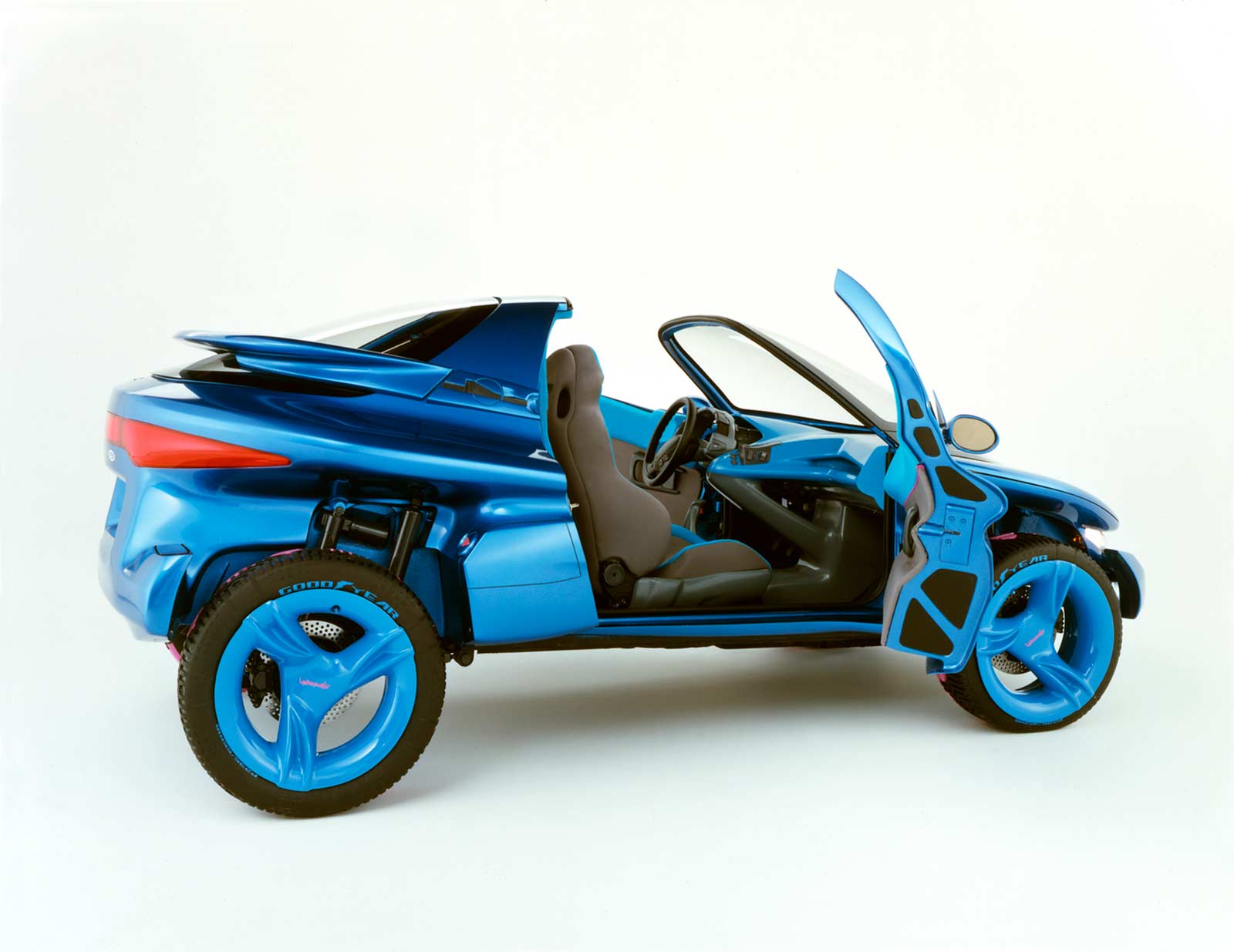
The Ford Splash was a concept vehicle shown by Ford Division in early 1989, presented as a multi-purpose vehicle aimed at a youthful, recreation-oriented buyer. It appeared alongside similar youth-oriented show cars from the other American manufacturers of the time, the Plymouth Speedster from Chrysler and the Pontiac Stinger from GM. The Splash was a 2+2-seat, two-door body style with exposed wheels and a targa roof, described as a four-wheel-drive multi-purpose concept vehicle rather than a conventional sports car. Its generous ground clearance suited it to off-road use as well as everyday driving.
The idea originated with Ford's Design Center and its Truck Operations division, which sought to explore a new market niche. Rather than have in-house designers handle the project, Ford Vice President of Design Jack Telnack assigned the task to four transportation design students from the industrial design department of Detroit's Center for Creative Studies, a leading art and design college enrolling around 1500 new students annually into its four-year programs. The students, named in some accounts as Brad Baldonado, Chris Gamble, Warren Manser and Ricky Hsu, aged between 21 and 24, began work in the spring of 1988 and were asked to design a vehicle they themselves would want to use year-round, suited equally to a surfing or scuba trip, a weekend ski outing, or use as a sports car. Work intensified during the students' summer break, and construction of the drivable prototype began that autumn at Autodynamics Corporation of America, a Detroit prototype engineering firm that had built earlier Ford concept vehicles. Ford's suppliers Goodyear, Kelsey-Hayes and Rubatex also contributed to the project.
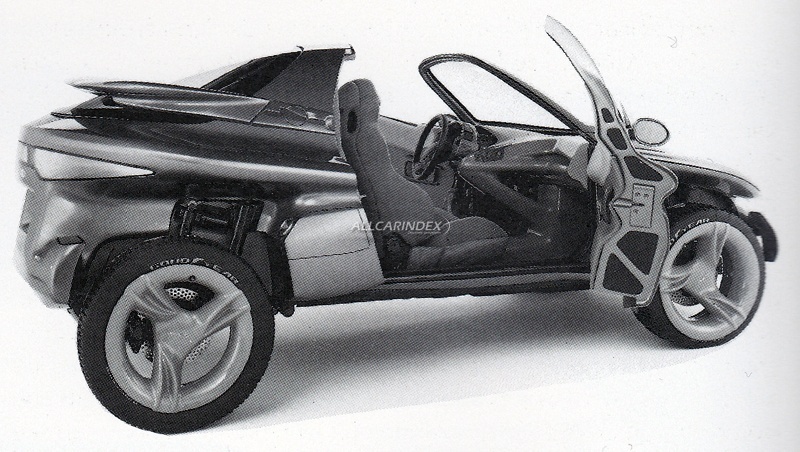
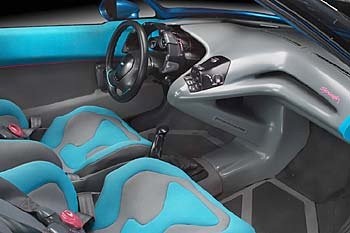
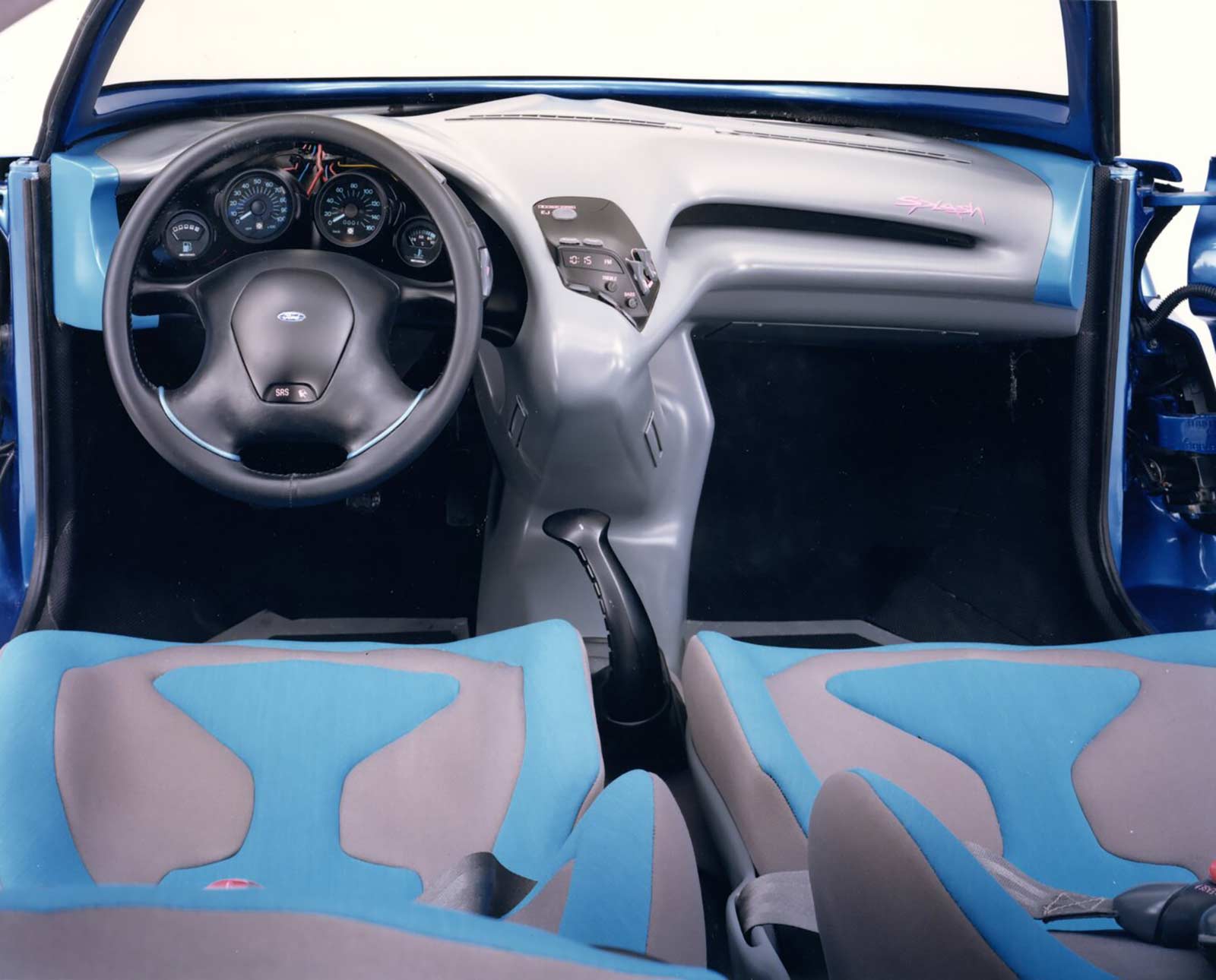
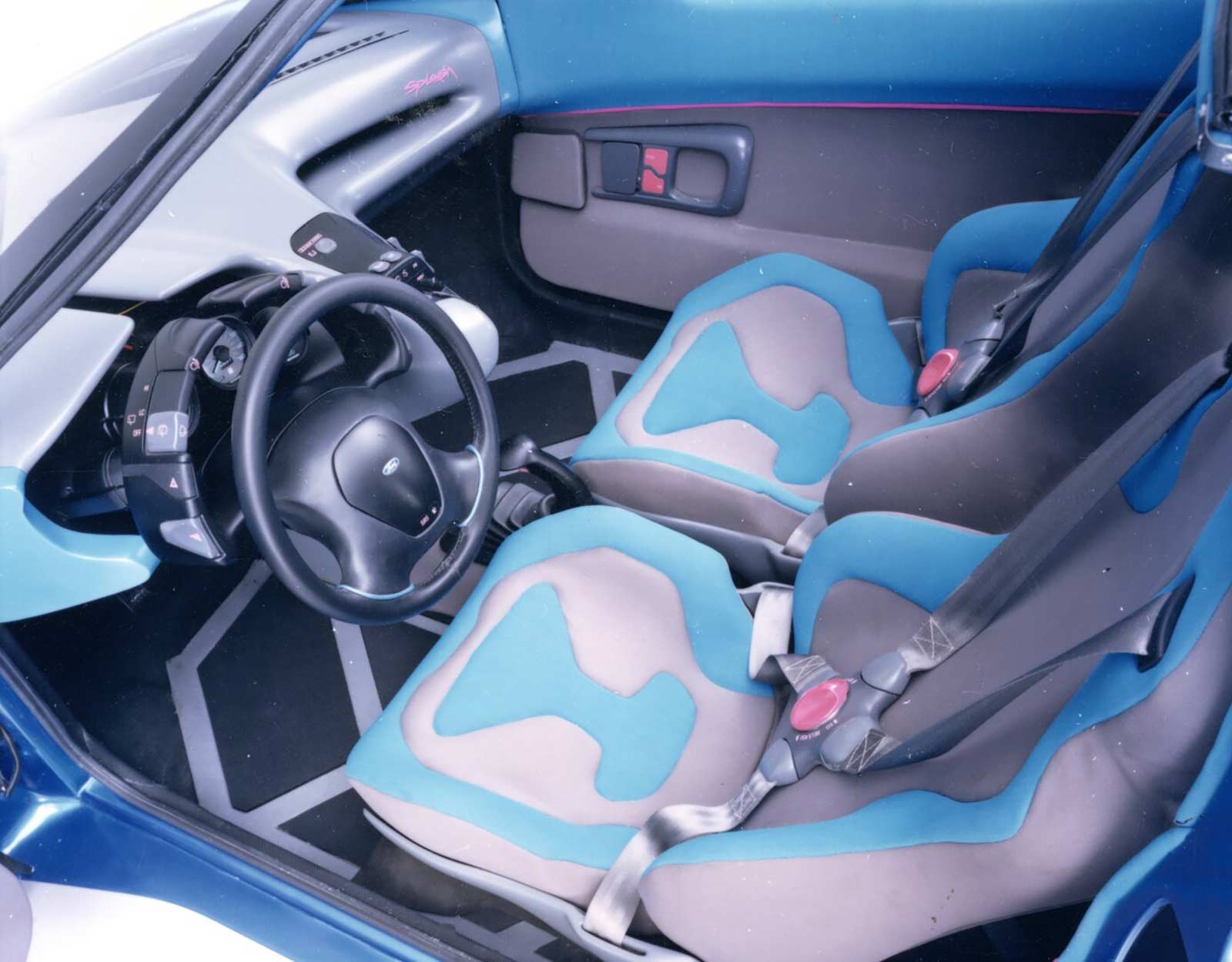
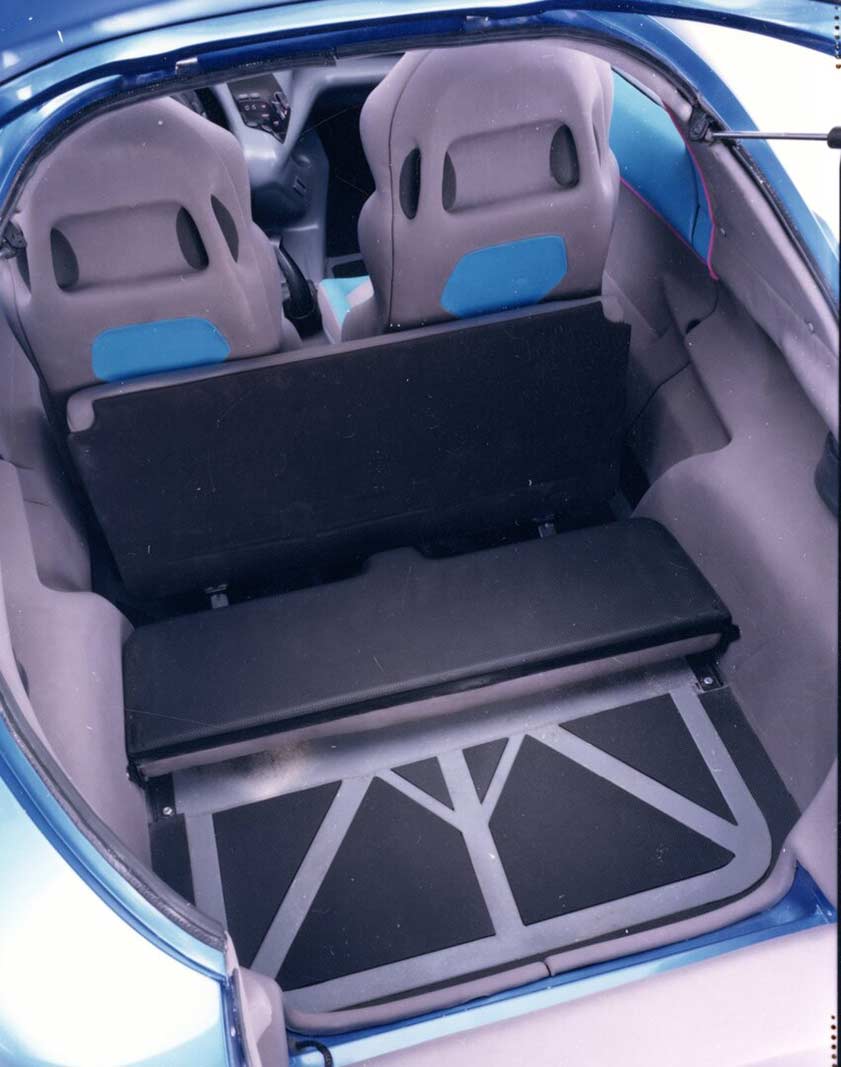
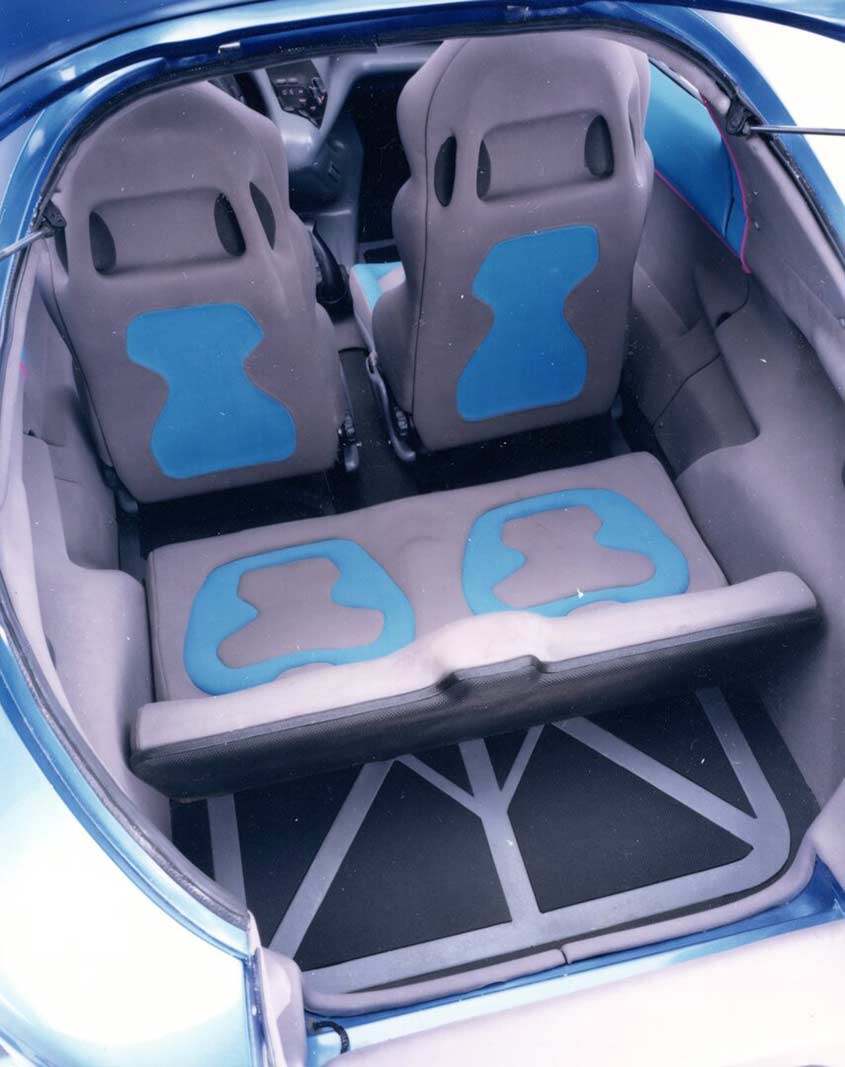
Technically, the Splash featured a rear suspension with double shock absorbers left visible through a cutout in the bodywork, along with a variable ride-height system intended to lower the body for street or highway use and raise it for negotiating rough terrain. Safety features included an integral roll cage formed by the targa bar, braced laterally, plus racing-style four-point harnesses for all four occupants and ventilated four-wheel disc brakes. Distinctive three-spoke wheels carried tires specially created by Goodyear, finished with a pink-toned structure on their inner sidewalls. Styling details included a glass panel set into the front hood ahead of the domed windshield, small recessed headlamps above the front bumper, and retractable, high-mounted driving lamps that could pivot to serve as exterior mirrors. Rear mud flaps could be retracted for off-road driving and lowered again for highway use to protect the body from mud and stones. The frameless side windows were fully retractable, and the rear hatch and window could be removed entirely, along with the roof panel and windows, giving the effect of a full convertible; a roof insert was provided as rain protection. The interior used a rubberized upholstery material similar to that of scuba wet suits, finished in fluorescent blue with magenta accents, chosen for resistance to occasional wet conditions.
As a concept vehicle, the Splash measured 363 cm in length, 178 cm in width, with a 236 cm wheelbase and 135 cm track. It was never put into production.