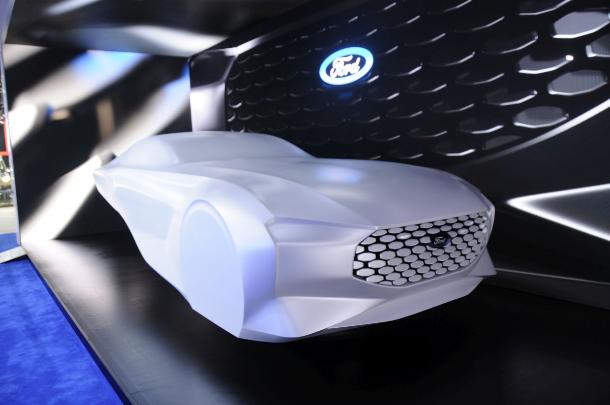

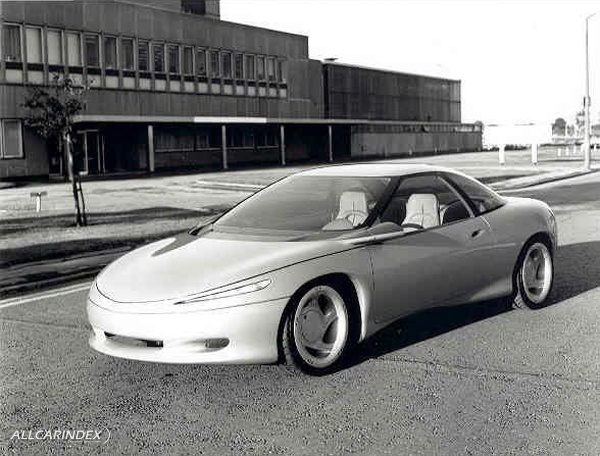
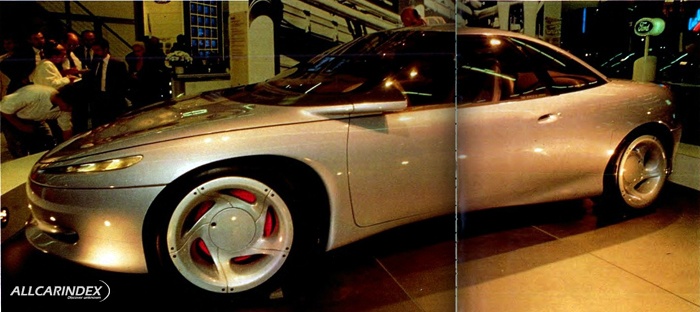
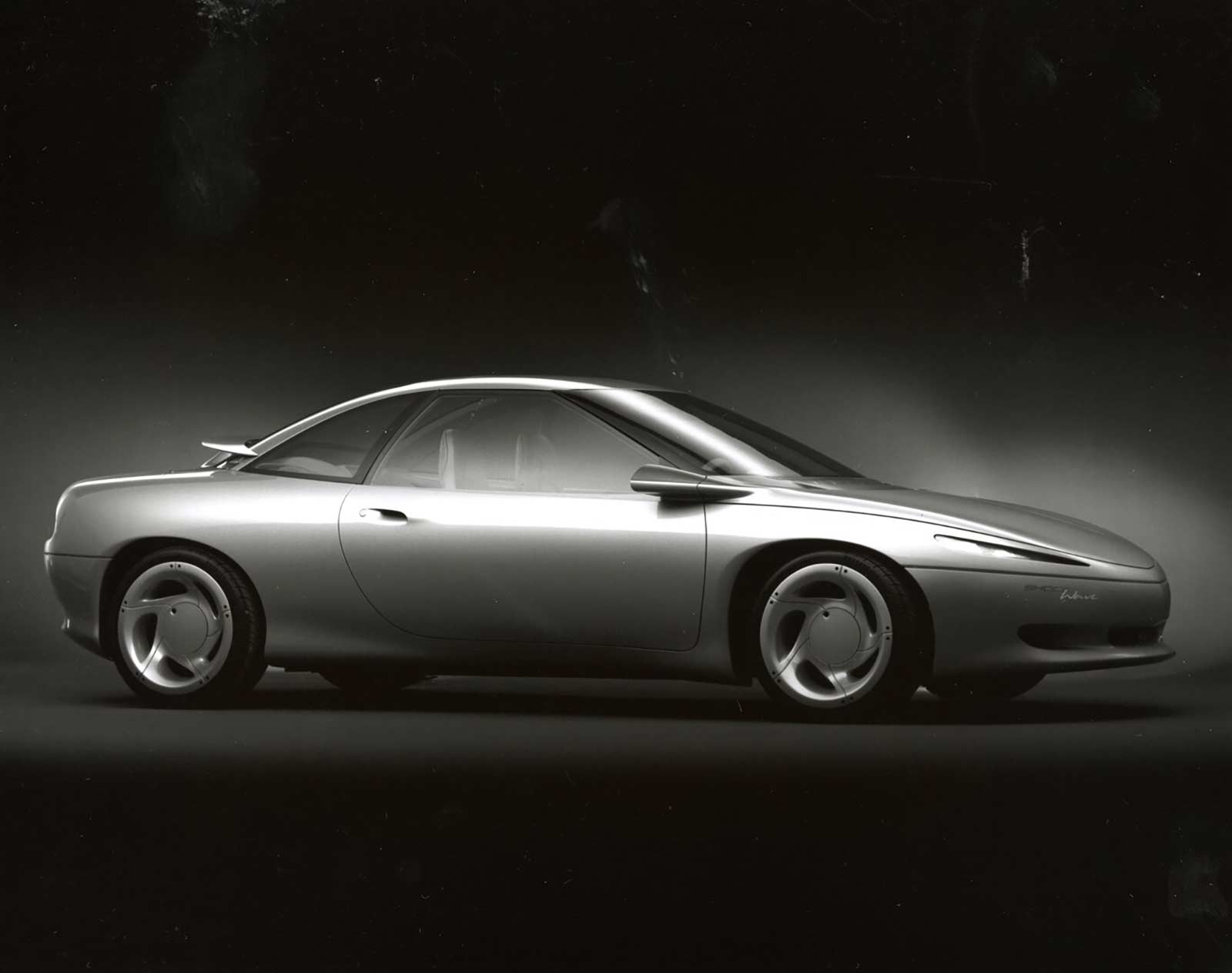
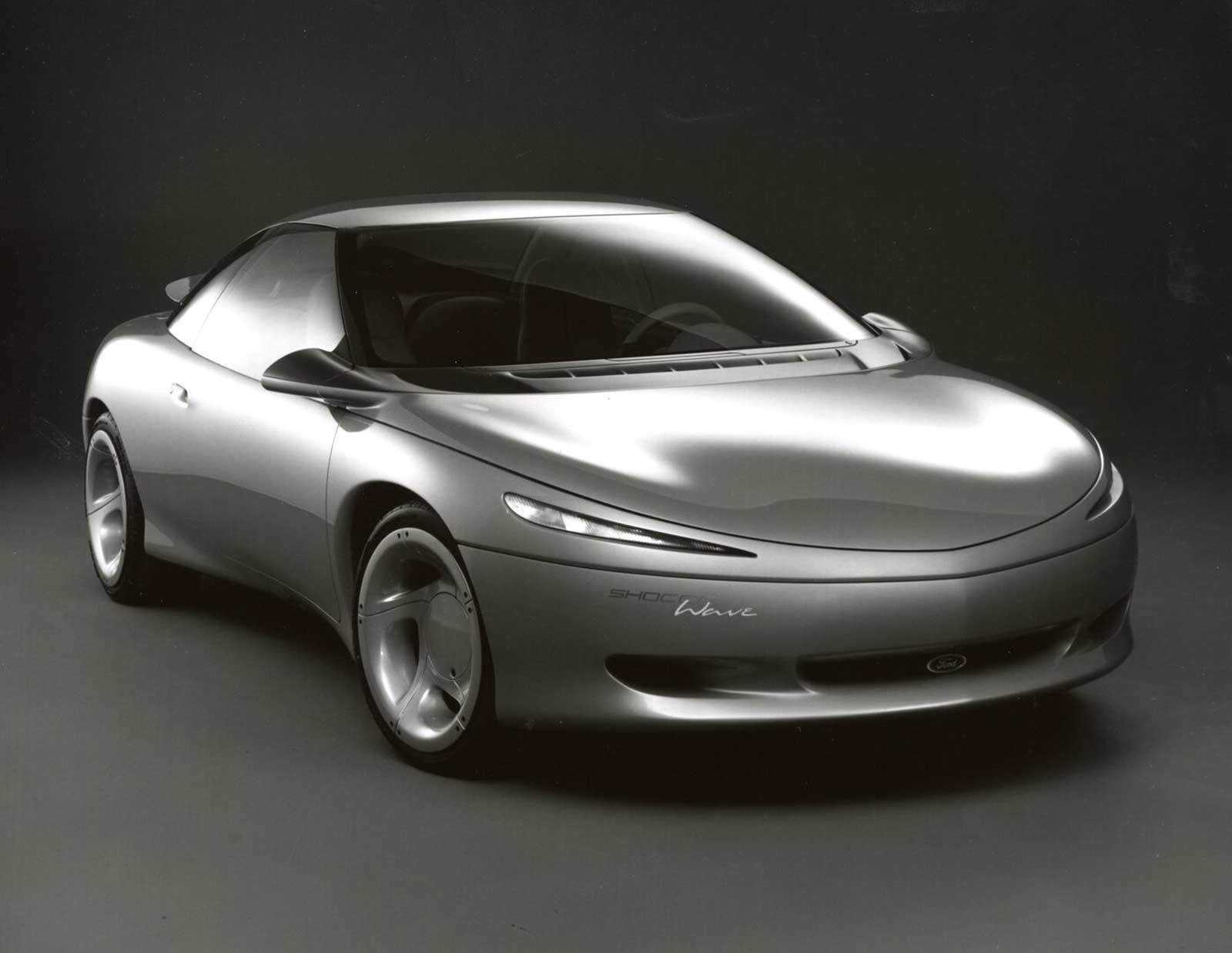
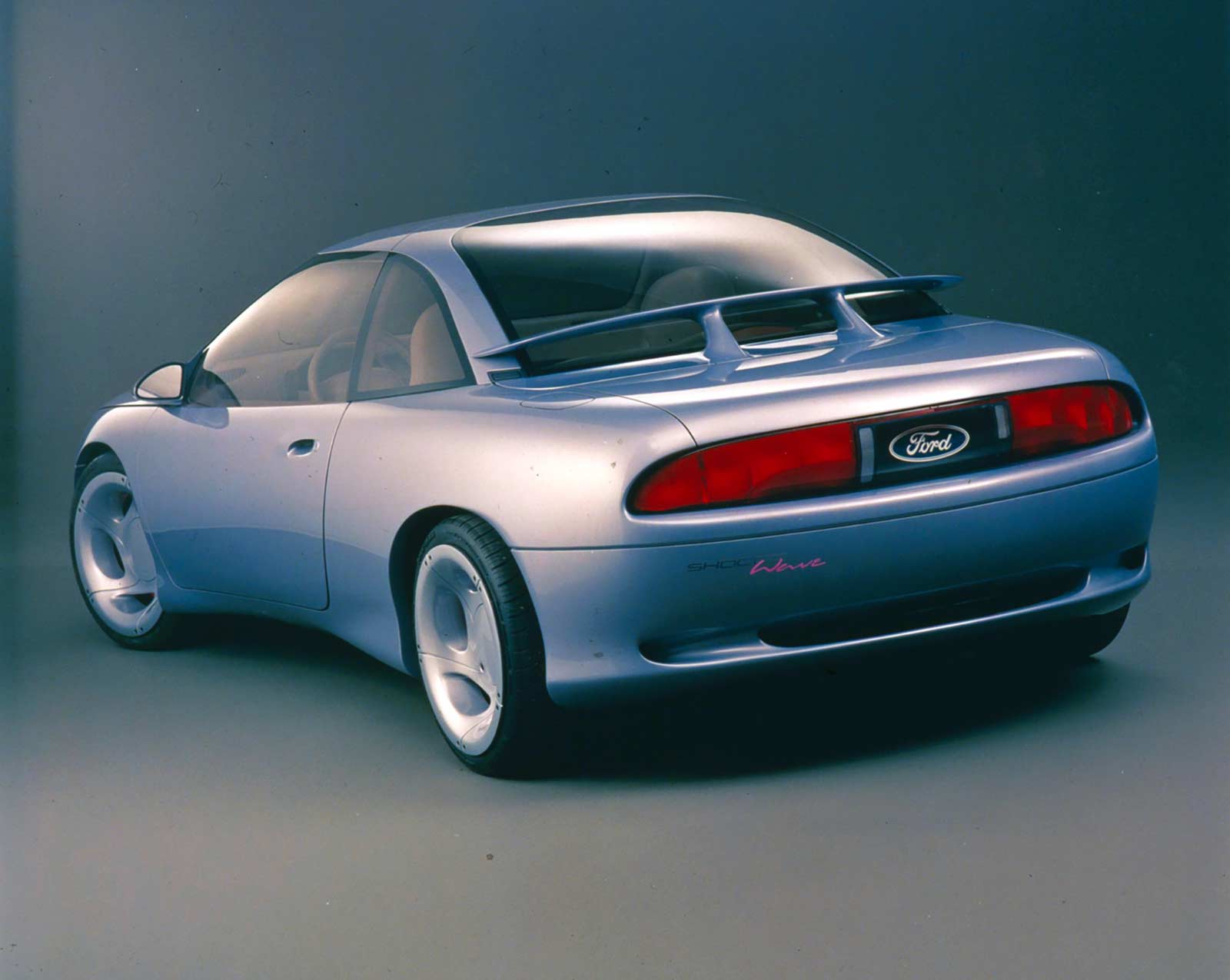
The ShocccWave was a concept car developed by Ford Motor Company, shown at auto shows including the Birmingham motor show in England and the Paris motor show. It was created by Ford's Concept Center California, and its name combined "SHO," a reference to the engine intended for the design, with "CCC," crediting that studio. Described by Ford as a vision of a two-door, performance-oriented car for the mid- to late-1990s, it was a luxurious four-seat coupe with a semi-notch configuration, and it showed stylistic similarities to the Mercury Cyclone concept, unveiled at the Detroit motor show in early 1990, which itself recalled the 1989 Ghia Via. Observers considered the ShocccWave a plausible preview of a future successor to the Ford Probe, which was built at an American Mazda plant.
Fritz Mayhew, chief design executive for North American Design at Ford, said the car was intended to make a statement while also serving as a creative exploration of interior space utilization considered feasible for production. The body structure used plastics and composite materials, and the composite wheels were fitted with Goodyear-developed 255/35R18 tires created specifically for the car. Head and tail lamps used fiberoptic technology, and a computer-controlled, adjustable rear deck spoiler sat at the base of the rear window. Aerodynamically enclosed exterior mirrors were supplemented by a rear-mounted video camera, and inside the cabin a cathode ray tube and camera replaced the conventional rearview mirror to improve visibility through the windshield and below the trunk lid.
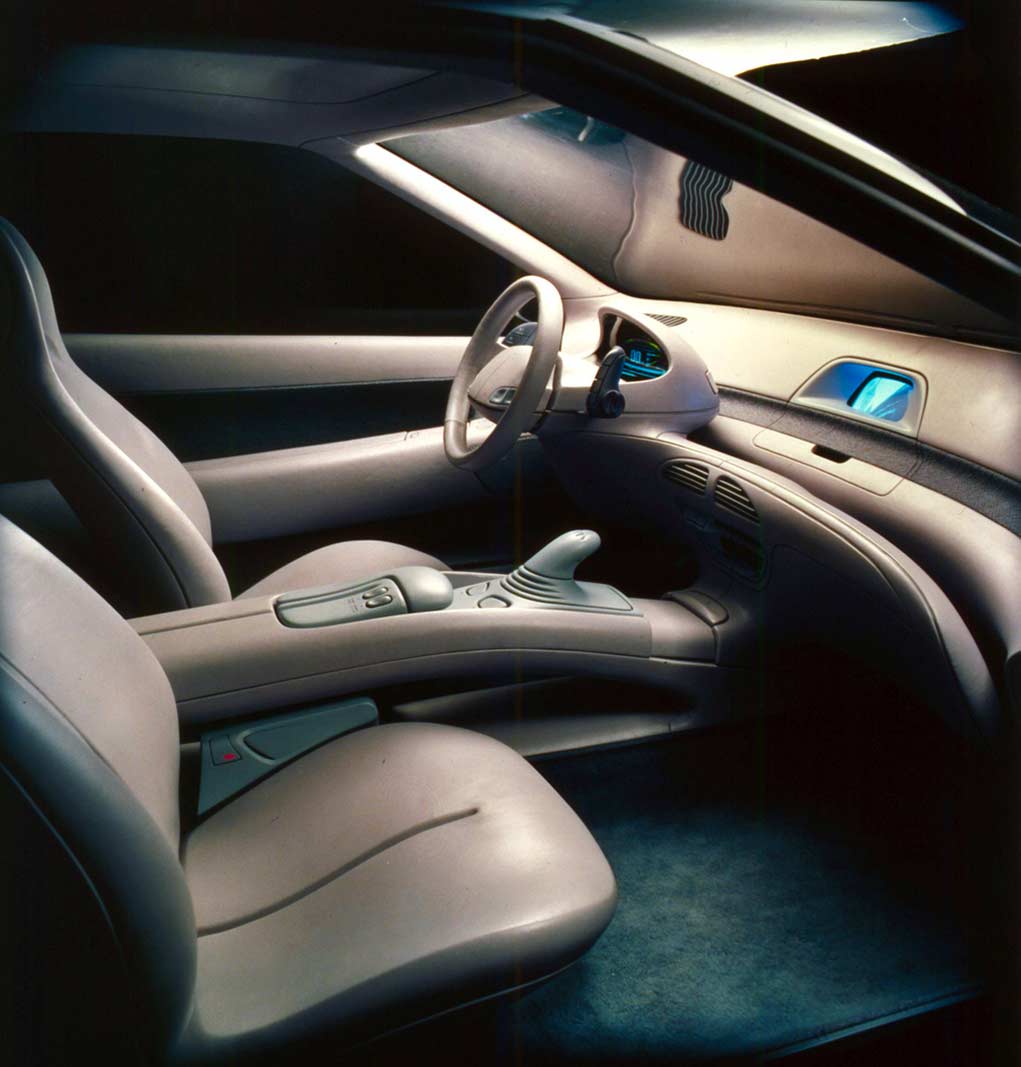
The interior was built around an internal skeleton structure, with an instrument panel divided into modules so the driver could adjust the position of key controls; the knee bolster was articulated and could be moved along the center console, as could the steering, hand controls, and other instrumentation. An articulated pedal assembly let the driver select a seating position with adequate headroom. Both front seats were cantilevered over the center console, eliminating conventional seat tracks, which freed up foot room for rear passengers and improved rear-seat entry and exit; a convenience lighting package illuminated the floor to accentuate the floating design of the front seats. The thinly molded front seats had minimal stitching and were visually joined to a console that bridged the center tunnel. New door construction techniques added about four inches of interior room by relocating door mechanicals into the armrest module, and miscellaneous hand controls were placed in an overhead console. As on the Cyclone concept, the instrument panel could be repositioned.
Power came from the Ford Taurus SHO engine, a 2979cc V6 with dual overhead camshafts and 24 valves, producing 223 hp at 6200 rpm and 271 Nm of torque at 4800 rpm. In the ShocccWave this engine was paired with a full-time four-wheel-drive configuration rather than the front-wheel-drive layout used in the Taurus SHO production car. As a design study, the ShocccWave was not put into production.