
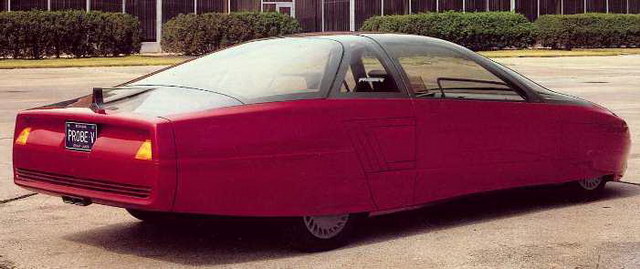
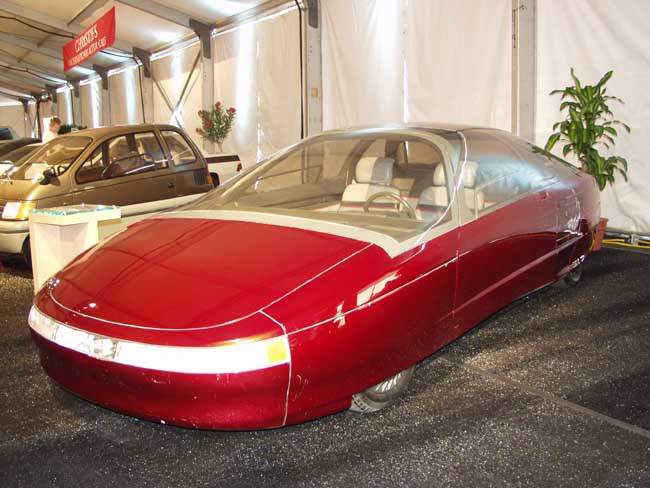
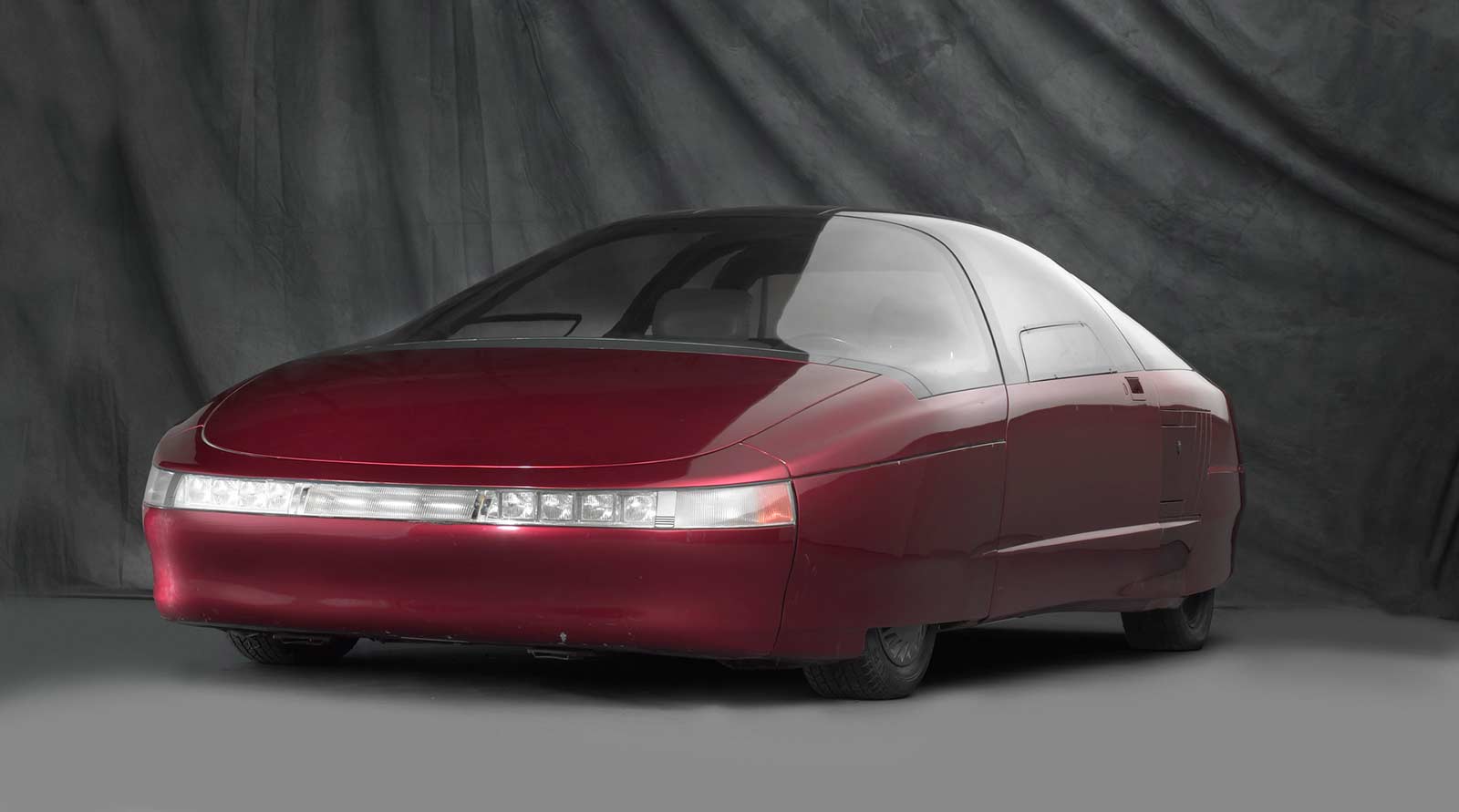
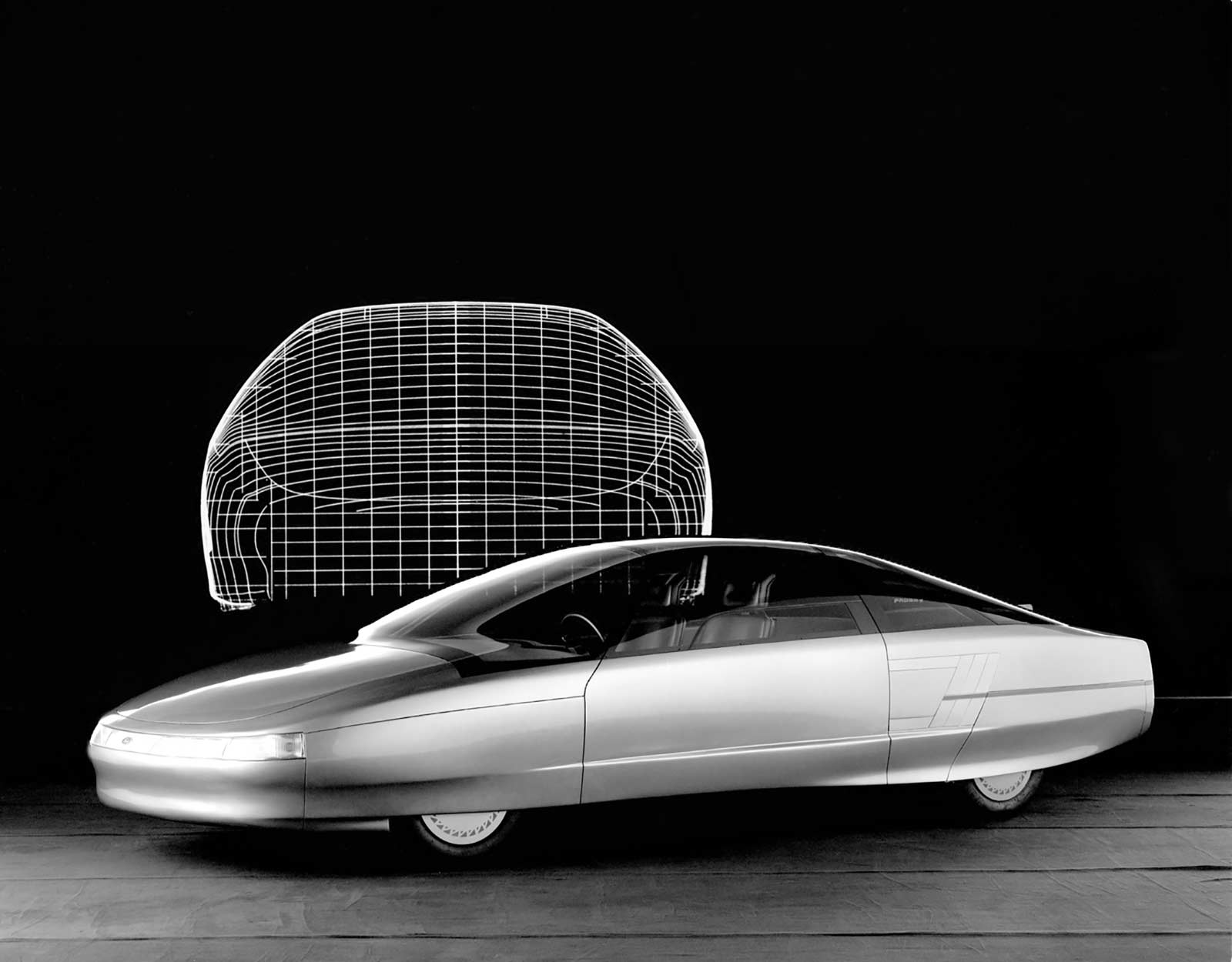
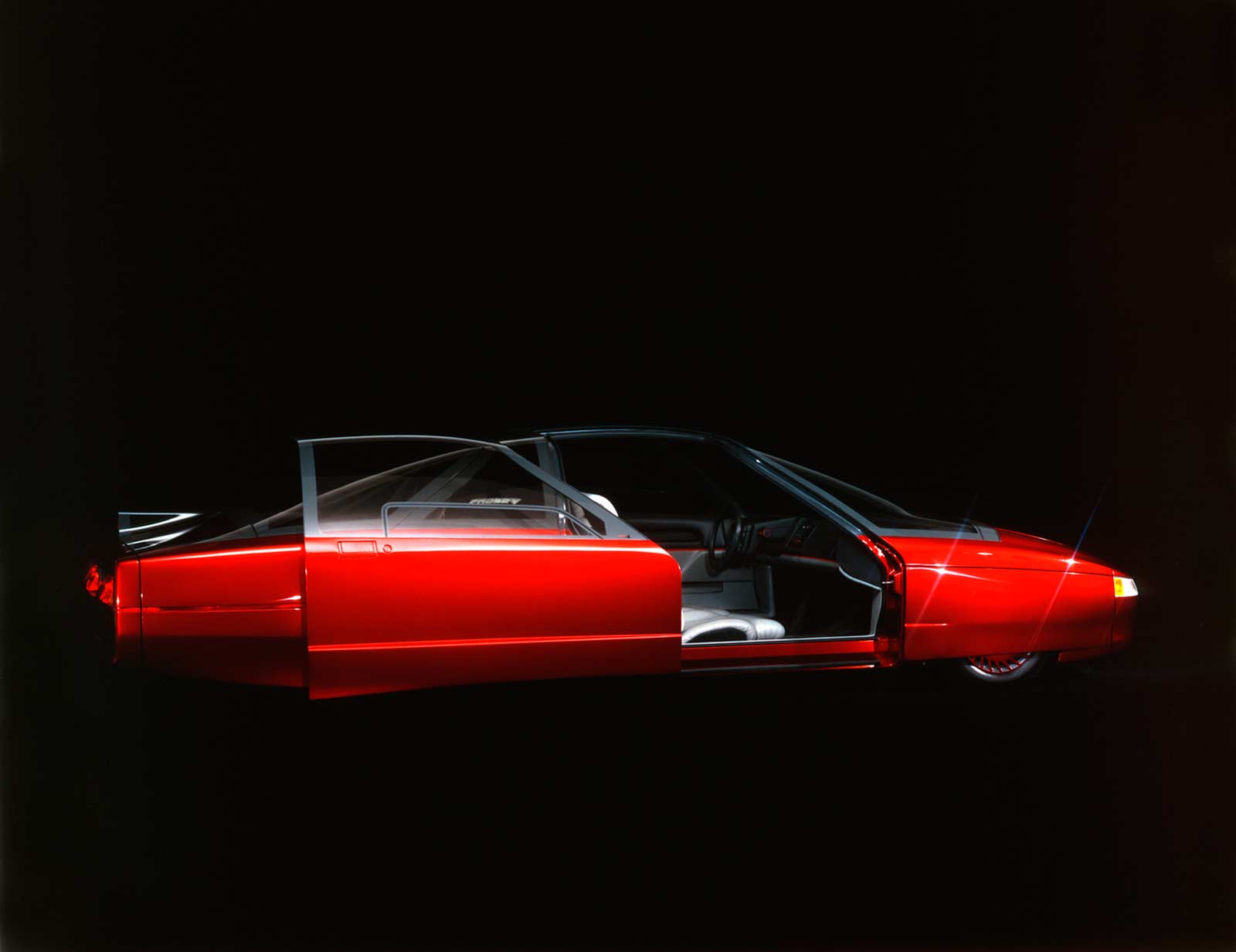
The Ford Probe V was a concept car unveiled by Ford Motor Company in the mid-1980s as the fifth and, at the time, concluding entry in a series of aerodynamic research vehicles that Ford had begun in 1979. The series had started with the Probe I, a coupe with a drag coefficient of 0.25, and continued through the four- and five-door sedan studies Probe II, III and IV between 1980 and 1983, during which the drag coefficient was progressively reduced from 0.30 to 0.22 and then 0.15. The Probe V, presented in 1985 as a fastback coupe, achieved a coefficient of drag of 0.137, a figure Ford noted was lower than that of the F-15 fighter jet.
Ford chose the Tokyo Motor Show for the car's unfinished world premiere, a venue where Japanese manufacturers traditionally unveiled their own advanced concept cars, and the Probe V reportedly drew attention away from those domestic displays. A steel model, trimmed inside and out, was shown at Tokyo, while a fully driveable version was completed afterward. Despite its shape being dictated almost entirely by wind-tunnel testing, the finished car was a functioning vehicle offering usable interior space for passengers. Ford stated that only about 5 horsepower was needed to maintain a constant 80 km/h, of which just 2 horsepower went toward overcoming aerodynamic drag.
Design and engineering work took place at Ford's International Design studio in Dearborn, Michigan, with the steel body fabricated by Ghia in Turin, continuing the arrangement used for the preceding Probe IV. David E. Rees, director of Ford's International Design, produced the first sketches for the Probe V in January 1983, before Probe IV had even been completed. Unlike its predecessor, the Probe V relocated its engine from the front to a position ahead of the rear axle. Designer Darrel P. Behmer, who joined the project shortly after graduating from the Center for Creative Studies in Detroit, and master modeler John C. Jackson were credited with contributions to the program, including the development of a full-scale ergonomics model, or space buck, that let designers and engineers test ideas directly in 1:1 scale. A new clay-modeling process allowed exterior structure and interior layout to be developed simultaneously, and a movable sled was used to compare different interior configurations, including a three-seat layout, before a variable 2+2 arrangement was chosen. Ford also involved inexperienced junior staff in the planning process.
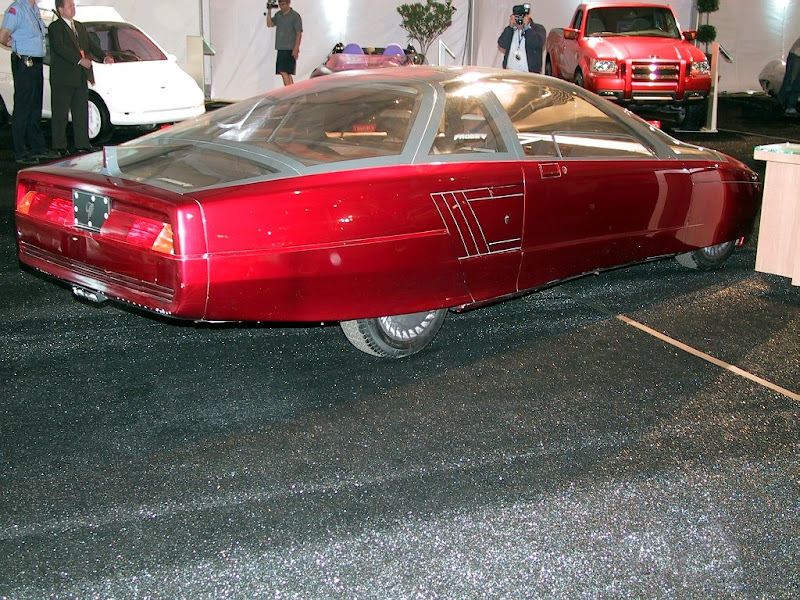
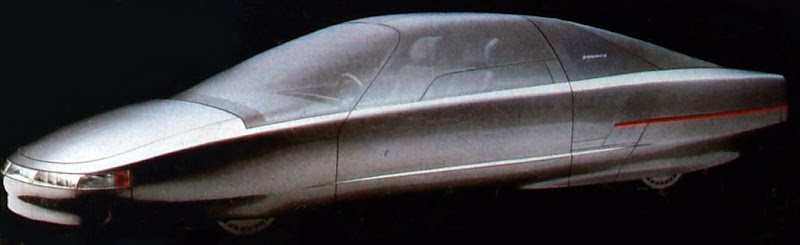
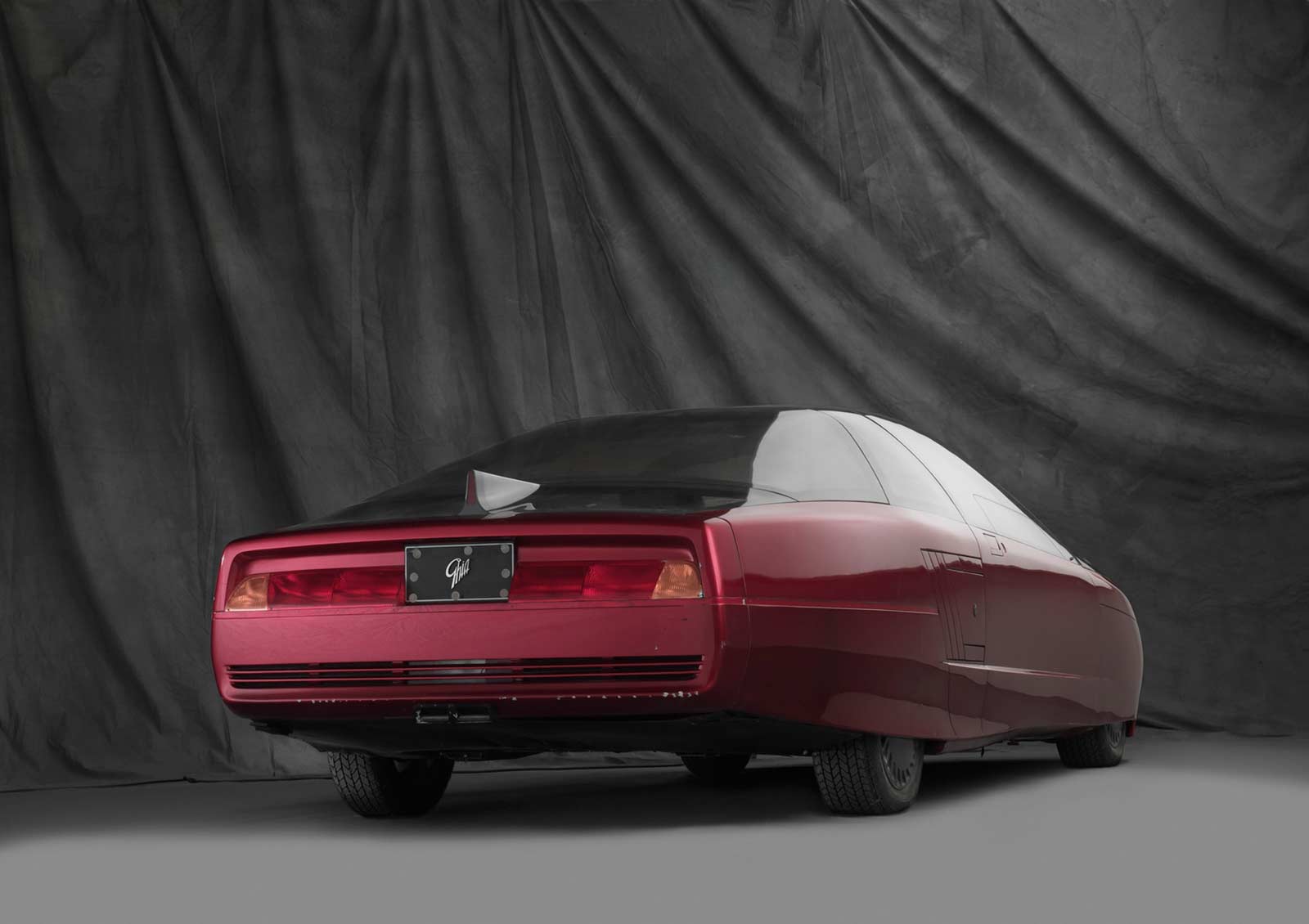
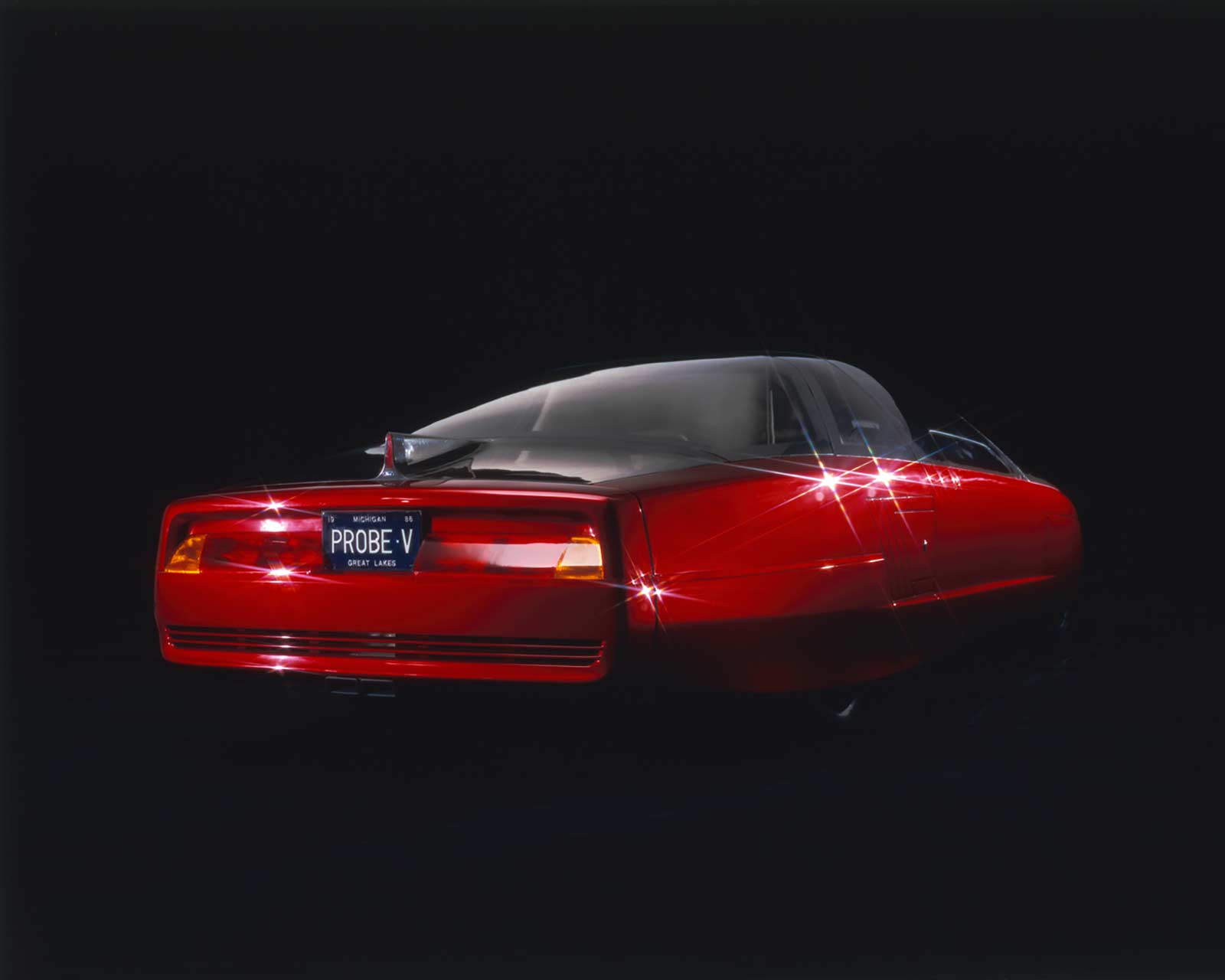
Several styling features carried over from the Probe IV, including fully enclosed wheels with flexible front wheel covers that could flex to accommodate steering movement. Rear cooling vents opened only when the engine signaled a need for additional cooling. The long, glazed tail ended in a wraparound cutoff edge topped by a small vertical fin made of Plexiglas; both the fin and the smooth overall shape underwent extensive wind-tunnel development, and Ford stated that the resulting body shape gave the car notable resistance to crosswinds. The windshield wiper was fully concealed when not in use, exterior mirrors were replaced by video monitors, body surfaces had no protruding seams, and the underbody was fully enclosed.
The first, non-driveable version of the car used modular construction with a space-frame chassis and plastic outer body panels. Sliding doors were part of the design from the outset, cut deep into the roofline along with their curved side windows; only small pass-through openings in the lower part of these windows could be opened. The large rear window, together with an integrated glass luggage cover, slid rearward electrically, exposing the transversely mounted mid-engine when the sliding doors were closed. The rounded front end carried a row of small rectangular headlamps with aerodynamic covers on either side of a Ford-typical central section.
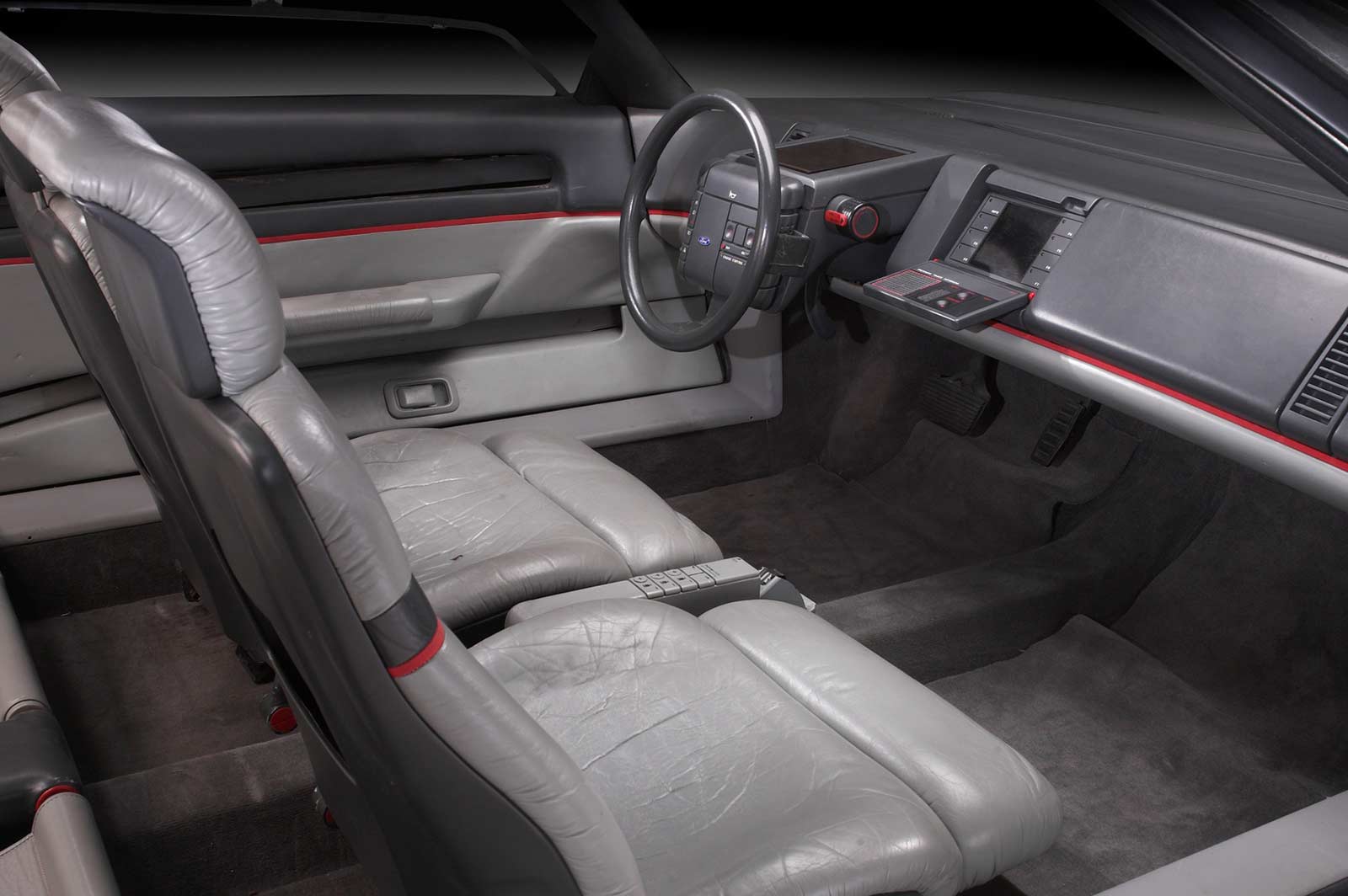
The leather-trimmed cabin received extensive attention to ergonomic layout. Both the steering wheel and instrument panel offered multiple adjustments, and digital displays along with a warning system were arranged in a specially refined manner, including a heads-up display for the digital speedometer and systems checks. The front seats were designed to be lightweight and space-efficient, fitted with inflatable backrests, and part of the climate control system was integrated into the doors. The rear auxiliary seats could be pulled out on side rails when needed for passengers, or retracted to free up additional luggage space when not in use.
The Probe V was powered by a 1.9-liter, 16-valve turbocharged four-cylinder engine derived from the American Ford Escort unit, fitted with a four-valve cylinder head; Ford later offered the US Escort with a related 1.8-liter Mazda engine without turbocharging. The engine was mounted ahead of the rear wheels and paired with a four-speed automatic transmission. The car rode on a wheelbase of 274 cm with a track of 146 cm, and measured 487 cm long, 175.5 cm wide and 119.5 cm high. Ford exhibited the Probe V at further international motor shows following its debut, and it remained a demonstration of aerodynamic optimization rather than a production model, with Ford stating that lessons learned from the car would be applied to future production vehicles.