

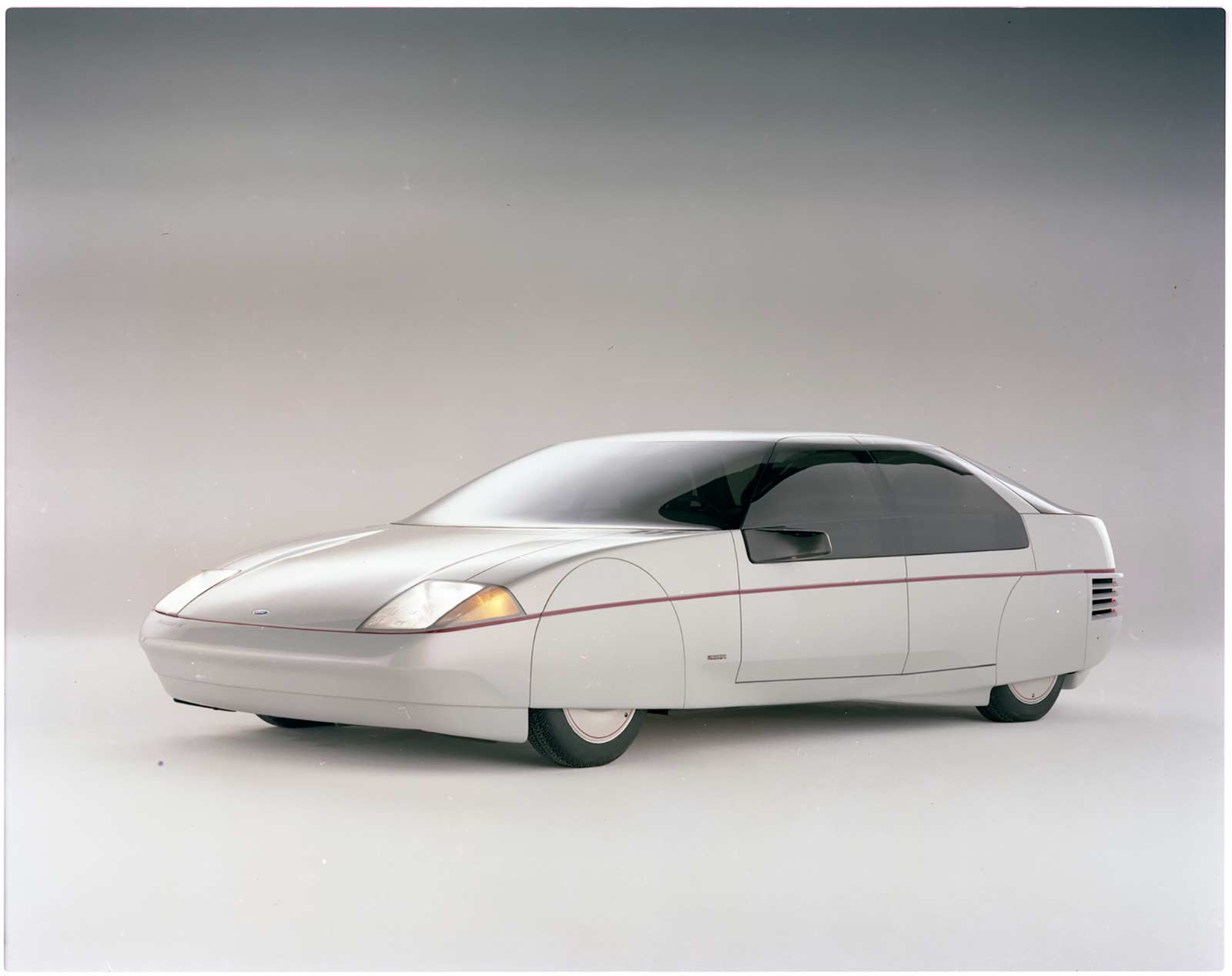
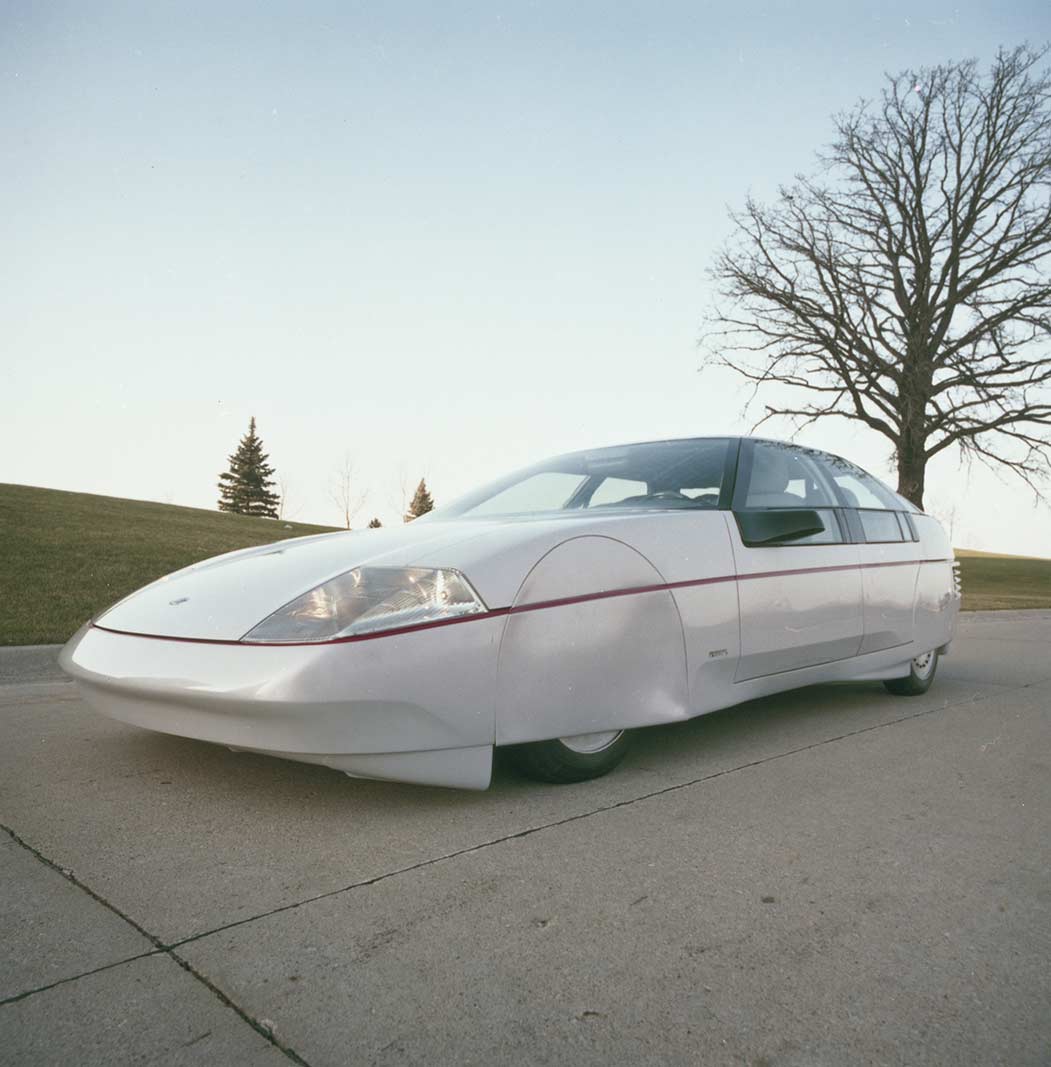
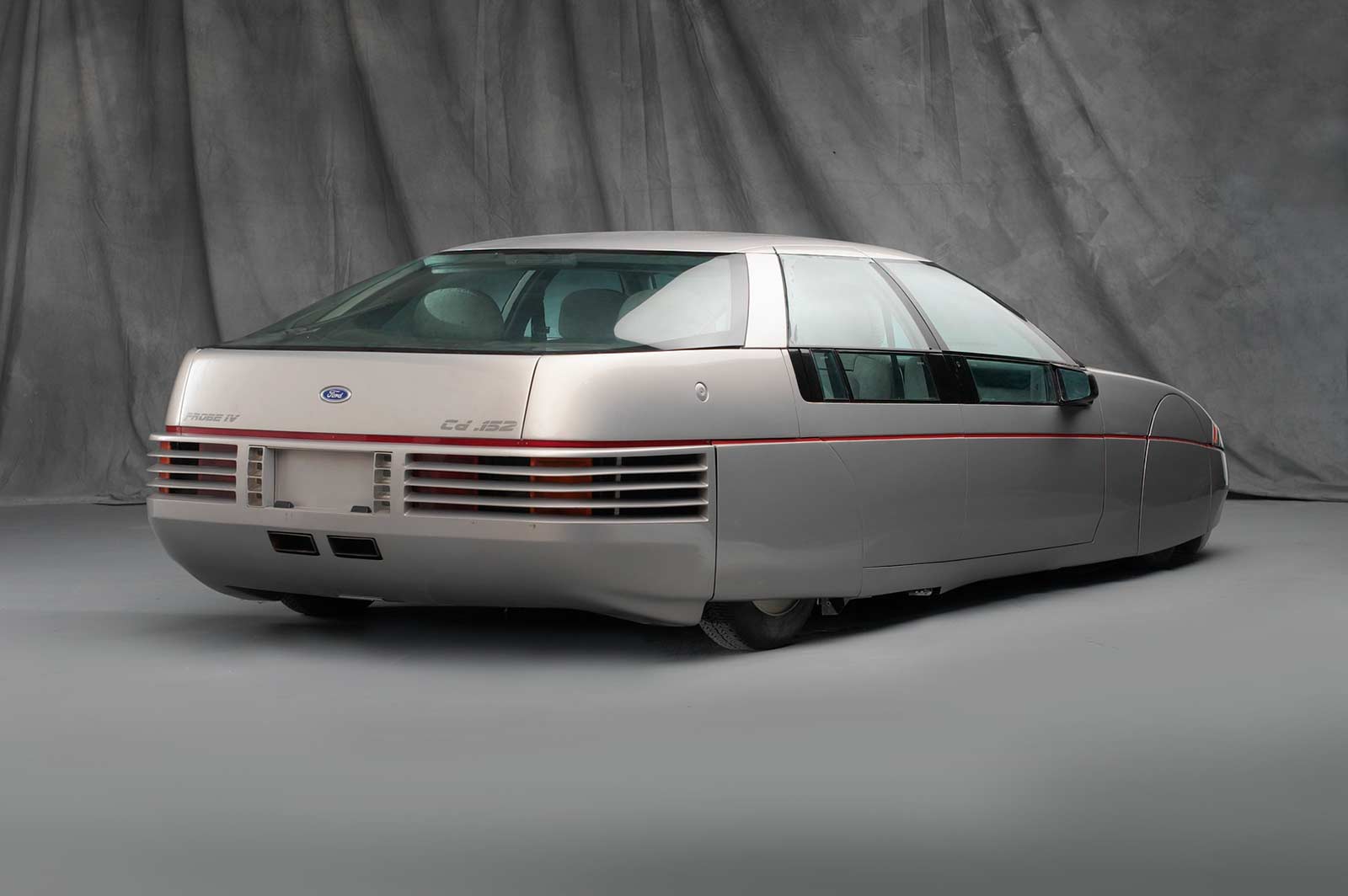
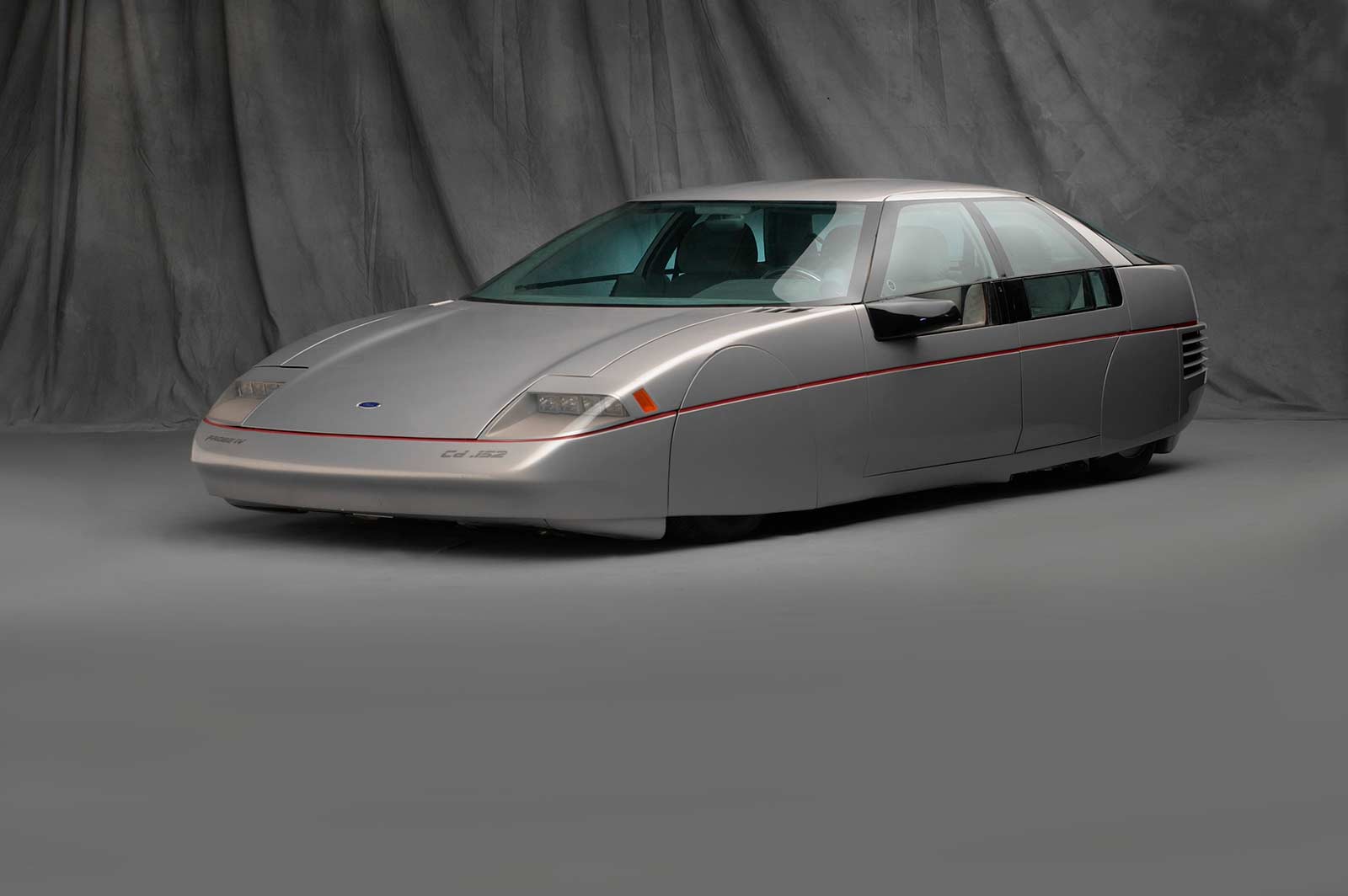
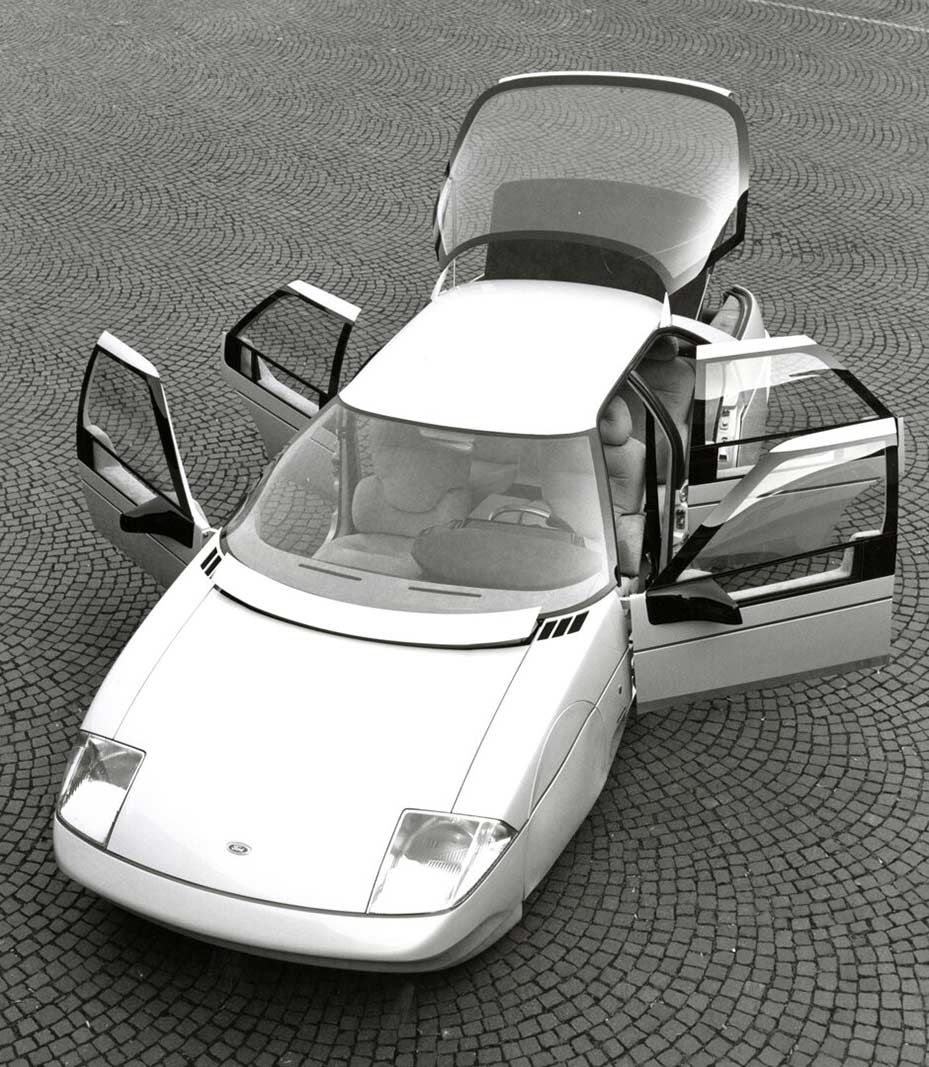
The Probe IV was a concept car built by the Ford Motor Company and shown at the Detroit Auto Show in early 1983, alongside the Continental Concept 100. It was the fourth in a series of aerodynamic research vehicles produced by Ford since 1979 and was developed with the involvement of Ford's Ghia studio in Turin, Italy. The car was a five-door, five-seat fastback sedan with a claimed drag coefficient of 0.15, a figure Ford described as the lowest of any conventional five-door vehicle in the world at the time, and roughly half that achieved by the Audi 100, then considered the most aerodynamically efficient production sedan. Ford vice president of design D. F. Kopka stated that this made it comparable in efficiency to a jet fighter plane.
At the Detroit unveiling, Ford's chief executive Donald E. Petersen said the purpose of the company's concept cars was to express the ideas of its designers and engineers and let customers imagine what they might expect from Ford in the not-too-distant future. Unlike many aerodynamic concept cars of the era, which Kopka described as banana-shaped single-seat cockpits, the Probe IV retained a conventional sedan layout with seating for four passengers, luggage space, a conventional powertrain, and typical passenger-car convenience features.
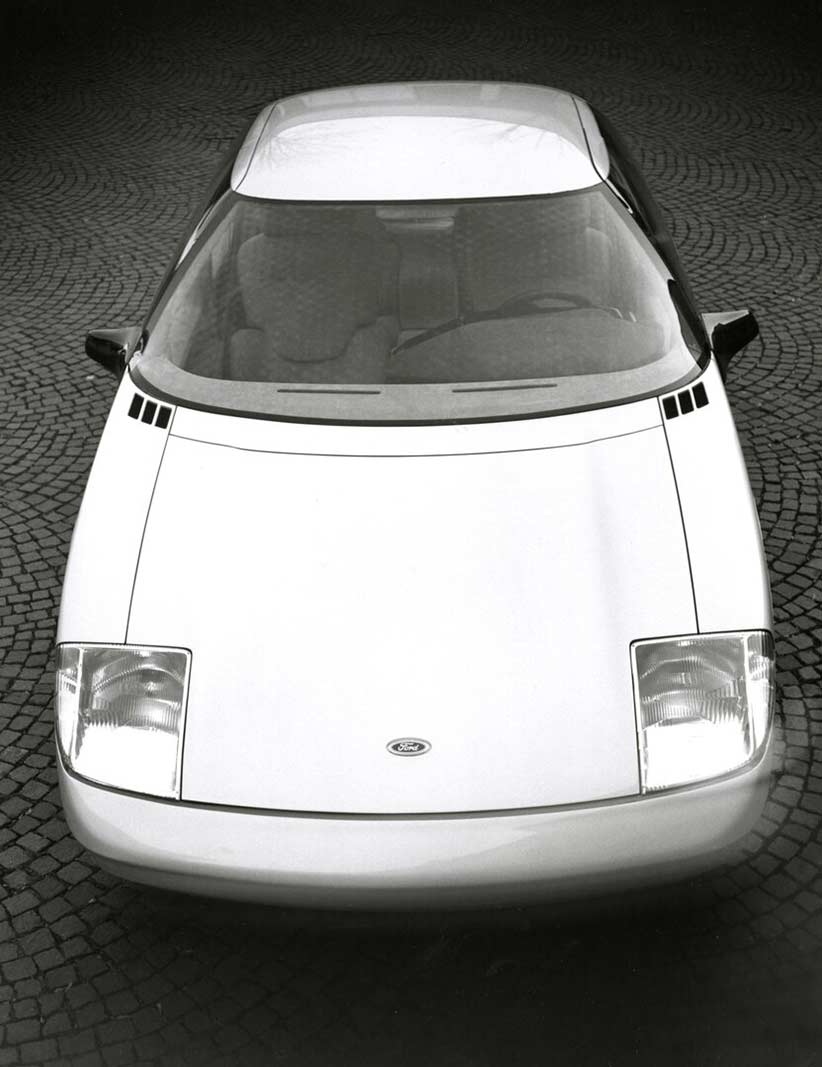
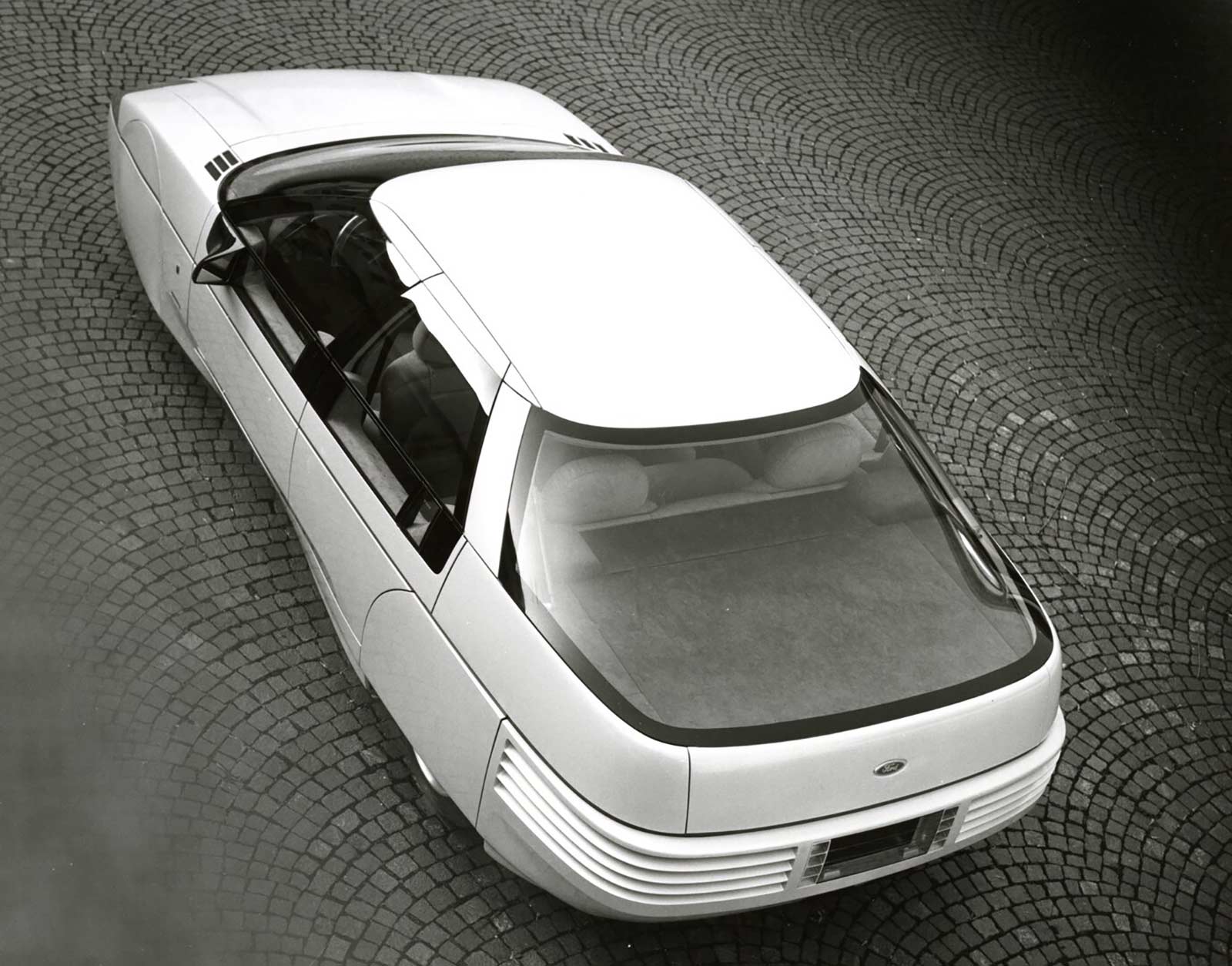
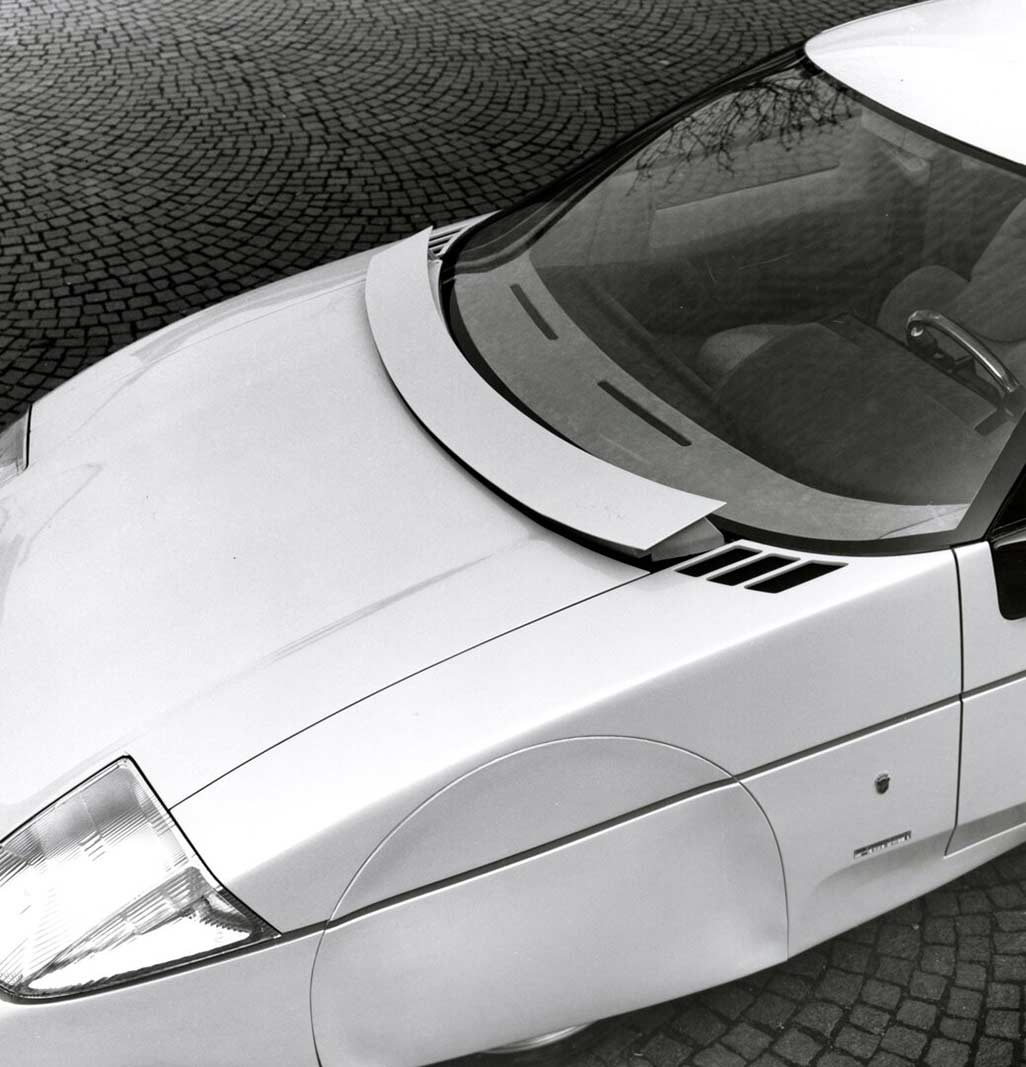
Although the Probe III, developed by Ford of Europe, went on to influence the production Sierra, the Probe IV did not feed as directly into a production model. Achieving a drag coefficient below the 0.2 threshold required a series of technical innovations concealed beneath the bodywork as well as visible exterior changes. Exterior features included a pointed nose without cooling air intakes, fully shrouded wheels, flush glazing, covered headlights, concealed windshield wipers, a full belly pan, and low air deflectors.
One of the most significant innovations was an automatic ride-height control system that adjusted ground clearance to counteract the aerodynamic penalties caused by changes in vehicle height and angle of attack as speed increased. This system combined an evolution of the electronic level control introduced on the 1984 Lincoln Mark VII with Goodyear-developed air springs on the rear axle. At low, city-driving speeds the body sat 16.5 cm above the road. As speed rose, the body lowered, reaching a ground clearance of about 10 cm at roughly 67 km/h (40 mph). At that speed, a computer-controlled front air dam automatically extended from under the nose, reducing front-end clearance to 7.5 cm, while the rear of the car rose to 15 cm. The front air dam could be retracted manually by the driver for rough roads or higher-speed driving.
To reduce turbulence generated by the front wheels, the Probe IV used full wheel covers and flexible front-fender skirts developed by Goodyear, made from the same material as tires. These skirts allowed the front wheels to turn for steering without contacting the flexible membrane, thanks to fixed inner shrouds that rotated together with the wheels. Ford noted that similar full-wheel-cover concepts had previously been demonstrated on the GM Aero, but said the Probe IV took the approach further.
Another notable feature was the relocation of the entire cooling system, including the air-conditioning condenser, to the rear of the vehicle. Air intakes for the cooling system were positioned at the rear flanks, behind the rear wheel housings, where they disrupted airflow far less than a conventional front grille opening would. Air passed through the cooling elements on both sides before exiting through the rear of the car. Electric fans connected to the radiator and condenser increased airflow through these components and also reduced turbulence behind the car, contributing a small additional improvement of 0.005 to the drag coefficient. Coolant was routed to finned tubes at the front of the car for additional cooling capacity without requiring a front air intake. Goodyear also supplied specially designed tires with an aerodynamically shaped tread pattern, engineered using computer design, intended to reduce rolling friction as well as aerodynamic drag.
The Probe IV used front-wheel drive powered by a transversely mounted 1.6-liter CVH engine, the same basic unit used in the Ford Escort, fitted with an exhaust turbocharger. The four-cylinder engine displaced 1598 cc and produced 122 hp at 5200 rpm and 163 Nm of torque at 3400 rpm. Because of the very low hood line, the engine was tilted forward at a 70-degree angle. The car's front suspension used a modified MacPherson strut design, shortened by around six inches compared with a conventional strut, with a low-friction ball-bearing arrangement developed to cope with the side loading created by the strut's altered angle without causing the shock absorber to bind.
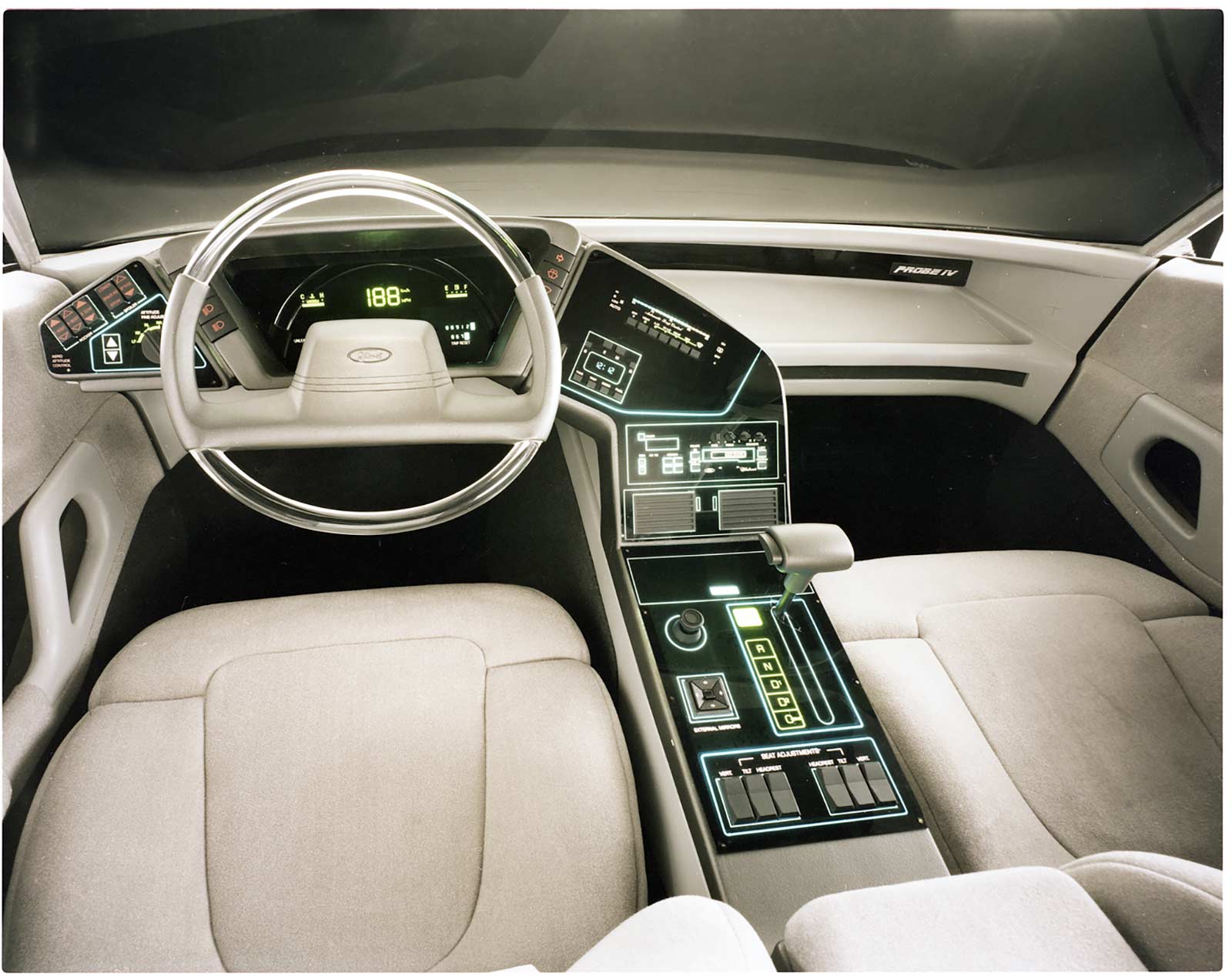
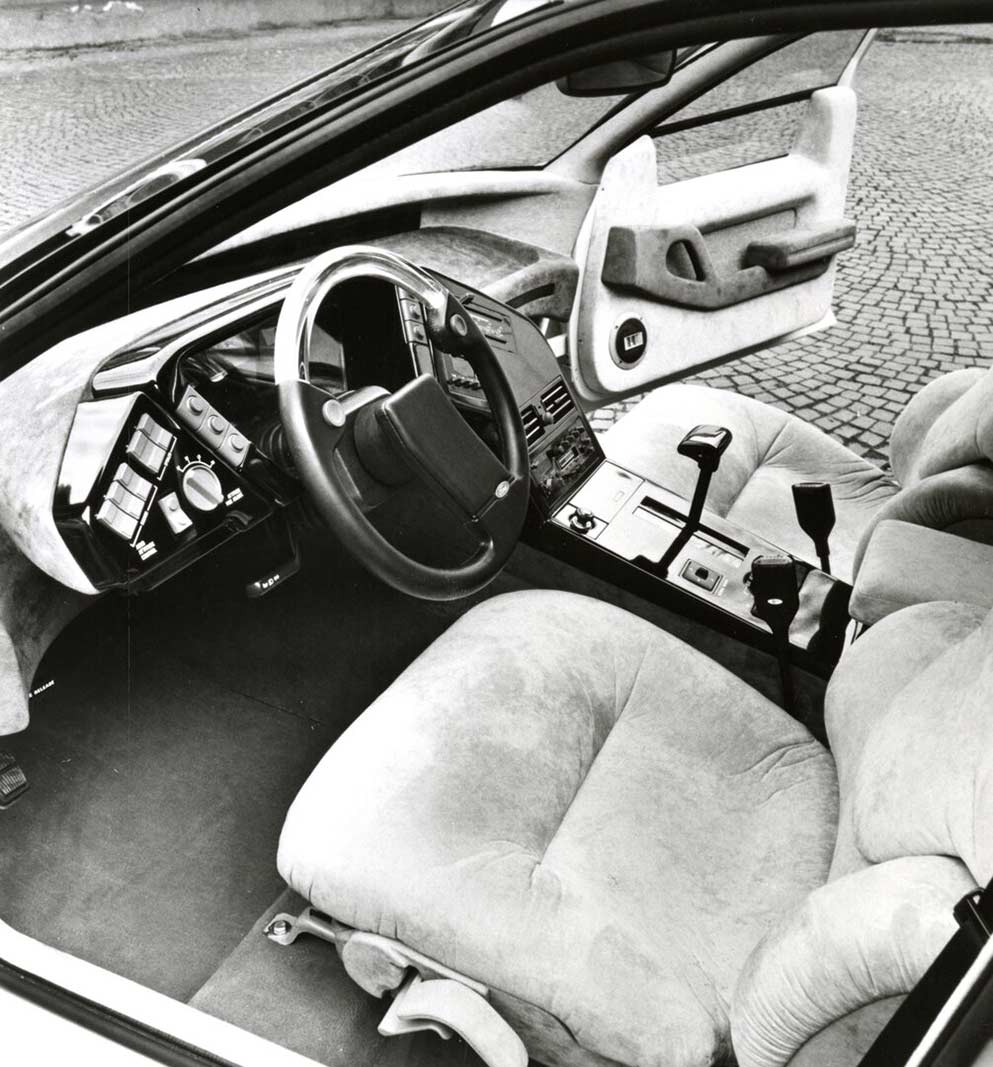
To keep the roofline as low as possible, Ford designed special front seats set at a more reclined angle than conventional seating, which allowed the overall vehicle height to be lowered by around 4 cm (roughly 1.5 inches) beyond what standard seats would have permitted. These seats used a sling-type configuration with lumbar and thigh support and offered individually adjustable seat and backrest sections at various points. The dashboard used a semicircular layout that Ford described as forward-looking and functional, with a strong emphasis on electronic instrumentation and controls positioned for easy reach.
Ford design chief Kopka stated that overcoming aerodynamic drag at 80 km/h required only 2.5 hp for the Probe IV, compared with 6.2 hp for the 1983 Thunderbird, itself considered a particularly aerodynamic production car with a drag coefficient of 0.35. Kopka suggested that a passenger car achieving a Cd of 0.15 could realize a fuel economy improvement of around 20 percent at the maximum legal highway speed in the United States at the time, just under 90 km/h (55 mph).
The Probe IV measured 4755 mm in length, 1202 mm in height, and had a wheelbase of 2718 mm. It remained a concept vehicle and was not put into production.