
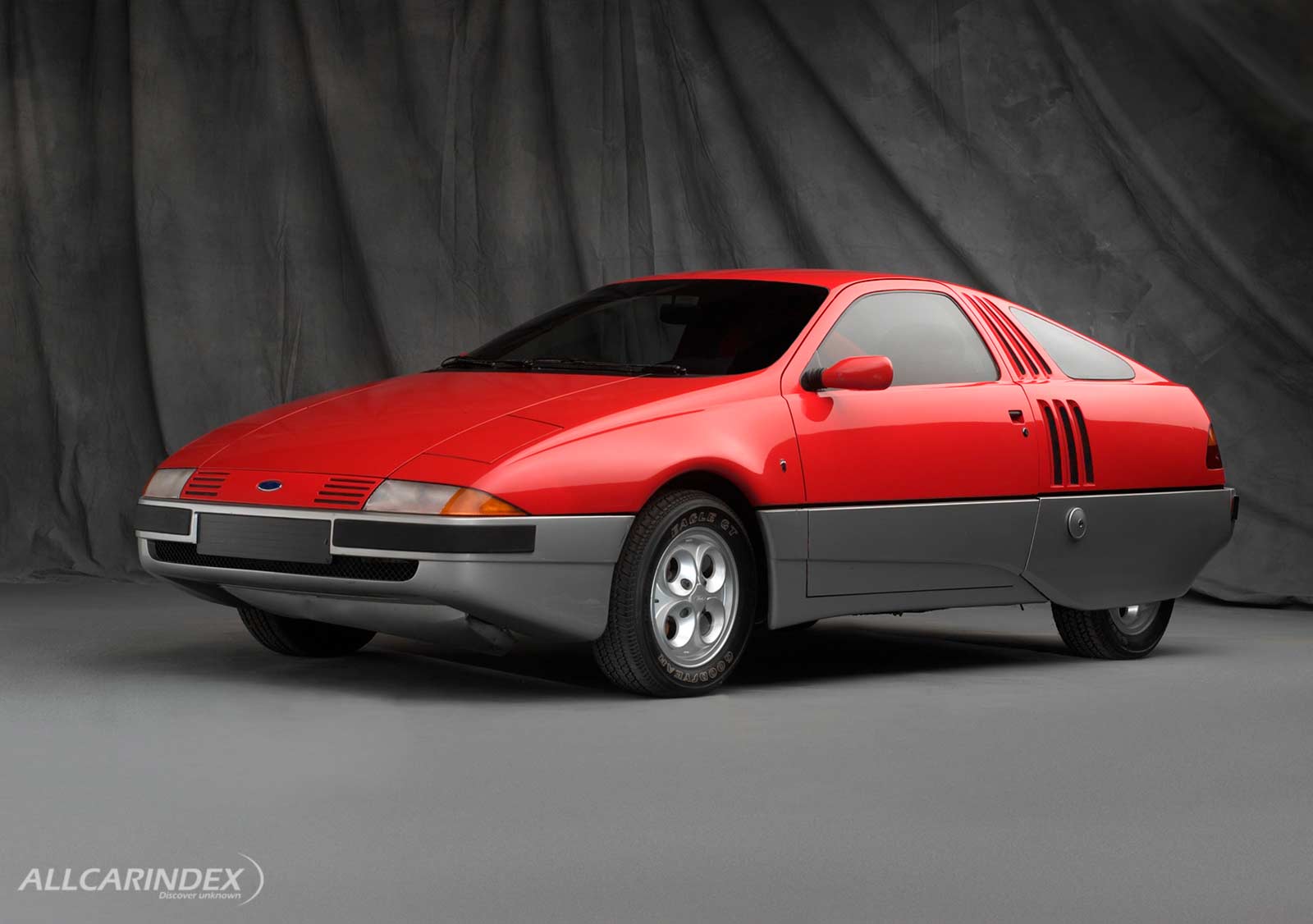
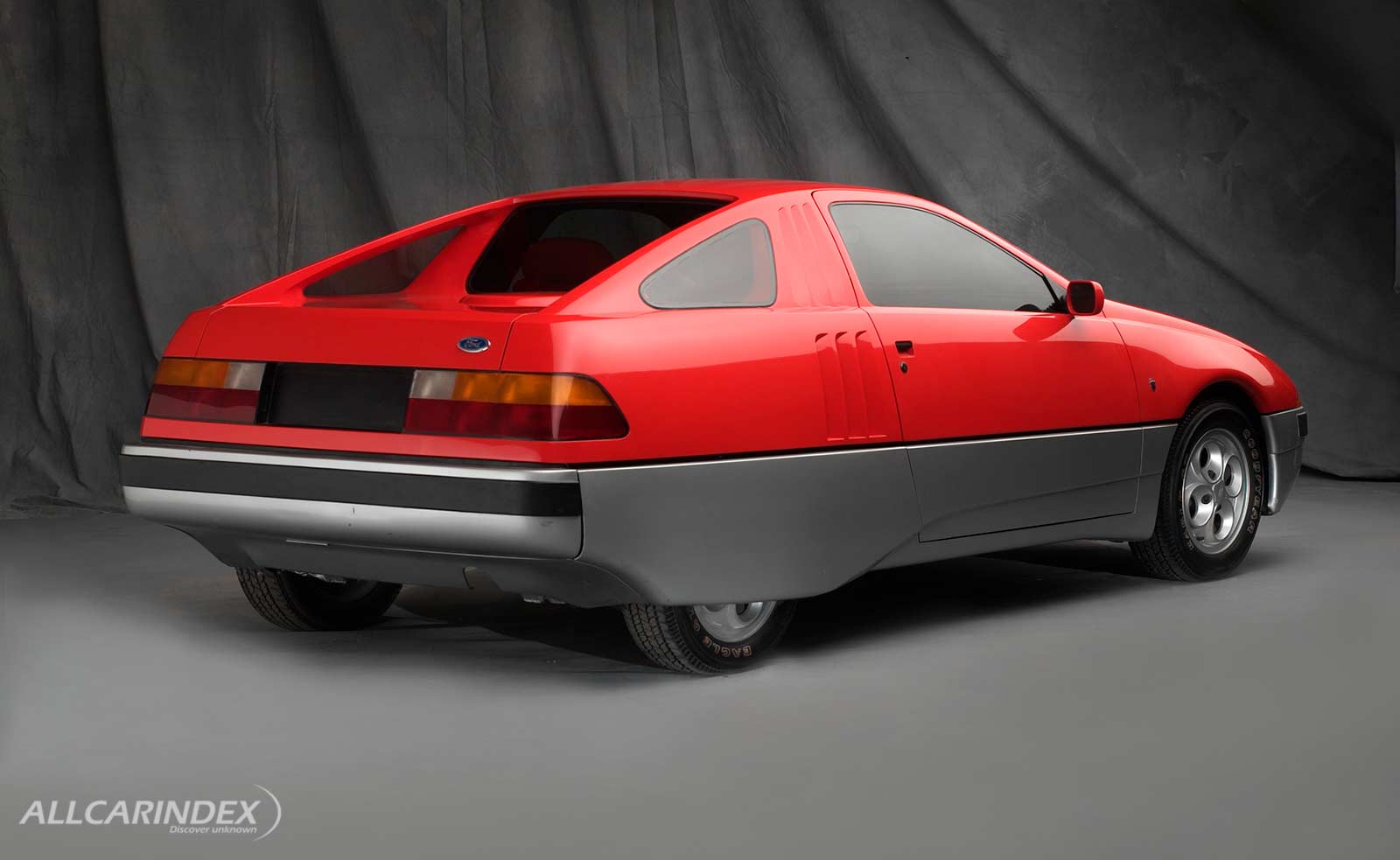
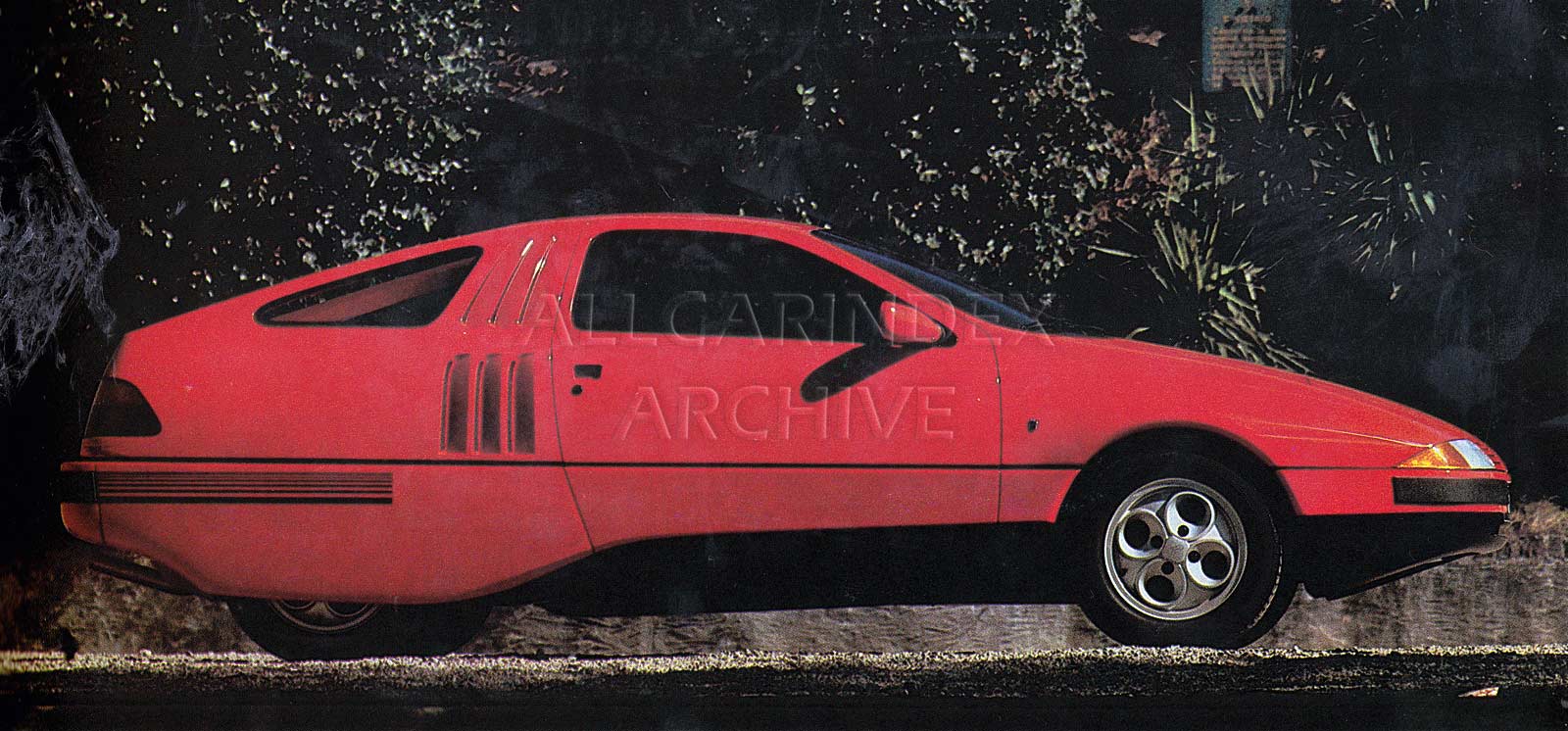
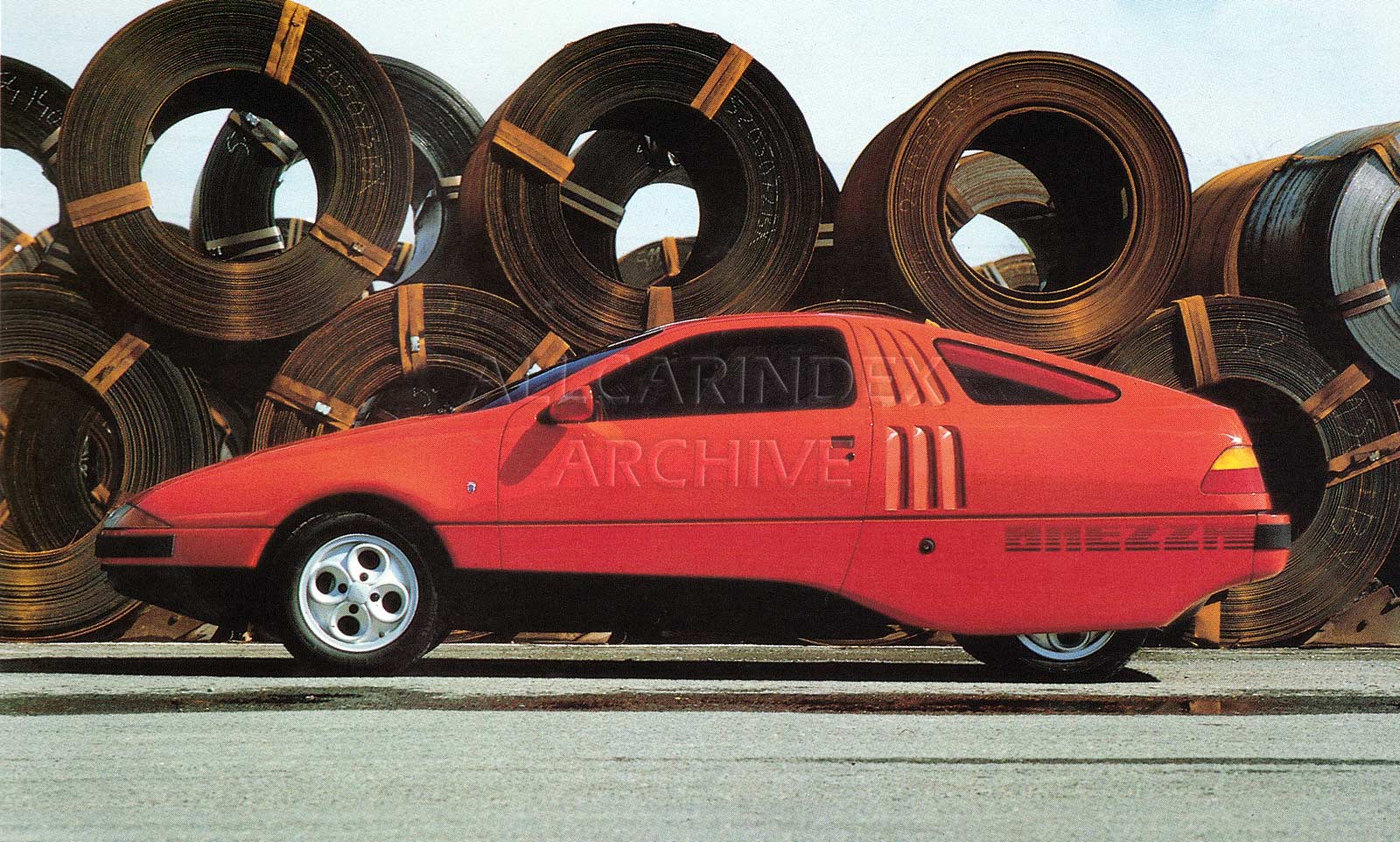
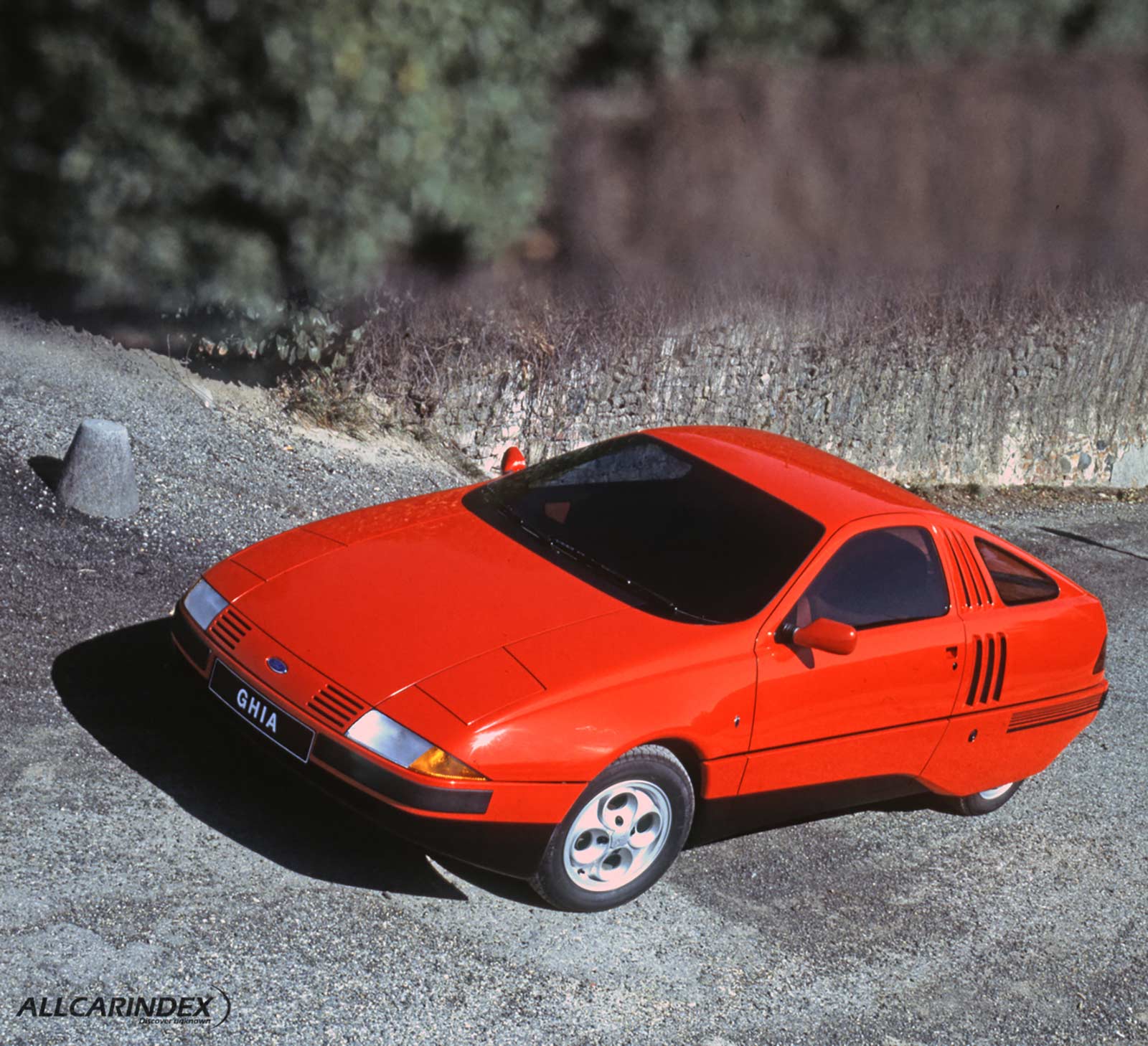
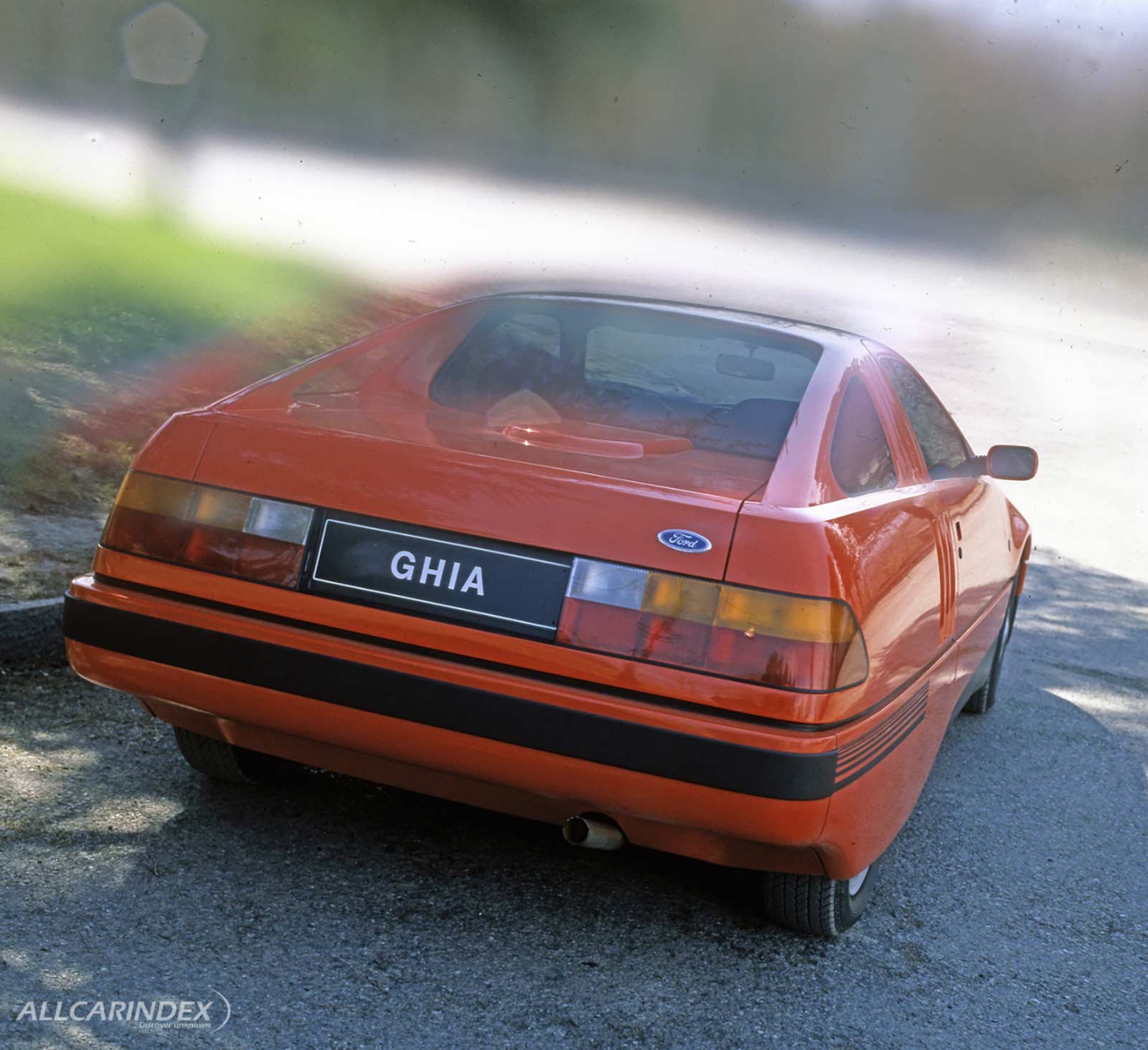
The Brezza was a concept car produced by Ford's Ghia studio in Turin, Italy, built as a two-seat, mid-engine coupe designed for aerodynamic efficiency. It was designed by Marilena Corvasce, who was responsible for both the exterior and interior of the car. The Brezza was delivered by Ford Motor Company to Six Flags AutoWorld in Flint, Michigan, on June 13, where it was shown to the news media alongside four other Ghia concept cars before going on a six-month loan to the Historic Flint AutoWorld Foundation for the "Love Affair on Wheels" exhibit at the AutoWorld entertainment complex, which opened on July 4. Ford vice president of Design Donald F. Kopka presented the car, describing Ghia as one of Ford's key international forward design studios.
The Brezza was based on the running gear of the front-wheel-drive Ford EXP, the coupe version of the American Ford Escort, converted by Ghia's engineers into a mid-engine layout. The 1.6-liter CVH four-cylinder engine, producing 71 hp at 4600 rpm and 121 Nm of torque at 3000 rpm, was relocated behind the seats together with its three-speed automatic transmission and suspension components. Non-driven MacPherson strut suspension was fitted at the front. The conversion from the EXP's original layout was said by the Turin-based designers not to have required extensive modification, though numerous detail changes were still necessary. The car rode on wheels taken from the Escort XR3, fitted with low-profile 185/16 x 14 tires.
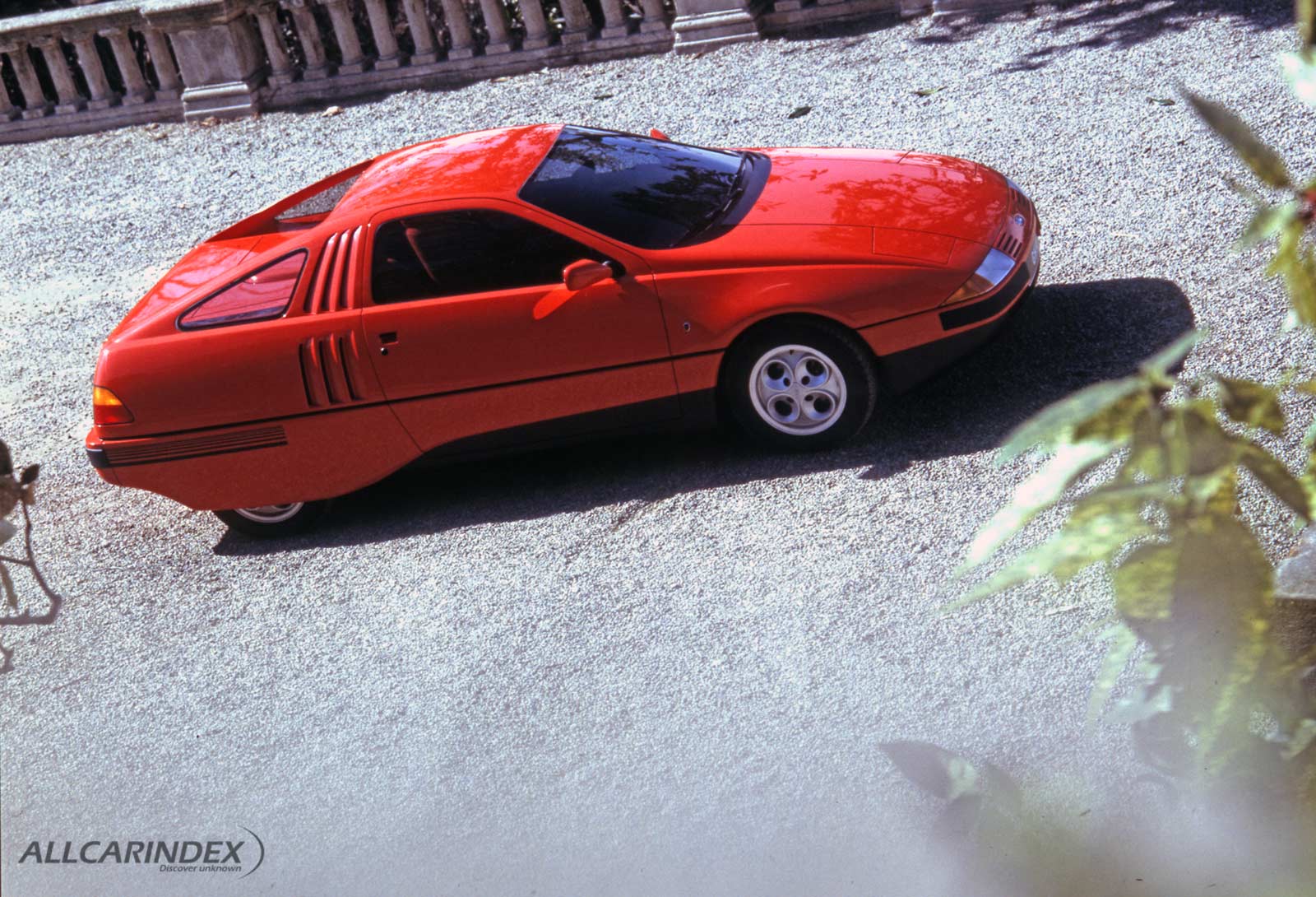
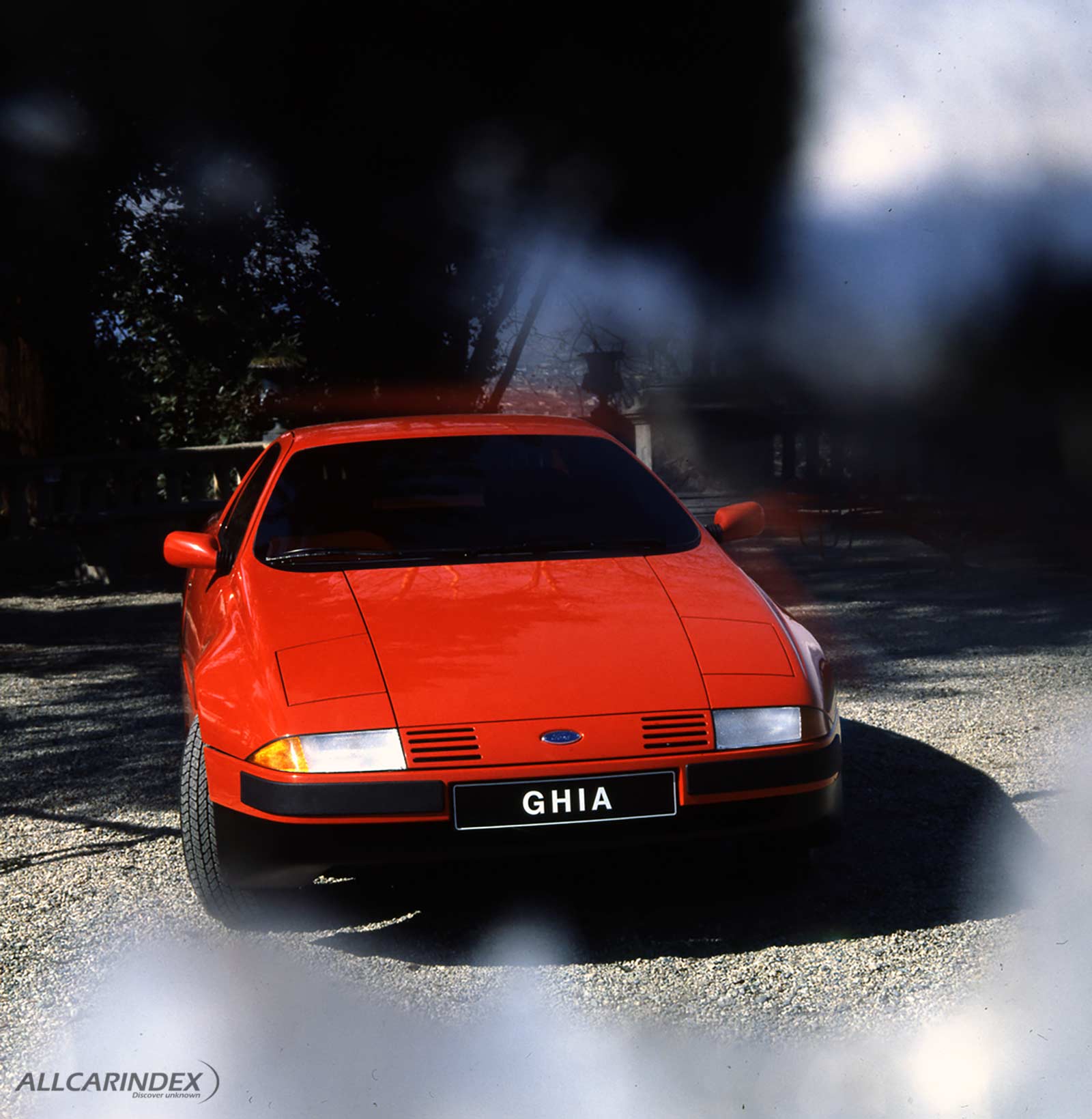
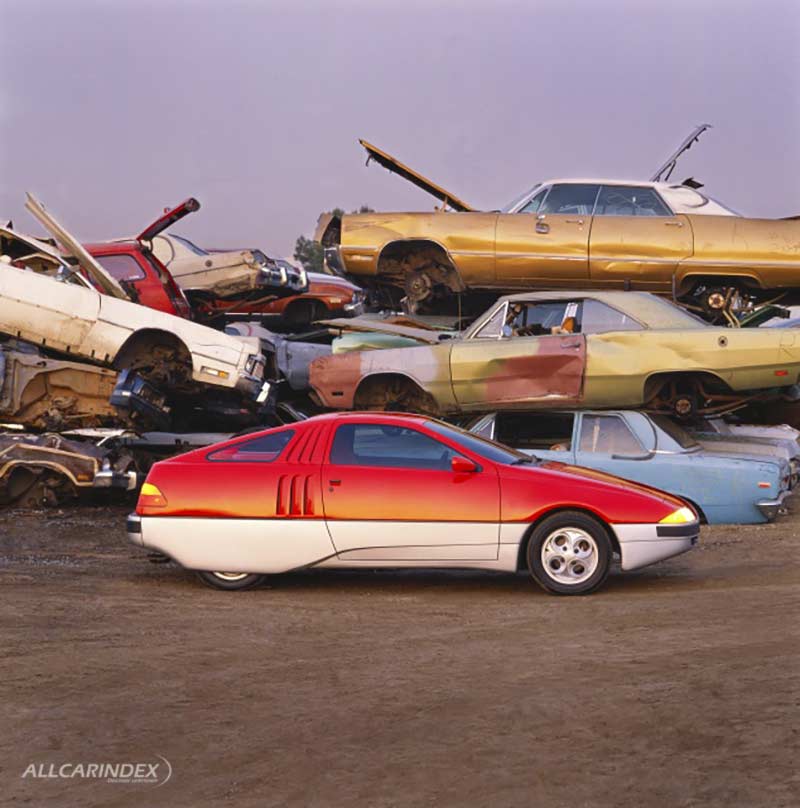
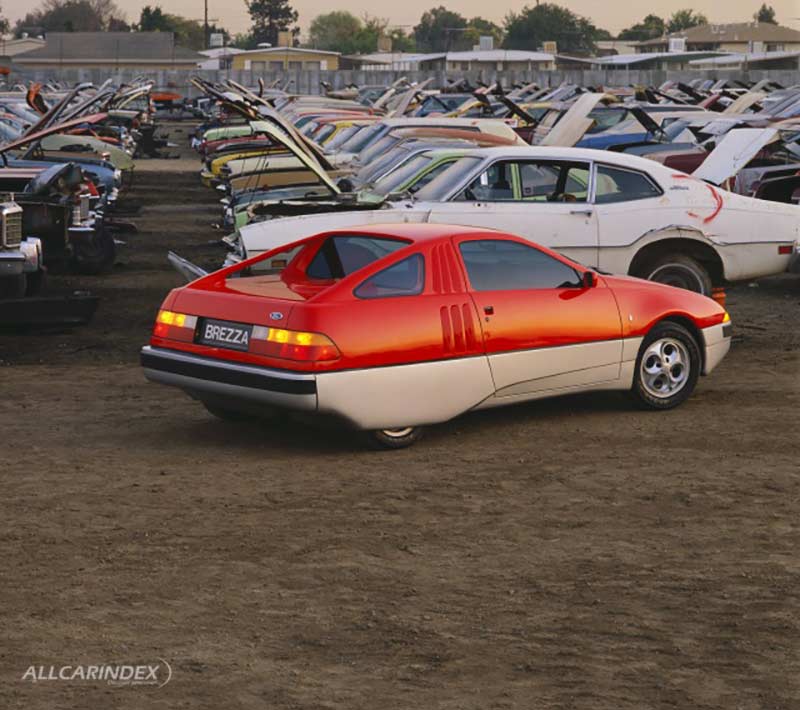
Early testing produced a drag coefficient of 0.30, which Ghia said could be reduced further with additional refinement. Measures built into the design from the outset to achieve this included a partial underbody panel and fairings enclosing the front and rear wheels, channeling airflow beneath the car. Cooling air was drawn in and routed out through openings below the bumpers as part of the same airflow management. The car's aerodynamic bodywork also featured a gently rising, rounded nose, flush-fitted window glass, and side windows with a special guide system developed by Ghia allowing them to sit almost flush with the exterior bodywork when raised electrically. The rear wheel covers were drawn down further to smooth airflow at the back. Retractable headlamps were hidden beneath flaps at the front, a common feature of similar nose designs of the era. Distinctive triple air slots were placed in the flanks above and below, just ahead of the rear wheels.
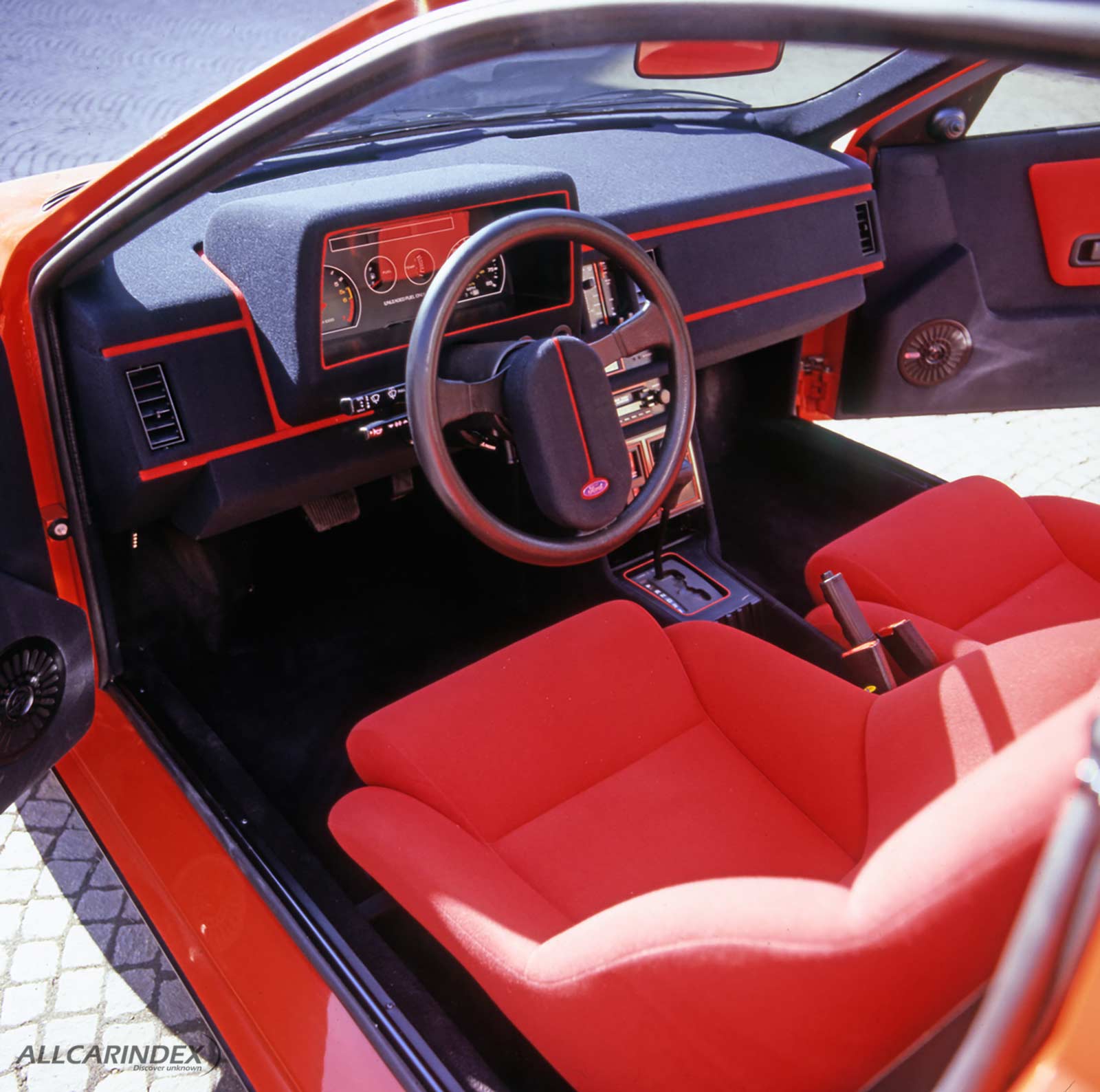
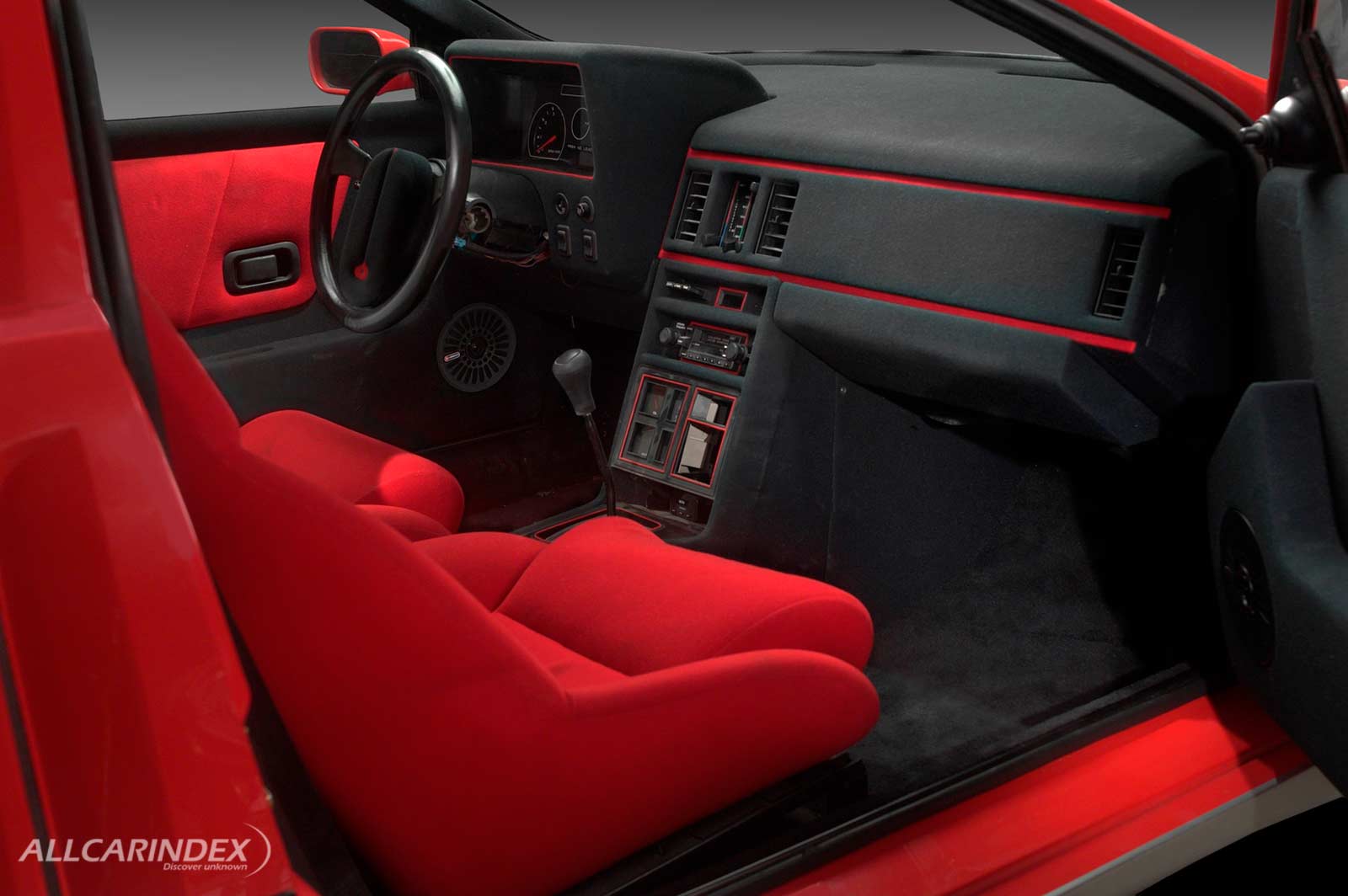
Inside, the Brezza had highly sport-oriented bucket seats and a lightly modified dashboard with a boxy instrument cluster and center console. Luggage space was provided both under the front hood and at the rear, with additional storage for small items behind the seats. The spare wheel was stored upright in the front luggage compartment, positioned in front of the bulkhead. Compared with the standard Ford EXP, which had a wheelbase of 240 cm and an overall length of 432.5 cm, the Brezza was considerably more compact, with a wheelbase of 232 cm and overall dimensions of 400 cm in length, 164 cm in width, and 123 cm in height.
The car was finished in red and was fully drivable. It was shown to the press together with three other Ghia concept vehicles: the AC Ghia, a luxury mid-engine two-seat sports car; the Megastar, a low four-door luxury sports sedan with seating for five; and the Probe IV, described at the time as the most aerodynamic driveable passenger car in the world, with a drag coefficient of 0.15. All of these Ghia concept cars had handcrafted all-steel bodies, and Kopka noted that the Ghia studio was producing between 12 and 14 concept cars per year at the time.